
迈瑞医疗

Search documents
贝尔生物三度闯关IPO再折戟 传统酶联免疫技术陷黄昏危机
Hua Xia Shi Bao· 2025-10-11 01:57
Core Viewpoint - Beijing Beier Bioengineering Co., Ltd. has once again paused its IPO journey, marking the third attempt since 2020 without success [2][3] IPO Attempts - Beier Bio's IPO journey has been tumultuous, with multiple attempts since its first application in July 2020, which was withdrawn in February 2021. The company then shifted to the Shanghai Stock Exchange in October 2021, but this attempt also failed. In April 2025, it redirected its efforts to the Beijing Stock Exchange, where its IPO was accepted on June 30, but was halted three months later due to the need for updated financial reports [3][4] Fundraising Plans - The company plans to publicly issue up to 25 million shares, aiming to raise a total of approximately 537 million yuan, which will be allocated to the construction of an in vitro diagnostic reagent and instrument production base and a research and development center [4][5] Project Feasibility Concerns - Despite claiming to be a "national-level specialized and innovative small giant," the feasibility and return prospects of its fundraising projects are questioned due to tightening industry policies, increasing market competition, and rising tax burdens [4][6] Financial Performance - Beier Bio has experienced significant revenue fluctuations, with a 50.57% increase in revenue and a 237.21% increase in net profit in 2023, followed by a decline in both metrics in 2024, with revenue down 9.08% and net profit down 6.00% [7][8] Core Product Revenue Decline - The decline in revenue is primarily attributed to a drop in income from core product lines, particularly the respiratory pathogen detection series, which saw a 10.3% decrease in revenue from 2023 to 2024 [9][10] Market Competition and Risks - The in vitro diagnostic market is highly competitive, with major players like Roche and Abbott dominating. Beier Bio's lack of brand influence and market coverage raises concerns about its ability to maintain market share if competitors adopt aggressive pricing strategies [6][11] Tax Policy Impact - Starting in 2025, the company will face increased tax burdens as it transitions from a simplified tax method to a general tax method, significantly raising its tax costs and further squeezing profit margins [6][11] Technology Transition Challenges - The company heavily relies on traditional enzyme-linked immunosorbent assays and colloidal gold reagents, which are losing market share to newer technologies like chemiluminescence. If Beier Bio fails to adapt and innovate, it risks being outpaced by competitors [10][11]


医疗器械板块10月10日跌1.04%,奕瑞科技领跌,主力资金净流入1.04亿元
Zheng Xing Xing Ye Ri Bao· 2025-10-10 08:46
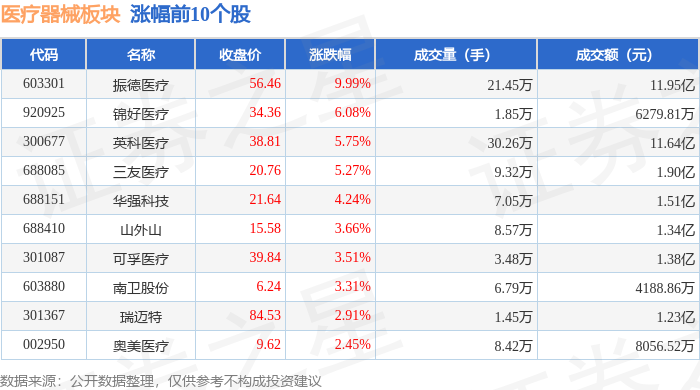
Market Overview - On October 10, the medical device sector declined by 1.04%, with Yirui Technology leading the drop [1] - The Shanghai Composite Index closed at 3897.03, down 0.94%, while the Shenzhen Component Index closed at 13355.42, down 2.7% [1] Stock Performance - Notable gainers in the medical device sector included: - Zhendemedical (603301) with a closing price of 56.46, up 9.99% [1] - Jinhao Medical (920925) at 34.36, up 6.08% [1] - Yingke Medical (300677) at 38.81, up 5.75% [1] - Conversely, significant decliners included: - Yirui Technology (688301) at 115.67, down 6.88% [2] - Aojing Medical (688613) at 26.00, down 6.20% [2] - Haooubo (688656) at 144.87, down 6.17% [2] Capital Flow - The medical device sector saw a net inflow of 104 million yuan from institutional investors, while retail investors experienced a net inflow of 10.76 million yuan [2][3] - Key stocks with significant capital flow included: - Yingke Medical (300677) with a net inflow of 93.64 million yuan from institutional investors [3] - Zhendemedical (603301) with a net inflow of 41.59 million yuan from institutional investors [3] - Huasheng Technology (688151) with a net inflow of 19.78 million yuan from institutional investors [3]

借助资本重塑增长?美敦力与强生的案例分析
思宇MedTech· 2025-10-10 08:09
Core Viewpoint - The article discusses the shift in growth strategies among global medical technology giants from traditional R&D-driven growth to capital-driven growth, emphasizing the importance of "tuck-in M&A" and partnerships with private equity (PE) to enhance innovation and manage risks in a challenging economic environment [2][3][4]. Group 1: Shift from R&D to Capital-Driven Growth - Historically, innovation in the medical technology industry was synonymous with R&D, but this approach is becoming less effective as R&D costs rise and the returns on new product sales decline [3][4]. - Major companies like Medtronic and Johnson & Johnson are now focusing on capital-driven growth, where capital serves as a tool for innovation rather than just a result of it [3][4]. Group 2: Tuck-in M&A as a Growth Strategy - Tuck-in M&A has become a key growth tool for medical technology giants, allowing them to embed critical capabilities or high-growth technology modules into their existing structures without large-scale mergers [5][6]. - This strategy enables companies to enhance their innovation density and growth flexibility while maintaining stability [5][6]. Group 3: Johnson & Johnson's M&A Strategy - Johnson & Johnson emphasizes that M&A is a core part of their strategy, focusing on high-growth and high-innovation areas while divesting from low-growth segments [8][9]. - Recent acquisitions, such as Abiomed and Shockwave Medical, illustrate their approach to strategically shift their portfolio towards more lucrative markets [8][9]. Group 4: Medtronic's Strategic Adjustments - Medtronic adopts a "shrink to grow" strategy, concentrating resources on areas where they have competitive advantages while executing smaller acquisitions to enhance their capabilities [12][13]. - The company has made significant decisions, such as splitting off its diabetes unit to improve cash flow and focus on core business areas [16][28]. Group 5: Role of Private Equity in Innovation - Private equity has emerged as a crucial partner in the medical device industry, helping companies share innovation risks and optimize their structures [18][20]. - Medtronic's collaboration with Blackstone exemplifies how PE can support R&D projects by sharing financial risks while allowing companies to maintain operational control [19][23]. Group 6: Trends in Capital Operations - The trend of divestitures and restructuring among major medical device companies reflects a broader industry shift towards optimizing growth quality through capital management [27][28]. - Companies are increasingly focusing on strategic divestitures to concentrate resources on high-growth areas, leading to a more dynamic industry landscape [27][32]. Group 7: Future of Chinese Medical Device Companies - Chinese medical device companies are at a turning point, transitioning from financing-driven growth to capital-driven growth, learning from the strategies of global giants [34][35]. - The future growth of these companies will depend on their ability to effectively manage capital for structural optimization and risk transfer [35][36].



医药生物行业双周报(2025/9/26-2025/10/9):第十一批国采月底申报-20251010
Dongguan Securities· 2025-10-10 07:04
Investment Rating - The report maintains a "Market Weight" rating for the pharmaceutical and biotechnology industry [2][24]. Core Viewpoints - The SW pharmaceutical and biotechnology industry underperformed the Shanghai and Shenzhen 300 index, declining by 0.23% from September 26, 2025, to October 9, 2025, lagging behind the index by approximately 2.76 percentage points [9][24]. - Most sub-sectors within the industry recorded negative returns during the same period, with the medical research outsourcing and in vitro diagnostics sectors showing gains of 1.99% and 0.55%, respectively, while the raw materials and chemical preparations sectors fell by 2.23% and 1.73% [10][24]. - Approximately 54% of stocks in the industry achieved positive returns, with the top performer, Zhendemedical, increasing by 21.43%, while the largest decline was seen in Guangshentang, which fell by 21.86% [11][14]. - The overall price-to-earnings (PE) ratio for the SW pharmaceutical and biotechnology industry was approximately 55.04 times as of October 9, 2025, indicating a decrease in industry valuation [15][24]. Summary by Sections 1. Market Review - The SW pharmaceutical and biotechnology industry underperformed the Shanghai and Shenzhen 300 index, with a decline of 0.23% from September 26, 2025, to October 9, 2025 [9]. - Most sub-sectors recorded negative returns, with medical research outsourcing and in vitro diagnostics performing better than others [10]. - About 54% of stocks in the industry recorded positive returns, with significant variations in individual stock performance [11]. 2. Industry News - The 11th batch of national procurement will begin accepting applications on October 21, 2025, with 55 major varieties included [22]. - The National Medical Products Administration issued guidelines for the quality management of medical device online sales [20][21]. 3. Company Announcements - Zhejiang Haizheng Pharmaceutical announced that its product achieved Self-GRAS certification in the U.S., allowing it to enter the U.S. market [23]. 4. Weekly Industry Perspective - The report suggests focusing on investment opportunities in innovative drugs and sectors with expected business development catalysts, including medical devices and pharmaceutical commerce [24][26].






迈瑞医疗跌2.00%,成交额9.22亿元,主力资金净流入2472.10万元
Xin Lang Cai Jing· 2025-10-10 03:15
Core Viewpoint - The stock price of Mindray Medical has experienced fluctuations, with a current price of 243.27 CNY per share, reflecting a year-to-date decline of 3.36% and a recent 5-day drop of 0.71% [1] Financial Performance - For the first half of 2025, Mindray Medical reported a revenue of 16.743 billion CNY, a year-on-year decrease of 18.45%, and a net profit attributable to shareholders of 5.069 billion CNY, down 32.96% compared to the previous year [2] - Cumulative cash dividends since the A-share listing amount to 33.699 billion CNY, with 23.388 billion CNY distributed over the last three years [3] Shareholder Information - As of June 30, 2025, the number of shareholders for Mindray Medical is 91,600, a decrease of 0.68% from the previous period, with an average of 13,241 circulating shares per person, an increase of 0.69% [2] - The top ten circulating shareholders include Hong Kong Central Clearing Limited, holding 131 million shares, a decrease of 3.0252 million shares from the previous period [3]
600382,预增上限超10倍!脑机接口,利好来了,最高5000万元支持研发
Zheng Quan Shi Bao· 2025-10-10 02:59
Core Insights - The brain-computer interface (BCI) industry is receiving significant policy support, with various local and national initiatives aimed at promoting innovation and clinical application [1][3][4] Group 1: Company Performance - Several listed companies have announced substantial profit increases for the third quarter, with Guangdong Mingzhu and Limin Co. expected to see net profit growth of over 600% [1] - Guangdong Mingzhu anticipates a net profit of 215 million to 263 million yuan, representing a year-on-year increase of 858.45% to 1071.44% [1] - Limin Co. expects a net profit of 384 million to 394 million yuan, reflecting a growth of 649.71% to 669.25% [1] Group 2: Policy Support for BCI - The East Lake High-tech Zone has introduced measures to support BCI technology development, including funding for R&D and operational support for innovation centers [2] - The measures include a maximum of 30% support for project R&D expenses and up to 50 million yuan in funding [2] - The establishment of the Hubei BCI Industry Innovation Development Alliance aims to accelerate innovation through collaboration among clinical resources, leading enterprises, and research teams [2] Group 3: Market Potential and Growth - The global BCI market is projected to grow from 2.62 billion USD in 2024 to 2.94 billion USD in 2025, with significant potential in the medical field [5] - McKinsey forecasts that the global market for BCI in the medical sector could reach 40 billion USD between 2030 and 2040, with a compound annual growth rate exceeding 10% [5] - Several BCI-related stocks have seen significant price increases, with some doubling in value, indicating strong investor interest [5][6] Group 4: Institutional Research and Investment - Multiple BCI concept stocks have undergone intensive institutional research, with companies like Xiangyu Medical and Zhongke Information receiving multiple inquiries [5][6] - Xiangyu Medical highlighted its integrated product advantages in BCI technology and rehabilitation equipment during recent research discussions [5] - Companies such as Senwo Medical are focusing on BCI as a strategic direction, indicating a broader industry trend towards embracing new technologies [6]
10月9日生物经济(970038)指数涨0.61%,成份股深科技(000021)领涨
Sou Hu Cai Jing· 2025-10-09 11:29
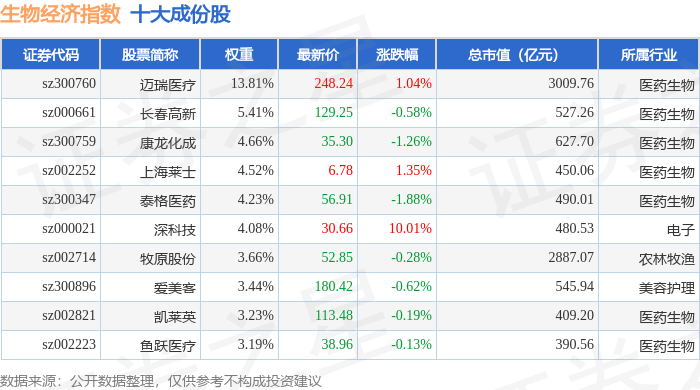
Core Points - The Bioeconomy Index (970038) closed at 2386.01 points, up 0.61%, with a trading volume of 28.528 billion yuan and a turnover rate of 1.76% [1] - Among the index constituents, 32 stocks rose while 18 fell, with Deep Technology leading the gainers at 10.01% and Xinlitai leading the decliners at 3.96% [1] Index Constituents Summary - Major constituents of the Bioeconomy Index include: - Mindray Medical (13.81% weight) at 248.24 yuan, up 1.04% [1] - Changchun High-tech (5.41% weight) at 129.25 yuan, down 0.58% [1] - Kanglong Chemical (4.66% weight) at 35.30 yuan, down 1.26% [1] - Deep Technology (4.08% weight) at 30.66 yuan, up 10.01% [1] Capital Flow Analysis - The Bioeconomy Index constituents experienced a net outflow of 224 million yuan from main funds, while retail investors saw a net inflow of 207 million yuan [3] - Notable capital flows include: - Deep Technology with a main fund net inflow of 28.4 million yuan [3] - Mindray Medical with a main fund net inflow of 80.8494 million yuan [3] - Other companies like Boteng Co. and Zhifei Biological also showed varying net inflows and outflows [3]




如何用一只基金投资热门科技成长赛道龙头股?
Sou Hu Cai Jing· 2025-10-09 09:05
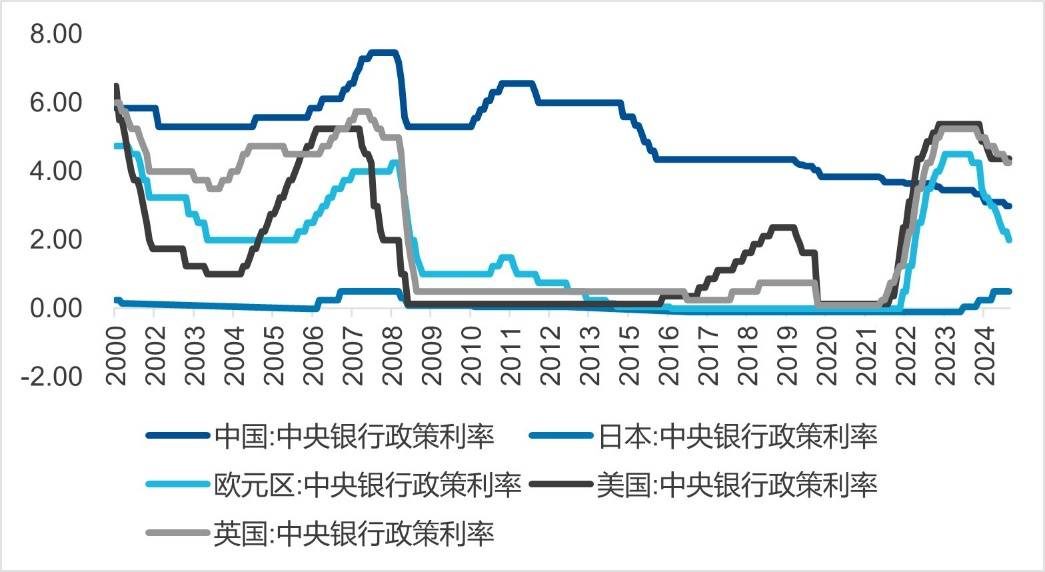
Group 1 - The global interest rate cut cycle and China's industrial trends are expected to create a favorable environment for growth sectors, with a consensus on growth direction among market participants [1] - The overseas markets are gradually entering a rate cut cycle, maintaining ample liquidity and high risk appetite, which may boost medium to long-term economic growth expectations [1] - China has made substantial breakthroughs in various fields such as semiconductors, robotics, military industry, and innovative pharmaceuticals, leading to increased market attention and rising market capitalization in technology and manufacturing sectors [1] Group 2 - The current investment challenge lies in selecting suitable growth sectors or funds amid rapid market rotations, with the ChiNext and STAR Market being key focus areas for investors since they encompass most of China's emerging growth companies [4] - The ChiNext 50 Index and ChiNext Index, which include leading companies from various growth industries, have both risen over 100% since September of the previous year, indicating strong performance in growth markets [4][7] - The ChiNext 50 Index covers major investment themes such as domestic computing (22%), optical communication (21%), edge chips and consumer electronics (7%), semiconductor equipment materials (5%), and energy storage (4%) [7] Group 3 - The ChiNext 50 Index includes the 50 largest companies by market capitalization from the STAR Market and ChiNext, providing a better risk-return profile during growth market phases [7] - The ChiNext Index is driven by two main sectors: AI hardware and new energy, with communication and electronics accounting for approximately 32% of the index's weight [11] - The new energy sector, particularly the power equipment and new energy industries, represents about 27% of the ChiNext Index, benefiting from technological advancements and increasing demand [11]
医疗器械板块10月9日涨0.83%,振德医疗领涨,主力资金净流入6915.01万元
Zheng Xing Xing Ye Ri Bao· 2025-10-09 09:03
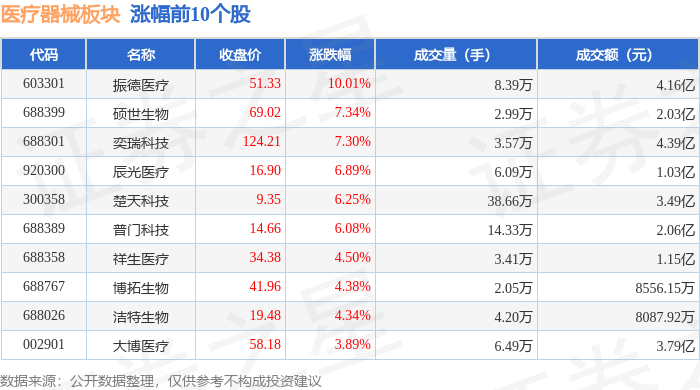
证券之星消息,10月9日医疗器械板块较上一交易日上涨0.83%,振德医疗领涨。当日上证指数报收于 3933.97,上涨1.32%。深证成指报收于13725.56,上涨1.47%。医疗器械板块个股涨跌见下表: 以上内容为证券之星据公开信息整理,由AI算法生成(网信算备310104345710301240019号),不构成投资建议。 从资金流向上来看,当日医疗器械板块主力资金净流入6915.01万元,游资资金净流入1.81亿元,散户资 金净流出2.5亿元。医疗器械板块个股资金流向见下表: | 代码 | 名称 | 主力净流入(元) | 主力净占比 游资净流入(元) | | 游资净占比 散户净流入(元) | | 散户净占比 | | --- | --- | --- | --- | --- | --- | --- | --- | | 688271 联影医疗 | | 1.47 Z | 7.45% | -9608.14万 | -4.87% | -5095.56万 | -2.58% | | 603301 振德医疗 | | 8818.91万 | 21.21% | -964.82万 | -2.32% | -7854.09万 | - ...

科创创业ETF(588360)开盘涨0.70%,重仓股宁德时代跌0.50%,中芯国际涨2.76%
Xin Lang Cai Jing· 2025-10-09 06:01
Core Viewpoint - The article discusses the performance of the Science and Technology Innovation ETF (588360), highlighting its opening price and the performance of its major holdings [1]. Group 1: ETF Performance - The Science and Technology Innovation ETF (588360) opened with a gain of 0.70%, priced at 1.013 yuan [1]. - Since its establishment on June 29, 2021, the fund has achieved a return of 0.41%, with a monthly return of 13.65% [1]. Group 2: Major Holdings Performance - Major stocks within the ETF include: - Ningde Times: down 0.50% - SMIC: up 2.76% - Mindray: down 0.69% - Haiguang Information: up 3.72% - Zhongji Xuchuang: up 3.80% - Xinyi Sheng: up 2.25% - Cambrian: up 2.68% - Huichuan Technology: up 1.17% - Sunshine Power: down 0.06% - Lankai Technology: up 4.65% [1].



