Sunrun

Search documents
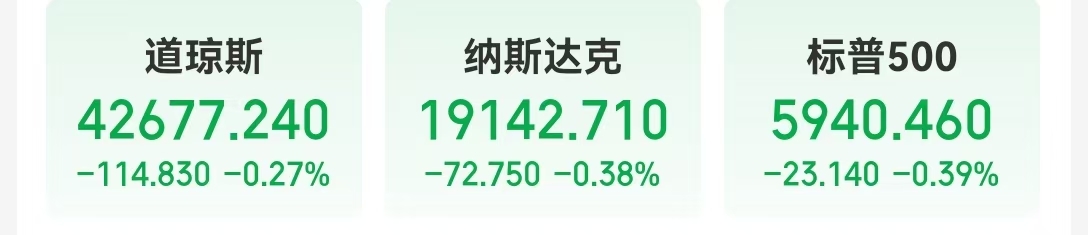
利空突袭!刚刚,全线暴跌!
券商中国· 2025-05-22 15:08
Group 1: Solar Sector Impact - The U.S. solar sector experienced a significant decline, with Sunrun dropping over 42%, SolarEdge down over 26%, and Complete Solaria falling over 17% following the passage of a tax bill that may end various renewable energy subsidies [2][4][5] - The overall U.S. stock market remained in a narrow trading range, while the bond market faced ongoing turmoil, with the 30-year Treasury yield reaching 5.149%, the highest level since October 2023 [2][4] Group 2: Legislative Developments - The tax bill, which passed the House with a narrow margin, is projected to reduce taxes by over $4 trillion over the next decade and cut at least $1.5 trillion in spending, raising the U.S. debt ceiling by $4 trillion [5][11] - The bill's implications for the renewable energy sector could lead to a significant reduction in government support for green energy initiatives, impacting the financial outlook for companies in this space [5][11] Group 3: Economic Indicators - The Markit PMI data for May showed better-than-expected results, with manufacturing PMI at 52.3, services PMI at 52.3, and composite PMI at 52.1, indicating expansion in the U.S. economy [5][6] - Despite the positive PMI data, concerns remain about market sentiment and output growth, with warnings about potential supply shortages and price increases due to tariff-related issues [6] Group 4: Bond Market Dynamics - The bond market is facing a sell-off, influenced by weak demand in the 20-year Treasury auction, leading to a steepening yield curve [8][10] - Analysts suggest that large investors are shifting away from U.S. Treasuries to other safe-haven assets, which could increase the cost of U.S. debt and exert downward pressure on the dollar [10][11] Group 5: Future Outlook - There are warnings from financial institutions about the potential for increased volatility in the U.S. stock market, with a focus on Asian investor behavior as a key indicator [11][12] - Emerging markets are becoming a focal point for global investors seeking diversification and long-term returns, as the U.S. market shows signs of strain [12]


美股太阳能板块走低,Sunrun(RUN.O)跌40%,SolarEdge跌25%,First Solar跌5%。
news flash· 2025-05-22 13:36
美股太阳能板块走低,Sunrun(RUN.O)跌40%,SolarEdge跌25%,First Solar跌5%。 ...

Solar stocks plunge as Republican tax bill worse than feared for clean energy
CNBC· 2025-05-22 12:48
Core Insights - The recent GOP tax bill has significant negative implications for the clean energy sector, particularly affecting solar companies and their business models [1][2][3] Group 1: Impact on Solar Stocks - Solar stocks experienced a sharp decline, with Sunrun falling over 35% due to the termination of key clean energy credits [1] - Enphase and SolarEdge saw a drop of approximately 18% as demand for rooftop solar is expected to decrease [2] - Array and Nextracker, which produce devices for solar panel tracking, fell by 14% and 5% respectively, reflecting the adverse impact on utility-scale solar projects [3] Group 2: Legislative Changes - The GOP bill ends investment and electricity production credits for clean energy facilities that begin construction after the legislation is enacted or enter service after December 31, 2028 [3] - Analysts describe the bill as a "sledgehammer" to the Inflation Reduction Act, indicating a severe setback for the rooftop solar industry, where 70% of installations use lease arrangements [2] Group 3: Company-Specific Outcomes - First Solar's stock only decreased by 1% as the manufacturing tax credit remains intact, which is seen as a positive outcome for the company [4] - First Solar is noted as the largest producer of solar panels in the U.S., benefiting from a strong domestic manufacturing presence [4]

特朗普税改法案即将在美国众议院投票,美股太阳能板块盘前下跌,Sunrun(RUN.O)跌9.3%,SolarEdge跌4.3%,First Solar跌3%。
news flash· 2025-05-22 08:53
Core Viewpoint - The upcoming vote on the Trump tax reform bill in the U.S. House of Representatives is causing a decline in the U.S. solar sector stocks, indicating investor concern over potential impacts on the industry [1] Company Summary - Sunrun (RUN.O) shares fell by 9.3% in pre-market trading [1] - SolarEdge shares decreased by 4.3% [1] - First Solar shares dropped by 3% [1]
美股指数集体收跌,特斯拉涨近4%后回落,光伏股多数收涨!国际黄金期货大涨
Mei Ri Jing Ji Xin Wen· 2025-05-20 22:09
Group 1 - Major tech stocks mostly declined, with Amazon and Google dropping over 1%. Travel services and cruise stocks saw significant declines, with Norwegian Cruise Line and Airbnb falling over 3% [1] - Tesla's stock initially rose nearly 4% but closed at $343.82, up 0.51%, with a market capitalization of $1.11 trillion. CEO Elon Musk stated he will remain in his position for the next five years unless he dies, and he noted that Tesla has not faced demand issues, with Europe being the weakest market [1] Group 2 - The precious metals sector saw significant gains, with Vista Gold rising nearly 18%, and other companies like Coeur Mining and Harmony Gold increasing by over 5% and 4% respectively [2] - U.S. solar stocks mostly rose, with Array Technologies up 5.57% and Sunrun up 2.21%. However, some companies like Maxeon Solar and FTC Solar experienced declines of 7.55% and 5.17% respectively [2] Group 3 - The Nasdaq Golden Dragon China Index fell by 0.65%, with Ctrip down over 5% and NIO down nearly 2%. Alibaba saw an increase of over 1%, while Jin Xin Technology surged by 36.96% [4] Group 4 - Spot gold futures rose by 1.84% to $3,289.54 per ounce, driven by a weaker dollar and uncertainties surrounding U.S. tariff policies and the Russia-Ukraine ceasefire situation. Analysts suggest that while gold prices are currently high, they may face short-term corrections but are expected to maintain a long-term upward trend [6] Group 5 - WTI crude oil futures closed at $62.56 per barrel, down 0.21%, while Brent crude oil futures closed at $65.38 per barrel, down 0.24%. Recent data shows that the S&P 500 index has recorded gains on 18 out of the last 22 trading days, indicating strong upward momentum in the stock market [8]
光伏行业周报(20250512-20250518)
Huachuang Securities· 2025-05-19 00:25
Investment Rating - The report maintains a "Recommendation" rating for the photovoltaic industry [1] Core Viewpoints - In April, India's photovoltaic installations saw a significant year-on-year increase, with a total of 10.08 GW added from January to April 2025, representing an 8% increase year-on-year. April alone saw 2.30 GW added, a remarkable 179% increase year-on-year, although it was a 25% decrease month-on-month. The Indian government aims for a cumulative installed capacity of 280 GW by 2030, with an annual addition of approximately 30 GW, supported by various policies and subsidies [6][10] - The demand in the downstream market has weakened, leading to a slight decrease in photovoltaic glass prices. The average price for 3.2mm coated photovoltaic glass is reported at 21.50 CNY/m², down 1.1% week-on-week, while the 2.0mm variant is at 13.50 CNY/m², down 1.8% week-on-week. The industry inventory days have increased to approximately 38.2 days, indicating a trend of rising inventory levels [6][12] Summary by Sections Section 1: April India's Photovoltaic Installations - April saw a year-on-year increase in India's photovoltaic installations, with a total of 2.30 GW added, marking a 179% increase year-on-year [10] - The cumulative installed capacity from January to April 2025 reached 10.08 GW, an 8% increase year-on-year [10] - The Indian government's National Electricity Plan aims for a cumulative installed capacity of 280 GW by 2030, with annual additions of about 30 GW [10] Section 2: Market Trends - The photovoltaic industry experienced a slight decrease in glass prices due to weakened downstream demand and increased production capacity [12] - The average price for 3.2mm coated photovoltaic glass is 21.50 CNY/m², down 1.1% week-on-week, while the 2.0mm variant is at 13.50 CNY/m², down 1.8% week-on-week [12] - Industry inventory days have increased to approximately 38.2 days, indicating a trend of rising inventory levels [12] Section 3: Industry Chain Prices - The average price for polysilicon dense material is reported at 37.00 CNY/kg, down 5.1% week-on-week, while the price for polysilicon granular material remains stable at 35.00 CNY/kg [39] - The average price for 182-183.75mm monocrystalline N-type silicon wafers is 0.95 CNY/piece, down 5.0% week-on-week [41] - The average price for 182-183.75mm TOPCon battery cells is reported at 0.260 CNY/W, down 1.9% week-on-week [44]
IRA政策红利延续:美国光伏产业链迎结构性重估
Haitong Securities International· 2025-05-14 04:03
Investment Rating - The report suggests a positive outlook for the U.S. solar industry, particularly for companies like First Solar, Sunrun, Maxeon Solar, Fluence Energy, and Daqo New Energy [4][10]. Core Insights - The Inflation Reduction Act (IRA) is identified as the foundational policy for rebuilding the domestic solar supply chain, with the Advanced Manufacturing Production Credit (45X) providing significant subsidies for U.S.-made components [3][8]. - The extension of the 45X tax credit until the end of 2031 is expected to stabilize mid-term profit levels for domestic solar companies and support their expansion decisions [3][8]. - The introduction of Foreign Entity of Concern (FEOC) restrictions aims to tighten eligibility for tax credits, reinforcing domestic supply chain security [3][8]. Summary by Sections Section 1: IRA Tax Credit Changes - The 45X tax credit will be extended through 2031, with no phasedown mechanism, while the Clean Electricity Investment Credit (48E) and Production Credit (45Y) will maintain full support until 2028, followed by a gradual phaseout [6][8]. - The report highlights specific subsidy amounts: $0.04/W for cells, $0.07/W for modules, and up to $0.11/W for inverters [3][8]. Section 2: U.S.-China Tariff Developments - Recent U.S.-China trade talks have led to a temporary easing of tariffs, with both sides retaining a 10% tariff on each other's goods and suspending a proposed 24% tariff hike for 90 days [2][7]. - This tariff relief is expected to significantly reduce supply chain costs for companies like Sunrun, which previously faced a 3% to 7% cost increase due to tariffs [4][9]. Section 3: Industry Implications - The combination of extended subsidies and reduced tariffs is projected to enhance profitability and adoption rates within the solar industry, particularly benefiting downstream leaders with strong brand and distribution networks [4][9]. - A recovery in solar installation activity is anticipated to drive demand for energy storage solutions, further benefiting companies with technological and scale advantages in the storage segment [4][9].
一家400亿的公司要破产了
凤凰网财经· 2025-05-10 14:21
Core Viewpoint - The article discusses the ongoing bankruptcy crisis in the U.S. solar industry, highlighting Sunnova's impending bankruptcy as a significant event following the previous bankruptcy of Sunpower. Sunnova's financial struggles stem from a combination of high debt, operational losses, and adverse market conditions [1]. Group 1: Sunnova's Financial History - Sunnova, founded in 2012, became a capital darling, raising over $900 million through multiple funding rounds before going public in 2019, achieving a peak market value of $6 billion [2][3]. - Despite rapid revenue growth from $132 million in 2019 to an expected $840 million in 2024, Sunnova has never turned a profit, accumulating losses exceeding $1.5 billion since its IPO [4][3]. Group 2: Business Model and Funding Mechanism - Sunnova operates under an "Energy as a Service" (EaaS) model, allowing customers to install solar systems with no upfront costs, instead paying monthly fees under long-term contracts [6][5]. - To finance its operations, Sunnova packages its solar systems into asset-backed securities (ABS) and utilizes tax equity funds, with 70% of its funding coming from ABS and debt financing, and 30% from tax credit funds [8][7]. Group 3: Market Challenges and Risks - The company faces significant challenges due to rising interest rates, which have made ABS less attractive and increased its debt servicing costs, with interest payments consuming 25% of its total revenue in 2024 [11][10]. - Policy changes in California have led to a 47% drop in solar installation applications, resulting in a projected $140 million loss in expected revenue for Sunnova in 2024 [11][10]. - The overall U.S. solar market is experiencing a downturn, with a projected 12% decline in installations in 2024, contributing to a wave of bankruptcies among solar companies [13][12].

一家400亿的公司要破产了
投中网· 2025-05-10 05:30
Core Viewpoint - Sunnova, a prominent player in the U.S. solar energy market, is facing bankruptcy due to unsustainable debt levels and operational losses, despite significant revenue growth. The company's business model resembles that of a financial institution rather than a traditional solar company [1][7]. Group 1: Company Background and Growth - Sunnova was founded in 2012 by John Berger, who has extensive experience in the energy sector. The company quickly became a darling of capital markets, raising over $9 billion through multiple funding rounds before going public in 2019 [3][4]. - By 2024, Sunnova's revenue reached $840 million, with a customer base exceeding 444,000 and a total solar capacity of 3 GW, positioning it as a leading player alongside Sunrun in the U.S. residential solar market [4][5]. Group 2: Financial Model and Debt Structure - Sunnova operates under an "Energy as a Service" (EaaS) model, allowing customers to install solar systems with minimal upfront costs, leading to significant financial pressure on the company [9][10]. - The company has issued approximately $5.8 billion in asset-backed securities (ABS), which constitutes a large portion of its $8.5 billion total debt, indicating a reliance on complex financial instruments for funding [11][12]. Group 3: Challenges and Market Conditions - The company faces severe challenges due to rising interest rates, which have increased its debt servicing costs significantly, with interest payments consuming 25% of total revenue in 2024 [14][17]. - Policy changes in California, which accounts for 40% of U.S. solar generation, have led to a 47% drop in solar installation applications, directly impacting Sunnova's revenue projections [14][15]. - The overall U.S. solar market is experiencing a downturn, with a projected 12% decline in installations in 2024, contributing to a wave of bankruptcies among solar companies [16][17].

Can Sunrun Weather the Policy Storm? Analysts Weigh Potential Solar ITC Cuts
Benzinga· 2025-05-08 19:35
Core Viewpoint - Sunrun Inc. reported better-than-expected first-quarter results, with an EPS of $0.20, surpassing the analyst consensus estimate of a $0.25 loss, and revenue of $504.27 million, exceeding the consensus estimate of $484.06 million [1] Group 1: Financial Performance - The company achieved a positive cash flow for the fourth consecutive quarter and exceeded solar and storage capacity addition guidance [5] - RUN shares increased by 11.7%, reaching $8.255 following the earnings report [6] Group 2: Analyst Insights - Guggenheim analyst Joseph Osha maintained a Neutral rating, noting modest customer volume growth with additions of 25,428, reflecting only a 6% increase [2] - Osha highlighted that the company is expected to prioritize liquidity and profitability over aggressive growth in the near to medium term [2] - KeyBanc analyst Sophie Karp reiterated a Sector Weight rating, acknowledging the results as a positive indicator of strong demand across channels [5] Group 3: Industry Challenges - Osha identified policy-related challenges, particularly concerning the solar Investment Tax Credit (ITC), which significantly affects cash generation, estimating a $50 million impact on cash flow for every 1% change in the effective ITC rate [3] - The company has strategies to mitigate the effects of a lower ITC, but predicting the net effect and timing of changes to the Inflation Reduction Act remains challenging [4] - Broader uncertainty around government and fiscal policy, along with high industry-wide cost of capital, may hinder the stock's positive momentum in the near term [6]