中国移动

Search documents
资产配置日报:上证新高,TL新低-20260106
HUAXI Securities· 2026-01-06 15:37
Market Performance - The Shanghai Composite Index achieved a 1.5% increase, reaching 4084 points, marking a nearly ten-year high with a consecutive thirteen-day rise[1] - The Wande All A Index rose by 1.59%, with a total trading volume of 2.83 trillion yuan, an increase of 265 billion yuan compared to the previous day[1] - The Hang Seng Index increased by 1.38%, while the Hang Seng Technology Index rose by 1.46%[1] Capital Flows - Southbound capital inflow was 2.879 billion HKD, lower than the previous day's inflow of 18.72 billion HKD[1] - Major inflows were seen in China Ping An and Alibaba, with net inflows of 1.84 billion HKD and 1.62 billion HKD respectively, while China Mobile and Tencent saw outflows of 875 million HKD and 804 million HKD[1] Bond Market Trends - The bond market continued to show weakness, with the 30-year government bond futures falling by 0.31% to 110.93 yuan, a new low since 2025[1] - The yields on 7-year, 10-year, and 30-year government bonds rose by 2.4 basis points, 2.2 basis points, and 2.6 basis points to 1.76%, 1.88%, and 2.31% respectively[4] Investment Sentiment - The implied volatility increased, indicating a rising FOMO (Fear of Missing Out) sentiment in the market, although the CSI 300 ETF IV index remains at a relatively low level[2] - The market is characterized by a bullish atmosphere, with traditional sectors like finance, consumption, and real estate performing well, alongside strong performances in technology and battery storage sectors[2] Commodity Market Insights - Precious metals led the commodity market, with silver rising by 7.06% and gold increasing by 1.27%[6] - The copper market showed strong performance due to supply constraints and inventory optimization, with significant price increases expected[8]
2026年通信行业年度投资策略:AI基建与应用加速,卫星互联趋势明显
HUAXI Securities· 2026-01-06 15:36
Group 1 - The communication industry is transitioning from a traditional pipeline support role to becoming a core engine that empowers new productive forces [3][13] - Global ICT investment has shown a compound annual growth rate (CAGR) of 4.3% from 2010 to 2020, and despite the pandemic, it maintained a CAGR of 6.7% in 2020 [5] - By 2023, the global ICT market investment is expected to reach approximately $4.9 trillion, with projections to grow to $6.6 trillion by 2028, reflecting a CAGR of 6.3% [5] Group 2 - The transition from 5G to 5G-A/6G is characterized by a shift from bandwidth growth to capability integration, emphasizing the importance of integrated sensing and computing [11][13] - The "14th Five-Year Plan" focuses on the large-scale deployment of 5G and the integration of computing networks, while the "15th Five-Year Plan" anticipates the emergence of AI-driven intelligent computing capabilities [14] - The deployment of low-orbit satellite internet constellations is breaking geographical limitations, enhancing communication capacity and reducing latency [18] Group 3 - The demand for computing power is becoming the main driver of growth in the ICT market, with the Chinese enterprise-level ICT market expected to reach approximately $751.76 billion by 2028, with a CAGR of 6.5% [26] - The investment in enterprise-level servers and storage in China is projected to grow at a CAGR of 24.3% from 2023 to 2028 [26] - AI model training is driving a significant increase in computing power demand, with the computational equivalent for training AI models increasing dramatically [30] Group 4 - The capital expenditure of major Chinese telecom operators is expected to continue increasing, with China Mobile, China Telecom, and China Unicom projected to spend approximately ¥1,640 billion, ¥935.1 billion, and ¥613.7 billion respectively in 2024 [35] - The capital expenditure of these operators is shifting towards intelligent computing, with significant increases in their self-owned computing power [36] - The overseas cloud service providers are also increasing their capital expenditure, with a total of approximately $111.9 billion in Q3 2025, reflecting a year-on-year increase of 78.8% [36] Group 5 - The AI applications are expected to penetrate various sectors, with the emergence of AI-native applications and embodied intelligence reshaping interaction paradigms [65][67] - The market for humanoid robots is anticipated to grow significantly, with commercial applications expected to accelerate in both industrial and service sectors [73][76] - The integration of AI in industrial applications is addressing labor shortages and enhancing operational efficiency, with robots capable of replacing multiple skilled workers [81]
国家队10亿投资雷鸟,改写中美科技叙事
Sou Hu Cai Jing· 2026-01-06 15:30
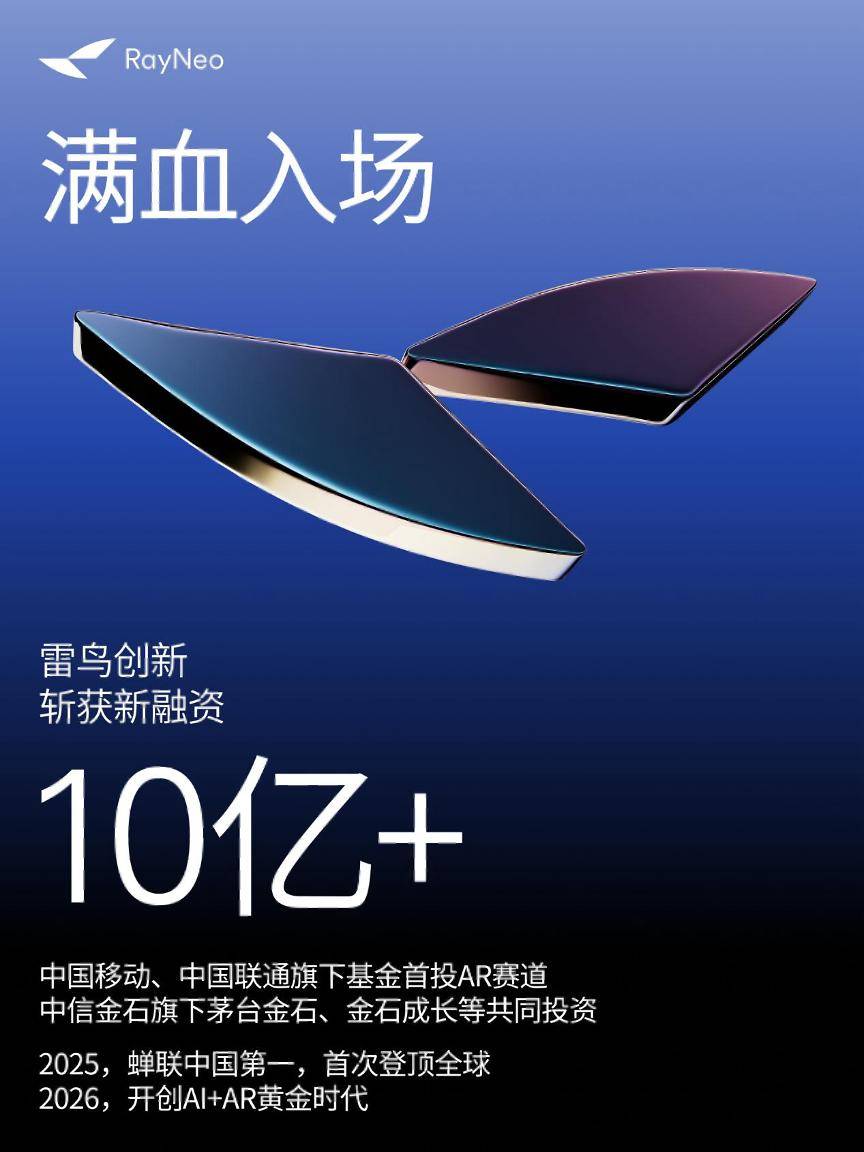
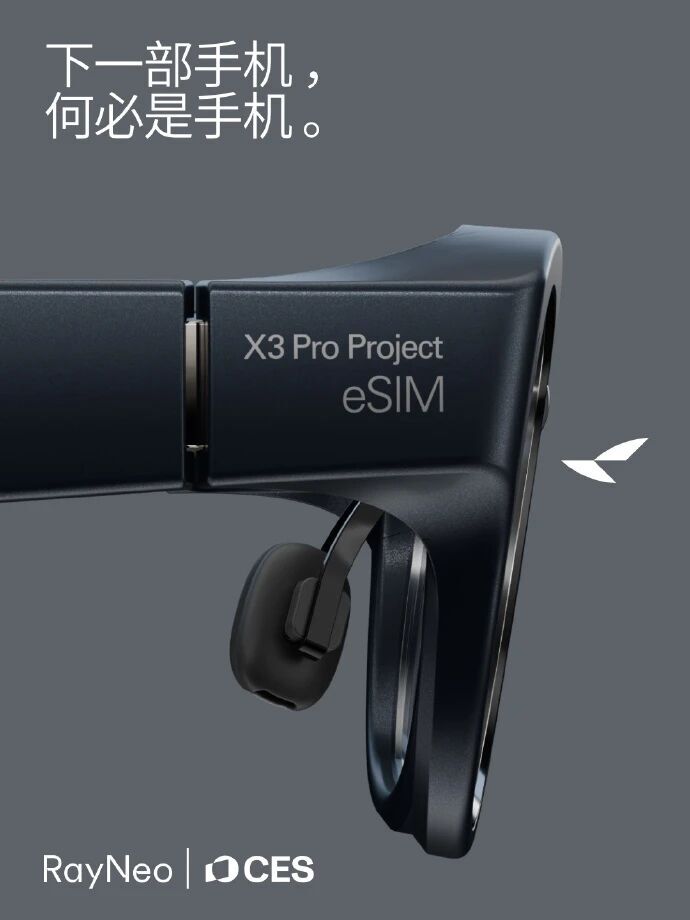
Core Insights - RayNeo has completed a new financing round exceeding 1 billion yuan, with notable investments from major Chinese telecom operators China Mobile and China Unicom, marking the first strategic investment by mainstream operators in the smart glasses sector [1][3]. Group 1: Industry Trends - The involvement of telecom operators in smart glasses signifies a consensus that smart glasses will become the next generation of consumer computing centers [3]. - The launch of RayNeo's X3 Pro at CES 2026, featuring eSIM technology, indicates that smart glasses may soon operate independently of smartphones, filling a critical gap in the market [3][18]. - The competition in the smart glasses market is intensifying, with major players like Meta and Alibaba releasing their own products, yet RayNeo has managed to secure a leading position [19]. Group 2: Company Achievements - RayNeo, established in 2021, has made significant strides in AR technology, launching the world's first AR smart glasses with dual full-color MicroLED and holographic waveguide optical display [4]. - The company has invested heavily in optical display research, reportedly spending hundreds of millions annually, and has successfully developed the second generation of MicroLED waveguide glasses, the RayNeo X2 [10]. - By Q3 2025, RayNeo achieved a 24% market share in the global AR smart glasses market, marking it as the top player for two consecutive quarters [19]. Group 3: Technological Innovations - RayNeo's X3 Pro is recognized for its advanced display and AI interaction capabilities, featuring the world's smallest mass-producible full-color Micro-LED engine and the first mass-production level optical waveguide [14]. - The company has established a comprehensive AI+AR ecosystem, including an operating system and a low-code development platform, enhancing its product offerings [18]. - The production capacity for RayNeo's optical engines is set to increase significantly, with expectations of reaching an annual output of 360,000 units [11]. Group 4: Market Dynamics - The entry of telecom operators into the smart glasses market is expected to catalyze growth in both market size and developer engagement, indicating a potential explosion in the sector by 2026 [20]. - The narrative of the smart glasses era may reverse the story of the smartphone era, with Chinese companies like RayNeo leading the charge against North American giants [20].

中国智能眼镜“扎堆”CES 2026
Guo Ji Jin Rong Bao· 2026-01-06 14:55
Core Insights - The CES 2026 event in Las Vegas is showcasing advancements in technology, particularly in the fields of semiconductors, artificial intelligence, and consumer electronics, with a notable focus on smart glasses as a potential replacement for smartphones [1] Group 1: Smart Glasses Market Developments - The global first eSIM smart glasses are set to be unveiled by Thunderbird Innovation, which has also secured over 1 billion yuan in funding from major Chinese telecom operators, indicating a significant investment in the smart glasses sector [3] - Rokid has launched its AI smart glasses, Rokid Style, at CES, which are marketed as the lightest full-featured AI glasses at 38.5 grams, priced starting at $299, and compatible with multiple AI engines [3] - XREAL has introduced the ROG Xreal R1, the first AR glasses with a 240Hz refresh rate, targeting the gaming market and enhancing the AR experience [4] Group 2: Industry Collaborations and Innovations - Google has announced its return to the smart glasses market with Project Aura, collaborating with XREAL to integrate advanced optical and AI capabilities [6] - Lenovo is set to unveil several AI concept products, including a personal AI smart glasses prototype, during CES, highlighting its collaboration with NVIDIA in the AI space [6] - XGIMI has expanded its strategic focus from home projectors to personal smart glasses with the launch of its MemoMind brand, offering two series of AI glasses [7] Group 3: Market Predictions and Policy Support - The Chinese government has included smart glasses in its new subsidy policy for digital and smart products, marking a significant step for the industry [9] - IDC forecasts that the global smart glasses market will exceed 23.687 million units by 2026, with China's market expected to surpass 4.915 million units, indicating a shift towards large-scale growth [10]


1月6日南向资金净买入28.79亿港元
Zheng Quan Shi Bao Wang· 2026-01-06 14:32
Core Viewpoint - The Hang Seng Index rose by 1.38% on January 6, closing at 26,710.45 points, with a net inflow of HKD 2.879 billion through the southbound trading channel [1]. Group 1: Market Activity - The total trading volume for the southbound trading on January 6 was HKD 133.353 billion, with a net buying amount of HKD 2.879 billion [1]. - The Shanghai Stock Exchange's southbound trading had a total transaction amount of HKD 81.029 billion, with a net buying of HKD 0.975 billion, while the Shenzhen Stock Exchange had a transaction amount of HKD 52.324 billion and a net buying of HKD 1.903 billion [1]. Group 2: Active Stocks - In the Shanghai Stock Exchange's southbound trading, Alibaba-W had the highest transaction amount of HKD 50.49 billion, followed by SMIC and Tencent Holdings with transaction amounts of HKD 44.27 billion and HKD 41.10 billion, respectively [1]. - Alibaba-W recorded a net buying amount of HKD 20.61 billion, despite a closing price drop of 1.31% [1]. - China Mobile had the highest net selling amount of HKD 8.75 billion, with a closing price decrease of 0.12% [1]. Group 3: Shenzhen Stock Exchange Activity - In the Shenzhen Stock Exchange's southbound trading, Alibaba-W also led with a transaction amount of HKD 43.74 billion, followed by Tencent Holdings and SMIC with HKD 28.76 billion and HKD 20.96 billion, respectively [2]. - The highest net buying stock was Ping An Insurance, with a net buying amount of HKD 10.81 billion, and it closed up by 4.96% [2]. - Tencent Holdings experienced the highest net selling amount of HKD 8.15 billion, while its closing price increased by 1.28% [2].




港股通1月6日成交活跃股名单
Zheng Quan Shi Bao Wang· 2026-01-06 14:22
Group 1 - The Hang Seng Index rose by 1.38% on January 6, with southbound trading totaling HKD 133.35 billion, including HKD 68.12 billion in buying and HKD 65.24 billion in selling, resulting in a net buying amount of HKD 2.88 billion [1] - The southbound trading through Stock Connect (Shenzhen) had a total trading amount of HKD 52.32 billion, with net buying of HKD 1.90 billion, while the trading through Stock Connect (Shanghai) totaled HKD 81.03 billion, with net buying of HKD 0.98 billion [1] - Active stocks in southbound trading included Alibaba-W with a total trading amount of HKD 94.23 billion, Tencent Holdings with HKD 69.86 billion, and SMIC with HKD 65.23 billion [1] Group 2 - Among the stocks, China Ping An had a net buying amount of HKD 18.40 billion, closing with a price increase of 4.96%, while Alibaba-W had a net buying of HKD 16.19 billion [2] - Xiaomi Group-W, SMIC, and Alibaba-W were among the stocks with the highest consecutive net buying days, with 4 days for Xiaomi Group-W and SMIC, and 3 days for Alibaba-W [2] - The total trading amount for China Ping An was HKD 32.79 billion, with a net buying of HKD 18.40 billion, while Tencent Holdings had a total trading amount of HKD 69.86 billion with a net selling of HKD 8.04 billion [2]




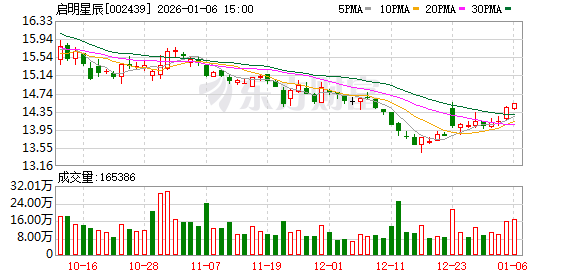
启明星辰:公司动态优化组织架构以适配长远发展
Zheng Quan Ri Bao Wang· 2026-01-06 14:11
证券日报网讯1月6日,启明星辰(002439)在互动平台回答投资者提问时表示,公司始终秉持战略导向 与精益运营的原则,动态优化组织架构以适配长远发展。在员工规模方面,基于业务发展需要,公司近 年来实施了精准的降本增效措施,员工数在每年的年度报告中予以披露。公司成为中国移动(600941) 的网信安全专业子公司后,致力于与中国移动强大的销售与服务网络进行深度融合与能力互补,启明星 辰的专业安全能力正通过中国移动覆盖全国的体系,更高效地触达更广泛的客户群体。公司高度重视产 品智能化程度与易用性,重视技术创新与产品体验,已将人工智能技术深度应用于产品研发。例如公司 的安星智能体,能够在安全运营中显著提升安全分析的自动化水平和响应效率。公司将持续迭代产品, 致力于为客户提供更智能、更便捷的安全解决方案。公司将根据中长期发展战略,紧抓AI安全、数据 安全等新质生产力发展机遇,持续优化人力资源配置,深化与中国移动的战略协同,并不断提升产品与 服务的智能化、易用性水平。 ...

启明星辰:公司坚信网络安全产业韧性强、潜力大,长期向好的基本面不变
Zheng Quan Ri Bao Wang· 2026-01-06 14:11
Core Viewpoint - The company believes that despite short-term challenges in the cybersecurity industry, the long-term potential remains strong due to the increasing demand for innovative security capabilities integrated with information technology applications and business scenarios [1] Group 1: Industry Outlook - The cybersecurity industry is currently facing limitations in traditional business growth and pressure on products and services [1] - There is a growing demand for high-quality innovative security capabilities as cybersecurity integrates more with information technology applications and business scenarios [1] Group 2: Company Strategy - The company is deepening its strategic collaboration with China Mobile, focusing on new areas such as "AI + security," cloud security, and 5G security [1] - The company aims to enhance the quality of related transactions with China Mobile, emphasizing the value of security products and improving overall gross margin levels, even if it means sacrificing some low-margin projects [1] - Following the appointment of a new chairman, the company is committed to advancing its strategic collaboration with China Mobile and proactively exploring new opportunities in the AI security sector [1]

启明星辰:公司已制定并审议通过《市值管理办法》
Zheng Quan Ri Bao Wang· 2026-01-06 13:48
证券日报网讯 1月6日,启明星辰(002439)在互动平台回答投资者提问时表示,公司始终重视市值管 理工作,已制定并审议通过《市值管理办法》,系统性推进市值管理各项工作。一是持续提升信息披露 质量,公司连续六年获深交所信息披露考评A级;二是持续加强投资者关系管理,通过业绩交流 会、"互动易"、投资者热线等多渠道与投资者保持沟通;三是与中国移动(600941)积极研究并持续评 估包括分红、回购增持等方案,以便适时推出符合公司发展和全体股东长远利益的回报举措。作为中国 移动专责网信安全子公司,公司将深入探索多维度、多手段的市值管理方法,积极响应国资委和中国移 动对央企控股上市公司市值管理的相关要求,努力提升公司价值,提振投资者信心。 ...
启明星辰:公司全力推动与中国移动的战略协同,聚焦AI安全、云安全等新赛道以培育新增长点
Zheng Quan Ri Bao· 2026-01-06 13:41
Core Viewpoint - The company is implementing systematic measures to improve short-term performance, deepen long-term strategy, and enhance investor confidence [2] Group 1: Strategic Initiatives - The company is focusing on strategic collaboration with China Mobile, emphasizing new growth areas such as AI security and cloud security to expand its customer base among individuals and families [2] - The company is actively researching and continuously evaluating plans for dividends, share buybacks, and other measures to ensure long-term benefits for all shareholders [2] Group 2: Operational Improvements - The company is strictly executing cost reduction and efficiency enhancement measures, improving accounts receivable management to enhance cash flow and optimize operations [2] - The company aims to improve its fundamental performance through these operational strategies [2]