中国平安

Search documents
保险股接下来怎么看
2026-01-13 01:10
Summary of Conference Call on Insurance Sector Industry Overview - The insurance sector is currently experiencing low valuations, with China Pacific Insurance (CPIC) and Ping An Insurance (Group) Company of China, Ltd. (Ping An) having P/EV ratios of approximately 0.7 and 0.8 respectively for 2026, indicating rapid growth in intrinsic value [1][2] - China Life Insurance Company Limited (China Life) has a higher valuation in the A-share market at around 0.9 times P/EV, attributed to its faster growth in intrinsic value, but the Hong Kong-listed version is recommended due to significant discounts compared to A-shares [3][4] Key Insights and Arguments - The quality of pre-receipt data from late 2025 to early 2026 is strong, with a decline in bank deposit rates leading to increased funds flowing into insurance products. It is expected that premium growth will be high in the first quarter of 2026 but may face pressure in the third quarter [1][5] - Rising interest rates are beneficial for insurance companies' fixed-income investments, alleviating risks associated with interest spread losses. The yield on 10-year government bonds has risen to approximately 1.9%, an increase of 30 basis points from the previous year [5][7] - The proportion of equity assets in insurance companies is around 15.5%. A strong stock market will enhance insurance companies' earnings [5][7] Impact of Dividend Insurance Products - Dividend insurance products have a shorter effective duration, allowing insurance companies to be more flexible in their fixed-income asset allocation and increasing their risk appetite. It is anticipated that dividend insurance will constitute a significant portion of new premium growth [6][9] Investment Strategies and Profit Expectations - Insurance companies are focusing on increasing their equity allocation to benefit from stock market gains. Despite a solid profit outlook for 2025, the primary profit source is expected to be in the third quarter, with a relatively low profit base in the first half of 2026 [8] - The anticipated performance for the first quarter of 2026 is optimistic, with expectations that even if the market's growth in the third quarter is lower than the previous year, profits will remain stable [8] Market Performance and Forecasts - Recent performance of insurance stocks has been strong, with notable increases in share prices for Xinhua Insurance and CPIC at the start of 2026. However, Ping An's performance has been more volatile [2] - By the end of January, major insurance companies are expected to release profit forecasts. China Life and Xinhua Insurance are likely to announce forecasts, while Ping An's profit growth is projected to be lower than 50% for the year [11] Industry Valuation and Future Outlook - The overall outlook for the insurance industry in the first half of 2026 is optimistic, with no significant negative factors affecting the asset and liability sides. Valuations could reach 1.5 times PEV under favorable market conditions, while they may drop to 0.7 to 0.8 times PEV under poor conditions [12] - The policy environment remains supportive, and large listed companies are expected to continue outperforming smaller firms in premium growth, enhancing their market share [12]



报行合一”重塑财险半壁江山 五千亿非车险告别“野蛮生长
2 1 Shi Ji Jing Ji Bao Dao· 2026-01-13 00:52
Core Viewpoint - The rapid growth of China's non-auto insurance sector, with an average annual growth rate exceeding 10% over the past decade, has led to high costs and irrational competition, prompting regulatory measures to reshape the market dynamics towards risk pricing and service capability [2][3][12]. Group 1: Industry Growth and Challenges - Non-auto insurance premiums accounted for over 50% of total premiums, with a significant increase in the average annual growth rate of 14.4% from 2014 to 2024, compared to 5.2% for auto insurance [3][12]. - Major insurance companies, including PICC, Ping An, and Taiping, have reported that their average non-auto insurance comprehensive cost ratio has remained above 100% since 2019, indicating underwriting losses primarily offset by auto insurance profits [4][12]. - The industry faces challenges such as high expense levels, inadequate premium sufficiency, persistent underwriting losses, and high accounts receivable [2][3]. Group 2: Regulatory Measures - The China Banking and Insurance Regulatory Commission (CBIRC) has issued several notifications and guidelines to address irrational competition and high costs in the non-auto insurance sector, including the recent "Questions and Answers on Comprehensive Governance of Non-Auto Insurance" [2][4][12]. - The new regulations emphasize the principle of "reporting and operating in unison," requiring insurance companies to strictly adhere to approved insurance terms and rates, thereby enhancing market behavior regulation [4][11]. - The regulations aim to reduce the emphasis on premium scale and growth, shifting the focus towards compliance, quality, and consumer rights protection [6][12]. Group 3: Company Responses - Leading insurers like PICC, Ping An, and Taiping have proactively initiated product term filings and cost governance in response to regulatory changes, indicating a strong commitment to compliance [6][7]. - Companies are restructuring their business models to transition from cost competition to risk pricing and service capability, with a focus on enhancing internal management and product innovation [7][8]. - Smaller insurers are encouraged to focus on niche markets and specialized products to differentiate themselves and build competitive advantages [15][16]. Group 4: Market Dynamics and Future Outlook - The implementation of the "reporting and operating in unison" policy is expected to compress some business operations in the short term but will ultimately lead to a more sustainable competitive environment based on risk identification and service quality [10][12]. - The regulatory framework aims to clarify responsibilities and streamline processes, pushing the market towards a more structured and compliant operational model [10][11]. - The anticipated market concentration will favor larger, well-managed companies, while smaller firms may need to adapt by focusing on specialized areas to survive [15][16].

中国高铁出海背后的“保障密码”:平安产险以“保险+科技+再保”护航雅万高铁
Zhong Guo Ji Jin Bao· 2026-01-13 00:39
Core Insights - The Jakarta-Bandung High-Speed Railway (Javan High-Speed Rail) is Indonesia's first high-speed rail, covering 142.3 kilometers with a maximum speed of 350 km/h, symbolizing China's manufacturing and technological prowess on a global scale [1][3] - Ping An Property & Casualty Insurance has developed a comprehensive "insurance + technology + reinsurance" protection system for the Javan High-Speed Rail, showcasing China's financial strength in supporting major global infrastructure projects [1][3][10] Group 1: Project Overview - The Javan High-Speed Rail represents a significant collaboration between China and Indonesia, embodying the Belt and Road Initiative and the shared destiny of Southeast Asian nations [3][10] - The project faces multiple natural risks due to Indonesia's complex geological and climatic conditions, including earthquakes, volcanic activity, and heavy rainfall [3][4] Group 2: Insurance Innovation - Ping An Property & Casualty Insurance has positioned itself as the chief reinsurer for the Javan High-Speed Rail, breaking the traditional dominance of Western reinsurance groups in large international infrastructure projects [4][10] - The company aims to provide a replicable and sustainable risk management solution for Chinese enterprises going abroad, emphasizing the importance of insurance as a stabilizing factor for these businesses [4][10] Group 3: Technological Advancements - The EagleX system, developed by Ping An, integrates satellite remote sensing, artificial intelligence, and big data analysis to transform risk management from reactive to proactive [6][11] - EagleX provides a comprehensive risk protection chain throughout the project lifecycle, including pre-warning, real-time monitoring, and post-incident response [6][11] Group 4: Localized Service Model - Ping An has established a "global underwriting + localized service" ecosystem to address the challenges of language barriers, legal differences, and response delays in overseas projects [7][8] - The company has created a specialized team to conduct on-site assessments in Indonesia, tailoring insurance solutions to local conditions and regulations [8][10] Group 5: Strategic Impact - The success of the Javan High-Speed Rail is not only a victory for Chinese high-speed rail technology but also a reflection of the high-quality development of China's financial services [10][11] - Ping An's commitment to supporting the Belt and Road Initiative is evident in its provision of risk coverage for over 3,400 overseas projects, amounting to approximately 29.4 trillion yuan, across more than 150 countries [10][11]

智通港股沽空统计|1月13日
智通财经网· 2026-01-13 00:25
Core Insights - The article highlights the top short-selling ratios and amounts for various companies, indicating significant market sentiment against these stocks [1][2]. Short-Selling Ratios - AIA Group Limited (友邦保险-R) has the highest short-selling ratio at 100.00% [2]. - China Resources Beer (华润啤酒-R) follows with a short-selling ratio of 93.73% [2]. - Great Wall Motor (长城汽车-R) has a short-selling ratio of 91.63% [2]. Short-Selling Amounts - Xiaomi Group (小米集团-W) leads in short-selling amount with 2.532 billion [2]. - Alibaba Group (阿里巴巴-W) has a short-selling amount of 2.493 billion [2]. - Tencent Holdings (腾讯控股) reports a short-selling amount of 1.976 billion [2]. Deviation Values - China Ping An (中国平安-R) has the highest deviation value at 44.83%, indicating a significant difference from its average short-selling ratio [2]. - Hong Kong Exchanges and Clearing (香港交易所-R) has a deviation value of 44.09% [2]. - AIA Group Limited (友邦保险-R) shows a deviation value of 41.14% [2].



银保渠道锁定26年新单增长主阵地
Ge Long Hui· 2026-01-13 00:08
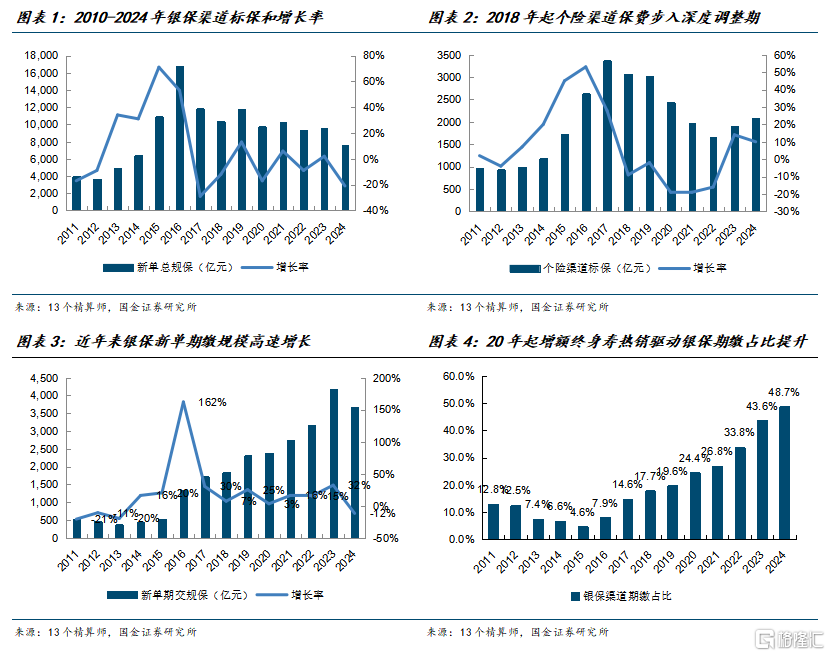
Investment Logic - The core view is that new individual insurance premiums for listed insurance companies are expected to achieve double-digit growth by 2026, primarily driven by the bancassurance channel [1][18] - The individual insurance channel is anticipated to maintain steady growth, while the bancassurance channel will benefit from the migration of deposits, leading to an increase in market share for large insurance companies [1][18] - The growth in the bancassurance channel is expected to dilute fixed costs, significantly enhancing overall profitability [1][18] Bancassurance Channel - Since 2020, leading insurance companies have refocused on the bancassurance channel, transitioning from scale compensation to value pursuit, resulting in a rise in market share [2][8] - The bancassurance channel has seen a compound annual growth rate (CAGR) of 16.2% from 2019 to 2023, while individual insurance premiums have declined [9] - The "reporting and banking integration" policy implemented in August 2023 has significantly reduced costs, enhancing the value rate of the bancassurance channel [14][9] Customer Deposit Analysis - A survey of 88 frontline bank wealth managers indicates that a significant portion of residents' deposits will mature in 2026, with expectations of low renewal rates due to the withdrawal of high-yield time deposits [3][25] - The majority of maturing depositors are aged 45 and above, indicating a lower risk appetite, with insurance products being the second choice for reallocating maturing deposits [4][30] - Wealth managers believe that bank wealth management products will be the most accepted option for maturing deposits, followed by insurance products [30][27] Sales Logic for Insurance Products - Wealth managers prioritize customer returns and the brand of insurance companies when recommending insurance products [5][33] - The core advantages of participating in dividend insurance sales include stable returns, capital safety, and alignment with long-term financial planning [36][40] - Challenges in selling dividend insurance include uncertainty in returns and the long duration of products, which may deter potential customers [40][36] Market Forecast - The insurance industry is projected to see new single premium growth exceeding 25% in 2026, driven by the bancassurance channel [42][44] - The expected influx of maturing deposits into insurance products will be significant, with estimates of new funds in the bancassurance channel reaching 11,150 billion by the end of 2026 [44][44] - The concentration trend among leading insurance companies is expected to continue, with larger firms benefiting from improved profitability in the bancassurance channel [47][48]
智通港股通资金流向统计(T+2)|1月13日





智通财经网· 2026-01-12 23:32
Core Insights - The article highlights the net inflow and outflow of funds in the Hong Kong stock market, with Xiaomi Group, Tencent Holdings, and China Construction Bank leading in net inflows, while the Yingfu Fund, Hang Seng China Enterprises, and Southern Hang Seng Technology experienced the highest net outflows [1] Group 1: Net Inflows - Xiaomi Group-W (01810) recorded a net inflow of 1.07 billion, representing a 16.36% increase in its closing price [2] - Tencent Holdings (00700) saw a net inflow of 863 million, with a 7.49% increase in its closing price [2] - China Construction Bank (00939) had a net inflow of 699 million, with a significant 41.06% increase in its closing price [2] Group 2: Net Outflows - Yingfu Fund (02800) experienced the largest net outflow of 6.289 billion, reflecting a -31.44% change in its closing price [2] - Hang Seng China Enterprises (02828) had a net outflow of 2.880 billion, with a -17.89% change in its closing price [2] - Southern Hang Seng Technology (03033) faced a net outflow of 1.289 billion, showing a -11.37% change in its closing price [2] Group 3: Net Inflow Ratios - 361 Degrees (01361) led with a net inflow ratio of 74.40%, with a net inflow of 8.9117 million [3] - BRILLIANCE CHI (01114) followed with a net inflow ratio of 64.04%, amounting to a net inflow of 36.4910 million [3] - Qin Port Co. (03369) had a net inflow ratio of 61.05%, with a net inflow of 846,600 [3] Group 4: Net Outflow Ratios - Wisdom Hong Kong 100 (02825) had a net outflow ratio of -100.00%, with a net outflow of -18,200 [3] - Stone Pharmaceutical Group (02005) recorded a net outflow ratio of -68.86%, with a net outflow of -14.1501 million [3] - Dexion Shipping (02510) experienced a net outflow ratio of -53.53%, with a net outflow of -10.0204 million [3]
创新高 沪指17连阳 两市成交3.6万亿
Xin Lang Cai Jing· 2026-01-12 16:57
Group 1 - The A-share market experienced a collective rise on January 12, with the Shanghai Composite Index increasing by 1.09%, marking a 17-day consecutive gain and reaching a new high not seen in over a decade [1] - The Shenzhen Component and ChiNext Index rose by 1.75% and 1.82% respectively, with over 4,100 stocks gaining and more than 200 stocks hitting the daily limit [1] - The trading volume in the Shanghai and Shenzhen markets reached 3.6 trillion yuan, surpassing 3 trillion yuan for the second consecutive trading day, and increasing by 478.7 billion yuan compared to the previous trading day, setting a new historical record for trading volume [1] Group 2 - Key sectors showing significant gains included software development, internet services, cultural media, aerospace, gaming, communication equipment, computer devices, education, and shipbuilding, while the insurance sector showed weakness [1] - The AI application sector saw notable increases, with several stocks like Yidian Tianxia and Zhide Mai hitting the daily limit, while the commercial aerospace sector also performed well [1] - Institutional perspectives suggest focusing on "two main lines and two auxiliary lines," emphasizing technology innovation and growth sectors, as well as manufacturing and resource sectors for potential recovery [2]
进驻券商App 保险代销竞速下半场
Bei Jing Shang Bao· 2026-01-12 15:26
Core Viewpoint - The integration of insurance products into brokerage apps signifies a potential transformation in wealth management, indicating the beginning of a new phase in the market [1][2]. Group 1: Insurance Product Integration - Major brokerage firms such as CITIC Securities, China Merchants Securities, and GF Securities have introduced dedicated insurance purchase sections in their apps, showcasing a variety of insurance products including medical insurance and whole life insurance [2]. - The move to include insurance products in brokerage apps is a recent development, despite the fact that brokerage firms have been allowed to sell insurance since 2012 [2][3]. Group 2: Comparison with Banks - Unlike banks, which have a long-standing experience in selling insurance products and offer a wide range of options, brokerage apps currently have a limited selection and less developed service features [4]. - Banks have established a robust system for insurance sales, while brokerage firms are still in the early stages of developing their insurance offerings [4][5]. Group 3: Market Dynamics and Challenges - The insurance distribution landscape is undergoing significant changes, with brokerages entering the market as new competitors, which may lead to increased choices for consumers [6]. - There are differing opinions on the future of insurance sales by brokerages; some believe they could become significant players, while others remain cautious due to past slow growth [6][7]. - The demand for stable returns from insurance products aligns well with the investment profiles of brokerage clients, presenting an opportunity for growth in this sector [6][7]. Group 4: Operational Challenges - Brokerages face challenges in ensuring sales quality and establishing strong partnerships with insurance companies, which are critical for success in this new venture [7]. - The complexity of insurance products compared to traditional financial products necessitates time and skill development for brokerage firms to effectively educate and guide clients [7].





港股通(深)净买入57.60亿港元
Zheng Quan Shi Bao Wang· 2026-01-12 15:13
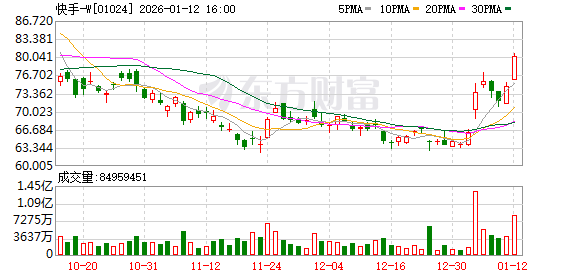
Market Performance - On January 12, the Hang Seng Index rose by 1.44%, closing at 26,608.48 points, with a total net inflow of HKD 7.306 billion through the southbound trading channel [1] - The total trading volume for the southbound trading was HKD 147.494 billion, with a net buying amount of HKD 7.306 billion [1] Trading Activity - In the Shanghai-Hong Kong Stock Connect, the trading volume was HKD 86.413 billion, with a net buying of HKD 1.546 billion; in the Shenzhen-Hong Kong Stock Connect, the trading volume was HKD 61.081 billion, with a net buying of HKD 5.760 billion [1] - The most actively traded stock in the Shanghai-Hong Kong Stock Connect was Alibaba-W, with a trading amount of HKD 8.776 billion, followed by Tencent Holdings and Xiaomi Group-W, with trading amounts of HKD 3.590 billion and HKD 2.802 billion, respectively [1] Stock Performance - Tencent Holdings had the highest net buying amount of HKD 1.184 billion, with its stock price increasing by 1.96% [1] - The stock with the highest net selling amount was China Mobile, with a net selling of HKD 1.030 billion, while its stock price rose by 0.25% [1] - In the Shenzhen-Hong Kong Stock Connect, Alibaba-W led with a trading amount of HKD 6.830 billion, followed by Tencent Holdings and Meituan-W, with amounts of HKD 3.416 billion and HKD 2.100 billion, respectively [2] - Kuaishou-W had the highest net buying amount of HKD 1.298 billion, with its stock price increasing by 7.43% [2] - China Ping An had the highest net selling amount of HKD 0.342 billion, with its stock price decreasing by 2.14% [2]
南向资金今日净买入73.06亿港元,快手-W净买入22.45亿港元
Zheng Quan Shi Bao Wang· 2026-01-12 15:13
Market Overview - On January 12, the Hang Seng Index rose by 1.44%, with total southbound trading amounting to HKD 1,474.94 billion, including buy transactions of HKD 774.00 billion and sell transactions of HKD 700.94 billion, resulting in a net buy of HKD 73.06 billion [2][3]. Southbound Trading Details - The southbound trading through Stock Connect (Shenzhen) had a total transaction amount of HKD 610.81 billion, with buy transactions of HKD 334.20 billion and sell transactions of HKD 276.61 billion, leading to a net buy of HKD 57.60 billion [2]. - The southbound trading through Stock Connect (Shanghai) had a total transaction amount of HKD 864.13 billion, with buy transactions of HKD 439.80 billion and sell transactions of HKD 424.33 billion, resulting in a net buy of HKD 15.46 billion [2]. Active Stocks - The most actively traded stock by southbound funds was Alibaba-W, with a total transaction amount of HKD 156.07 billion, followed by Tencent Holdings and Xiaomi Group-W, with transaction amounts of HKD 70.06 billion and HKD 46.71 billion, respectively [2][3]. - Among the net buying stocks, Kuaishou-W had the highest net buy amount of HKD 22.45 billion, with a closing price increase of 7.43%. Tencent Holdings followed with a net buy of HKD 20.12 billion, and Southern Hang Seng Technology had a net buy of HKD 8.58 billion [2][3]. Continuous Net Buying and Selling - Three stocks experienced continuous net buying for more than three days, with Xiaomi Group-W leading at 8 days, followed by Tencent Holdings at 4 days and SMIC at 3 days. The total net buy amounts were HKD 63.26 billion for Xiaomi Group-W, HKD 62.43 billion for Tencent Holdings, and HKD 12.79 billion for SMIC [3]. - Two stocks faced continuous net selling, with China Mobile and Meituan-W having the highest net sell amounts of HKD 44.80 billion and HKD 10.76 billion, respectively [3].