
OPPO

Search documents
新股前瞻|中国光学传感器龙头冲刺港股,聚芯微为何能让OPPO、华为、小米、字节“同框”?
智通财经网· 2025-10-20 08:15
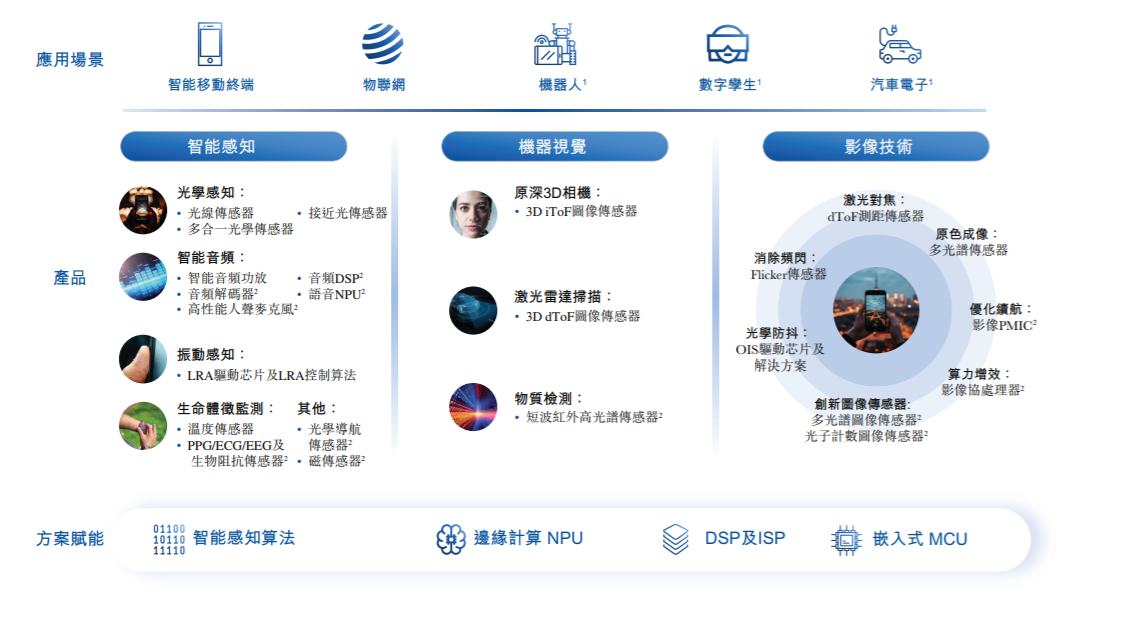
Core Viewpoint - Wuhan Juxin Microelectronics Co., Ltd. (Juxin Micro) has submitted its listing application to the Hong Kong Stock Exchange, aiming to capitalize on its rapid growth in the optical sensor market, where it ranks third globally and first in mainland China [1][2]. Financial Performance - Juxin Micro's revenue is projected to grow from approximately 127 million RMB in 2022 to 667 million RMB in 2024, showcasing strong growth momentum [1][12]. - The company is expected to achieve a net profit of approximately 9.73 million RMB in 2024, marking a turnaround from losses in previous years [1][12]. - For the first half of 2025, Juxin Micro's revenue is anticipated to reach 400 million RMB, reflecting a year-on-year growth of 53.85% [2][15]. Product Lines and Market Position - Juxin Micro's product lines include intelligent perception, machine vision, and imaging technology, with intelligent perception accounting for 86% of revenue in 2024 [5][12]. - The company has achieved significant market share, with 11.2% in the optical sensor sector, 8.3% in smart audio amplifiers, and 4.1% in vibration sensing [5][7]. - Juxin Micro's optical sensing products are expected to see explosive growth, with revenues projected to increase from 11,000 RMB in 2022 to 300 million RMB in 2024 [13][20]. Shareholder Structure and Financing - Notable shareholders include OPPO, Huawei, Xiaomi, and ByteDance, indicating strong ties with leading consumer electronics brands [2][10]. - Juxin Micro has completed ten rounds of financing since its establishment, with a post-financing valuation of 5.31 billion RMB as of June 2025 [8][10]. Market Trends and Growth Drivers - The global smart perception chip market is in a growth phase, with a projected compound annual growth rate (CAGR) of 7.3% from 2024 to 2029 [17][20]. - The demand for optical sensors and smart audio products is expected to grow significantly, driven by the proliferation of new smart devices and consumer demand for enhanced sensing capabilities [17][20]. - Juxin Micro's strategic focus on product diversification and technological innovation positions it well to benefit from the ongoing trend of domestic substitution in the semiconductor industry [11][21]. Competitive Landscape - The optical sensor market is characterized by high foreign market concentration, with leading companies holding significant market shares, indicating a potential opportunity for Juxin Micro to capture market share through domestic production [20][21]. - Juxin Micro's reliance on a limited number of major customers and suppliers poses a risk, as revenue from the top five customers accounted for 99.7% in 2022, though this percentage is decreasing [22].

急于IPO的荣耀,开始“邪修”
3 6 Ke· 2025-10-20 07:40
Core Viewpoint - The evolution of mobile phones has been significantly influenced by technological advancements, with Honor's new Robot Phone aiming to redefine the smartphone experience through AI integration and innovative design [1][2][4]. Group 1: Product Development and Strategy - Honor's CEO, Li Jian, announced the "Alpha Strategy," which involves a $10 billion investment over five years to focus on AI terminal ecosystem development, with the Robot Phone being the first product under this strategy [2][4]. - The Robot Phone combines a smartphone with an AI gimbal camera, featuring a unique design that contrasts with the trend of thinner devices, indicating a shift towards more interactive and multifunctional devices [5][9]. Group 2: Market Position and Challenges - Honor is under pressure to perform as it seeks to go public, having completed its listing guidance in June 2025, while facing a slowing global smartphone market and intensified domestic competition [4][22]. - Despite a slight recovery in market share, with a 14.4% share in Q3 2025, Honor's year-over-year shipment volume decreased by 2.1%, lagging behind competitors like Apple and Xiaomi [18][19]. Group 3: AI Integration and User Interaction - The Robot Phone's design aims to enhance user interaction through AI capabilities, allowing for features like automatic photo capturing and IoT integration, which could redefine user engagement with smartphones [5][10]. - Honor's AI technology, including the "Magic Model 3.0," promises improved performance metrics, such as a 25% increase in inference speed and a 25% reduction in power consumption, positioning it competitively against existing AI models [12][14]. Group 4: Data Security and Privacy Concerns - The integration of AI in smartphones raises significant data security and privacy concerns, particularly regarding the permissions required for AI functionalities, which may not be fully transparent to users [12][16]. - Reports indicate that AI-driven operations may require extensive user data, leading to potential risks if not managed properly, highlighting the need for Honor to ensure transparency and security in its AI applications [14][16]. Group 5: Future Outlook and Market Dynamics - Honor's transition from a smartphone company to an AI terminal ecosystem company reflects its strategy to adapt to market demands, but it faces challenges in gaining consumer acceptance for its innovative yet unconventional designs [17][23]. - The competitive landscape remains tough, with Honor's global market share estimated at 4%-5%, indicating a significant gap compared to leading brands like Samsung and Apple [20][21].

全球影像,进入中国时间
雷峰网· 2025-10-20 04:06
Core Viewpoint - The article emphasizes the transformation of the imaging industry, highlighting China's emerging dominance in this sector through technological advancements and market dynamics [1][2]. Group 1: Evolution of the Imaging Industry - The imaging industry has undergone significant changes, transitioning from traditional camera dominance to mobile imaging, driven by technological breakthroughs and market demands [2][3]. - The shift from cameras to smartphones as the primary imaging device marks the third transition in the industry, with Chinese companies leading this change [7][8]. - The global camera sales peaked at 120 million units in 2010 but are projected to decline to 8.3 million units by 2024, while smartphone shipments are expected to rise from 297 million units in 2010 to 1.24 billion units by 2024 [5][6]. Group 2: Technological Advancements - The rapid iteration of smartphone sensors, particularly the transition from CCD to CMOS technology, has allowed for significant advancements in pixel density and processing speed [9][10]. - The processing capabilities of smartphones have surpassed those of traditional cameras, with smartphones utilizing advanced 3nm/5nm chips for complex image processing, while cameras often rely on older technology [11][12]. - The integration of a complete ecosystem for mobile imaging, including shooting, processing, and sharing, has created a unique advantage for Chinese companies in the imaging market [13][14]. Group 3: China's Competitive Advantages - China's massive mobile imaging market is a key driver of innovation and investment, fostering a robust supply chain and manufacturing capabilities [16][17]. - The vertical integration of the supply chain in China enhances efficiency and reduces costs, allowing for rapid innovation and responsiveness to market demands [18][19]. - The combination of AI and large-scale manufacturing capabilities in China supports the development of advanced imaging technologies and products [21][22]. Group 4: User-Centric Innovation - The focus on user needs drives innovation in the imaging sector, with companies like OPPO leveraging consumer insights to enhance product offerings [29][30]. - OPPO's Find X9 series exemplifies the integration of high pixel counts with superior image quality, addressing specific user demands for clarity and emotional resonance in photography [32][33]. - The article highlights the importance of understanding user behavior and preferences in shaping the future of imaging technology [30][31]. Group 5: Future Outlook - The article concludes with a positive outlook for China's imaging industry, anticipating significant advancements and global recognition in the coming decade [51].

耳夹耳机增速是行业五倍
Jing Ji Guan Cha Wang· 2025-10-20 02:57
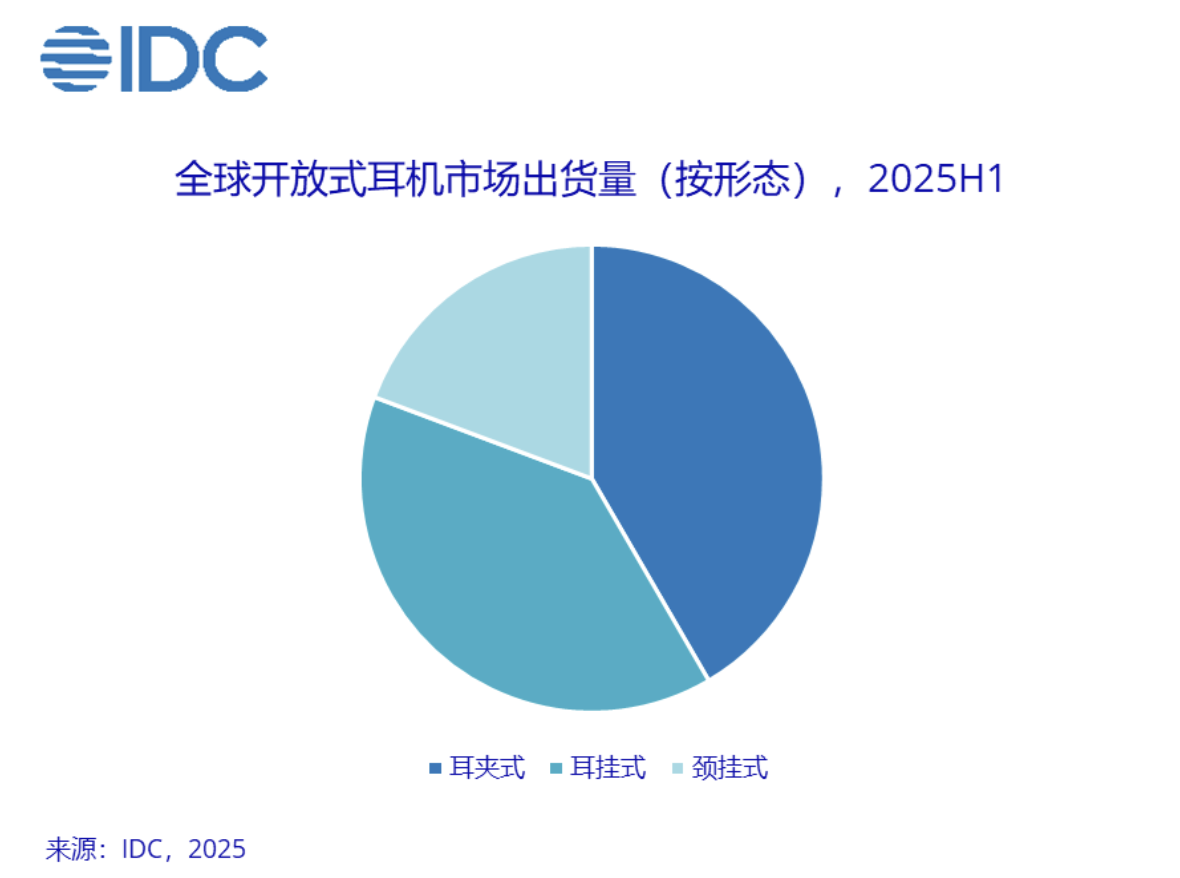
Core Insights - The ear clip market is projected to see a 41% year-on-year increase in shipment volume, reaching 6.51 million units in the first half of 2025, marking it as a new growth engine for the industry [1] - Huawei's FreeClip2 ear clip headphones achieved over 80,000 units in pre-sales within the first hour, showcasing its appeal as a "phenomenal hit" through innovative aesthetics and acoustic technology [1] - The product is set to officially launch on October 20, integrating chip technology and acoustic algorithms to provide a clear listening experience across various scenarios, shifting the industry focus from "parameter competition" to "experience competition" [1] Market Share - Edifier holds a market share of 21.0% - Sony accounts for 13.0% - Bose has a share of 8.8% - Philips represents 3.8% - OPPO has a market share of 2.9% - Shokz (韶音) holds 2.3% - Sena (塞那) and Honor (荣耀) each have shares of 1.3% and 1.2% respectively - Other brands collectively account for 1.6% [4]
消电ETF(561310)盘中涨超3%,消费电子3D打印与AI需求共振
Mei Ri Jing Ji Xin Wen· 2025-10-20 02:47
Core Insights - The consumer electronics ETF (561310) rose over 3% in early trading on October 20, indicating positive market sentiment towards the sector [1] - The successful application of folding machine hinges by Honor and OPPO, along with increased investment from Apple, is accelerating the penetration of 3D printing in the consumer electronics field, suggesting a potential new era for 3D printing applications [1] - AI demand continues to exceed expectations, with TSMC emphasizing tight capacity and expansion plans for Cowos extending to 2026, indicating a significant increase in value across servers, chips, and storage due to the AI wave [1] Industry Trends - Counterpoint Research forecasts a 50% year-on-year increase in global AR smart glasses shipments in the first half of 2025, highlighting the growing importance of edge AI in devices like headphones and glasses [1] - Samsung Electronics is benefiting from a recovery in demand for memory chips, reporting over a 30% increase in operating profit for the third quarter, while upstream sectors such as passive components and testing are also showing signs of recovery [1] ETF and Index Overview - The consumer electronics ETF (561310) tracks the consumer electronics index (931494), which includes publicly traded companies involved in the manufacturing and sales of smartphones, home appliances, and wearable devices, reflecting the overall performance of the tech consumer sector [1] - The index is characterized by high growth potential and volatility, effectively capturing market dynamics within the consumer electronics industry [1]
eSIM虽好,但现在还不适合你
3 6 Ke· 2025-10-20 01:32
Core Points - The era of eSIM is approaching, with major telecom operators in China officially launching eSIM services nationwide after years of anticipation [4][12] - eSIM technology allows for a more integrated mobile experience, eliminating the need for physical SIM cards and enabling features like dual-device sharing [12][19] - The current implementation of eSIM still requires users to visit physical stores for activation, which contradicts the convenience that eSIM is supposed to offer [17][18] Group 1: eSIM Technology Overview - eSIM, or Embedded-SIM, replaces traditional physical SIM cards with a chip embedded in the device, allowing for remote provisioning of mobile numbers [7][10] - The removal of the SIM card slot can lead to improved device design, such as larger batteries and enhanced waterproofing [9][12] - eSIM supports features like dual-device sharing, allowing users to share a single number between a smartphone and a smartwatch [12][19] Group 2: Implementation and User Experience - All three major telecom operators in China have begun offering eSIM services, with similar activation processes that require users to make appointments and visit physical stores [13][15] - Users must present identification and the eSIM device at the store, and there are restrictions on number portability and the total number of eSIMs that can be activated [15][18] - The current eSIM process is seen as cumbersome, as it still requires physical presence, which may deter average consumers from adopting the technology [17][18] Group 3: Future Outlook - The transition to a fully eSIM environment is expected to take time, with many new devices still supporting both physical SIM and eSIM [19][22] - The ideal scenario for eSIM is a seamless, user-friendly experience that allows for easy switching between carriers without the need for physical store visits [18][23] - The industry is still in the early stages of eSIM adoption, and further developments are needed to enhance user convenience and flexibility [23]
iPhone 17引爆Deco设计潮,手机设计为何狂卷「辨识度」?
3 6 Ke· 2025-10-20 01:26
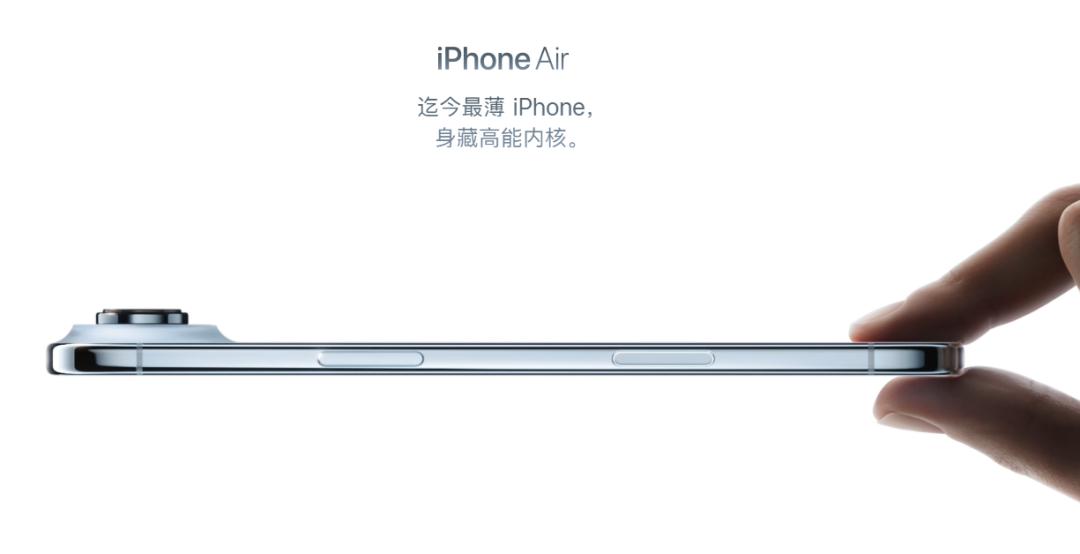
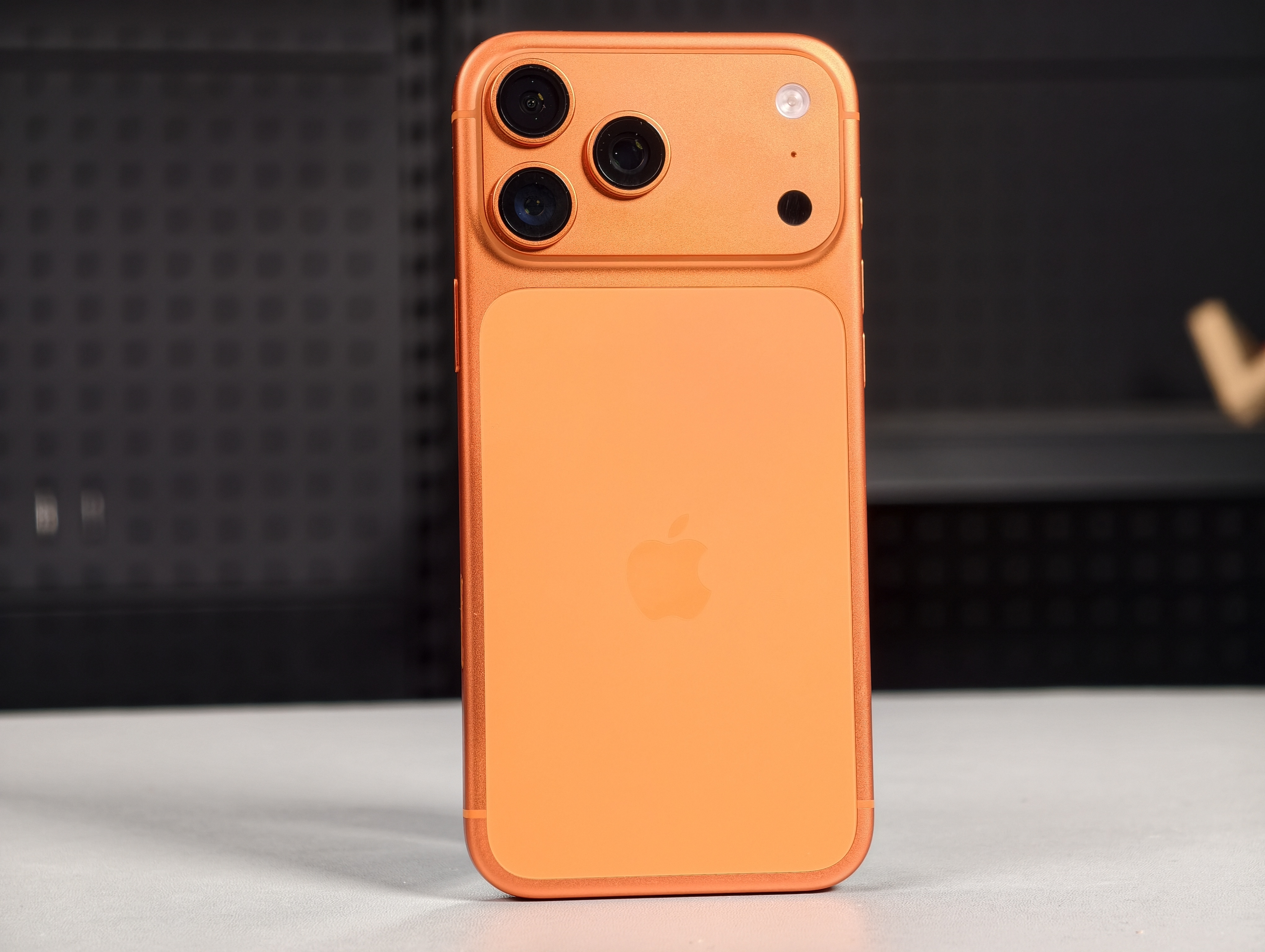
Core Viewpoint - Recent smartphone manufacturers, including Apple and Xiaomi, have shifted focus from aesthetic design to high recognition in their products, as evidenced by their new camera Deco designs, which prioritize distinctiveness over traditional beauty [1][12][22]. Design Changes - Apple and Xiaomi have both adopted a long strip camera Deco design, moving away from their previous design identities, which has not negatively impacted their sales but rather attracted new users [1][4]. - The iPhone 17 series features a horizontal Deco that enhances visual recognition, while Xiaomi's 17 series includes a back screen that serves multiple functions, such as displaying notifications and enabling selfies [1][6][4]. Sales Performance - The iPhone 17 series saw a 30% increase in sales compared to its predecessor in its first week, with over 4 million units activated in China by October 12, indicating a potential resurgence in Apple's market position [4][6]. - Xiaomi's 17 series has a different sales distribution, with the higher-priced Pro Max version accounting for 50% of sales, showcasing strong market acceptance of the new back screen feature [6][4]. Market Trends - The trend of prioritizing recognition over aesthetics is evident across various brands, including Realme and OPPO, which have also made significant design changes to enhance product differentiation [11][12]. - The smartphone industry is experiencing severe homogenization, leading manufacturers to innovate through design changes rather than solely focusing on technical specifications [14][22]. Consumer Preferences - Consumers are increasingly drawn to smartphones that are easily recognizable and address practical needs, rather than those that are merely visually appealing [23][22]. - The introduction of unique features, such as Xiaomi's back screen and Realme's interchangeable camera modules, reflects a shift towards meeting individual user preferences and cultural trends [6][9][22]. Future Innovations - The upcoming Honor ROBOT PHONE introduces a foldable gimbal camera and advanced AI capabilities, suggesting a potential new direction for smartphone innovation that combines mechanical design with AI [18][22]. - The industry may benefit from exploring new forms and functionalities, moving beyond traditional designs to create products that resonate with users on a deeper level [22][23].


Omdia:到2027年 中东媒体和娱乐支出预计将翻倍增至360亿美元
智通财经网· 2025-10-20 01:24
Core Insights - Hardware remains the cornerstone of the consumer technology ecosystem in the Middle East and Africa, with smartphones and personal computers being essential for connectivity, streaming, gaming, and transactions [1] - Revenue from hardware is projected to grow from $32.9 billion in 2020 to approximately $41.9 billion by 2027, while media and entertainment spending is expected to nearly double from $18 billion to $36 billion during the same period [1] - The trend of bundling services with devices is becoming increasingly significant, particularly in affluent markets like Saudi Arabia and the UAE, where manufacturers are repositioning devices as experience platforms driven by services [3][6] Hardware and Services Growth - The average revenue per user (ARPU) in the Gulf Cooperation Council (GCC) exceeds $20, creating opportunities for service bundling and raising user expectations [1] - By Q2 2025, the Middle East and Africa will account for only 14% of global telecom operators' partnerships with OTT providers, despite a predominance of mobile users [1] - The MENA region's online video market is expected to grow over fivefold by 2029, reaching $8.4 billion, highlighting the need for a shift from subsidy-driven models to sustainable subscription systems [9][15] Ecosystem Collaboration - Telecom operators and retailers play a crucial role as enablers in the ecosystem, using multi-layered service bundles to prevent ARPU decline and reduce churn [8] - Bundled packages, such as those combining Netflix, Anghami Plus, and iCloud storage with flagship devices, provide significant profit margins in high ARPU markets [8] - Retailers are transitioning from hardware sellers to integral parts of the service ecosystem, collaborating with streaming or software providers to enhance value at sales touchpoints [12] User Experience and Market Dynamics - The focus of marketing is shifting from specifications to user experience, exemplified by collaborations like Samsung's foldable phones bundled with streaming services [11] - The competitive landscape in the Middle East and Africa is intense, with many bundles starting as subsidized offers, which can lead to a perception of services as non-essential if not properly converted into sustainable subscriptions [9][15] - The collaboration between manufacturers, telecom operators, and service providers is essential for expanding market scale and achieving long-term value [10][15]

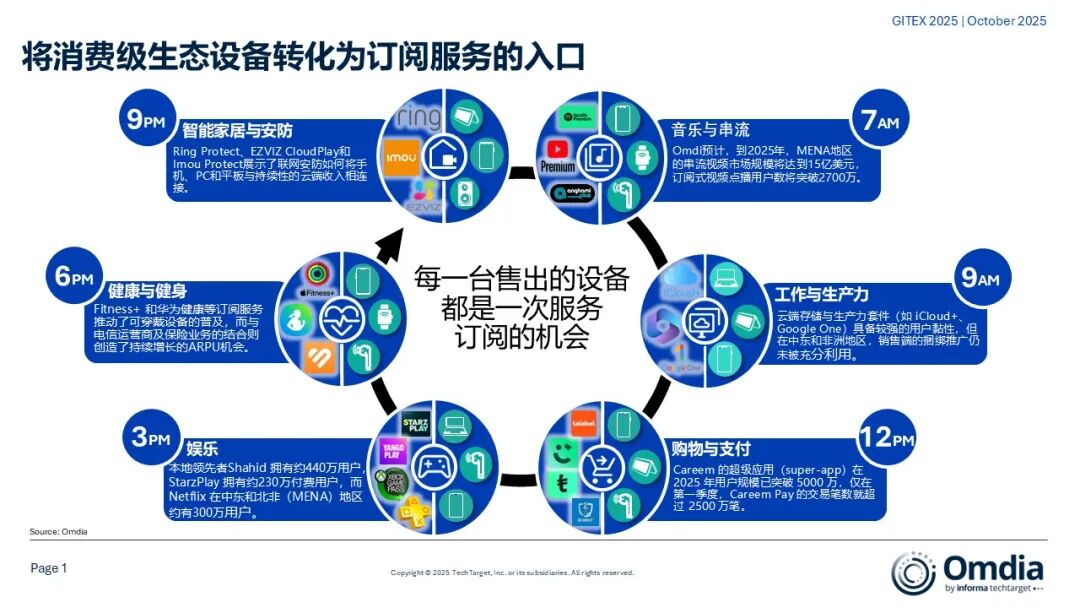
从设备到体验:生态系统合作推动中东和非洲消费科技市场的可持续增长
Canalys· 2025-10-20 01:03
Core Insights - The consumer technology market in the Middle East and Africa (MEA) is shifting from hardware to services, with media and entertainment spending expected to reach $36 billion by 2027, driven by ecosystem collaboration [1][12][16] - Hardware remains foundational, with revenue projected to grow from $32.9 billion in 2020 to approximately $41.9 billion by 2027, while media and entertainment spending is expected to nearly double from $18 billion to $36 billion during the same period [1][12] Market Trends - In some global markets, service revenue has already surpassed device sales, with the GCC market showing an average ARPU exceeding $20, creating space for bundled service models [2][12] - As of Q2 2025, MEA accounts for only 14% of global telecom operators' partnerships with OTT providers, despite a mobile user dominance [2][12] Ecosystem Collaboration - Ecosystem collaboration is leading the shift from product to experience, with manufacturers repositioning devices as service-driven "experience platforms" [4][12] - Bundled offerings, such as Samsung's foldable phones with Netflix, enhance user experience and create strategic opportunities for content providers [4][12] Bundled Service Models - The cost-sharing structure of bundled services varies by partnership type, with telecom-led collaborations typically having operators bear most costs [8][12] - Bundled packages enhance user retention for operators and provide differentiation for manufacturers while expanding reach for service providers [8][12] Role of Telecom Operators and Retailers - Telecom operators and retailers act as enablers in the ecosystem, using multi-layered service bundles to prevent ARPU decline and reduce churn [9][12] - Bundled packages in high ARPU markets offer significant profit margins, enhancing customer retention compared to standalone service purchases [9][12] Consumer Benefits - Bundled packages lower overall usage costs and provide better value compared to purchasing services separately, with convenience and cultural relevance being key factors [9][12] Market Dynamics - The MENA online video market is projected to grow over fivefold to $8.4 billion by 2029, necessitating a shift from subsidy-driven models to sustainable subscription systems [12][16] - The collaboration between manufacturers, telecom operators, and content providers is crucial for capturing long-term value in the evolving market landscape [13][16] Strategic Recommendations - Manufacturers should shift marketing focus from specifications to user experience, while telecom operators expand bundled offerings to mid-tier markets [16][17] - Retailers need to transition from hardware sales to becoming integral parts of the service ecosystem, leveraging partnerships with streaming or software providers [16][17] - Content providers should prioritize collaborations with telecom operators and manufacturers to achieve scale in a fragmented market [16][17]

国内eSIM手机商用破冰 运营商加速迈向“无卡”时代
Zheng Quan Shi Bao· 2025-10-19 22:24
Core Insights - The introduction of eSIM technology marks a significant shift towards a "cardless" era in mobile communication, with eSIMs expected to gradually replace physical SIM cards in the long term [1][4][7] Industry Overview - eSIM technology allows for flexible network switching, space-saving in devices, and seamless connectivity across multiple devices and scenarios, indicating a trend towards "cardless" solutions [1][2] - The global market for eSIM-enabled smartphones is projected to reach approximately 1 billion connections by the end of 2025, with an expected growth to 7 billion by 2030, representing three-quarters of total smartphone connections [4] Market Dynamics - Major Chinese telecom operators have recently received approval to launch eSIM services for mobile phones, marking a significant milestone in the domestic market after a two-year pause [3][4] - The shift to eSIM is expected to enhance device waterproofing, internal space utilization, and battery optimization, thus driving innovation in high-end smartphone models [6][10] Competitive Landscape - The entry of eSIM technology into the Chinese smartphone market is seen as a catalyst for global eSIM development, with Apple leading the charge by launching eSIM-only devices [4][5] - Other smartphone manufacturers, including OPPO and vivo, are also preparing to release eSIM-compatible devices, indicating a rapid market response [4][5] Challenges and Considerations - The transition to eSIM technology faces challenges such as security concerns, consumer awareness, and the need for standardized interoperability among different operators [9][10] - The shift from physical SIM cards to eSIMs is expected to increase competition among telecom operators, as users will have greater flexibility to switch providers, potentially impacting traditional revenue models [10][11]


