
东风股份

Search documents
经典车回归,汽车消费迎来又一增长极
Zhong Guo Qi Che Bao Wang· 2025-10-14 06:24
Core Viewpoint - The 2025 China Classic Car Rally and New Energy Vehicle Gathering aims to revive classic cars in the public eye, showcasing over 50 classic vehicles and promoting the integration of classic and new energy vehicles as part of a broader cultural and economic initiative [1][3]. Group 1: Event Overview - The event is scheduled for November 7-12, 2025, in Hainan, featuring a public tour of classic cars and new energy vehicles, along with technical exhibitions and a classic car industry summit [1]. - The rally will cover major cities in Hainan, connecting various cultural and tourism landmarks, and aims to create a "mobile museum" of classic cars [3][4]. Group 2: Industry Context - The classic car market in China has been historically marginalized due to regulatory constraints, including import restrictions and unclear definitions of classic vehicles [5][6]. - Recent policy changes from the Ministry of Commerce and other departments are aimed at developing the classic car industry, including the establishment of standards for classic car recognition [6][7]. Group 3: Economic Potential - The classic car sector is viewed as a "sunshine industry" with significant consumer potential, especially as policies evolve to support its growth [1][4]. - The integration of classic cars with new energy vehicles is seen as a way to enhance cultural heritage while promoting green technology [3][4]. Group 4: International Comparisons - Global classic car markets, particularly in Europe and the U.S., have established robust ecosystems that combine events, restoration, and trading, serving as models for China's developing market [10][11]. - Japan and Singapore have implemented effective policies to support classic car ownership and trade, contrasting with China's nascent industry [11][12]. Group 5: Future Directions - The establishment of associations and forums is underway to promote the classic car industry, focusing on standardization and resource integration [7][14]. - The classic car sector is expected to become a significant driver of automotive service consumption, with potential growth in areas like restoration, parts reproduction, and event-driven economic activities [14][15].


产业运行 | 2025年9月汽车工业产销情况
中汽协会数据· 2025-10-14 06:17
Core Viewpoint - The automotive industry in China is experiencing a positive trend with significant growth in production and sales, driven by policies such as the vehicle trade-in program and the introduction of new models by companies [1][12][62]. Group 1: Overall Automotive Production and Sales - In September, automotive production and sales reached 3.276 million and 3.226 million units respectively, marking a month-on-month increase of 16.4% and 12.9%, and a year-on-year increase of 17.1% and 14.9% [12]. - From January to September, total automotive production and sales were 24.433 million and 24.436 million units, reflecting year-on-year growth of 13.3% and 12.9% [12][13]. Group 2: Domestic Sales Performance - In September, domestic automotive sales were 2.574 million units, with a month-on-month increase of 14.6% and a year-on-year increase of 13.4% [13]. - For the first nine months, domestic sales totaled 19.414 million units, showing a year-on-year increase of 12.5% [13][38]. Group 3: Export Performance - In September, automotive exports reached 652,000 units, with a month-on-month increase of 6.7% and a year-on-year increase of 21% [18]. - From January to September, total automotive exports were 4.95 million units, reflecting a year-on-year growth of 14.8% [18][19]. Group 4: New Energy Vehicles (NEVs) - In September, NEV production and sales reached 1.617 million and 1.604 million units respectively, with year-on-year growth of 23.7% and 24.6% [62]. - For the first nine months, NEV production and sales were 11.243 million and 11.228 million units, showing year-on-year growth of 35.2% and 34.9% [62][69]. Group 5: Key Enterprises and Market Concentration - The top fifteen automotive groups sold a total of 22.476 million units from January to September, with a year-on-year increase of 12.9%, accounting for 92.3% of total automotive sales [78]. - The top fifteen NEV groups sold a total of 10.666 million units, reflecting a year-on-year growth of 36.8%, representing 95% of total NEV sales [80].
东风奕派为DH项目征名 东风、华为合作更进一步
Xi Niu Cai Jing· 2025-10-13 14:08
Core Insights - Dongfeng and Huawei are collaborating on the DH project, focusing on mid-to-high-end intelligent vehicles priced between 200,000 to 400,000 yuan, with the first model expected to be a full-size SUV launching in 2026 [2][4] Group 1: Project Overview - The DH series aims to integrate advanced technologies such as Huawei's ADS 4 and HarmonyOS cockpit 5, positioning it as one of Huawei's most technologically integrated vehicles [2] - A naming contest is being held for the brand's Chinese name and logo, with the name required to be two characters, simple, and memorable, reflecting the brand values of "technology, quality, and trust" [4] Group 2: Market Context - The mid-to-high-end automotive market is highly competitive, with established players like Tesla, Li Auto, and Xiaomi, creating a stable market structure that new entrants must navigate [4] - The collaboration between Dongfeng and Huawei may adopt a model similar to the "HI PLUS model" used by GAC and Huawei, where Huawei provides advanced technology and GAC supports in battery and vehicle manufacturing [4] Group 3: Future Developments - The naming contest will conclude on October 28, and the selected creator will receive substantial rewards, indicating a proactive approach to brand development [4] - The launch of the first model next year is anticipated to introduce a new player into the Chinese mid-to-high-end intelligent vehicle market, potentially altering the current market dynamics [4]


“金九银十”看车市|“金九”圆满收官:零批量创历年9月新高,“银十”增长可期
Bei Jing Shang Bao· 2025-10-13 13:18
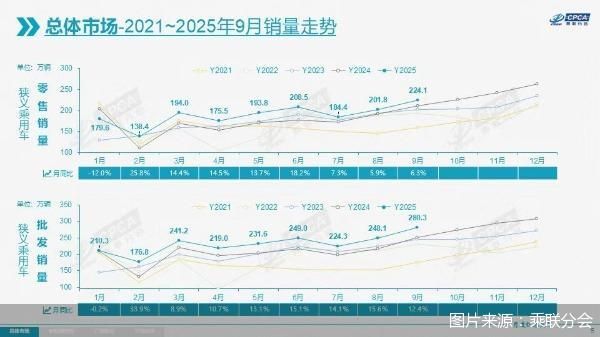
Core Insights - The Chinese passenger car market achieved record retail and wholesale volumes in September, marking a strong start to the "Golden September and Silver October" period, which is crucial for the overall annual performance of the automotive market [1][3]. Retail and Wholesale Performance - In September, the retail volume of passenger cars reached 2.241 million units, a year-on-year increase of 6.3% and a month-on-month increase of 11% [3]. - The wholesale volume was 2.803 million units, showing a year-on-year growth of 12.4% and a month-on-month increase of 13% [3]. - Cumulatively, the retail volume for the first nine months of the year reached 17.005 million units, reflecting a year-on-year growth of 9.2% [3]. Brand Structure - Domestic brands remain the main driving force in the market, with retail sales of 1.5 million units in September, a year-on-year increase of 13% and a month-on-month increase of 12.9% [4]. - The market share of domestic brands reached 66.9%, up 3.6 percentage points year-on-year [4]. - Major state-owned groups, including SAIC, Dongfeng, Changan, Chery, and BAIC, saw a combined year-on-year sales growth of 25% in September [4]. New Energy Vehicles (NEVs) - NEVs led the market with a production volume of 1.501 million units in September, a year-on-year increase of 22.9% and a month-on-month increase of 17.5% [6]. - The retail volume of NEVs was 1.296 million units, reflecting a year-on-year growth of 15.5% and a month-on-month increase of 16.2% [6]. - The penetration rate of NEVs in the domestic market reached 57.8% in September [6]. Market Dynamics - The market is experiencing a shift in structure, with pure electric vehicles (EVs) accounting for 63% of wholesale volumes in September, showing a year-on-year increase [7]. - The competition in the market is stabilizing, with a decrease in the number of models undergoing price cuts from 227 last year to 148 in 2023 [8]. - The inventory warning index for automotive dealers was 54.5% in September, indicating a 2.5 percentage point decrease month-on-month, suggesting improved order conversion efficiency [9]. Upcoming Trends - The market is entering the "Silver October" phase, with over 70 new models launched in September, contributing to increased consumer interest [10]. - The automotive consumption index for September was 88.9, indicating a positive outlook for October sales, driven by new policies and promotional activities [11].
商用车板块10月13日跌1.35%,江淮汽车领跌,主力资金净流出4.74亿元
Zheng Xing Xing Ye Ri Bao· 2025-10-13 12:38
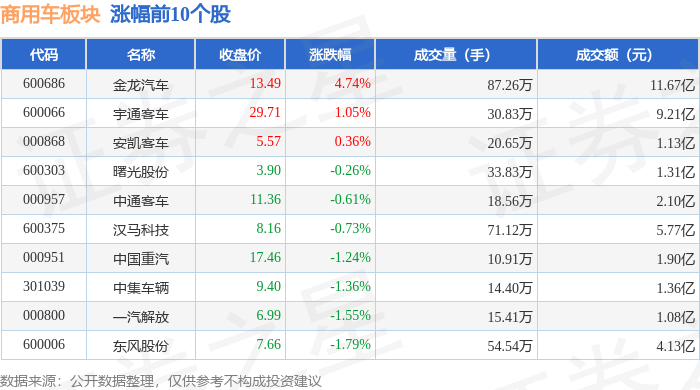
Market Overview - The commercial vehicle sector experienced a decline of 1.35% on October 13, with Jianghuai Automobile leading the drop [1] - The Shanghai Composite Index closed at 3889.5, down 0.19%, while the Shenzhen Component Index closed at 13231.47, down 0.93% [1] Stock Performance - Key stocks in the commercial vehicle sector showed mixed performance, with Jinlong Automobile rising by 4.74% to a closing price of 13.49 [1] - Jianghuai Automobile fell by 2.89% to a closing price of 50.39, with a trading volume of 534,300 shares and a transaction value of 2.682 billion [2] - Other notable declines included Foton Motor down 2.87% and JMC down 2.45% [2] Capital Flow - The commercial vehicle sector saw a net outflow of 474 million from institutional investors, while retail investors contributed a net inflow of 310 million [2] - The capital flow data indicates that retail investors were more active in the market despite the overall decline in the sector [2] Individual Stock Capital Flow - Jinlong Automobile had a net inflow of 53.38 million from institutional investors, while it faced a net outflow of 79.41 million from speculative funds [3] - Jianghuai Automobile experienced a significant net outflow of 459.86 million from institutional investors, indicating a lack of confidence among larger investors [3] - The data shows that retail investors were more favorable towards stocks like Ankai Bus, which had a net inflow of 472.44 million [3]


解放/重汽/东风/福田等23款新能源重卡新品配TA,谁家电机如此受青睐?| 头条
第一商用车网· 2025-10-13 10:00
Core Viewpoint - In the third quarter of 2025, 23 new energy heavy-duty trucks equipped with Te Baijia's drive motors were reported, indicating a growing market acceptance and diverse application scenarios for these motors [2][5][18]. Group 1: Market Presence - A total of 23 new models from 10 different manufacturers, including Dongfeng, FAW Liberation, and Beiqi Heavy Truck, have chosen to equip Te Baijia's drive motors [7][18]. - Among these models, 14 are charging heavy-duty trucks, 5 are battery-swapping trucks, and 4 are fuel cell trucks, showcasing a variety of energy solutions [7][8]. Group 2: Product Diversity - The models equipped with Te Baijia's drive motors include 11 cargo vehicles, which account for 47.83% of the total, with the majority being charging cargo trucks [8][10]. - The heavy-duty trucks include 5 electric tractors, all of which are 6×4 dual-motor configurations, indicating a trend towards higher performance in this segment [12][24]. Group 3: Technical Specifications - Te Baijia's drive motors feature a range of peak power outputs, with models such as TZ400XSTPG78 reaching 455 kW (619 PS) and TZ380XSTPG67 at 185 kW (252 PS), catering to different market needs [23][24]. - The presence of dual-motor configurations in 10 of the new models highlights the adaptability of Te Baijia's technology to various operational scenarios [24][26]. Group 4: Industry Impact - Te Baijia's drive motors are becoming the preferred choice for major brands in the new energy heavy-duty truck market, contributing to the evolution and upgrade of their product lines [26].

从零跑限消事件看企业生态
Zhong Guo Qi Che Bao Wang· 2025-10-13 07:47
性价比优势难抵信用赤字 零跑曾凭借自主研发的三电系统和高性价比,成功跻身新势力头部企业,但其品牌形象在失信风波中遭受重创,凸显出品牌效应的"双刃剑"特性。"361 万并非巨额款项,却使企业陷入失信风波,反映出零跑在财务管理和合规方面的疏忽。"一位汽车行业分析师如此评价。 近日,零跑汽车刚刚官宣第100万辆汽车下线的里程碑,然而,创始人朱江明却因全资子公司涉及的361.8万元货款纠纷,被列为失信被执行人,并受到 限制高消费的处罚。这一戏剧性反差的背后,揭示出零跑汽车高达182.52天的应付账款周转天数——这一数字远超《保障中小企业款项支付条例》所要求的 及行业普遍承诺的60天标准。尽管3天后,朱江明宣布限高令已解除,并将事件归咎于"车辆过户流程的疏漏",承认"团队存在不足",但这场风波已然撕开 了部分新能源汽车企业"以账期换扩张"模式的隐疾,暴露出企业生态建设的深层问题。鉴于2024年国内车企的平均账期仍高达170~200天,而特斯拉、丰田 等国际车企已将账期控制在60天以内,零跑事件显然并非孤立个案,而是行业生态失衡的一个典型例证。 "以账期换扩张"的反噬效应 "将供应商的资金视作无息贷款,曾是众多车企扩张的 ...

中国汽车市场一周行业信息快报——2025年10月第2期
Zhong Guo Zhi Liang Xin Wen Wang· 2025-10-13 07:47
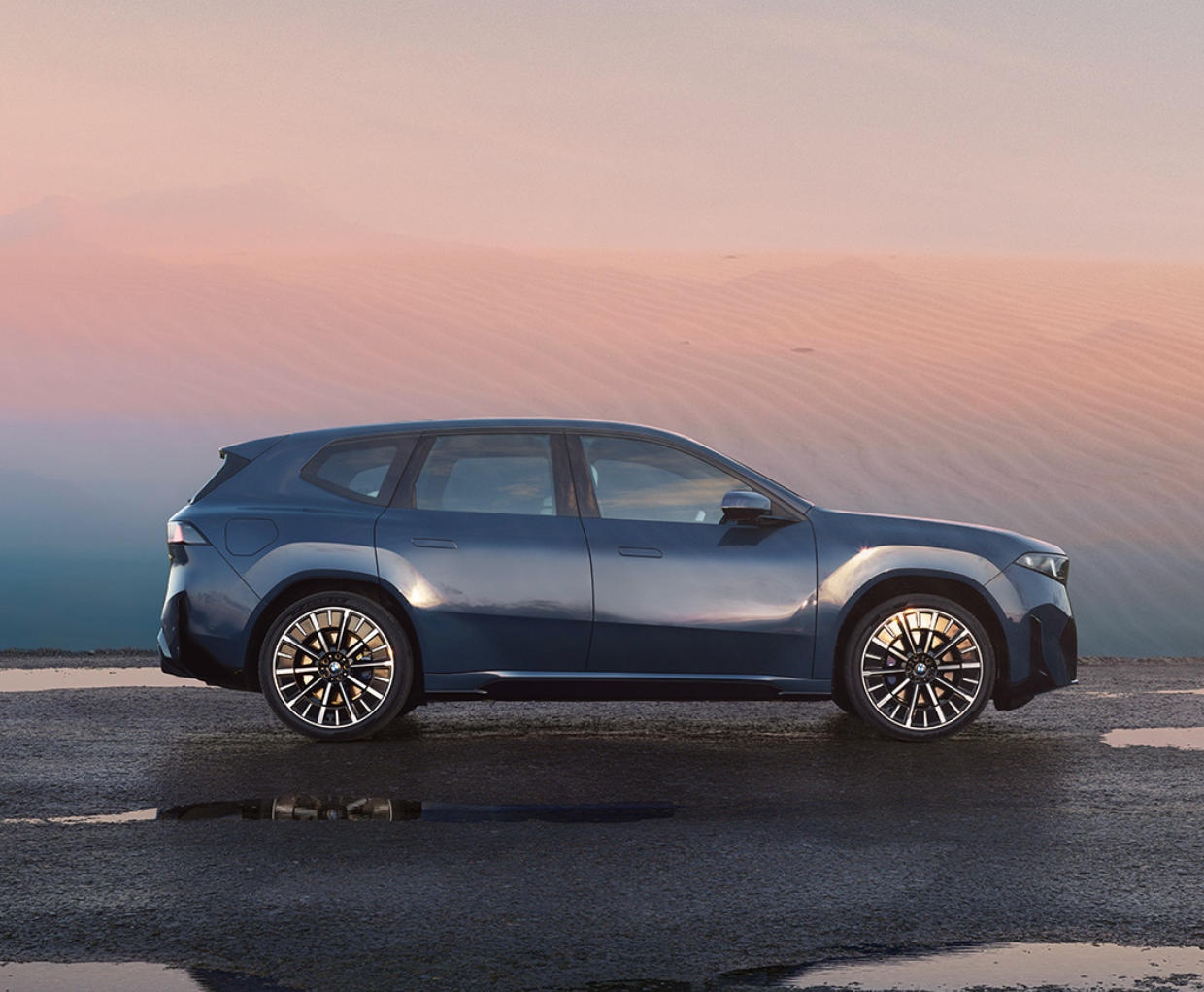
Group 1: BMW Group Performance - BMW Group delivered 588,300 vehicles in Q3 2025, a year-on-year increase of 8.8% [1] - Cumulative deliveries of BMW, MINI, and Rolls-Royce reached 1,795,894 units by the end of September, a slight increase of 2.4% compared to the previous year [1] - In Q3, a total of 151,282 electric (BEV) and plug-in hybrid (PHEV) vehicles were delivered, with a total of 470,313 new energy vehicles sold in the first three quarters, marking a 15.0% year-on-year growth [3] Group 2: Mercedes-Benz Sales - Mercedes-Benz sold 525,300 vehicles globally in Q3, with pure electric vehicle sales increasing by 22% quarter-on-quarter and 9% year-on-year [4] - High-end model sales grew by 5% quarter-on-quarter and 10% year-on-year, reaching 67,800 units, accounting for 15.4% of total sales [6] Group 3: Hongmeng Zhixing Performance - Hongmeng Zhixing received over 48,500 large orders during the National Day holiday, averaging about 6,000 units sold per day [6] - In September, the company delivered 52,916 new vehicles, surpassing 950,000 cumulative deliveries, with new orders exceeding 110,000, setting a historical high [8] Group 4: New Energy Vehicle Tax Policies - The Ministry of Industry and Information Technology, along with other departments, announced new requirements for the exemption of vehicle purchase tax for new energy vehicles for 2026-2027 [9] - Pure electric passenger vehicles must meet specific energy consumption limits, while plug-in hybrid vehicles have defined requirements for electric range and fuel consumption [9][10] Group 5: Dongfeng and Huawei Collaboration - Dongfeng and Huawei launched a public naming campaign for their joint DH project, emphasizing a two-character brand name that signifies intelligent travel [10] - The DH project, initiated in January, aims to develop a high-end intelligent full-size SUV expected to launch in 2026 [12] Group 6: Dongfeng Nissan's New Engine - Dongfeng Nissan's first plug-in hybrid vehicle, the N6, features the newly developed NR15 engine, which was officially launched on September 30 [13] - The N6 is positioned as a mid-size car with a hybrid system combining a 1.5L naturally aspirated engine and an electric motor, offering two pure electric range options of 125 km and 130 km [15] Group 7: International Standard for Smart Mobility - The proposal for the international standard on "Safety and Privacy in Smart Mobility Services" has been successfully initiated, with support from multiple countries [16] - This standard aims to establish a common framework for smart mobility services, focusing on safety measures and data flow among stakeholders [16] Group 8: BYD Han Long Range Version Launch - BYD launched the Han Long Range version with prices starting from 159,800 yuan after subsidies, featuring significant advancements in range and efficiency [17] - The Han DM-i Long Range version offers a pure electric range of 245 km and a fuel consumption of only 3.44L/100km, while the EV version provides a range of 635 km to 705 km [19]

东风商用车重卡又爆大单了!
第一商用车网· 2025-10-13 07:27
Core Viewpoint - Dongfeng Commercial Vehicle is experiencing a surge in deliveries across the country, showcasing its commitment to quality and reliability in the commercial vehicle market [1][3]. Delivery Highlights - In September, Dongfeng Commercial Vehicle held multiple grand delivery ceremonies nationwide, emphasizing its strong market presence from south to north, covering various sectors such as express delivery and resource transportation [3]. - Specific delivery figures include: - 70 units of new energy heavy trucks in Wuhan, Hubei [4] - 50 units of new energy tractors in Chengdu, Sichuan [5] - 30 units of new energy tractors in Shanxi [5] - 15 units of new energy dump trucks in Nanchang, Jiangxi [6] - 300 units of gas/oil tractors in Wenzhou, Zhejiang [6] - 100 units of gas tractors in Zhengzhou, Henan [7] - 60 units of gas hazardous material tractors in Shiyan, Hubei [7] - 40 units of gas tractors in Puyang, Henan [8] - 10 units of gas tractors in Wenshan, Yunnan [9] Strategic Vision - Each delivery is seen as a recognition of Dongfeng's quality, with the company aiming to create value for customers and inject strong momentum into industry development [11]. - Dongfeng Commercial Vehicle is looking forward to achieving more milestones by 2025, reinforcing its position in the market [11].

东风股份跌3.08%,成交额6026.45万元,主力资金净流出1694.03万元
Xin Lang Cai Jing· 2025-10-13 02:00
Core Viewpoint - Dongfeng Motor Corporation's stock has experienced a decline of 3.08% on October 13, with a current price of 7.56 CNY per share and a market capitalization of 15.12 billion CNY, indicating a mixed performance in recent trading periods [1] Financial Performance - For the first half of 2025, Dongfeng reported a revenue of 5.03 billion CNY, a year-on-year decrease of 13.22%, while the net profit attributable to shareholders was 97.21 million CNY, showing a significant increase of 48.66% [2] - Cumulative cash dividends since the A-share listing amount to 3.47 billion CNY, with 156 million CNY distributed over the past three years [3] Shareholder Structure - As of June 30, 2025, the number of shareholders decreased by 8.75% to 131,400, while the average number of circulating shares per person increased by 9.59% to 15,219 shares [2] - Notable changes in institutional holdings include an increase in shares held by Southern CSI 1000 ETF and a decrease by Hong Kong Central Clearing Limited [3]