
小米

Search documents
2030年汽车市场格局,玩家还有多少?
数说新能源· 2025-10-13 08:12
Core Viewpoint - The article discusses the future landscape of the Chinese automotive market by 2030, emphasizing the potential consolidation of players and the critical role of electric vehicles (EVs) in shaping the market dynamics [1][12]. Group 1: Central Enterprises - The three central enterprises are accelerating their transition to new energy, but only Changan is showing significant change, with a likelihood of mergers or further integration among them, potentially leaving only one major player [1]. - The assessment of the fuel vehicle business dependency for the three central enterprises indicates high risks, particularly for FAW and Dongfeng, due to their reliance on joint ventures and slow transition to EVs [2]. - Changan is noted for its faster transition and lower dependency on fuel vehicles compared to its peers, positioning it better for the future [2]. Group 2: Local State-Owned Enterprises - Local state-owned enterprises like BAIC may become less relevant due to the rise of new players like Xiaomi and Li Auto, while SAIC remains a significant player but faces profitability challenges [2]. - The article suggests that without strong governmental push for restructuring, only one local state-owned enterprise may survive in the competitive landscape [2]. Group 3: Private Enterprises - BYD is identified as the dominant player among private enterprises, with Geely also expected to remain competitive, while Great Wall and Chery have a chance to stay relevant [3]. - The emergence of new forces like Huawei and Xiaomi is highlighted as a significant factor that could reshape the competitive landscape [3]. Group 4: Market Dynamics and Sales Projections - The "survival line" for mainstream automakers in the EV market is projected at an annual sales volume of 1 million units, with 2 million units needed to maintain pricing power and invest in next-generation technologies [4]. - The penetration rate of new energy vehicles in China is expected to exceed 50% by 2024, with projections suggesting it could reach between 70% and 85% by 2030 [5]. - The total retail sales of passenger vehicles in China are projected to grow slightly from 23 million in 2024 to 25 million by 2030, with a significant portion of this market transitioning to EVs [5]. Group 5: Replacement Market Analysis - The article outlines a replacement market for fuel vehicles, estimating that 8 to 10 million buyers will switch to EVs by 2030, creating a substantial market opportunity for new energy vehicles [6]. - The analysis of various price segments indicates that the economic segment (under 80,000 RMB) will predominantly be occupied by EVs, while the mainstream market (80,000-150,000 RMB) is largely controlled by BYD and Geely [7][8]. Group 6: Competitive Landscape and Future Outlook - The competitive landscape in the mid-to-high-end market (150,000-250,000 RMB) is expected to be challenging, with brands like NIO and Li Auto facing stiff competition from Huawei and Tesla [9][10]. - The high-end market (above 400,000 RMB) is anticipated to be dominated by Huawei, with significant challenges for other brands to maintain market share [10]. - Factors such as export markets, demographic changes, and pricing strategies will play crucial roles in shaping the future of the automotive industry in China [11][12].



奇迹日!特朗普,重大突发!
Zhong Guo Ji Jin Bao· 2025-10-13 08:08
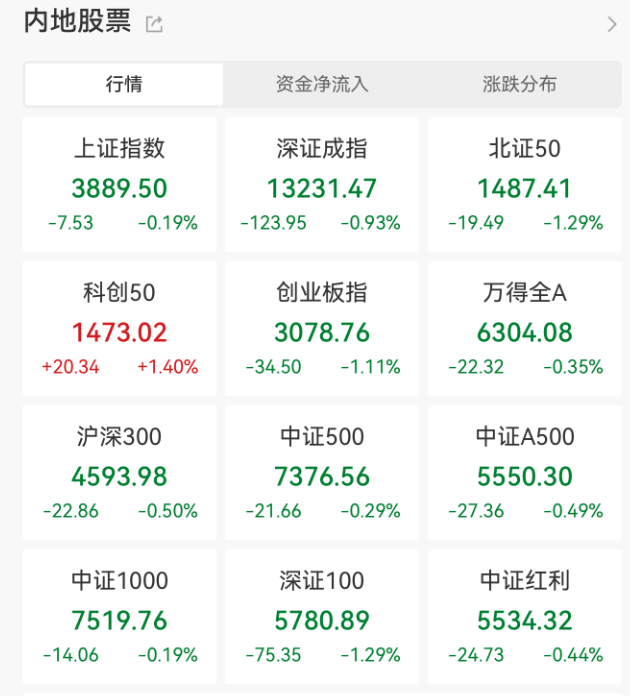
Market Overview - The market showed resilience despite a slight decline in the three major indices, with the overall performance exceeding expectations amid tariff pressures [1][14]. - On October 13, A-shares opened significantly lower but rebounded, with the Shanghai Composite Index closing down 0.19%, the Shenzhen Component down 0.93%, and the ChiNext Index down 1.11%. The STAR 50 Index was the best performer, rising 1.4% [3][4]. Stock Performance - A total of 1,684 stocks rose while 3,634 stocks fell, with 73 stocks hitting the daily limit up. The total trading volume reached 23,742.21 billion, with a total turnover of 146,016.8 million shares [5]. - The rare earth sector saw a collective surge, with companies like China Rare Earth and Northern Rare Earth hitting the daily limit up. In September, China exported 4,000.3 tons of rare earths, down from 5,791.8 tons in August [6][7]. Gold and Silver Stocks - Gold and silver stocks strengthened in the afternoon, with West Mining and Silver Resources hitting the daily limit up. The spot silver price surged nearly 3%, reaching a historical high, while spot gold prices briefly exceeded $4,070 per ounce [8][10]. Semiconductor Sector - The semiconductor industry experienced a rebound, with companies like Huahong Semiconductor and Luwei Optoelectronics hitting the daily limit up [10][11]. Xiaomi Stock - Xiaomi's stock fell nearly 7% following an incident where a Xiaomi SU7 caught fire after a collision in Chengdu, raising concerns about safety [12]. Tariff Developments - Trump's recent comments suggested a potential cancellation of new tariffs on Chinese goods, which has led to a significant rise in U.S. stock index futures. This contrasts with previous threats of imposing additional tariffs [14][16].
汽车行业2025年10月投资策略:3月狭义乘用车市场销量预计同比增长2%,建议关注三季报行情
Guoxin Securities· 2025-10-13 07:17
Investment Rating - The report maintains an "Outperform" rating for the automotive industry [1][4][5] Core Views - The automotive industry is transitioning into a technological era, with electric, intelligent, and connected vehicles driving growth. The report emphasizes the importance of energy flow applications in electrification and data flow applications in intelligence [14][15] - The report highlights the rise of domestic brands and the opportunities in incremental components driven by electric and intelligent trends [4][25] - The report anticipates a compound annual growth rate of 2% for the overall automotive market in China over the next 20 years, with significant growth in the new energy vehicle segment [15][22] Monthly Sales and Market Performance - In September, the narrow passenger car market is expected to see a retail sales volume of approximately 2.15 million units, representing a month-on-month increase of 6.5% and a year-on-year increase of 2% [1][10] - The automotive sector's performance in September showed a 6.38% increase, outperforming the CSI 300 index by 3.18 percentage points [2][10] Key Company Recommendations - Recommended companies include: - Leap Motor, Geely, and JAC Motors for strong new product cycles [4][5] - Companies in the intelligent sector such as Coboda, Huayang Group, and Junsheng Electronics [4] - Robotics companies like Top Group and Sanhua Intelligent Control [4] - Domestic replacement companies including Xingyu, Fuyao Glass, and Jifeng [4] Profit Forecasts and Valuations - Profit forecasts for key companies indicate that Leap Motor is expected to have an EPS of 0.62 in 2025, with a PE ratio of 107 [5] - Geely is projected to have an EPS of 1.57 in 2025, with a PE ratio of 13 [5] - JAC Motors is expected to have a significantly high PE ratio of 478 in 2025, reflecting its growth potential [5] Market Trends and Future Outlook - The report notes that the penetration rate of new energy vehicles is expected to reach 38% in 2024, with sales of new energy passenger vehicles projected to exceed 1.55 million units in 2025, representing a year-on-year growth of over 25% [22][25] - The report emphasizes the importance of the new energy vehicle segment as a high-growth area within the automotive industry [15][22]

怪兽充电拒绝高瓴私有化要约 为啥不选出价高的方案?
Xi Niu Cai Jing· 2025-10-13 06:28
Core Viewpoint - Monster Charging's board has officially rejected Hillhouse Capital's premium privatization offer and decided to continue with the original privatization plan formed with CITIC Capital and management [2] Group 1: Privatization Offer - Hillhouse Capital made a preliminary non-binding privatization proposal on August 15, offering $1.77 per ADS, which is approximately 40% higher than the $1.25 per ADS offer previously signed by Monster Charging's management with CITIC Capital [2] - The original privatization offer of $1.25 per ADS was initiated by CITIC Capital and Monster Charging's management in January this year [2] - The $1.25 per ADS offer is significantly lower than the cash asset value of $1.63 per ADS disclosed in Monster Charging's 2024 annual report [2] Group 2: Financial Performance - In 2024, Monster Charging reported revenue of 1.894 billion yuan, a year-on-year decline of 36% [2] - The net loss for the company was 13.5 million yuan, which represents a year-on-year increase of 115.21% [2] - The decline in revenue is attributed to the transition from a direct sales model to a network partner model, as well as intensified industry competition leading to reduced efficiency in charging service revenue [2] Group 3: Company Background - Monster Charging was established in 2017 and went public in April 2021, attracting support from top investment institutions such as Alibaba, Hillhouse, and Xiaomi through six rounds of financing [2]
经纬恒润(688326):Q2扭亏为盈 智驾业务成长驱动业绩持续向好
Xin Lang Cai Jing· 2025-10-13 06:27
Core Viewpoint - The company reported a significant increase in revenue for H1 2025, achieving 2.908 billion yuan, a year-on-year growth of 43.48%, while narrowing its net loss to 87 million yuan, a reduction of 73.91% compared to the previous year [1] Group 1: Financial Performance - In Q2 2025, the company achieved revenue of 1.580 billion yuan, a year-on-year increase of 38.90% and a quarter-on-quarter increase of 18.98% [1] - The company turned a profit in Q2 2025 with a net profit of 33 million yuan and a non-recurring net profit of 19 million yuan, marking a significant recovery [1] - The gross margin for Q2 2025 was 24.6%, an increase of 3.7 percentage points year-on-year and 3.3 percentage points quarter-on-quarter [1] Group 2: Business Expansion and Product Development - The company is focusing on automotive electronics, with a wide range of products covering over 80% of the components in the automotive electronics industry [1] - The company has established strategic partnerships with major clients such as Geely, Xiaomi, and XPeng, which are expected to drive continued growth in sales [1] - New products, including intelligent driving domain controllers and integrated control systems, are set to be mass-produced in the second half of the year, enhancing the company's value per vehicle [2] Group 3: Industry Trends and Regulatory Environment - The release of the L2 strong standard is expected to promote the standardization of the intelligent driving industry and expand the market scale, benefiting the company as an industry leader [3][4] - The company is well-positioned to take advantage of the market opportunities arising from the L2 strong standard, with a comprehensive product lineup in DMS, domain control, cameras, and millimeter-wave radar [4] Group 4: Future Growth Projections - The company is projected to achieve revenues of 7.077 billion yuan, 8.624 billion yuan, and 10.177 billion yuan from 2025 to 2027, with net profits of 58 million yuan, 234 million yuan, and 448 million yuan respectively [4] - The expected growth catalysts include the mass production of urban NOA in Q4 2025 and the ramp-up of production capacity at the Malaysia factory [4]

一辆SU7碰撞后爆燃,多人救援未果!小米股价重挫近8%!
Xin Lang Cai Jing· 2025-10-13 04:45
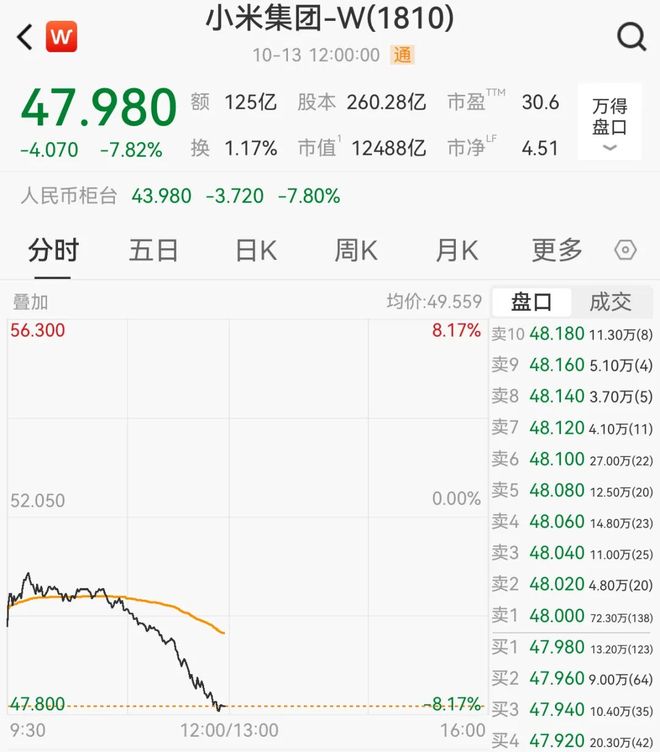
Group 1 - Xiaomi's stock price fell by 7.82% to HKD 47.98 per share as of the midday close on October 13 [2] - A Xiaomi SU7 vehicle was involved in a collision and subsequently caught fire on a main road in Chengdu, Sichuan, resulting in the unfortunate death of the driver [4] - The involved vehicle is identified as a Xiaomi SU7 Ultra version, with a base price of at least RMB 579,900 [6] Group 2 - Xiaomi has not yet responded to the incident involving the SU7 vehicle [6]
小米第三款车要来了!雷军胡峥楠亲赴新疆试车,多张谍照曝光
自动驾驶之心· 2025-10-13 04:00
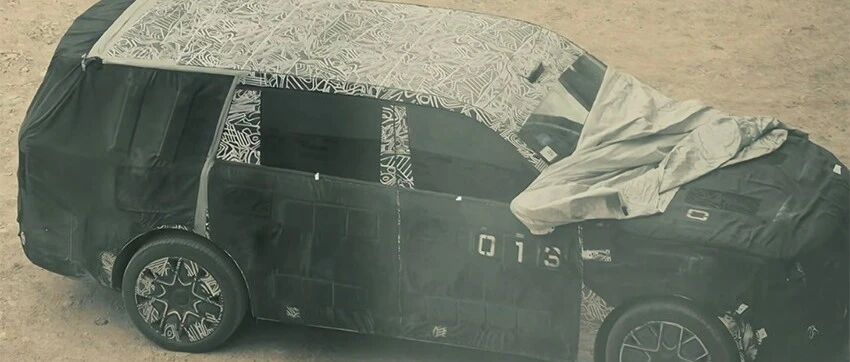
Core Viewpoint - Xiaomi is actively testing its third vehicle model, tentatively named Xiaomi YU9, in Xinjiang, indicating significant progress in its automotive development [2][3][40]. Group 1: Testing and Development - Xiaomi founder Lei Jun is personally overseeing high-altitude tests for the Xiaomi YU9 in Xinjiang, with a team of over 20 engineers involved in various testing aspects, including range and charging capabilities [15][25]. - Multiple Xiaomi executives, including senior advisor Hu Zhengnan and VP Zhang Jianhui, are also participating in the testing, suggesting a major testing initiative [5][25][40]. - Videos and images of the Xiaomi YU9 undergoing road tests have surfaced, showing a camouflaged vehicle with a specific identification number [9][10][41]. Group 2: Vehicle Specifications - The Xiaomi YU9 is expected to feature a range-extended powertrain, as indicated by the presence of an exhaust system in leaked images [26][27]. - The vehicle's dimensions are projected to exceed 5.2 meters in length and approximately 1.8 meters in height, making it a large SUV [28][29][33]. - It is anticipated that the Xiaomi YU9 will have a battery capacity of 80 kWh, with an electric range exceeding 400 km [28][29]. Group 3: Market Impact and Future Plans - The introduction of the Xiaomi YU9 is expected to enhance Xiaomi's product lineup, potentially leading to increased sales targets following the recent record of over 40,000 units delivered in September [42][40]. - The vehicle is projected to be launched in 2026, aligning with Xiaomi's strategy to expand its automotive offerings [39][40].
小米暴跌6.5%
Di Yi Cai Jing· 2025-10-13 03:43
小米暴跌6.5% 截至发稿,小米港股暴跌6.5%。消息面上,10月13日凌晨,四川成都天府大道主干道,一辆小米SU7在 行驶中发生碰撞后起火燃烧,多人合力救援未能打开SU7车门。 ...