软银集团

Search documents
桥水抛售英伟达65.3%持股,多家机构同步减持
Di Yi Cai Jing Zi Xun· 2025-11-15 01:23
Group 1 - The core point of the article highlights that Bridgewater, the world's largest hedge fund, significantly reduced its holdings in chip giant Nvidia by 65.3% in the third quarter [2] - Major institutions such as Barclays and Citigroup also decreased their positions in Nvidia, indicating a broader trend among large investors [2] - The ongoing debate regarding the "AI bubble" has intensified, especially following SoftBank's sale of Nvidia shares [2]


甲骨文押注“AI+数据” 重塑自身形象
2 1 Shi Ji Jing Ji Bao Dao· 2025-11-15 01:10
Core Insights - Oracle aims to redefine its position in the enterprise AI market with a product suite centered around "AI + Data" as it seeks to reshape its image in the AI era [2] - A report from MIT indicates that 95% of generative AI investments have not yielded substantial benefits for enterprises, highlighting the importance of data infrastructure and architecture [2] Group 1: Strategic Focus - Oracle's strategic focus has shifted from cloud infrastructure to overall AI capabilities, emphasizing openness in technology architecture, multi-cloud support, and external ecosystem collaboration [4] - The introduction of Oracle AI Database 26ai is positioned as a "next-generation AI-native database" that supports the creation and deployment of intelligent applications [4][5] Group 2: Product Offerings - Oracle AI Data Platform (AIDP) aims to integrate databases, data lakes, and large model services under a unified architecture, providing tools for data visualization and workflow management [5] - The new OCI Zettascale10 Cluster supercomputing cluster supports up to 800,000 GPUs and is designed for high throughput and low latency, serving as a performance engine for OCI [5] Group 3: Partnerships and Collaborations - Oracle has partnered with Dify, an open-source LLM application development platform, to embed AI into the data layer and enhance enterprise-level intelligent applications [4][6] - The collaboration with Dify allows for the integration of structured and vector data into Dify's workflows, enhancing the capabilities of Oracle's AI Database 26ai [7] Group 4: Market Positioning - Oracle's collaboration with Dify is seen as a strategy to tap into more enterprise-level scenarios amid increasing competition in AI infrastructure [8] - The company is also expanding its data center deployments in the Middle East and Africa to cater to the outbound needs of Chinese enterprises [8]

甲骨文押注“AI+数据”,重塑自身形象
2 1 Shi Ji Jing Ji Bao Dao· 2025-11-15 01:06
Core Insights - Oracle aims to redefine its position in the enterprise AI market with a product suite centered around "AI + Data" [1] - A report from MIT indicates that 95% of generative AI investments have not yielded substantial returns for businesses [1] - Oracle emphasizes the importance of building a solid data foundation before implementing AI applications [1] Product Offerings - Oracle AI Database 26ai is introduced as a "next-generation AI-native database" that supports the creation and deployment of intelligent applications [2] - The Oracle AI Data Platform (AIDP) integrates databases, data lakes, and large model services under a unified architecture [2] - The platform includes tools for data visualization, workflow management, and conversational interfaces for business users [2] Cloud Infrastructure - Oracle has launched the OCI Zettascale10 Cluster, capable of supporting up to 800,000 GPUs, enhancing throughput and reducing latency [3] - The Zettascale10 Cluster is part of a collaboration with OpenAI for the "Stargate" project, which has an initial investment of $100 billion [3] - The total energy consumption for the Stargate project data centers is projected to reach 5 gigawatts, deploying over 2 million chips [3] Market Dynamics - Many Chinese enterprises are focusing their limited IT budgets on AI projects, but the outcomes are often unsatisfactory due to weak data foundations [4] - Oracle collaborates with Dify, an open-source community, to strengthen its enterprise-level intelligent infrastructure [4] - Dify's products are integrated into Oracle Cloud Marketplace, allowing for seamless deployment in OCI environments [4] Strategic Positioning - Oracle seeks to find a new positioning in the Chinese market through partnerships and an open, multi-cloud technology approach [5] - The company has been in China for 36 years and is now reshaping its image with new product offerings and partnerships [5] - Oracle is expanding its data center deployments in the Middle East and Africa to cater to the needs of Chinese enterprises going global [5]
“英伟达市值要冲8万亿美元”的背后
吴晓波频道· 2025-11-15 01:03
Core Viewpoint - The article discusses the current state of the AI industry, highlighting the potential bubble and risks associated with the rapid investment and speculation in AI technologies, drawing parallels to past financial crises like the internet bubble and subprime mortgage crisis [5][6][29]. Group 1: AI Industry Overview - Nvidia is set to release its Q3 earnings report, with 91% of Wall Street analysts rating its stock as a "buy" and HSBC raising its target price to $230, while Loop Capital Markets predicts a target of $350, potentially pushing Nvidia's market cap to nearly $8 trillion [3][4]. - The AI industry is experiencing a surge in investment, with 58% of venture capital directed towards AI companies this year, indicating a trend towards "purely speculative" companies heavily reliant on AI [12][16]. Group 2: Bubble Characteristics - According to economist Brent Goldfarb, the AI sector exhibits characteristics of a bubble, scoring an 8 out of 10 on his bubble scale, which includes uncertainty about profitability, reliance on speculative companies, and grand narratives surrounding AI's potential [8][17]. - The uncertainty in AI profitability is highlighted by OpenAI's significant losses, with a reported net loss of approximately $11.5 billion in Q1 2025, raising concerns about the sustainability of AI business models [9]. Group 3: Financial Operations and Risks - The article draws parallels between current AI investment strategies and the subprime mortgage crisis, noting that tech companies are using complex financial structures to fund AI infrastructure, which could lead to significant risks if the market turns [19][20]. - Morgan Stanley predicts that by 2028, total spending on data centers could reach $2.9 trillion, while the projected annual revenue from generative AI may only be $1 trillion, indicating a potential mismatch between investment and returns [20][26]. Group 4: Market Dynamics and Future Outlook - The article emphasizes that major tech companies view AI investment as a necessary gamble for survival, with leaders like Jeff Bezos and Andy Jassy suggesting that missing out on AI could be more detrimental than the risks of a bubble [29][30]. - The current investment climate is characterized by a rush to capitalize on AI advancements, with companies willing to take significant risks in hopes of achieving long-term dominance in the market [30].

投机主题都在抛!高盛交易台:周四美股动量交易创DeepSeek冲击以来最大跌幅
美股IPO· 2025-11-14 23:10
Core Viewpoint - The recent sell-off in the market, particularly affecting high-beta momentum trading strategies and AI-related stocks, is attributed to multiple pressure factors, including profit-taking ahead of Nvidia's earnings report, concerns over AI infrastructure investment returns, hawkish comments from the Federal Reserve, corporate layoffs, and year-end portfolio adjustments [1][7][9]. Group 1: Market Performance - The Nasdaq 100 index fell over 2% on Thursday, marking a decline in five out of the last six trading days, with market sentiment shifting towards a defensive stance [2][4]. - High-beta momentum trading (GSPRHIMO) experienced a 7% drop, the largest single-day decline since the DeepSeek event, indicating significant pressure on speculative sectors like AI and cryptocurrency-related stocks [1][4][5]. Group 2: Contributing Factors - Five key factors triggered the recent market downturn: profit-taking before Nvidia's earnings, concerns about inflated power demand in data centers related to AI, hawkish statements from Federal Reserve officials, corporate cost-cutting measures, and the seasonal pressure of year-end portfolio adjustments [9][10][11]. - The market is currently awaiting clearer signals, such as Nvidia's earnings performance and the Federal Reserve's monetary policy direction, to assess when the sell-off might stabilize [7][11]. Group 3: Investment Strategies - High-beta momentum strategies are currently showing a significant correlation with high short interest and high residual volatility, while their correlation with high-quality factors is notably lower than usual [12][14]. - Goldman Sachs' momentum strategy has shifted towards high-beta and cyclical sectors while shorting healthcare, making it particularly vulnerable during this sell-off [14][15]. - The skepticism surrounding AI is increasing, with notable events such as Oracle's credit default swaps widening and SoftBank selling Nvidia shares, impacting the AI thematic basket [15].

Megacap earnings story presents risk with reliance on startup usage
Youtube· 2025-11-14 20:11
Group 1 - Tech stocks are rebounding after three consecutive days of losses, but concerns about the AI bubble persist [1] - The source of concern may lie in private AI markets, as startup burn impacts big tech's profitability [1][2] - AI startups are raising significant capital, with Curser valued at nearly $30 billion despite only generating $1 billion in annualized revenue [2] Group 2 - Startups like Curser are heavily investing in AI models, which in turn drives revenue for big tech companies [3] - Soft Bank has divested from Nvidia, a major public beneficiary of the AI boom, to invest in OpenAI, a significant private loss generator [4] - A potential pullback in startup funding could negatively affect the earnings narrative for mega-cap tech companies [4]

Oracle Credit Derivatives Jump as Traders Rush to Hedge AI Bets
MINT· 2025-11-14 18:33
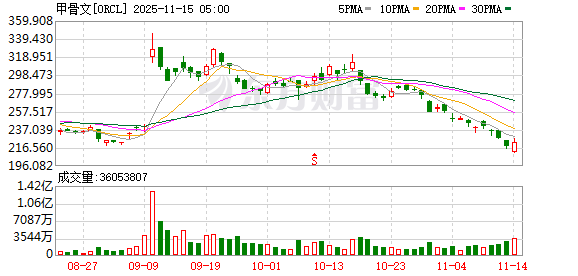
Core Viewpoint - The cost of protecting Oracle Corp.'s debt against default is increasing significantly due to investor concerns over the company's rising leverage and substantial investments in artificial intelligence [1][2]. Group 1: Debt and Credit Default Swaps - The spread on Oracle's five-year credit default swaps rose by 13.5 basis points to 101.68 basis points, marking the largest increase since December 2021 [1]. - Rising credit default swap prices indicate declining investor confidence in Oracle's credit quality, driven by fears of the company's leverage pushing it towards junk status [2]. Group 2: AI Investments and Financing - Oracle is part of a consortium, including OpenAI and SoftBank, aiming to invest $500 billion in AI infrastructure, with a significant portion financed through an $18 billion project loan from a group of about 20 banks [3]. - In September, Oracle issued $18 billion in US high-grade bonds to support its increased spending in response to the AI boom [3]. Group 3: Future Financial Outlook - Analysts predict Oracle's net adjusted debt could more than double to approximately $290 billion by fiscal year 2028, up from around $100 billion [4]. - Concerns regarding future revenue and cash flow generation due to rising AI infrastructure spending have negatively impacted Oracle's stock and bond prices [4]. Group 4: Investor Sentiment - Despite rising risks and underperformance in tech debt, analysts believe that concerns about a bubble in the AI sector are currently overstated [5].

Global markets struggle after tech sell-off and fears over Chinese economy
Yahoo Finance· 2025-11-14 17:39
Market Overview - Global markets have experienced a decline following a tech sell-off, marking Wall Street's worst day in a month and reflecting weak economic data from China, which indicated an unprecedented slump in investment [1][6]. - The tech-focused Nasdaq Composite fell by as much as 1.8%, while the S&P 500 and Dow Jones industrial average declined by 0.7% and 1%, respectively [2]. - The FTSE 100 index fell by 1.4%, losing approximately 100 points, as major banking stocks like Barclays, Lloyds, and NatWest dropped between 3% and 3.5% [2][3]. Regional Market Performance - The FTSE 100 closed at 9,705, having previously threatened to break the 10,000-point mark [3]. - European markets also saw declines, with the pan-European Stoxx 600 falling by 0.9% [3]. - France's Cac 40 and Germany's Dax fell by 0.54% and almost 0.9%, respectively, while Japan's Nikkei dropped by 1.8% and South Korea's Kospi plunged by 2.6% [4]. Tech Sector Impact - Nvidia, valued at $4.5 trillion, led the decline in the tech sector, falling by 3.6% as investors reassessed the value of AI-related businesses following SoftBank's sale of its entire stake in the company [5]. - Other tech companies such as SoftBank, SK Hynix, Samsung Electronics, and Taiwan Semiconductor Manufacturing Company also experienced significant declines, with drops ranging from 1.8% to over 6% [6]. Economic Data and Concerns - China's fixed-asset investment shrank by 1.7% in the first ten months of the year, marking a record decline, which contributed to fears of a slowdown in the Chinese economy [7]. - The CSI 300 index fell by 0.7%, while Hong Kong's Hang Seng and Taiwan's Taiex dropped by 0.9% and 1.4%, respectively [7]. - US markets are facing uncertainty due to the longest federal government shutdown in history, which has delayed the release of crucial economic data [8]. Interest Rate Outlook - There is growing caution among officials regarding the prospects of a US rate cut next month, with analysts noting a volatile week in market sentiment [9].
一周热榜精选:数据“消失”不影响美联储放鹰!AI泡沫带崩美股?
Jin Shi Shu Ju· 2025-11-14 13:33
Market Overview - The US dollar index faced slight pressure this week, dipping below the 99 mark, and is expected to close lower for the second consecutive week. The longest government shutdown in US history has ended, but key economic data will take time to be released. Fed officials have signaled a hawkish stance, reducing the likelihood of a rate cut in December [1] - Precious metals prices rose overall, with spot gold reaching a high of $4245 per ounce due to a weaker dollar and safe-haven buying. Spot silver saw a similar trend but with a larger increase, rising nearly 10% at one point. However, both gold and silver experienced a sharp decline on Friday, narrowing their weekly gains [1] - Oil prices for WTI and Brent crude saw significant mid-week declines followed by a rebound. OPEC's latest report adjusted its forecast for a "supply shortage" to "supply surplus" for Q3, while the IEA raised its forecast for global oil supply surplus for the sixth consecutive month, predicting that demand will stop growing by the end of this decade [1] Economic Data and Federal Reserve - The US government shutdown has ended, but key economic data such as non-farm payrolls and CPI remain absent. The shutdown is estimated to have caused a GDP decline of over 0.1%. The release of economic data may take months to normalize due to staffing shortages and leadership vacancies [6][7] - Market analysis suggests that unless there are significant surprises in delayed data, the rationale for a third rate cut by the Fed this year is rapidly diminishing. The probability of a 25 basis point cut in December is now at 51.6%, down from 95.5% a month ago [8][9] - Several Fed officials have expressed hawkish views, indicating a preference for maintaining current rates due to high inflation and the absence of key data. The Fed's stance is complicated by internal disagreements among officials regarding the economic outlook and policy direction [9][10] Corporate Developments - Nomura expects the Fed to pause rate cuts in December, while UBS predicts that global gold demand will reach its highest level since 2011 this year and next. JPMorgan Private Bank forecasts gold prices to exceed $5000 per ounce by the end of 2026 [5] - Alibaba has reportedly launched a secret project called "Qianwen," aimed at developing a personal AI assistant to compete with ChatGPT. This initiative is seen as a significant move to integrate AI capabilities into its e-commerce platform [24] - SoftBank has completed the liquidation of its Nvidia shares, raising $5.83 billion to fund an additional investment of $22.5 billion in OpenAI. This decision has led to a significant drop in SoftBank's stock price [25][26] Geopolitical Events - The US has initiated "Operation Southern Shield" to combat drug-related terrorism in the Western Hemisphere, with military actions already taken against suspected drug trafficking vessels [11][12] - Venezuela is preparing for potential military action from the US by deploying guerrilla tactics, having established combat positions at over 280 sites [13][14] - Tensions between India and Pakistan have escalated following bombings in both capitals, leading to a declaration of war readiness by Pakistan [19]

投机主题都在抛!高盛交易台:周四美股动量交易创DeepSeek冲击以来最大跌幅
Hua Er Jie Jian Wen· 2025-11-14 13:25
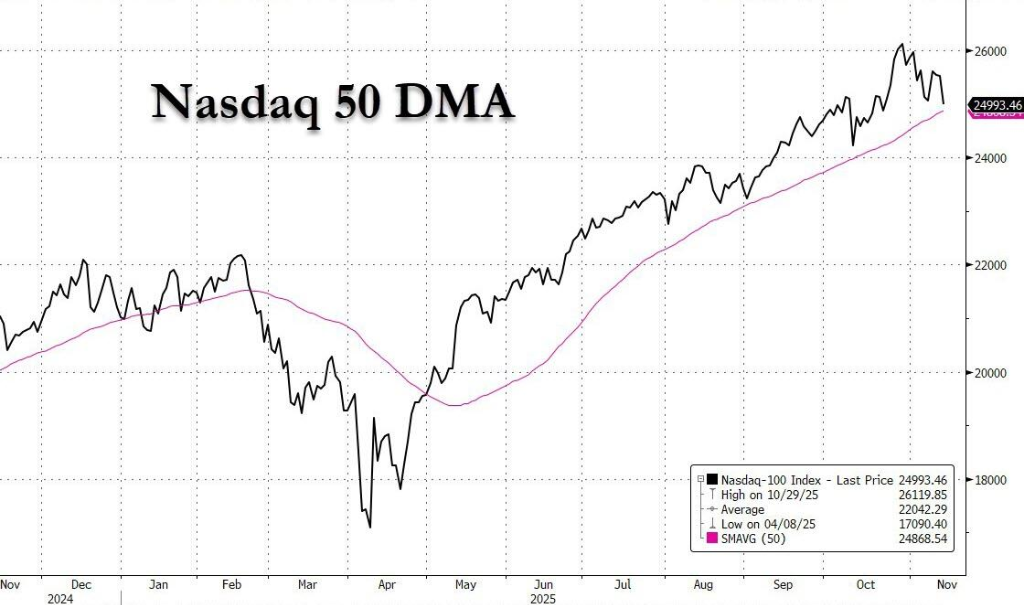
Core Viewpoint - The market is experiencing significant sell-offs in technology stocks, particularly those related to AI, due to concerns over massive financing needs and a shift in investor sentiment towards a defensive stance [1][10]. Group 1: Market Performance - The Nasdaq 100 index fell over 2% on Thursday, marking five declines in the last six trading days, with the index only about 5% away from its historical high [1]. - High Beta Momentum Pair Trading (GSPRHIMO) dropped 7% on Thursday, the second-worst performance of the year, indicating a severe sell-off in speculative sectors like AI-related stocks and Bitcoin-sensitive stocks [4][9]. Group 2: Factors Behind the Sell-off - Goldman Sachs identified five key triggers for the recent market downturn: profit-taking ahead of Nvidia's earnings report, concerns over inflated power demand for AI infrastructure, hawkish comments from Federal Reserve officials, corporate cost-cutting announcements, and upcoming economic data releases [6][11]. - The market is currently facing a challenging macro backdrop, with deteriorating performance from internet companies and signs of fatigue in leading sectors like AI and large tech stocks [6]. Group 3: Momentum Trading Strategies - Momentum trading strategies are highly correlated with AI narratives, and the recent sell-off has raised concerns about a potential wave of position liquidations before year-end [7]. - The correlation between momentum factors and high short interest, high residual volatility, and high beta has significantly increased, while the correlation with high-quality factors remains low [7][9]. Group 4: AI Sector Sentiment - AI beneficiary stocks have declined by 9% relative to the S&P 500, excluding the "Magnificent Seven" tech giants, with previous similar pullbacks averaging around 20% [9]. - Skepticism towards AI is rising, influenced by factors such as Oracle's widening credit default swaps and SoftBank's sale of Nvidia shares, which are impacting the AI thematic basket [11].