大疆

Search documents
北纬科技(002148.SZ):天宇经纬的御空机场暂未与除了大疆之外的其他厂家设备进行适配
Ge Long Hui· 2025-09-05 07:15
格隆汇9月5日丨北纬科技(002148.SZ)在投资者互动平台表示,天宇经纬的御空机场暂未与除了大疆之 外的其他厂家设备进行适配,天宇云盒可适配除大疆外的普宙、道通等多品牌工业级无人机设备。 ...

影石创新与大疆为什么都盯上了对方的生意
Zheng Quan Zhi Xing· 2025-09-05 06:04
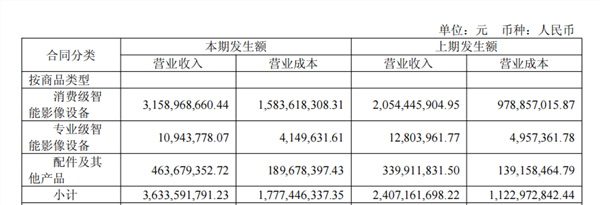
Core Viewpoint - The consumer imaging and drone market is witnessing a significant competitive shift as leading companies, Insta360 and DJI, expand into each other's core markets, indicating a high-level competition that is emerging [1][12]. Group 1: Market Dynamics - The global panoramic camera market is limited, with a size of 5.03 billion yuan in 2023, expected to grow to 7.85 billion yuan by 2027, reflecting a compound annual growth rate (CAGR) of less than 12% [2]. - Insta360 holds a dominant market share of 67.2% in the panoramic camera sector, indicating limited room for further market share expansion [2]. - The revenue structure of Insta360 shows that in the first half of 2025, revenue from consumer-grade smart imaging devices was 3.159 billion yuan, accounting for 86.06% of total revenue [3]. Group 2: Strategic Expansion - Insta360's entry into the drone market is a strategic move to seek a "second growth curve" due to the limitations of the panoramic camera market [4]. - The consumer drone market is projected to grow at a CAGR of over 10.32%, with an estimated market size exceeding 13 billion USD by 2033, making it a more attractive sector compared to panoramic cameras [4]. - Insta360 aims to create a comprehensive product matrix by introducing drones, catering to users' diverse shooting needs and enhancing customer loyalty [6]. Group 3: Competitive Landscape - DJI is facing growth challenges, with recent product releases criticized for lacking innovation, necessitating a response to maintain market leadership [7]. - Insta360's strategy involves creating a differentiated product category with "panoramic drones," avoiding direct competition with traditional drones while leveraging its established brand in panoramic cameras [8]. - The technological overlap between panoramic cameras and drones allows Insta360 to utilize its existing expertise in optics and smart devices to develop competitive products [9]. Group 4: Future Considerations - Insta360's cloud service, launched in January 2025, enhances user experience by providing cloud storage and editing capabilities, which can significantly improve the usability of their products [10]. - To establish itself as a leading brand in the new drone category, Insta360 must validate its product strength through market share data [11]. - The presence of a strong competitor like DJI presents both challenges and opportunities for Insta360, as it can lower market education costs while also increasing competitive pressure [12].

北纬科技:天宇经纬的御空机场暂未与除了大疆之外的其他厂家设备进行适配
Mei Ri Jing Ji Xin Wen· 2025-09-05 04:26
(记者 张明双) 每经AI快讯,有投资者在投资者互动平台提问:天宇经纬的"御空5G智能无人值守智能机场"是一款内 置5G的网联机场硬件,可以支持大疆的m300/m350等系列的无人机,在机场端可实现无人机自动充电 及换电、远程控制、数据回传的功能,适用于固定线路巡査、短距离巡查、应急安防配置,配合天宇云 盒产品和无人机云平台等系统,可远程控制无人机及机场进行作业。请问董秘,除了适配大疆无人机 外,还适配了哪些厂家的无人机? 北纬科技(002148.SZ)9月5日在投资者互动平台表示,天宇经纬的御空机场暂未与除了大疆之外的其 他厂家设备进行适配,天宇云盒可适配除大疆外的普宙、道通等多品牌工业级无人机设备。 ...
迁厂也没用!富士从中国搬回日本,照样被加税15%,相机还得涨价
Sou Hu Cai Jing· 2025-09-05 04:12
Core Viewpoint - Fujifilm's decision to relocate production from China back to Japan has resulted in unexpected consequences, as the company is still subjected to a 15% tariff on camera imports to the U.S., highlighting the challenges of navigating trade policies and the complexities of global supply chains [1][2][5]. Group 1: Background and Decision - The decision to move production back to Japan was made in response to fears of high tariffs on cameras produced in China amid escalating U.S.-China trade tensions [2]. - Fujifilm believed that relocating to Japan would shield them from tariffs due to the historically strong U.S.-Japan relationship [2]. Group 2: Current Situation and Impact - The U.S. Department of Commerce has imposed a 15% anti-dumping tax on Japanese camera imports, which has taken Fujifilm by surprise [2][5]. - This tariff could result in Fujifilm incurring additional costs of several million dollars annually, which will likely lead to increased camera prices for consumers [7]. Group 3: Broader Implications - Fujifilm's experience illustrates the indiscriminate nature of U.S. trade protectionism, affecting both competitors and allies alike [9]. - The case serves as a cautionary tale for companies considering relocating production to avoid trade risks, as such moves may not yield the expected benefits [9]. - The situation emphasizes the importance of maintaining competitive product quality and innovation in a complex international trade environment, as demonstrated by companies like Huawei and DJI [11][12][14].

越卖越贵的扫地机器人,正被打工人抛弃
3 6 Ke· 2025-09-05 00:06
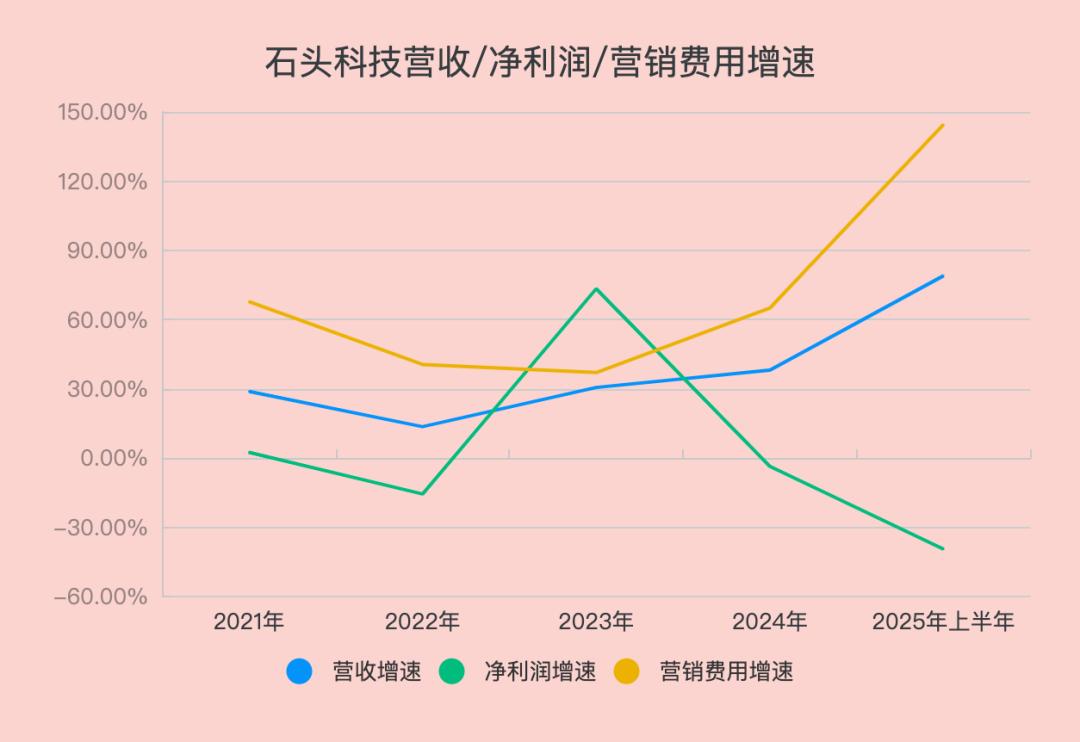
Core Insights - The sweeping robot industry is facing a decline in consumer satisfaction and sales despite rising prices, leading to a situation where many consumers abandon their devices after minimal use [1][2] - Major companies like Stone Technology and Ecovacs are experiencing revenue growth but declining profits, indicating a challenging market environment [1][4] - The market is becoming increasingly competitive with new entrants and high marketing and R&D costs, leading to a phenomenon known as "involution" within the industry [7][8] Industry Overview - The average online price of sweeping robots has increased from 1413 yuan in 2018 to 3207 yuan in 2024, more than doubling [1] - Despite a retail revenue increase to 193.6 billion yuan in 2024, the industry is struggling with profitability, as seen in Stone Technology's net profit decline of 39.55% in the first half of the year [2][4] - The sweeping robot market saw a peak in sales in 2020 with 6.54 million units sold, but has not returned to that level, with projected sales of 6.036 million units in 2024 [1][2] Company Performance - Stone Technology reported a revenue of 7.903 billion yuan in the first half of 2024, a year-on-year increase of 78.96%, but its net profit fell to 678 million yuan, a decrease of 39.55% [1][4] - Ecovacs has shown a slight recovery in net profit growth in 2024 after two years of negative growth, with marketing expenses growing at a slower rate than revenue [4][7] - Both companies are investing heavily in R&D, with Stone Technology's R&D expenses increasing by over 50% in 2024 [7][8] Market Dynamics - The sweeping robot market is not saturated, with a penetration rate of approximately 5.5% in China compared to over 10% in developed countries, indicating potential for growth [11] - New entrants like DJI and Midea are entering the market, with DJI's ROMO series already selling over 7000 units despite mixed reviews [11][12] - Companies are increasingly focusing on overseas markets, with Stone Technology's overseas revenue exceeding 50% of total revenue in 2024, reaching 6.388 billion yuan [15][16] Competitive Landscape - Stone Technology holds a 16% market share in global shipments, followed closely by iRobot and Ecovacs, indicating a highly competitive environment [10][9] - The competition is intensified by the lack of significant product differentiation, leading to rapid imitation of new technologies among companies [10][16] - Companies are expanding their presence in international markets, with Stone Technology focusing on Western Europe and Ecovacs targeting Asia-Pacific and the Middle East [12][16]


开学了,需要一个报团取暖的自驾学习社区...
自动驾驶之心· 2025-09-04 23:33
Group 1 - The article discusses the importance of the autumn recruitment season, highlighting a student's experience of receiving an offer from a tier 1 company but feeling unfulfilled due to a desire to transition to a more advanced algorithm position [1] - The article encourages perseverance and self-challenge, emphasizing that pushing oneself can reveal personal limits and potential [2] Group 2 - A significant learning package is introduced, including a 299 yuan discount card for a year of courses at a 30% discount, various course benefits, and hardware discounts [4][6] - The focus is on cutting-edge autonomous driving technologies for 2025, particularly end-to-end (E2E) and VLA autonomous driving systems, which are becoming central to the industry [7][8] Group 3 - The article outlines the development of end-to-end autonomous driving algorithms, emphasizing the need for knowledge in multimodal large models, BEV perception, reinforcement learning, and more [8] - It highlights the challenges faced by beginners in synthesizing knowledge from fragmented research papers and the lack of practical guidance in transitioning from theory to practice [8] Group 4 - The introduction of a new course on automated 4D annotation algorithms is aimed at addressing the increasing complexity of training data requirements for autonomous driving systems [11][12] - The course is designed to help students navigate the challenges of data annotation and improve the efficiency of data loops in autonomous driving [12] Group 5 - The article discusses the emergence of multimodal large models in autonomous driving, noting the rapid growth of job opportunities in this area and the need for a structured learning platform [14] - It emphasizes the importance of practical experience and project involvement for job seekers in the autonomous driving sector [21] Group 6 - The article mentions various specialized courses available, including those focused on perception, model deployment, planning control, and simulation in autonomous driving [16][18][20] - It highlights the importance of community engagement and support through dedicated VIP groups for course participants [26]

万亿佛山:制造业回城背后的动力之变
2 1 Shi Ji Jing Ji Bao Dao· 2025-09-04 23:18
Core Insights - The article discusses the transformation of urban development in China, particularly focusing on the shift from large-scale expansion to improving existing urban quality and efficiency [1] - It highlights the case of Foshan, specifically the changes occurring in the manufacturing sector and the strategic initiatives being implemented to enhance urban and industrial development [2][3] Group 1: Urban Development and Policy - The Central Urban Work Conference emphasizes a new path for urban modernization with a focus on high-quality development [1] - Foshan's Chancheng District aims to transition from a central urban area to a city center by enhancing its manufacturing, service, and cultural sectors [3][4] Group 2: Manufacturing Sector Dynamics - Guangdong Kuanpu Technology is expanding its production capacity in Chancheng, which is part of a broader trend of manufacturing returning to urban centers [3][12] - The district has seen significant industrial investment growth, with advanced manufacturing investment increasing by 58.8% and high-tech industry investment rising by 1.8 times in the first half of the year [12][14] Group 3: Land Use and Space Optimization - Chancheng faces land use challenges with a high development intensity of 82%, limiting its capacity for industrial growth [5][6] - The "collective to state" land optimization model is being implemented to enhance land value and facilitate industrial development [8][9] Group 4: Infrastructure and Connectivity - The opening of the Guangfo South Ring and the construction of the Guangzhan High-speed Railway station will significantly reduce commuting times, enhancing connectivity with Guangzhou [4][17] - The integration of high-density transportation networks is attracting technology companies to invest in Chancheng [4][12] Group 5: Investment and Economic Growth - Chancheng has established a robust industrial land reserve, exceeding the total amount sold in the past 15 years, indicating a strong investment climate [11][12] - The district's industrial investment is projected to maintain double-digit growth, with a focus on high-tech and advanced manufacturing sectors [12][13] Group 6: Cultural and Consumer Engagement - Chancheng is revitalizing its urban landscape through cultural initiatives and enhancing consumer experiences, which is expected to drive local economic growth [23][24] - The district is fostering a collaborative environment for cultural and commercial activities, aiming to create a vibrant economic ecosystem [25][26]
追觅入局无人机,凭什么?
Guan Cha Zhe Wang· 2025-09-04 12:52
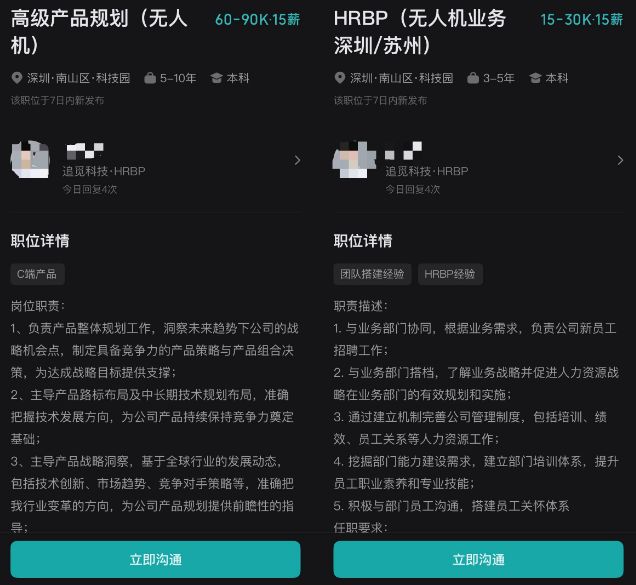
Core Insights - Company is entering the drone business, aiming to capture a share of China's low-altitude economy market by forming a specialized R&D team [1] - The initial operational model for the drone project will focus on e-commerce and "OEM" strategies, with plans for self-research in the future [1][2] - The company is leveraging its existing technology in smart cleaning products to support its drone business, although it faces challenges in brand recognition and technology transfer [1][12] Group 1 - The company is recruiting for key positions such as "drone navigation modeling algorithm engineer" and "drone operations sales leader," indicating a focus on industrial-grade markets [2][4] - The industrial drone market has significant application potential in agriculture, surveying, and security, with relatively low price sensitivity [4] - The founder's background in aerospace and previous experience in drone development provide a foundational advantage for the company's new venture [5][8] Group 2 - The company has previously invested in a tilt-rotor eVTOL startup, which indicates a strategic move to secure a foothold in the low-altitude economy [9][11] - Despite the founder's aerospace background, the company has primarily focused on ground cleaning products for the past eight years, which may complicate the transition to drone technology [12] - The company faces significant challenges in technology migration and brand perception, as it is primarily known for its cleaning robots [15] Group 3 - The company is also exploring other growth avenues, including a 110 billion yuan venture capital fund focused on AI and robotics [16] - Following the announcement of its drone business, the company also revealed plans to enter the automotive sector with a luxury electric vehicle by 2027 [18] - The company needs to address key issues such as brand recognition, balancing short-term investments with long-term returns, and effectively translating ground technology advantages into aerial competitiveness [18]
猛玛,小品类做出大生意
盐财经· 2025-09-04 11:58
Core Viewpoint - The article discusses the transformation of Chinese manufacturing from a "world factory" to a stage focused on technological innovation, product design, and brand output, particularly highlighting the rapid growth of the wireless lavalier microphone market driven by the rise of live streaming and short videos [2][6]. Market Overview - The global wireless lavalier microphone market reached a sales figure of $1.428 billion (approximately 10.361 billion RMB) in 2023, with projections to grow to $2.299 billion (approximately 16.681 billion RMB) by 2030, reflecting a compound annual growth rate (CAGR) of 6.94% [6]. - North America is the largest consumer market, accounting for 35.24%, while China and Europe hold shares of 26.67% and 21.23%, respectively [6]. Competitive Landscape - The market is characterized by intense competition, with brands like Moman leveraging technology and innovation, while established brands like DJI and RODE upgrade their products [8]. - A price war is evident, with low-cost products flooding the market, including white-label microphones available for as low as 7 RMB on platforms like 1688 [8]. Moman's Strategy and Innovation - Moman's rise in the market is highlighted as a textbook case of success, having established a leading market share in just two years after its founding in 2017 [10]. - The launch of Moman's first wireless microphone, Lark 150, introduced a charging case design that addressed key pain points of battery life, pairing, and storage, setting a new industry standard [12]. - Moman's focus on "noise reduction" has differentiated its products, allowing creators to capture clear audio even in noisy environments, which has been a significant factor in its market success [13]. Product Development and User Engagement - Moman emphasizes lightweight design and user-centric product development, with innovations like the LARK MIX and LAAR M2, which have gained popularity among professional users [14][17]. - The brand actively engages with users for feedback, leading to continuous improvements and adaptations in their product offerings [16][17]. Global Expansion - Moman's international revenue accounts for 65%-70%, showcasing its ambition beyond the domestic market, although initial overseas efforts faced challenges [22]. - The company invests 20% of its revenue in R&D, building a robust technical barrier and gaining recognition among global creators [23]. Future Outlook - The wireless microphone market is entering a new phase, with Moman's comprehensive product lineup putting pressure on both low-cost white-label products and traditional brands [27]. - The future competition will hinge on technological innovation and the ability to create a complete product ecosystem, as the demand for high-quality audio continues to grow across various applications [28].

2025户储及便携式储能电池技术论坛9月26号深圳举办!
起点锂电· 2025-09-04 10:08
Core Viewpoint - The article discusses the growth and competitive landscape of the home energy storage and portable energy storage markets, highlighting significant trends, forecasts, and the upcoming 2025 forum focused on battery technology and safety [3][4][6]. Home Energy Storage - In 2024, the global home energy storage shipment is projected to reach 27.8 GWh, marking a 19% year-on-year increase, with Chinese companies accounting for 75% of the shipments [3]. - The leading regions for home energy storage consumption include Europe, the USA, Ukraine, Japan, Australia, Africa, the Middle East, ASEAN, and Russia, with Europe being the largest and most mature market [3]. - The USA, Ukraine, Australia, South Africa, Nigeria, and Brazil are expected to see rapid growth in 2024 due to various factors, including declining electricity prices in Europe [3]. - SPIR forecasts that the global home energy storage market will reach 180 GWh by 2030, representing a 547% increase from 2024 [3]. - The top 10 companies in global home energy storage shipments include Huawei, BYD, Airo Energy, and others [3]. Portable Energy Storage - The global portable energy storage shipment is expected to reach 11 million units in 2024, reflecting a 90% year-on-year growth [4]. - The USA is identified as the largest and most mature market for portable energy storage, driven by outdoor activities and a developed RV market [4]. - Ukraine is projected to experience the fastest growth in 2024 due to energy shortages caused by the Russia-Ukraine conflict [4]. - By 2030, the global portable energy storage market is anticipated to reach 28 million units, a 156% increase from 2024, fueled by outdoor economy growth and emergency power needs [4]. - The top 10 companies in global portable energy storage shipments include EcoFlow, BLUETTI, Jackery, and others [5]. Industry Trends and Challenges - The article notes the emergence of new technologies and materials in battery development, such as fast charging, solid-state, sodium batteries, and full-tab designs, while also highlighting ongoing safety challenges [5]. - The upcoming forum will focus on high safety standards and collaborative innovation within the industry, bringing together various stakeholders to discuss technical pain points and share innovative results [6][11]. Forum Details - The 2025 forum will take place on September 26, 2025, in Shenzhen, focusing on high safety and building a new ecosystem for home and portable energy storage [6][11]. - The agenda includes discussions on safety standards, battery technology trends, and market strategies for Southeast Asia and the Middle East [8][9].