
浦发银行

Search documents
三季度公募含“银”量创五年新低,四季度银行股修复动能渐显
第一财经· 2025-11-11 14:59
Core Viewpoint - The article highlights the significant changes in the banking sector, particularly focusing on the increasing shareholding of local state-owned enterprises and insurance funds in various banks, while public funds and northbound capital are reducing their holdings. The overall market sentiment for bank stocks is showing signs of recovery in the fourth quarter after a challenging third quarter [3][10][12]. Group 1: Shareholding Changes - Action Person's total shareholding ratio has risen to 19.17%, making it the largest shareholder of Qingdao Bank [3]. - Many city commercial banks and national banks have disclosed shareholding increase plans or have already implemented them, including Chengdu Bank, Nanjing Bank, and Postal Savings Bank [3]. - The number of shareholders in banks like China Merchants Bank and Beijing Bank has increased significantly, indicating a rise in retail investor participation alongside a decline in institutional holdings [5][6]. Group 2: Fund Holdings and Market Performance - Public funds' exposure to bank stocks has dropped to a five-year low, with a decrease in their overall holdings [4][6]. - The banking sector saw a decline of 8.68% in the third quarter but rebounded with an increase of 8.23% in the fourth quarter as of November 11 [3]. - Northbound capital inflow into banks decreased by 31.66% in the third quarter, with only a few banks like Ningbo Bank and Chengdu Bank seeing net inflows [7]. Group 3: Institutional Investment Trends - Insurance funds and state-owned capital have maintained relatively stable holdings in bank stocks, with state-owned funds holding a total market value of 4.5 trillion yuan [8]. - The increase in local state-owned capital investments in city commercial banks reflects a strategy to strengthen regional financial resource control and capitalize on low valuations [9]. - The investment sentiment in the banking sector is expected to improve in the fourth quarter, with several banks announcing share buyback plans [10][11]. Group 4: Future Outlook - The article suggests that the banking sector may experience structural recovery opportunities in the fourth quarter, driven by high dividend yields and the resilience of regional banks [10][12]. - Analysts believe that the combination of increased institutional investment and favorable market conditions could lead to a stabilization phase for bank stocks [11][12].



春立医疗认购合共7.9亿元北京银行结构性存款产品
Zhi Tong Cai Jing· 2025-11-11 14:52
春立医疗(01858)公布,于2025年11月11日,该公司订立(i)北京银行(大兴支行)结构性存款产品协议1, 同意使用其来自A股公开发行的临时闲置募集资金认购北京银行(大兴支行)的结构性存款产品,总金额 为人民币2.9亿元;(ii)北京银行(方庄支行)结构性存款产品协议1,同意使用其来自A股公开发行的临时闲 置募集资金认购北京银行(方庄支行)的结构性存款产品,总金额为人民币2.1亿元;及(iii)北京银行(方庄 支行)结构性存款产品协议2,同意使用其内部资源认购北京银行(方庄支行)的结构性存款产品,总金额 为人民币2.9亿元。 此外,于2025年9月26日,公司订立上海浦东发展银行(海淀园支行)结构性存款产品协议,同意使用其 内部资源认购上海浦东发展银行的结构性存款产品,总金额为人民币8500万元。上海浦东发展银行(海 淀园支行)结构性存款产品协议于本公告日期前已赎回。 ...


春立医疗(01858)认购合共7.9亿元北京银行结构性存款产品
智通财经网· 2025-11-11 14:52
Core Viewpoint - Spring Medical (01858) has entered into multiple structured deposit agreements with Beijing Bank and Shanghai Pudong Development Bank, utilizing temporary idle funds raised from its A-share public offering for investment purposes [1] Group 1: Structured Deposit Agreements - The company has agreed to invest a total of RMB 2.9 billion in a structured deposit product with Beijing Bank (Daxing Branch) using idle funds from its A-share public offering [1] - Additionally, the company will invest RMB 2.1 billion in another structured deposit product with Beijing Bank (Fangzhuang Branch) from the same source [1] - The company has also committed RMB 2.9 billion to a second structured deposit product with Beijing Bank (Fangzhuang Branch) using internal resources [1] Group 2: Other Financial Agreements - On September 26, 2025, the company entered into a structured deposit agreement with Shanghai Pudong Development Bank (Haidian Park Branch), agreeing to invest RMB 85 million using internal resources [1] - The structured deposit agreement with Shanghai Pudong Development Bank (Haidian Park Branch) was redeemed prior to the announcement date [1]
承接进博溢出效应 浦发银行举办上海北美清洁技术与碳中和路演对接活动
Zhong Guo Jin Rong Xin Xi Wang· 2025-11-11 14:19
Core Insights - The event organized by Shanghai Pudong Development Bank (SPDB) at the National Exhibition and Convention Center focused on clean energy, carbon neutrality technologies, and green low-carbon development opportunities, attracting around 80 industry leaders and representatives from China and the U.S. [1][3] - SPDB highlighted its green financial service philosophy through the keywords "green, cross-border, internationalization," reporting a green loan balance exceeding 700 billion yuan with a compound annual growth rate of 26% as of September 2025 [1][3]. Group 1 - SPDB possesses a comprehensive cross-border platform advantage in the green sector, leveraging its international business experience and professional service team [3]. - The bank has supported multiple Chinese enterprises in overseas green projects through green credit, with a total cross-border green loan balance of approximately 2.6 billion USD and overseas green bond investments totaling 380 million USD [3]. - SPDB, in collaboration with various institutions, launched China's first high-grade bond index fund addressing climate change, filling a gap in the domestic market and providing a benchmark for global investors [3]. Group 2 - The event featured presentations from CEOs and executives of 13 leading U.S. clean technology companies, showcasing innovative solutions in clean energy, carbon capture, green buildings, clean transportation, wind and solar energy equipment, and smart transportation systems [3]. - Participating companies expressed their eagerness to engage in deeper collaborations with enterprises and industrial parks in Shanghai following the summit [3]. Group 3 - The event was guided by the Shanghai Municipal Commission of Commerce, the People's Government of Pudong New Area, and the People's Government of Jinshan District, and co-hosted by several local investment promotion centers and the U.S.-China Clean Technology Center [4].
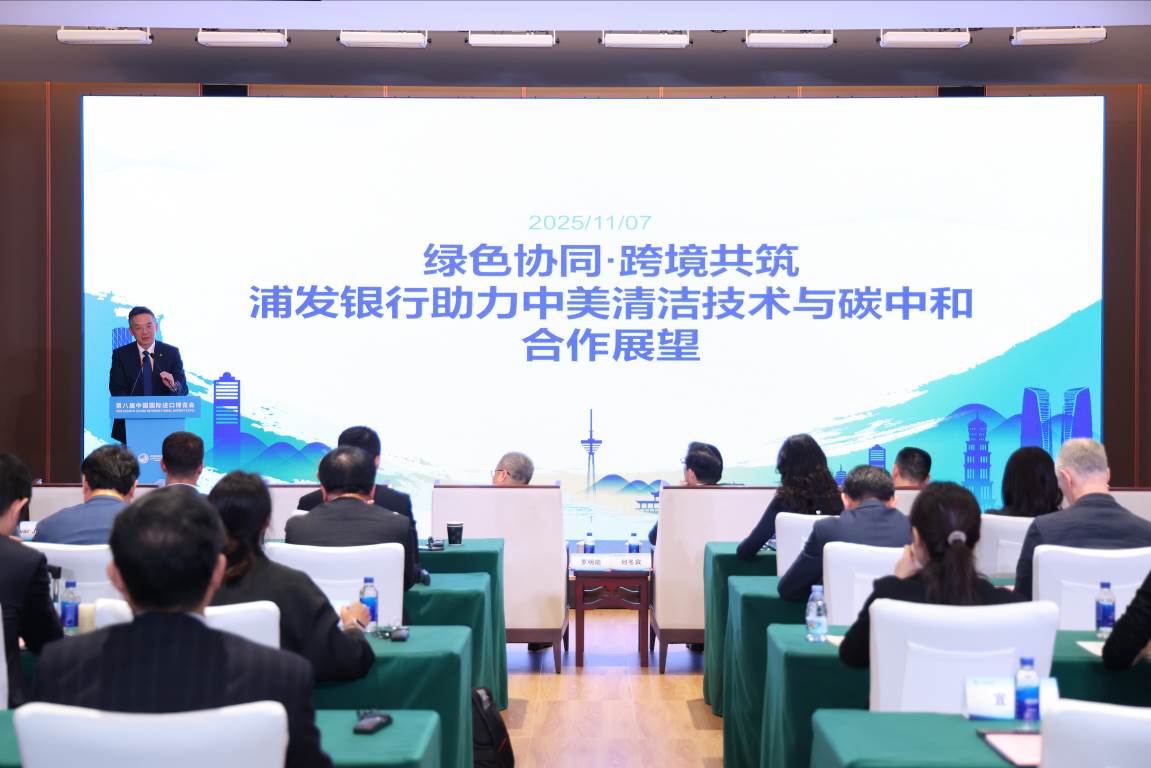
聚焦跨境金融需求 浦发银行上海分行举办进博会重点企业专场交流活动
Zhong Guo Jin Rong Xin Xi Wang· 2025-11-11 14:08
Core Insights - The event "Meeting at the Expo for Cross-Border Win-Win" organized by Shanghai Pudong Development Bank focuses on enhancing cross-border financial services to support high-quality development of enterprises engaged in international cooperation [1] Group 1: Event Overview - The event aims to implement national strategies for high-level opening-up and to leverage the International Import Expo as a platform for international procurement, investment promotion, and cultural exchange [1] - Experts and representatives from enterprises with cross-border investment and financing needs participated in the event to facilitate in-depth dialogue [1] Group 2: Financial Services Offered - Shanghai Pudong Development Bank introduced its comprehensive financial service plan 8.0 and the latest digital products for cross-border transactions [1] - The bank has established a "6+X" cross-border financial service system, integrating offshore banking, free trade zones, and overseas branches to provide a full lifecycle financial support for enterprises [1] - Eight key service scenarios were highlighted, including free trade finance, cross-border e-commerce, mergers and acquisitions, risk management, fund management, trade, RMB services, and custody services [1] Group 3: Innovations and Case Studies - The event featured insights from industry leaders, including a detailed analysis of cross-border investment structure design and multi-regional tax policies to guide enterprises in international market layout [2] - Practical experiences in cross-border financial innovations were shared, showcasing collaborative models between banks and enterprises for mutual benefits [2]
波段难做,多家银行相关投资收益下降,拖累前三季度非息收入
Zheng Quan Shi Bao· 2025-11-11 12:58
Core Viewpoint - The bond market faced significant pressure from strong commodity and equity market performances in Q3, leading to increased volatility and a notable rise in interest rates, which adversely affected banks' non-interest income due to unrealized losses on bond holdings [1] Group 1: Impact on Non-Interest Income - Many banks reported a decline in non-interest income due to reduced investment returns from the bond market, with at least ten banks showing a year-on-year decrease in non-interest income for the first three quarters [2][5] - China Merchants Bank's non-interest income fell by 11.42% year-on-year, primarily due to decreased bond and fund investment returns, with a cumulative loss of 8.827 billion yuan in fair value changes compared to a gain of 3.099 billion yuan in the same period last year [2] - Ping An Bank's investment income dropped nearly 50% year-on-year in Q3, with a total investment income of 16.275 billion yuan for the first three quarters, down approximately 11.41% from the previous year [2] Group 2: Market Conditions and Trends - The bond market experienced significant fluctuations, with yields on various bonds rising above 1.8% in September, marking a notable increase compared to the previous month [4] - The overall bond market has shown wide fluctuations this year, contrasting with last year's bullish trend, making it challenging for banks to execute effective trading strategies [4][5] - A report indicated that the other non-interest income of listed banks grew by only 5.4% year-on-year, with a significant decline in the growth rate attributed to bond market volatility [3] Group 3: Strategic Responses - Banks are advised to enhance their trading capabilities and consider increasing the use of derivative hedging and fixed-income assets to mitigate risks associated with bond market fluctuations [5][6] - China Merchants Bank plans to maintain a reasonable bond investment ratio of around 30%, optimize asset allocation, and improve trading operations to enhance income [5] - Recommendations include utilizing government bond futures and interest rate swaps to construct hedging portfolios and accurately identify market trends for better timing in trading [6]


波段难做,债市浮亏!多家银行相关投资收益下降,拖累前三季度非息收入
券商中国· 2025-11-11 12:24
Core Viewpoint - The article highlights the significant impact of bond market volatility on the non-interest income of several banks in the third quarter, leading to a decline in investment income and overall non-interest revenue due to losses from bond holdings [1][4]. Group 1: Impact on Non-Interest Income - Many banks reported a decrease in non-interest income due to reduced investment income from the bond market, with notable declines in the third quarter [2][4]. - For example, China Merchants Bank's non-interest income fell by 11.42% year-on-year, primarily due to decreased bond and fund investment returns, resulting in a cumulative fair value loss of 8.827 billion yuan compared to a gain of 3.099 billion yuan in the previous year [2]. - Ping An Bank's investment income dropped nearly 50% in the third quarter, with a year-to-date decrease of approximately 11.41% [2][3]. Group 2: Market Conditions and Bank Responses - The bond market experienced significant fluctuations, with yields rising above 1.8% for various bank categories, contrasting sharply with the previous year's bullish market [6]. - Banks are advised to enhance their trading capabilities and consider using derivatives for hedging to mitigate risks associated with market volatility [8]. - Strategies suggested include maintaining a reasonable proportion of bond investments, optimizing asset allocation, and utilizing derivative tools to manage risks effectively [8]. Group 3: Overall Trends in the Banking Sector - A total of 10 banks reported a year-on-year decline in non-interest net income, with decreases ranging from 4% to 23% [6][7]. - The research team from China International Capital Corporation noted that the growth rate of other non-interest income for listed banks slowed significantly, with only state-owned banks showing an increase in this metric [4][5].


发展离岸金融重在“先试后立”
Di Yi Cai Jing· 2025-11-11 12:13
Core Insights - The article emphasizes that successful financial policies should be based on practical exploration rather than top-down design, particularly in the offshore financial sector [1][10] Group 1: Historical Examples - The emergence of the Eurodollar market in London during the 1950s serves as a benchmark for the "practice first, policy later" approach, where the market developed without specific regulations, leading to significant growth [2] - The UK's introduction of the "dual banking system" in 1968 and the subsequent Banking Act in 1979 were based on practical experiences, resulting in a tenfold increase in London's offshore financial scale within a decade [2] - Singapore's offshore market growth from 20 billion USD in 1970 to 1.8 trillion USD in 2023 illustrates the effectiveness of dynamic policy adaptation following market needs [5] Group 2: China's Unique Context - China's offshore financial development has been characterized by a gradual approach, with significant milestones such as the establishment of offshore RMB funding pools and the growth of business scale to 2.1 trillion USD by 2023, reflecting a 320% increase since policy initiation [3] - The article highlights that premature legislation could lead to rigid policies that stifle innovation, as evidenced by the experiences of other countries [3][10] Group 3: Policy Dynamics - Successful financial policies require a dynamic interaction between business practices and regulatory frameworks, allowing for innovation while managing risks effectively [4] - The case of Meizhou's foreign exchange management illustrates how responsive policy-making can lead to significant cost savings for businesses and stimulate local economic growth [6] Group 4: Lessons from History - The decline of Tokyo's offshore market serves as a cautionary tale about the dangers of implementing rigid regulations without understanding market needs, resulting in stagnation [8] - The U.S. "Banking as a Service" model highlights the importance of learning from practical failures to inform future regulatory frameworks [9] Group 5: Future Path for China - The article proposes a three-step strategy for China's offshore financial development, starting with expanding pilot programs in free trade zones and gradually moving towards comprehensive legislation as practices mature [12][13] - The ultimate goal is to create a robust offshore financial ecosystem that aligns with international standards while being tailored to China's specific context [10][13]
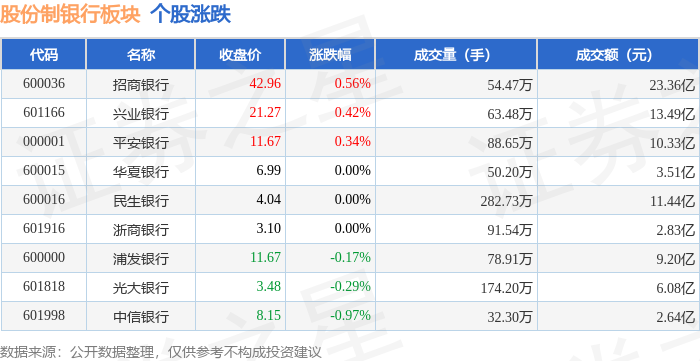
股份制银行板块11月11日涨0.12%,招商银行领涨,主力资金净流入3.14亿元
Zheng Xing Xing Ye Ri Bao· 2025-11-11 08:46
Group 1 - The banking sector saw a slight increase of 0.12% on November 11, with China Merchants Bank leading the gains [1] - The Shanghai Composite Index closed at 4002.76, down 0.39%, while the Shenzhen Component Index closed at 13289.0, down 1.03% [1] - Major banks' stock performance included China Merchants Bank at 42.96 with a rise of 0.56%, and Minsheng Bank at 4.04 with no change [1] Group 2 - The banking sector experienced a net inflow of 314 million yuan from institutional investors, while retail investors saw a net outflow of 135 million yuan [1] - China Merchants Bank had a significant net inflow of 1.79 billion yuan, representing 7.68% of its total trading volume [1] - Ping An Bank also saw a net inflow of 112 million yuan, accounting for 10.81% of its trading volume [1]

贵金属市场迎来爆发 金饰克价突破1300元
Jin Tou Wang· 2025-11-11 07:09
Core Insights - The precious metals market experienced a significant surge on November 11, with spot gold prices surpassing $4130 per ounce and New York futures crossing $4140 per ounce, reflecting a daily increase of 0.55% and 0.51% respectively [1][2] - Domestic gold jewelry prices rose sharply, with some brands exceeding 1300 yuan per gram, influenced by the international gold price movements [1] - The Shanghai gold futures price increased by 2.83%, reaching a new high of 950 yuan per gram, while silver futures rose nearly 4%, surpassing 11960 yuan per kilogram [1] International Precious Metals Prices - As of November 11, international gold was priced at $4132.66 per ounce, silver at $50.81 per ounce, platinum at $1579.05 per ounce, and palladium at $1435.69 per ounce [2] Domestic Brand Gold Prices - Major domestic brands reported the following gold prices on November 11: - Chow Tai Fook: 1308.00 yuan/gram - Lao Feng Xiang: 1310.00 yuan/gram - Chow Sang Sang: 1308.00 yuan/gram - Others ranged from 1265.00 to 1310.00 yuan/gram [3] Bank Gold Bar Prices - The latest prices for bank gold bars were as follows: - Construction Bank: 964.70 yuan/gram - Bank of China: 963.56 yuan/gram - Agricultural Bank: 976.85 yuan/gram - Other banks had prices ranging from 963.60 to 1072.00 yuan/gram [4] Precious Metals Recycling Prices - Current recycling prices for precious metals are: - Gold: 939.00 yuan/gram - Silver: 10.88 yuan/gram - Platinum: 349.00 yuan/gram - Palladium: 306.00 yuan/gram [5] Hong Kong Gold Prices - In Hong Kong, gold prices were reported as follows: - General gold: 38431.92 HKD/two - Chow Tai Fook gold jewelry: 45780.00 HKD/two - Chow Tai Fook gold bars: 41300.00 HKD/two [6]