兖矿能源

Search documents
未知机构:国盛能源电力兖矿能源如果你都打不开空间我想不出还有谁能涨-20260213
未知机构· 2026-02-13 02:35
Summary of Key Points from the Conference Call Company Overview - The company discussed is Yancoal Australia, a subsidiary of Yanzhou Coal Mining Company, which holds a 62.26% stake in Yancoal Australia. The primary product is high-calorific thermal coal, accounting for 80% of sales, with an annual sales volume of approximately 40 million tons [2]. Coal Industry Insights - The company has a total coal production capacity of 27,759 million tons per year, distributed across various regions: Shandong (5,435 million tons), Shanxi, Shaanxi, and Inner Mongolia (11,314 million tons), and Australia (11,010 million tons) [1]. - There are 6,300 million tons of coal production capacity under construction, with expected production of commodity coal reaching 260 million tons by 2031, an increase of 78 million tons from 2025 [3]. - The company anticipates that the price of NEWC (6000 kcal) coal will rise due to reduced production in Indonesia, with current prices at $114.5 per ton. If prices reach $120 per ton, it could yield a profit of 4 billion yuan, and at $150 per ton, the profit could increase to 8 billion yuan [2]. Chemical Industry Developments - The company has a chemical production capacity exceeding 792 million tons per year, including methanol (406 million tons), acetic acid (120 million tons), and ethylene glycol (40 million tons) [1]. - The company aims to increase its chemical product output to over 20 million tons annually within 5-10 years, with a target of 8.3 million tons by 2025, representing a year-on-year increase of 690,000 tons [3]. - Current geopolitical conflicts and high oil prices are expected to create growth opportunities for the chemical business [4]. Mining Projects - The company plans to commence operations at the Cao Si Yao molybdenum mine (51% stake) in 2026, with production starting in 2028, targeting a metal output of 108.9 million tons and an annual production of 16,500 tons. Estimated net profit at a price of 2,100 yuan per ton could reach 650 million yuan per year [4]. - The Sosi potash mine project in Canada has a chloride potassium reserve of 173 million tons, with designed capacities of 2 million tons per year for phase one and 800,000 tons per year for phase two, totaling 2.8 million tons per year [4]. Dividend Policy - The company has committed to a cash dividend of no less than 0.5 yuan per share, with a payout ratio of at least 60% of net profit after statutory reserves for 2023-2025. The cash dividend ratio for 2023 and 2024 is expected to meet this commitment [5].

兖矿能源资产转让、股权激励调整及高管变动引关注
Jing Ji Guan Cha Wang· 2026-02-13 02:25
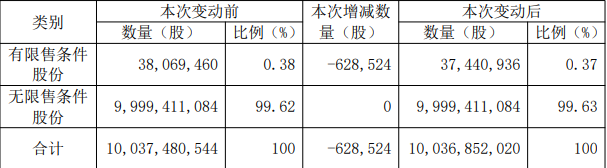
经济观察网兖矿能源(600188)近期公告涉及资产处置、公司治理和股权激励调整。全资子公司拟通过 山东产权交易中心公开转让内蒙古鑫泰煤炭有限公司100%股权,挂牌底价6.7亿元,此前网络竞价最高 报价达30.5亿元,远高于标的净资产和评估值。交易尚未完成,若达成预计将对公司2026年归母净利润 产生较大影响,但最终结果存在不确定性。 高管变动 公司董事会审议通过议案,计划回购注销18名激励对象已获授的62.85万股限制性股票,同时为1161名 激励对象的3744.09万股限制性股票办理第三个解除限售期手续。回购价格调整为0.6833元/股,股份总 数将相应减少。该调整基于2024年度和2025年半年度分红实施完毕,旨在落实股权激励计划。 以上内容基于公开资料整理,不构成投资建议。 公司公告黄伟超因工作变动辞任联席公司秘书及授权代表,由林庚墀接任授权代表,黄霄龙担任唯一公 司秘书。此次人事变动自2026年2月11日起生效。 公司状况 ...
煤炭开采行业专题研究:蒙古:跨越戈壁的煤炭动脉供需梳理
GOLDEN SUN SECURITIES· 2026-02-13 02:24
Investment Rating - The report provides a positive investment rating for the coal mining industry in Mongolia, highlighting its rich resources and potential for growth in exports, particularly to China [19][25]. Core Insights - Mongolia has abundant coal resources, with proven reserves of 252 million tons as of the end of 2020, including 135 million tons of lignite and brown coal, and 117 million tons of anthracite and bituminous coal [7][11]. - The coal mining sector is crucial for Mongolia's economy, with coal accounting for over 90% of the country's primary energy consumption, primarily used for power generation and exports [24][25]. - The report emphasizes the strategic importance of coal exports to China, which accounted for 94.9% of Mongolia's coal exports in 2024, showcasing the reliance on this market for growth [22][25]. Summary by Sections Coal Resource Overview - Mongolia's coal resources are mainly distributed across five regions, with the northern and southern areas being the most productive, contributing to 99% of the total output [7][11]. - The country has approximately 300 coal mines, with a significant portion of high-quality coking coal suitable for metallurgical processes [11][19]. Production and Export Trends - Coal production in Mongolia has seen fluctuations, with a peak of 32 million tons in 2011, primarily driven by export demand [21]. - The report forecasts a cumulative coal production of 97.72 million tons by 2024, reflecting a compound annual growth rate (CAGR) of 10.3% from 2013 to 2024 [21]. - In 2025, coal production is expected to slow down due to a decline in demand from the Chinese coking coal market [21]. Infrastructure and Trade Ports - Key coal export ports include Gashuunsukhait, Tsagaan Khad, and Mandula, with ongoing improvements in cross-border railway and logistics infrastructure to enhance export capacity [28][32]. - The report outlines various railway projects aimed at increasing coal export volumes by approximately 4 million tons annually [32]. Company Insights: Mongolian Coal - Mongolian Coal is identified as the largest high-quality coking coal producer and exporter in Mongolia, with a diversified resource portfolio including gold and copper [40][41]. - The company has strategically shifted towards resource diversification, reducing reliance on coal by expanding into gold and copper mining [46][90]. - As of mid-2025, the company reported total coal reserves of 612 million tons, with a focus on enhancing production capabilities and market presence [56][61]. Financial Performance - The company's revenue has shown significant growth, particularly from 2015 to 2019, driven by increased demand from infrastructure projects in China [55]. - The report notes a typical cyclical fluctuation in revenue, with a notable increase in 2022 and 2023, followed by a decrease in the first half of 2025 [55][61]. Cost Structure and Pricing - The report details the cost structure of coal production, with average costs remaining stable around $77 per ton from 2018 to the first half of 2025 [71]. - Pricing strategies are influenced by market dynamics, with a focus on maintaining competitive pricing in the context of international coal markets [68][70].
大宗-强供给逻辑下的底部反转机会
2026-02-13 02:17
Summary of Key Points from Conference Call Industry Overview - **Electronic Fabric Market**: The electronic fabric market is experiencing a supply-demand imbalance due to a shortage of weaving machines, leading to price increases for LCT and second-generation fabrics expected in 2025-2026. Ordinary electronic fabrics also face supply constraints, with a projected shortage lasting until 2027, potentially driving prices significantly higher. China National Glass's market value could reach 140 billion [2][4]. - **Consumer Building Materials**: The consumer building materials sector has seen a decline since 2021, but leading companies like Oriental Yuhong and Sankeshu have significantly increased their market share, indicating a potential turning point. With supportive real estate policies, it is recommended to increase allocations to quality leading companies such as Sankeshu, Henkel Group, Yuhong, and Tubao [2][4]. - **Electricity Market Reform**: The reform in the electricity market is promoting green electricity consumption, with the State Council emphasizing the green certificate system. High-energy-consuming industries may face mandatory assessments of green certificate ratios. Clean energy operators like Longyuan Power and New天绿色能源 are worth monitoring [2][6]. - **Global Metal Resource Pricing**: The pricing model for global metal resources has shifted from a just-in-time supply chain to a stockpiling approach, leading to a tighter supply of strategic metals and increased price volatility. Copper inventories are moving from Asia to North America, complicating price stability due to geopolitical tensions [2][7]. Core Insights and Arguments - **Supply Situation in 2026**: The supply situation in the building materials industry, particularly in electronic fabrics and consumer building materials, is expected to be tight. The electronic fabric sector, especially AI electronic fabrics, is facing significant shortages due to machine supply constraints. Even with new capacities from China National Glass and Jianfa, the existing gap is unlikely to be filled [3][4]. - **Chemical Industry Pricing Logic**: Future price increases in the chemical industry are expected to be driven by changes in competitive dynamics and carbon emission restrictions. Products in the textile chain, such as nylon and organic silicon, are likely to see price increases through self-regulation [3][17]. - **Coal Industry Trends**: After four years of decline, the coal industry is expected to see a supply contraction due to policy shifts towards price stabilization and external factors like the U.S. coal revival plan. Companies with stable earnings, such as Yancoal and Power Development, are recommended for investment [3][25]. Additional Important Insights - **Investment Strategies in Power Sources**: Different power sources exhibit significant differences in stability and cleanliness, which will influence future investment strategies. The emphasis on green energy and carbon reduction will be crucial [5][6]. - **Impact of U.S. Midterm Elections**: The U.S. midterm elections are expected to significantly impact economic data, which in turn will affect metal prices. Key economic indicators will be closely monitored during this period [12]. - **Challenges for China's Export and Domestic Demand**: In 2026, China's export and domestic demand chains may face challenges due to rising raw material prices and currency appreciation, potentially leading to a shift back to domestic demand chains [13]. - **Future of the Dye Industry**: The dye industry is seeing a shift towards self-regulation among leading companies to avoid destructive competition, with expectations of price increases continuing into peak seasons [18]. - **PVC Industry Changes**: Recent price increases in the PVC market are attributed to the cancellation of export tax rebates, with long-term supply constraints expected due to environmental regulations [20][21]. - **Outlook for Refrigerants and Potash Fertilizers**: The refrigerant market is expected to see price increases due to seasonal demand, while potash fertilizers are projected to remain stable with growth potential [22]. - **Opportunities in Petrochemical and Oil & Gas Sectors**: The petrochemical sector is poised for growth due to reduced competition and favorable market conditions, while the oil and gas sector is expected to benefit from rising oil prices [23][24]. - **Coal Supply and Price Expectations**: Domestic coal supply is expected to decrease in 2026, leading to potential price increases due to reduced imports from Indonesia and domestic production cuts [26][27]. - **Geopolitical Impact on Oil Transportation**: U.S. geopolitical actions may boost oil transportation demand, particularly in light of sanctions against countries like Venezuela and Iran [16]. - **Investment Recommendations**: Companies with stable earnings and growth potential in the coal sector are recommended for investment, particularly those with reasonable valuations at higher price levels [30].
蒙古:跨越戈壁的煤炭动脉供需梳理-20260213
GOLDEN SUN SECURITIES· 2026-02-13 01:44
Investment Rating - The report provides a positive investment rating for the coal mining industry in Mongolia, highlighting its rich resources and potential for growth in exports, particularly to China [19][25]. Core Insights - Mongolia has abundant coal resources, with proven reserves of 252 million tons as of the end of 2020, including 135 million tons of lignite and brown coal, and 117 million tons of anthracite and bituminous coal [7][11]. - The coal mining sector is crucial for Mongolia's economy, with coal accounting for over 90% of the country's primary energy consumption, primarily used for power generation and exports [24][25]. - The report emphasizes the strategic importance of coal exports to China, which accounted for 94.9% of Mongolia's coal exports in 2024, showcasing the reliance on this market for growth [22][25]. Summary by Sections Coal Resource Overview - Mongolia's coal resources are distributed across various regions, with the northern and southern areas being the most productive, contributing to 99% of the total output [7][11]. - The country has approximately 300 coal mines, with a significant portion of high-quality coking coal suitable for metallurgical processes [11][19]. Production and Export Trends - Coal production in Mongolia has seen fluctuations, with a peak of 32 million tons in 2011, primarily driven by export demand [21]. - The report forecasts a cumulative coal production of 97.72 million tons by 2024, reflecting a compound annual growth rate (CAGR) of 10.3% from 2013 to 2024 [21]. - In 2025, coal production is expected to slow down due to a decline in demand from the Chinese coking coal market [21]. Infrastructure and Trade Ports - Key coal export ports include Gashuunsukhait, Tsagaan Khad, and Mandula, with ongoing improvements in cross-border railway and logistics infrastructure to enhance export capacity [28][32]. - The report outlines various railway projects aimed at increasing coal export volumes by approximately 4 million tons annually [32]. Company Analysis: Mongolian Coal - Mongolian Coal is identified as the largest producer and exporter of high-quality coking coal in Mongolia, with diversified mineral resource development including gold and copper [40][43]. - The company has a strategic focus on expanding its resource base and reducing dependency on coal by entering the gold and copper sectors [46][90]. - As of mid-2025, the company reported total coal reserves of 612 million tons, with significant production capabilities from its UHG and BN mines [56][58]. Financial Performance - The company's revenue has shown cyclical fluctuations, with significant growth from 2015 to 2019, followed by a contraction during the pandemic, and a resurgence in 2021-2024 [55]. - The report highlights that coal sales remain the primary revenue source, with hard coking coal contributing the majority of sales [55][67]. Cost Structure and Pricing - The report details the cost structure of coal production, with average costs remaining stable around $77 per ton from 2018 to mid-2025, despite fluctuations in transportation and compliance costs [71][74]. - Pricing strategies are influenced by market dynamics, with hard coking coal prices expected to stabilize around $160-$180 per ton in 2024 [70][71].
能源信托板块受政策与风险事件影响,煤炭股上涨信托产品引关注
Jing Ji Guan Cha Wang· 2026-02-12 23:10
Group 1 - The coal industry is experiencing a revival due to President Trump's plans to sign an executive order for the Department of Defense to enter into power supply contracts with coal-fired power plants and provide $175 million for upgrades to six coal plants [2] - The coal sector in the A-share market saw a significant increase, with an overall rise of over 1% on February 11, 2026, driven by positive expectations from U.S. policy [3] - The trust risk event involving Xuesong Holdings has raised concerns about the safety of financial products related to private financial control groups, following the arrest of its leader Zhang Jin [2][3] Group 2 - The stock performance of coal companies such as Shanxi Coking Coal (600740) and Yanzhou Coal Mining (600188) showed significant gains, reflecting the positive sentiment in the coal sector [3] - Trust products linked to local government financing projects are facing liquidity concerns, as evidenced by the overdue issues reported by companies like Mongolian Grass Ecology (300355) and Ningbo Construction (601789) [3] - The recent decline in cryptocurrency optimism, as noted by Federal Reserve Governor Waller, indicates a shift in financial market risk preferences, which may indirectly affect the energy trust sector [4]

特朗普一把火烧旺全球煤炭股!五角大楼买单,A股煤飞色舞
Sou Hu Cai Jing· 2026-02-12 18:53
Core Viewpoint - The recent executive order by Trump to support the coal industry has sparked significant movements in the capital markets, indicating a potential shift in the global energy landscape and a revival of interest in coal as a reliable energy source [1][2][10]. Group 1: Government Actions - Trump has signed an executive order directing the Department of Defense to enter into power purchase agreements with coal-fired power plants, using Pentagon funds to ensure energy supply for military bases [1]. - The U.S. Department of Energy has allocated $175 million for upgrades and extended operations of coal plants in key swing states like Kentucky, Ohio, and West Virginia, highlighting a strategic political investment [1]. Group 2: Market Reactions - Following the announcement, coal stocks in the U.S. and China's A-share market experienced significant gains, with the coal sector index in China rising nearly 1.6% and individual stocks like Jiangxi Tungsten Equipment hitting the daily limit [4]. - The coal sector has shown resilience, with three consecutive days of gains in the A-share market, contrasting with the overall market volatility [4]. Group 3: Supply-Side Changes - Indonesia, the largest exporter of thermal coal, plans to reduce its coal production from 790 million tons to 600 million tons by 2026, a reduction of nearly 24%, which will significantly impact international coal supply [6]. - China has tightened regulations on coal production since last year, leading to a noticeable contraction in supply, coinciding with increased demand for electricity as factories resume operations post-holiday [6]. Group 4: Analyst Perspectives - Analysts from Zheshang Securities believe that if Indonesia's production cuts are strictly enforced, the global coal supply-demand balance will be reshaped, leading to a significant increase in coal prices [7]. - Guotai Junan has projected that the coal sector's cyclical bottom will be confirmed by the second quarter of 2025, with a new upward cycle expected to begin in 2026 [7]. Group 5: Political Context - The timing of Trump's executive order is strategic, coinciding with the upcoming midterm elections, where coal-producing states are crucial for his support base [10]. - Trump's actions are seen as a fulfillment of his long-standing promise to revive the coal industry and support coal miners, leveraging government resources to achieve this goal [10]. Group 6: Conclusion - The interplay of political maneuvers and market realities suggests a potential resurgence of the coal industry, with significant implications for investors and the energy sector as a whole [14].

煤炭板块受美政策提振上涨,信托产品风险引关注
Jing Ji Guan Cha Wang· 2026-02-12 14:17
经济观察网 近期能源及信托行业相关热点事件引发市场关注,包括美国煤炭政策提振板块及国内信托 产品风险事件。 近期事件 特朗普推动煤炭行业振兴:2026年2月11日,据报道,美国总统特朗普计划签署行政命令,指示国防部 与燃煤电厂签订供电合同,并宣布为六家燃煤电厂提供1.75亿美元升级资金。此举旨在重振美国煤炭行 业,当日美股及A股市场煤炭股应声上涨。 加密货币热潮消退:美联储理事沃勒在2月10日表示,特朗普当选后推动的加密货币市场乐观情绪可能 正在消退,近期市场波动与监管不确定性及机构调整风险头寸有关。比特币价格较去年10月高点已下跌 超40%。这一观点虽非直接针对能源信托,但反映了当前金融市场风险偏好的变化。 股票近期走势 煤炭板块表现强劲:受美国政策预期提振,2月11日A股煤炭板块逆市上涨,整体涨幅超1%。部分个股 如山西焦化(600740)、兖矿能源(600188)等涨幅显著。美股盘前,Peabody Energy、科尔黛伦矿业 等煤炭股也出现拉升。 信托风险事件波及上市公司:蒙草生态(300355)于2026年2月5日公告,其子公司购买的1.35亿元R2级 信托产品到期未能收回本金。此外,宁波建工(60 ...
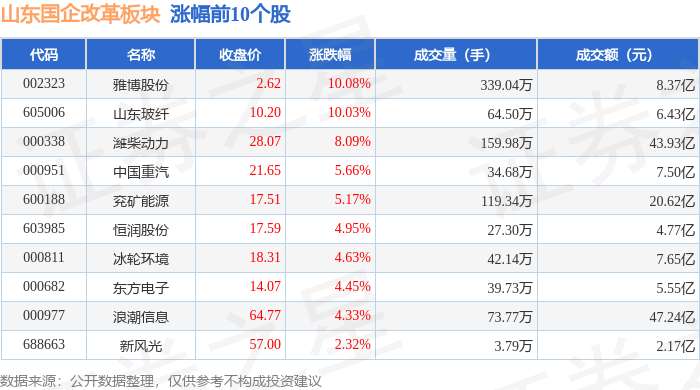
山东国企改革板块2月12日涨0.89%,雅博股份领涨,主力资金净流入10.49亿元
Sou Hu Cai Jing· 2026-02-12 09:16
Core Insights - The Shandong state-owned enterprise reform sector saw an increase of 0.89% on February 12, with Yabo Co., Ltd. leading the gains [1] - The Shanghai Composite Index closed at 4134.02, up 0.05%, while the Shenzhen Component Index closed at 14283.0, up 0.86% [1] Stock Performance - Yabo Co., Ltd. (002323) closed at 2.62, up 10.08%, with a trading volume of 3.39 million shares and a transaction value of 837 million yuan [1] - Shandong Pofiber (605006) closed at 10.20, up 10.03%, with a trading volume of 645,000 shares and a transaction value of 643 million yuan [1] - Weichai Power (000338) closed at 28.07, up 8.09%, with a trading volume of 1.60 million shares and a transaction value of 4.39 billion yuan [1] - China National Heavy Duty Truck Group (000951) closed at 21.65, up 5.66%, with a trading volume of 1.35 million shares and a transaction value of 750 million yuan [1] - Yanzhou Coal Mining Company (600188) closed at 17.51, up 5.17%, with a trading volume of 1.19 million shares and a transaction value of 2.06 billion yuan [1] Capital Flow - The Shandong state-owned enterprise reform sector experienced a net inflow of 1.049 billion yuan from institutional investors, while retail investors saw a net outflow of 904 million yuan [2] - The main stocks with significant net inflows included Inspur Information (000977) with a net inflow of 648 million yuan, accounting for 13.72% of the total [3] - Weichai Power (000338) had a net inflow of 440 million yuan, representing 10.02% of the total [3] - Yabo Co., Ltd. (002323) had a net inflow of 90 million yuan, accounting for 10.76% of the total [3]




兖矿能源拟回购注销62.85万股限制性股票,1161名激励对象3744万股解除限售
Qi Lu Wan Bao· 2026-02-12 08:17
2月2日收盘,兖矿能源股价17.51元,市值1758亿元。 本次回购注销涉及资金总额约63.5355万元(含同期银行存款利息),全部以公司自有资金支付。回购注销 完成后,公司股份总数将由10037480544股变更为10036852020股。 | 类别 | 本次变动前 | | 本次增减数 | 本次变动后 | | | --- | --- | --- | --- | --- | --- | | | 数量(股) | 比例(%) | 量(股) | 数量(股) | 比例(%) | | 有限售条件 股份 | 38,069, 460 | 0. 38 | -628, 524 | 37, 440, 936 | 0. 37 | | 无限售条件 股份 | 9, 999, 411, 084 | 99. 62 | O | 9, 999, 411, 084 | 99. 63 | | 合计 | 10, 037, 480, 544 | 100 | -628,524 | 10, 036, 852, 020 | 100 | 兖矿能源表示,本次回购注销已履行相应的决策程序,不存在对公司的财务状况和经营成果产生实质性 影响的情形,也不存在损害公司及 ...