华润微

Search documents
全球存储产业链大涨解读及长鑫招股书梳理
2026-01-04 15:35
Summary of Key Points from the Conference Call Industry Overview - The storage industry has shown strong performance in the US stock market, with Micron and SanDisk's stock prices increasing by over 10% and 15% respectively due to revised expectations for contract price increases in Q1 2026 [2][4] - The supply-demand tension in the storage market has driven prices to exceed expectations, with DRAM prices rising by up to 70% and NAND flash expected to increase by 33%-38% [4][5] Core Insights and Arguments - Samsung's pricing strategy significantly impacts the storage industry, as it adjusts contract prices based on supply and demand, setting prices higher than market expectations [4][6] - Micron's Q1 performance exceeded expectations with projected revenue of $18.7 billion and a gross margin of 68%, benefiting from substantial product price increases. The company anticipates profits could reach $50 billion in 2026, indicating significant upside potential in valuation [8][9] - A-share companies such as Jiangbolong and Baweilei Storage, as well as chip design firms like Zhaoyi Innovation and Junzheng Group, are expected to benefit from price increases in storage products, with Junzheng Group's DRAM business showing strong pricing momentum [9] Additional Important Content - Global storage equipment supplier Lam Research has seen its stock price reach new highs, correlating with the rise in storage product prices, indicating a synchronized cycle between equipment and storage markets [10][11] - The global storage industry is currently facing a significant supply shortage, particularly in HBM and traditional DRAM and NAND flash, which has become more pronounced since Q3 and Q4 of 2025. This supply gap is expected to drive price increases and boost capital expenditures in the industry [12] - Changxin has recently filed for an IPO, aiming to raise nearly 30 billion RMB for production line upgrades, DRAM expansion, and technology R&D, with a long-term goal of increasing market share from under 5% to potentially over 20% [13] - The rise of the CBA (CMOS Bonding Array) architecture is expected to increase demand for logic chip foundry services, with companies like Jinghe Integration positioned to benefit from this trend [18] Future Trends and Recommendations - The capital expenditure in the global storage industry is expected to increase significantly in the coming quarters, particularly in 2026, driven by price cycles and technological advancements [12] - Companies with high barriers to entry and significant market share in semiconductor equipment, such as Tuojing Technology and Micro-Nano, are recommended for investment due to their potential benefits from the rising domestic production rate [15][16] - The development of DRAM technology is evolving, with new architectures like CBA expected to become mainstream, as traditional scaling methods face limitations [17]
2026年中国MEMS微纳米制造零部件行业产业链、市场规模、竞争格局及发展趋势研判:随着MEMS技术在多个领域加速渗透,市场规模有望达到77亿元[图]
Chan Ye Xin Xi Wang· 2026-01-03 02:50
Core Insights - The MEMS micro-nano manufacturing components industry is experiencing rapid growth due to increased penetration in consumer electronics, automotive electronics, industrial automation, and healthcare sectors, with the global market expected to reach 7.3 billion yuan by 2025 and 7.7 billion yuan by 2026 [1][5][10] Industry Definition and Classification - MEMS (Micro-Electro-Mechanical Systems) combines electronic and mechanical technologies to create devices at micro or nano scales, enabling smart and integrated systems [2][3] - Key components include sensors, acoustic modules, optical modules, pressure sensors, and inertial sensors, characterized by miniaturization, integration, and mass production [3][4] Current Industry Status - The MEMS micro-nano manufacturing components market is expanding, driven by technological advancements and increasing demand for miniaturized and intelligent devices [4][5] - The largest segment within this market is sensors, followed by acoustic modules, with significant growth projected in various subcategories [5] Industry Chain - The upstream of the MEMS industry includes high-grade metals, silicon-based materials, polymers, and precision equipment, with high technical barriers and reliance on imports for some high-end materials [6] - The midstream focuses on the production of MEMS components, characterized by high technology barriers and added value [6] - The downstream applications span aerospace, automotive, biomedical, and consumer electronics sectors [6] Competitive Landscape - The MEMS micro-nano manufacturing components market in China is primarily dominated by foreign companies, with domestic firms accelerating their efforts to replace imports and enhance core technologies [7] - Key players include AAC Technologies, Huazhong University of Science and Technology, Goertek, and others, with ongoing advancements in various segments [7][8] Development Trends - The MEMS industry is evolving towards micro-nano precision manufacturing of integrated functional components, emphasizing miniaturization, integration, and mass production [9][10] - Future growth is anticipated as technological advancements lower production costs and expand applications across various sectors, including IoT, consumer electronics, and automotive industries [10]


华润微集成电路取得适用于汽车安全芯片的ECC抗攻击方法专利
Jin Rong Jie· 2026-01-02 06:54
天眼查资料显示,华润微集成电路(无锡)有限公司,成立于2002年,位于无锡市,是一家以从事计算 机、通信和其他电子设备制造业为主的企业。企业注册资本19501.6776万人民币。通过天眼查大数据分 析,华润微集成电路(无锡)有限公司共对外投资了1家企业,参与招投标项目410次,财产线索方面有 商标信息18条,专利信息907条,此外企业还拥有行政许可19个。 财经频道更多独家策划、专家专栏,免费查阅>> 声明:市场有风险,投资需谨慎。本文为AI基于第三方数据生成,仅供参考,不构成个人投资建议。 国家知识产权局信息显示,华润微集成电路(无锡)有限公司取得一项名为"适用于汽车安全芯片的 ECC抗攻击方法、装置、设备及介质"的专利,授权公告号CN118860727B,申请日期为2023年4月。 ...
中国金龙指数,全年累涨11.33%
财联社· 2026-01-01 01:13
Market Performance - The US stock market continued its post-Christmas pullback, with all three major indices closing lower, marking a subdued end to 2025. The S&P 500 index fell by 0.74% to 6845.5 points, the Nasdaq Composite dropped by 0.76% to 23241.99 points, and the Dow Jones Industrial Average decreased by 0.63% to 48063.29 points [1]. - For the year, the S&P 500 recorded an annual increase of 16.39%, while the Nasdaq managed a 20.36% rise, achieving over 20% growth for three consecutive years. The Dow Jones also rose by 12.97%, marking a similar performance for the third year in a row [3]. Individual Stock Performance - Among the top performers in the S&P 500, four storage giants—SanDisk, Western Digital, Micron Technology, and Seagate Technology—led the annual gains. Semiconductor stocks like Lam Research, AI application leader Palantir, and Comfort Systems, which provides HVAC solutions for data centers, also featured prominently [3]. - In the tech sector, only Google and Nvidia among the "Big Seven" tech companies outperformed the benchmark index in 2025 [8]. Commodity and Sector Movements - US silver futures experienced a significant drop of 9% due to a second margin increase by the CME Group within a week, negatively impacting the mining sector. Companies like Endeavour Silver and Silvercorp Metals saw declines of over 4% and 2.8%, respectively [11]. Chinese Stocks - The Nasdaq Golden Dragon China Index closed down 1.13% but recorded an annual increase of 11.33%. Notable Chinese stocks included Alibaba, which rose over 75%, and Netease, which increased by 58.28% [12]. Corporate News - Warren Buffett officially retired as CEO of Berkshire Hathaway on December 31, 2025, after a long tenure, although he will remain as chairman of the board [13]. - Tesla achieved a milestone with a driver completing a coast-to-coast journey using full self-driving technology, marking a significant advancement in autonomous vehicle capabilities [15]. - Nvidia and AMD are expected to enter a "year-long price increase cycle" for GPUs, driven by rising memory costs, with flagship models potentially reaching prices as high as $5000 [16]. - Trump Media & Technology Group announced plans to issue a new cryptocurrency to shareholders, despite a significant annual decline in stock value [17]. - Brookfield Asset Management is launching a cloud computing business to challenge tech giants like Amazon, aiming to reduce AI development costs [18]. - Uber is in talks to acquire the parking app SpotHero, which could create synergies between ride-hailing and parking services [19].



工业硅、多晶硅2026年策略报告:双硅产能过剩,“政策”落地执行为关键变量-20251231
Hua Jin Qi Huo· 2025-12-31 13:41
Report Industry Investment Rating No relevant content provided. Core Viewpoints of the Report - In 2026, the overcapacity situation of industrial silicon is expected to continue, but policy - end regulation will have a guiding effect. Production is expected to increase slightly by 3%, with overall demand increasing by about 5%. The mainstream price range is expected to be between 7,600 yuan/ton and 9,400 yuan/ton, and factors such as capacity optimization, enterprise dynamic production adjustment, and upward price transmission in the photovoltaic industry chain should be focused on [3][94]. - Compared with industrial silicon, polysilicon has greater variability. Currently, polysilicon has overcapacity and high inventory, but policy - based storage and price - support from leading enterprises provide strong support, driving up the prices of downstream silicon wafers and solar cells and contributing to the profit recovery of the photovoltaic industry. In 2026, it still faces the challenge of declining terminal demand. Policy implementation (energy - consumption regulations + platform - based storage) will have a significant impact on polysilicon prices. Capacity elimination and optimization are relatively certain events, and with the increasing concentration of production enterprises' capacity, polysilicon is generally "prone to rise but difficult to fall". It is recommended to conduct risk - hedging based on production conditions [4][97]. Summary According to the Table of Contents 1. Review of Industrial Silicon and Polysilicon Market in 2025 (1) Industrial Silicon Futures - The price trend in 2025 can be divided into three stages: continued decline from 2024 until early June, a rebound from early June to mid - July, and a consolidation period from August to the end of the year. The price dropped to a minimum of 6,990 yuan/ton in early June, with a decline of 36.5% from the beginning of the year, then rebounded to a maximum of 10,060 yuan/ton in mid - July, a 43.9% increase from the early - June low. The market entered a state of "subtle balance" later, with supply and demand both decreasing, high inventory but slight destocking, and reduced trading volume [7][10][11]. - In terms of the basis, the basis was relatively low in the first quarter. It reached the annual high in the second quarter as the futures price declined rapidly. In the third and fourth quarters, the basis was mainly driven by the futures price, with the spot price being 400 - 800 yuan/ton higher than the futures price, showing an obvious inverse market pattern [14]. (2) Polysilicon Futures - The price trend in 2025 can be divided into four stages: a calm period during the "rush - installation wave" from the beginning of the year to early April; a decline due to oversupply from early April to mid - late June, with the price dropping to a minimum of 30,400 yuan/ton, a 30% decline; a price increase boosted by the "anti - involution" policy from late June to late July, with the price reaching a maximum of 55,605 yuan/ton, an 83% increase in one month; and a high - level consolidation period from early August to the end of the year under the contradiction of "weak supply - demand vs. strong policy". The futures price fluctuated in the range of 48,000 - 56,000 yuan/ton, and reached a maximum of 61,985 yuan/ton after the establishment of the storage platform [15][18][20]. - The basis was relatively stable from January to April, around - 4,000 yuan/ton, then converged as the price fluctuated. From late July to mid - September, the futures price was higher than the spot price. The basis gradually widened from late October and exceeded - 10,000 yuan/ton by the end of the year [21]. 2. Industrial Silicon Market Analysis (1) Capacity - In 2026, the effective capacity is expected to decline. The domestic industrial silicon capacity at the end of 2025 was 7.879 million tons. It is expected that 400,000 - 500,000 tons of new capacity will be added in 2026, while some capacity (mainly in Sichuan and Yunnan) will continue to be phased out, and the supply center will shift northward. The domestic industrial silicon capacity in 2026 is expected to be 8 - 8.2 million tons, with the effective capacity below 7.5 million tons [23]. - In 2025, the domestic industrial silicon capacity continued to expand. By November 2025, the capacity was 7.879 million tons, with an increase of 600,000 tons during the year, including 400,000 tons of newly - put - into - operation capacity and about 200,000 tons of restarted idle capacity. The incremental capacity mainly came from Xinjiang, Inner Mongolia, Sichuan, Yunnan, Qinghai, Ningxia, and Gansu [24]. - Policy impact on industrial silicon is relatively limited. The "Industrial Structure Adjustment Guidance Catalog (2024 Edition)" requires the elimination of certain types of furnaces, but the proportion of affected capacity is small (about 5% or 400,000 tons, mostly already shut down). The "anti - involution" policy has a limited impact on industrial silicon, and production is more affected by profit factors. As capacity further concentrates in the northern regions, the effect of joint production cuts by large enterprises is expected to improve [25][28]. - For new capacity in 2026, it is expected to be 400,000 - 500,000 tons. There are currently about 200,000 tons of completed but un - put - into - operation capacity (expected to be put into production in the first half of 2026) and 700,000 tons under construction (expected to be put into production in batches). The new capacity is highly concentrated in Inner Mongolia and Xinjiang, accounting for 80%, and the project commissioning time will be concentrated in the first half of the year and the third quarter [29][33]. (2) Production - In 2025, the domestic industrial silicon production was about 4.27 million tons, a 12.8% year - on - year decrease, and the annual capacity utilization rate was about 54%. The production in the northern regions increased, with Xinjiang accounting for 52% of the total production from January to November 2025, and the four northern provinces (Xinjiang, Inner Mongolia, Gansu, and Ningxia) accounting for 81%, while Sichuan and Yunnan together accounted for less than 17% [34][37]. - The output of substitute products decreased. The output of 97 - silicon was expected to be about 110,000 tons in 2025, a 73% year - on - year decrease, and the output of recycled silicon was 180,000 tons, a 28% year - on - year decrease [41]. (3) Demand 1: Organic Silicon - In 2025, the production of organic silicon was basically flat. The cumulative production of domestic organic silicon DMC and other polysiloxanes in 2025 was expected to reach 2.72 million tons, almost the same as in 2024. The domestic consumption was 2.2 million tons, and the export was 203,200 tons, showing a tight balance with a slight surplus. The DMC price is currently in the range of 13,500 - 14,000 yuan/ton, and the profitability of enterprises has been significantly restored [44][47]. - In 2026, the organic silicon industry is also facing overcapacity, with no new device plans. Production or maintenance will be adjusted according to downstream demand. The downstream demand is relatively scattered, and the future growth points may be in smart wear and new energy. It is expected that the demand will increase slightly by 1 - 3% [47]. (4) Demand 2: Aluminum Alloy - In 2025, the price of aluminum alloy showed a volatile and upward - trending pattern, and the price center increased in line with the price of primary aluminum. The cumulative production of domestic aluminum alloy from January to November 2025 was 17.456 million tons, a 15.8% year - on - year increase, and the annual production is expected to exceed 18 million tons, reaching a new high. The driving factors include the booming demand for new - energy vehicles, the accelerated release of recycled aluminum capacity, technological upgrades, and policy support [49][50]. - In 2026, the production of aluminum alloy is expected to continue to grow steadily by more than 10%. The main supporting factors include the implementation of "two new" policies in the new - energy vehicle sector, the increasing demand for aluminum alloy in energy storage and 5G fields, the possible supply shortage of recycled aluminum, and the gradual reaching of full production capacity by leading enterprises [54]. (5) Import and Export - In 2025, China's industrial silicon exports were expected to be 746,000 tons, a slight increase from the previous year. Overseas markets mainly purchase on demand, and exports in 2026 are expected to remain stable with limited growth [56]. (6) Cost and Profit - Electricity and silicon - coal account for about 75% of the total raw material cost of industrial silicon, and the price of coal has a higher correlation with the price of industrial silicon. Cost and profit are the main references for enterprises to adjust production [58]. - In the long - term, the electricity cost has a downward trend, but the regional and enterprise - level cost differences will increase. In 2026, the electricity price in low - price regions such as Xinjiang, Gansu, and Shandong is expected to decline, while in high - price regions such as Shanghai, Anhui, and Guangdong, it will be more resilient. The electricity price in intermediate regions such as Yunnan, Jiangxi, and Hebei South Grid will be stable [61][62]. - The price of silicon - coal has a significant impact on cost changes. The price increase of coal in early June 2025 boosted the price of industrial silicon [63]. 3. Polysilicon Market Analysis (1) 2025: Continued Overcapacity - From 2022 to 2024, the domestic polysilicon capacity expanded nearly six times. In 2025, the domestic polysilicon capacity was expected to be 3.32 million tons, with an effective capacity of 3.123 million tons, a 10.5% year - on - year increase. The production was expected to be 1.33 million tons, a 26% year - on - year decrease, and the annual capacity utilization rate was about 40% [64][67]. - In terms of demand, the domestic silicon wafer production in 2025 was 649 GW, and the consumption of polysilicon was about 1.23 million tons. With exports of 23,500 tons and imports of 19,000 tons, the domestic polysilicon market still had overcapacity, but the surplus was narrower than in 2023 and 2024 [71]. (2) Supply - For capacity changes in 2026, it can be analyzed from three aspects: project planning, energy - consumption regulations, and platform - based storage. It is expected that more than 400,000 tons of new capacity will be put into production by the end of 2026 [72]. - Energy - consumption regulations will adjust the polysilicon capacity. About 450,000 tons of existing capacity may not meet the new energy - consumption standards and will be phased out, and some capacity needs to be technically upgraded. After the implementation of the new standards, the domestic effective polysilicon capacity is expected to drop to about 2.4 million tons per year [72]. - The storage platform "Beijing Guanghe Qiancheng Technology Co., Ltd." was registered in December 2025. It plans to adopt a dual - track operation mode of "debt - assumption acquisition + flexible capacity storage" to optimize the capacity structure. The goal is to shut down 1 - 1.2 million tons of capacity and retain 1.5 million tons of effective capacity [72][73]. - The supply in 2026 largely depends on policy - end regulation, and it is preliminarily estimated that the supply will be between 1.4 - 1.5 million tons [77]. (3) Demand - In 2025, the nominal capacity of each link in the photovoltaic industry chain was high, but the actual production was affected by weak demand and industry self - regulation. The production of polysilicon decreased for the first time in 12 years, the growth rate of silicon wafer and module production slowed down, and the capacity investment in solar cells continued to grow [78][79]. - In 2026, global photovoltaic installation will benefit from energy transformation, emerging market development, and policy support. However, the demand in China, the United States, and Europe is expected to remain stable or decline. The demand for domestic polysilicon should not be overly optimistic due to factors such as the loss of downstream products, the possible reduction of domestic installation after the subsidy withdrawal, and the restriction of exports by other countries. The demand for polysilicon is estimated to range from 1.32 - 1.58 million tons under different installation scenarios [83][84]. (4) Inventory - As of the end of December 2025, the total inventory of polysilicon was 523,000 tons, reaching a recent high. The inventory of silicon wafers, solar cells, and modules was in a relatively normal state, but the module inventory showed a cumulative trend in the second half of the year [86]. - It is expected that the polysilicon inventory will remain high in the first quarter of 2026 and may increase further. It will decline in the second and third quarters as demand recovers and the installation season arrives, and enter a stable period in the fourth quarter [88]. (5) Cost - The cost of polysilicon is mainly composed of electricity, silicon powder, and other raw materials, with electricity accounting for about 50%. The "anti - involution" policy in 2025 prohibited selling below cost [89]. - There are differences in the calculation basis of polysilicon cost between market participants and production enterprises. In 2026, with the progress of the industrial storage platform, the concentration of production will further increase, and it will play a leading role in guiding the cost and price of polysilicon, which is an important bottom - support for the price [90]. 4. Summary: Supply - Demand Structure and Strategy Suggestions for Industrial Silicon and Polysilicon in 2026 (1) Industrial Silicon - In 2026, the overcapacity of industrial silicon is expected to continue, but policy regulation will guide production to increase slightly by 3% and demand to increase by about 5%. The mainstream price range is expected to be 7,600 - 9,400 yuan/ton, and factors such as capacity optimization, enterprise production adjustment, and price transmission in the photovoltaic industry chain should be focused on [94]. (2) Polysilicon - Polysilicon has greater variability. Currently, it has overcapacity and high inventory, but policy - based storage and price - support from leading enterprises provide strong support. In 2026, it faces the challenge of declining terminal demand, and policy implementation will have a significant impact on prices. Capacity elimination and optimization are certain events, and polysilicon is generally "prone to rise but difficult to fall". It is recommended to conduct risk - hedging based on production conditions [97][98].
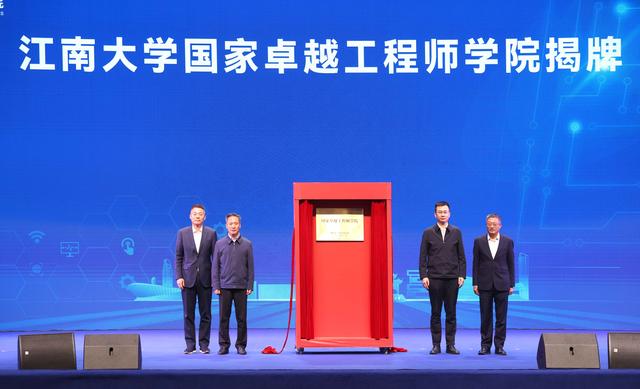
江南大学国家卓越工程师学院揭牌
Huan Qiu Wang· 2025-12-31 08:39
Core Viewpoint - The establishment of Jiangnan University's National Excellence Engineer College marks a significant advancement in high-level engineering talent cultivation and the quality development of the college [2] Group 1: Institutional Development - The college aims to align with the Ministry of Education's collaborative education requirements, focusing on internal support mechanisms, school-enterprise collaboration, and city-school co-construction [2] - Jiangnan University has set up 15 engineering technology centers to leverage its academic strengths and address key areas urgently needed by national strategies [2] - The college has received support from various industry-leading enterprises and government departments, forming a council to oversee its operations and development [3] Group 2: Collaboration and Industry Engagement - The college has implemented a council system that includes major enterprises such as Poly, China Resources, and Sinograin, promoting a joint training model that synchronizes academic and innovative resources [3] - A career navigation event was held, allowing students to interact with industry leaders from companies like China National Pharmaceutical Group and Longxin Technology, providing insights into industry trends and career paths [4] - The collaboration aims to integrate students' practical achievements into a scientific degree evaluation system, facilitating their career development [3]
华润微(688396) - 关于公司高级管理人员辞职的公告
2025-12-31 08:30
| (一)高级管理人员提前离任的基本情况 | | --- | | | | | | | | | 是否继续在上 | 是否存在未 | | --- | --- | --- | --- | --- | --- | --- | --- | --- | | 姓名 | 离任职务 | | 离任时间 | | 原定任期到期日 | 离任原因 | 市公司及其控 | 履行完毕的 | | | | | | | | | 股子公司任职 | 公开承诺 | | | 副总裁兼总 | | | | | | | | | 李舸 | 法律顾问、 | 2025 | 年 月 12 | 日 31 | 年 月 日 2028 5 22 | 工作调整 | 否 | 无 | | | 首席合规官 | | | | | | | | 关于公司高级管理人员辞职的公告 本公司董事会及全体董事保证本公告内容不存在任何虚假记载、误导性陈述 或者重大遗漏,并对其内容的真实性、准确性和完整性承担法律责任。 重要内容提示: 华润微电子有限公司(以下简称 "公司")董事会于近日收到公司现任高级 管理人员李舸先生提交的书面辞职报告。李舸先生因工作调整原因,申请辞去公 司副总裁兼总法律顾问、首席合规官职 ...
华润微:高级管理人员李舸因工作调整辞职
Xin Lang Cai Jing· 2025-12-31 08:11
华润微公告称,董事会近日收到高级管理人员李舸书面辞职报告。因工作调整,李舸申请辞去副总裁兼 总法律顾问、首席合规官职务,2025年12月31日离任,原定任期到2028年5月22日,辞职后不再担任公 司任何职务。其辞职不会对公司日常运营产生不利影响。截至公告披露日,李舸持有公司股份28,800 股,承诺任期内遵守股份增减持规定。 ...
华润微:副总裁兼总法律顾问、首席合规官李舸辞职
2 1 Shi Ji Jing Ji Bao Dao· 2025-12-31 07:59
南财智讯12月31日电,华润微公告,公司董事会于近日收到高级管理人员李舸先生提交的书面辞职报 告。李舸先生因工作调整原因,申请辞去公司副总裁兼总法律顾问、首席合规官职务,辞职后将不再担 任公司任何职务,其辞职报告自送达董事会之日起生效。 ...
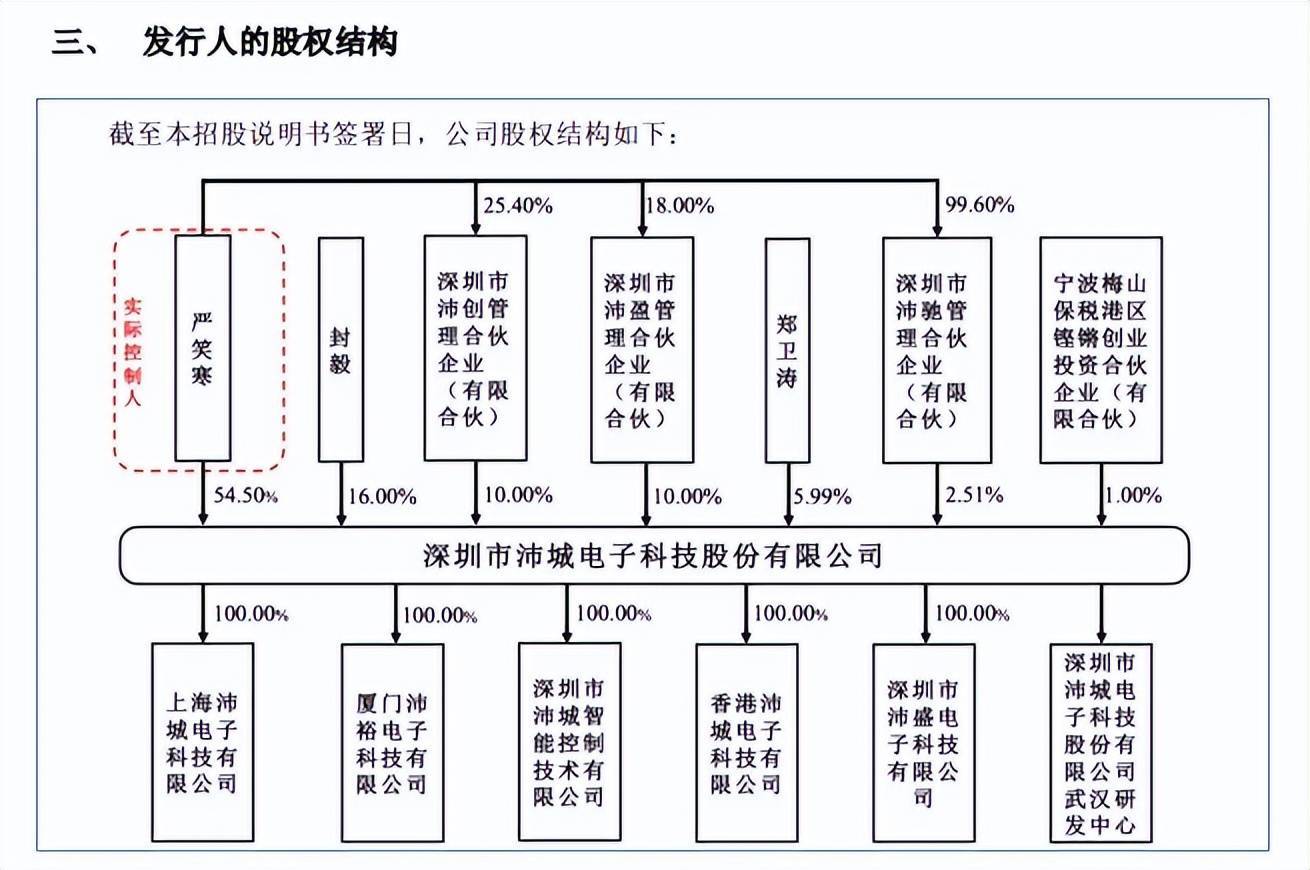
沛城科技IPO:实控人表决权超77%,为何转让50万元出资额
Sou Hu Cai Jing· 2025-12-31 02:24
Core Viewpoint - Shenzhen Peicheng Electronic Technology Co., Ltd. (Peicheng Technology) has successfully passed the listing review on the Beijing Stock Exchange, with Guotai Junan Securities as the sponsor [1] Company Overview - Peicheng Technology specializes in the independent research, production, and sales of third-party battery power control systems (BMS, PCS, etc.) and provides application solutions centered around integrated circuits and discrete devices [1] - The company was established in February 2004 and underwent a shareholding reform in September 2023, with plans to list on the New Third Board in September 2024 [1] Shareholding Structure - The controlling shareholder and actual controller of Peicheng Technology is Yan Xiaohan, who holds a direct shareholding of 54.5% and indirectly controls an additional 22.51%, totaling 77.01% of the shares [1] - Yan Xiaohan has held various key positions in the company since its inception, including General Manager and Chairman [3] Employee Incentives - In December 2020, Yan Xiaohan gifted 7.5 million yuan to eight core management and business personnel for subscribing to Peicheng Technology's equity as part of an employee stock incentive plan [3] - The employees involved have significant tenure with the company, with most having over 15 years of service [4][5] Regulatory Scrutiny - The Beijing Stock Exchange raised concerns regarding the source of the employee stock subscription funds, questioning the rationale behind Yan Xiaohan's gift and the absence of performance assessments or service duration agreements [6][8] - The second round of inquiries focused on the fairness of the pricing for the share transfer to the newly established private equity fund, Ningbo Mengshan, and whether there were any related party transactions [8] Recent Transactions - In June 2023, Yan Xiaohan transferred a 500,000 yuan stake in Peicheng Technology to Ningbo Mengshan at a price of 20 yuan per share, totaling 10 million yuan, with a corresponding price-to-earnings ratio of 10.82 [6] - The private equity fund was established in May 2023, just a month before the share transfer [6] Investment Background - Yan Xiaohan has previously invested in other private equity funds managed by the same entity as Ningbo Mengshan, indicating a potential strategic alignment [7][8] - The company is required to clarify the circumstances surrounding the share transfer and the communication between Yan Xiaohan and Ningbo Mengshan [8]