宝钢股份

Search documents
有色金属行业周报:大宗商品价格调整,继续看好后市机会
东方财富· 2026-02-05 07:45
Investment Rating - The report maintains an "Outperform" rating for the industry, indicating a projected increase in performance relative to the market index [2][15]. Core Insights - The report highlights a positive outlook for commodity prices, particularly in metals, driven by supply constraints and strong demand dynamics [1][7]. - It emphasizes the resilience of copper prices, with recent data showing a week-on-week increase of 3.5% for LME copper and 2.3% for SHFE copper, indicating strong market fundamentals [7]. - The aluminum sector is expected to maintain its strength, with a slight increase in SHFE aluminum prices despite a decrease in processing rates due to seasonal factors [7]. - The precious metals market is experiencing volatility, but there are opportunities for investment once price stability is achieved [7]. - The tungsten sector is noted for increased price fluctuations, while rare earth prices remain relatively stable, suggesting varied investment opportunities across different metal categories [7][11]. Summary by Sections Copper - Copper prices are showing strong resilience, with LME and SHFE prices at 133,370 and 103,680 USD/ton respectively, reflecting a week-on-week increase [7]. - Supply constraints are highlighted, particularly with declining grades in major mines in Peru, leading to expected production decreases in the coming years [7]. Aluminum - The report notes a slight decrease in LME aluminum prices but an increase in SHFE prices, indicating mixed market signals [7]. - Seasonal demand impacts are acknowledged, with a decrease in processing rates due to the Chinese New Year [7]. Precious Metals - The report discusses the recent fluctuations in precious metals, particularly gold, with SHFE gold prices at 1,161.4 CNY/gram and COMEX gold at 4,907.5 USD/ounce [7]. - The potential for investment is noted once the market stabilizes post-volatility [11]. Small Metals - Tungsten prices have increased by 12.3% week-on-week, while rare earth prices show stability, indicating diverse investment opportunities [7][11]. Steel - The report indicates that southern steel mills are proactively raising prices, with SHFE rebar and hot-rolled coil prices at 3,128 and 3,288 CNY/ton respectively [8]. - An increase in total inventory and consumption rates suggests a potential for profit improvement in the steel sector [8].
有色金属行业周报:大宗商品价格调整,继续看好后市机会-20260205
East Money Securities· 2026-02-05 07:08
Investment Rating - The report maintains an "Outperform" rating for the industry [2][11]. Core Insights - The report highlights a positive outlook for commodity prices, particularly in the context of copper and aluminum, with expectations of continued strength in these markets [7][8]. - It emphasizes the resilience of copper prices, which have shown a week-on-week increase, indicating a tight supply situation [7]. - The report notes that the steel industry is seeing price adjustments from southern steel mills, which may lead to improved profit margins [8]. Summary by Sections Copper - Copper prices remain resilient, with LME and SHFE copper prices recorded at 133,370 and 103,680 USD/ton respectively, showing week-on-week increases of 3.5% and 2.3% [7]. - The report suggests focusing on companies with rich copper resource reserves such as Zijin Mining, Luoyang Molybdenum, and China Nonferrous Mining [11]. Aluminum - The aluminum sector is expected to maintain its resilience, with LME and SHFE aluminum prices at 3,110 and 24,560 USD/ton, respectively [7]. - Recommended companies include Shenhuo Group, Yun Aluminum, China Aluminum, and Nanshan Aluminum [11]. Precious Metals - The report indicates that precious metals have experienced volatility, with SHFE gold and COMEX gold prices at 1,161.4 CNY/gram and 4,907.5 USD/ounce, respectively [7]. - It suggests monitoring companies like Zijin Gold International, Shandong Gold, and China National Gold for potential investment opportunities [11]. Minor Metals - Tungsten prices have increased by 12.3% week-on-week, with significant price adjustments noted in the tungsten sector [7]. - The report recommends focusing on rare earth companies such as Northern Rare Earth and China Rare Earth, as well as tungsten companies like Zhongtung High-tech and Xiamen Tungsten [11]. Steel - The steel industry is seeing proactive price increases from southern steel mills, with SHFE rebar and hot-rolled coil prices at 3,128 and 3,288 CNY/ton, respectively [8]. - Companies to watch include Baosteel, Hualing Steel, and Nanjing Steel, particularly those with superior product structures [11].
AI电荒,谁能救场
Di Yi Cai Jing· 2026-02-05 04:32
Core Insights - The global power equipment industry is witnessing a significant shift, with China not only excelling in manufacturing but also setting global standards [18] Group 1: Current Industry Challenges - In Ashburn, Virginia, a power shortage crisis is emerging due to the concentration of major AI companies building data centers, which consume over 2 billion kilowatt-hours annually, equivalent to the annual electricity consumption of a city with 20 million people [1] - The transformer market in the U.S. is critically dependent on imports, with 80% of transformers being sourced from abroad, leading to extended delivery times from 50 weeks to 127 weeks [1] - The global transformer shortage is creating a divide between economies, with AI demand overwhelming existing power grids while infrastructure orders surge [2] Group 2: Historical Context and Development - From 1978 to 1990, China's electricity generation was significantly lower than that of the U.S., leading to a reliance on imported high-voltage transformers [3] - The breakthrough in domestic transformer production occurred in 1985 when a Chinese team successfully developed a 500 kV transformer, marking a pivotal moment in the industry [4][6] - The 1990s saw a push for ultra-high voltage (UHV) technology in China, despite skepticism from international experts, leading to the establishment of a UHV power grid [7][9] Group 3: Technological Advancements - The successful development of UHV transformers in the early 2000s positioned China as a leader in the global power equipment market [10] - By 2009, the first 1000 kV UHV test transformer was completed, showcasing China's technological capabilities [10] - The rise of smart grids and digital twin transformers in the 2010s reflects the industry's adaptation to new energy demands and digitalization [11][12] Group 4: Recent Developments and Future Outlook - In 2023, the demand for power due to AI advancements is creating a critical need for efficient power infrastructure, with global data center electricity consumption expected to double in three years [15] - China's overseas power project contracts reached $67.28 billion in 2024, with a significant portion related to transformer and grid construction, highlighting the global demand for Chinese solutions [16] - The "East Data West Calculation" strategy is being implemented to enhance China's computing power infrastructure, supported by robust power supply planning [16][17]

自由现金流ETF中证全指(561080)跌1.55%,半日成交额840.67万元
Xin Lang Cai Jing· 2026-02-05 03:44
Group 1 - The Freedom Cash Flow ETF CSI All Index (561080) closed down 1.55% at 1.330 yuan with a trading volume of 8.4067 million yuan [1] - Major holdings in the ETF include China National Offshore Oil Corporation (CNOOC) down 1.12%, SAIC Motor up 0.14%, Gree Electric Appliances down 0.33%, COSCO Shipping Holdings up 0.07%, Muyuan Foods down 0.15%, Aluminum Corporation of China down 6.77%, TCL Technology down 0.61%, Baosteel down 1.52%, Great Wall Motors up 1.06%, and Chint Electric down 4.14% [1] - The ETF's performance benchmark is the CSI All Index Free Cash Flow Index, managed by Huaan Fund Management Co., Ltd. The fund has returned 35.06% since its inception on April 23, 2025, and 7.11% over the past month [1]




中国钢铁四巨头,加起来还比不过日本制铁,凭什么?
Sou Hu Cai Jing· 2026-02-05 02:41
Group 1 - The core point of the article highlights that despite the large scale of Chinese steel companies, their profit margins remain weak, with significant revenue but low net profits per ton of steel produced [2][3][4] - In 2024, major Chinese steel companies reported revenues and net profits as follows: Baowu Group with 322.1 billion yuan and 7.362 billion yuan; CITIC Special Steel with 109.2 billion yuan and 5.126 billion yuan; Nanjing Steel with 61.8 billion yuan and 2.261 billion yuan; and Huazhong Steel with 14.46 billion yuan and 2.032 billion yuan, totaling over 16.7 billion yuan in net profit [2] - The article emphasizes that the product structure of Chinese steel, heavily reliant on low-margin ordinary products like rebar and wire rods, leads to lower profitability compared to Japanese steel companies that focus on high-end products [3][4] Group 2 - Japanese steel companies, such as Nippon Steel, have shifted their focus to high-value products, allowing them to sell steel at significantly higher prices, averaging over 1,500 USD per ton compared to China's 755 USD per ton [4][6] - The article notes that while Chinese companies are making efforts to develop high-end products, their overall proportion of high-end offerings still lags behind that of Japanese competitors, which impacts their profitability [8][9] - Strategic moves by Japanese companies, such as Nippon Steel's acquisition of U.S. Steel for 14.1 billion USD, are aimed at securing a stable market and capitalizing on low-carbon steel production advantages [11] Group 3 - Chinese steel companies are also taking steps towards modernization and sustainability, with projects like Baowu's hydrogen metallurgy and Nanjing Steel's focus on raw material stability, indicating a shift towards lower carbon emissions [13] - The article suggests that the future competitive landscape will be defined by low-carbon and intelligent manufacturing, with the potential for Chinese companies to leverage their scale and market advantages if they can effectively transition to higher-margin products [15] - The current disparity in profitability is framed as a reflection of different development stages and paths, with Chinese companies needing to convert their production advantages into profits more effectively [15]


今年底牌照到期 东方付通100%股权遭转让
Bei Jing Shang Bao· 2026-02-04 16:19
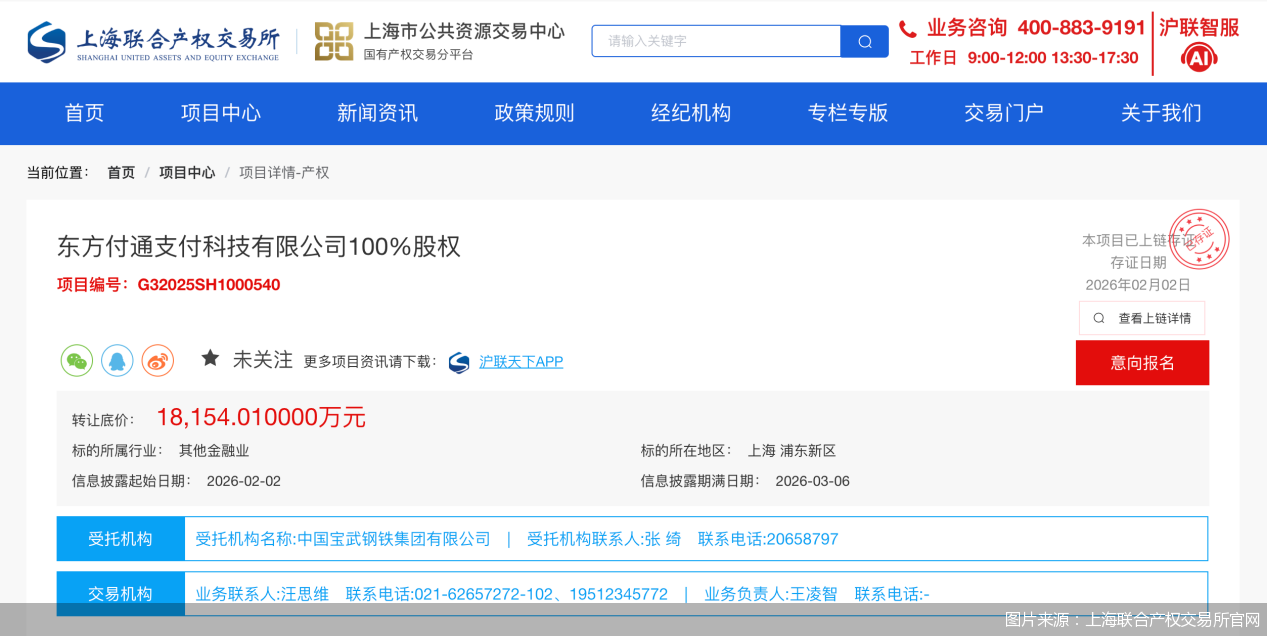
这张支付牌照再被挂牌。2月4日,北京商报记者注意到,上海联合产权交易所官网日前披露东方付通支 付科技有限公司(以下简称"东方付通")100%股权转让公告,转让底价定为1.82亿元。在去年11月首次 挂牌中,东方付通未对外披露转让底价。 整体来看,东方付通最大的价值源于其所持有的储值账户运营Ⅰ类牌照,目前该公司尚未更换长期有效 的支付牌照。结合监管要求,东方付通的新股东需在今年6月21日前完成对东方付通的增资和牌照续展 材料递交工作,且增资幅度至少应达1亿元。分析人士认为,东方付通的股权转让是原股东战略调整剥 离非核心资产的体现,其挂牌定价整体处于行业中等水平。 面对监管要求,东方付通在短期内找到买家的需求更为迫切。过去几年,国有企业出清旗下支付等非主 业金融业务的情况在业内并不少见。对于公司股权转让的具体原因、预期转让完成时间以及后续经营规 划等问题,北京商报记者向东方付通方面进行采访,对方表示需联系股权挂牌的对接人,而后者电话未 有人接听。 素喜智研高级研究员苏筱芮表示,随着"长期有效"支付牌照陆续颁发,一些牌照将在今年到期的中小机 构,可能会加速寻求潜在买家。去年以来,一些非金融集团也在逐步聚焦主业,主动 ...

中国宝武邹继新的三方面建议
Xin Lang Cai Jing· 2026-02-04 12:21
2026年2月4日上午,上海市政协十四届四次会议举行专题会议,在"着力深化'五个中心'建设,全面提 升城市核心功能,奋力推动高质量发展取得新突破"专题会议上,市政协常委,中国宝武钢铁集团有限 公司党委常委,宝钢股份党委书记、董事长邹继新结合宝钢股份产业转型升级的管理实践,围绕推动钢 铁产业提质升级、更好融入上海"十五五"产业规划,提出三方面建议。 一是更大力度支持钢铁企业提升数智化水平。具体来说,他建议,可以加大数字化转型示范企业、示范 项目的激励力度,发挥领军企业数字化转型对全球产业链的带动作用;搭建数字化转型成果转移转化平 台,统筹推进产学研攻关、成果转化与推广应用;鼓励、引导企业、高校、科研院所加速研发范式变 革,推动基于行业数据库和知识大模型的数字化研发基座建设,构建数据、知识双引擎的AI数字化研 发平台及示范应用。 二是更大力度支持钢铁企业加快绿色化转型。 他认为,可以构建"从供给侧激励到需求侧引导"的绿色 低碳产品激励体系,对冶金低碳工艺产线建设运营给予支持,在产能、能耗双控与减排政策上予以倾 斜;加强绿色供应链体系建设,加大绿色低碳钢材在市政重大项目和工程中的使用比例,促进上海市整 体碳减排;加 ...
挂牌价1.82亿元!东方付通100%股权遭转让,牌照将在2026年末到期
Bei Jing Shang Bao· 2026-02-04 11:40
这张支付牌照再次被挂牌。2月4日,北京商报记者注意到,上海联合产权交易所官网日前披露东方付通支付科技有限公司(以下简称"东方付通")100%股 权转让公告,转让底价定为18154.01万元。在2025年11月的首次挂牌中,东方付通未对外披露转让底价。 买家应履行硬性要求 公开信息显示,东方付通成立于2011年3月,于同年12月获得人民银行颁发的支付牌照。支付牌照许可范围为全国范围内的储值账户运营Ⅰ类,即原互联网 支付,此前该公司已经完成两次支付牌照续展,牌照将在2026年12月到期。东方付通当前注册资本1亿元,由上海欧冶供应链有限公司100%持股。经天眼查 股权穿透,东方付通的实际控制方为国有企业中国宝武钢铁集团有限公司。 根据转让公告,交易完成后,标的企业不得继续使用中国宝武系字号、资质及特许经营权,受让方需承接原债权债务,并按转让方制定的方案安置10名员 工。 而支付机构展业的硬性条件,也为牌照转让带来了新要求。按照转让公告,意向受让方须为境内依法存续的企业法人,具备良好商业信用与支付能力,不接 受联合受让及委托、信托举牌,且需缴纳5400万元保证金。交易价款须一次性支付,合同生效以签署完毕且受让方股东资 ...
87家央企负责人任期激励收入披露:中石油董事长86.21万元、中石化董事长84.81万元、中国移动总经理21.61万元……



Sou Hu Cai Jing· 2026-02-04 04:20
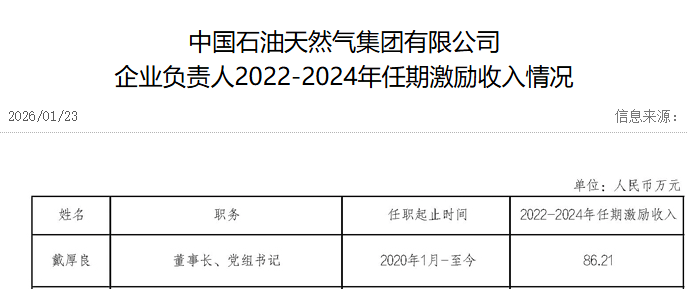
Core Viewpoint - The State-owned Assets Supervision and Administration Commission (SASAC) announced the incentive income for executives of central enterprises for the 2022-2024 term, with a total of 87 enterprises disclosing their incentive income figures. Group 1: Incentive Income Overview - The total incentive income for central enterprise executives consists of annual salary and term incentive income, with the latter being distributed every three years [1]. - Notable figures include: - Jiao Houliang, Chairman of China National Petroleum Corporation, with an incentive income of 86.21 million RMB for the 2022-2024 term [1]. - Ma Yongsheng, Chairman of Sinopec, with an incentive income of 84.81 million RMB [3]. - Wang Dongjin, Chairman of China National Offshore Oil Corporation, with an incentive income of 86.06 million RMB [4]. Group 2: Specific Executive Incentive Income - Zhang Wei, Chairman of the National Oil and Gas Pipeline Group, has an incentive income of 78.17 million RMB [6]. - Meng Zhenping, Chairman of China Southern Power Grid, has an incentive income of 83.54 million RMB [8]. - Temperature of incentive income varies across different enterprises, with some executives like Liu Mingsheng from China Power Investment Corporation receiving 26.02 million RMB for the 2022-2024 term [13]. Group 3: Additional Notable Executives - Chen Zhongyue, Chairman of China Unicom, has an incentive income of 80.49 million RMB [17]. - Xu Peng, from China First Automobile Group, has an incentive income of 82.54 million RMB [23]. - Wang Xianming, Chairman of China Resources Group, has an incentive income of 82.44 million RMB [54].
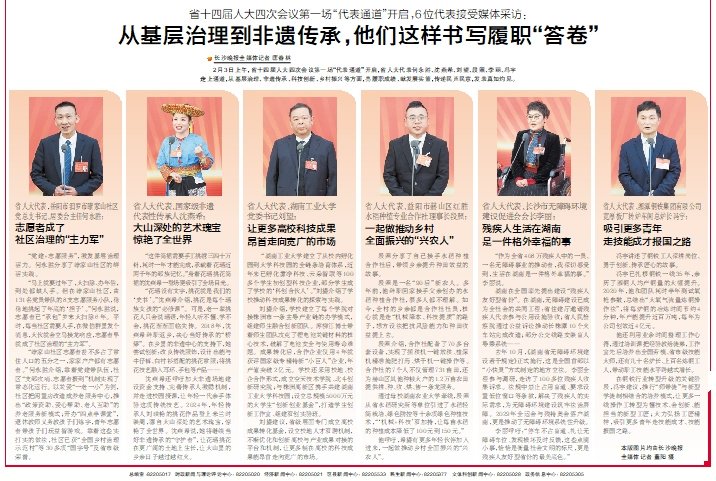
从基层治理到非遗传承,他们这样书写履职“答卷”
Chang Sha Wan Bao· 2026-02-04 00:13
Group 1: Community Governance and Volunteerism - The community of Liaojiashan has effectively utilized volunteers, with 131 party members leading 8 volunteer teams, significantly contributing to community governance and activities such as year-end cleaning [5] - Approximately 20% of the community's permanent residents are volunteers, showcasing a strong culture of volunteerism and community engagement [5] - The community has received over 30 national and provincial honors, including being recognized as a "National Rural Governance Demonstration Village" [5] Group 2: Cultural Heritage and Non-material Cultural Inheritance - The art of embroidery in the Hmong culture, which requires extensive manual labor, is at risk of being lost as younger generations struggle to learn the craft [7] - Efforts to innovate traditional clothing and integrate embroidery techniques into modern products have been initiated to preserve this cultural heritage [7] - The call for increased funding for cultural heritage sites and improved incentive mechanisms for inheritors has been emphasized to ensure the continuation of these traditions [7] Group 3: Technology and Innovation in Education - Hunan University of Technology has established a comprehensive incubation system, resulting in the creation of over 100 student-led tech startups [9] - The university's collaboration with local industries has led to significant advancements in lithium battery technology, with a partner company achieving an annual output value exceeding 200 million yuan [9] - A proposal for a provincial-level fund to support the commercialization of university research outcomes has been made to enhance the connection between academia and industry [9] Group 4: Agricultural Innovation and Rural Revitalization - The rice planting cooperative led by a young entrepreneur has adopted mechanization and technology to improve farming efficiency and reduce costs by 100 to 150 yuan per mu [11] - The cooperative provides comprehensive agricultural services to local farmers, enhancing productivity across 12,000 mu of farmland [11] - There is a call for more young individuals to engage in agriculture and contribute to rural revitalization efforts [11] Group 5: Accessibility and Disability Rights - Hunan has taken the lead in establishing a "disability-friendly province," with initiatives involving disabled representatives in public facility assessments [13] - The implementation of local legislation aimed at improving accessibility for disabled individuals has been highlighted, addressing practical needs such as the prohibition of occupying blind paths [13] - The upcoming 2029 National Games and Special Olympics in Hunan is expected to further enhance the systematic upgrade of accessibility environments [13] Group 6: Skills Development in the Steel Industry - The steel industry has seen significant productivity improvements, with innovative practices leading to an annual increase in production capacity by nearly one million tons [16] - A focus on training and mentoring has resulted in the development of skilled workers, including national role models and skilled masters [16] - Recommendations for combining traditional apprenticeship models with modern training methods have been made to attract youth to skilled trades [16]