
良品铺子

Search documents
玩过“奥特蛋”吗?金添动漫冲击港股IPO:IP授权方撤资,渠道转型反噬现金流
Xin Lang Cai Jing· 2025-12-26 10:28
Core Viewpoint - The article discusses the rise of IP (Intellectual Property) in the snack industry, focusing on JinTian Animation's potential as the first "IP food play" stock in Hong Kong, while highlighting the challenges and risks associated with reliance on licensed IPs [3][52]. Group 1: Market Overview - The IP snack market in China is projected to grow from 11.5 billion yuan in 2024 to 30.5 billion yuan by 2029, with a compound annual growth rate (CAGR) of approximately 20.9%, significantly outpacing the overall retail market growth of 4.1% [6][55]. - JinTian Animation claims to be the largest IP snack company in China, achieving revenues of 877 million yuan and a net profit of 122 million yuan in 2024, capturing a market share of 7.6% [10][60]. Group 2: Product and Profitability - JinTian Animation's gross margin reached 34.7% in the first half of 2025, an increase of over 8 percentage points from 2022, while competitors like Three Squirrels and Liangpinpuzi maintained margins around 25% [5][54]. - The company's flagship product, the "Ultraman Egg," has sold 70 million units since its launch, contributing 1.27 billion yuan in revenue over three and a half years [13][62]. Group 3: Licensing and Dependency Risks - JinTian Animation relies heavily on licensed IPs, with Ultraman accounting for approximately 63% of its revenue in 2022-2023, and 43.9% in the first half of 2025 [16][65]. - The licensing agreement for Ultraman is set to expire in less than 12 months, raising concerns about the company's core revenue source if the contract is not renewed [14][63]. Group 4: Corporate Governance and Changes - The departure of key shareholder Sun Jian, who was also the controlling party of the IP licensing entity, has severed the previously strong ties between JinTian Animation and its core IP sources [19][68]. - Following Sun Jian's exit, the company's IP licensing fees have increased significantly, from 21.14 million yuan in 2022 to 36.79 million yuan in 2024, indicating rising costs amid uncertain renewal terms [23][72]. Group 5: Sales Channels and Financial Performance - JinTian Animation's revenue structure has shifted, with sales through distributors dropping from 95% of total revenue in 2022 to 55.1% in the first half of 2025, while direct sales to retailers have increased significantly [37][41]. - Despite revenue growth, the company's cash flow from operating activities has declined by 34.7% year-on-year, raising concerns about financial sustainability [43][46].


玩过“奥特蛋”吗?金添动漫冲击港股IPO:IP授权方撤资,渠道转型反噬现金流
市值风云· 2025-12-26 10:13
Core Viewpoint - The article discusses the rise of the IP economy in the snack industry, focusing on Jin Tian Animation's potential as the first "IP food play" stock in Hong Kong, while highlighting the challenges and risks associated with reliance on licensed IPs [3][4]. Group 1: Market Potential - The IP snack market in China is projected to grow from 11.5 billion RMB in 2024 to 30.5 billion RMB by 2029, with a compound annual growth rate (CAGR) of approximately 20.9%, significantly outpacing the overall retail market growth of 4.1% [6]. - Jin Tian Animation's gross margin reached 34.7% in the first half of 2025, an increase of over 8 percentage points compared to 2022, while competitors like Three Squirrels and Liangpinpuzi maintained margins around 25% [5]. Group 2: Company Performance - Jin Tian Animation reported revenues of 877 million RMB and a net profit of 122 million RMB in 2024, holding a market share of 7.6% in the IP snack sector, making it the leading company in this niche [13]. - The company has a diverse portfolio with 26 licensed IPs and over 600 active SKUs, covering five major categories of snacks, and has a distribution network that spans over 1,700 counties in China [15]. Group 3: Dependency on IPs - The company's flagship product, "Ultraman Egg," has sold 70 million units since its launch, contributing 12.7 billion RMB in revenue over the past three and a half years, but the IP license is set to expire in less than 12 months [17][19]. - Approximately 63% of the company's revenue in 2022-2023 came from the Ultraman IP, which dropped to 43.9% in the first half of 2025, indicating a heavy reliance on a single IP [19]. Group 4: Licensing Risks - The company faces significant risks as it does not own the IPs it relies on, making it vulnerable to potential increases in licensing fees and the possibility of losing key IPs upon contract expiration [10][28]. - Following the exit of a key shareholder who was also the IP agent for Ultraman, the company lost its close ties to the IP source, raising concerns about future licensing negotiations and costs [25][27]. Group 5: Financial Health - From 2022 to 2024, the company experienced rapid revenue growth from 596 million RMB to 877 million RMB, with a CAGR of 21.3%, and net profit growth of 98% [41]. - However, the company's cash flow has shown signs of deterioration, with a 34.7% decline in net cash flow from operating activities in the first half of 2025 compared to previous years [49][51].

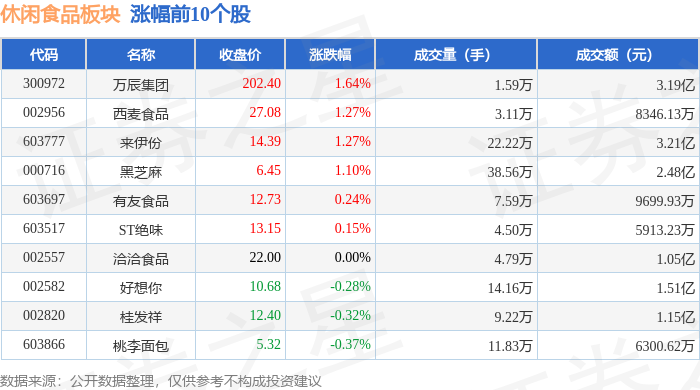
休闲食品板块12月26日涨0.02%,万辰集团领涨,主力资金净流出5517.24万元
Zheng Xing Xing Ye Ri Bao· 2025-12-26 09:07
Core Viewpoint - The leisure food sector experienced a slight increase of 0.02% on December 26, with Wancheng Group leading the gains, while the overall market indices also showed positive movement [1]. Group 1: Market Performance - The Shanghai Composite Index closed at 3963.68, up by 0.1% [1]. - The Shenzhen Component Index closed at 13603.89, up by 0.54% [1]. - Key stocks in the leisure food sector showed varied performance, with Wancheng Group closing at 202.40, up by 1.64% [1]. Group 2: Stock Performance Summary - Wancheng Group (300972) led the sector with a closing price of 202.40 and a gain of 1.64% [1]. - Other notable performers included Ximai Food (002956) at 27.08, up by 1.27%, and Laiyifen (603777) at 14.39, also up by 1.27% [1]. - Stocks such as Good Idea (002582) and Guilin Faxiang (002820) saw slight declines of 0.28% and 0.32%, respectively [1]. Group 3: Capital Flow Analysis - The leisure food sector saw a net outflow of 55.17 million yuan from institutional investors, while retail investors contributed a net inflow of 48.18 million yuan [2]. - The overall capital flow indicates a mixed sentiment, with institutional investors withdrawing funds while retail investors showed interest [2]. Group 4: Individual Stock Capital Flow - Laiyifen (603777) experienced a significant net outflow of 42.53 million yuan from institutional investors, indicating a bearish sentiment [3]. - Wancheng Group (300972) had a net inflow of 2.78 million yuan from retail investors, suggesting some level of support from individual investors [3]. - Ximai Food (002956) saw a net inflow of 3.03 million yuan from institutional investors, reflecting positive interest [3].



良品铺子股权纠纷再添变数,广州轻工硬刚:弃股权要赔偿
2 1 Shi Ji Jing Ji Bao Dao· 2025-12-26 03:24
这场股权转让纠纷的源头可追溯至今年年中。良品铺子控股股东宁波汉意曾先后与两家国资背景的企业 接触并签署相关协议,这直接导致了后续的法律冲突。 2025年5月,宁波汉意与广州轻工签署《合作协议书》,约定广州轻工拟受让宁波汉意持有的良品铺子 股份。然而,仅两个月后的7月17日,良品铺子发布公告称,宁波汉意拟将其持有的股份转让给武汉国 资旗下的长江产业投资集团(即长江国贸),若交易完成,公司控制权将发生变更。 南方财经记者伍素文实习生王颢琪广州报道 这一变动引发了广州轻工的法律反击。7月,广州轻工向法院提起诉讼,主张宁波汉意违约,并申请冻 结宁波汉意持有的约7976.4万股股份。广州轻工要求宁波汉意继续履约,将持有的良品铺子股份有限公 司的7976.4万股股份,按照每股12.42 元的价格转让给原告,并支付协议约定的违约金500万元等,涉案 金额为9.96亿元。 广州轻工集团起诉良品铺子(603719.SH)控股股东的股权纠纷目前仍处于司法程序阶段,随着事件迎 来新进展,这家休闲食品头部企业的"卖身"走向似乎更加明朗。 8月,广州轻工对宁波汉意的诉讼再次升级。除了要求其继续履行9.91亿元的股份交易总价款外,需支 ...

盘一盘2025:AI营销黑榜,谁在降本增“笑”?
3 6 Ke· 2025-12-26 00:23
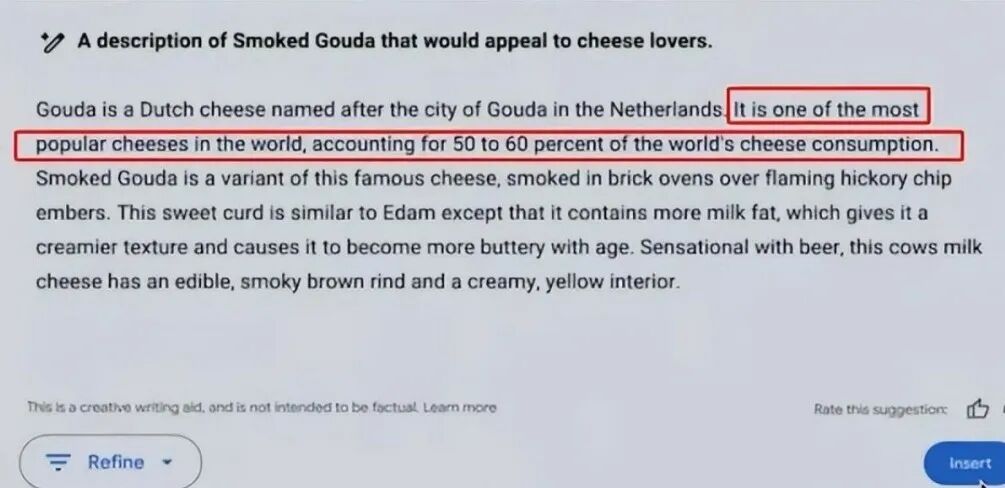
Core Insights - The advertising industry is at the forefront of utilizing AI for cost reduction and efficiency, but it faces significant challenges and failures in execution [1] Group 1: Major Failures in AI Advertising - Google's Super Bowl AI advertisement faced backlash due to a misleading claim about cheese consumption, which was generated by its Gemini AI [1] - Asiaray's advertisement featuring a girl with six fingers sparked public discomfort and criticism, highlighting the potential pitfalls of AI-generated content [3] - Oriental Tree Leaf's outdoor advertisement was criticized for its lack of authenticity, with models displaying unnatural expressions and proportions, raising concerns about the quality of AI-generated visuals [5] - A promotional image from Liangpinpuzi incorrectly depicted peanuts hanging from trees, leading to a public apology and a commitment to review all promotional materials for accuracy [7] - Coca-Cola's AI-generated Christmas advertisement was criticized for lacking creativity and failing to evoke the intended festive spirit, as it merely paid homage to previous ads without innovation [9] - McDonald's AI-generated Christmas advertisement was deemed negative and unsettling, leading to its removal after public backlash [10] Group 2: Industry Insights and Recommendations - The failures in AI advertising underscore the necessity for rigorous human oversight in content creation, emphasizing that factual accuracy and common sense are non-negotiable standards [11] - Industry professionals are encouraged to enhance their aesthetic judgment and not overly rely on AI for creative processes, ensuring that the quality of advertising materials is maintained [12] - Brands must prioritize trust and be cautious of the "hidden costs" associated with using subpar AI-generated content, as it can damage brand perception and customer relationships [12]



100个死掉的品牌,背后站着同一个“老登味”的老板
新消费智库· 2025-12-25 16:00
Core Viewpoint - The article discusses the phenomenon of brand aging and the challenges faced by once-successful brands, emphasizing that the decline is often gradual and rooted in the founders' inability to adapt to changing market dynamics [2][24]. Group 1: Brand Aging and Challenges - Many once-prominent brands have rapidly fallen from grace, with founders transitioning from successful leaders to struggling individuals [2]. - The concept of "brand aging" is likened to a person aging, where superficial changes do not address the underlying issues [5]. - Founders often create a "comfort zone" that limits their exposure to diverse opinions and market realities, leading to poor decision-making [8][26]. Group 2: Entrepreneurial Mindset Shift - Entrepreneurs initially operate like "pirates," seizing opportunities and adapting quickly, but as they establish their businesses, they become more defensive and resistant to change [9]. - The shift from a growth-oriented mindset to a defensive one can hinder innovation and responsiveness to market trends [9]. Group 3: Understanding Market Realities - The reliance on curated data and reports creates a "second-hand reality," which can obscure true market sentiments and consumer feedback [10]. - Engaging directly with consumers and understanding their frustrations is crucial for maintaining relevance [10]. Group 4: Breaking Out of Comfort Zones - To rejuvenate their perspectives, founders should actively seek discomfort by engaging with unfamiliar concepts and diverse viewpoints [14]. - Encouraging open dialogue within teams and valuing honest feedback can help leaders avoid the pitfalls of complacency [15][16]. Group 5: Authenticity and Brand Values - Authenticity in brand messaging is essential; actions must align with stated values to build trust with consumers [18]. - Acknowledging weaknesses and failures can resonate more with consumers than projecting a perfect image [20][21]. - Brands should focus on translating their messages into relatable narratives for consumers, rather than attempting to educate them [22].

政观长三角丨竞逐宠物经济,异军突起的宿州凭什么
Xin Lang Cai Jing· 2025-12-25 05:03
Core Insights - The pet economy in China is rapidly growing, with the market expected to reach 300.2 billion yuan in 2024 and 1.15 trillion yuan by 2028, driven by increasing pet ownership and consumer spending [2][17] - Suzhou is emerging as a leader in the pet industry, boasting the largest pet trading market in East China, with daily foot traffic exceeding 10,000 and an annual transaction volume of 1 billion yuan [9][10] - The local government has implemented policies to accelerate the development of the pet industry, aiming for a market size of over 50 billion yuan by 2027 and over 100 billion yuan by 2030 [17][18] Industry Overview - The pet economy encompasses various sectors, including pet food, medical services, and accessories, reflecting a shift in consumer behavior towards viewing pets as emotional companions [4][17] - Suzhou's historical background as a "hometown of circus" and its agricultural strengths provide a unique foundation for the pet food production segment [4][5] Market Dynamics - The Suzhou pet market has evolved from a few vendors to a comprehensive trading hub with 385 fixed businesses and around 2,000 mobile vendors, indicating a robust supply chain [9][10][11] - The market's growth is supported by its strategic location at the intersection of major transportation routes, facilitating nationwide distribution [5][9] Future Developments - Plans are underway to construct a new pet trading market that will enhance the existing infrastructure, incorporating e-commerce and various service areas to meet the full spectrum of pet ownership needs [11][18] - Educational institutions in Suzhou are developing programs to address the talent shortage in the pet industry, fostering a skilled workforce to support future growth [17][18]

2025零售业十大事件
Sou Hu Cai Jing· 2025-12-24 16:41
Group 1 - The hard discount supermarket format has gained significant attention in the second half of this year, with major internet companies launching new stores and expanding their presence [3][5] - Companies like Hema, JD, and Meituan have opened multiple hard discount stores, indicating a shift towards more price-sensitive consumer behavior [3][5] - The core competitiveness of hard discount formats lies in efficiency rather than just low prices, utilizing standardized models to reduce costs and improve turnover [5][7] Group 2 - Hema's X membership store has exited the market due to unclear positioning and high operational costs, highlighting the challenges faced by membership-based retail formats [9][10] - Despite Hema's exit, other local players are still attempting to establish membership stores, but they face strong competition and challenges in attracting price-sensitive customers [12][13] Group 3 - The retail sector has seen a wave of leadership changes among major players like Aldi, Sam's Club, and Yonghui, indicating a need for new strategies to adapt to market conditions [14][15] - These leadership changes are aimed at enhancing local procurement and supply chain management to support expansion while maintaining cost efficiency [15][17] Group 4 - The "prepaid card redemption" issue at Meitohai in Shanxi has raised concerns about cash flow and operational stability, as customers rush to redeem their prepaid cards amid fears of financial instability [18][21] - The situation has been exacerbated by recent store adjustments and closures, leading to a loss of consumer confidence and further financial strain [21][22] Group 5 - The trend of online players moving into offline retail is gaining momentum, with companies like Xiaoxiang Supermarket and Pupu planning to open physical stores to complement their online operations [23][24] - This shift is driven by rising costs associated with pure online fulfillment and the need to enhance consumer trust through physical retail experiences [25][28] Group 6 - The supermarket sector is undergoing a transformation as companies adopt the "learn from Pao Donglai" strategy, focusing on improving store layouts and customer experience [30][32] - However, many traditional supermarkets are still struggling with profitability despite initial positive performance post-renovation, indicating deeper systemic issues [32][33] Group 7 - Major online retailers like JD and Hema are retracting from partnerships with traditional supermarkets to refocus on self-operated models, aiming to streamline operations and improve efficiency [34][35] - This strategic shift reflects a broader trend of integrating online and offline capabilities to enhance customer experience and operational effectiveness [37][38] Group 8 - Regional retailers are emerging as new players in the market, focusing on local consumer needs and adapting their offerings accordingly, which may provide a competitive edge [39][41] - These regional players face challenges related to cost management and operational execution, particularly as they expand into new markets [41][42] Group 9 - The snack industry is experiencing a shift towards low-cost, high-density store formats, with companies like Mingming and Wancheng rapidly expanding their presence [42][44] - Traditional brands are facing pressure as they struggle to maintain market share amid aggressive pricing strategies from new entrants [44][45] Group 10 - The recent subsidy wars in instant retail have led to significant increases in order volumes, but also heightened financial pressures due to intensified price competition [47][51] - The long-term implications of these subsidy strategies remain uncertain, as companies navigate the balance between growth and profitability [51][52]
良品铺子(603719) - 良品铺子2025年第一次临时股东大会决议公告
2025-12-24 10:45
证券代码:603719 证券简称:良品铺子 公告编号:2025-051 良品铺子股份有限公司 2025年第一次临时股东大会决议公告 本公司董事会及全体董事保证本公告内容不存在任何虚假记载、误导性陈述 或者重大遗漏,并对其内容的真实性、准确性和完整性承担法律责任。 重要内容提示: 本次会议是否有否决议案:无 一、 会议召开和出席情况 | 1、出席会议的股东和代理人人数 | 227 | | --- | --- | | 2、出席会议的股东所持有表决权的股份总数(股) | 234,106,582 | | 3、出席会议的股东所持有表决权股份数占公司有表决权股 | | | 份总数的比例(%) | 58.3806 | (四) 表决方式是否符合《公司法》及《公司章程》的规定,大会主持情况等。 本次股东大会由公司董事会召集,董事长程虹先生主持,会议采用现场结合 (一) 股东大会召开的时间:2025 年 12 月 24 日 (二) 股东大会召开的地点:公司 5 楼会议室(武汉市东西湖区金银湖航天路 1 号良品大厦 (三) 出席会议的普通股股东和恢复表决权的优先股股东及其持有股份情况: 通讯的方式召开,采用现场投票和网络投票相结合 ...
良品铺子(603719) - 北京市金杜(广州)律师事务所关于良品铺子股份有限公司2025年第一次临时股东大会的法律意见书
2025-12-24 10:45
北京市金杜(广州)律师事务所 关于良品铺子股份有限公司 2025 年第一次临时股东大会的法律意见书 致:良品铺子股份有限公司 北京市金杜(广州)律师事务所(以下简称本所)接受良品铺子股份有限公司 (以下简称公司)委托,根据《中华人民共和国证券法》(以下简称《证券法》) 《中华人民共和国公司法》(以下简称《公司法》)、中国证券监督管理委员会《上 市公司股东会规则》(以下简称《股东会规则》)等中华人民共和国境内(以下简 称中国境内,为本法律意见书之目的,不包括中国香港特别行政区、中国澳门特别 行政区及中国台湾省)现行有效的法律、行政法规、规章和规范性文件和现行有效 的公司章程有关规定,指派律师出席了公司于2025年12月24日召开的2025年第一 次临时股东大会(以下简称本次股东大会),并就本次股东大会相关事项出具本法 律意见书。 为出具本法律意见书,本所律师审查了公司提供的以下文件,包括但不限于: 1 1. 经公司2023年年度股东大会审议通过的《良品铺子股份有限公司章程》(以 下简称《公司章程》); 2. 公司于2025年12月9日刊登于《中国证券报》《上海证券报》《证券时报》 《证券日报》、巨潮资讯网及上海 ...