
贝特瑞

Search documents
北交所两融余额增至78.88亿元,海希通讯融资净买入居首
Sou Hu Cai Jing· 2025-12-25 02:43
在融资净卖出方面,捷众科技、欧福蛋业、纳科诺尔等股票净卖出金额居前,分别为1021.50万元、641.93万元和510.01万元。 统计数据显示,截至12月23日,北交所股票中融资余额排名前三的为锦波生物、曙光数创和贝特瑞,最新融资余额分别为3.93亿元、3.73亿元和3.34亿元。 市场有风险,投资需谨慎。本文为AI基于第三方数据生成,仅供参考,不构成个人投资建议。 截至12月23日,北京证券交易所融资融券余额为78.88亿元,较前一交易日增加6339.22万元。其中,融资余额为78.87亿元,为连续第三个交易日增长。 12月23日,北交所市场共有179只股票获得融资净买入。其中,净买入金额在100万元以上的有45只。海希通讯以1276.17万元的净买入额位居首位,汉鑫科 技、天力复合分别以790.39万元和780.98万元的净买入额紧随其后。贝特瑞、曙光数创、骑士乳业等个股也获得了较高的融资净买入。 从行业分布来看,获得融资净买入超百万元的股票主要集中在机械设备、电力设备和计算机领域,上榜数量分别为13只、5只和5只。 来源:市场资讯 ...


182只北交所股票获融资净买入
Zheng Quan Shi Bao Wang· 2025-12-25 02:09
Core Insights - As of December 24, the total margin financing and securities lending balance on the Beijing Stock Exchange reached 7.959 billion yuan, an increase of 71.38 million yuan from the previous trading day, marking a continuous increase for four consecutive trading days [1] - The stocks with the highest margin financing balances include Jinbo Biological, Shuguang Digital Innovation, and Better Energy, with latest balances of 399 million yuan, 370 million yuan, and 339 million yuan respectively [1] - A total of 182 stocks on the Beijing Stock Exchange received net margin purchases on December 24, with 44 stocks having net purchases exceeding 1 million yuan, led by Tianli Composite with a net purchase of 9.5846 million yuan [1][2] Margin Financing Overview - The margin financing balance increased for the following stocks on December 24: - Tianli Composite: 572.73 million yuan, up by 9.5846 million yuan, with a market value ratio of 0.67% [2] - Tiangong Co.: 321.16 million yuan, up by 6.5918 million yuan, with a market value ratio of 2.46% [2] - Hongyu Packaging: 254.18 million yuan, up by 6.407 million yuan, with a market value ratio of 0.83% [2] Industry Performance - The industries with the highest concentration of stocks receiving net margin purchases over 1 million yuan include machinery equipment, automotive, and basic chemicals, with 6, 5, and 4 stocks respectively [2] - On December 24, stocks with net margin purchases exceeding 1 million yuan had an average increase of 0.98%, with notable gainers including Tiangong Co. (up 16.15%), Jiahe Technology (up 9.60%), and Litong Technology (up 6.73%) [2] - The average turnover rate for stocks with net margin purchases over 1 million yuan was 4.60%, with the highest turnover rates seen in Tiangong Co. (38.53%), Xingchen Technology (21.24%), and Knight Dairy (18.00%) [2]
3月19-20日常州!2026锂电关键材料及应用市场高峰论坛
鑫椤锂电· 2025-12-24 06:16
2026锂电关键材料及应用市场高峰论坛 会议背景 2026年,锂电行业正以磅礴之势开启新一轮周期性增长浪潮,其特征表现为需求端的强势复苏、全球 化版图的加速扩张、技术路线的颠覆性迭代,形成"量价齐升+技术跃迁"的螺旋式上升格局。 会议主办: 鑫椤资讯 会议时间: 2026年3月19-20日 会议地点: 江苏·常州 会议咨询: 13248122922(微信同) 据鑫椤资讯的预测,2025年全球锂电池产量将达到2250Gwh,2026年的增长率将达到30%,其中储能 领域增速更是有望达到48.3%,呈现出"海内外需求双轮驱动、上下游产业链协同爆发"的盛况。如此爆 发式的市场需求,对电芯及上游四大主材的需求产生了巨大的拉动作用。 然而,从当前有效产能情况来看,电芯及各种材料的远期供应存在着一定的缺口。面对明确的供应缺 口,如何保障稳定、高效的供应链,将成为抓住这轮确定性增长的关键。 -广告- 关注公众号,点击公众号主页右上角" ··· ",设置星标 "⭐" ,关注 鑫椤锂电 资讯~ 会议议题 为把握锂电行业这一轮发展机遇,鑫椤资讯将于 2026年3月19日-20日 (19日报到)举办 2026锂电关键 材料及应用市 ...






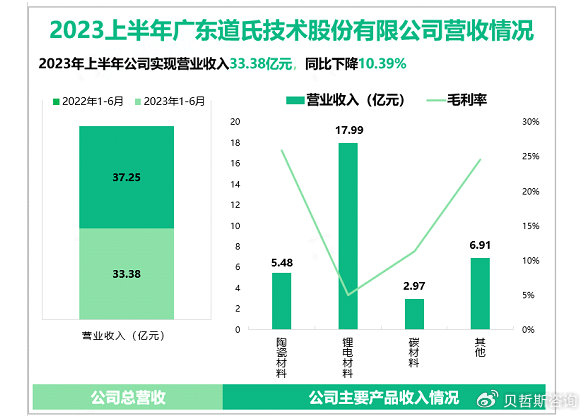
广东道氏形成“碳材料+锂电材料+陶瓷材料”新格局
Xin Lang Cai Jing· 2025-12-23 07:40
Core Viewpoint - The company maintains its leading position in the ceramic materials business while carbon materials and lithium battery materials are gradually becoming core strategic businesses. Group 1: Main Business Analysis - The company's revenue primarily comes from lithium battery materials and carbon materials related to the new energy industry, with a year-on-year decline attributed to several factors [1]. - Revenue from the carbon materials segment decreased due to increased product sales but forced price reductions; the shipment volume of conductive agents reached 12,000 tons, a 27% increase year-on-year, but prices were lowered due to supply-demand impacts and intense industry competition [1]. - The decline in revenue from the lithium battery materials segment is mainly due to cobalt salt products; while sales revenue from ternary precursors increased by 175% and shipment volume grew by 203%, cobalt salt shipment volume decreased by 52%, and prices fell due to declining cobalt metal prices [1]. - Overall, the company achieved a revenue of 3.338 billion yuan in the first half of 2023, a decrease of 10.39% year-on-year, with overseas business revenue accounting for 53% [1]. Group 2: Market Position and Competitive Landscape - The company began mass application of graphene conductive paste in lithium iron phosphate batteries in 2014, being one of the earliest enterprises in China to do so [3]. - In 2017, the company successfully developed carbon nanotube conductive paste for ternary lithium batteries [3]. - By 2022, the company expanded its product line to include graphite anode materials and silicon-based anode materials, with a graphite production capacity of 20,000 tons per year established at the Lanzhou base [3]. Group 3: Technical and Production Scale - The company adheres to a talent innovation plan, led by chief scientist Dong Angang from the Lawrence Berkeley National Laboratory, to build a strong technical R&D team [4]. - The company is recognized as a leader in customer acceptance and R&D capabilities within the industry [4].
电池化学品板块走高,天际股份涨停
Mei Ri Jing Ji Xin Wen· 2025-12-23 03:11
Group 1 - The battery chemicals sector experienced a rise, with Tianji Co., Ltd. hitting the daily limit increase, while Haike Xinyuan, Tianhua Xinneng, Huasheng Lithium Battery, Betterray, and Tianci Materials also saw significant gains [1] Group 2 - The overall positive movement in the battery chemicals market indicates growing investor confidence and potential opportunities within the sector [1]



电池化学品板块走高
Xin Lang Cai Jing· 2025-12-23 02:56
Group 1 - The battery chemicals sector has seen a significant rise, with Tianji Co., Ltd. hitting the daily limit up [1] - Other companies in the sector, including Haike Xinyuan, Tianhua Xinneng, Huasheng Lithium Battery, Betterray, and Tianci Materials, have also experienced notable increases in their stock prices [1]
贝特瑞等成立新能源材料公司
Zheng Quan Shi Bao Wang· 2025-12-22 03:53
Group 1 - The core point of the article is the establishment of Dibeiyi New Energy Materials (Jiangsu) Co., Ltd., which focuses on electronic materials and energy storage technology [1] - The company has a registered capital of 10 million yuan and its business scope includes manufacturing and research of electronic materials, new materials technology development, and energy storage technology services [1] - The company is jointly owned by Shenzhen Qingyan Electronic Technology Co., Ltd. and Betterray's wholly-owned subsidiary Betterray (Jiangsu) New Materials Technology Co., Ltd. [1]
银河期货每日早盘观察-20251222
Yin He Qi Huo· 2025-12-22 02:46
1. Report Industry Investment Ratings No relevant content provided. 2. Core Views of the Report - The stock index futures are expected to have upward momentum at the beginning of the week, but face integer - level pressure. The conversion of contract months may lead to an expansion of basis. The bond market for treasury futures is cautiously optimistic in the short - term, with short - term trading opportunities in the TL contract [21][23]. - Agricultural products have different trends. Protein meal prices are under pressure, sugar is expected to bottom - oscillate, and the cotton - cotton yarn market is strong due to factors such as good sales of new cotton [27][32][54]. - Black metals show different characteristics. Steel prices are range - bound, coking coal and coke may rebound from the bottom, and iron ore prices are volatile [58][61][64]. - Non - ferrous metals also vary. Precious metals like gold and silver are likely to continue their strong trend, while base metals such as copper, aluminum, and zinc have different price trends due to various factors [70][84][91]. - Energy and chemical products have diverse situations. Crude oil prices are bottom - oscillating, asphalt has support, and fuel oil is weakly - oscillating [116][120][124]. 3. Summary by Relevant Catalogs 3.1 Financial Derivatives Stock Index Futures - **Investment Logic**: The market was first down then up last week. The Shanghai Composite Index faces the 3900 - point decision. There may be a style switch, and the acquisition plan of Shenhua may drive large enterprises. Futures contracts' basis may expand after the contract - month change, and short - selling forces have increased [21]. - **Trading Strategy**: Adopt a high - selling and low - buying strategy for unilateral trading; wait for the basis to expand for IM\IC long 2603 + short ETF cash - and - carry arbitrage; use a double - buying strategy for options [21]. Treasury Futures - **Investment Logic**: The bond market is less sensitive to weak economic data. The capital supply is loose, increasing the market's expectation of interest - rate cuts. The short - and medium - term bonds are relatively stable, while the long - term bonds' recovery is uncertain [23]. - **Trading Strategy**: Short - term, buy low and sell high for the TL contract [23]. 3.2 Agricultural Products Protein Meal - **Investment Logic**: The global soybean supply is abundant. Domestic soybean meal has an uncertain supply, and rapeseed meal is expected to oscillate [27]. - **Trading Strategy**: Adopt a bearish view for unilateral trading; narrow the MRM spread for arbitrage; sell a wide - straddle strategy for options [28]. Sugar - **Investment Logic**: Internationally, the Brazilian sugar supply pressure is easing, and the northern hemisphere is in an increasing - production cycle. Domestically, new sugar production is increasing, but there is cost support [31][32]. - **Trading Strategy**: For unilateral trading, watch for the support at previous lows; for arbitrage, go long on the January contract and short on the May contract; for options, wait and see [32]. Oilseeds and Oils - **Investment Logic**: Domestic soybean oil inventory is decreasing, but the overall supply is sufficient. There is a lack of positive drivers for oils, but the downward space is limited [35]. - **Trading Strategy**: For unilateral trading, go long on palm oil after it stops falling and rebounds, and wait and see for soybean oil and rapeseed oil; for arbitrage and options, wait and see [35]. 3.3 Black Metals Steel - **Investment Logic**: The steel price is range - bound. The replenishment expectation has not been fulfilled, and the cost has support, but the upward space is limited [58]. - **Trading Strategy**: For unilateral trading, maintain the oscillating trend; for arbitrage, short the coil - coal ratio and hold the short position in the coil - rebar spread; for options, wait and see [59]. Coking Coal and Coke - **Investment Logic**: The coking coal auction situation has improved, but the price increase is not widespread. The coking coal supply may improve in the future, but the price fluctuation is large [61]. - **Trading Strategy**: For unilateral trading, wait and see or go long lightly at low prices; for arbitrage and options, wait and see [62]. Iron Ore - **Investment Logic**: The iron ore supply is abundant, and the demand is weak. The price increase space is limited [64]. - **Trading Strategy**: For unilateral trading, the price is oscillating; for arbitrage and options, wait and see [65]. 3.4 Non - ferrous Metals Precious Metals - **Investment Logic**: The obstacles to interest - rate cuts have decreased, and gold and silver are likely to continue their strong trend [70]. - **Trading Strategy**: For unilateral trading, hold long positions in gold and silver based on the 5 - day moving average; for arbitrage, wait and see; for options, buy out - of - the - money call options [72]. Base Metals - **Investment Logic**: Different base metals have different price trends due to factors such as supply and demand, cost, and policies [79][85][91]. - **Trading Strategy**: Each metal has different trading strategies, including unilateral trading, arbitrage, and options trading, mainly depending on its specific situation [79][85][91]. 3.5 Energy and Chemical Products Crude Oil - **Investment Logic**: Geopolitical factors cause frequent disturbances, and the oil price is bottom - oscillating. The supply - demand surplus pressure is significant [116]. - **Trading Strategy**: For unilateral trading, the price is weakly oscillating; for arbitrage, the domestic gasoline is neutral, the diesel is weak, and the oil - price spread is weak; for options, wait and see [117]. Asphalt - **Investment Logic**: The raw - material risk is difficult to prove false, and the asphalt price has support. The supply - demand fundamentals may weaken [120]. - **Trading Strategy**: For unilateral trading, the price is oscillating; for arbitrage and options, wait and see [120]. Fuel Oil - **Investment Logic**: The fundamentals of high - and low - sulfur fuel oils are weakly oscillating. The supply is increasing, and the demand is weakening [124]. - **Trading Strategy**: For unilateral trading, go short; for arbitrage, the low - sulfur and high - sulfur crack spreads are weak; for options, wait and see [124].
让研发告别“手搓试错” 国产BDA软件赋能智造万亿锂电产业|人工智能Al瞭望台
证券时报· 2025-12-22 00:12
Core Viewpoint - The integration of AI with lithium battery research and development is revolutionizing traditional methods, significantly reducing time and costs in the R&D process [1][3][6]. Group 1: Industry Overview - China is the world's largest producer and user of lithium-ion batteries, with a projected shipment volume of 1214.6 GWh in 2024, representing a 36.9% year-on-year growth and accounting for 78% of global shipments [3]. - The industry has a market value exceeding 1 trillion yuan, but the R&D process has been hampered by inefficient traditional methods, often relying on trial and error [3][4]. Group 2: Challenges in R&D - The R&D of lithium batteries is characterized as a "complex system engineering" challenge, facing issues related to cross-scale, long processes, and multiple factors [3]. - Current commercial lithium battery energy densities are nearing their limits, and new generation batteries like lithium metal and solid-state batteries face significant scientific and engineering challenges [3][4]. Group 3: BDA Software Innovation - The BDA (Battery Design Automation) software, developed by Peking University and Yigen Technology, utilizes a dual-drive model of physical simulation and AI to enhance the R&D process [4][6]. - This software can reduce the R&D cycle of a battery cell from 1-2 years to about 6 months and cut material experimentation time from months to days, achieving a cost reduction of 30%-40% [6]. Group 4: Broader Applications and Future Potential - The BDA software's applicability extends beyond lithium-ion batteries to other battery types and materials, including solid-state, sodium, and fuel cells [7]. - The software's underlying algorithms can be adapted for various industries, including fine chemicals and semiconductor materials, indicating a broad potential market [8]. Group 5: Industry Transformation - The adoption of AI in R&D is expected to shift the industry from traditional experimental methods to digital simulation and precise prediction, similar to the evolution seen in the semiconductor industry with EDA software [8][9]. - This transformation is anticipated to reshape competitive dynamics within the industry, as more companies begin to develop core materials and components independently [9]. Group 6: Challenges Ahead - Despite the advancements, the integration of AI in industrial applications faces challenges, including a shortage of interdisciplinary talent and a conservative corporate culture resistant to new digital tools [11]. - There is also a need for targeted policy support for AI industrial software development, as current funding mechanisms are often too broad and not industry-specific [11].

让研发告别“手搓试错”国产BDA软件赋能智造万亿锂电产业
Zheng Quan Shi Bao· 2025-12-21 18:07
Core Insights - The integration of AI with lithium battery research is revolutionizing traditional development methods, significantly reducing time and costs associated with material testing and performance prediction [1][4][6] Industry Overview - China is the largest producer and user of lithium-ion batteries globally, with a projected shipment volume of 1214.6 GWh in 2024, representing a 36.9% year-on-year increase and accounting for 78% of global shipments [1] - The industry is valued at over 1 trillion yuan, but the research and development (R&D) processes have been hampered by inefficient traditional methods [1][2] R&D Challenges - The current R&D model relies heavily on trial and error, leading to lengthy development cycles of one to several years for battery cells, with costs reaching millions of yuan for traditional methods [2][4] - The complexity of lithium battery R&D is characterized by "cross-scale, long process, and multiple factors," which complicates the development process [1][2] Technological Innovation - The BDA software, developed by a collaboration between Peking University and Yigen Technology, utilizes a dual-drive model of "physical simulation + AI" to enhance the efficiency of battery R&D [3][4] - This software has already been adopted by leading companies such as CATL, BYD, and GAC, resulting in significant improvements in efficiency and cost reduction [4][5] Efficiency and Cost Reduction - The BDA software can potentially reduce the R&D cycle for battery cells from 1-2 years to just six months, and material testing time from months to days [4] - It can lower R&D costs by 30% to 40% by optimizing material formulations through computer simulations [4][6] Broader Applications - The BDA software's applicability extends beyond lithium-ion batteries to other battery types and materials, including solid-state batteries and sodium batteries, as well as semiconductor and display materials [5][6] - The underlying algorithms of BDA are designed to address common challenges across various industries, indicating a wide potential for application [5] Future Trends - In the next 3-5 years, AI is expected to fundamentally change industrial production and R&D processes, shifting from trial-and-error methods to digital simulation and precise prediction [6] - This transformation is anticipated to reshape competitive dynamics within industries, with more companies focusing on in-house development of core materials and components [6] Challenges Ahead - The integration of AI in industrial applications faces challenges such as a shortage of interdisciplinary talent, conservative corporate cultures, and data security concerns [7] - There is a need for targeted policy support to foster the development of AI industrial software, as current funding mechanisms are often too broad and not industry-specific [7]