Nestle

Search documents
外资奶粉在中国不香了,昔日一哥惠氏将被雀巢合并
Guan Cha Zhe Wang· 2025-12-02 01:57
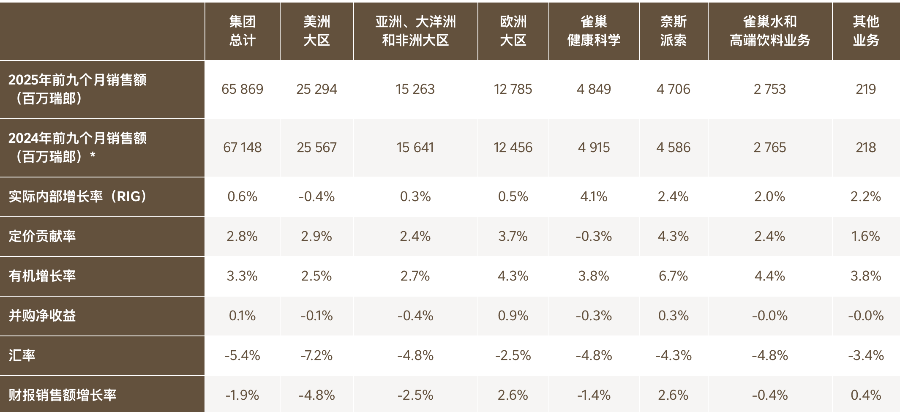
Core Insights - Nestlé Group is integrating its Wyeth Nutrition and Nestlé Infant Nutrition units to form a new "Nestlé Nutrition" team in China starting January 1, 2026, with Joel Seah as the head of the merged business [1] - The integration aims to enhance growth momentum and strengthen Nestlé's leadership position in the Chinese infant nutrition market [1] Financial Performance - Nestlé's global sales for the first nine months of 2025 were 65.9 billion Swiss francs, a year-on-year decline of approximately 1.9% [1] - The Greater China region experienced an organic growth rate of -6.1%, with an internal growth rate of -2.9% and a pricing contribution rate of -3.2% [1] Strategic Changes - New CEO Philipp Navratil has prioritized improving internal growth rates and is implementing a comprehensive strategy to streamline operations, eliminate inefficiencies, and maximize the value of existing assets [2] - The focus is shifting from expensive non-organic growth to leveraging synergies and enhancing profitability across existing business units [2] Market Challenges - The Chinese infant formula market is facing challenges such as declining birth rates and increased competition, leading to a further decline in Wyeth's market share [2] - The market dynamics have shifted significantly, with domestic brands gaining ground and foreign brands like Wyeth experiencing a drop in market presence [2] Competitive Landscape - In 2019, the market shares of Feihe and Nestlé were nearly equal at 13.3% and 13.5%, respectively; however, by 2022, Feihe's market share increased to 17.5%, while Nestlé's fell to 10.7% [3] - The implementation of new national standards for infant formula presents an opportunity for Wyeth, as it was the first foreign brand to have all its products registered under the new standards [3] Operational Continuity - The restructuring will not affect the ongoing operations of Wyeth Nutrition (China) Co., Ltd. and Wyeth (Shanghai) Trading Co., Ltd., and brands like Wyeth Illuma and S-26 will continue to serve Chinese consumers [4]



植物肉退潮!别样肉客关旗舰店 雀巢联合利华相关业务暂停
Nan Fang Du Shi Bao· 2025-12-01 14:00
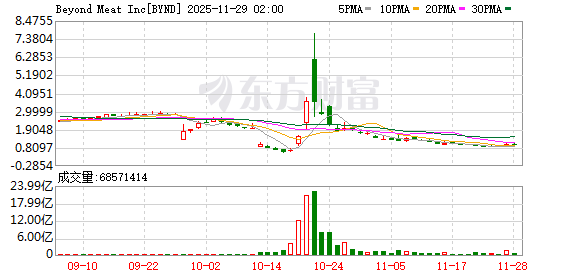
Core Viewpoint - Beyond Meat, known as the "first plant-based meat stock," has independently terminated its Tmall flagship store operations, reflecting a significant retreat from the Chinese market due to declining demand for plant-based products [1][5][8]. Group 1: Business Operations - Beyond Meat announced in February that it would suspend operations in China by the end of June, planning to reduce its workforce by 95% [5][8]. - The company had previously viewed China as a strategic market, launching products in collaboration with major brands like Starbucks and KFC [6][7]. - As of November 27, Beyond Meat's Tmall flagship store ceased operations, and its Pinduoduo store no longer sells any products [1][8]. Group 2: Market Challenges - The demand for plant-based meat in China has significantly declined, with major partners like Starbucks, KFC, and Nestlé halting or selling off their plant-based product lines [9][12][14]. - Beyond Meat's revenue has been on a downward trend since 2022, with projected revenues of $4.65 billion in 2021, dropping to $3.27 billion in 2024, and net losses increasing from $1.82 billion to $1.60 billion over the same period [9][11]. - In the U.S. market, Beyond Meat has also experienced a decline in sales, with retail channel revenues down 18.4% and food service revenues down 27.3% in the latest quarter [11]. Group 3: Industry Trends - The overall market for plant-based meat in China is cooling, with various brands, including local ones, also facing challenges in maintaining product offerings [12][13]. - Nestlé and Unilever have both scaled back their plant-based meat initiatives in China, indicating a broader industry trend of reassessing the market potential for plant-based products [13][14].

新帅在华动刀:雀巢、惠氏营养品合并
2 1 Shi Ji Jing Ji Bao Dao· 2025-12-01 13:21
Core Viewpoint - Nestlé is undergoing a significant restructuring, merging its Wyeth Nutrition and Nestlé Infant Nutrition units into a single Nestlé Nutrition business starting January 1, 2026, to enhance growth and consolidate its leadership in the Chinese infant nutrition market [1][9]. Group 1: Business Restructuring - The merger aims to reduce internal competition and leverage the strong brand influence of Wyeth and the operational advantages of Nestlé's infant nutrition team [10][9]. - Joel Seah will lead the newly formed Nestlé Nutrition business [1]. - The restructuring is part of a broader strategy to prioritize high-potential opportunities and foster a performance-oriented culture within the company [13]. Group 2: Market Dynamics - The infant formula market in China is experiencing stagnation, with a growth rate of only 0.6% in Q2 2025, as the new birth rate declines and marriage registrations drop by over 20% in 2024 [4]. - The ultra-premium segment is becoming mainstream, with a 13.3% year-on-year growth in the ultra-premium+ market, while other segments are declining [5]. - Domestic brands like Feihe and Yili have surpassed foreign brands in market share, indicating a shift in competitive dynamics [8]. Group 3: Financial Performance - Nestlé's organic growth rate in the Greater China region was -10.4% in Q3, continuing a downward trend from Q2, highlighting the operational pressures faced by the company [10]. - The overall sales figures for the first nine months of 2025 show a slight decline compared to the same period in 2024, with total sales of 65,869 million Swiss francs [3]. Group 4: Leadership Changes - Recent leadership changes include the appointment of a new CEO, who emphasizes a cautious approach to resource allocation and a focus on growth [12][13]. - The restructuring is being executed under the guidance of the new management team, which includes key personnel with experience in the Southeast Asian market [16][15].
新帅在华动刀:雀巢、惠氏营养品合并丨消费一线
2 1 Shi Ji Jing Ji Bao Dao· 2025-12-01 13:12
Core Viewpoint - Nestlé is undergoing a significant top-down reform, merging its Wyeth Nutrition and Nestlé Infant Nutrition businesses into a single Nestlé Nutrition unit starting January 1, 2026, to enhance growth and consolidate its leadership in the Chinese infant nutrition market [1][2]. Business Strategy - The merger aims to leverage the strong brand influence of Wyeth and S-26 with Nestlé's industry and channel advantages to achieve sustainable development in a competitive market [6][8]. - Nestlé emphasizes that this restructuring will not affect existing operations, and both Wyeth Nutrition (China) Co., Ltd. and Wyeth (Shanghai) Trading Co., Ltd. will continue to operate [1][2]. Market Dynamics - The infant formula market is transitioning to a mature phase, with a reported growth rate of only 0.6% in Q2 2025, as the newborn demographic advantage diminishes [3]. - The ultra-premium segment is becoming mainstream, with a 13.3% year-on-year growth in the ultra-premium+ market, while other segments are experiencing declines [4]. Competitive Landscape - The competition in the ultra-premium market is intensifying, as evidenced by Feihe's revenue decline of 9.36% to 9.151 billion yuan in the first half of the year [5][6]. - Domestic brands like Feihe and Yili have surpassed foreign brands in market share, indicating a shift in the competitive landscape [6]. Management Changes - Recent leadership changes at Nestlé include the appointment of a new CEO, who is focused on resource allocation towards high-potential opportunities and fostering a performance-driven culture [7][8]. - The restructuring is part of a broader strategy to simplify the organizational structure and enhance operational efficiency under the new management [9][10]. Key Personnel - Joel Seah has been appointed as the head of the newly formed Nestlé Nutrition business, bringing experience from his previous roles in Southeast Asia [11][12].
雀巢新变动!惠氏营养品和雀巢婴儿营养品在中国市场将合并
Nan Fang Du Shi Bao· 2025-12-01 08:21
Core Viewpoint - Nestlé announced a restructuring plan in the Greater China region, merging its Wyeth Nutrition and Nestlé Infant Nutrition businesses to form a new Nestlé Nutrition business starting January 1, 2026, aiming to enhance market competitiveness and sustainable growth [2][4]. Group 1: Organizational Changes - The new Nestlé Nutrition business will be led by Joel Seah, who previously served as the director of Nestlé's infant formula business in mainland China [3]. - The merger aims to combine the strong brand influence of Wyeth's products with Nestlé's advantages in industry and channels, reinforcing its leadership in the infant nutrition market in China [2][4]. - The restructuring is part of a broader trend within Nestlé, which has seen frequent executive changes and a shift from five global regions to three, with the Greater China region now included in the Asia, Oceania, and Africa (AOA) zone [3]. Group 2: Financial Performance - Nestlé's overall sales for the first nine months of the year reached 65.9 billion Swiss francs, a decline of 1.9%, but with an organic growth of 3.3% [3]. - In contrast, the Greater China region reported a sales figure of 2.47 billion Swiss francs (approximately 22.3 billion RMB) for the same period, reflecting a year-on-year decline of 6.4%, which is more significant than the overall group decline [4]. - The organic growth rate for the Greater China region was -10.4% in the third quarter, continuing a downward trend from the second quarter, indicating ongoing challenges in this market [4].
雀巢中国回应婴儿营养品业务与惠氏合并:不影响现有业务开展
2 1 Shi Ji Jing Ji Bao Dao· 2025-12-01 08:16
Core Viewpoint - Nestlé China will officially establish a new nutrition business for Wyeth and Nestlé infant nutrition in the Chinese market starting January 1, 2026, with Joel Seah appointed as the head of this new business [2] Group 1: Business Structure and Management - The new Nestlé nutrition business will focus on infant nutrition, which remains a core area for the company [2] - The company plans to increase investments in brands and channels during this transition [2] - The restructuring will not affect the ongoing operations of Wyeth Nutrition (China) Co., Ltd. and Wyeth (Shanghai) Trading Co., Ltd. [2] Group 2: Brand Continuity - Brands such as Wyeth Illuma and S-26 will continue to serve Chinese consumers despite the business restructuring [2]
惠氏营养品和雀巢婴儿营养品在中国市场将迎来合并
Mei Ri Jing Ji Xin Wen· 2025-12-01 05:56
Core Viewpoint - The infant nutrition businesses of Wyeth and Nestlé in the Greater China market are set to merge, officially forming Nestlé Nutrition by January 1, 2026, with Joel Seah appointed as the head of the new entity [1] Company Summary - Nestlé acquired Wyeth's nutrition business in 2012, and after 13 years, the infant nutrition businesses of both companies in China are merging [1]
1 No-Brainer International Vanguard ETF to Buy Right Now for Less Than $100
Yahoo Finance· 2025-11-29 13:46
Economic Overview - Warning signs are evident across the economy, influenced by the Trump administration's tariff policies, persistent high inflation, and concerns regarding the affordability of daily life [1] Market Sentiment - The CBOE Volatility index (VIX) has risen above 20, indicating increased market fear, as it had spent most of the year in the teens [2] - CNN's Fear and Greed index currently stands at 14 on a scale of 1 to 100, reflecting "extreme fear" in the market [3] Investment Strategy - In light of potential economic corrections, international markets may present more attractive investment opportunities, especially when the dollar weakens, as international profits can increase when converted back to U.S. dollars [4] - The FTSE All-World ex-US ETF (NYSEMKT: VEU) is highlighted as a low-cost investment option to diversify away from U.S. companies and capitalize on international growth [5] ETF Details - The VEU ETF is highly diversified, holding over 3,800 stocks, with financial services making up 23.9% of its portfolio, alongside significant positions in industrials, technology, and consumer cyclical sectors [6] - The VEU ETF has outperformed the S&P 500 this year, offering a 2.7% dividend yield and a low expense ratio [7] - The fund tracks the FTSE All-World ex-US index, including mid-cap and large-cap stocks from both developed and emerging markets, with only one stock exceeding a 3% weighting [8] Top Holdings Performance - Key stocks in the VEU ETF include: - Taiwan Semiconductor: 3.33% weight, 49.8% return - Tencent Holdings: 1.43% weight, 57.6% return - ASML: 1.18% weight, 46.7% return - Alibaba Group: 1.08% weight, 84.3% return - Samsung Electronics: 1.00% weight, 60.6% return - Other notable stocks include SAP, AstraZeneca, HSBC Holdings, Nestle, and Novartis AG with varying returns [9]
上任不到5个月的雀巢大中华区CEO到访 云南咖啡藏不住了
Mei Ri Jing Ji Xin Wen· 2025-11-29 05:38
Core Insights - The newly appointed Chairman and CEO of Nestlé Greater China, Mark Schneider, visited a coffee plantation in Xishuangbanna, Yunnan, which is a major coffee bean production area for the company [1] - The annual agricultural output value of coffee in Yunnan reached nearly 5 billion yuan last year, highlighting the region's significant contribution to the coffee industry [1] - The journey from coffee cherries in the field to a rich cup of coffee represents a success story for Yunnan, showcasing the potential for growth and development in the local coffee sector [1]
研判2025!中国即饮咖啡行业发展历程、市场政策、产业链图谱、销售现状、竞争格局及发展趋势分析:雀巢咖啡龙头优势明显[图]
Chan Ye Xin Xi Wang· 2025-11-29 05:27
Core Insights - The ready-to-drink (RTD) coffee market in China has seen significant growth, with 2023 offline sales reaching 3.76 billion liters and a revenue of 10.653 billion yuan, but a decline is expected in 2024 due to economic slowdown and competition from freshly brewed coffee [1][5]. Overview - RTD coffee refers to coffee products that can be consumed directly without brewing, primarily packaged in bottles and cans, characterized by convenience and stable shelf life [1]. Development History - The development of China's RTD coffee industry can be divided into four stages: initial enlightenment, steady growth, diversified competition, and high-quality upgrade, with a focus on health, premium quality, and localization since 2020 [2]. Regulatory Policies - The food and beverage industry is facing stricter regulations, impacting the RTD coffee sector, which must comply with various food safety laws throughout the production process [3]. Industry Chain - The RTD coffee industry chain includes upstream suppliers of raw materials (coffee beans, milk, etc.), midstream production processes, and downstream sales channels such as convenience stores and e-commerce [4]. Upstream Supply - Yunnan province is the primary coffee bean production area in China, contributing over 90% of the national output, with 2024 production expected to reach 150,200 tons [4]. Consumer Demographics - By 2024, the number of coffee consumers in China is projected to reach 417 million, with a significant portion of the core consumer group aged 25-35, primarily urban professionals [5]. Current Market Status - The RTD coffee market is becoming mainstream in China, with a notable increase in consumer adoption, although a decline in sales volume is anticipated for 2024 [1][5]. Competitive Landscape - The market is highly concentrated, with the top five companies holding an 87.2% market share. Nestlé leads with a 60.4% share, while new brands are emerging, intensifying competition [6][7]. Company Analysis - **China Resources Beverage**: A state-owned enterprise with a revenue of 6.206 billion yuan and a gross profit margin of 46.67% in the first half of 2025 [8]. - **Nongfu Spring**: A leading beverage company with a revenue of 25.62 billion yuan and a gross profit margin of 60.3% in the first half of 2025 [8]. Future Trends - Health-oriented products, including sugar-free and plant-based options, are expected to dominate the market, along with the introduction of functional ingredients in RTD coffee [9].