浦发银行

Search documents
浦发银行驻村工作队举办敬老文艺汇演活动
Huan Qiu Wang· 2025-11-07 08:26
Core Viewpoint - The event organized by the Shanghai Pudong Development Bank (SPDB) in Jiedi Village aims to promote respect for the elderly and enrich the cultural life of the rural elderly community, reflecting the bank's commitment to corporate social responsibility and rural cultural development [1] Group 1: Event Details - The SPDB's working team in Jiedi Village hosted a cultural performance and a communal meal for the elderly, featuring a professional artistic team to provide a diverse and rich show [1] - Following the performance, a "warm-hearted banquet" was held at the village committee courtyard, inviting all elderly villagers to share lunch together [1] Group 2: Corporate Commitment - SPDB emphasizes that respecting the elderly is a traditional virtue of the Chinese nation and a key focus of its rural work [1] - The event not only allowed the elderly in Jiedi Village to feel the care and warmth from society but also demonstrated SPDB's determination to actively fulfill its corporate social responsibility and participate in rural cultural construction [1] Group 3: Future Plans - SPDB plans to continue its efforts in Jiedi Village, focusing on addressing community needs and enhancing the quality of life, thereby embodying the principle of "finance for the people" [1] - The bank aims to leverage financial resources to support rural revitalization and inject spiritual strength into the comprehensive revitalization of Jiedi Village [1]

上市银行大类资产配置跟踪:信贷投放稳健,债券配置灵活性提升
Ping An Securities· 2025-11-07 08:10
Industry Investment Rating - The investment rating for the banking sector is "Outperform" [1] Core Insights - The proportion of corporate loans has increased, while retail demand recovery is being monitored. As of mid-2025, the proportion of corporate loans among listed banks rose by 1.65 percentage points from the end of 2024 to 60.2%. The manufacturing sector's loans accounted for 18.5% of corporate loans, reflecting a recovery in the operations of manufacturing enterprises [3][12] - The flexibility in bond allocation has increased, with bond trading helping to stabilize market fluctuations. In the first half of 2025, listed banks saw a significant decline in other comprehensive income and fair value changes due to interest rate fluctuations. Some banks, primarily state-owned, increased bond trading to enhance investment returns and stabilize net profit growth [3][6] - Asset quality pressure is manageable, with a focus on risks in the retail sector. The overall asset quality remains stable, with the non-performing loan (NPL) ratio for A-share listed banks holding steady at 1.15% as of Q3 2025. However, the average NPL ratio for retail loans increased by 15 basis points to 1.58% compared to the end of 2024 [3][6] Summary by Sections Corporate Loan Structure - The overall asset structure of listed banks shows an increase in loan allocation, with the loan proportion rising by 0.1 percentage points from the end of 2024. State-owned banks increased interbank asset allocation, while small and medium-sized banks focused more on loan issuance [12][19] - Corporate loans remain the primary focus of credit allocation, with corporate loans accounting for 91.1% of all new loans in the first nine months of 2025. Short-term corporate loans made up 33.7% of new corporate loans [17][18] Bond Investment Preferences - The preference for flexible bond allocation has increased, with banks primarily investing in government bonds and central bank bills. The proportion of OCI accounts has risen, indicating a shift towards more flexible investment strategies [6][3] Asset Quality and Risk Monitoring - The asset quality of the banking sector is stable, with a non-performing loan ratio of 1.15% as of Q3 2025. The retail loan sector has shown slight increases in NPL ratios, necessitating ongoing monitoring of risks in this area [3][6]



“四叶草”中的金融较量:进博会上的银行“十八般武艺”
Hua Er Jie Jian Wen· 2025-11-07 05:42
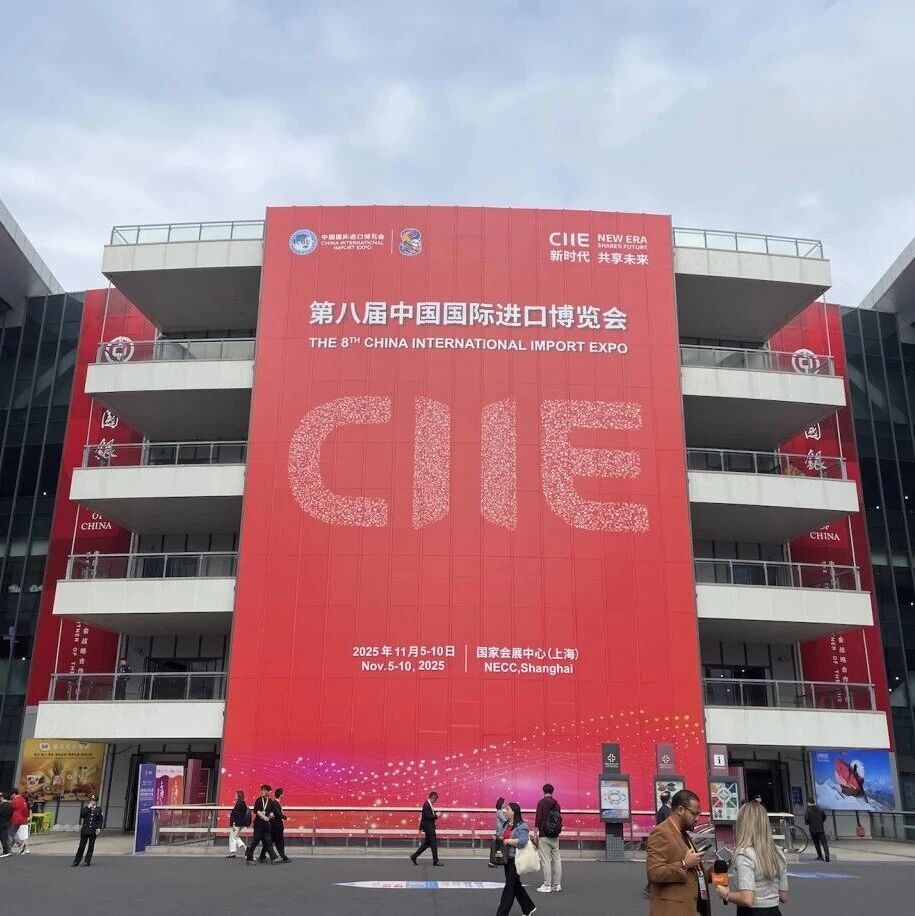
Core Insights - The 8th China International Import Expo (CIIE) opened in Shanghai, showcasing 4,108 foreign enterprises across 430,000 square meters, highlighting global innovations and products [1] - The event serves as a significant platform for financial institutions to demonstrate their cross-border services and support China's high-level opening-up strategy amidst global economic uncertainties [2] State-Owned Banks: Comprehensive Service Showcase - Major state-owned banks, including Bank of China, Industrial and Commercial Bank of China, and Bank of Communications, showcased their global networks and digital innovations, enhancing cross-border financial services [3] - Bank of China, as the strategic partner of CIIE, has supported nearly 100 overseas exhibitions and over 120 domestic promotional events, introducing a "cross-border e-commerce zone" and a "digital RMB hard wallet" that supports 36 currencies [3] - Bank of Communications highlighted its "financial + technology + scenario" integration, optimizing foreign service processes and showcasing its capabilities in various sectors, including automotive and cultural tourism [4] Foreign Banks: Bridging Markets - Foreign banks play a crucial role in connecting international enterprises with the Chinese market while assisting Chinese companies in global expansion [5] - Standard Chartered, HSBC, and other foreign banks presented their strategies at CIIE, focusing on cross-border financial services and sustainable finance, with Standard Chartered emphasizing China's ongoing economic growth as a confidence booster for global cooperation [6] - DBS Bank showcased its expertise in technology finance, corporate outbound strategies, and wealth management, reflecting the evolving landscape of cross-border finance [7] Small and Medium Banks: Differentiated Support - Smaller banks, such as Shanghai Pudong Development Bank and Shanghai Bank, demonstrated their localized service advantages and innovative capabilities, offering tailored financial solutions [8] - Shanghai Pudong Development Bank introduced an upgraded suite of cross-border financial products, including "cross-border rapid remittance" and "cross-border e-station," aimed at enhancing efficiency for traditional import-export businesses [8] - Shanghai Bank launched a bilingual service plan addressing core needs in cross-border transactions, while also hosting a financial service release event during CIIE [9][10] Innovative Products and Services - Shanghai Rural Commercial Bank unveiled two new cross-border remittance products, "Xin Yi Xian Su Da" and "Xin Yi Bai Bi Tong," designed for fresh produce trade and supporting over 120 currencies through a single USD account [11]
多家股份行城商行前三季发力个人房贷
Feng Huang Wang· 2025-11-07 02:27
Core Insights - The latest reports indicate a significant increase in personal housing loans from several listed banks, contrasting with the decline observed in state-owned banks' mortgage lending [1][2][6][7] Group 1: Personal Housing Loan Growth - Nearly ten listed banks, including Minsheng Bank, Ping An Bank, and others, reported a clear increase in personal housing loans by the end of Q3 compared to the beginning of the year [1][2] - Specific banks like Ping An Bank reported a housing loan balance of 3,523.50 billion yuan, growing by 8.1% from the beginning of the year [2] - Minsheng Bank's mortgage loan balance increased by 180.41 billion yuan, marking a growth of 3.24% [2] Group 2: State-Owned Banks' Decline - The six major state-owned banks experienced a reduction of over 1,000 billion yuan in personal housing loans in the first half of the year, continuing a downward trend for three consecutive years [1][6] - By the end of Q3, the total personal housing loan balance for these banks was approximately 25.086 trillion yuan, reflecting a decrease of 1,078 billion yuan since the beginning of the year [6] Group 3: Market Dynamics and Regional Insights - The demand for housing loans remains strong in certain regions, such as Jiangsu, Zhejiang, and Shanghai, prompting banks to increase mortgage lending [4][5] - The new personal housing loans issued in key economic regions accounted for 87.70% of the total new loans issued by Shanghai Pudong Development Bank, indicating a regional focus in lending strategies [3] Group 4: Overall Market Trends - As of the end of Q3 2025, the total personal housing loan balance in the market was 37.44 trillion yuan, showing a year-on-year decline of 0.3% despite the growth from smaller banks [7] - The overall trend suggests that while some smaller banks are increasing their mortgage lending, it is not sufficient to offset the overall decline in the personal housing loan market driven by the larger state-owned banks [7]



实探!进博会含“金”量多少?
Zheng Quan Shi Bao Wang· 2025-11-07 02:09
Core Insights - The 8th China International Import Expo (CIIE) showcases China's commitment to high-level opening-up and global economic cooperation [1][5] - Financial institutions play a crucial role in connecting domestic and foreign markets, enhancing cross-border financial services [1][2] Financial Institutions' Participation - Major state-owned banks like Bank of China, Industrial and Commercial Bank of China, and Bank of Communications set up exhibition areas to showcase financial innovations [1] - Foreign banks such as HSBC, Standard Chartered, and DBS have participated for eight consecutive years, demonstrating their long-term commitment to the Chinese market [1][4] Cross-Border Financial Services - Financial institutions are launching upgraded cross-border financial services focusing on "digital intelligence" and "one-stop" solutions to address the complex needs of businesses [2][3] - Bank of Communications introduced a one-stop cross-border financial service platform, "Jiaoyin Hangmaotong," targeting foreign trade enterprises [2] - Shanghai Pudong Development Bank updated its comprehensive financial service plan to version 8.0, with a cross-border transaction settlement volume reaching 3.3 trillion yuan, a 47% year-on-year increase [3] Support for SMEs - Standard Chartered launched the "Outreach" program for SMEs to address challenges like cross-border settlement issues and limited financing channels [3] - DBS Bank is increasing support for emerging industries and providing comprehensive financial services to tech enterprises [3] Strategic Importance of CIIE - HSBC views CIIE as a platform to showcase China's new development blueprint and opportunities for global enterprises [5][6] - Standard Chartered emphasizes China's continuous opening-up and economic growth as a source of confidence for international investment [6] - DBS highlights CIIE's role as a significant window for foreign trade and economic cooperation [7] Forums and Discussions - Various forums and roundtable discussions are being held at CIIE, focusing on industry trends and cooperation opportunities [8] - HSBC and Standard Chartered are organizing discussions on the latest trends and challenges faced by Chinese enterprises going global [8]
实探!进博会含“金”量多少?
券商中国· 2025-11-07 02:04
Core Viewpoint - The eighth China International Import Expo (CIIE) showcases China's commitment to high-level opening-up and presents vast opportunities in the Chinese market for global businesses [1] Group 1: Financial Institutions' Role - Financial institutions play a crucial role in connecting domestic and foreign markets, serving as a hub for the real economy and promoting bilateral openness [1] - Major state-owned banks like Bank of China, Industrial and Commercial Bank of China, and Bank of Communications showcased their financial innovations at the expo [1] - Foreign banks such as HSBC, Standard Chartered, and DBS have participated in the CIIE for eight consecutive years, demonstrating their long-term commitment to the Chinese market [1][5] Group 2: Cross-Border Financial Services - Financial institutions introduced upgraded cross-border financial services focusing on "digital intelligence" and "one-stop" solutions to meet the complex needs of businesses [3] - Bank of Communications launched a one-stop cross-border financial service platform, "Jiaoyin Hangmaotong," addressing core needs in settlement, financing, and risk management for foreign trade enterprises [3] - Shanghai Pudong Development Bank updated its comprehensive financial service plan to version 8.0, including various cross-border financial products, achieving a cross-border transaction settlement volume of 3.3 trillion yuan, a 47% year-on-year increase [4] Group 3: Support for SMEs - Standard Chartered Bank upgraded its "Outreach" program for SMEs to address challenges such as cross-border settlement issues and limited financing channels [4] - DBS Bank is increasing support for emerging industries and providing comprehensive financial services to help enterprises expand into overseas markets [4] Group 4: Insights and Discussions - The CIIE serves as a platform for exchanging ideas and insights, with various forums and roundtable discussions held by participating financial institutions [8] - HSBC organized discussions on the latest trends and challenges faced by Chinese enterprises going global, while Standard Chartered focused on SMEs and cross-border RMB usage [8][9] - Shanghai Pudong Development Bank hosted multiple events to explore cross-border finance and support high-quality development in cross-border trade [9]


私行业务成银行“香饽饽”?七家客户数破10万大关
Xin Lang Cai Jing· 2025-11-07 00:20
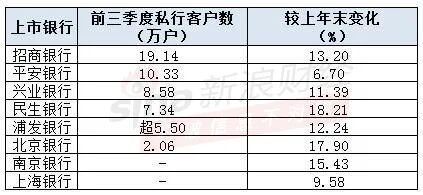
Core Insights - The private banking sector in China is experiencing significant growth, with several listed banks reporting an increase in private banking clients exceeding 10% [1][2][3] - Notably, Minsheng Bank, Beijing Bank, and Nanjing Bank have all reported client growth rates above 15% [1][2][3] - As of the end of September, the total number of private banking clients at Minsheng Bank reached 73,409, marking an 18.21% increase from the previous year [3][5] Private Banking Client Growth - Multiple banks have shown robust growth in private banking clients, with Minsheng Bank, Beijing Bank, and Nanjing Bank leading with growth rates over 15% [1][2][3] - As of September 30, 2023, the number of private banking clients at major banks is as follows: - China Merchants Bank: 191,418 clients, up 13.2% - Ping An Bank: 103,300 clients, up 6.7% - Minsheng Bank: 73,409 clients, up 18.21% - Beijing Bank: 20,586 clients, up 17.9% - Nanjing Bank: growth of 15.43% [3][5][6] Wealth Management Market Expansion - The wealth management market in China continues to expand, with listed banks reporting steady growth in wealth clients [8][9] - As of September 30, 2023, Ping An Bank reported 1.4911 million wealth clients, a 2.4% increase from the previous year [9] - Nanjing Bank's wealth clients grew by 16.31%, while Guiyang Bank's wealth clients increased by 7.77% [9] Asset Under Management (AUM) Growth - The total assets under management (AUM) for private banking clients at Minsheng Bank reached 1,014.72 billion yuan, an increase of 148.75 billion yuan, or 17.18% [3][5] - Beijing Bank's private banking AUM was 224 billion yuan, up 14.39% from the beginning of the year [4] Revenue from Wealth Management Services - Several banks reported positive growth in wealth management fee income, with many exceeding 15% growth [10][12] - For instance, China Merchants Bank's wealth management fee income reached 20.67 billion yuan, an 18.76% year-on-year increase [10] - Ping An Bank's wealth management fee income was 3.979 billion yuan, up 16.1% [10] Distribution and Sales Growth - The distribution of financial products has become a significant revenue source for banks, with many reporting substantial increases in sales [11][12] - For example, Ping An Bank's income from personal insurance sales grew by 48.7%, while its income from personal fund sales increased by 6.7% [12] - China Merchants Bank's income from fund sales rose by 38.76%, driven by increased sales and improved product structure [12]


证券代码:603788 证券简称:宁波高发 公告编号:2025-040
Zhong Guo Zheng Quan Bao - Zhong Zheng Wang· 2025-11-06 23:25
Core Viewpoint - The company plans to utilize idle self-owned funds, not exceeding RMB 500 million, for structured deposits and purchasing financial products from banks and securities companies to enhance capital efficiency and economic benefits [1][2]. Group 1: Basic Information on Entrusted Wealth Management - The source of funds for this investment comes from temporarily idle self-owned funds, including funds from previous financial products that have matured [2]. - As of the announcement date, the company has rolled over RMB 190 million to purchase wealth management products from various financial institutions, including Shanghai Pudong Development Bank and China Merchants Bank [2]. Group 2: Impact on the Company - The use of idle self-owned funds for wealth management is conducted without affecting the company's normal operations, thereby improving the efficiency and returns of idle funds [2][3]. - This strategy is not expected to have a significant impact on the company's main business, financial status, operating results, or cash flow [2]. Group 3: Internal Risk Control Measures - The company primarily invests in low to medium-risk wealth management products with terms not exceeding 12 months, ensuring overall risk is manageable [3]. - A separation of decision-making, execution, and supervision functions is established to ensure effective and standardized operations in purchasing wealth management products [3]. - The finance department will analyze and monitor the investment's progress, and if any risks to fund safety are identified, appropriate measures will be taken [3][4].

大唐华银电力股份有限公司关于2025年度第一期中期票据发行情况公告
Zhong Guo Zheng Quan Bao - Zhong Zheng Wang· 2025-11-06 23:16
Core Points - The company has successfully issued its first phase of medium-term notes for 2025, raising a total of 500 million RMB with a maturity of 2 years and an interest rate of 1.9% [1] - The total registered issuance amount for medium-term notes is capped at 1 billion RMB, as approved in the recent shareholders' meeting [1] - The funds raised from this issuance will be used to repay existing interest-bearing debts [1] Summary by Sections - **Issuance Details** - The company completed the issuance of 500 million RMB in medium-term notes, with a face value of 100 RMB each and a 2-year term [1] - The interest rate for the issued notes is set at 1.9% [1] - **Underwriters** - The lead underwriter for this issuance is Shanghai Pudong Development Bank, with CITIC Bank serving as a co-lead underwriter [1] - **Purpose of Funds** - The proceeds from the medium-term notes will be allocated for the repayment of existing interest-bearing debts [1]

5家银行不良率下降,零售AUM增长成亮点
Nan Fang Du Shi Bao· 2025-11-06 23:10
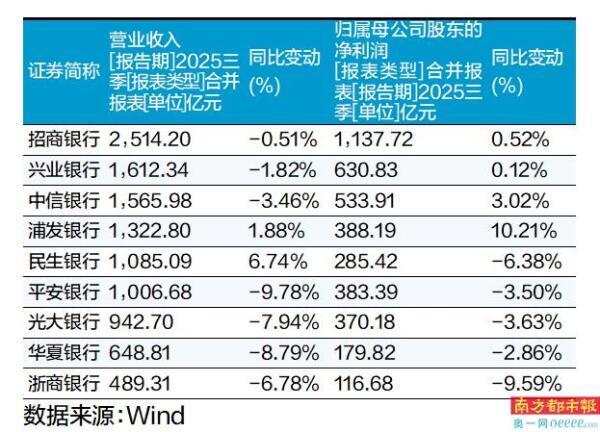
Core Viewpoint - The performance of A-share listed joint-stock banks in the third quarter of 2025 shows a mixed picture, with seven banks experiencing a year-on-year decline in operating income and five banks reporting a drop in net profit. Only Shanghai Pudong Development Bank achieved growth in both metrics [1][2][3]. Group 1: Revenue Performance - Among the nine listed joint-stock banks, only Shanghai Pudong Development Bank and Minsheng Bank reported year-on-year revenue growth, with Minsheng Bank achieving the highest growth rate of 6.74% [2]. - China Merchants Bank led in revenue scale with 2,514.20 billion yuan, followed by Industrial Bank and CITIC Bank with 1,612.34 billion yuan and 1,565.98 billion yuan, respectively [2][3]. - Ping An Bank experienced the most significant revenue decline at -9.78%, while several other banks, including Everbright Bank and Huaxia Bank, also saw declines exceeding 6% [2][3]. Group 2: Net Profit Analysis - China Merchants Bank maintained the highest net profit at 1,137.72 billion yuan, with a slight increase of 0.52% year-on-year. Shanghai Pudong Development Bank saw a notable increase of 10.21% in net profit [3]. - The banks that reported a decline in net profit include Zhejiang Commercial Bank, which had the largest drop at -9.59%, along with Minsheng Bank, Ping An Bank, and others experiencing varying degrees of decline [3]. Group 3: Interest Income and Net Interest Margin - Interest income growth varied significantly, with China Merchants Bank leading at 1,600.42 billion yuan and a 1.74% increase. Shanghai Pudong Development Bank had the highest growth rate in interest income at 3.93% [5]. - The net interest margin faced pressure across the industry, with CITIC Bank experiencing the largest decline of 16 basis points. Only Minsheng Bank reported a slight increase of 2 basis points [5][6]. Group 4: Asset Quality and Provision Coverage - The asset quality of joint-stock banks showed resilience, with a mixed performance in non-performing loan (NPL) ratios. China Merchants Bank had the best NPL ratio at 0.94%, while several banks saw slight increases in their NPL ratios [8]. - Provision coverage ratios decreased for most banks, with China Merchants Bank still leading at 405.93%, despite a decline of 6.05 percentage points [9][10]. Group 5: Loan Structure - The loan structure indicates a shift towards corporate loans, with all five banks reporting growth in corporate loans, while personal loan growth was weak for several banks [11][12]. - China Merchants Bank led in personal loan balance with nearly 3.7 trillion yuan, while corporate loan growth was particularly strong for CITIC Bank, which saw a 10.45% increase [11][12].