华为技术有限公司

Search documents
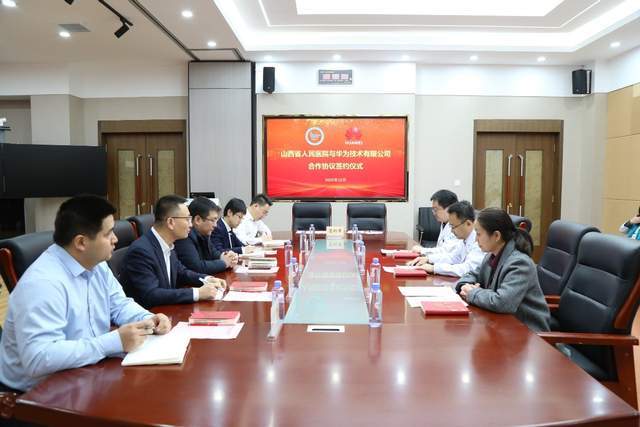
山西省人民医院与华为技术有限公司签署合作协议
Sou Hu Cai Jing· 2025-12-26 12:52
Group 1 - The strategic cooperation between Shanxi Provincial People's Hospital and Huawei aims to integrate resources and advance the application of "technology + scenarios" in healthcare [2][4] - The collaboration will focus on developing replicable and promotable smart medical solutions tailored to the province's needs, establishing a leading smart hospital demonstration project in China [4][11] - Huawei will leverage its technological advantages in artificial intelligence and experience in digital transformation to support the hospital's transition, setting a benchmark for high-quality development in public hospitals in Shanxi and North China [6][9] Group 2 - The partnership will emphasize areas such as medical AI, health big data, research platforms, digital infrastructure, and a unified digital platform for multiple hospital zones, accelerating the innovative application of AI and big data in healthcare [9][11] - The signing of the cooperation agreement marks a new strategic phase driven by technological innovation in medical transformation, aiming to enhance efficiency and service optimization through shared technological advancements [11]

变“粗放引才”为“精准聚才”
Xi An Ri Bao· 2025-12-26 09:45
Core Viewpoint - The implementation of "order-based" training in Xi'an aims to address the mismatch in the job market by aligning skills training with the specific needs of employers, thereby enhancing employment outcomes and supporting local economic development [1][2]. Group 1: Order-based Training Implementation - As of November, Xi'an has conducted subsidized vocational skills training for 103,000 participants, focusing on key sectors such as health care, digital tourism, and advanced manufacturing [1]. - The "order-based" training model connects job seekers with employers, ensuring that training is tailored to meet specific industry demands, thus facilitating a more effective job placement process [1][2]. Group 2: Benefits for Job Seekers and Employers - For job seekers, "order-based" training provides practical skills and greater resource support, enabling quicker adaptation to market demands and clearer career development paths [2]. - Employers benefit from reduced time spent on resume screening and lower recruitment and training costs, which enhances employee loyalty and stability, ultimately promoting long-term business growth [2]. Group 3: Challenges and Considerations - Despite the popularity of "order-based" training, there are concerns regarding job opportunities for graduates and the risks associated with companies facing operational issues that may affect training commitments [3]. - Some companies may exploit the "order-based" training label without substantial collaboration in curriculum development, leading to a disconnect between theoretical education and practical application [3]. - There is a need for improved institutional frameworks and a shift in corporate hiring mindsets to foster deeper collaboration between educational institutions and businesses, ensuring the protection of workers' rights and the cultivation of high-skilled talent [3].
近200位企业开发者齐聚蓉城,共探鸿蒙生态创新与产业融合新路径
Sou Hu Cai Jing· 2025-12-26 06:40
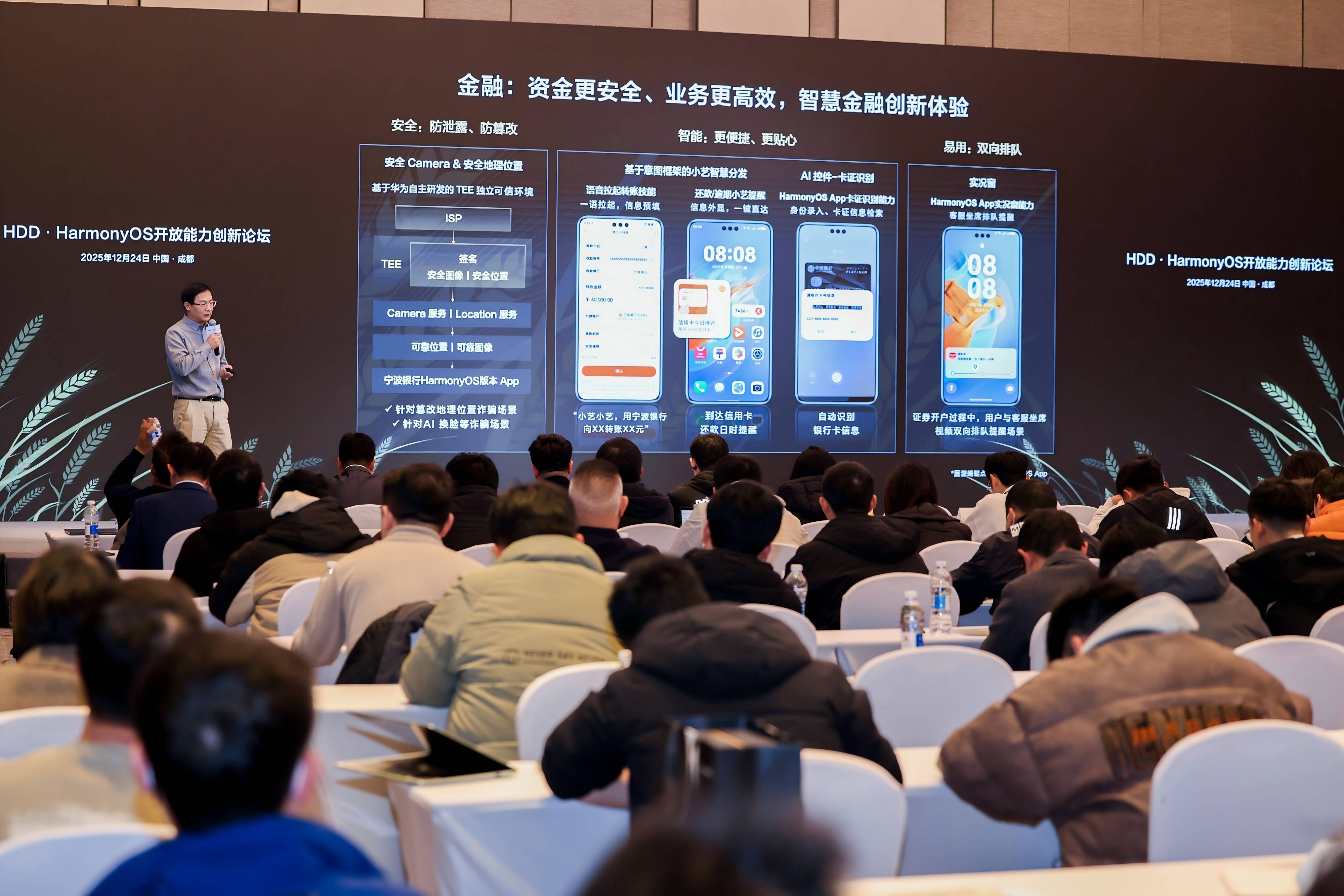
Core Insights - The HarmonyOS Open Capability Innovation Forum in Chengdu successfully gathered nearly 200 developers from various sectors, emphasizing the growth of the HarmonyOS ecosystem supported by local government policies and the Chengdu ecological innovation center [1][2] Group 1: Ecosystem Development - The Sichuan government is promoting the HarmonyOS ecosystem through substantial subsidies and open scenarios, aiming to establish Chengdu as a national digital economy hub [1] - Over 200 applications have been launched in Sichuan, showcasing the vibrant development of the HarmonyOS ecosystem across multiple sectors including government, finance, education, and consumer electronics [2] Group 2: Technological Advancements - The number of devices equipped with HarmonyOS 5 and HarmonyOS 6 has surpassed 32 million, with over 50,000 applications and services available, indicating rapid ecosystem growth [6] - The introduction of a new self-developed security architecture enhances user privacy and security, while distributed multi-device collaboration improves efficiency and resource sharing [6] Group 3: Industry Innovation Solutions - Huawei experts presented innovative solutions for industry applications, focusing on systematic integration of high-frequency APIs, components, and SDKs to facilitate digital transformation [7] - The integration of HarmonyOS SDK in local applications has improved user experiences, such as the Jingxun App's multi-device compatibility and personalized content delivery [7] Group 4: Marketing and Service Distribution - The lightweight and cross-terminal capabilities of meta-services are reshaping service distribution and user engagement, enhancing the overall user experience in various sectors [8] - The "Whale Hong Energy" model leverages HarmonyOS's capabilities to create a comprehensive commercial ecosystem, providing diverse services for brand marketing and user growth [8] Group 5: Productivity Enhancement - HarmonyOS computers are redefining office productivity by offering a seamless and intelligent collaborative experience, with over 10,000 applications available for various professional needs [9] - The forum highlighted solutions for enterprise security and management, aimed at enhancing digital office upgrades in Sichuan [9]
【深圳特区报】深能源:AI“望天”更准,绿电调度更稳
Sou Hu Cai Jing· 2025-12-26 06:09
Core Viewpoint - The integration of AI technology in green energy is transforming the industry, with Shenzhen Energy Group and Huawei Cloud leading the way in developing an AI-based meteorological model for renewable energy power forecasting [1][4]. Group 1: AI and Renewable Energy Transformation - Shenzhen Energy Group has partnered with Huawei Cloud to apply the Pangu meteorological model for predicting power generation from wind, solar, and hydropower, creating the world's first AI-based renewable power forecasting platform [1][4]. - The rapid growth of renewable energy installations in China has surpassed 1.2 billion kilowatts by July 2024, exceeding coal power for the first time [3]. - Traditional weather forecasting methods face challenges in accuracy and timeliness, which are critical for the stability of renewable energy generation [3][4]. Group 2: Technological Advancements - The Pangu meteorological model offers significant improvements, achieving a resolution of up to 1 kilometer and a speed increase of 10,000 times, providing second-level weather forecasts [4]. - The system has been implemented in four pilot sites, showing a 15% overall improvement in weather prediction accuracy, a 10% increase in wind power forecasting precision, and a 2% enhancement in solar power forecasting [4]. Group 3: Future Applications and Industry Impact - The AI system is expected to extend its capabilities to hydropower, enabling precise predictions of rainfall and extreme weather events, thereby enhancing revenue and disaster resilience [5][6]. - The collaboration between Shenzhen Energy and Huawei Cloud exemplifies the implementation of the "Artificial Intelligence +" strategy in state-owned enterprises, paving the way for broader applications in energy and meteorology [6]. - The "Shenzhen model" is moving from pilot projects to large-scale replication, with ongoing efforts to explore the application of meteorological models in power forecasting, electricity trading, and other areas [6].

昇思MindSpore AI框架下载量超1300万
Huan Qiu Wang Zi Xun· 2025-12-26 00:56
Core Insights - The MindSpore AI framework has surpassed 13 million downloads and is utilized in 156 countries, with over 52,000 community contributors, indicating its global reach and community engagement [1][3] - The framework focuses on innovations in super-node technology, aiming to lead the AI framework into the "super-node era" with advanced technology and user-friendly experiences [1][3] - The development of the "Yufeng·Zhiying" intelligent design system for civil aircraft, based on the MindSpore framework, showcases its application in the aerospace industry [3] Group 1 - The MindSpore framework is designed to be super-node friendly, integrating various scenarios, and promoting an open architecture to facilitate intelligent transformation across industries [1][3] - The HyperParallel architecture treats super-nodes as a "supercomputer," enabling advanced programming and scheduling capabilities, which enhances the performance of new AI models [4] - The conference recognized outstanding developers and evangelists, highlighting the community's commitment to fostering talent in the AI sector [4] Group 2 - The evolution of AI models is moving towards long sequences and sparse trillion-level structures, presenting both challenges and opportunities for AI frameworks [3] - The MindSpore open-source community emphasizes collaborative governance and aims to enhance the developer experience while supporting AI talent development [3][4] - The event was co-hosted by various organizations, indicating a collaborative effort in advancing AI technology and community engagement [4]
人工智能如何打造“未来场馆”?
Xin Lang Cai Jing· 2025-12-25 23:21
Core Insights - The Beijing International Convention Center has been officially designated as a "Global Model Smart Venue" through a collaboration between Beijing Beichen Group and Huawei, marking a successful transformation towards intelligence in the exhibition industry [1][7]. Group 1: Transformation and Innovation - The transformation of the venue signifies a shift from traditional exhibition spaces to intelligent, data-driven environments, enhancing operational efficiency and visitor experience [2][3]. - The integration of smart systems allows for real-time monitoring of venue conditions, predictive maintenance, and streamlined communication processes, significantly improving operational workflows [8][9]. Group 2: Technological Infrastructure - The venue has established a robust technological foundation, connecting over 100 types of terminals and deploying more than 3,000 access points to ensure reliable and high-speed network connectivity [10]. - A cloud-edge collaborative digital platform has integrated over 1.1 billion data points across various dimensions, facilitating efficient management and operational insights [10]. Group 3: Industry Implications - The smart venue's transformation provides a replicable model for the exhibition industry, aligning with global trends towards digitalization and sustainability [11]. - The Chinese exhibition industry is projected to reach a total output value of 1.5 trillion yuan by 2025, with technology-driven exhibitions experiencing a compound annual growth rate of 12.5% [11].

人工智能如何打造“未来场馆”?——首都国际会展中心构建智慧化转型样本
Zheng Quan Ri Bao· 2025-12-25 16:27
Core Viewpoint - The partnership between Beijing Beichen Group and Huawei has transformed the Capital International Exhibition Center into a "Global Model of Smart Venues," marking a significant shift towards digitalization in the exhibition industry [1] Group 1: Transformation and Innovation - The Capital International Exhibition Center has successfully transitioned from a traditional venue to a smart venue, showcasing a model that can be replicated across the industry [1] - The integration of smart technologies has led to enhanced operational efficiency, with features such as real-time monitoring of foot traffic and energy consumption, predictive maintenance, and streamlined communication through mobile applications [2][4] - The venue's transformation is supported by a robust digital infrastructure, including over 3,000 wireless access points and the integration of more than 11 billion data points across various systems [4] Group 2: Strategic Significance - The shift towards a smart venue is seen as a necessary evolution for the exhibition industry in the digital economy, providing a clear path for growth and innovation [5] - The collaboration between multiple stakeholders, including Huawei and other industry partners, is crucial for creating a comprehensive smart venue ecosystem that enhances service delivery and operational management [3][4] - The exhibition industry is experiencing a global trend towards digitalization and sustainability, with projections indicating that China's exhibition industry will reach a total output value of 1.5 trillion yuan by 2025, driven by technological advancements [5]
华为云城市峰会走进十堰,绿色算力赋能鄂西数字经济发展新篇章
Xin Lang Cai Jing· 2025-12-25 13:18
Core Viewpoint - The Huawei Cloud City Summit held in Shiyan, Hubei, focuses on the development of the digital economy and the establishment of a green computing power industry, highlighting the city's commitment to digital transformation and industrial upgrading [1][9]. Group 1: Digital Economy Development - Shiyan has identified digital economy as a key area for development, aiming to cultivate it as one of the ten trillion-level industrial clusters [1]. - The city has been selected as one of the first pilot cities for small and medium-sized enterprises' digital transformation in Hubei Province [1]. Group 2: Green Computing Power - Shiyan possesses natural advantages for developing green computing power, including an average annual temperature of 10 to 15°C and abundant cold water resources, which create a "natural cooling system" [5]. - The city has established five differentiated data center clusters, with total computing power exceeding 10,000 PetaFLOPS, expected to reach 50,000 PetaFLOPS within two years [5]. - The Wudang Cloud Valley data center has a Power Usage Effectiveness (PUE) value as low as 1.12, making it one of the largest and most efficient green data centers in Central China [5]. Group 3: Infrastructure and Data Management - Shiyan has built a low-latency computing power network with a coverage of 5 milliseconds within the province and 15 milliseconds nationwide, supporting smart city initiatives [8]. - The city has created an urban information model platform that aggregates over 10 billion data points, aiding in urban governance and water resource management [8]. Group 4: Strategic Partnerships - The Shiyan government signed a new strategic cooperation agreement with Huawei, focusing on smart city development, industrial digitalization, computing power ecosystem construction, and talent cultivation [9]. - Since 2021, Huawei has assisted Shiyan in creating the first full-stack autonomous innovation cloud platform in Central China, named "Wudang Cloud" [9]. Group 5: Policy Support and Industry Activation - To reduce costs for enterprises, Shiyan plans to issue "computing power vouchers" and "data vouchers," along with establishing a digital industry fund [10]. - The city is forming a computing power industry ecosystem with participation from universities and leading enterprises like Huawei [10]. Group 6: Future Outlook - Shiyan aims to deepen cooperation with leading companies like Huawei, focusing on upgrading smart cities, empowering key industries, co-building computing power ecosystems, and developing digital talent [12]. - The city is set to explore innovative models such as "green data centers" and "zero-carbon parks," positioning itself as a digital economy development hub in Western Hubei [12].
顶着首个L3牌照光环,深蓝汽车增资,渝富招银投资新进,长安汽车把S05、G318车型专利技术评估10.43亿元来入股
Xin Lang Cai Jing· 2025-12-25 12:40
Core Viewpoint - Deep Blue Automotive has completed a capital increase, attracting two external investors, despite holding the first L3 autonomous driving license in China, indicating cautious market sentiment towards investment in the electric vehicle sector [2][11][12]. Group 1: Capital Increase Details - The capital increase involves three parties: Changan Automobile, Chongqing Yufu Holding Group, and China Merchants Bank Financial Asset Investment Co., with contributions of 3.122 billion, 2.5 billion, and 500 million respectively [2][25]. - After the capital increase, Changan Automobile retains a controlling stake of 50.9959%, while the stakes of other original shareholders are diluted to the range of 5%-8% [2][25]. - The total registered capital of Deep Blue Automotive increased from approximately 32.81 billion to 46.62 billion [26]. Group 2: Investment Context - Chongqing Yufu Holding Group, as a local state-owned platform, is likely focused on industrial synergy, while China Merchants Bank's investment may provide financial support, indicating a non-purely financial investment role [10][33]. - The cautious entry of only two investors reflects the intensified competition in the electric vehicle market, alongside subsidy reductions and price wars [11][35]. Group 3: Valuation and Financial Implications - Deep Blue Automotive's valuation is set at 14.55 billion, with the capital increase providing over 5 billion in cash reserves to support ongoing technology investments [14][40]. - The funding is expected to be directed towards the research and development of intelligent driving technology and capacity expansion, crucial for commercializing L3-level vehicles [18][41]. - Changan Automobile's investment strategy includes both cash and technology patents valued at 1.043 billion, ensuring continued R&D progress without burdening the parent company's financials [4][42]. Group 4: Market Position and Future Outlook - The successful acquisition of the L3 license and partnerships with Huawei and CATL provide Deep Blue Automotive with a competitive edge, but long-term success will depend on the speed of technology implementation and market acceptance [10][43]. - The electric vehicle sector's competitive landscape is becoming increasingly challenging, necessitating rapid production scaling for Deep Blue Automotive to keep pace with rivals like Tesla and BYD [18][41][44].


青岛港跌0.24%,成交额8766.95万元,后市是否有机会?
Xin Lang Cai Jing· 2025-12-25 07:46
Core Viewpoint - Qingdao Port is experiencing a slight decline in stock price, with a focus on its strong dividend yield and strategic position in the context of the China-South Korea Free Trade Agreement and the Belt and Road Initiative [1][2]. Group 1: Financial Performance - Qingdao Port's dividend yields over the past three years were 4.80%, 4.74%, and 3.45% respectively [2]. - For the period from January to September 2025, Qingdao Port achieved a revenue of 14.238 billion yuan, representing a year-on-year growth of 1.86%, and a net profit attributable to shareholders of 4.180 billion yuan, up by 6.33% [6]. - The company has distributed a total of 13.770 billion yuan in dividends since its A-share listing, with 6.638 billion yuan distributed over the past three years [7]. Group 2: Strategic Positioning - Qingdao Port is strategically located in the center of the Bohai Sea region and the Yangtze River Delta port cluster, benefiting from its proximity to South Korea and the signing of the China-South Korea Free Trade Agreement [2]. - The company operates as a comprehensive operator of the Qingdao Port, which is a key node in the Belt and Road Initiative and ranks as the seventh largest port in the world [2]. Group 3: Business Operations - Qingdao Port's main business activities include the loading and unloading of containers, metal ores, coal, crude oil, and various logistics and value-added port services [2][6]. - The revenue composition of the company is as follows: 56.72% from loading and related services, 36.96% from logistics and port value-added services, and smaller percentages from other port-related services [6]. Group 4: Market Activity - On December 25, Qingdao Port's stock price fell by 0.24%, with a trading volume of 87.6695 million yuan and a turnover rate of 0.19%, resulting in a total market capitalization of 54.785 billion yuan [1]. - The stock has seen a net outflow of 1.2694 million yuan from major investors today, with no significant trend in major holdings observed [3][4].