DeepMind

Search documents
2025商用具身智能白皮书:智启商业未来,身赋无限可能
Ai Rui Zi Xun· 2025-12-04 02:46
Investment Rating - The report does not explicitly state an investment rating for the industry Core Insights - Embodied intelligence is recognized as a significant direction in artificial intelligence, essential for achieving artificial general intelligence, characterized by strong interaction with the environment and continuous learning [5][12] - The global market for embodied intelligence is projected to reach 19.2 billion RMB by 2025, with a compound annual growth rate (CAGR) of 73% over the next five years, indicating a potential trillion-level market in about ten years [84][86] - The development of embodied intelligence is seen as a critical battleground in the technological competition between China and the United States, with implications for economic benefits and national competitiveness [12][15] Summary by Sections 1. Definition and Strategic Significance - Embodied intelligence integrates machine learning, computer vision, and robotics, marking a significant step towards practical AI applications [5] - It is defined as an intelligent system that interacts with the environment through physical bodies, enabling perception, understanding, decision-making, and action [6] 2. Current Development Stages and Key Challenges - The evolution of embodied intelligence is categorized into three phases: conceptual emergence (1950-2000), technological accumulation (2000-2020), and application expansion driven by large models (2020-present) [24][26] - Key challenges include data collection, technology maturity, cost of core components, and societal acceptance [28][29] 3. Global Market Trends - The market for embodied intelligence is transitioning from L2 to L3 levels of autonomy, with expectations of significant advancements in the next 2-3 years [52] - The commercial breakthrough will depend on improvements in reliability, economic efficiency, accuracy, endurance, and latency [55] 4. Industry Value Chain and Market Forecast - The industry value chain is complex, involving hardware, brain, and integration components, with significant potential for Chinese companies in downstream applications [75] - The report highlights a surge in financing for embodied intelligence companies, indicating strong investor interest and market potential [79] 5. Competitive Landscape and Key Success Factors - The competition is intensifying between Chinese and American firms, with both sides leveraging unique strengths in technology and policy support [24][25] - The report emphasizes the importance of collaboration across the industry to overcome existing bottlenecks and achieve large-scale commercialization [28][29] 6. Case Studies of Leading Companies - The report does not provide specific case studies of leading companies in the industry
AI重新定义「我」 与AI交融后,每个人都能成为科学家丨36氪 WISE2025 商业之王大会
36氪· 2025-12-03 13:41
Core Viewpoint - The WISE2025 Business King Conference aims to anchor the future of Chinese business amidst uncertainty, focusing on the transformative impact of technology and the redefinition of commercial narratives [3][4]. Group 1: AI for Science - AI for Science is a burgeoning field that aims to leverage AI to assist in scientific discoveries, potentially creating AI systems that can autonomously conduct scientific research [9][10]. - The ultimate goal of AI for Science is to transform scientific research into a production-like process, enabling the mass generation of high-value scientific outcomes [11][12]. - The integration of AI in scientific research is expected to lower the barriers to entry, allowing more individuals to participate in scientific endeavors, thus democratizing knowledge and scientific contributions [13][14]. Group 2: China's Position in AI for Science - China is positioned to be competitive in the AI for Science sector, with a strong talent pool and a significant number of scientific papers published by Chinese researchers [21][22]. - The country is focusing on building foundational infrastructures such as scientific databases, computational resources, and automated laboratories, which are crucial for advancing AI for Science [20][22]. - The potential for China to produce Nobel Prize-winning research in the future is linked to its advancements in AI for Science, with expectations of significant breakthroughs by 2035 [23][24]. Group 3: Commercial Viability - The global investment in scientific research is approximately $2.8 trillion, with China contributing around 3.6 trillion RMB, indicating a substantial market for AI-driven scientific research [27][28]. - AI for Science is seen as a lucrative market with clear applications and outcomes, making it an attractive field for entrepreneurs and investors [28][29]. - The commercial value of AI for Science is expected to grow as it enhances the efficiency of scientific research, leading to a continuous stream of new knowledge and innovations [26][27]. Group 4: Future Outlook - By 2035, it is anticipated that millions of individuals will actively participate in scientific research, facilitated by AI technologies that simplify the research process [30][31]. - The integration of AI and robotics in daily life is expected to shift human focus towards pursuits in sports, arts, and sciences, enhancing personal fulfillment and self-actualization [31][32]. - The current landscape of AI for Science presents significant opportunities for young entrepreneurs, with the potential for substantial financial success by addressing specific market needs [37][38].


AI for Science,走到哪一步了?
3 6 Ke· 2025-12-03 09:15
Core Insights - Google DeepMind's AlphaFold has significantly impacted protein structure prediction, driving advancements in scientific research over the past five years [1][4] - AI is reshaping scientific research, particularly in life sciences and biomedicine, due to rich data availability and urgent societal needs [1][3] Group 1: AI in Scientific Research - AI models and tools have achieved breakthroughs in basic research, including protein structure prediction and the discovery of new biological pathways [1][3] - The paradigm of "foundation models + research agents + autonomous laboratories" is emerging in AI-driven scientific research [3][13] Group 2: Advancements in Biology - DeepMind's AlphaFold has solved the protein structure prediction problem, earning the 2024 Nobel Prize in Chemistry and establishing itself as a digital infrastructure for modern biology [4] - The C2S-Scale model, developed by Google and Yale University, has generated new hypotheses about cancer cell behavior, showcasing AI's potential in formulating original scientific hypotheses [8] Group 3: AI in Drug Development - AI-assisted pathology detection has expanded to new disease scenarios, with the DeepGEM model achieving a prediction accuracy of 78% to 99% for lung cancer gene mutations [10] - The AI-optimized drug MTS-004 has completed Phase III clinical trials, marking a significant milestone in AI-driven drug discovery [10] Group 4: AI in Other Scientific Fields - AI applications in materials science are gaining momentum, with startups like Periodic Labs and CuspAI focusing on discovering new materials [11] - DeepMind's WeatherNext 2 model has surpassed traditional physical models in accuracy and efficiency for weather predictions [5] Group 5: Future of AI in Science - The evolution of scientific intelligence technologies is expected to accelerate, with AI foundational models and robotics enhancing research efficiency [19] - The integration of AI into scientific discovery is anticipated to lead to significant breakthroughs, with predictions of achieving near-relativistic level discoveries by 2028 [19]


AI产业速递:从DeepSeek V3
2025-12-03 02:12
Summary of Key Points from the Conference Call Industry and Company Overview - The conference call discusses advancements in the AI industry, specifically focusing on the Deepseek V3.2 model developed by DeepMind, which showcases significant improvements in reinforcement learning and inference efficiency [1][3][5]. Core Insights and Arguments - **Model Architecture and Mechanisms**: Deepseek V3.2 introduces the Dynamic Spatial Attention (DSA) mechanism, replacing the previous Multi-Level Attention (MLA) mechanism. DSA optimizes computational efficiency by focusing on key attention parameters, particularly in complex tasks [3][5]. - **Performance Enhancements**: The C9 version of Deepseek V3.2 utilizes approximately 10% of the pre-training computational resources to significantly enhance its performance in complex tasks, such as code debugging, achieving a global leading level [1][3]. - **Context Management Strategy**: The model employs an efficient context management strategy that intelligently handles frequent task switching, multi-turn dialogues, and ambiguous inputs, effectively reducing inference costs [1][3]. - **Synthetic Data Utilization**: The training process for Deepseek V3.2 incorporates a substantial amount of high-difficulty synthetic data, which has doubled compared to previous versions. This data is crucial for the subsequent reinforcement learning phase and requires significant computational resources [1][6]. - **Open Source Innovations**: Deepseek has made strides in open-source capabilities by completing a comprehensive post-training process and supporting agent invocation, potentially leveling the playing field with closed-source models [7]. Additional Important Insights - **Reinforcement Learning Developments**: The evolution of reinforcement learning techniques has been marked by the introduction of human prompts based on Rubik's rules, enhancing the model's ability to think and execute simultaneously, thus improving overall efficiency [8][9]. - **Future of Model Pricing**: It is anticipated that by 2026, the cost of models will significantly decrease, potentially dropping to one-fifth of current prices due to advancements in technology and competitive pricing strategies among vendors [2][20]. - **Impact of Sparsity Techniques**: The implementation of sparsity techniques is expected to lower training computational requirements while increasing the upper limits of model training, encouraging more startups to engage in large model development [2][19]. - **Vertical Scene Task Solutions**: The application of reinforcement learning in e-commerce platforms illustrates the model's ability to adapt recommendations based on user feedback through multi-turn dialogue mechanisms, enhancing user satisfaction [12]. Conclusion - The advancements in Deepseek V3.2 highlight a significant shift in the AI landscape, emphasizing the importance of efficient computational mechanisms, the role of synthetic data, and the potential for open-source models to compete with proprietary solutions. The expected decrease in model costs and the rise of new startups indicate a dynamic and evolving market landscape [1][2][20].

Luma AI Eyes International Expansion
Bloomberg Technology· 2025-12-02 21:07
Company Strategy & Expansion - Luma is launching its second office outside of Palo Alto in London, viewing London as a gateway for business in Europe and the Middle East [1][2] - Luma aims to build multimodal AGI that can generate, understand, and operate in the physical world [10] - Luma is deeply focused on general purpose robotics, viewing video as the path to AGI and a universal simulator [8][7] Talent Acquisition - Luma has a significant pipeline of researchers and engineers from Europe, including those from DeepMind [1] - Luma attracts exceptional talent due to its focused mission on multimodal AGI and high resource allocation per person, currently around 150 people [4] - Luma aims to hire 200-300 brilliant people to solve research problems [13] Technology & Research - Video, audio, and language combined offer a chance to build a universal simulator, enabling general purpose robotics [7][8] - Luma is focused on solving the research problem for omni models that can reason in audio, video, language, and text together [12] - Advancements in video models will lead to more accurate physics simulations, crucial for building physical intelligence [10] Compute Infrastructure - Luma, in collaboration with Humane, is building a 2 gigawatt compute cluster, one of the largest in the world models and video models space [14] - Multimodal AI will require more compute than is currently available, making compute a critical input for Luma's business [15] Funding - Luma has raised $900 million [11]

从理解疾病到药物发现,科技巨头们押注的「虚拟细胞」究竟是什么?| 科技早知道
声动活泼· 2025-12-02 12:05
Core Viewpoint - The concept of "Virtual Cell" has emerged as a significant intersection of life sciences and AI, with major tech companies and research institutions investing heavily in its development and application [3][4]. Group 1: Definition and Impact of Virtual Cell - "Virtual Cell" refers to the modeling and digitalization of biological cell functions and behaviors using AI, enabling simulations of cellular changes in various environments [6][7]. - The research on virtual cells aims to deepen the understanding of biological principles, particularly the differences between cancerous and normal cells, and to enhance drug development processes [8][9]. Group 2: AI's Role in Biology - AI's application in biology is revolutionizing the field by allowing for the simulation of complex biological systems, which were previously difficult to model using traditional methods [10][11]. - The development of AI algorithms and computational power has made it feasible to create virtual cell models that can predict cellular behavior and drug interactions [27][28]. Group 3: Investment Trends and Industry Dynamics - There has been a surge in investment in virtual cell research due to the inherent complexity of biological systems and the inefficiencies in traditional biomedical research methods [12][13]. - Major tech companies like DeepMind and traditional pharmaceutical firms are increasingly collaborating to leverage AI capabilities in drug discovery and development [14][15]. Group 4: Challenges and Future Directions - The primary challenges in developing virtual cell models include insufficient data volume, lack of multi-dimensional data, and the need for algorithms that can handle the complexity of biological data [41][42]. - The future of virtual cell applications is promising, with expectations that they will become mainstream tools in drug development within the next five years, potentially transforming traditional research methodologies [48].

AI重新定义“我” 与AI交融后,每个人都能成为科学家| 36氪 WISE2025 商业之王大会
3 6 Ke· 2025-12-02 07:50
Core Insights - The WISE 2025 conference in Beijing emphasizes the transformative impact of AI on various industries, showcasing a shift from traditional industry summits to immersive experiences that highlight technological advancements and their implications for business practices [1] Group 1: AI for Science - AI for Science is a concept introduced in 2018, aiming to leverage AI for scientific discoveries, potentially creating AI systems that can autonomously conduct scientific research [5][6] - The ultimate goal of AI for Science is to streamline scientific research into a production-like process, enabling the generation of high-value scientific outcomes efficiently [8][9] - The integration of AI in scientific research is expected to lower barriers to entry, allowing more individuals to participate in scientific endeavors, thus democratizing knowledge and research [10][18] Group 2: Market Potential and Investment - The global investment in scientific research is approximately $2.8 trillion, with China contributing around 3.6 trillion RMB, indicating a significant market potential for AI applications in science [22] - The AI for Science sector is viewed as a lucrative market, with opportunities for startups to innovate and capture value, despite the challenges posed by larger corporations [19][20] - The potential for AI to enhance scientific research efficiency could lead to a surge in new scientific knowledge and innovations, creating a robust ecosystem for commercial applications [21][22] Group 3: Future Outlook - By 2035, it is anticipated that millions of individuals could actively participate in scientific research, transforming the landscape of scientific discovery and innovation [25] - The development of foundational infrastructure for AI in science is crucial, as it will support downstream scientific advancements and discoveries [16][17] - The expectation is that a significant portion of scientific achievements in the next decade will be driven by AI, indicating a paradigm shift in how scientific research is conducted [30]

AI时代,到底会有什么新职业?
腾讯研究院· 2025-12-01 09:03
Group 1 - The overall impact of AI on employment is characterized by four intertwined effects: enhancement, substitution, supplementation, and creation [3][4] - AI enhancement leads to widespread efficiency improvements, with a potential 15% increase in labor productivity in developed markets, while 25% of global jobs face risks from GenAI, with high-income countries seeing a 34% risk [3][4] - The substitution effect of AI is currently faster than the creation of new jobs, but this does not equate to mass unemployment, as companies are adopting strategies like hiring freezes and role transitions instead of large-scale layoffs [5][6] Group 2 - AI is expected to supplement labor in high-demand, high-risk jobs, addressing structural labor shortages, particularly in sectors facing challenges from an aging population [5][6] - The creation of entirely new job types is lagging, with existing roles increasingly requiring AI skills; positions demanding AI tool proficiency have grown by 68% year-on-year [6][20] - New job categories in the AI ecosystem can be classified into five core types: Enablers, Collaborators, Governors, Promoters, and Supporters, reflecting different value creation roles within the AI landscape [8][10][15] Group 3 - The emergence of new job characteristics includes deep specialization, cross-disciplinary integration, human-machine collaboration, and dynamic evolution of roles, indicating a shift in job nature and requirements [20][22][23] - AI-native jobs are expected to emerge primarily from technology companies, with a significant increase in AI-related job postings projected for 2025 [25] - The service industry is anticipated to be the main area for employment growth, driven by AI's integration into service roles and the increasing demand for jobs in elder care and community services [26][27] Group 4 - The shift towards flexible employment models is accelerated by AI, with a rise in gig work and one-person enterprises, as traditional job structures evolve into task-based systems [27][29] - Companies are encouraged to adopt people-centric AI transformation strategies, ensuring employee rights and providing retraining opportunities to adapt to AI integration [30] - A collaborative approach among government, enterprises, and workers is essential to create an employment-friendly environment, including support for AI innovation and adjustments to social security systems [31][32]

这才是 AI 近年来最有价值的成就,却被很多人忽视
3 6 Ke· 2025-12-01 00:15
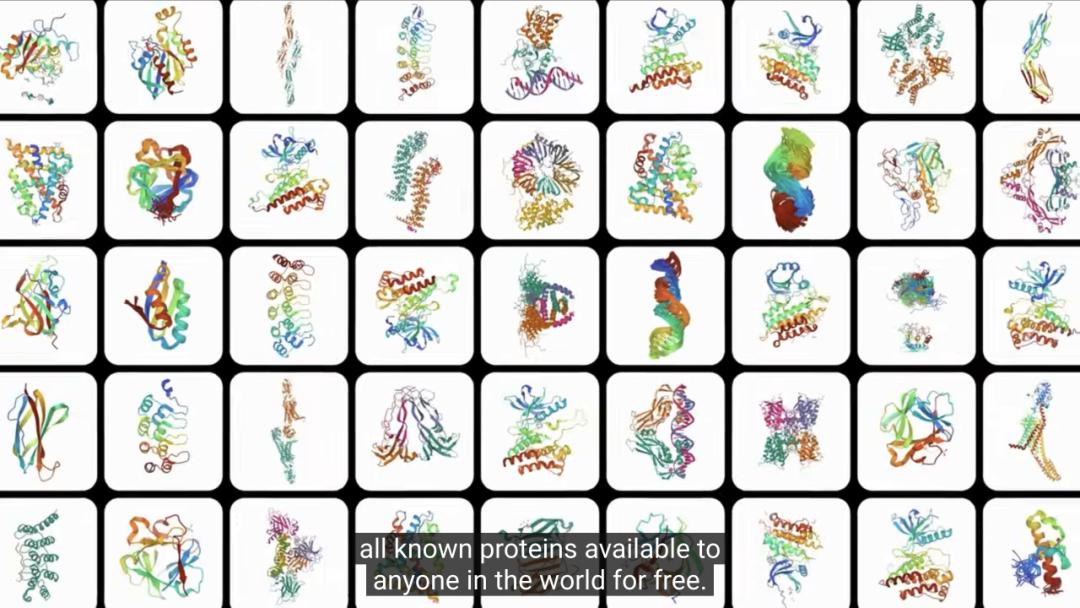
Core Insights - The article discusses the significance of AlphaFold2, an AI tool developed by DeepMind, in predicting protein structures, particularly the giant protein titin, which has eluded complete structural analysis for over 70 years [1][3][4] Group 1: AlphaFold2 and Protein Structure Prediction - AlphaFold2 has revolutionized the field of protein structure prediction, achieving over 90% accuracy in predicting protein structures from amino acid sequences during the global protein structure prediction competition (CASP) in 2020 [6][4] - The database created by AlphaFold now contains over 200 million predicted protein structures, covering 98.5% of the human proteome, enabling researchers worldwide to explore protein functions more efficiently [6][4] - AlphaFold2 was utilized during the early stages of the COVID-19 pandemic to predict the structures of viral proteins, aiding in understanding the virus's mechanisms and potential treatments [8][10] Group 2: Applications in Disease Research - Researchers are using AlphaFold to study the impact of genetic mutations on diseases, such as osteoporosis, by comparing the structures of normal and mutated proteins [11][13] - The introduction of AlphaMissense allows scientists to assess the pathogenic potential of missense mutations, successfully categorizing 89% of human missense mutations and creating a directory for further research [13][11] Group 3: Environmental and Pharmaceutical Innovations - AlphaFold2 is also being applied to address environmental issues, such as plastic pollution, by helping scientists design enzymes that can efficiently degrade single-use plastics [14][17] - The integration of AlphaFold2 into drug discovery platforms, like Insilico Medicine's Pharma.AI, has led to the identification of a candidate drug for idiopathic pulmonary fibrosis, Rentosertib, which is currently in Phase II clinical trials [18][20] Group 4: Future Developments - The article highlights ongoing advancements in protein research, including the discovery of a new protein larger than titin and the release of AlphaFold3 and AlphaProteo, which enhance predictions of protein interactions and custom protein design [23][21] - Other AI models, such as RoseTTAFold and I-TASSER, are also contributing to solving long-standing challenges in protein folding, indicating a collaborative effort in the field [23]
贝索斯、杨立昆纷纷“出山”创业:AI黄金十年还是泡沫前夜?
Sou Hu Cai Jing· 2025-11-28 15:03
Core Insights - The return of Jeff Bezos and Yann LeCun to the AI sector marks a significant shift in the industry, with their contrasting approaches aiming to address the real bottlenecks in AI technology and its application in creating tangible value [1][3][4] Group 1: Major Players Re-entering the AI Arena - Jeff Bezos has taken on a leadership role in the AI startup "Project Prometheus," securing $6.2 billion in funding, making it one of the best-funded early-stage AI companies globally [4][5] - Yann LeCun, a Turing Award winner, is establishing a new company focused on Advanced Machine Intelligence (AMI), with Meta as a strategic partner, emphasizing foundational research over immediate commercialization [5][6] Group 2: Diverging Paths in AI Development - Bezos's "physical AI" approach targets the optimization of engineering manufacturing in sectors like hardware, automotive, and aerospace, aiming to reduce production cycles significantly [5][7] - LeCun's focus on AMI seeks to address the fundamental challenges of AI, such as understanding the physical world and developing reasoning capabilities, which he believes are essential for the next AI revolution [8][9] Group 3: Capital and Talent Dynamics - The influx of capital into the AI sector is accelerating, with 57% of new unicorns being AI companies, and the funding environment becoming increasingly competitive [10][11] - Talent acquisition has intensified, with companies offering substantial compensation packages to attract top AI researchers, further reshaping the competitive landscape [11][12] Group 4: Industry Trends and Future Outlook - The AI industry is transitioning from a phase of technological explosion to one of deep industry engagement, characterized by a focus on foundational innovation and vertical integration [9][10] - The potential for AI to drive significant advancements in manufacturing and healthcare is evident, with applications already demonstrating substantial efficiency gains and cost reductions [13][14] Group 5: Balancing Opportunities and Risks - While the enthusiasm for AI's potential is high, concerns about a possible bubble due to overvaluation and a lack of sustainable business models are emerging [14][16] - The industry's future will depend on maintaining a balance between innovation quality and commercial viability, as well as navigating regulatory uncertainties [14][16]