蔚来

Search documents
美股翻绿,热门中概股深夜爆发,小鹏涨超7%,理想、蔚来集体上涨,钯金暴涨10%
21世纪经济报道· 2025-12-26 15:42
Market Overview - On the first trading day after Christmas, U.S. stock indices showed mixed performance, with the Nasdaq up 0.14% and the S&P 500 up 0.08%, while the Dow Jones fell 0.03% [1] - As of the report, all three major U.S. stock indices had declined, but the Chinese tech leader index rose by 1% [1] Stock Performance - Key stock indices and their performance included: - Dow Jones Industrial Average: 48687.83, down 43.33 (-0.09%) - Nasdaq Index: 23580.76, down 32.55 (-0.14%) - S&P 500: 6927.56, down 4.49 (-0.06%) - Nasdaq 100: 25635.91, down 20.24 (-0.08%) - Chinese Tech Leader Index: 4358.68, up 43.27 (+1.00%) [2] Notable Stocks - Nvidia saw a nearly 1.5% increase after the U.S. government allowed it to sell H200 AI chips to China and announced a $20 billion acquisition of AI chip startup Groq, marking the largest deal ever [2] - Sidus Space, a space concept stock, initially surged over 40% and had a weekly increase of over 160% [2] Chinese Tech Stocks - The Nasdaq Golden Dragon China Index initially rose by 0.44%, with notable Chinese stocks experiencing significant gains: - Dingdong Maicai surged over 20% - Xpeng rose over 7% - Li Auto increased over 2% - NIO and Bilibili also rose over 2% [3] Commodity Market - Gold and silver prices continued to rise, with spot gold surpassing $4527 and spot silver reaching $75, marking the highest premium level since 1980 [6] - Copper futures reached a historical high, with a nearly 2% increase, while palladium saw a daily surge of 10% [6] Cryptocurrency Market - Most cryptocurrencies experienced declines, with Bitcoin falling below $87,000 and Ethereum dropping below $3,000, resulting in over 95,000 liquidations in the past 24 hours [8] Economic Outlook - According to CME's "FedWatch," the probability of a 25 basis point rate cut by the Federal Reserve in January 2026 is 15.5%, with an 84.5% chance of maintaining current rates [8] - The chief economist at Zhonghang Securities indicated that the risk of stagflation in the U.S. remains, despite strong third-quarter economic data, suggesting limited likelihood for short-term rate cuts [8]


优信(UXIN.US)盘前涨逾6% 与蔚来资本和Prestige Shine签署5000万美元融资协议
Zhi Tong Cai Jing· 2025-12-26 13:58
Core Viewpoint - Uxin (UXIN.US) shares rose over 6% to $3.80 following the announcement of a $50 million financing agreement with NIO Capital and Prestige Shine [1] Group 1: Financing Agreement - Uxin Group announced a financing agreement on December 26, involving a total investment of $50 million [1] - NIO Capital will invest $20 million, while Prestige Shine will contribute $30 million [1] - The funds will be used to support the launch of 4 to 6 new used car sales locations by 2026 [1] Group 2: Management Commentary - Uxin's founder, chairman, and CEO, Dai Kun, expressed satisfaction with the support from NIO Capital and Prestige Shine [1] - The further investment from existing shareholders reflects their strong confidence in Uxin's strategic direction, business model, and current operational progress [1]


美股异动 | 优信(UXIN.US)盘前涨逾6% 与蔚来资本和Prestige Shine签署5000万美元融资协议
智通财经网· 2025-12-26 13:51
Core Viewpoint - Uxin Group (UXIN.US) announced a $50 million financing agreement with NIO Capital and Prestige Shine, which is expected to support the company's expansion plans in the used car market by establishing 4 to 6 new sales locations by 2026 [1] Financing Details - The financing agreement includes an investment of $20 million from NIO Capital and $30 million from Prestige Shine [1] - The funds will be utilized for the establishment of new used car sales locations [1] Management Commentary - Uxin's founder, chairman, and CEO, Dai Kun, expressed satisfaction with the support from NIO Capital and Prestige Shine, highlighting the confidence of long-term investors in Uxin's strategic direction and business model [1]
蔚来资本、Prestige Shine投资基金5000万美元投资优信 看好超级大卖场模式
Jin Rong Jie· 2025-12-26 13:45
Group 1 - The core point of the article is that Uxin Group has signed a $50 million financing agreement with NIO Capital and Prestige Shine Investment Fund to enhance liquidity and support the expansion of its warehouse-style used car marketplace [1] - NIO Capital is investing $20 million, while Prestige Shine Investment Fund is contributing $30 million [1] - This financing is part of Uxin's overall business and financial planning for 2026, aimed at supporting the establishment of 4 to 6 new marketplaces and optimizing the balance sheet [1] Group 2 - Uxin's warehouse-style used car marketplace in Jinan has begun trial operations, marking the fifth offline warehouse marketplace following Xi'an, Hefei, Wuhan, and Zhengzhou [2] - Uxin has established strategic partnerships with local governments in cities like Tianjin, Guangzhou, and Yinchuan to promote the construction of warehouse marketplaces [2] - Since its strategic transformation in 2020, Uxin has focused on combining offline warehouse-style marketplaces with online national purchases, covering the entire process from vehicle acquisition to sales [4] Group 3 - Each marketplace has an inventory of 1,000 to 3,000 vehicles, all sold by Uxin, with vehicles undergoing 315-point inspections [4] - Uxin offers a "ten-year return guarantee" for vehicles with major accidents, odometer tampering, or water damage, addressing long-standing transparency issues in used car transactions [4] - Uxin's customer net promoter score (NPS) has reached 67, maintaining above 65 for six consecutive quarters, indicating strong customer satisfaction [6] Group 4 - In Q3 2025, Uxin reported a total transaction volume of 15,904 vehicles, a 37.0% quarter-over-quarter increase and a 125.7% year-over-year increase [6] - Retail transaction volume reached 14,020 vehicles, with a 35.0% quarter-over-quarter increase and a 133.5% year-over-year increase, reflecting growth in retail sales, revenue, and profitability [6] - Uxin aims to steadily expand its business scale and create long-term value for shareholders through continuous performance growth [6]
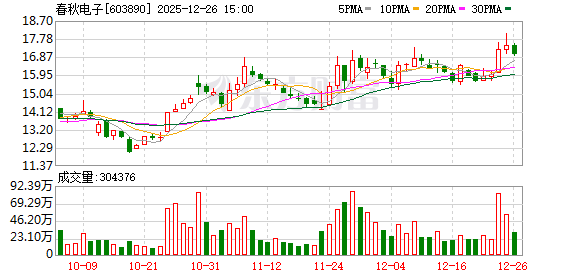
春秋电子:公司在笔记本电脑结构件领域的终端客户为联想、戴尔、三星等主流笔记本电脑品牌商
Mei Ri Jing Ji Xin Wen· 2025-12-26 10:13
Group 1 - The company, Spring Autumn Electronics (603890.SH), reported stable orders and good operational performance [2] - The company's end customers in the notebook structural components sector include major brands such as Lenovo, Dell, and Samsung [2] - In the automotive magnesium alloy application business, the company's end customers include Xiaomi, NIO, XPeng, BYD, BMW, Geely, and Volkswagen [2]

L4级自动驾驶卡车龙头来了!蔚来参投!估值猛涨25倍!
Guo Ji Jin Rong Bao· 2025-12-26 08:36
近日,主线科技(北京)股份有限公司(下称"主线科技")在港交所递交招股书,拟在主板上市,国泰海通是独家保荐人。 IPO日报注意到,自动驾驶卡车领头羊主线科技由张天雷创立(他毕业于清华大学,曾参与联合创立百度无人车团队),投资方有蔚来等知名企业和机 构,最新估值高达38.6亿元。 主线科技的解决方案包含三大核心产品:AiTruck(智能卡车)、AiBox(智能终端)、AiCloud(智能云服务)。作为所有解决方案的通用"人工智能虚拟司 机",AiTrucker建立了统一的算法基础,利用物流枢纽的复杂数据加速公司公路物流及城市交通解决方案的鲁棒性。公司的解决方案中使用的车辆主要是自 动驾驶卡车,并辅以其他类型的商用车。主线科技将这些产品战略性地部署在三大核心商业场景:Trunk Port(物流枢纽)、Trunk Pilot(公路物流)、Trunk City(城市交通),依托公司的通用化架构,实现从物流枢纽、公路物流到城市交通的技术复用与无缝连接。 目前,主线科技已累计交付830辆AiTruck及349套AiBox,并获得821套AiTruck及920套AiBox的意向订单。 根据咨询机构弗若斯特沙利文的资料,20 ...
350亿,又一家新势力宣布破产
3 6 Ke· 2025-12-26 07:11
Core Insights - The demise of Qoros Auto serves as a warning for the Chinese automotive industry, highlighting the challenges of transitioning from product development to market success [1][5] - The industry is entering a critical phase where competition will focus on value and user experience rather than just product availability [10][12] Company Overview - Qoros Auto, once seen as a benchmark for high-end domestic brands, has officially entered bankruptcy proceedings due to long-standing debt issues and inability to repay creditors [2][3] - The company has accumulated over 1,000 enforcement records and has a total equity freeze amounting to over 35 billion yuan, reflecting severe financial distress [2] Historical Context - Founded in 2007 as a joint venture between Chery Automobile and Israel's Quantum Group, Qoros aimed to create a truly international high-end brand [3] - The first model, Qoros 3, launched in 2013, received high praise for its design and safety but was priced too high compared to established competitors, leading to poor sales [3][6] Strategic Missteps - Qoros's strategy under Baoneng Group, which acquired a 51% stake in 2017, was marked by short-sightedness and operational disconnect, leading to a temporary spike in sales that did not translate to sustainable growth [4][6] - The company failed to adapt to the rapid shift towards electric vehicles and smart technology, resulting in a significant decline in sales, dropping to fewer than 100 units in 2023 [4][7] Industry Implications - The bankruptcy of Qoros highlights systemic issues within the automotive industry, including the need for effective brand building, market positioning, and technological pathways [5][9] - The case illustrates the importance of strategic consistency and market timing, as Qoros struggled to keep pace with competitors who embraced electric and smart vehicle trends [7][8] Future Outlook - The automotive industry is moving towards a "value realization period," where companies must focus on user experience and long-term ownership value rather than just product features [10][11] - Successful companies will need to evolve from being mere car manufacturers to becoming intelligent mobility technology enterprises, emphasizing user engagement and ecosystem integration [10][12]
“东方迪士尼之父”,又要去IPO了
阿尔法工场研究院· 2025-12-26 03:33
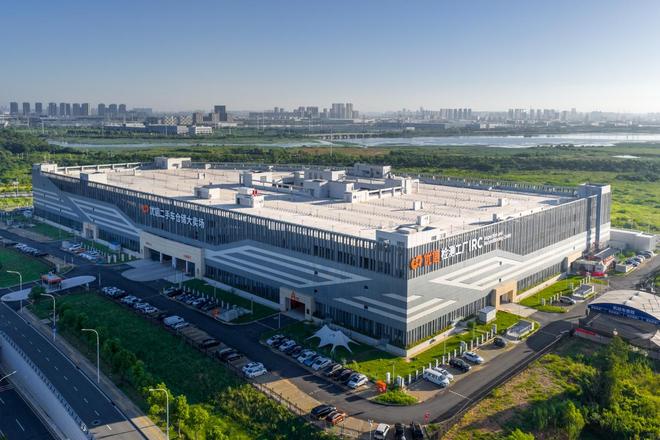
Core Viewpoint - The article discusses the IPO of Aodong New Energy, a battery swapping company founded by Cai Dongqing, known as the "Father of Oriental Disney," highlighting the challenges and financial struggles the company faces in the competitive new energy sector [4][5][18]. Company Overview - Aodong New Energy aims to become the "first stock in battery swapping" and is currently the largest independent third-party battery swapping solution provider in China, with significant investments from notable institutions like NIO Capital and SoftBank Capital [4][5][12]. Financial Performance - The company has been operating at a loss, with a net loss of 157 million yuan in the first half of 2025 and cumulative losses exceeding 2 billion yuan since 2022. Revenue has also declined, with a 31.7% year-on-year drop in the first half of 2025 [5][8][12]. - The gross loss margin worsened from -4.4% to -8.9% year-on-year, indicating a lack of improvement in its financial health [5][8]. Business Model - Aodong New Energy operates under two business models: a "light asset model" focusing on selling battery swapping equipment and a "heavy asset model" involving significant capital investment in building and operating battery swapping stations. The light asset model contributed 71% of revenue in 2022, but its share has since decreased to 30.2% by mid-2025 [7][8]. - The heavy asset model, which now accounts for 69.8% of revenue, has led to significant financial challenges, with a gross loss margin of -23.3% in the first half of 2025 [8][12]. Market Position and Competition - The battery swapping industry is experiencing rapid growth, with market size projected to increase from 1.5 billion yuan in 2020 to 10.3 billion yuan by 2024, reflecting a compound annual growth rate of over 60% [15]. - Aodong New Energy positions itself as an independent third-party service provider, collaborating with over 16 major automotive companies to develop battery swapping models, but faces intense competition from established players like NIO and CATL [15][16][17]. Investment and Financing - Aodong New Energy has raised approximately 3.5 billion yuan in total investments, with significant backing from strategic investors, including NIO Capital. However, the company has not secured new financing since early 2022, leading to cash flow pressures [12][13]. - The lack of new funding has intensified the urgency of the IPO as a means to sustain expansion and operations [13]. Industry Challenges - The company faces challenges from the high capital requirements of the battery swapping model and increasing competition from alternative technologies, such as ultra-fast charging solutions [17][18]. - The operational model's inherent conflicts, where costs exceed revenues, highlight the difficulties in achieving profitability in the current market landscape [8][17].
销量向上,人事动荡:魏牌的“双面现实”
3 6 Ke· 2025-12-26 01:30
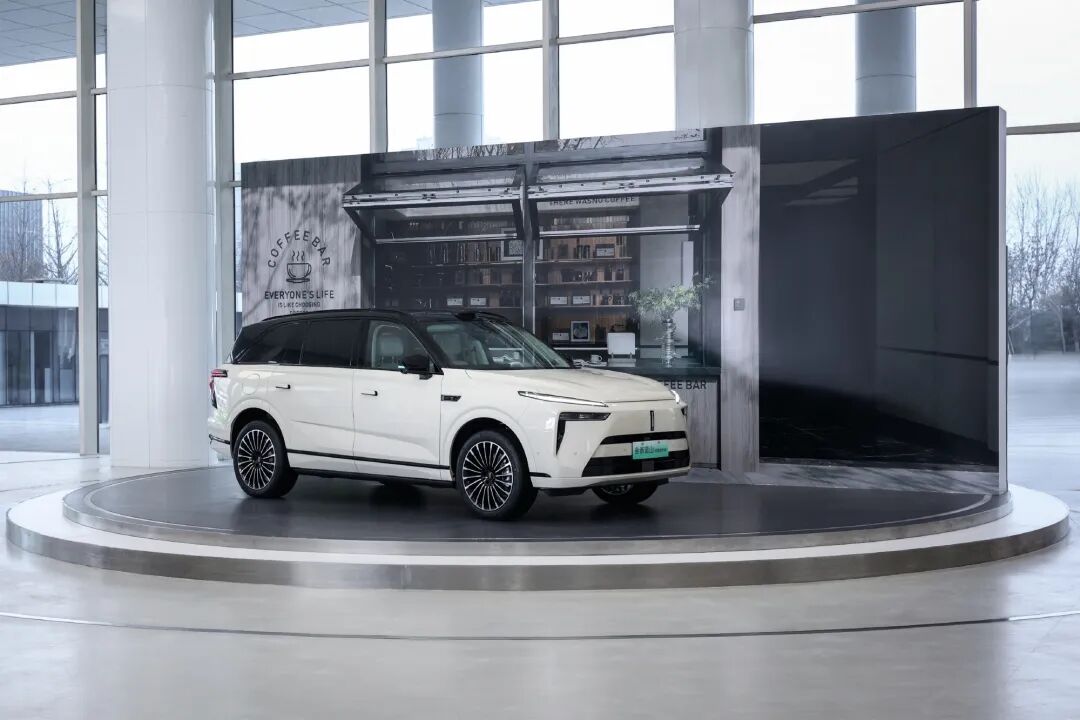
Core Viewpoint - The Weipai brand, named after Great Wall Motors' chairman Wei Jianjun, has experienced significant growth in sales after a period of uncertainty, but frequent CEO changes raise concerns about its long-term stability [1][7][9]. Group 1: Brand Development and Market Position - Weipai was once a leading domestic brand aiming for high-end market penetration, achieving a record sales milestone of 300,000 units in a short time, but later faced stagnation and strategic confusion [1][6]. - The new Weipai Blue Mountain model, priced between 299,800 to 326,800 yuan, represents a significant product launch, being the first mass-produced vehicle equipped with the VLA large model technology [1][7]. - In November 2023, Weipai's sales growth reached 81.14% year-on-year, with cumulative sales nearing 90,000 units, marking a 93% increase compared to the previous year [7][9]. Group 2: Competitive Landscape and Strategic Challenges - The automotive industry is witnessing a shift towards high-end brands, with companies like NIO, Li Auto, and BYD focusing on technological advancements and brand narratives [6][9]. - Weipai's frequent leadership changes, with the shortest tenure being four months, indicate internal challenges and pressures within the organization [9][11]. - The brand's transition from traditional fuel vehicles to electric and hybrid models has been rocky, with a need for clearer positioning in the high-end market [11][21]. Group 3: Technological Innovations and Product Strategy - Weipai is focusing on plug-in hybrid technology while explicitly rejecting range-extended electric vehicles, aiming to differentiate itself in a competitive market [14][18]. - The introduction of the "All-Power Intelligent Super Platform" allows for compatibility with multiple powertrain types, enhancing Weipai's technological capabilities [21][23]. - The brand's reliance on the Blue Mountain and High Mountain models has led to a significant average transaction price nearing 300,000 yuan, establishing a foothold in the high-end market [7][9]. Group 4: Sales Performance and Market Dynamics - Weipai's sales have shown a notable increase since June 2023, with monthly sales consistently exceeding 10,000 units, although the Blue Mountain model's sales have declined while the High Mountain model's sales have surged [29][34]. - The competitive landscape includes other brands like Xpeng and Li Auto, which are also advancing in the high-end segment, necessitating Weipai to accelerate its technological deployment and product diversification [30][34].

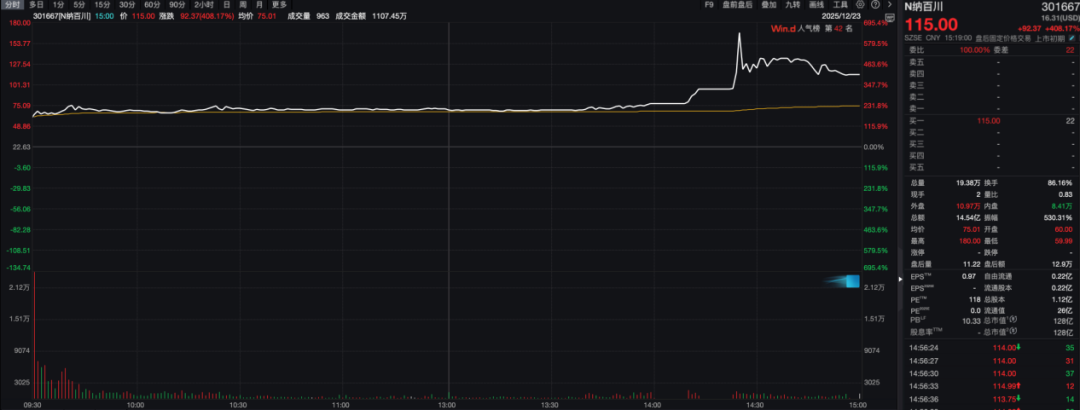
首日大涨408%!电池液冷板隐形冠军纳百川
Xin Lang Cai Jing· 2025-12-26 01:22
Core Insights - The article highlights the significant market potential and growth trajectory of Nabichuan, a leading manufacturer of battery liquid cooling plates, which achieved a remarkable 408% increase on its first day of trading [1][22]. Group 1: Company Overview - Nabichuan has evolved over 18 years from a local automotive parts supplier to a dominant player in the domestic battery liquid cooling plate market, achieving a market share of 12.16% in 2024 [3][22]. - The company has established strong partnerships with major automotive manufacturers, including CATL, NIO, and Mercedes-Benz, supplying over 50 global mainstream car manufacturers [3][22]. - Nabichuan's production capabilities are set to expand significantly with the establishment of a new facility in Chuzhou, which will produce 360,000 sets of water cooling plates annually, enhancing its capacity to meet growing demand [3][22]. Group 2: Market Dynamics - The penetration rate of new energy vehicles has surpassed 40%, and the energy storage installation capacity has increased fivefold over three years, indicating a booming market for battery thermal management systems [3][22]. - The market size for battery liquid cooling plates in China was approximately 4.7 billion yuan in 2022, with projections suggesting it could reach 9.6 billion yuan by 2025, reflecting a growth of 104.26% [15][32]. - The global market for battery liquid cooling plates is expected to grow to 14.5 billion yuan by 2025, driven by the rapid increase in new energy vehicle production and advancements in battery technology [15][32]. Group 3: Financial Performance - Nabichuan demonstrated resilience in its financial performance, with revenue growth from 1.031 billion yuan in 2022 to 1.437 billion yuan in 2024, representing a compound annual growth rate of 18.07% [11][29]. - In the first three quarters of 2025, the company reported a revenue of 1.208 billion yuan and a net profit of 58 million yuan, marking year-on-year growth of 32.29% and 29.3%, respectively [14][31]. - Despite challenges such as industry price competition, Nabichuan maintained a stable net profit range of 95 million yuan to 113 million yuan from 2022 to 2024 [16][33]. Group 4: Technological Advancements - Nabichuan has developed a robust technological framework, including temperature control, lightweight technology, and automated production processes, with 20 invention patents and 183 utility model patents as of March 2025 [6][26]. - The company is actively innovating its product offerings, achieving significant efficiency improvements in product development timelines, such as completing a battery liquid cooling plate project for Mercedes-Benz in just 210 days [6][26]. - The integration of battery liquid cooling plates with battery boxes is anticipated to enhance product value, with the single vehicle value of battery boxes estimated at around 2,000 yuan [19][36].