工商银行

Search documents
Visa Enables Apple Pay Support for Chinese Visa Cardholders
Yahoo Finance· 2026-01-22 18:08
Group 1 - Visa Inc. has enabled Apple Pay support for Chinese Visa cardholders, allowing eligible customers to add their Visa cards to Apple Pay for various payment methods [1][2] - The banks participating in this initiative include major institutions such as Industrial and Commercial Bank of China, Bank of China, and Agricultural Bank of China, with plans to expand the network further [2] - Visa is increasing investments in data and payment security, launching tokenization services, and focusing on cross-border payment scenarios to enhance its digital payment strategy in China [3][4] Group 2 - Visa operates VisaNet, a transaction-processing network that facilitates the authorization, clearing, and settlement of payment transactions globally [4]

银价上涨带火银质品 银行多款产品脱销
Zheng Quan Ri Bao Zhi Sheng· 2026-01-22 16:37
本报记者 彭妍 娄飞鹏补充说,中长期来看,银价受供需结构支撑仍有上行空间,但当前价格已快速反映市场预期,叠 加交易所调控措施及技术替代压力,短期可能维持高位震荡,需重点关注政策转向与市场情绪变化。 开年以来,白银市场表现亮眼,涨幅显著跑赢黄金。Wind资讯数据显示,截至1月21日,伦敦现货银价 格盘中最高触及95.42美元/盎司,年内累计涨幅近32%,大幅超过黄金同期涨幅。银价的快速攀升,直 接引爆了投资者的投资与收藏需求,多家银行出现部分银质品暂时缺货现象,缺货品类主要集中在生肖 主题类与低溢价投资类两大核心领域。 2026年以来,贵金属价格在多重风险因素共振下强势攀升,多位业内分析人士对后续白银价格走势持乐 观态度,但同时提醒投资者需警惕阶段性回调风险。 中国邮政储蓄银行研究员娄飞鹏对《证券日报》记者表示,近期银价上涨是供需缺口、避险需求及政策 预期共同作用的结果。在供给端,矿产银产量下滑,再生银补充能力有限;在需求端,光伏等工业领域 的刚性需求持续增长,叠加地缘因素升温引发避险资金流入。 东方金诚研究发展部高级副总监瞿瑞在接受《证券日报》记者采访时表示,未来银价将呈现短期强势震 荡、中长期回归基本面的态 ...

大摩优享六个月持有期混合A:2025年第四季度利润942.15万元 净值增长率2.98%
Sou Hu Cai Jing· 2026-01-22 15:16
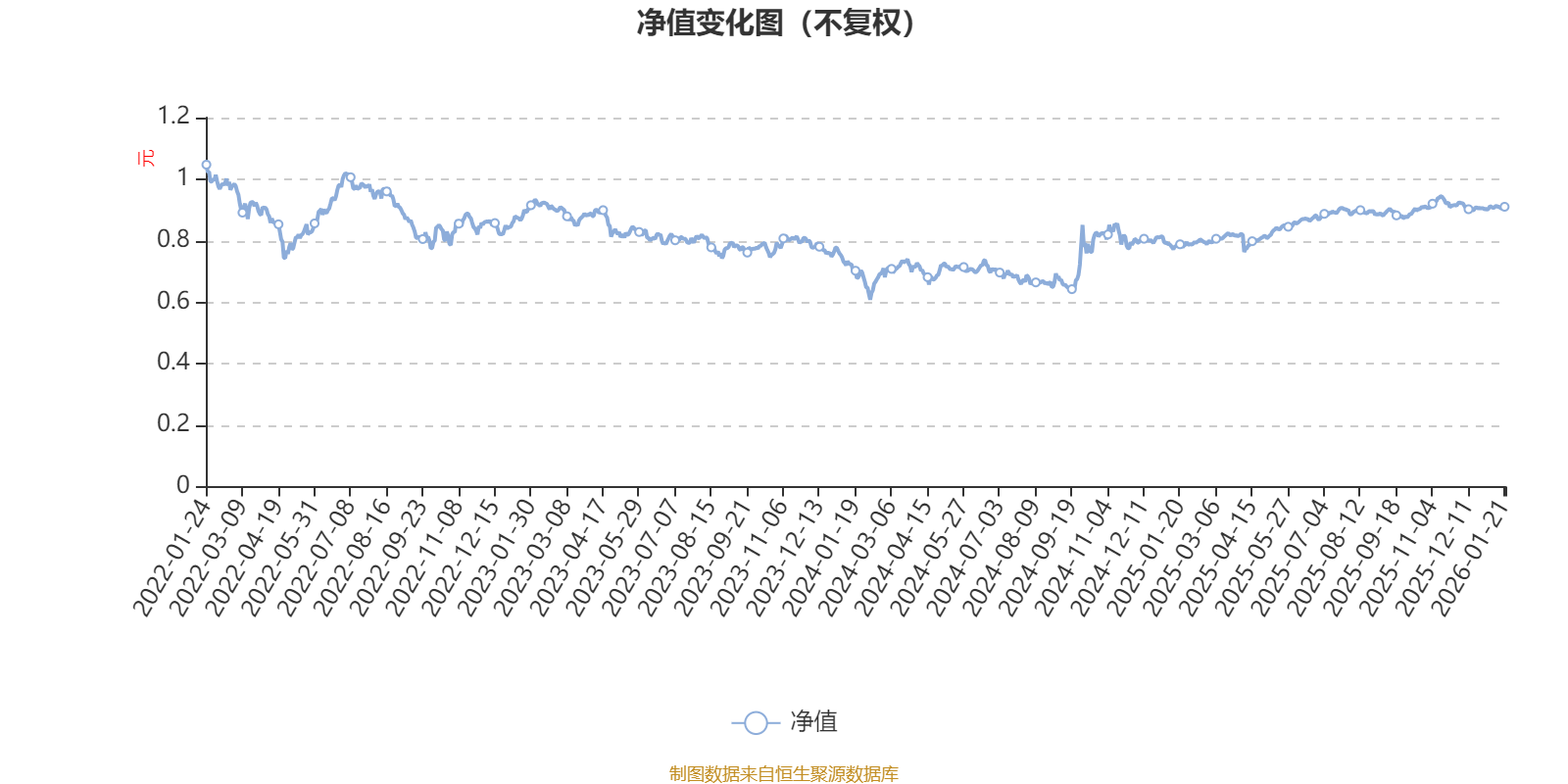
AI基金大摩优享六个月持有期混合A(012368)披露2025年四季报,第四季度基金利润942.15万元,加权平均基金份额本期利润0.0276元。报告期内,基金 净值增长率为2.98%,截至四季度末,基金规模为2.97亿元。 该基金属于偏股混合型基金。截至1月21日,单位净值为0.91元。基金经理是余斌和缪东航。 基金管理人在四季报中表示,本基金长期看好低波红利板块,目前中国的经济发展日趋成熟,经济增速将出现一定程度的放缓,因此未来中国企业的利润增 长速度也将跟随经济放缓。企业产能扩张的需求减少,企业将减少资本开支,自由现金流将大幅改善,企业将提升分红以回报投资者。 十年期国债收益率目前仍然处于低位,低波红利指数的股息率平均而言显著高于十年期国债收益率,这将有利于红利板块的估值提升。即便红利板块的估值 由于市场风格原因未能提升,我们认为持有高红利股票获得稳定分红,也能让基金获得显著高于国债收益率的回报。 截至1月21日,大摩优享六个月持有期混合A近三个月复权单位净值增长率为0.93%,位于同类可比基金557/621;近半年复权单位净值增长率为1.05%,位于 同类可比基金598/621;近一年复权单位净值增长 ...

大额存单利率步入“0字头” 低位运行或将成常态
2 1 Shi Ji Jing Ji Bao Dao· 2026-01-22 14:37
Group 1 - The core phenomenon observed is the decline of large-denomination certificate of deposit (CD) rates entering the "0% era," driven by structural interest rate cuts and banks' need to stabilize net interest margins [1][3] - Experts predict that in 2026, large-denomination CD rates will continue to operate at low levels due to a combination of a moderately loose monetary environment and ongoing pressure on bank interest margins, indicating a shift in asset allocation logic for residents and liability management for banks [1][4] - The issuance of large-denomination CDs is increasingly characterized by short-term products, with most banks focusing on 1-year or shorter maturities, while longer-term products are becoming scarce [2][3] Group 2 - The average interest rates for various deposit terms have fallen below 2%, with specific rates such as 3-month at 0.944% and 1-year at 1.277% as of September 2025 [3] - Analysts suggest that the trend towards short-term deposits is a result of banks adjusting their term structures and customers seeking increased liquidity, leading to a potential shortage of large-denomination CDs for those preferring long-term deposits [3][5] - The low interest rates are also affecting smaller banks, with rates for 3-month large-denomination CDs aligning closely with those of larger banks, indicating a widespread trend across the banking sector [2][5] Group 3 - The ongoing pressure on banks' net interest margins, which stood at 1.42% as of Q3 2025, is a significant factor influencing the reduction of large-denomination CD rates and the contraction of long-term product offerings [5][6] - The improvement of net interest margins is crucial for banks' profitability and their ability to serve the real economy, with expectations of further interest rate cuts in 2026 [6][7] - The differentiation in pricing for deposit products is expected to become more refined, with banks implementing flexible liability strategies based on their asset-liability structures and market positioning [7]
消费贷贴息政策升级,多家银行明确实施细则
Xin Hua Wang· 2026-01-22 14:29
Core Viewpoint - The Ministry of Finance and other departments have announced an optimization of the personal consumption loan interest subsidy policy, which aims to enhance consumer spending and support economic recovery through various measures [1]. Group 1: Policy Enhancements - The implementation period of the personal consumption loan interest subsidy policy has been extended to the end of 2026 [1]. - The scope of support has been expanded to include credit card bill installment services [1]. - Restrictions on the consumption amount have been lifted, allowing for subsidies on amounts of 50,000 yuan and above [1]. - The subsidy standards have been improved by removing the previous cap of 500 yuan per single transaction and the limit of 1,000 yuan for each borrower at the same financial institution for amounts below 50,000 yuan [1]. Group 2: Implementation and Customer Convenience - Starting from January 1, 2026, banks will provide services under the optimized subsidy policy for eligible personal consumption loan customers and credit card bill installment customers [1]. - Customers who have already applied for subsidies will not need to re-sign subsidy agreements, as transactions occurring from January 1, 2026, will automatically apply the new subsidy policy [1]. - Banks will not charge any additional fees beyond loan interest and installment-related fees during the processing of personal consumption loans and credit card bill installment subsidy services [1]. Group 3: Fraud Prevention and Compliance - Banks have issued warnings against providing false documentation or engaging in fraudulent activities to obtain subsidies [2]. - Borrowers who illegally obtain subsidy funds will face recovery actions and will be recorded in personal credit histories, with strict legal consequences [2].





[1月22日]指数估值数据(A股港股继续上涨;红利指数不同渠道估值不同,原因为何?)
银行螺丝钉· 2026-01-22 13:58
Core Viewpoint - The article discusses the recent performance of various stock indices, highlighting the rotation of investment styles and the implications for valuation metrics, particularly focusing on dividend indices and their calculation methods [1][2][3][4][12]. Group 1: Market Performance - The major indices, including the Shanghai Composite and Shenzhen 300, experienced slight increases, with small-cap stocks showing more significant gains [2]. - After a period of low performance, value style indices related to dividends and cash flow have seen an overall rise [3]. - Growth style indices, such as the ChiNext and STAR Market, initially fell but ended the trading day with gains [4]. Group 2: Investment Strategy - The current market conditions present opportunities for low-buy and high-sell adjustments in portfolios [6]. - Recent style rotations align with the adjustments made in actively managed portfolios over the past two weeks [7]. - Active selection and enhanced index strategies have achieved strong performance at the beginning of the year, marking one of the best starts in recent years [8]. Group 3: Valuation Discrepancies - There is a notable discrepancy in the reported price-to-earnings (P/E) ratios for the CSI Dividend Index, with some sources reporting around 8 times while others indicate over 10 times [13][14]. - The difference arises from the weighting methods used in calculating the indices, with most platforms using total market capitalization while the dividend index uses dividend yield weighting [19][20]. - The weighting method significantly affects the representation of bank stocks, which have a low weight in the dividend index but a high market cap, leading to a distorted P/E ratio when calculated by market cap [21][27][30]. Group 4: Index Composition - The top holdings in the CSI Dividend Index show that only two stocks have a P/E ratio below 10, indicating that the overall P/E cannot realistically be as low as 8 times [35][36]. - The financial sector's actual weight in the dividend index is around 23%, similar to the 21% in the CSI 300, suggesting that the perceived low valuation is misleading [30][31]. - The article emphasizes the need for accurate valuation calculations based on actual holdings rather than simplistic total market cap methods [55]. Group 5: Investment Insights - The article introduces a valuation table for various indices, including dividend indices, to assist investors in making informed decisions [56]. - The recent publication of the book "Dividend Index Fund Investment Guide" aims to clarify investor doubts regarding dividend products and has quickly gained popularity [63]. - The author encourages investors to focus on long-term value and to be cautious about market trends, emphasizing the importance of protecting investor interests over mere growth in scale [64].
为什么大家不爱存大额存单了
Xin Lang Cai Jing· 2026-01-22 13:25
#存款到期往哪搬#【#为什么大家不爱存大额存单了#】大额存单利率正步入0字头。目前,四大国有行 工商银行、农业银行、中国银行、建设银行在售的1个月、3个月期限大额存单年利率已统一锚定在 0.9%,起存点也集中在20万元。以起存点计算,1个月的利率收入为150元,3个月的利率收入则在450 元,收益已与同期限普通定期存款相差无几。开源证券银行业首席分析师刘呈祥表示,定期存款短期化 将是未来趋势。高息定期存款在2025年下半年和2026年到期后,将很难用原有同样的产品续接,部分银 行的大额存单额度可能供给不足,偏好长期存款的客户可能买不到大额存单,也有客户会主动转向一些 短期存款增加流动性。 #大额存单利率降至0字头区间# 责任编辑:刘万里 SF014 #存款到期往哪搬#【#为什么大家不爱存大额存单了#】大额存单利率正步入0字头。目前,四大国有行 工商银行、农业银行、中国银行、建设银行在售的1个月、3个月期限大额存单年利率已统一锚定在 0.9%,起存点也集中在20万元。以起存点计算,1个月的利率收入为150元,3个月的利率收入则在450 元,收益已与同期限普通定期存款相差无几。开源证券银行业首席分析师刘呈祥表示, ...
工行、农行、中行、建行、交行、邮储,集体公告
Zhong Guo Xin Wen Wang· 2026-01-22 13:23
Core Viewpoint - Major Chinese banks have collectively announced the optimization of personal consumption loan fiscal subsidy policies, extending the implementation period and expanding the support scope for consumers [1][2]. Group 1: Policy Extensions - The implementation period for the personal consumption loan fiscal subsidy policy has been extended to December 31, 2026 [2]. - Loans signed under the previous fiscal subsidy service agreement will automatically apply the latest subsidy policy for consumption occurring after January 1, 2026, without the need for re-signing agreements [1]. Group 2: Expanded Support - The support scope has been expanded to include credit card bill installment services [2]. - Restrictions on single transactions of 50,000 yuan and above have been removed, allowing for broader access to subsidies [2]. Group 3: Enhanced Subsidy Standards - The subsidy standard has been improved by removing the cap of 500 yuan on single transaction subsidies [2]. - The previous limit of 1,000 yuan on cumulative subsidies for each borrower at a single institution for transactions below 50,000 yuan has also been eliminated [2].
大额存单利率步入“0字头”时代
Xin Lang Cai Jing· 2026-01-22 13:01
目前,四大国有行工商银行、农业银行、中国银行、建设银行在售的1个月、3个月期限大额存单年利率 已统一锚定在0.9%,起存点也集中在20万元。以起存点计算,1个月的利率收入为150元,3个月的利率 收入则在450元,收益已与同期限普通定期存款相差无几。 业内专家指出,这一现象是结构性降息降准引导与商业银行稳定净息差需求共同作用的结果。展望2026 年全年,业内专家普遍认为,在适度宽松货币环境与银行息差压力持续的双重作用下,大额存单利率低 位运行将成常态,这标志着居民资产配置逻辑与银行负债管理模式正在进行角色转化。 中国货币网数据显示,当前大额存单发行呈现显著短期化特征,多数银行主打1年期及以下短期品种,3 年期大额存单发行量锐减,5年期产品近乎绝迹。 宽松的货币环境下,大额存单利率也步步走低,已经步入"0字头"时代。 ...
信用卡分期纳入贴息!六大行公告→
新华网财经· 2026-01-22 12:37
Core Viewpoint - The recent policy optimization allows credit card bill installments to enjoy interest subsidies, making them a preferred choice for consumers who typically do not apply for specific consumer loan products [2][3]. Group 1: Policy Changes - The Ministry of Finance, the Financial Regulatory Administration, and the People's Bank of China jointly issued a notice to optimize the implementation of the personal consumer loan interest subsidy policy, which includes raising the subsidy standards and extending the policy period until the end of 2026 [5]. - The subsidy standard has been improved by removing the previous limits on single transaction subsidies and cumulative subsidies for individual borrowers, while maintaining an annual cap of 3,000 yuan for each borrower at one financial institution [5]. Group 2: Credit Card Installment Subsidy - Credit card bill installment services are now included in the subsidy scope, with an annual interest subsidy rate set at 1% [8]. - To benefit from the subsidy, customers must sign a supplementary agreement with their bank for each credit card, and the subsidy will be directly deducted from the installment interest during the billing period [8]. Group 3: Bank Responses and Implementation - Various banks, including Agricultural Bank of China and Bank of Communications, have provided clear guidelines on how to apply for the credit card bill installment interest subsidy, emphasizing the need for customers to sign the supplementary agreement [8][9]. - Banks like China Bank and Postal Savings Bank have streamlined the process, allowing customers to automatically apply the new subsidy policy to transactions made after January 1, 2026, without needing to re-sign agreements [9].