
鹏华

Search documents
麦高视野:ETF观察日志(2025-07-11)
Mai Gao Zheng Quan· 2025-07-14 06:33
- The report introduces the **RSI (Relative Strength Index)** as a quantitative factor, constructed to measure market conditions by comparing average gains and losses over a 12-day period. The formula is: $ RSI = 100 - 100 / (1 + RS) $ where RS represents the ratio of average gains to average losses over the specified period. RSI values above 70 indicate overbought conditions, while values below 30 suggest oversold conditions [2] - Another quantitative factor mentioned is **Net Purchase Amount (NETBUY)**, which calculates the net inflow or outflow of funds for ETFs. The formula is: $ NETBUY(T) = NAV(T) - NAV(T-1) * (1 + R(T)) $ where NAV(T) is the net asset value of the ETF on day T, NAV(T-1) is the net asset value on the previous day, and R(T) is the return on day T [2] - The report also tracks **Institutional Holdings Ratio**, which estimates the proportion of ETF shares held by institutions based on the latest annual or semi-annual reports. This excludes holdings by linked funds and may involve approximations due to data limitations [3] - The report provides **daily intra-day price trends** for ETFs using 5-minute interval data, highlighting the highest and lowest prices of the day with red markers. However, some data gaps may exist due to limitations in the source [2] - The report categorizes ETFs into "Broad-based" and "Thematic" groups based on the indices they track, such as major indices like CSI 300, CSI 500, and industry-specific indices like Non-bank Financials and Red Chips [2] - The report includes a detailed table of ETF performance metrics, such as RSI values, net purchase amounts, trading volumes, management fees, institutional holdings ratios, and T+0 trading availability. For example, the RSI for CSI 300 ETFs ranges from 68.14 to 75.77, while institutional holdings ratios vary significantly across ETFs [4] - The report highlights thematic ETFs such as **Consumption Electronics**, **Non-bank Financials**, **Renewable Energy**, **Semiconductors**, and **Artificial Intelligence**, providing metrics like RSI, net purchase amounts, and institutional holdings ratios. For instance, the RSI for Consumption Electronics ETFs ranges from 59.68 to 60.40, while institutional holdings ratios range from 23.10% to 58.47% [6] - The report also includes performance metrics for international ETFs tracking indices like the **Hang Seng**, **Nikkei 225**, **Nasdaq 100**, and **S&P 500**, with RSI values ranging from 46.50 to 72.83 and institutional holdings ratios varying widely [4][6]
稀土ETF领涨,机构:稀土价格有望迎来上涨丨ETF基金日报
2 1 Shi Ji Jing Ji Bao Dao· 2025-07-11 03:18
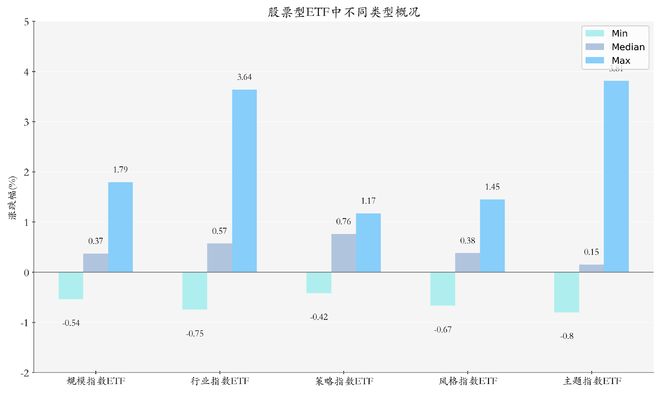
Market Overview - The Shanghai Composite Index rose by 0.48% to close at 3509.68 points, with a daily high of 3526.59 points [1] - The Shenzhen Component Index increased by 0.47% to close at 10631.13 points, reaching a high of 10667.41 points [1] - The ChiNext Index saw a smaller increase of 0.22%, closing at 2189.58 points, with a peak of 2199.71 points [1] ETF Market Performance - The median return for stock ETFs was 0.36%, with the highest return from the MSCI China A50 ETF at 1.79% [2] - The highest performing sector ETF was the China Securities Real Estate ETF, which returned 3.64% [2] - The top three ETFs by return were: - Fortune MSCI China A50 ETF (3.81%) - China Securities Real Estate ETF (3.64%) - Yinhua China Securities Mainland Real Estate Theme ETF (3.55%) [4] ETF Fund Flow - The top three ETFs by fund inflow were: - Huaxia SSE Sci-Tech 50 ETF with an inflow of 1.228 billion yuan - Guotai Junan China Securities Coal ETF with an inflow of 574 million yuan - Penghua China Securities Wine ETF with an inflow of 402 million yuan [6] - The largest outflows were from: - Huaxia SSE Sci-Tech 100 ETF with an outflow of 317 million yuan - Southern China Securities 1000 ETF with an outflow of 227 million yuan - Morgan Stanley China A50 ETF with an outflow of 199 million yuan [6] Financing and Margin Trading - The highest financing buy amounts were for: - Huaxia SSE Sci-Tech 50 ETF (573 million yuan) - Guotai Junan China Securities ETF (257 million yuan) - Yinhua ChiNext ETF (226 million yuan) [8] - The highest margin sell amounts were for: - Huatai-PB SSE 300 ETF (27.858 million yuan) - Huaxia SSE 50 ETF (21.416 million yuan) - Southern China Securities 500 ETF (3.836 million yuan) [8] Industry Insights - Guotai Junan Securities forecasts a potential rise in rare earth prices due to increasing demand and supply constraints, particularly looking towards the second half of 2025 [9] - Dongguan Securities expresses optimism for the rare earth industry, citing recovering export demand and growth opportunities in emerging fields like humanoid robots [10]

首批科创债ETF集体“一日光”,投资者怎么选?未来规模或超5000亿!
Sou Hu Cai Jing· 2025-07-08 13:31
Core Insights - The first batch of 10 Sci-Tech Bond ETFs sold out in one day, raising a total of 30 billion yuan, setting a record for "daylight" bond ETFs [1] - The popularity of these Sci-Tech Bond ETFs has pushed the overall scale of bond ETFs to the 400 billion yuan era [2] Group 1: ETF Performance and Indices - Investors face choices among 10 ETFs, with core differences based on the three major Sci-Tech bond indices they track [5] - The CSI AAA Sci-Tech Bond Index, tracked by six products, has a return of 14.37% since its base date (June 30, 2022) and an annualized return of 4.11% over the past year with a volatility of 1.38% [5] - The SSE AAA Sci-Tech Bond Index, tracked by three products, has a total return of 14.52% since its base date and an annualized return of 4.13% with a volatility of 1.40% [5] - The SZSE AAA Sci-Tech Bond Index, tracked by one product, has increased by 12.57% since its base date and shows an annualized return of 3.93% with a volatility of 1.22% [6] Group 2: Market Dynamics and Policy Support - The surge in interest for Sci-Tech Bond ETFs is driven by dual support from policies and industry trends, with the government emphasizing technology innovation [8] - The China Securities Regulatory Commission has called for increased support for technology innovation in the bond market, optimizing the issuance mechanism for Sci-Tech bonds [8] - The combination of policy support and the wave of technological innovation has made ETFs focused on financing Sci-Tech enterprises an efficient channel for capital allocation [8]
影响市场重大事件:香港证监会召开第二次数字资产咨询小组会议;国金证券旗下香港子公司正在筹备申请虚拟资产相关交易牌照
Mei Ri Jing Ji Xin Wen· 2025-07-07 22:51
Group 1: Digital Assets and Regulations - The Hong Kong Securities and Futures Commission (SFC) held its second digital asset consultation group meeting, discussing regulatory developments in the digital asset sector, particularly focusing on the ASPIRe roadmap's pillars A (Access) and P (Products) [1] - Guojin Securities' Hong Kong subsidiary is preparing to apply for a virtual asset trading license and has engaged with experienced institutions in Hong Kong and internationally to advance this application [3] Group 2: Memory Market Insights - TrendForce predicts a 10% to 15% quarter-on-quarter increase in general DRAM prices for Q3 2025, driven by a shift in production capacity towards high-end products and seasonal demand [4] - Morgan Stanley forecasts that the HBM market supply-demand tightness will persist until 2027, with growth driven by technological advancements and AI demand [6] Group 3: Bond Market Developments - Ten newly launched science and technology bond ETFs successfully raised a total of 30 billion yuan in just one day, contributing to a total bond ETF market size of 387.7 billion yuan, with expectations to surpass 400 billion yuan soon [5] Group 4: Standards and Regulations in Various Industries - China has officially released the international standard ISO 34505:2025 for autonomous vehicle testing scenarios, outlining evaluation processes and requirements for testing scenarios [2] - The State Council's Food Safety Committee is promoting the establishment of an internal reporting reward mechanism for food safety risks in various production and operation units by the end of 2025 [8] - The Market Supervision Administration is enhancing the development and implementation of standards for civil drones, which has reduced costs and improved commercialization capabilities [10]

一日售罄!多只科创债ETF发行火爆
Zhong Zheng Wang· 2025-07-07 09:59
Group 1 - The core viewpoint of the articles highlights the successful launch of multiple science and technology bond ETFs, indicating a strong demand in the market [1][2] - On July 7, the first batch of 10 science and technology bond ETFs was collectively launched, with 7 products having a one-day subscription period and a fundraising cap of 3 billion yuan for each [1] - Several ETFs, including those from Penghua, Huaxia, and Guangfa, sold out within a day, while others that were initially set to close later also reached their fundraising targets and ended subscriptions early [1][2] Group 2 - The rapid sell-out of these bond funds is a rare occurrence, reflecting the strong market interest in science and technology bonds, which have been supported by national policies since their pilot launch in 2021 [2] - The science and technology bond market has seen collaborative efforts from various departments to optimize its system, with favorable policies introduced this year to boost its development [2] - Science and technology bond ETFs fill a gap in the "technology finance" themed bond ETF market, serving as a crucial tool for directing funds to support technological innovation [2]
多只科创债ETF仅半日售罄 机构资金提前锁定
news flash· 2025-07-07 07:02
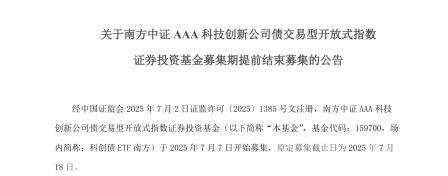
多只科创债ETF仅半日售罄 机构资金提前锁定 智通财经7月7日电,首批10只科创债ETF今日发行,智通财经记者获悉,截至今日下午2点,多只科创 债ETF已售罄。根据公告,10只产品募集上限均为30亿元,富国、招商、易方达、广发、博时、鹏华、 华夏旗下7只募集期仅为今日一天,其余3只产品募集安排相对宽松,景顺长城、嘉实旗下科创债ETF计 划募集截止日是7月11日,南方科创债ETF稍晚,计划至7月18日截止。业内指出,科创债ETF主要投资 者来自机构,不少产品资金早已锁定,不排除剩余3只产品也将提前结募。(智通财经记者 闫军) ...
科创债ETF,会是下一个债基「爆款」吗?
Sou Hu Cai Jing· 2025-07-07 03:29
Core Insights - The China Securities Regulatory Commission (CSRC) has approved the launch of the first batch of 10 Science and Technology Innovation Bond ETFs (科创债ETF) on July 2, 2023, following the proposal made by CSRC Chairman Wu Qing at the Lujiazui Forum [2][3] - The Science and Technology Innovation Bond market has evolved significantly, growing from a pilot program in 2016 to a market size of 3.2 trillion yuan by June 2025, with a compound annual growth rate of 116% from 2022 to 2024 [6][7][29] - The "May New Policy" has been a driving force behind the growth of the Science and Technology Innovation Bond market, encouraging the issuance of bonds by technology companies and expanding the scope of fund usage [4][8][14] Group 1: Policy and Market Development - The "May New Policy" introduced a comprehensive set of measures to support Science and Technology Innovation Bonds, including broadening the types of issuers and the use of raised funds [8][9] - The policy encourages investment institutions to increase their allocation to Science and Technology Innovation Bonds, enhancing liquidity through mechanisms like pledging and market-making [10][11] - The market for Science and Technology Innovation Bonds has matured, with a significant shift from real estate and local government bonds to technology-related bonds as key investment products [4][6] Group 2: Characteristics of Science and Technology Innovation Bonds - Science and Technology Innovation Bonds can be categorized into two types: bonds issued by technology innovation companies listed on exchanges and notes issued in the interbank market [5] - The bonds are characterized by high credit ratings, with 99% of the issuers being state-owned enterprises, ensuring a high level of safety for investors [19][24] - The average duration of the bonds is around four years, which aligns with the funding needs of the technology sector and may yield higher returns in a declining interest rate environment [27][29] Group 3: Performance and Investment Appeal - The first batch of Science and Technology Innovation Bond ETFs is expected to attract significant investor interest due to their higher yields compared to government bonds, especially in a bond bull market [32][33] - Historical performance shows that the Shanghai AAA Science and Technology Innovation Bond Index has delivered a cumulative return of 14.11% since June 30, 2022, outperforming other indices [29] - The ETFs offer T+0 trading, providing high flexibility for investors, making them suitable for both active traders and long-term allocators seeking higher yield products [33][35]

多只产品份额创新高 6月以来逾200亿元涌入港股主题ETF
Shang Hai Zheng Quan Bao· 2025-07-04 19:00
Group 1 - The Hong Kong stock market is becoming a new focus for capital, with over 20 billion yuan flowing into Hong Kong-themed ETFs since June, leading to record high shares for several ETFs [2][3] - Major public funds are optimistic about the long-term investment value of the Hong Kong market and plan to increase their allocations [2][4] - As of July 3, 2023, the net subscription amount for Hong Kong-themed ETFs reached 209.68 billion yuan, with significant inflows into sectors like innovative pharmaceuticals, technology, and dividends [3][4] Group 2 - Southbound capital has become a crucial support for the Hong Kong stock market, with a net inflow of over 690 billion yuan this year, nearly double that of the same period last year [5][6] - The performance of the Hong Kong stock market in the first half of the year was driven by the revaluation of Chinese technology assets, substantial southbound capital inflows, and the market being in a valuation trough [6][7] - Future investment opportunities in the Hong Kong market are expected to focus on policy support, technological iterations, and capital allocation preferences, particularly in technology, innovative pharmaceuticals, and high-dividend assets [7]
4只中证A50指数ETF成交额环比增超100%
Zheng Quan Shi Bao Wang· 2025-07-04 09:13
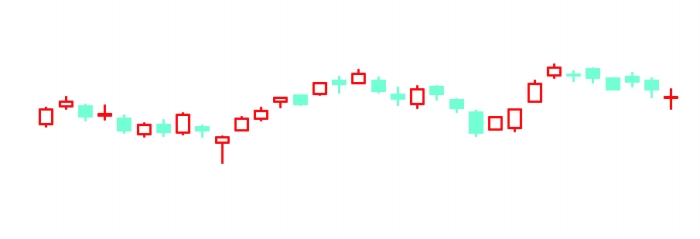
Summary of Key Points Core Viewpoint - The trading volume of the CSI A50 Index ETFs reached 1.074 billion yuan today, showing a significant increase of 342 million yuan or 46.68% compared to the previous trading day [1]. Trading Volume and Performance - The E Fund CSI A50 ETF (563080) had a trading volume of 144 million yuan, up by 112 million yuan, reflecting a remarkable increase of 351.03% [1]. - The Morgan CSI A50 ETF (560350) recorded a trading volume of 101 million yuan, an increase of 37.38 million yuan, with a growth rate of 59.06% [1]. - The Ping An CSI A50 ETF (159593) saw a trading volume of 242 million yuan, up by 35.65 million yuan, marking a 17.26% increase [1]. - The Xinhua CSI A50 ETF (560820) and E Fund CSI A50 ETF (563080) had the highest increases in trading volume, with growth rates of 1509.84% and 351.03% respectively [1]. Market Performance - As of market close, the average increase for ETFs tracking the CSI A50 Index was 0.43%, with the Xinhua CSI A50 ETF (560820) and Huabao CSI A50 ETF (159596) leading the gains at 0.57% and 0.53% respectively [1].




麦高视野:ETF观察日志(2025-07-03)
Mai Gao Zheng Quan· 2025-07-04 08:59
Quantitative Factors and Construction Methods 1. Factor Name: RSI (Relative Strength Index) - **Factor Construction Idea**: RSI measures the relative strength of price movements over a specific period to identify overbought or oversold market conditions[2] - **Factor Construction Process**: - The formula for RSI is: $ RSI = 100 - \frac{100}{1 + RS} $ where $ RS $ is the ratio of the average gain to the average loss over a 12-day period[2] - RSI > 70 indicates an overbought market, while RSI < 30 indicates an oversold market[2] - **Factor Evaluation**: RSI is a widely used technical indicator for short-term market sentiment analysis[2] 2. Factor Name: Net Subscription (NETBUY) - **Factor Construction Idea**: This factor calculates the net subscription amount of ETFs to gauge investor demand[2] - **Factor Construction Process**: - The formula for NETBUY is: $ NETBUY(T) = NAV(T) - NAV(T-1) \times (1 + R(T)) $ where $ NAV(T) $ is the net asset value on day T, $ NAV(T-1) $ is the net asset value on the previous day, and $ R(T) $ is the return on day T[2] - **Factor Evaluation**: This factor provides insights into the capital flow dynamics of ETFs, reflecting investor sentiment and market positioning[2] --- Factor Backtesting Results 1. RSI Factor - **HS300 ETFs**: RSI values range from 60.24 to 70.30, with most ETFs hovering around the overbought threshold of 70[4] - **CSI500 ETFs**: RSI values range from 66.04 to 66.37, indicating moderate strength[4] - **CSI800 ETFs**: RSI values range from 69.54 to 71.77, with some ETFs entering overbought territory[4] - **CSI1000 ETFs**: RSI values range from 63.76 to 64.97, suggesting neutral to slightly strong market conditions[4] - **Thematic ETFs**: RSI values vary significantly, with some themes like "New Energy" reaching as high as 74.71, while others like "Semiconductors" remain around 50[6] 2. Net Subscription Factor - **HS300 ETFs**: Net subscription values range from -6.69 billion to 1.51 billion, indicating mixed investor sentiment[4] - **CSI500 ETFs**: Net subscription values range from -2.65 billion to 0.54 billion, reflecting weak demand[4] - **CSI800 ETFs**: Net subscription values range from 0.00 billion to 0.45 billion, showing stable capital flows[4] - **CSI1000 ETFs**: Net subscription values range from -2.69 billion to 0.55 billion, indicating varied investor interest[4] - **Thematic ETFs**: Net subscription values vary widely, with some themes like "Semiconductors" showing strong inflows (up to 6.28 billion), while others like "Consumer Electronics" exhibit moderate inflows (up to 1.15 billion)[6]