浦发银行

Search documents
浦发银行深入开展校园金融教育 助力青少年筑牢反诈防线
Zhong Guo Jin Rong Xin Xi Wang· 2025-10-29 11:56
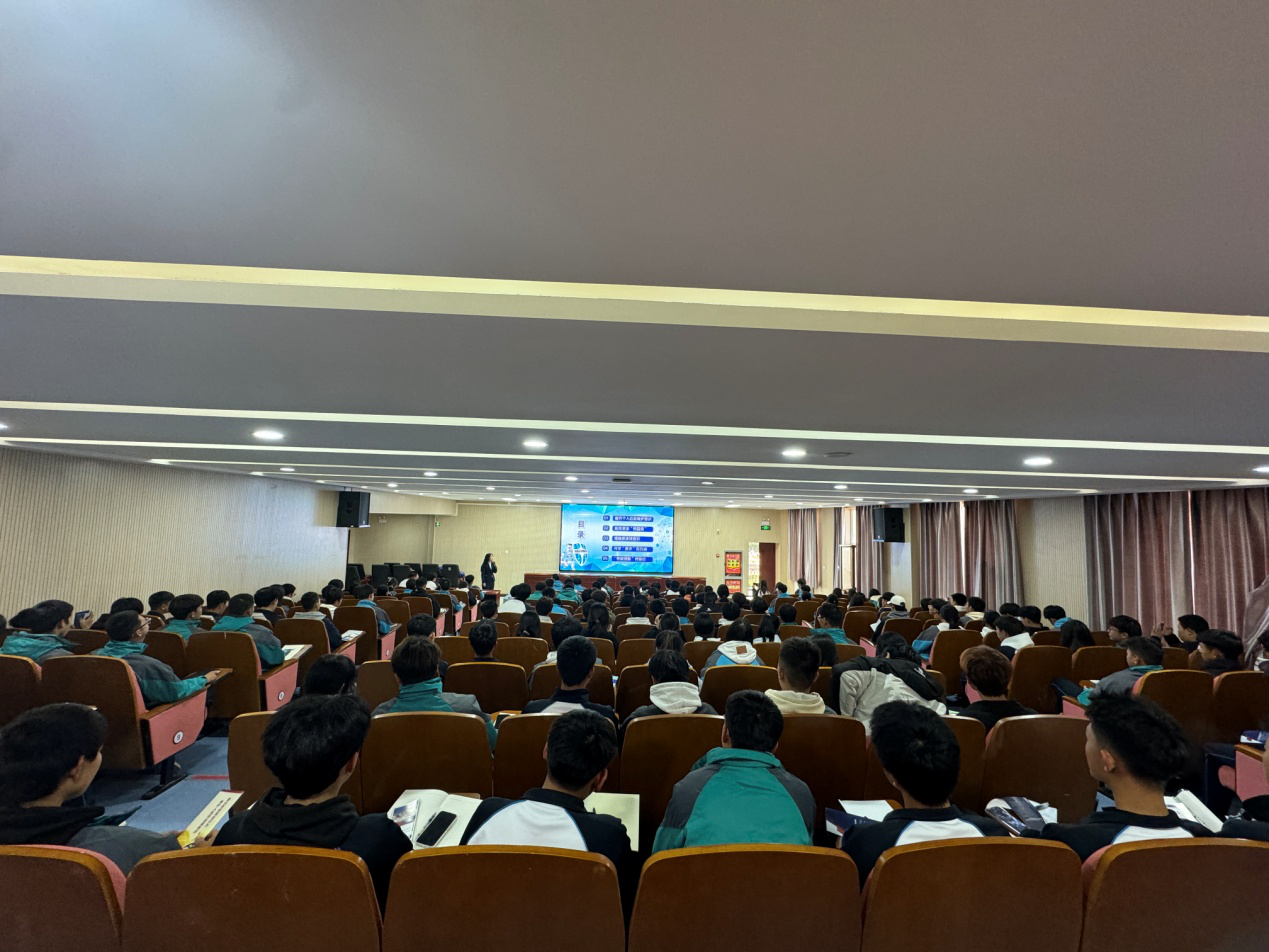
Core Viewpoint - The urgent need to enhance financial literacy and fraud prevention skills among the youth is highlighted through a recent educational initiative by SPDB Yinchuan Branch, which conducted a financial knowledge seminar for over 150 students at Ningxia Water Conservancy and Electric Power Engineering School [1][3]. Group 1: Event Overview - The seminar titled "Financial Knowledge Accompanies Growth, Fraud Prevention and Gambling Resistance Enter Campus" focused on critical issues faced by the youth, including personal information protection, anti-money laundering awareness, recognizing telecom fraud, and resisting gambling temptations [3]. - The educational team utilized various engaging methods such as case analysis, situational simulations, and interactive Q&A to make complex financial concepts more accessible to students [3]. Group 2: Key Topics Addressed - Real-life cases were analyzed to illustrate the mechanisms and potential dangers of "campus loans" and "trap loans," along with common fraud techniques like online brushing, fake shopping, and impersonating customer service [3]. - A warning segment was included to showcase the development path and consequences of falling into high-interest campus loans, aiming to guide students in establishing correct values and consumption perspectives [3]. Group 3: Future Initiatives - The campus outreach activity is part of a broader series of financial education initiatives by SPDB Yinchuan Branch, emphasizing the responsibility of financial institutions to protect consumer rights and enhance youth financial literacy [5]. - The branch plans to deepen collaboration with schools and regularly conduct financial knowledge dissemination activities, continuously innovating educational formats to equip students with essential financial skills and risk awareness [5].


公募基金三季度转债持仓分析:公募转债持仓规模大增,绩优产品8月末减转债加股票
Guoxin Securities· 2025-10-29 11:13
Group 1: Report Industry Investment Rating - No relevant content provided Group 2: Core Views of the Report - In Q3 2025, the public - fund convertible bond (CB) holding scale increased significantly, while high - performing products reduced CBs and increased stocks at the end of August [1][12] - The secondary bond funds, CB funds, and ETFs were the main forces for increasing CB allocations, and the number of "marginal CB allocators" decreased [1] - Funds mainly increased positions in photovoltaic, battery, TMT, non - ferrous, and pharmaceutical sectors in Q3, while reducing allocations in the large - financial and consumer sectors [2] - In Q3, equity - biased products led the active funds, and the median return of CB funds was + 13% [2] Group 3: Summary by Related Catalogs 1. Fund Holding CB Scale and Fund Type Distribution - The total asset scale of public funds reached 39.0 trillion in Q3 2025 (excluding QDII and REITs), with the number reaching 12,908, showing significant growth compared to the previous quarter [12] - The asset value of CB funds increased from 56.338 billion yuan at the end of Q2 to 67.850 billion yuan at the end of Q3 [1][12] - The CB market scale decreased by 77.8 billion yuan in Q3, but the overall public - fund CB holding scale increased by 43.8 billion yuan to 316.6 billion yuan [1][13] - The ratio of funds increasing positions to those reducing positions in CBs was 0.73 in Q3 [15] - The number of funds with a CB position > 5% decreased to 753 from 927/894 in 25Q1/25Q2 [17] - By fund type, primary bond funds, secondary bond funds, convertible bond funds, bond - biased hybrid funds, and flexible - allocation funds were the main CB allocators in 25Q3, accounting for 20.4%/33.7%/16.4%/3.9%/2.0% respectively [19] - The CB positions of balanced hybrid and flexible - allocation funds decreased slightly in Q3 after rising in Q2, while those of primary bond, secondary bond, and bond - biased hybrid funds continued to decline. The CB position of equity - biased hybrid funds increased slightly, and the average CB position of CB funds was basically flat at 78.77% [19] - More balanced hybrid funds started to allocate CBs in 25Q3, and the scale of primary bond, equity - biased hybrid, and convertible bond funds expanded significantly [22] 2. Public - Fund CB Individual Bond Allocation - In Q3, the price of public - fund held CBs increased with the market. The proportion of equity - biased and high - price CBs increased, and the position of bank CBs continued to decline [24] - Funds mainly increased positions in photovoltaic, battery, TMT, non - ferrous, and pharmaceutical sectors, while reducing allocations in large - financial and consumer sectors [2][27] - Financial CBs were generally underweighted by institutions. Only a few CBs like Changyin CB (+6 times) and Ruida CB (+3 times) had an increased number of times in the top 10 positions [31][34] - Some low - price CBs in environmental protection, public utilities, steel, and transportation sectors were increased, such as Zhongte CB (+20 times) and Jieneng CB (+17 times) [31][34] - TMT sector CBs, especially those related to semiconductors and consumer electronics, were significantly increased. For example, Wenti CB (+23 times) and Lixun CB (+11 times) [34] - Pharmaceutical CBs were generally increased. For example, Haoyuan CB (+25 times) and Huayi CB (+13 times) [35][36] - Most remaining auto CBs were increased, but some like Sheng 24 CB (-16 times) and Baolong CB (-11 times) were decreased [37] - The CB positions in photovoltaic and battery sectors increased significantly. For example, Tian 23 CB (+54 times) and Yiwei CB (+78 times) [37] - Leading pig - breeding enterprises' CBs were increased, such as Wenshi CB (+18 times) and Muyuan CB (+11 times) [38] - Non - ferrous sector CBs were generally increased, such as Hengbang CB (+17 times) and Bo 23 CB (+14 times) [38][41] - Chemical sector CBs showed a mixed performance. Most were increased, but Shenma CB (-10 times) was decreased [38][41] - Most consumer sector CBs were decreased, such as Ou 22 CB (-15 times) and Lizhi CB (-5 times), while some like Yitian CB (+5 times) and Lutai CB (+5 times) were increased [41][42] 3. 2025 Q3 Returns of Various Funds - In Q3 2025, equity - biased hybrid funds led the active funds, with the average return of common stock and equity - biased hybrid funds around 25% [42] - The average quarterly return of convertible bond funds was 13.67%, significantly lower than that of equity - biased funds [42] - The average Q3/one - year returns of primary bond funds were + 0.57%/4.44%, secondary bond funds were + 3.11%/7.57%, bond - biased hybrid funds were 4.50%/8.25%, and flexible - allocation funds were 21.54%/26.30% [43] - CB funds performed well, with the scale reaching a new high. The median Q3 return of 41 CB funds was + 13%, and the median one - year return was 25.17% [44] - Many products increased positions in mid - July and achieved returns exceeding the index. By the end of September, 33 out of 39 active CB products had higher returns than ETFs [44] 4. Performance of High - Performing Products - Among the funds with a CB ratio > 40% and an asset value > 100 million yuan, 78 out of 79 achieved positive returns in Q3, with a median net - value growth rate of 11.4% and a median year - to - date net - value growth rate of 10.4% as of October 28 [48][50] - Fund A, with a Q3 return of + 28.73%, increased CB positions in mid - July,重仓ed TMT and military - industry CBs/individual stocks. In September, it increased stock positions and reached a new net - value high during the CB market adjustment [50][51] - Fund B, with a Q3 return of + 27.29%, had a balanced CB allocation across industries and concentrated stock positions in semiconductor design and manufacturing. Similar to Fund A, it also reached a new net - value high during the CB market adjustment [53][57][60]
浦发银行:温情金融服务 守护最美“夕阳红”
Zhong Jin Zai Xian· 2025-10-29 10:53
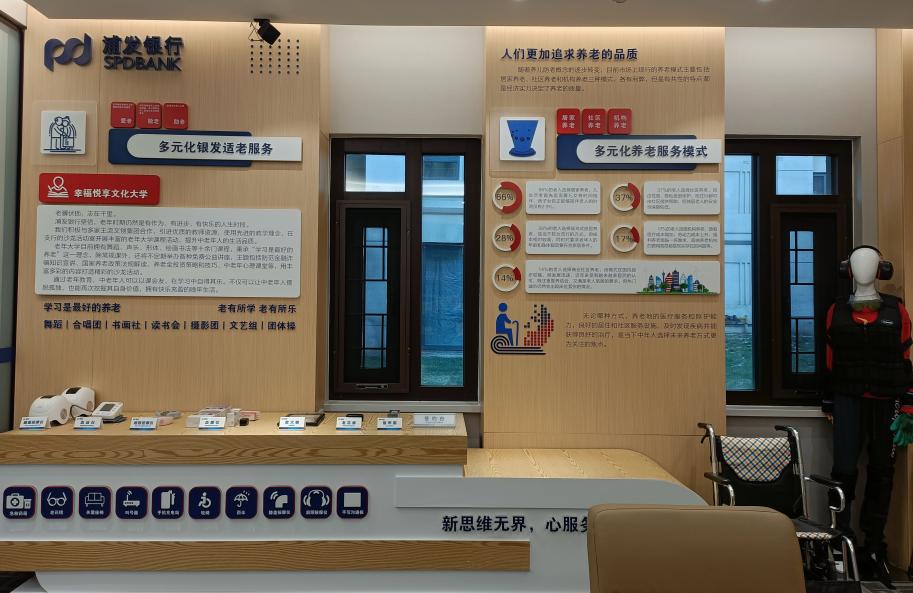
Core Viewpoint - The company emphasizes its commitment to providing tailored financial services for the elderly, enhancing their quality of life through innovative and considerate approaches [1][4][10]. Group 1: Service Innovation - The bank has implemented a systematic and professional elderly service mechanism, showcasing its dedication to "finance for the people" [1]. - Upgraded mobile banking specifically for seniors includes features like voice interaction and video tutorials, making it more user-friendly for the elderly [4]. - The bank has established 100 specialized financial service branches for the elderly, equipped with advanced facilities such as VR experiences and assistive devices [2]. Group 2: Financial Education - The bank organizes various educational activities aimed at improving financial literacy among the elderly, integrating risk awareness into their daily lives [6]. - Collaborations with senior universities to provide tailored financial courses help seniors learn and understand financial concepts [8]. - Multiple branches have initiated community outreach programs, conducting over 20 financial education events to assist nearly 5,000 elderly individuals in understanding financial services [8]. Group 3: Security Measures - The bank has developed a multi-layered security system to protect elderly clients' funds, actively identifying and preventing fraudulent activities [11][13]. - Specific measures include real-time alerts for suspicious transactions and a dedicated team for fraud prevention calls, ensuring elderly clients are informed of potential risks [13]. - Successful interventions have resulted in recovering significant amounts of money for elderly clients who were targeted by scams, demonstrating the bank's proactive approach to safeguarding their assets [10][11]. Group 4: Future Directions - The bank plans to continue enhancing its elderly services, focusing on expanding the depth and breadth of its offerings to improve the overall experience for senior clients [13].
红杉中国刚刚收购拜耳集团重要资产
FOFWEEKLY· 2025-10-29 10:04
Core Viewpoint - Bayer AG has agreed to sell its antibiotic drug Avelox to Sequoia China for an estimated transaction value between €160 million and €260 million, reflecting the growing investment value in off-patent branded drugs in China [1][2]. Group 1: Transaction Details - The sale includes Avelox's intellectual property, brand ownership, and global commercial rights [1]. - HSBC acted as the exclusive financial advisor for Bayer, while Shanghai Pudong Development Bank provided loan financing support to Sequoia China [1]. Group 2: Market Context - Avelox, a broad-spectrum antibiotic, was approved by the FDA in 1999 and peaked in sales in 2012, but has seen a decline since then [1]. - In 2021, Avelox's global sales were reported at $72 million, with Bayer's original brand holding a 40% market share in China despite competition from 22 local generic manufacturers [2]. Group 3: Industry Trends - The transaction highlights the investment opportunities in the market for off-patent branded drugs, as multinational pharmaceutical companies focus on innovative drug pipelines [2]. - The period from 2025 to 2029 is expected to see a new wave of patent expirations, with an estimated annual sales value of $180 billion for expiring drugs [3]. - Chinese capital is becoming a key player in the transaction of expired patent drug assets, as exemplified by Sequoia China's acquisition of Avelox [3].


帮主郑重收评:北证50飙8%!沪指站4000点,明天这么干
Sou Hu Cai Jing· 2025-10-29 09:10
Market Overview - The market experienced a significant rally with all three major indices rising, particularly the North Stock Exchange 50, which surged by 8.41% [3] - The Shanghai Composite Index increased by 0.7%, while the ChiNext Index rose nearly 3% [3] - The total trading volume reached over 2.2 trillion yuan, an increase of more than 120 billion yuan compared to the previous day, indicating strong market liquidity [3] Sector Performance - The photovoltaic and energy storage sectors saw substantial gains, with leading companies like LONGi Green Energy and Canadian Solar hitting their daily price limits [3] - The non-ferrous metals sector also performed well, with copper and zinc leading the charge; major players like Zhongjin Lingnan and Jiangxi Copper experienced significant price increases [3] - Conversely, the banking and liquor sectors struggled, with stocks like Chengdu Bank and Shanghai Pudong Development Bank declining [3] Investment Strategy - Investors are advised not to chase high prices in the rapidly rising photovoltaic and non-ferrous metal sectors; instead, they should wait for potential pullbacks to key support levels, such as the 5-day moving average [4] - For those who missed the North Stock Exchange 50 rally, it is recommended to wait for stabilization before entering, as the index may experience volatility after a sharp rise [4] - Monitoring trading volume and the stability of the Shanghai Composite Index at the 4000-point level is crucial; maintaining positions is advisable unless there is a significant drop in volume or a breach of the 4000-point support [4]
解密主力资金出逃股 连续5日净流出490股





Zheng Quan Shi Bao Wang· 2025-10-29 09:03
Core Insights - A total of 490 stocks in the Shanghai and Shenzhen markets have experienced net outflows of main funds for five consecutive days or more as of October 29 [1] - The stock with the longest continuous net outflow is Zhongju Gaoxin, with 31 days of outflows, followed by Hengshen New Materials with 21 days [1] - The largest total net outflow amount is from China Merchants Bank, with a cumulative outflow of 3.093 billion yuan over 12 days [1] Group 1: Stocks with Longest Net Outflows - Zhongju Gaoxin has seen net outflows for 31 days, with a total outflow of 559 million yuan and a cumulative decline of 6.91% [1] - Hengshen New Materials has recorded net outflows for 21 days, totaling 197 million yuan, with a decline of 9.80% [3] - China Merchants Bank has the highest net outflow amount of 3.093 billion yuan over 12 days, with a net outflow ratio of 6.98% and a cumulative increase of 1.65% [1] Group 2: Other Notable Stocks - Guotai Junan has experienced net outflows for 10 days, amounting to 1.877 billion yuan, with a net outflow ratio of 7.89% and a cumulative increase of 2.70% [1] - Shengbang Co. has seen net outflows for 12 days, totaling 1.826 billion yuan, with a net outflow ratio of 9.52% and a cumulative decline of 10.65% [1] - Huajian Group has recorded net outflows for 6 days, with a total outflow of 1.713 billion yuan and a significant decline of 40.29% [1] Group 3: Stocks with Significant Outflow Ratios - Jianan Intelligent has the highest net outflow ratio at 14.74%, with a decline of 2.98% over the past 5 days [1] - Other notable stocks with high outflow ratios include Huayi Development at 11.91% and Pianzaihuang at 11.84% [1] - The overall trend indicates a significant outflow of funds from various sectors, reflecting investor sentiment and market conditions [1]
A股高开高走放量上涨,沪指站上4000点
Sou Hu Cai Jing· 2025-10-29 08:49
Market Overview - The A-share market opened higher on October 29, with the Shanghai Composite Index surpassing 4000 points, closing at 4016.33 points, up 0.7% [2][3] - The ChiNext Index rose by 2.93%, closing at 3324.27 points, while the Shenzhen Component Index increased by 1.95% to 13691.38 points [2] Sector Performance - New energy stocks surged, particularly in the energy storage sector, leading to a wave of limit-up stocks [2] - The non-bank financial sector, including brokerage stocks, saw significant gains, with several stocks hitting the daily limit [5] - Conversely, bank stocks experienced a notable decline, with the banking index dropping nearly 2% [6] Trading Volume and Stock Movement - A total of 2664 stocks rose while 2621 fell, with a trading volume of 22,560 billion yuan, an increase from the previous day's 21,479 billion yuan [3][4] - 112 stocks saw gains of over 9%, while 13 stocks experienced declines of over 9% [4] Investment Sentiment and Future Outlook - Analysts suggest that the A-share market may continue to perform strongly, with the recent breakthrough of the 4000-point level providing a solid foundation for future gains [7][9] - The current market environment is characterized by low valuations and low leverage, which may enhance the sustainability of the current rally compared to previous cycles [10] - The upcoming economic policies and the potential for further interest rate cuts by the Federal Reserve are expected to bolster market confidence [9][10]
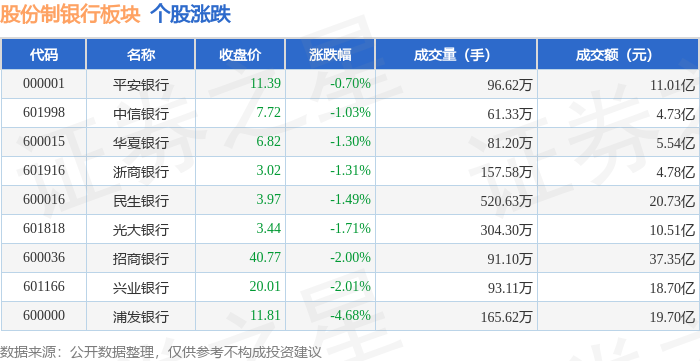
股份制银行板块10月29日跌2.1%,浦发银行领跌,主力资金净流出15.67亿元
Zheng Xing Xing Ye Ri Bao· 2025-10-29 08:41
Core Insights - The banking sector experienced a decline of 2.1% on October 29, with Shanghai Pudong Development Bank leading the drop [1] - The Shanghai Composite Index closed at 4016.33, up 0.7%, while the Shenzhen Component Index closed at 13691.38, up 1.95% [1] Banking Sector Performance - Ping An Bank closed at 11.39, down 0.70% with a trading volume of 966,200 shares and a transaction value of 1.101 billion [1] - CITIC Bank closed at 7.72, down 1.03% with a trading volume of 613,300 shares and a transaction value of 473 million [1] - Huaxia Bank closed at 6.82, down 1.30% with a trading volume of 812,000 shares and a transaction value of 554 million [1] - Zhejiang Commercial Bank closed at 3.02, down 1.31% with a trading volume of 1,575,800 shares and a transaction value of 478 million [1] - Minsheng Bank closed at 3.97, down 1.49% with a trading volume of 5,206,300 shares and a transaction value of 2.073 billion [1] - Everbright Bank closed at 3.44, down 1.71% with a trading volume of 3,043,000 shares and a transaction value of 1.051 billion [1] - China Merchants Bank closed at 40.77, down 2.00% with a trading volume of 911,000 shares and a transaction value of 3.735 billion [1] - Industrial Bank closed at 20.01, down 2.01% with a trading volume of 931,100 shares and a transaction value of 1.870 billion [1] - Shanghai Pudong Development Bank closed at 11.81, down 4.68% with a trading volume of 1,656,200 shares and a transaction value of 1.970 billion [1] Capital Flow Analysis - The banking sector saw a net outflow of 1.567 billion from major funds, while retail investors contributed a net inflow of 1.297 billion [1] - CITIC Bank had a net inflow of 104 million from major funds, but a net outflow of 69.77 million from speculative funds [2] - Huaxia Bank experienced a net inflow of 24.95 million from major funds, with a negligible outflow from speculative funds [2] - Ping An Bank had a net outflow of 17.16 million from major funds, but a net inflow of 62.38 million from retail investors [2] - Zhejiang Commercial Bank saw a net outflow of 61.17 million from major funds, with a net inflow of 5.468 million from retail investors [2] - Everbright Bank had a net outflow of 63.94 million from major funds, but a net inflow of 5.508 million from retail investors [2] - Industrial Bank experienced a net outflow of 166 million from major funds, with a net inflow of 114 million from retail investors [2] - Shanghai Pudong Development Bank had a significant net outflow of 171 million from major funds, but a net inflow of 29.47 million from retail investors [2] - Minsheng Bank faced a net outflow of 411 million from major funds, with a net inflow of 24.5 million from retail investors [2] - China Merchants Bank had a substantial net outflow of 806 million from major funds, while retail investors contributed a net inflow of 531 million [2]
大爆发!多股30%涨停!
天天基金网· 2025-10-29 08:38
Market Overview - A-shares experienced a strong rally on October 29, with the Shanghai Composite Index surpassing 4000 points, closing at 4016.33, up 0.7% [3] - The ChiNext Index reached a nearly four-year high, closing up 2.93% at 3324.27 [3] - The North Exchange 50 Index surged by 8.41%, with total trading volume across Shanghai, Shenzhen, and North exchanges reaching 22.909 billion yuan, an increase of approximately 1.25 billion yuan from the previous day [3][5] Sector Performance Photovoltaic Industry - The photovoltaic sector saw significant gains, with major stocks like Sungrow Power rising over 15%, reaching a market capitalization of nearly 400 billion yuan [9] - Other companies in the sector, such as LONGi Green Energy and Tongwei Co., hit their daily price limits [9][11] - The industry is showing signs of recovery, with improved supply-demand dynamics due to rising polysilicon prices and previous production cuts [11] Nonferrous Metals - The nonferrous metals sector also performed strongly, particularly tungsten and aluminum stocks, with companies like China Tungsten High-Tech hitting their daily price limit [13] - The price of tungsten has been increasing, with black tungsten concentrate prices rising to 288,000 yuan per ton, reflecting a supply-demand tightness [15] - Recent production issues in aluminum smelting facilities have led to supply constraints, further supporting price increases in the aluminum sector [16] Regulatory Developments - The China Securities Regulatory Commission (CSRC) announced plans to enhance the North Exchange's listing mechanisms and improve the quality of listed companies [5] - The focus will be on optimizing the entry system and promoting the interconnectivity between the New Third Board and regional equity markets [5][7] Investment Insights - Analysts suggest that the recent downturn in the North Exchange has created new valuation opportunities, particularly for newly listed stocks with strong profit potential [7] - The upcoming third-quarter reports are expected to reveal companies with better-than-expected performance, which could lead to further investment interest [7]

大爆发!尾盘,多股30%涨停!
证券时报· 2025-10-29 08:30
Market Overview - The A-share market experienced a strong rally on October 29, with the Shanghai Composite Index surpassing 4000 points, reaching a 10-year high. The ChiNext Index rose nearly 3%, and the North Exchange 50 Index surged over 8% [1][2]. Shanghai Composite Index - The Shanghai Composite Index closed at 4016.33 points, up 0.7%. The Shenzhen Component Index increased by 1.95% to 13691.38 points, while the ChiNext Index rose by 2.93% to 3324.27 points. The North Exchange 50 Index saw a significant increase of 8.41% [2][4]. Trading Volume - The total trading volume across the Shanghai, Shenzhen, and North exchanges reached 22909 billion yuan, an increase of approximately 1250 billion yuan compared to the previous day [2]. Sector Performance Photovoltaic Industry - The photovoltaic sector saw explosive growth, with stocks like Sungrow Power Supply rising over 15%, reaching a historical high. Other companies such as Longi Green Energy, Tongwei Co., and JA Solar Technology also hit their daily limit [2][9]. - The market capitalization of Sungrow Power Supply is now nearly 400 billion yuan [9]. Nonferrous Metals Sector - The nonferrous metals sector performed strongly, with companies like China Tungsten High-Tech and Jiangxi Copper nearing their daily limit. The sector was driven by rising prices in tungsten and aluminum [13][15]. - Tungsten prices have increased due to growing demand and supply constraints, with black tungsten concentrate prices rising to 288,000 yuan per ton [15]. Securities Sector - The securities sector also saw gains, with companies like Huashan Securities and Northeast Securities reaching their daily limit during intraday trading [2]. Hainan Free Trade Zone - Stocks related to the Hainan Free Trade Zone, such as Hainan Development and Hainan Airlines, also experienced significant gains, hitting their daily limit [2]. Regulatory Developments - The China Securities Regulatory Commission (CSRC) announced plans to improve the listing mechanism for the North Exchange, aiming to enhance the quality of listed companies and stimulate market activity [7]. Future Outlook - Analysts suggest that the recent adjustments in the North Exchange have created new valuation opportunities, particularly for newly listed companies with strong profit potential and innovative attributes [7]. Conclusion - The A-share market's strong performance on October 29 reflects a shift in investor focus towards sectors like photovoltaic and nonferrous metals, driven by regulatory support and improving market conditions [1][2][7].