联影医疗

Search documents
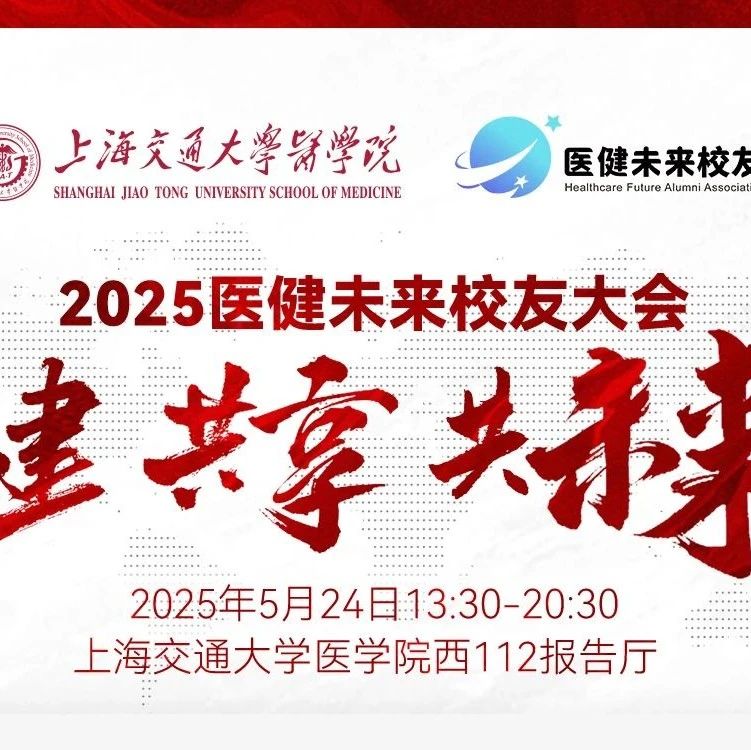
倒计时7天!2025年医健未来校友年会
思宇MedTech· 2025-05-16 11:34
Core Viewpoint - The 2025 Alumni Conference of Shanghai Jiao Tong University School of Medicine aims to create a platform for emotional connection, resource sharing, and opportunity exchange under the theme "Co-construct, Share, and Co-future" [2]. Agenda Summary - The conference will feature a series of speeches and discussions on various topics related to medical policies, industry opportunities, and advancements in healthcare [3][4]. - Keynote speakers include prominent figures such as Xu Shuqiang, Gu Yan, and Ren Yongqiang, who will address topics like medical policies, obesity treatment, and anti-aging cell therapies [3][4]. - A roundtable discussion will focus on the challenges and strategies for medical companies expanding internationally, featuring industry leaders and experts [4]. Educational Program - The Medical and Health Future Leading Talents program offers a comprehensive curriculum designed to enhance entrepreneurial thinking and strategic capabilities in the healthcare sector [5][6]. - The program emphasizes collaboration between academia and industry, aiming to develop leaders who can navigate complex challenges in the medical field [8][11]. - Participants will engage in workshops and discussions on topics such as innovation in medical products, investment strategies, and the integration of new technologies in healthcare [17][12]. Networking Opportunities - The conference will facilitate networking among alumni, industry leaders, and academic experts, providing a platform for resource matching and innovative collaboration [9][21]. - Attendees will have the chance to visit leading medical institutions and companies, enhancing their understanding of the healthcare ecosystem [21][20]. Alumni Engagement - The alumni association aims to foster a vibrant and innovative community, organizing events that connect scientists and entrepreneurs for knowledge exchange and collaboration [18][19]. - The program includes international study tours to renowned medical institutions, further enriching the learning experience for participants [22][21].

超2500亿营收!2024医疗器械百强背后的突破与隐忧
思宇MedTech· 2025-05-16 10:27
Core Viewpoint - The medical device industry in 2024 faces a complex policy environment and market challenges, with a slight revenue growth of 0.19% but a significant decline in net profit by 13.82%, indicating a divergence in performance across different sub-sectors [1][13]. Medical Equipment - The medical equipment sector experienced a revenue decline of 1.38% and a net profit drop of 17.93% in 2024, with Q1 2025 showing a further revenue decrease of 5.27% and a net profit decline of 14.10% [3][10]. - The decline is attributed to slowed bidding processes and inventory digestion, particularly affecting imaging and monitoring equipment [3][4]. - Leading company, United Imaging Healthcare, reported a revenue of 10.3 billion yuan in 2024, a decrease of 9.73%, marking the first decline in net profit in six years [3][4]. High-Value Consumables - The high-value consumables sector saw a revenue growth of 3.58% but a net profit decline of 4.09% in 2024, with Q1 2025 showing a slight revenue increase of 0.25% and a net profit drop of 6.15% [6][7]. - The sector is impacted by price pressures from national procurement policies, but domestic market share for local brands is improving [6][7]. Low-Value Consumables - The low-value consumables sector achieved a revenue growth of 12.86% and a remarkable net profit increase of 114.83% in 2024, with Q1 2025 showing a revenue growth of 2.37% and a net profit growth of 7.19% [8][9]. - The growth is driven by recovery in the domestic market and accelerated international expansion, particularly in mid-to-high-end markets [8][9]. In Vitro Diagnostics - The in vitro diagnostics sector faced a revenue decline of 6.13% and a net profit drop of 47.04% in 2024, with Q1 2025 showing a further revenue decrease of 15.39% and a net profit decline of 40.27% [10][11]. - The decline is largely due to the high base effect from the COVID-19 pandemic and the impact of various policies, including DRGs and procurement policies [10][11]. Conclusion - The overall revenue growth in the medical device industry is stable, but profit volatility is significant, particularly in the in vitro diagnostics and medical equipment sectors. However, growth drivers remain in low-value consumables' international expansion and innovation, high-value consumables' technological updates, and the gradual recovery of medical equipment [13][14].




大医集团港股闯关:高瓴临阵撤退、家族控股权集中与财务失血三重绞杀
Xin Lang Zheng Quan· 2025-05-16 06:13
Core Viewpoint - Deyi Group, a leader in the radiation therapy sector in China, is facing significant financial challenges despite its market position, as evidenced by ongoing losses and cash flow issues [1][2]. Financial Sustainability and Cash Flow Pressure - Deyi Group has been in a prolonged state of loss, with net losses of 69.78 million yuan in 2023 and 94.57 million yuan in 2024, totaling 777 million yuan [2]. - Although the gross profit margin is projected to rise to 52.7% in 2024, revenue growth is nearly stagnant, with only a 1.2% increase, primarily driven by high-margin TaiChi platform solutions, while low-margin digital business revenue plummeted by 82.7% [2]. - The company has reported negative operating cash flow for eight consecutive years, with cash reserves of only 126 million yuan at the end of 2024, sufficient for approximately 40 months of operation at the current burn rate, alongside a significant inventory turnover period of 894 days, indicating substantial inventory impairment risks [2]. Customer Concentration and Accounts Receivable Risk - Deyi Group's revenue is heavily reliant on its top five customers, accounting for 58.4% in 2023 and 53.4% in 2024, with the largest customer contributing up to 21.6% [3]. - Trade receivables increased from 159 million yuan in 2023 to 271 million yuan in 2024, representing 28% of current assets, with the average collection period extending from 172 days to 322 days, intensifying bad debt provision pressures [3]. - High customer concentration may weaken bargaining power, and the loss or delayed payments from major clients could directly impact cash flow and revenue stability [3]. Technology Commercialization and R&D Investment Imbalance - Despite holding a 75.8% market share in the gamma knife segment with core products CybeRay and TaiChiRT Pro, Deyi Group's overall market share in radiation therapy equipment is only 4.7%, significantly lower than leading competitors [4]. - The R&D investment as a percentage of revenue is as high as 43%, notably exceeding peers like Mindray Medical at 10%, yet the expansion of core product indications remains in clinical trial phases, leading to slow commercialization [4]. - The risk of technological obsolescence is pronounced, as competitors may introduce more cost-effective or innovative products, potentially squeezing Deyi Group's market space [4]. Shareholding Structure and Governance Risks - The Liu Haifeng family controls 52.99% of the voting rights through a multi-layered structure, with several family members in key management positions, raising concerns about centralized decision-making risks [5]. - Hillhouse Capital's sudden transfer of shares worth 50 million yuan before the IPO has sparked market concerns regarding institutional investor confidence [5]. - Historical related-party transactions, such as the acquisition of Prowess in the U.S., lacked sufficient disclosure, potentially indicating issues of interest transfer or compliance disputes [5]. Industry Competition and Policy Dependence - The domestic radiation therapy equipment market is dominated by imported brands, with Deyi Group facing competition from comprehensive giants like United Imaging, which is projected to exceed 10 billion yuan in revenue in 2024 [6]. - The regulatory environment for medical device approvals is stringent, with long and uncertain product registration cycles; for instance, the TaiChiB multi-mode radiation therapy system has not yet completed clinical trials, and failure to obtain approval could hinder market expansion [6]. - The rapid pace of technological iteration in the industry necessitates continuous innovation and adaptation to regulatory changes; failure to do so may result in the loss of first-mover advantages [6]. - Deyi Group previously withdrew its A-share listing application, and despite multiple financing rounds leading to a valuation of 5.1 billion yuan, its profitability remains unverified, compounded by institutional sell-offs raising doubts about long-term value and management capabilities [6].
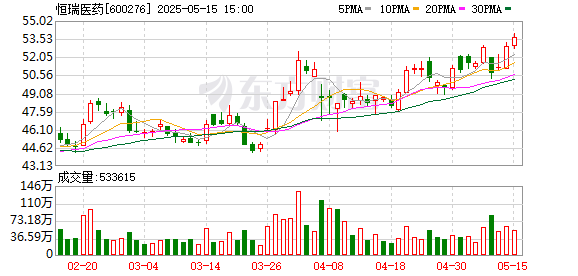
医疗行业拐点已至:恒瑞医药浴火重生 迈瑞医疗海外扩张稳居王座
Di Yi Cai Jing· 2025-05-16 00:33
Group 1: Core Insights - Heng Rui Pharmaceutical is set to list on the Hong Kong Stock Exchange, aiming to raise up to HKD 130.8 billion, following its peers WuXi AppTec, BeiGene, and Rongchang Biologics [1] - The company has experienced a significant decline in generic drug revenue from 2021 to 2023, but is expected to rebound in 2024 due to its innovative drug business [1][8] - Mindray Medical, another industry giant, has seen a notable slowdown in revenue growth, with a mere 0.74% increase in 2024, marking a departure from its previous six years of nearly 20% growth [1] Group 2: Financial Performance - Heng Rui's revenue from generic drugs dropped from CNY 277.3 billion in 2020 to CNY 228.2 billion in 2023, with a significant impact from drug price reductions due to procurement policies [8] - In 2024, Heng Rui's innovative drug sales reached CNY 138.92 billion, a 30.60% increase, contributing to 49.64% of total revenue, marking a historical high [8][9] - Mindray's 2024 revenue was CNY 367.25 billion, a 5.14% increase, while net profit grew by only 0.74%, with domestic market revenue declining by 5.10% [13][14] Group 3: Market Trends and Future Outlook - The medical health sector is witnessing a new phase driven by advancements in AI technology and the international expansion of innovative drug and medical device companies [2] - The Chinese market's demand for innovative drugs has surged, with the proportion of innovative drug products in development increasing from 4.1% in 2016 to 29% in 2023 [2] - Mindray's overseas revenue reached CNY 164.3 billion in 2024, accounting for 45% of total revenue, with a strong focus on developing markets [14]


“千亿产业新势能”之医疗器械篇: 联合攻关、链式发展 深圳医疗器械“南研发、北创造”密码
Zheng Quan Shi Bao· 2025-05-15 17:41
Core Viewpoint - The high-end medical device industry in Shenzhen is a significant indicator of national manufacturing capability and technological development, with a projected revenue of 200 billion yuan by 2025, highlighting its importance in the global medical device market [1]. Group 1: Industry Overview - Shenzhen's medical device output reached 99 billion yuan in 2023, accounting for approximately 10% of the national total, with exports also around 10% [1]. - The city is home to leading companies like Mindray Medical and BGI, which are recognized among the top 100 global medical device firms [1]. Group 2: Technological Advancements - The brain-computer interface technology developed by Shenzhen Ruihan Medical has shown significant promise in rehabilitation, with patients experiencing better recovery outcomes compared to traditional methods [2][3]. - Ruihan Medical's brain-computer interface rehabilitation robot system is the first commercialized product of its kind globally, with over 100 patents and a focus on practical application [3]. Group 3: Collaborative Innovation - The National High-Performance Medical Device Innovation Center in Shenzhen is addressing core technological challenges in the medical device sector through collaborative projects with key enterprises [6][7]. - The center has successfully developed a 5.0T whole-body MRI system, marking a significant breakthrough in high-field MRI technology [6]. Group 4: Market Dynamics - The medical device industry in Shenzhen is characterized by a "chain development" model, where breakthroughs in technology stimulate growth across the entire supply chain [8]. - Companies like Mindray Medical and Libang Instruments have successfully disrupted international monopolies in their respective fields, leading to increased domestic production capabilities [9][10]. Group 5: Spatial and Policy Support - Shenzhen's medical device industry faces challenges such as limited industrial space, prompting local governments to create favorable conditions for business growth [11][12]. - The city has introduced comprehensive support measures for the medical and pharmaceutical sectors, aiming to solidify its position as a leading hub for medical device innovation [13].



中国医疗器械市场的替代性机会出现了 | 海斌访谈
Di Yi Cai Jing· 2025-05-15 14:39
Core Viewpoint - The deep localization of medical device manufacturing in China is becoming a key competitive advantage for domestic companies, driven by trade tensions and the need for innovation [1][7]. Group 1: Industry Changes - The trade friction has created opportunities for domestic medical device companies to replace imports, particularly in high-performance piezoelectric materials [1][3]. - Major international companies like GE Healthcare and Siemens are increasingly localizing their production in China to maintain market position amid rising competition from domestic firms [7][6]. - The domestic market for medical imaging equipment is evolving, with companies like New Hong Electronics developing products that can compete with established international brands [4][5]. Group 2: Market Dynamics - The price increase of transducers in the U.S. is prompting American medical device companies to seek local suppliers in China, presenting an opportunity for Chinese firms to enter the international supply chain [3][6]. - The market share of imported high-end X-ray tubes is around 85%, indicating significant room for growth for domestic manufacturers [5]. - The Chinese market for mid-to-low-end X-ray tubes has a localization rate of approximately 30%-40%, suggesting that there is still potential for further domestic production [5]. Group 3: Innovation and Collaboration - Companies are encouraged to focus on material and technological innovation rather than relying solely on tariff barriers for competitive advantage [10]. - Collaborative research and development between domestic companies and hospitals is essential for validating new technologies and products in the medical imaging sector [5][4]. - The need for continuous investment in research and development is highlighted as crucial for maintaining competitiveness in the medical device industry [10]. Group 4: Future Outlook - The ongoing U.S.-China trade tensions are expected to have a long-term impact on multinational companies and Chinese enterprises, creating a sustained push for deep localization [9][10]. - The medical device sector is seen as a strong regulatory environment where rapid technological change is more challenging compared to other industries like photovoltaics and batteries [9][8]. - The establishment of a robust ecosystem of domestic suppliers and innovation is critical for the future success of Chinese medical device companies [7][10].

科创板年报观察:195家民企营收和净利润双增长 经营质效稳步提升
Zheng Quan Shi Bao Wang· 2025-05-15 11:42
经营质效见韧性 资本市场是促进民营经济发展壮大的重要平台。目前,科创板民营企业占比超八成,市值超3.8万亿 元。 科创板民企首发募集资金超过5300亿元,资金大部分投向研发及产业化项目,加速了各领域的产业升级 与经济发展。 科创板民营企业经营质效、发展活力、投资信心实现稳步提升。2024年度,科创板民营企业合计实现营 收9091.97亿元,实现净利润225.99亿元。其中,195家科创板民营企业的营业收入、净利润双增长,41 家公司营业收入增速超50%,86家公司净利润增速超50%。 结合2024年业绩表现看,158家公司营业收入超10亿元,145家公司净利润超1亿元。部分企业实现跨越 式发展,154家公司上市后营收实现翻番,70家公司净利润实现翻倍或扭亏为盈,形成"创新—资本—产 业"的良性循环。 民营企业的回款效率是实现长期健康发展的重要基础。2024年度,科创板民营企业整体回款情况得到改 善,销售商品、提供劳务收到的现金金额合计1.05万亿元,同比增加3.7%,较收入增速高出2个百分 点。回款效率的提升进一步提高了科创板民营企业研发资金可获得性,为持续创新提供了现金流保障。 研发创新显活力 创新是科创板 ...
这家“全球第一”IPO了:健信超导三年分红6000万,研发费用率仅为行业“零头”
Sou Hu Cai Jing· 2025-05-15 10:07
Core Viewpoint - Ningbo Jianxin Superconducting Technology Co., Ltd. (referred to as "Jianxin Superconducting") has been accepted for IPO on the Shanghai Stock Exchange, aiming to raise 865 million yuan, despite financial challenges such as low gross margins and R&D expenses compared to industry averages [2][4]. Financial Performance - Jianxin Superconducting's revenue for the years 2022 to 2024 was 359 million yuan, 451 million yuan, and 425 million yuan respectively, with net profits of 34.63 million yuan, 48.73 million yuan, and 55.78 million yuan [3]. - The company reported a significant amount of inventory and accounts receivable, with the combined total accounting for approximately 79.71% of current assets by the end of 2024 [3][4]. Dividend Distribution - Prior to the IPO, Jianxin Superconducting distributed nearly 60 million yuan in dividends, with half of this amount benefiting the controlling shareholder's family [4][5]. Market Position - Jianxin Superconducting is the leading independent supplier of superconducting magnets in the global MRI industry, holding a market share of approximately 4.2%, ranking fifth globally and second among domestic companies [2]. Gross Margin and R&D Expenses - The company's gross margins for the reporting period were 19.56%, 22.84%, and 24.94%, significantly lower than the industry average of 46.27%, 45.59%, and 45.17% [7]. - R&D expenses for the same period were 20.33 million yuan, 24.42 million yuan, and 27.65 million yuan, with R&D expense ratios of 5.66%, 5.42%, and 6.50%, which are substantially below the industry average [8][9]. Seasonal Revenue Trends - Jianxin Superconducting's revenue exhibits significant seasonal fluctuations, with a higher proportion of sales occurring in the second half of the year due to procurement cycles of domestic medical institutions [10].

AI医疗重构诊疗流程,效率与市场增长下的投资机会
Caixin Securities· 2025-05-15 02:25
Investment Rating - The report maintains an investment rating of "Outperform the Market" for the medical device industry [2]. Core Insights - The report emphasizes that AI in healthcare is restructuring diagnostic and treatment processes, creating investment opportunities driven by efficiency and market growth. The global healthcare sector faces challenges such as aging populations and uneven distribution of medical resources, which AI can address by optimizing the healthcare value chain and promoting equitable access to medical resources [5][6]. Summary by Sections 1. AI Healthcare Development Environment - The domestic AI healthcare development environment is mature, supported by data resources and services that enhance algorithm accuracy and generalization [11]. - AI technology is breaking the uneven distribution of medical resources, addressing the growing demand for healthcare services due to an aging population [18][19]. 2. AI Medical Imaging - AI medical imaging is the most mature application of AI in healthcare, with a complete ecosystem covering various imaging modalities such as CT, MRI, and X-ray. The market for AI medical imaging in China is projected to reach 6.17 billion yuan by 2025 [5][39]. - Companies like Mindray and United Imaging are leveraging hardware advantages to build "device + AI" ecosystems, while pure AI companies focus on lesion recognition and cross-disease generalization capabilities [5][39]. 3. AI In Vitro Diagnostics - The AI in vitro diagnostics market is rapidly growing, with applications in hematology, microbiology, and pathology. Companies like BGI and Anbiping are innovating with AI-driven solutions to enhance diagnostic efficiency [5][6]. 4. AI Wearable Devices - AI wearable devices are transforming health management by providing real-time monitoring and data analysis, becoming essential for chronic disease management. The market for smart wearable devices in China is expected to exceed 15 billion yuan in 2023 and reach 33 billion yuan by 2026, with a compound annual growth rate of 18.1% [6]. 5. Investment Recommendations - The report suggests that the industry is poised for multidimensional development, transitioning from scale expansion to higher-level growth. It highlights long-term investment opportunities in leading companies like Mindray, United Imaging, Yuyue Medical, and Kefu Medical, which are early adopters of AI healthcare solutions [6].


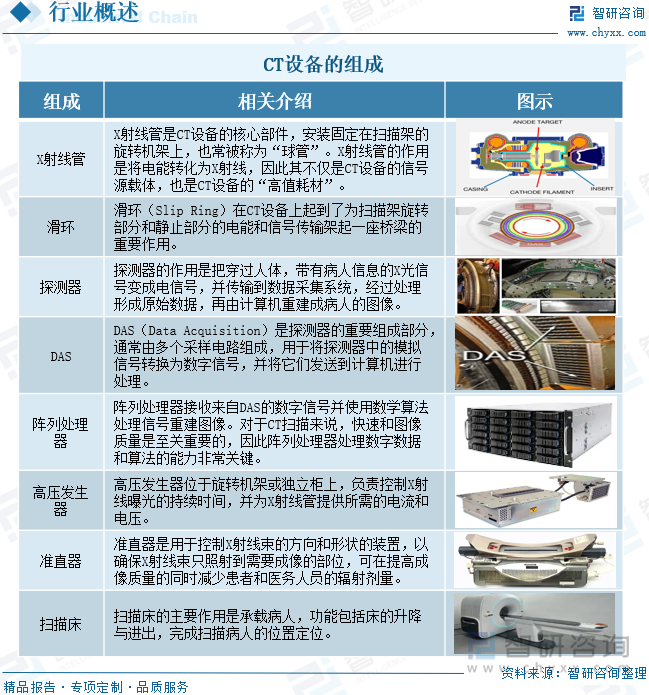
趋势研判!2025年中国CT设备行业产业链、保有量、市场规模、竞争格局及前景展望:CT设备市场保持高速发展,优秀国产CT设备占比超6成[图]
Chan Ye Xin Xi Wang· 2025-05-15 01:33
Core Insights - The CT equipment market in China is projected to reach approximately 25.5 billion yuan in 2024, driven by increasing clinical demand due to an aging population and rising chronic disease prevalence [1][20] - The market is expected to maintain rapid growth as investments in healthcare increase and the implementation of hierarchical medical care continues [1][20] Industry Overview - CT, or computed tomography, is a medical imaging technology that utilizes X-rays to create detailed images of the body's internal structures, widely used for diagnosing various diseases [3][7] - The CT equipment industry is characterized by high technical barriers, requiring long-term technological accumulation for both core component development and complete device manufacturing [16] Market Dynamics - The demand for CT equipment is increasing due to the aging population and the growing need for medical examinations, with the number of CT devices in China expected to reach approximately 55,133 units by 2024 [21] - The domestic CT equipment market's localization rate is projected to be around 53% in 2024, with over 66% of sales coming from high-quality domestic brands [23] Competitive Landscape - The CT equipment industry in China exhibits a tiered competitive structure, with leading companies like GE Healthcare, United Imaging, and Siemens dominating the high-end market, while domestic firms are rapidly catching up through technological innovation [26][28] - Companies such as United Imaging and Wandong Medical are focusing on high-performance imaging equipment and innovative solutions to enhance their market presence [28][30] Policy Environment - The Chinese government has implemented strict regulatory frameworks for medical devices, promoting high-quality development and technological innovation in the CT equipment sector [9][11] - Recent policies aim to enhance the regulatory system for medical devices, ensuring safety and effectiveness while fostering innovation and competitiveness in the industry [9][11] Future Trends - The industry is witnessing a shift towards technological innovation and domestic substitution, with local manufacturers making significant strides in core component production and image quality [32] - The demand for CT equipment in grassroots medical institutions is expected to grow, driven by the hierarchical medical care policy and the increasing number of private hospitals [33] - The integration of AI and digital technologies in CT equipment is anticipated to enhance diagnostic capabilities and operational efficiency, aligning with the industry's move towards sustainability and environmental compliance [34]