吉祥航空

Search documents
人民日报关注:锁座成普遍现象,飞机锁座收费合理吗?
Xin Lang Cai Jing· 2026-01-20 03:29
Core Viewpoint - The practice of locking premium seats by airlines is a method to increase revenue, which raises concerns about consumer rights and fair trading [1] Group 1: General Findings - The investigation by Jiangsu Consumer Protection Committee revealed that all ten surveyed airlines have implemented seat locking practices, with no airline fully opening all economy class seats [2] - The average seat locking rate across the surveyed routes is 38.7%, with some routes like Spring Airlines' "Nanjing-Lanzhou" exceeding 60% [2] Group 2: Payment for Unlocking Seats - Airlines require consumers to use miles or points to unlock certain premium seats, with specific examples showing different point requirements for various seat categories [3] - Some airlines have introduced additional paid options for purchasing points or miles, further pushing consumers towards paid unlocking methods [3] Group 3: Lack of Transparency - Airlines provided vague explanations for seat locking, citing reasons such as reserving seats for special passengers and maintaining flight balance, which contradicts the high locking rates observed [4][5] - Customer service responses were often unclear, failing to provide satisfactory justifications for the locking practices [4] Group 4: Unfair Terms - The seat selection agreements of the ten airlines contain unfair clauses, lacking clear communication about locking rules and fees, which may infringe on consumer rights [6] - Airlines are currently evaluating their policies to balance revenue optimization with consumer rights and improve transparency in seat selection information [6]
江苏省消保委调查10家主流航司 机票锁座比例最高达62.1%
Ren Min Ri Bao· 2026-01-20 01:04
Core Viewpoint - The practice of charging for seat selection in airlines is seen as a method to increase revenue by locking premium seats, which raises concerns about consumer rights and fair trading [1] Group 1: General Findings - The survey conducted by Jiangsu Consumer Protection Committee revealed that all 10 selected domestic airlines have implemented seat locking practices, with no airline fully opening all economy class seats [2] - The average seat locking rate across the surveyed routes is 38.7%, with some airlines like Spring Airlines and Shenzhen Airlines exceeding 60% and 50% respectively [2] Group 2: Payment for Unlocking Seats - Many airlines require consumers to use miles or membership points to unlock preferred seats, with specific examples showing that certain seats can require up to 2000 points for unlocking [3] - Some airlines have introduced additional paid options for purchasing points or miles, further pushing consumers towards paid unlocking methods [3] Group 3: Lack of Transparency - Airlines provided vague explanations for seat locking, citing reasons such as reserving seats for special passengers or maintaining flight balance, which do not align with the high locking rates observed [4][5] - Customer service responses were often unclear, failing to provide solid justifications for the locking practices [5] Group 4: Unfair Terms - The seat selection agreements of the airlines contain unfair terms, lacking clear communication about locking rules and fees, which may infringe on consumer rights [6] - Airlines are currently evaluating their policies to balance revenue optimization with consumer rights and improve transparency in seat selection information [6]



飞机锁座收费合理吗?(法治聚焦)
Ren Min Ri Bao· 2026-01-20 00:24
Core Viewpoint - The practice of airlines locking premium seats during the ticket purchasing process is a method to increase revenue, which may infringe on consumers' rights to fair trade and choice [1] Group 1: General Findings - The survey conducted by Jiangsu Consumer Protection Committee revealed that all ten selected domestic airlines have implemented seat locking practices, with no airline fully opening all economy class seats [2] - The average seat locking ratio across the surveyed routes is 38.7%, with some airlines like Spring Airlines and Shenzhen Airlines exceeding 60% and 50% respectively [2] Group 2: Payment for Unlocking Seats - Many airlines require consumers to use miles or membership points to unlock premium seats, with specific examples showing different point thresholds for various seat categories [3] - Some airlines have introduced additional paid options for purchasing points or miles, further pushing consumers towards a paid unlocking mechanism [3] Group 3: Lack of Transparency - Airlines provided vague explanations for seat locking, citing reasons such as reserving seats for special passengers and maintaining flight balance, which contradicts the high locking ratios observed [4][5] - Customer service responses were often unclear, failing to provide reasonable justifications for the locking practices [4] Group 4: Unfair Terms - The seat selection agreements of the ten airlines commonly contain unfair terms, lacking clear communication about locking rules and fees, which may violate consumers' right to information [6] - The use of ambiguous language in agreements allows airlines to avoid disclosing the number and range of free seats available, facilitating unilateral seat locking [6] Group 5: Expert Opinions - Experts argue that the seat locking practice is a form of price discrimination and information concealment, which increases consumer decision-making costs and distorts market efficiency [9] - There is a call for airlines to balance economic benefits with consumer rights, advocating for clearer rules and transparency in seat allocation practices [9]
10家航司机票锁座比例最高达62.1%,飞机锁座收费合理吗?
Bei Jing Ri Bao Ke Hu Duan· 2026-01-19 23:37
Core Viewpoint - The investigation by Jiangsu Consumer Protection Committee reveals that the practice of locking seats by airlines is widespread and raises concerns about consumer rights and transparency in the airline industry [3][4]. Group 1: Investigation Findings - The survey included 10 major domestic airlines, all of which confirmed the existence of seat locking practices, with no airline fully opening all economy class seats [4]. - The average seat locking ratio across the surveyed airlines is 38.7%, with some routes showing locking ratios as high as 62.1%, such as Spring Airlines' "Nanjing-Lanzhou" route [4]. - Preferred seating areas, such as front rows and exit rows, are commonly included in the locked categories, with higher fees or points required for unlocking these seats [4]. Group 2: Payment and Redemption Issues - Some airlines require consumers to use miles or membership points to unlock preferred seats, with specific examples showing redemption thresholds of 2000 points for premium seats [5]. - Airlines have introduced additional paid options for purchasing points or miles, further pushing consumers towards paid unlocking methods [6]. Group 3: Transparency and Communication - Airlines provided vague explanations for seat locking, citing reasons like reserving seats for special passengers or maintaining flight balance, which contradicts the high locking ratios observed [7]. - Customer service responses were often unclear, failing to provide satisfactory explanations for the locking practices, which raises concerns about consumer rights [7]. Group 4: Unfair Terms and Conditions - The seat selection agreements of the airlines contain unfair terms, lacking clear communication about locking rules and fees, which may infringe on consumer rights [8]. - Airlines often use ambiguous language in their agreements, avoiding the disclosure of free seat availability and locking practices, which benefits the airlines at the expense of consumer transparency [8].

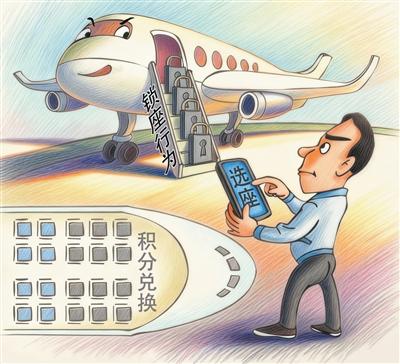
人民日报聚焦:航司为什么锁座?飞机锁座收费合理吗?
Ren Min Ri Bao· 2026-01-19 23:37
Core Viewpoint - The investigation by Jiangsu Consumer Protection Committee highlights the prevalent practice of airlines locking premium seats, which may infringe on consumer rights and calls for airlines to optimize service rules and respond to consumer demands [1] Group 1: General Findings - The survey included 10 domestic airlines, all of which confirmed the existence of seat locking practices in their economy class [2] - The average seat locking rate across the surveyed airlines was 38.7%, with some routes showing rates as high as 62.1% [2] Group 2: Issues Identified - **Issue 1: Prevalence of Seat Locking** All surveyed airlines had locked seats in economy class, with no airline offering complete access to all economy seats [2] - **Issue 2: Payment for Unlocking Seats** Some airlines require consumers to use miles or points to unlock preferred seats, effectively turning basic seat selection into a paid service [3] - **Issue 3: Lack of Transparency** Airlines provided vague explanations for seat locking, often citing reasons that contradicted the high locking rates observed [4][5] - **Issue 4: Unfair Contract Terms** The seat selection agreements of the airlines contained unfair terms, lacking clear communication about seat locking rules and fees, which may violate consumer rights [6]
江苏省消保委调查10家主流航司,机票锁座比例最高达62.1%——飞机锁座收费合理吗?
Xin Hua Wang· 2026-01-19 23:36
Core Viewpoint - The investigation by Jiangsu Consumer Protection Committee highlights that airlines are locking premium seats, which may infringe on consumer rights and fair trading practices, prompting a call for self-examination and service optimization by airlines [1] Group 1: General Findings - The survey included 10 domestic airlines, all of which confirmed the existence of seat locking practices in their economy class, with no airline fully opening all economy seats [2] - The average seat locking rate across the surveyed airlines was 38.7%, with some routes showing rates as high as 62.1% [2] Group 2: Issues Identified - **Issue 1: Prevalence of Seat Locking** All surveyed airlines exhibited seat locking behavior, with significant proportions of seats locked during the purchasing phase [2] - **Issue 2: Indirect Payment for Unlocking Seats** Some airlines require consumers to use miles or points to unlock preferred seats, effectively turning basic seat selection into a paid service [3] - **Issue 3: Lack of Transparency** Airlines provided vague explanations for seat locking, often citing reasons that contradicted the high locking rates observed [4][5] - **Issue 4: Unfair Contract Terms** The seat selection agreements of the airlines contained unfair terms, lacking clear communication about seat locking rules and fees, which may violate consumer rights [6]
江苏省消保委调查10家主流航司 机票锁座比例最高达62.1% 飞机锁座收费合理吗?(法治聚焦)
Ren Min Ri Bao· 2026-01-19 22:09
Core Viewpoint - The investigation by Jiangsu Consumer Protection Committee highlights that airlines are locking premium seats during the ticket purchasing process, which may infringe on consumers' rights to fair trade and choice [1] Group 1: General Findings - The survey included 10 domestic airlines, all of which confirmed the existence of seat locking practices in their economy class [2] - The average seat locking rate across the surveyed airlines is 38.7%, with some routes showing rates as high as 62.1% [2] Group 2: Issues Identified - **Issue 1: Prevalence of Seat Locking** All surveyed airlines have locked economy class seats, with no airline fully opening all economy seats for selection [2] - **Issue 2: Indirect Payment for Seat Unlocking** Some airlines require consumers to use miles or points to unlock preferred seats, effectively turning basic seat selection into a paid service [3] - **Issue 3: Lack of Transparency** Airlines provided vague explanations for seat locking, often citing reasons that contradict the high locking rates observed [4][5] - **Issue 4: Unfair Contract Terms** The seat selection agreements of the airlines contain unfair clauses, lacking clear communication about seat locking rules and fees, which may violate consumer rights [6]
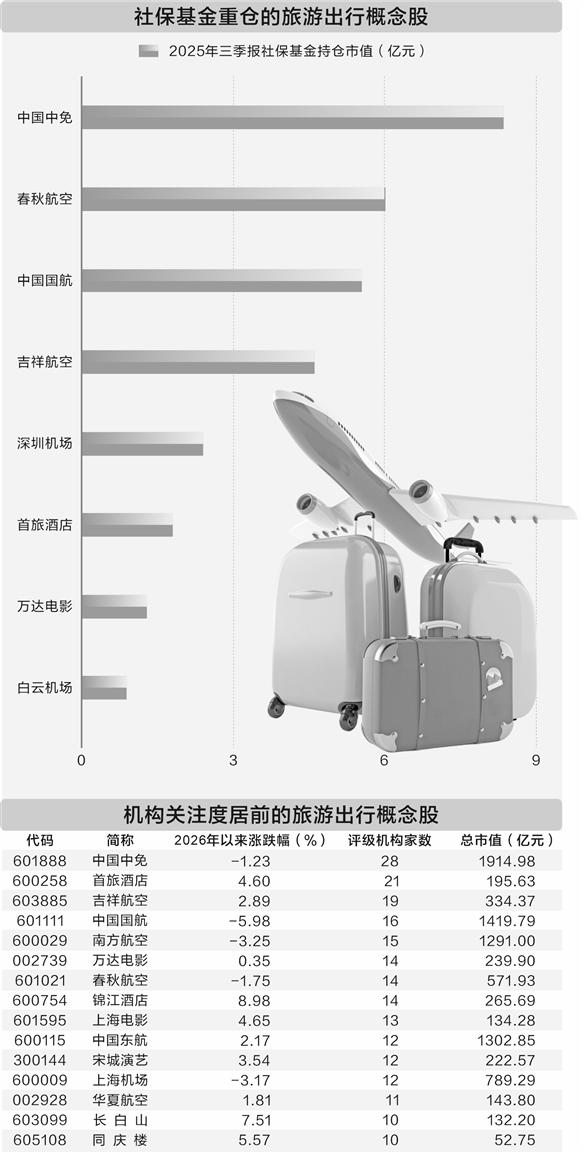
春运车票开售引爆出行热 社保基金重仓8只概念股
Zheng Quan Shi Bao· 2026-01-19 18:14
Group 1: Core Insights - The tourism and travel sector in China is experiencing significant growth, driven by increased consumer demand and favorable government policies [5][6] - The upcoming Spring Festival is expected to boost travel, with a notable increase in ticket bookings and travel service reservations [4][6] - Social security funds have heavily invested in key tourism stocks, indicating strong institutional interest in the sector [6] Group 2: Company Performance - China Duty Free Group (中国中免) has seen a cumulative stock increase of 30.91% since October 2025, supported by its expansion into city duty-free stores [6] - Spring Airlines (春秋航空) reported a 23.68% year-on-year increase in available ton-kilometers in December 2025, reflecting growth in operational capacity [7] - China National Aviation Holding (中国国航) and Spring Airlines are among the top holdings by social security funds, with market values of 5.56 billion and 6.01 billion yuan respectively [6] Group 3: Market Trends - The domestic tourism market showed strong recovery in 2025, with 4.85 trillion yuan in spending, an 11.5% increase year-on-year [5] - The "reverse Spring Festival" trend is gaining traction, with a 35% increase in ticket bookings for parents traveling to their children's work locations [4] - The Wind tourism index rose by 2.5% on January 19, 2026, indicating a positive market sentiment ahead of the Spring Festival [3]




交通运输行业周报20260119:航空关注春运预售表现,重视顺丰估值修复机会-20260119
Guolian Minsheng Securities· 2026-01-19 14:34
Investment Rating - The report maintains a "Buy" rating for key companies in the transportation sector, including SF Holding, Spring Airlines, and China Eastern Airlines, among others [2][3]. Core Insights - The report highlights the recovery of the aviation industry as flight volumes increase, with domestic flights reaching 89,086 flights from January 10 to January 16, 2026, a 2.7% increase from the previous week [29]. - SF Holding is noted for its high safety margin and low valuation, with a current PE ratio of 18X, indicating potential for valuation recovery as market conditions improve [6][24]. - The logistics company Shimon Holdings is preparing for its IPO, showcasing strong resource integration capabilities and a stable revenue growth trajectory [46][48]. Summary by Sections SF Holding - SF Holding has a substantial cash reserve, with cash accounting for 14.2% to 20.5% of its market value from 2022 to 2024, providing a strong support for its stock price [9]. - The company is expected to achieve a shareholder return rate of 3.8% in 2025 and 2026, with dividend yields projected at 2.57% and 2.88% respectively [12][15]. - The current valuation is at a ten-year low, suggesting a potential for recovery as demand in the mid-to-high-end express market improves [21][24]. Aviation Sector - The aviation industry is emerging from a low season, with flight utilization rates improving to 7.89 hours per day, which is 92.6% of the levels seen in 2019 [30]. - The upcoming Spring Festival travel season is anticipated to boost passenger numbers, with a projected 5.39 billion travelers expected on railways, marking a 5% year-on-year increase [6][29]. - The average ticket price for domestic economy class has increased by 3.5% year-on-year, indicating a recovery in pricing power [39]. Logistics Sector - Shimon Holdings is recognized for its strong resource integration and stable revenue growth, with expected revenues of 9.2 billion yuan in 2025, despite a projected decline due to client revenue drops [48][51]. - The company has established long-term partnerships with major clients, ensuring a stable business model and low replacement risk [46][47]. - Revenue from the supply chain logistics service segment is expected to contribute significantly to overall earnings, with a projected revenue of 3.4 billion yuan in the first half of 2025 [48]. Express Delivery Industry - The express delivery sector is experiencing a gradual improvement in pricing, with single ticket revenue for major companies like SF Holding and Yunda showing positive trends [59][62]. - The overall express delivery business volume has increased by 5% year-on-year, indicating robust demand despite a slight decline in revenue [59]. - The report emphasizes the importance of monitoring the performance of express delivery companies as they adapt to market conditions and pricing strategies [80].

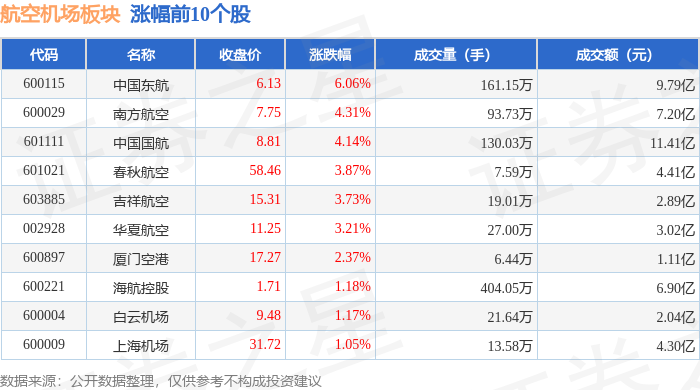
航空机场板块1月19日涨3.36%,中国东航领涨,主力资金净流入2710.67万元
Zheng Xing Xing Ye Ri Bao· 2026-01-19 08:56
Core Insights - The aviation and airport sector experienced a significant increase of 3.36% on January 19, with China Eastern Airlines leading the gains [1] - The Shanghai Composite Index closed at 4114.0, up 0.29%, while the Shenzhen Component Index closed at 14294.05, up 0.09% [1] Stock Performance - China Eastern Airlines (600115) closed at 6.13, up 6.06%, with a trading volume of 1.6115 million shares and a transaction value of 979 million [1] - Southern Airlines (600029) closed at 7.75, up 4.31%, with a trading volume of 937,300 shares and a transaction value of 720 million [1] - Air China (601111) closed at 8.81, up 4.14%, with a trading volume of 1.3003 million shares and a transaction value of 1.141 billion [1] - Spring Airlines (601021) closed at 58.46, up 3.87%, with a trading volume of 75,900 shares and a transaction value of 441 million [1] - Other notable performances include Xiamen Airport (600897) at 17.27, up 2.37%, and Shanghai Airport (600009) at 31.72, up 1.05% [1] Capital Flow - The aviation and airport sector saw a net inflow of 27.1067 million in main funds, while retail funds experienced a net inflow of 54.5283 million [2] - The sector's overall capital flow indicates a mixed sentiment, with main funds showing a net outflow in some stocks while retail investors contributed positively [2][3] Individual Stock Capital Flow - Hainan Airlines (600221) had a main fund net outflow of 56.1893 million, while retail investors showed a net outflow of 28.2785 million [3] - Shanghai Airport (600009) recorded a main fund net inflow of 41.0025 million, but retail investors had a net outflow of 50.1886 million [3] - Southern Airlines (600029) saw a main fund net inflow of 23.9450 million, with retail investors also showing a net outflow of 13.4306 million [3] - Other stocks like Xiamen Airport (600897) and Shenzhen Airport (000089) also reflected varied capital flows, indicating differing investor sentiments across the sector [3]