太平鸟

Search documents
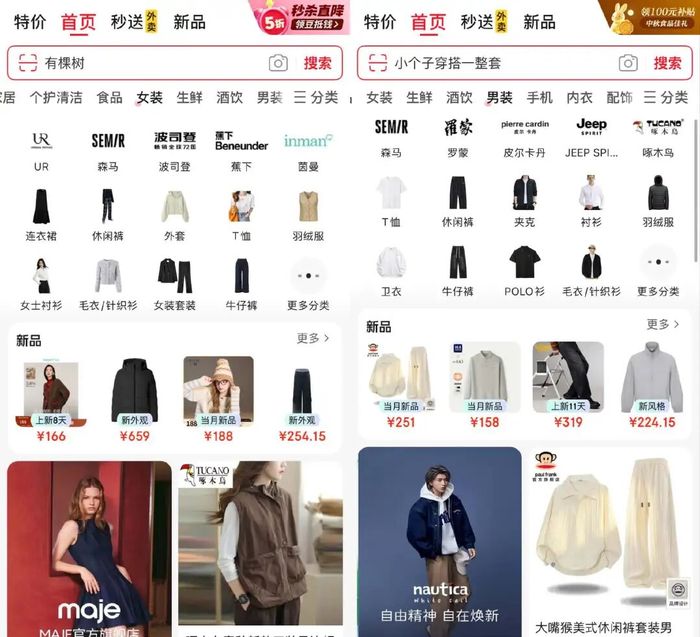
谁在京东买服饰?
Xin Lang Cai Jing· 2025-09-26 13:14
Core Insights - The article discusses the competitive landscape of the apparel segment within China's e-commerce industry, highlighting JD.com's strategic ambitions and challenges in this sector [1][12] - JD.com has evolved from a 3C-focused platform to a significant player in the fashion market, but it faces challenges in changing consumer perceptions and competing with other platforms [1][14] Consumer Behavior - A deep user of JD.com, referred to as Chen, prefers the platform for its reliable logistics and product authenticity, extending his purchasing habits from electronics to apparel [2] - In contrast, another consumer, Lin, rarely shops for clothing on JD.com, favoring platforms like Taobao for their variety and trendiness, indicating a generational divide in shopping preferences [4][5] - A younger consumer, referred to as Xiao Jia, shows a preference for offline shopping, reflecting a different approach to apparel purchasing [6] JD.com's Market Position - JD.com has established itself as the second-largest player in China's B2C apparel market by 2014, with a significant portion of new users purchasing apparel [7] - The platform's focus on quality and brand assurance attracts middle to high-income consumers, differentiating it from competitors like Taobao and Pinduoduo [8][9] Challenges Faced - JD.com struggles with a lack of "fashion gene" and brand appeal, making it less attractive for casual browsing compared to platforms that emphasize trendiness and community engagement [10][11] - The platform has faced setbacks, such as losing major clothing brands due to competitive pressures and policies from other platforms [11][12] Strategic Initiatives - JD.com is attempting to differentiate itself by introducing luxury brands and opening offline outlets, aiming to attract price-sensitive consumers [13] - The company is also implementing a "boundaryless retail" strategy to address gaps in information and service, while offering incentives for merchants to establish a presence on the platform [13][14] Future Outlook - The future success of JD.com's apparel segment hinges on its ability to infuse a sense of fashion and engagement into its platform, transforming from a mere shopping tool to a vibrant fashion space [16] - Analysts predict that JD.com may evolve into a model that integrates content, intelligent supply chains, and an open ecosystem, focusing on the entire value chain rather than just traffic competition [16]


今日共73只个股发生大宗交易,总成交32.19亿元
Di Yi Cai Jing· 2025-09-26 09:45
Group 1 - A total of 73 stocks experienced block trades in the A-share market on September 26, with a total transaction value of 3.219 billion yuan [1] - The top three stocks by transaction value were Pudong Development Bank (782 million yuan), Guangqi Technology (273 million yuan), and Zhongwei Company (244 million yuan) [1] - Among the stocks, 10 were traded at par, 7 at a premium, and 56 at a discount; Dongfang Caifu, Aerospace Hongtu, and Taiping Bird had the highest premium rates of 15.08%, 9.14%, and 7.37% respectively [1] Group 2 - The top stocks by institutional buy amounts included Ningde Times (224 million yuan), Zhongwei Company (217 million yuan), and Haiguang Information (127 million yuan) [1] - The top stocks by institutional sell amounts were Ningde Times (187 million yuan), Jinkang Electric (101 million yuan), and Jinkai New Energy (37.29 million yuan) [2] - The MACD golden cross signal has formed, indicating a positive trend for certain stocks [2]



太平鸟今日大宗交易溢价成交120万股,成交额1800万元
Xin Lang Cai Jing· 2025-09-26 09:38
Summary of Key Points Core Viewpoint - On September 26, Taiping Bird executed a block trade of 1.2 million shares, amounting to 18 million yuan, which accounted for 46.36% of the total trading volume for that day, with a transaction price of 15 yuan, representing a premium of 7.37% over the market closing price of 13.97 yuan [1][2]. Group 1 - The block trade involved 1.2 million shares of Taiping Bird, with a total transaction value of 18 million yuan [1]. - The transaction price was set at 15 yuan per share, which is higher than the market closing price [1]. - The premium of 7.37% indicates strong demand for the shares during the block trade [1].


太平鸟跌2.06%,成交额1868.42万元,主力资金净流出69.81万元
Xin Lang Zheng Quan· 2025-09-25 03:24
Core Viewpoint - The stock price of Taiping Bird has shown a slight decline this year, with a recent drop in trading, indicating potential challenges in the market [1][2]. Company Overview - Taiping Bird Fashion Co., Ltd. is located in Ningbo, Zhejiang Province, established on September 10, 2001, and listed on January 9, 2017. The company specializes in the design and sales of branded apparel [2]. - The main revenue composition includes: thick outerwear (28.66%), pants (19.34%), thin outerwear (15.28%), knitwear (10.03%), skirts (9.29%), T-shirts (8.54%), shirts (4.52%), accessories and others (3.44%), and other business income (0.87%) [2]. Financial Performance - As of June 30, 2025, Taiping Bird reported a revenue of 2.898 billion yuan, a year-on-year decrease of 7.86%, and a net profit attributable to shareholders of 77.7116 million yuan, down 54.61% year-on-year [2]. - The company has distributed a total of 2.581 billion yuan in dividends since its A-share listing, with 541 million yuan distributed over the past three years [3]. Stock Performance - The stock price of Taiping Bird has decreased by 0.99% year-to-date, with a recent increase of 2.52% over the last five trading days, but a decline of 0.49% over the last 20 days and 2.66% over the last 60 days [2]. - As of September 25, the stock was trading at 14.26 yuan per share, with a market capitalization of 6.718 billion yuan [1]. Shareholder Information - As of June 30, 2025, the number of shareholders for Taiping Bird was 11,500, a decrease of 7.48% from the previous period, with an average of 40,704 circulating shares per person, an increase of 8.08% [2][3]. - The sixth largest circulating shareholder is Hong Kong Central Clearing Limited, holding 9.274 million shares, a decrease of 1.8113 million shares from the previous period [3].
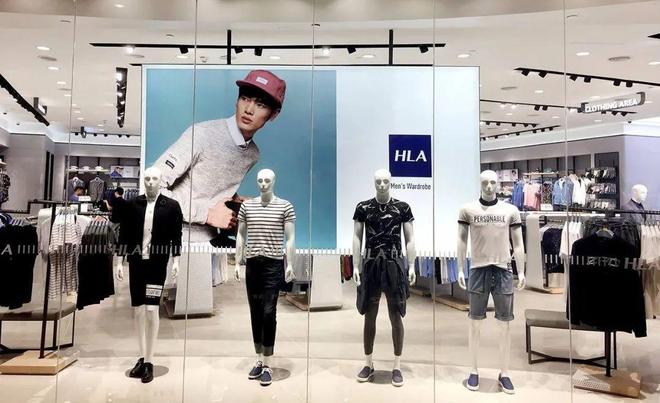
太平鸟转型阵痛:2025年上半年业绩双降、业绩承压 渠道表现与运营效率均难容乐观
Xin Lang Zheng Quan· 2025-09-24 09:51
Core Insights - Taiping Bird is undergoing a painful transformation period due to dual challenges of industry changes and internal adjustments [1][2] - The company is experiencing a decline in both revenue and net profit in the first half of 2025, with major brands showing varying degrees of decline [1] - Despite an increase in gross margin through higher product prices and strict discount control, operational efficiency and cost management remain unresolved issues [1] Strategic Positioning Challenges - Taiping Bird is attempting to shift from a "fast fashion" model to a "quality fashion" positioning, which has led to short-term pain [2] - The introduction of higher-priced new product lines aims to target the middle-class consumer group, but the brand lacks sufficient depth and a distinct aesthetic system to support its premium pricing in the high-end market [2] - The company's diversified brand layout may dilute its overall competitiveness compared to competitors focused on niche markets, resulting in a challenging "neither high nor low" positioning [2] Channel Adjustments and Efficiency Challenges - The company has been optimizing its channel structure by closing many underperforming stores while promoting a "superstore" model in key commercial areas [3] - Although these large stores provide brand exposure and sales growth, their high operational costs and initial investments pose a risk of "inefficient large stores" if single-store growth does not outpace area expansion [3] - Online sales have also declined, indicating a need for improvement in digital operations and online marketing amidst the rapid growth of content and social e-commerce [3] - The ongoing decrease in inventory turnover efficiency highlights potential optimization areas in product planning, supply chain management, and sales forecasting [3] - The transformation journey for Taiping Bird is expected to be challenging, with the effectiveness of its strategies in product innovation, channel restructuring, and digital transformation yet to be validated [3]
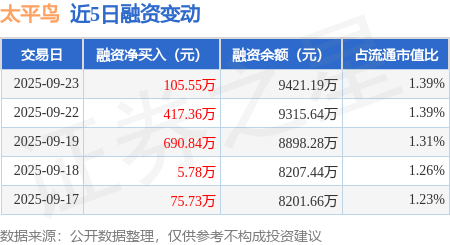
太平鸟:9月23日融资净买入105.55万元,连续3日累计净买入1213.75万元
Sou Hu Cai Jing· 2025-09-24 02:37
Summary of Key Points Core Viewpoint - The financing activities of Taiping Bird (603877) indicate a positive sentiment among investors, with a net buying trend observed over recent trading days, suggesting potential growth in stock value [1]. Financing Activities - On September 23, 2025, Taiping Bird had a financing buy of 6.4537 million yuan and a financing repayment of 5.3982 million yuan, resulting in a net financing purchase of 1.0555 million yuan. The financing balance reached 94.2119 million yuan [1]. - Over the last three trading days, the cumulative net buying amounted to 12.1375 million yuan, with 15 out of the last 20 trading days showing net financing purchases [1]. Financing and Margin Trading Data - The financing balance on September 23 was 94.7916 million yuan, reflecting an increase of 1.11% from the previous day [4]. - The financing net purchases for the last few trading days were as follows: - September 22: 4.1736 million yuan - September 19: 6.9084 million yuan - September 18: 57,800 yuan - September 17: 757,300 yuan [2]. Margin Trading Overview - On September 23, 2025, there were no shares sold short, but 1,200 shares were repaid, resulting in a net short selling of 1,200 shares, with a remaining short balance of 40,200 shares [3]. - The margin trading balance has shown a consistent upward trend, with significant increases noted in the past few trading days [4].
中企500强十年磨一剑 232家“常青树”企业持续在列
Bei Ke Cai Jing· 2025-09-23 07:49
Group 1 - The 2025 China Enterprise 500 list shows dynamic changes, with 232 companies consistently making the list, termed "evergreen trees" [1] - The entry threshold for the list has increased to 47.96 billion yuan, marking a record high, with State Grid leading at 3.95 trillion yuan in revenue [1] - JD.com has entered the top ten for the first time, indicating the rising influence of private internet companies [1] Group 2 - Xinhua Life Insurance has seen the fastest rise, with a revenue growth of 224.8%, jumping 215 places in the rankings [2] - Companies like Shandong Zhaojin Group and Hongrun Petrochemical have also achieved over 50% revenue growth, benefiting from industry recovery [2] - Significant declines were noted in infrastructure, photovoltaic, and steel industries, with companies like Gansu Public Aviation and Longi Green Energy experiencing revenue drops of 30-40% [2] Group 3 - The new entrants in the 2025 list reflect the growth of the digital economy and green industries, including companies like Zall Intelligent and NIO [3] - Local energy groups are also growing, with Sichuan Energy Development and Hainan Development Holdings making the list [3] - The new companies span various sectors, indicating opportunities arising from China's economic transformation [3] Group 4 - The industry landscape of the China Enterprise 500 is evolving towards diversification, with significant changes in rankings over the past decade [4] - Companies like Chery Holding Group and Zhuhai Huafa Group have seen substantial ranking improvements, reflecting their innovation and market expansion [4] - The average ranking increase for the top ten companies over the past decade is approximately 250 places [4] Group 5 - Companies in transportation, energy, construction, and new energy sectors have shown significant advantages in strategic layout and policy support [5] - Firms like Zhejiang Transportation Investment Group and Xuyang Holdings have achieved over 200 places in ranking increases [5] - These companies share common traits of clear strategy, innovation-driven growth, and diversified development [5]
政策利好首发经济 释放消费新动能
Zheng Quan Ri Bao Wang· 2025-09-19 12:43
Group 1 - The Ministry of Commerce and nine other departments have jointly issued policies to expand service consumption, emphasizing the development of "first-release economy" and the creation of new consumption scenarios that integrate business, travel, culture, sports, and health [1][2] - The "first-release economy" concept encompasses the overall business activities of companies launching their latest products and services for the first time, including new products, new business formats, and new models [2][3] - Local governments are actively responding to national policies by implementing supportive measures, such as financial incentives for introducing first stores and promoting new consumption models [2] Group 2 - The "first-release economy" is showing multiple trends in the consumer market, meeting the demand for novelty and high-quality living, while also promoting cross-industry collaboration and creating new growth points [3] - Several listed companies in Zhejiang Province are accelerating their layout in the first-release economy, launching new brands and stores across various sectors, including beauty, digital products, and trendy toys [4] - The first-release economy has evolved from a marketing gimmick to a national strategy, with companies needing to focus on sustainable operations to seize opportunities in the new consumption wave [4]

腾讯云副总裁李学朝:企点营销云三大升级 助力企业打造“一专多能”AI营销团队
Sou Hu Cai Jing· 2025-09-18 00:46
Core Insights - Companies are experiencing "growth anxiety" as they transition from "incremental" to "stock" growth in the new normal [1] - Tencent's marketing cloud has been upgraded to provide AI-driven solutions aimed at addressing marketing growth challenges from strategy to execution [1][5] Group 1: Product Upgrades - The marketing cloud has undergone three major upgrades to enhance efficiency and simplify operations for businesses [1] - AI capabilities have been integrated into core products such as Customer Data Platform (CDP), Marketing Automation (MA), Social Customer Relationship Management (SCRM), and Fusion Analysis (FA) [2] - New features like "smart segmentation" in CDP and "assisted canvas generation" in MA simplify complex marketing processes [2] Group 2: Customer AI and Decision-Making - The "Customer AI" marketing decision engine serves as the system's core, focusing on user-centered personalized experiences [5] - It utilizes advanced models and machine learning to provide quantifiable growth paths and continuously refines strategies based on insights [5] - The engine's "four-dimensional matching" capability optimizes combinations of users, content, products, and benefits [5] Group 3: Magic Agent and Team Empowerment - The "Magic Agent" is a comprehensive marketing intelligence system designed to empower businesses to create versatile AI marketing teams [7] - It alleviates the workload of marketing professionals, allowing them to transition from executors to strategic planners [7] - The system consists of multiple agents that automate various marketing tasks, enabling a single operator to execute complex campaigns [8] Group 4: Industry Applications and Results - Tencent's marketing solutions have been validated through successful collaborations across various industries, including food, fashion, and automotive [10] - In a project with Juewei Foods, the AI team achieved sales performance 3.1 times higher than the manual team, with content click-through rates 1.8 times greater [10] - The shift from labor-intensive to intelligent-driven marketing models provides critical pathways for businesses to find new growth in a limited market [10]

一年营收超过千亿,雅戈尔、海澜可不只卖衣服
Di Yi Cai Jing Zi Xun· 2025-09-15 13:21
Group 1: Key Insights on Companies - In the 2025 China Top 500 Enterprises list, several companies that started in the apparel industry have diversified into conglomerates, with Youngor Group ranking 162nd and reporting a revenue of 164.57 billion yuan [1] - Youngor Group's fashion business, while well-known, constitutes only a small part of its overall operations, which include fashion, commercial retail, international trade, and investment [1] - Haier Group, ranked 188th with a revenue of 145.82 billion yuan, also has a diversified business model beyond its well-known apparel segment [2][4] - Taiping Bird Group, which debuted on the list at 476th, reported a revenue of 51.28 billion yuan, marking a decline for the third consecutive year [4] Group 2: Financial Performance - Youngor Group's revenue for 2024 was 14.19 billion yuan, showing a year-on-year growth of 3.19%, but its net profit decreased by 19.41% to 2.77 billion yuan due to industry adjustments and weak consumer demand [1] - Haier Group maintained over 20 billion yuan in revenue despite a decline in both revenue and net profit [2] - Taiping Bird Group's total revenue was 6.80 billion yuan, down 12.7%, with a net profit of 260 million yuan, reflecting a 38.7% decrease [4]