建信基金

Search documents
传递信心!年内基金公司自购盘点
Sou Hu Cai Jing· 2025-12-16 23:33
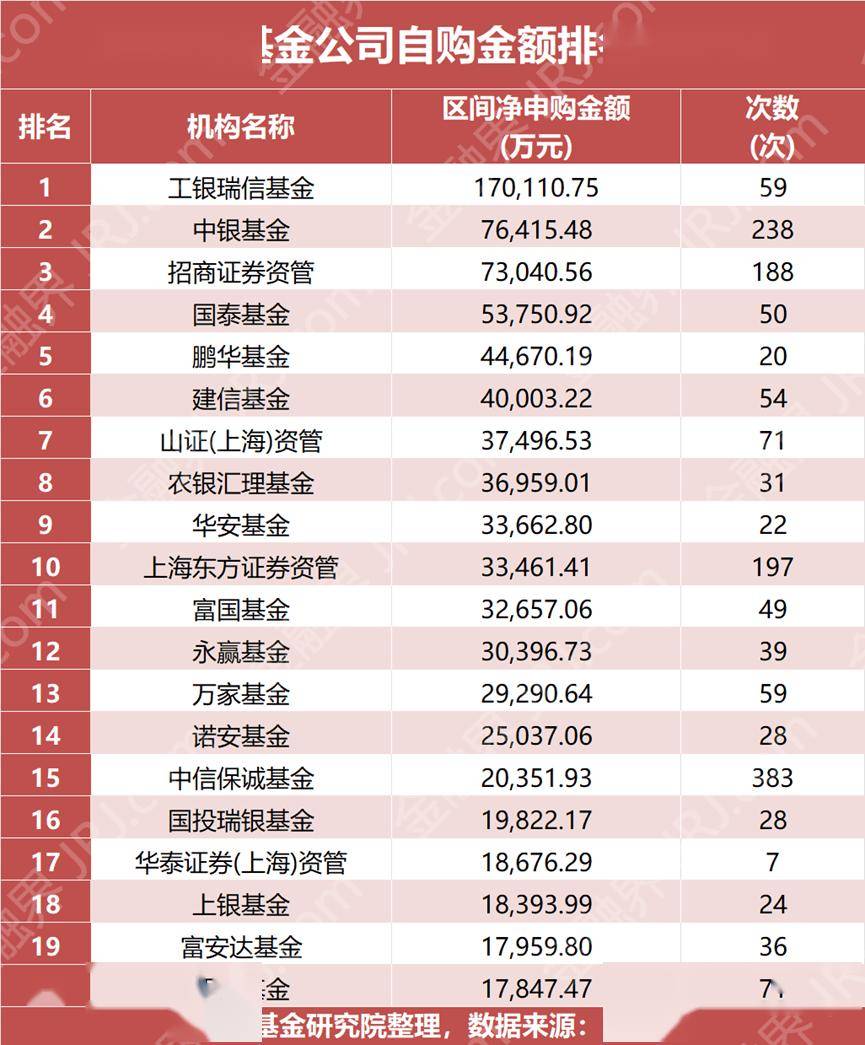
Core Viewpoint - The recent draft of the "Guidelines for Performance Assessment Management of Fund Management Companies" has introduced significant changes in the public fund industry, particularly emphasizing the requirement for executives and fund managers to invest their own money in their funds [1] Group 1: Guidelines Overview - The guidelines mandate that executives, heads of major business departments, and fund managers must allocate a certain percentage of their performance-based compensation to purchase their company's public funds, with a holding period of no less than one year [1] - Specifically, executives and department heads are required to use 30% of their total performance compensation to buy their company's public funds, with at least 60% of that amount allocated to equity funds unless the company does not offer equity funds [1] - Fund managers must invest 40% of their total performance compensation in the funds they manage [1] Group 2: Self-Purchase Statistics - As of December 15, 138 public fund institutions have made a total of 8,546 self-purchases, with a net subscription amount reaching 255.09 billion yuan, involving 1,561 fund products [1] - This represents a dramatic increase of 1,733.71% compared to the net subscription amount of 13.91 billion yuan in the same period of 2024 [1] Group 3: Major Self-Purchasing Institutions - The top self-purchasing institution is ICBC Credit Suisse Fund, with a net subscription amount exceeding 17 billion yuan and 59 self-purchases [2][4] - Following closely is Bank of China Fund with over 7 billion yuan in net subscriptions and 238 self-purchases, and China Merchants Securities Asset Management with over 7 billion yuan and 188 self-purchases [4] - Other notable institutions include Guotai Junan Fund, Penghua Fund, and CCB Fund, with net subscription amounts exceeding 5 billion yuan, 4 billion yuan, and 4 billion yuan respectively [4]

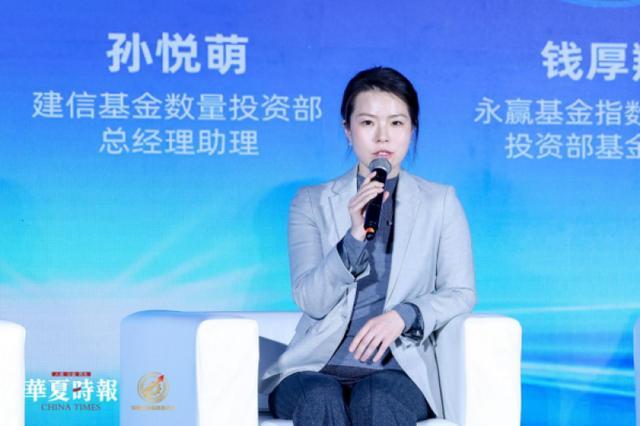
建信基金孙悦萌:以“三层框架”与“客户场景”应对结构性行情,风控需权衡赔率与胜率|2025华夏机构投资者年会
Hua Xia Shi Bao· 2025-12-16 12:03
Core Viewpoint - The article discusses the investment management philosophy and risk control methods shared by Sun Yuemeng, an assistant general manager and fund manager at CCB Fund, during the 19th Huaxia Institutional Investor Annual Conference. The focus is on a disciplined investment framework that adapts to structural market changes and emphasizes matching product delivery with client needs [2][3]. Group 1: Investment Management Framework - The investment approach is divided into three layers: macro asset allocation adjustments, adjustments at the terminal industry level, and fund selection adjustments [3]. - The team emphasizes a disciplined adjustment strategy, particularly in response to structural market changes expected by 2025, with tactical adjustments made on a monthly basis [3]. - Sun Yuemeng provides an example of maintaining a balanced style while making marginal adjustments based on market conditions, aiming for a higher cost-performance ratio and better holding experience for clients [3][4]. Group 2: Client-Centric Product Delivery - The team adheres to two main principles: first, product delivery must match the "scenario-based needs" of clients, such as prioritizing holding experience in retirement products [4]. - The second principle involves a "layered and systematic quantitative framework" that integrates various factors like asset allocation, industry style, duration, and fund selection into a cohesive delivery system [4]. Group 3: Risk Control Strategies - In terms of risk control amid market volatility, the team focuses on balancing odds and win rates, particularly in public fund products where tools are limited [5]. - The team utilizes a cost-performance indicator commonly used in fixed income plus investments, which is more aligned with an "odds model" rather than a "win rate model" [5]. - Strategic decisions are informed by a framework that anchors on cost-performance while tactical adjustments are made based on macro factors to mitigate unexpected losses [5]. Group 4: Future Market Outlook - Looking ahead, Sun Yuemeng suggests that market styles may become more balanced, advocating for macro asset allocation as an anchor and balanced styles as a guiding principle in wealth management [5].
“反内卷”重塑PPI,AI需求重构周期,顶尖基金经理勾勒2026年投资新蓝图|2025华夏机构投资者年会
Hua Xia Shi Bao· 2025-12-15 09:39
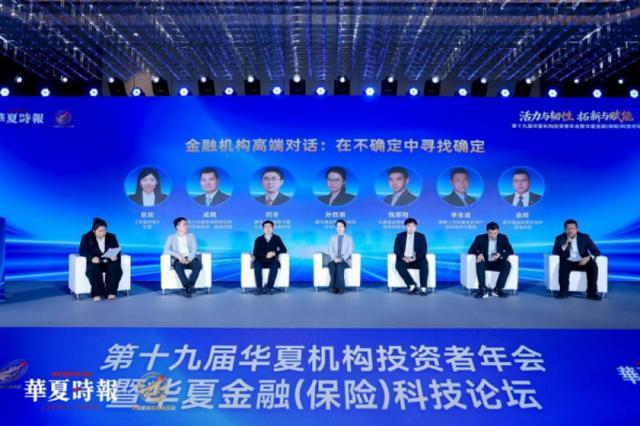
Core Insights - The forum focused on the theme "Finding Certainty in Uncertainty," addressing the contradictions between macro narratives and micro data in the current market environment [2] - Six top fund managers shared insights on navigating market complexities and emphasized the importance of risk control and investor experience in achieving investment success [3] Group 1: Market Trends and Strategies - Fund managers discussed the unexpected strength of cyclical sectors, particularly in metals, which have seen significant price increases due to supply constraints and new demand from emerging industries like AI [5][6] - The cyclical sector's performance has been driven by factors such as high production costs and geopolitical risks, leading to a potential long-term price elevation for commodities [5] - The investment framework needs to evolve continuously, with a focus on AI capital expenditure and the recovery of traditional manufacturing post-Fed rate cuts [6] Group 2: Investment Philosophy and Risk Management - Fund managers highlighted the necessity of a disciplined approach to asset allocation, emphasizing the importance of aligning investment strategies with client needs and market conditions [4][10] - The concept of balancing risk and return was discussed, with a focus on constructing low-correlation strategy portfolios to mitigate risks during market volatility [5][10] - The importance of understanding the underlying logic of different strategies was emphasized to ensure effective risk diversification, especially during extreme market conditions [10] Group 3: Future Outlook and Recommendations - Looking ahead to 2026, fund managers suggested that high-growth sectors may see a resurgence as valuations stabilize and earnings materialize [6][11] - The focus should be on sectors with improving earnings, particularly in AI and manufacturing, as well as on underappreciated industries that may offer investment value [11] - The need for a balanced asset allocation strategy was reiterated, with recommendations to consider both cyclical recovery and structural growth opportunities in the market [11]
公募REITs周报(第46期):指数震荡下行,产权类表现更优-20251215
Guoxin Securities· 2025-12-15 02:21
Report Industry Investment Rating - Not provided in the given content Core Viewpoints - This week, the China Securities REITs Index fell 0.5% for the week, with the average weekly price changes of equity REITs and franchise REITs being +0.4% and -0.6% respectively. REITs underperformed major stock and bond indices. As of December 12, 2025, the dividend yield of equity REITs was 35BP lower than the average dividend yield of CSI Dividend stocks, and the spread between the average internal rate of return of franchise REITs and the 10-year Treasury yield was 295BP [1]. - The year-to-date price change of the China Securities REITs Index was 1.0%. In the past year, the return rate of the China Securities REITs Index was 2.0%, with a volatility of 7.4%. The total market value of REITs on December 12 was 217.6 billion yuan, a decrease of 200 million yuan from the previous week, and the average daily turnover rate for the week was 0.37%, unchanged from the previous week [2][9]. Summary by Relevant Catalogs Secondary Market Trends - Main Index Weekly Price Changes: CSI Convertible Bonds > CSI All-Bond Index > CSI 300 > China Securities REITs. As of December 12, 2025, the closing price of the China Securities REITs (Closing) Index was 797.54 points, with a weekly price change of -0.5%, underperforming the CSI Convertible Bonds Index (+0.2%), the CSI All-Bond Index (+0.18%), and the CSI 300 Index (-0.1%) [2][6]. - In terms of different project attributes, the average weekly price changes of equity REITs and franchise REITs were +0.4% and -0.6% respectively. In terms of different project types, most REIT sectors closed up, with municipal facilities, new infrastructure, and water conservancy facilities leading the gains. The top three REITs in terms of weekly price increase were Huatai Nanjing Jianye REIT (+7.33%), CICC Chongqing Liangjiang REIT (+5.07%), and GF Chengdu Gaotou Industrial Park REIT (+5.06%) [3][14][18]. - New infrastructure REITs had the highest trading activity, with an average daily turnover rate of 0.9%. Transportation infrastructure REITs had the highest trading volume this week, accounting for 25.8% of the total REIT trading volume. The top three REITs in terms of net inflow of main funds were Southern Runze Technology Data Center REIT (11.84 million yuan), China Merchants Shekou Rental Housing REIT (5.95 million yuan), and Hongtu Innovation Yantian Port REIT (5.66 million yuan) [3][20][21]. Primary Market Issuance - As of December 12, 2025, there were 3 REIT products in the exchange's "accepted" stage, 2 in the "declared" stage, 2 in the "inquired" stage, 4 in the "feedback" stage, 7 products that had passed and were waiting to be listed, and 13 first-issue products that had passed and were listed [23]. Valuation Tracking - REITs have both bond and equity characteristics. As of December 12, the average annualized cash distribution rate of public REITs was 6.13%. Different project types had different relative net value discount/premium rates, P/FFO, IRR, and annualized dividend rates [25][26]. - As of December 12, 2025, the dividend yield of equity REITs was 35BP lower than the average dividend yield of CSI Dividend stocks, and the spread between the average internal rate of return of franchise REITs and the 10-year Treasury yield was 295BP [1][28]. Industry News - Huaxia Zhonghe Clean Energy REIT was approved for registration on December 8, 2025. It is the first public REIT product under China National Nuclear Corporation, with the underlying asset being the Bobona Hydropower Station in Hotan, Xinjiang. Boshi Shandong TieTou Road & Bridge REIT has been officially declared to the Shanghai Stock Exchange, with the underlying asset being the Changqing Yellow River Bridge [4][34].
活力与韧性、拓新与赋能,回答时代命题——第十九届华夏机构投资者年会暨华夏金融(保险)科技论坛召开
Hua Xia Shi Bao· 2025-12-13 06:17
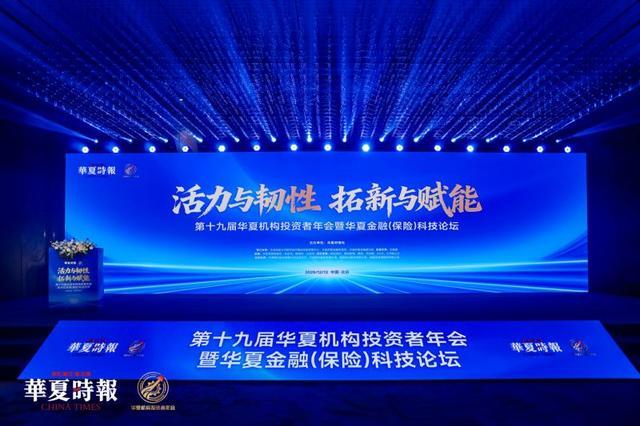
Group 1 - The forum held in Beijing focused on the theme of "Vitality and Resilience, Innovation and Empowerment," aiming to address contemporary challenges and explore future pathways for development [2][5] - The Chinese economy demonstrated resilience with a GDP growth of 5.2% year-on-year in the first three quarters, amounting to an economic increment of 39,679 billion [3][5] - The asset management industry in China is entering a golden development period, with a combined entrusted management scale of approximately 70 trillion, serving as a stabilizing force for the capital market [8][29] Group 2 - The banking sector is urged to balance development and safety, enhancing risk prevention capabilities while integrating deeply into the high-quality economic development framework [7][29] - The financial industry is increasingly focusing on technology to support innovation and the development of technology enterprises, marking a significant leap in financial technology [29][32] - The insurance industry is facing challenges due to outdated operational models, yet it remains a sunrise industry with significant potential for growth, particularly in serving low-income households [24][29] Group 3 - The transition of China's economy from high-speed to medium-speed growth necessitates a shift in growth drivers from investment and exports to innovation and consumption [10][12] - The capital market is encouraged to support new productive forces through a more inclusive venture capital market and a well-established legal environment [14][29] - The importance of long-term value creation in the face of uncertainty is emphasized, with a focus on managing market volatility and balancing returns [34][37]
12月11日86只基金净值增长超3%
Zheng Quan Shi Bao Wang· 2025-12-12 02:45
Group 1 - The core viewpoint of the article highlights the performance of stock and mixed funds, with only 6.09% achieving positive returns on December 11, and a significant number of funds experiencing declines [1][2] - The Shanghai Composite Index fell by 0.70% to close at 3873.32 points, while the Shenzhen Component Index and the ChiNext Index dropped by 1.27% and 1.41% respectively [1] - Among the funds, 86 achieved returns exceeding 3%, with the top performer being the Jiashi North Index 50 Component A, which had a net value growth rate of 3.70% [1][2] Group 2 - The majority of funds with a net value growth rate above 3% belong to the index stock type, with 66 funds categorized as such, while 18 are equity-oriented and 2 are flexibly allocated [2] - The largest decline in net value was observed in the Manulife Performance Mixed C fund, which fell by 3.78%, followed closely by other funds with similar declines [2][4] - The net value growth rate average for stock and mixed funds on December 11 was -0.85%, indicating a challenging market environment for these investment vehicles [1][2] Group 3 - The article provides a detailed ranking of funds based on their net value growth rates and declines, showcasing the performance of various funds and their respective management companies [2][4] - The top funds by net value growth rate include Jiashi North Index 50 Component A and C, and Jianxin North Index 50 Component Initiation A and C, all of which are index stock types [2][3] - Conversely, the funds with the largest net value declines are primarily from the flexible allocation and equity-oriented categories, indicating a broader trend of underperformance in certain fund types [4][5]
市场波动下,投资如何从容“智远”?
中国基金报· 2025-12-12 00:08
步入12月,2025年投资进入收官阶段。回顾这一年,A股从年初的3200点一路攀升至4000点,其中不乏震荡调整。 (数据来源:WIND,截至2025年11月20日。) 市场持续波动下,投资该如何布局?多元资产配置或许是个不错的答题思路。 多元资产配置通过搭配投资股票、债券、黄金及其他资产,利用不同资产之间的低相关性,有助于降低投资组合的整 体波动性,改善投资体验。 以中证多资产风险平价指数为例,该指数是由A股、债券、黄金三类资产构成的多资产指数。近10年中证多资产风险 平价指数累计上涨58.11%,对应的年化波动率、最大回撤分别为1.93%、-3.79%,对比同期沪深300指数、中证 全债指数以及南华黄金指数,呈现更优的风险收益比。 多元资产配置:应对不确定性的"从容之道" 多元资产配置的核心在于"不把鸡蛋放在同一个篮子里",在当前不确定性加大的市场环境下,其含金量正不断凸显。 适应多变市场环境,捕捉多元机会 复盘历史数据,不同资产在不同周期中表现各异,存在一定轮动现象,没有任何一类资产能够持续走强,比如2017 年的港股、2020年的A股、2021年的美股,虽当年领涨,但次年均出现不同程度的下跌。 而多元 ...

12/11财经夜宵:得知基金净值排名及选基策略,赶紧告知大家
Sou Hu Cai Jing· 2025-12-11 15:49
Group 1 - The article provides an objective ranking of fund net asset values, highlighting the top-performing and bottom-performing funds without subjective bias [1] - The top 10 funds by net value growth include: 1. Jiashi Beizheng 50 Component Index A (1.3917, +3.70%) 2. Jiashi Beizheng 50 Component Index C (1.3813, +3.69%) 3. Jianxin Beizheng 50 Component Index Initiation A (0.9929, +3.66%) 4. Jianxin Beizheng 50 Component Index Initiation C (0.9915, +3.66%) 5. Jiashi Beijiao Selected Two-Year Mixed C (0.9686, +3.65%) 6. Jiashi Beijiao Selected Two-Year Mixed A (0.9924, +3.64%) 7. Huaxia Beizheng 50 Component Index C (1.3595, +3.64%) 8. Guotai Beizheng 50 Component Index Initiation A (1.2007, +3.64%) 9. Guotai Beizheng 50 Component Index Initiation C (1.1982, +3.64%) 10. Huaxia Beizheng 50 Component Index A (1.3714, +3.63%) [2] - The bottom 10 funds by net value growth include: 1. Manulife Performance Mixed C (2.4551, -3.78%) 2. Manulife Performance Mixed A (2.4894, -3.78%) 3. Xin'ao Performance Driven Mixed C (1.7228, -3.77%) 4. Manulife Growth Mixed (4.0023, -3.77%) 5. Xin'ao Performance Driven Mixed A (1.7575, -3.77%) 6. Debang Xinxing Value C (3.5433, -3.66%) 7. Debang Xinxing Value A (3.6867, -3.66%) 8. Manulife Revival Mixed A (2.5580, -3.58%) 9. Manulife Revival Mixed C (2.5360, -3.57%) 10. Anxin Innovation Pioneer Mixed Initiation A (1.1657, -3.56%) [3] Group 2 - The Shanghai Composite Index opened high but closed lower, with a trading volume of 1.88 trillion, and the number of rising stocks to falling stocks was 1,033 to 4,378 [5] - The leading sectors showed no significant gains, while the new stock concept rose over 2% [5] - The sectors that experienced the largest declines included comprehensive and communication equipment, both dropping over 3% [6] - Jiashi Beizheng 50 Component Index A showed significant net value growth, outperforming the market [6]
天府证券ETF日报-20251211
天府证券· 2025-12-11 09:21
Market Overview - On December 11, 2025, the Shanghai Composite Index fell 0.70% to close at 3873.32 points, the Shenzhen Component Index fell 1.27% to close at 13147.39 points, and the ChiNext Index fell 1.41% to close at 3163.67 points. The trading volume of A-shares in the two markets was 1885.4 billion yuan. The top-performing industry was banking with a 0.17% increase, while the bottom-performing industries were comprehensive (-4.31%), communication (-3.14%), and real estate (-3.06%) [2][6]. Stock ETF - The top-traded stock ETFs on this day were Huatai-PineBridge CSI A500 ETF, which fell 0.89% with a discount rate of -0.77%; ChinaAMC CSI A500 ETF, which fell 0.69% with a discount rate of -0.69%; and Southern CSI A500 ETF, which fell 0.66% with a discount rate of -0.66% [3][7]. Bond ETF - The top-traded bond ETFs were Haitong CSI Short-term Financing Bond ETF, which rose 0.00% with a discount rate of -0.01%; E Fund CSI AAA Science and Technology Innovation Corporate Bond ETF, which rose 0.05% with a discount rate of -0.21%; and ChinaAMC Shanghai Stock Exchange Benchmark Market-making Treasury Bond ETF, which rose 0.15% with a discount rate of 0.14% [4][9]. Gold ETF - Gold AU9999 rose 0.16% and Shanghai Gold rose 0.15%. The top-traded gold ETFs were HuaAn Gold ETF, which rose 0.16% with a discount rate of 0.22%; E Fund Gold ETF, which rose 0.20% with a discount rate of 0.22%; and Bosera Gold ETF, which rose 0.19% with a discount rate of 0.21% [12]. Commodity Futures ETF - Dacheng Nonferrous Metals Futures ETF had a 0.00% change with a discount rate of 0.44%; ChinaAMC Feed Soybean Meal Futures ETF fell 0.36% with a discount rate of 2.33%; and CCB YiSheng Zhengzhou Commodity Exchange Energy and Chemical Futures ETF fell 0.08% with a discount rate of -0.07% [13]. Cross - border ETF - The previous day, the Dow Jones Industrial Average rose 1.05%, the Nasdaq rose 0.33%, the S&P 500 rose 0.67%, and the German DAX fell 0.13%. On this day, the Hang Seng Index fell 0.04% and the Hang Seng China Enterprises Index fell 0.23%. The top-traded cross - border ETFs were E Fund CSI Hong Kong Securities Investment Theme ETF, which fell 1.18% with a discount rate of -1.51%; GF CSI Hong Kong Innovative Drugs ETF, which fell 0.46% with a discount rate of -0.19%; and Huatai - PineBridge Hang Seng Technology ETF, which fell 0.82% with a discount rate of -0.86% [16]. Money ETF - The top-traded money ETFs were YinHua RiLi ETF, HuaBao TianYi ETF, and Money ETF [18].
【投资】小盘成长+量化策略 这只基金太酷啦
中国建设银行· 2025-12-11 06:22
Core Viewpoint - The article emphasizes the performance and investment strategy of the Jianxin Flexible Allocation Mixed Fund, highlighting its ability to adapt to market changes and achieve significant returns compared to benchmarks [3][8]. Investment Strategy - Jianxin Flexible Allocation Mixed Fund employs an active quantitative strategy focused on index enhancement, utilizing a proprietary multi-factor model to identify risks, select quality stocks, and manage investment risks [3][4]. - The fund primarily invests in small-cap growth stocks across high-growth sectors such as pharmaceuticals, machinery, and computers, which have shown superior performance this year [6]. Performance Metrics - The fund's performance in the past year has been impressive, with returns of 64.47% and 32.97% over the last six months, significantly outperforming its benchmark by 26.01% and 12.24% respectively [8][12]. - The Jianxin Flexible Allocation Mixed Fund ranks in the top 10% of its peers over the past year, two years, and three years, indicating strong relative performance [12]. Market Context - The small-cap growth style has been favored this year, with the CSI 2000 Index and CSI 1000 Index rising by 33.78% and 25.66% respectively, supported by improved market sentiment and ongoing liquidity support from the central bank [6][7].