
瑞幸咖啡

Search documents
China’s big food chains retreat from deep discounts – report
Yahoo Finance· 2026-02-04 10:19
Group 1 - Leading restaurant and beverage operators in China are increasing prices and scaling back subsidies on food delivery platforms, indicating an end to aggressive discounts and price wars [1][4] - Yum China Holdings-operated KFC raised its delivery prices by an average of 0.8 yuan ($0.12) last month [1] - Coffee chain Cotti has ended its "9.9 yuan a cup" promotion, with most delivery drinks now priced from 13.99 yuan and above [2] Group 2 - China's consumer market has experienced intense price competition as businesses lowered prices to attract cautious spenders in a weaker economic environment [3] - The subsidy campaigns among food delivery platforms began in April 2025, leading to unsustainable price levels, with some coffees sold for 14 cents and meals for 50 cents [3] - The recent price increases and reduction in incentives signal a shift away from the long-standing price battles affecting restaurants, teahouses, and cafés [4]
挪瓦咖啡完成数亿元融资:轻资产黑马重塑咖啡战争逻辑
Xin Lang Cai Jing· 2026-02-04 06:48
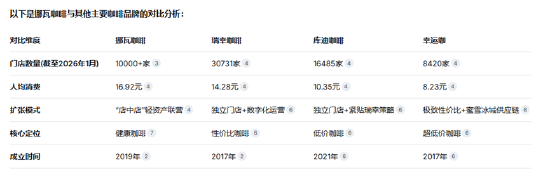
Group 1 - The core point of the article is that Nova Coffee has completed a significant C-round financing of several hundred million yuan, attracting multiple prominent investment institutions, which is seen as a major boost for the Chinese restaurant industry during a cautious investment period [1][7]. Group 2 - Nova Coffee was founded in June 2019 in Shanghai and initially focused on the takeout market, leveraging digital operations to expand consumer reach. By the end of 2024, it had over 1,200 stores, but experienced explosive growth in 2025, surpassing 10,000 stores by the end of the year [2][8]. - The company adopted a "store-in-store" model, significantly reducing fixed costs and allowing for rapid scaling with minimal space requirements. This model involves embedding coffee counters in convenience stores, which helps lower initial investment costs [3][9]. - Nova Coffee's product positioning focuses on health-oriented coffee options, avoiding mainstream price wars. The average price per cup is set at 15 yuan, with a price range of 9.9 to 15 yuan, strategically positioned between competitors like Luckin Coffee and Starbucks [3][9]. Group 3 - The Chinese coffee market reached a scale of 313.3 billion yuan in 2024, with an expected growth to 369.3 billion yuan in 2025, indicating a substantial market capacity for multiple brands [5][11]. - Supply chain management is becoming a core competitive advantage for coffee brands. Nova Coffee is establishing its own coffee production and raw material supply system, with a roasting factory set to begin operations in 2025, enhancing product quality by over 30% and reducing costs [5][11]. - The C-round financing has attracted a diverse group of investment institutions, providing Nova Coffee with differentiated industrial empowerment in areas such as supply chain, channel operations, and international expansion [6][11]. Group 4 - The coffee market in China is transitioning from a phase of rapid expansion to one focused on refined operations and profitability, with a shift from quantity to quality competition expected by 2028 [12]. - The founder of Nova Coffee emphasized that competition should focus on brand philosophy and differentiation rather than just pricing, indicating a strategic shift in the company's approach following the recent financing [12].

拿下餐饮年度最大融资,门店超过1万家,咖啡界迎来新变局
Sou Hu Cai Jing· 2026-02-04 06:37
来源|深氪新消费 郑栾 1月底,餐饮圈又有大新闻。 挪瓦咖啡完成数亿元的C轮融资,由君联资本、昇望基金、华映资本、挑战者创投、源星资本、金沙江 创投等多家明星投资机构集体投资。据悉,这是过去一年中国餐饮业最大规模的一笔融资。 2024年底,挪瓦咖啡仅有1200多家门店,到2025年底,挪瓦的全球门店总数已经超过10000家,其中开 店最密集的一个月,单月开店1800家。 这样的发展速度,恐怕也是挪瓦被资本集体看好的原因。 咖啡已经成为一二线城市年轻人的"每日饮品",在瑞幸、库迪的开拓下,三四线城市乃至县城也形成了 稳定的用户群体。巨大的市场体量和可观的市场潜力,不断吸引新品牌入局。 挪瓦有什么不一样,为什么它能从这条赛道脱颖而出? 挪瓦咖啡创始人郭星君2013年毕业于华中科技大学。曾在辉瑞制药和三星电子等跨国公司任职。2014年 加入饿了么,从运营经理做到新零售部门COO。 在饿了么工作期间,以及跟美团交流时,郭星君发现咖啡在外卖领域成长很快,当时平台并没有过度扶 持这个品类,甚至咖啡都没有独立的频道,但它的生意每年都翻倍。 2019年,在饿了么被阿里收购一年后,郭星君离开饿了么开始创业。由于四位创始人此前都 ...

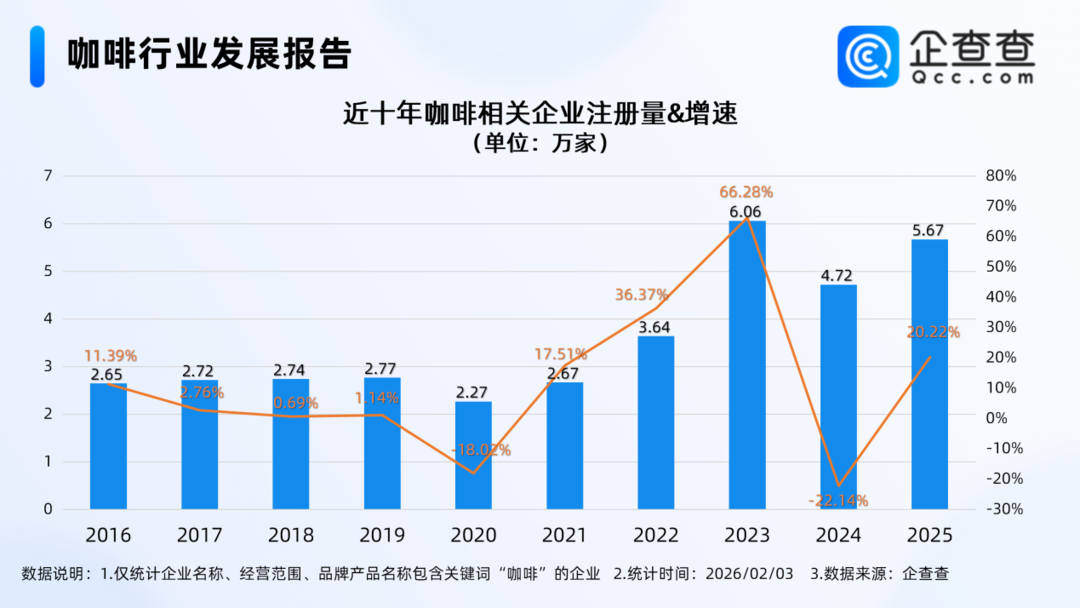
9块9咖啡价格战熄火?2025年咖啡相关企业注册量同比增长20.22%|封面有数
Xin Lang Cai Jing· 2026-02-04 04:02
Core Insights - Kudi announced the end of its 9.9 yuan all-you-can-drink promotion starting February 1, marking a shift in strategy after nearly two years of low-price competition in the Chinese coffee market [1] - Analysts suggest that brands will now focus on refined operations, user retention, and increasing repurchase rates, prioritizing long-term profitability over mere scale [1] Industry Overview - As of February 3, there are 263,800 coffee-related enterprises in China, with a consistent growth trend in registrations over the past decade [3] - It is projected that 56,700 coffee-related enterprises will be registered in 2025, representing a year-on-year growth of 20.22% [3] - In the current year, 4,100 coffee-related enterprises have already been registered [3] Company Formation Trends - The majority of existing coffee-related enterprises were established in the last three years, with those aged 1-3 years making up 31.40% of the total [5] - Enterprises established within the last year account for 20.89% of the total [5] Regional Distribution - Coffee-related enterprises are predominantly located in the East China region, accounting for 29.94% of the total [7] - The Southwest and South China regions follow, with 22.53% and 20.81% of enterprises, respectively [7] - Other regions have less than 10% representation in coffee-related enterprises [7]

2026年第5周:食品饮料行业周度市场观察
艾瑞咨询· 2026-02-04 03:25
Group 1: Canned Food Industry - The State Administration for Market Regulation has released three draft national standards for canned food to enhance industry standards and applicability [3] - The canned food industry in China is diverse but lacks innovation, particularly in attracting younger consumers [3][4] - Canned food prices are generally affordable, benefiting from economies of scale and technological advancements, with the industry upgrading through self-heating products and high-end categories [3][4] Group 2: New Beverage Trends - The sugar water shop model has gained popularity among franchisees, with brands like Mai Ji Milk rapidly expanding, but faces challenges such as high costs and low-frequency consumption [5] - The market for traditional Chinese health drinks is booming, with products like red bean and barley water seeing increased sales, driven by young consumers' health consciousness [6] - The beverage market is experiencing a shift towards health-oriented products, with low-sugar and functional drinks becoming mainstream, while traditional brands face declining sales [7] Group 3: Functional and Innovative Products - Vitamin drinks are becoming essential for young consumers, especially during flu seasons, with brands like Nongfu Spring seeing significant sales growth [9] - The introduction of banana-flavored drinks by major brands reflects a trend towards health-conscious and innovative beverage offerings [10] - The global nutrition and health industry is witnessing a peak in raw material innovation, with a focus on standardized and stable ingredients [11] Group 4: Market Dynamics and Brand Strategies - The "medicinal food" trend is emerging, with a market size projected to reach 370 billion yuan, driven by policy support and technological advancements [12] - The rise of Chinese-style health drinks is creating a competitive landscape, with brands needing to address issues of standardization and supply chain integration [14] - The dairy industry is shifting focus from consumer markets to B2B opportunities, driven by the growth of new consumption formats like tea and coffee [15] Group 5: Brand Developments and Challenges - The beverage brand COMMUNE is preparing for an IPO, aiming to expand its presence despite facing challenges in same-store sales and rising costs [24] - The acquisition of the domestic soda brand Dayao by KKR marks a shift towards capitalizing on efficiency over emotional branding [25] - Dongpeng's coffee brand has rapidly gained market share, positioning itself among the top three in the ready-to-drink coffee market through strategic pricing and targeted marketing [26] Group 6: New Market Entrants and Innovations - The launch of Baoshifu's first bread store in Wuhan indicates its entry into the competitive bakery market, focusing on fresh and affordable products [27] - The Mexican baking group Bimbo is increasing investment in the Chinese market, leveraging local strategies and brand acquisitions to enhance market presence [28] - The recent leadership change at China Resources Beverage aims to optimize costs and drive new business growth amid evolving consumer trends [29]

打了三年咖啡价格战终谢幕!库迪正式叫停“全场9.9元”【附咖啡行业市场分析】
Qian Zhan Wang· 2026-02-04 03:14
Core Viewpoint - Kudi Coffee is ending its "all items at 9.9 yuan" promotion, which has sparked significant discussion on social media, indicating a shift in its pricing strategy and the broader coffee market dynamics [2][9]. Group 1: Pricing Strategy and Market Impact - Kudi Coffee initiated a price war by offering coffee at 9.9 yuan, which was later reduced to 8.8 yuan, leading to rapid market expansion with over 18,000 stores globally within two years [2]. - The price war prompted competitors like Luckin Coffee to adopt similar pricing strategies, resulting in a 30% reduction in beverage prices across the industry, affecting brands like Starbucks and CoCo [2][3]. - The initial low-price strategy aimed to capture market share and reshape consumer perceptions of coffee from a luxury item to a daily beverage, successfully attracting price-sensitive customers [3]. Group 2: Competitive Landscape and Consumer Behavior - The price competition has significantly impacted Starbucks in China, leading to consecutive quarters of declining same-store sales as consumer expectations shifted regarding coffee pricing [3][4]. - Younger consumers, particularly from the 90s and Z generations, prioritize cost-effectiveness and convenience, favoring brands like Kudi and Luckin that utilize digital platforms for ordering and delivery [4]. - The generational shift in consumer preferences poses a challenge for Starbucks, which has traditionally relied on its premium brand image and social space attributes [4]. Group 3: Future Market Trends - Kudi Coffee's decision to end the 9.9 yuan promotion reflects a strategic pivot towards focusing on quality, service, and brand strength rather than solely competing on price [9]. - The coffee market is expected to transition from price competition to a focus on overall brand value and customer experience, as evidenced by the changing dynamics in consumer preferences and market strategies [9]. - The rapid expansion of domestic coffee brands like Kudi and Luckin, established after 2015, contrasts with older foreign brands, indicating a significant shift in market dynamics and consumer engagement [5].

9块9咖啡价格战熄火,2025年咖啡相关企业注册量同比增长20.22%
Qi Cha Cha· 2026-02-04 03:10
Core Insights - The price war initiated by Kudi's 9.9 yuan all-you-can-drink promotion has ended, allowing Chinese coffee brands to focus on refined operations and user retention rather than just scale [1] Group 1: Current Market Landscape - As of February 3, there are 263,800 existing coffee-related enterprises in China, with a projected registration of 56,700 new coffee-related companies in 2025, representing a year-on-year growth of 20.22% [2] - In the current year, 4,100 coffee-related enterprises have already been registered [2] Group 2: Company Establishment Trends - Most coffee-related enterprises have been established in the last three years, with those operating for 1-3 years making up 31.40% of the total [3] - Additionally, 20.89% of coffee-related enterprises have been established within the past year [3] Group 3: Regional Distribution - Coffee-related enterprises are predominantly located in the East China region, accounting for 29.94% of the total [4] - The Southwest and South China regions follow, with 22.53% and 20.81% of coffee-related enterprises, respectively [4]
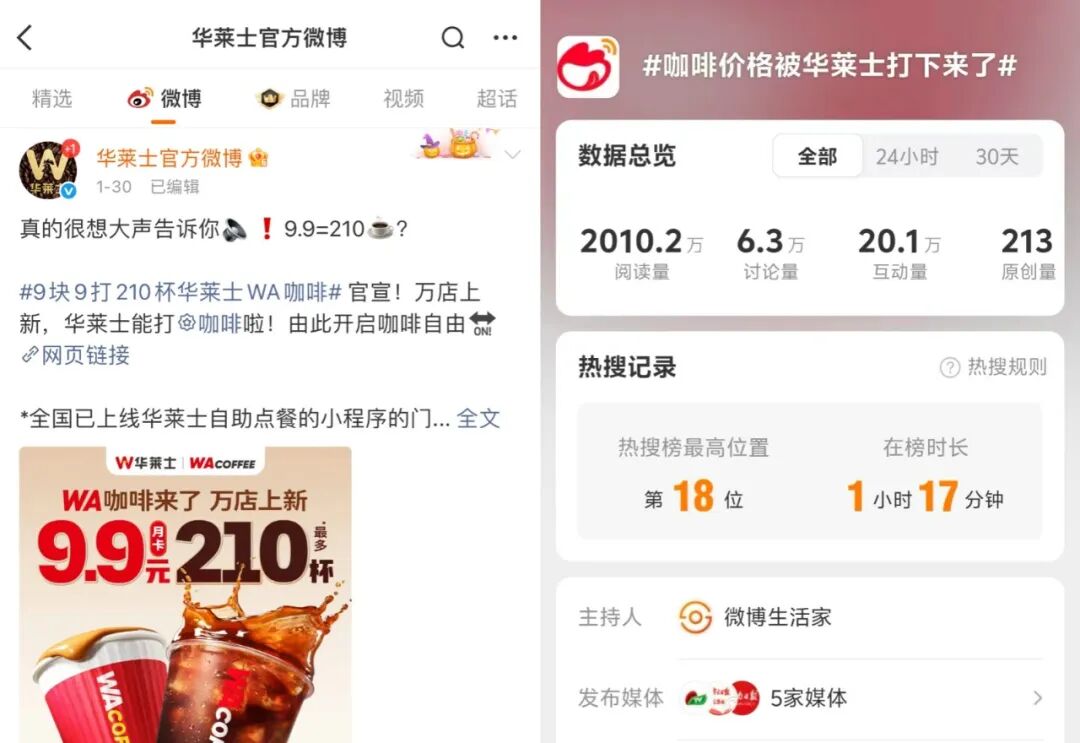
9.9元210杯,万店已上新,又一品牌“自杀式卖咖啡”
3 6 Ke· 2026-02-04 02:28
Core Viewpoint - Wallace's aggressive pricing strategy of offering coffee at 9.9 yuan for 210 cups has created significant buzz in the beverage industry, raising questions about its implications for the market and competitors [2][23]. Group 1: Pricing Strategy - Wallace is selling coffee at an unprecedented low price, with a monthly subscription model allowing customers to drink 210 cups for just 9.9 yuan, which is cheaper than bottled water [2][4]. - The promotional campaign has gained massive attention, with over 2.2 billion views on social media, indicating strong consumer interest [2][4]. Group 2: Product Offering - Currently, Wallace offers only one type of coffee, an American-style coffee, which can be customized with milk, but the overall product range is limited [6][8]. - The coffee is made using automatic machines operated by staff, rather than trained baristas, which may affect the quality perception [6][8]. Group 3: Operational Insights - The cost of coffee beans is approximately 2.34 yuan per cup, sourced from a premium brand, indicating a commitment to quality despite low pricing [13][15]. - Wallace has invested over 100 million yuan in coffee-making equipment, suggesting a significant commitment to the coffee segment [16][18]. Group 4: Marketing and Customer Engagement - The coffee offering serves as a traffic driver, with additional promotions for food items, indicating a strategy to increase overall customer spending [19][21]. - The timing of the coffee launch coincided with competitors scaling back their promotions, allowing Wallace to capture attention and re-engage younger consumers [22][23]. Group 5: Market Impact - The introduction of low-priced coffee is seen as a potential catalyst for market growth, with predictions of a doubling of coffee shop numbers in China by 2025 [25][27]. - The competitive landscape is evolving, with new business models like "store-in-store" gaining traction, positioning Wallace as a key player in this emerging market [27][28].
咖啡机第一股,来了
Xin Lang Cai Jing· 2026-02-04 00:10
咖啡市场如此火爆,怎么能少得了咖啡机的品牌崛起故事呢? 1月29日,本土咖啡机品牌格米莱Gemilai背后的格米莱控股有限公司,递交IPO招股书,冲击港股主板 上市。 公开信息显示,格米莱由袁彬创立于2011年,并由他创立了"一起喝一杯"的品牌理念。不过,目前袁彬 已完全退出格米莱,公司由谢建萍控制并领衔。 创立次年,格米莱推出首款配置58毫米商用萃取系统的家用意式咖啡机,2013年进军海外市场,2015年 推出首款商用意式咖啡机,2024年自建工厂投产,成为行业内少有的涵盖设计、研发、制造、销售及服 务的全产业链咖啡机品牌。 格米莱非常幸运,创立之后没几年,就赶上了中国现磨咖啡市场的爆发期。 在星巴克的引入和普及下,在瑞幸和库迪的强力推动下,2017年之后,中国咖啡人口迅速增长,人均杯 量迅速提升,中国咖啡市场迎来大增长。 来源:斑马消费 规模、利润大幅增长,格米莱的盈利能力也在稳步提升。2023年、2024年、2025年1-9月,毛利率分别 为41.9%、40.5%、44.1%,净利率分别为7.2%、8.0%、12.0%。 2018年,中国现磨咖啡市场规模约为390亿元,到2025年约在1880亿元,年均 ...
逛街、品美食、体验传统文化 重庆北站候车站焕新迎春运
Xin Lang Cai Jing· 2026-02-03 17:46
2026年春运已拉开大幕,游子背起行囊踏上归乡路。2月3日,记者走进重庆北站发现,全新升级的"北 站里"商业街热闹非凡,瑞幸咖啡、周黑鸭等十余家知名品牌商铺有序营业,往来旅客或驻足选购、或 静坐品饮,享受候车时光。 据悉,此次"北站里"商业街焕新升级,打破了传统高铁候车空间局限,以旅客需求为核心,将单纯等候 区域升级为集购物、餐饮、文化体验于一体的综合性服务场景,让春运归途不再枯燥,让候车时光更有 温度。 除餐饮零售外,商业街还完善了服务功能:来伊份、美宜佳等便利店24小时营业,满足旅客即时需求; 龙腾商务VIP休息室为老、弱、病、残、孕等特殊旅客提供静谧舒适的专属空间及贴心服务;"中欧班 列"主题特色店铺,既陈列进口商品,也展现重庆国际物流枢纽的独特魅力,让旅客感受城市活力。 春运暖人心,文化添年味。围绕"春归北站里,温暖回家路"主题,商业街布置了多项文化展览,融合川 渝文化与春运温情。南广场扶梯上方,国画展与大足石刻新春展同步开展,吸引旅客驻足观赏;北广场 扶梯上方的川剧服饰配饰展,展现川剧独特韵味,让五湖四海的旅客近距离感受川渝传统文化。 "选择多了,环境亮了,文化范儿和高级感都出来了,候车时间也过得快 ...