
银河航天

Search documents
侨银股份和正大集团签订合作协议
Zheng Quan Shi Bao Wang· 2025-09-22 11:17
Core Viewpoint - Qiaoyin Co., Ltd. has signed a strategic cooperation agreement with Charoen Pokphand Group in Bangkok, focusing on environmental sustainability in the Mekong River region [1][2] Group 1: Strategic Cooperation - The agreement aims to explore environmental governance, restoration, and sustainable management in the Mekong River basin, utilizing smart monitoring technology and pollution control solutions [1] - This collaboration aligns with the Lancang-Mekong cooperation mechanism, promoting regional environmental protection [1] Group 2: Technological Innovation - Qiaoyin Co., Ltd. will collaborate with leading global technology companies such as Huawei, IBM, Yushu Technology, and Galaxy Aerospace in various fields [1] Group 3: Company Background - Charoen Pokphand Group, founded in 1921, operates in over 100 countries with more than 460,000 employees and is projected to achieve global sales of $102.2 billion in 2024 [1] - Qiaoyin Co., Ltd. is the first A-share listed urban public utility service company in China, with a comprehensive service system and AI-enabled management capabilities covering over 100 cities nationwide [1]

侨银股份:与泰国正大集团签订战略合作协议
Zheng Quan Shi Bao Wang· 2025-09-22 06:00
Group 1 - The core viewpoint of the article is that Qiaoyin Co., Ltd. has signed a strategic cooperation agreement with Charoen Pokphand Group in Bangkok, Thailand, focusing on environmental sustainability in the Mekong River region [1] - The collaboration will involve deep cooperation in ecological governance, waste recycling technology, and smart operations to promote sustainable development in Southeast Asia [1] - The agreement emphasizes the use of smart monitoring technology and pollution control solutions for environmental governance, restoration, and sustainable management in the Mekong River basin [1] Group 2 - Qiaoyin Co., Ltd. will also engage in technological innovation partnerships with leading global tech companies such as Huawei, IBM, Yushu Technology, and Galaxy Aerospace alongside Charoen Pokphand Group [1] - The focus of the technological collaboration will be on leveraging expertise in respective fields to drive innovation [1]
北京亦庄打造“新质出海矩阵”
Jing Ji Ri Bao· 2025-09-21 22:09
Group 1 - The core viewpoint is that Beijing E-Town is enhancing its foreign trade policies and promoting a new quality outbound strategy, as evidenced by the launch of the "Three Seas Action" to support enterprises in going global [1][3] - The E-Town Comprehensive Bonded Zone has officially started operations, achieving the fastest record in the country from application to establishment, providing new opportunities for enterprises [2] - The region has attracted 1,530 foreign-funded enterprises from 67 countries and regions, with 109 foreign R&D centers, indicating a shift from "in China" to "for China" and "for the world" [2] Group 2 - The export value in the first half of the year reached 31.43 billion RMB, representing a year-on-year increase of 16.9%, showcasing strong resilience in foreign trade [1] - Key enterprises such as Liangliang Vision, Wenyan Zhixing, and Galaxy Aerospace are making significant strides in international markets, with products like AR glasses and breakthroughs in autonomous driving [1] - The E-Town Comprehensive Bonded Zone is expected to enhance the global supply chain layout and accelerate the globalization of high-end medical equipment, as stated by the general manager of Raytai Medical [2]
卫星通信将在更多领域落地!“宇宙级”大机遇来了
Qi Lu Wan Bao· 2025-09-20 01:45
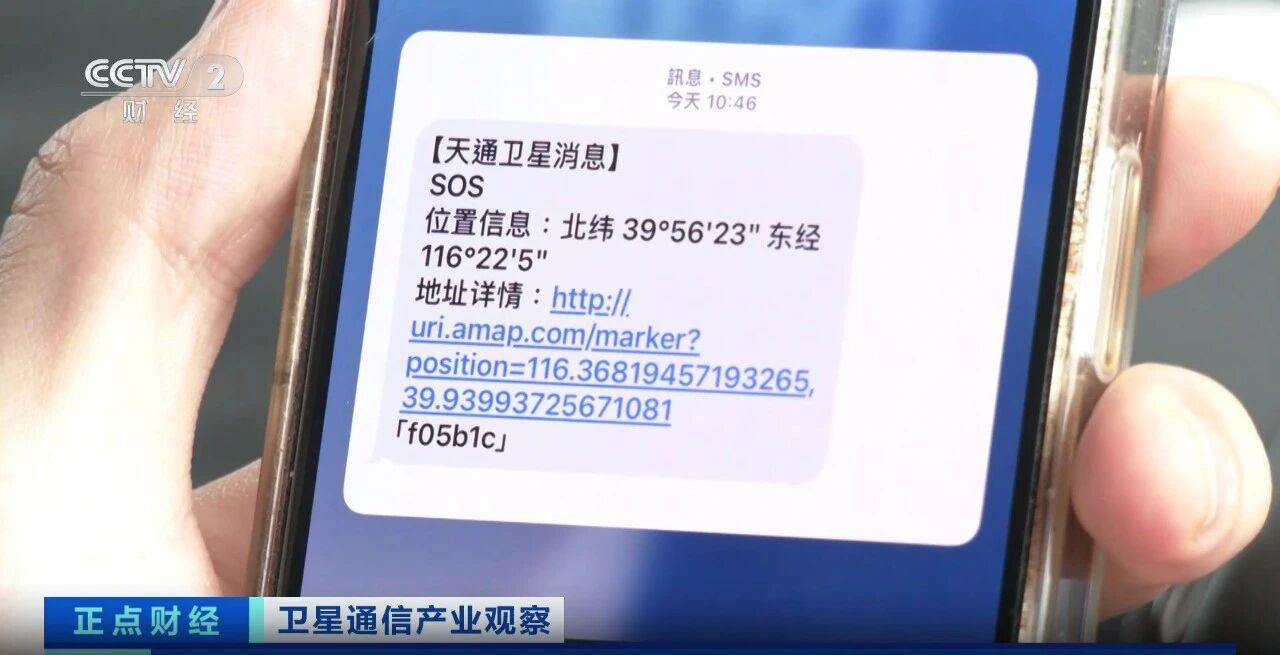
Core Viewpoint - The Ministry of Industry and Information Technology (MIIT) has issued guidelines to optimize business access and promote the development of the satellite communication industry, aiming to stimulate commercial space innovation and enhance high-quality development in related sectors [1] Group 1: Satellite Communication Development - Satellite communication allows direct connection without the need for ground base stations, enabling services like phone calls and messaging in areas lacking mobile network coverage [1] - As of September 2023, China Telecom has opened satellite direct connection services for mobile phones and vehicles, with nearly 3 million users of the Tian Tong satellite [3] - In July 2023, the monthly call minutes for the Tian Tong satellite exceeded 1 million, with 35 models of satellite direct connection phones launched, totaling over 23 million units shipped [5] - The MIIT has granted China Unicom a satellite mobile communication business license, with China Mobile's license expected soon, indicating an expansion of direct satellite services to a broader user base [6] Group 2: Integration with Ground Communication - Future developments in satellite communication are expected to integrate with ground mobile communication, expanding applications across various industries, including mobile phones, vehicles, and drones [8] Group 3: Satellite Internet Launches - China has planned to launch over 10,000 satellites to provide global network services, with recent successful launches of multiple low-orbit internet satellites [9] - The Long March 8 rocket has demonstrated high-density launch capabilities, with plans for five more launches before the Lunar New Year [14] - The industry is currently developing new rockets to meet the demand for launching thousands of low-orbit satellites, with several new rocket designs expected to achieve their first flights by the end of 2025 [20][24]

长二丙火箭发射卫星互联网技术试验卫星看点解析
Xin Hua She· 2025-09-18 08:30
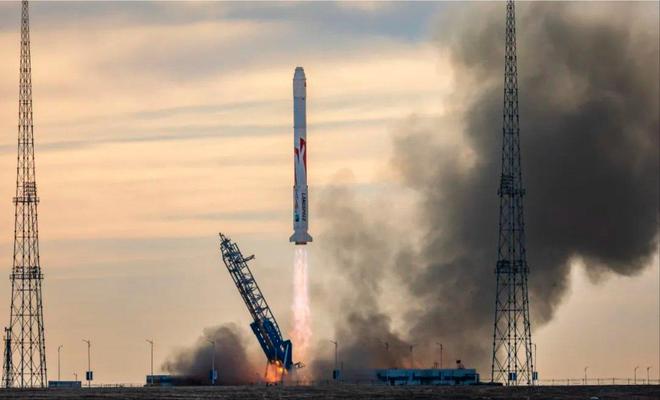
Key Points - The successful launch of the satellite internet technology test satellite using the Long March 2C rocket marks a significant achievement in China's space endeavors [1] Group 1: Rocket Innovations - The Long March 2C rocket features a new star-arrow connection and separation device, enhancing the internal space utilization of the fairing and improving satellite separation safety, allowing for reliable and orderly multi-satellite separation [2] - The rocket employs shared inertial group technology and composite material satellite brackets, increasing payload capacity to better meet mission requirements [2] Group 2: Satellite Production - The satellite involved in this mission was developed by Galaxy Space, which has established a "cloud, edge, terminal" satellite mass production testing model, utilizing flexible island-style pulsed production line design for adaptability [3] - The production line operates at high speed, with streamlined processes for solar wings, cables, and other components, aiming to standardize and scale satellite production akin to automobile manufacturing [3] Group 3: Core Technology Innovations - The satellite is equipped with a lightweight, rollable, high aspect ratio flexible solar wing, optimizing weight and volume while providing substantial power [4] - The solar wing can be compactly rolled up for launch, minimizing its impact on the satellite's size and weight, and enabling multi-satellite stacked launch modes to reduce mission costs [4] Group 4: Commercial Space Development - The rapid development of global satellite internet necessitates advancements in key technologies such as space computing and fully flexible solar wings, which are crucial for accelerating satellite constellation construction [5] - Future satellite networks are expected to provide seamless connectivity in traditionally underserved areas, enhancing global communication and supporting the development of 6G networks [5]
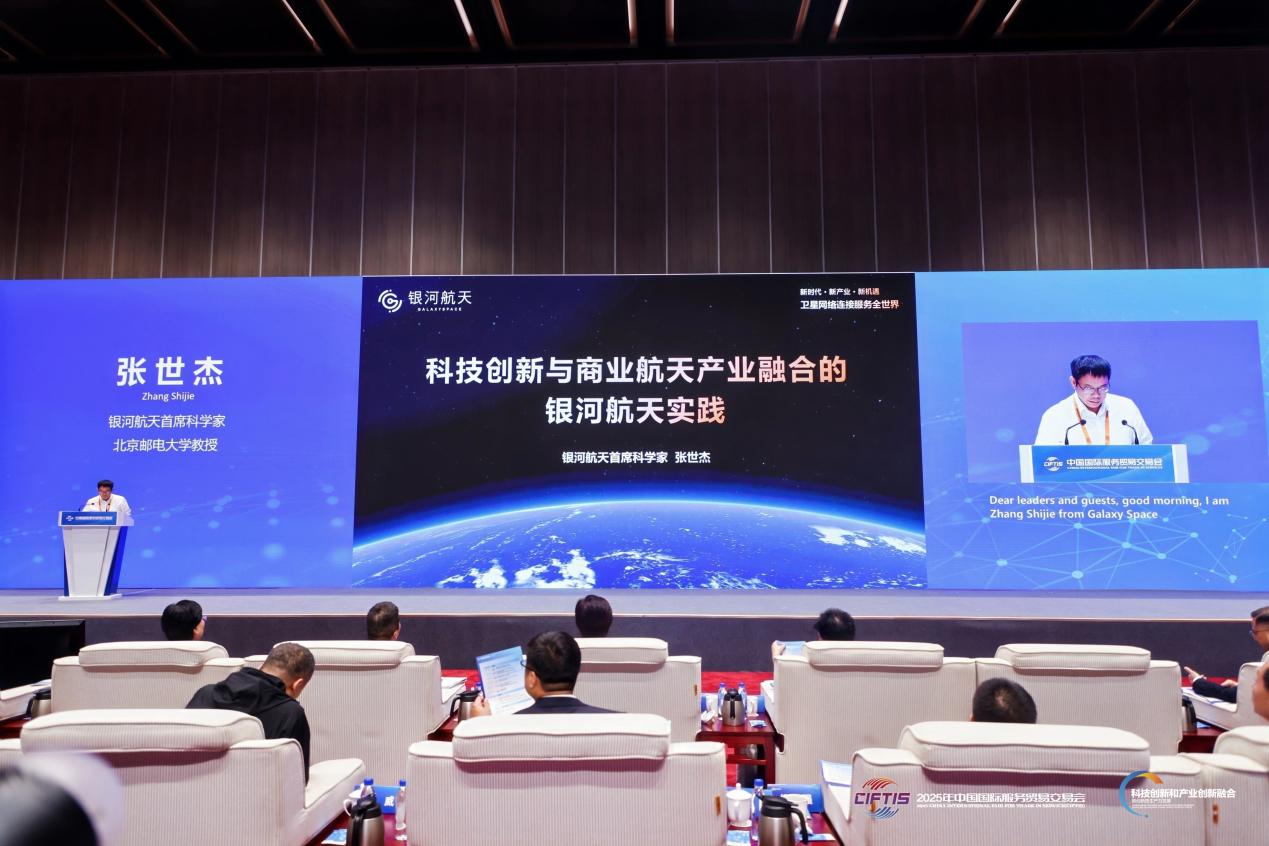
服贸会看点:银河航天科技创新与商业航天产业融合助力太空新基建
Zhong Guo Jing Ji Wang· 2025-09-13 05:32
Group 1 - The forum held on September 12, 2025, focused on the integration of technological and industrial innovation to promote the development of new productivity in China [1] - The forum aimed to create a platform for communication among government, industry, academia, and finance, enhancing corporate innovation and accelerating the establishment of a modern industrial system [1] Group 2 - The global satellite industry is experiencing explosive growth, with predictions indicating that the global commercial space market will exceed $1.2 trillion by 2030, up from $420 billion in 2020 [3] - To address the accelerating development of the global satellite internet industry, it is essential to strengthen international cooperation in technology standards, regulatory policies, and industrial collaboration [3] - The company, Galaxy Aerospace, aims to continue its mission of developing aerospace technology to serve humanity, focusing on technological innovation and industrial integration to promote high-quality development in China's commercial space industry [3]

商业航天,又火了
投中网· 2025-09-12 06:49
Core Viewpoint - The commercial aerospace industry in China is on the verge of explosive growth, with significant increases in market size and financing expected in the coming years [5][9]. Group 1: Market Growth and Financing - The Chinese commercial aerospace market is projected to reach a scale of 2.3 trillion yuan in 2024 and is expected to exceed 2.5-2.8 trillion yuan in 2025, with an average annual growth rate exceeding 20% [5]. - In terms of financing, the total amount for 2024 is expected to surpass 20 billion yuan, setting a historical record. By mid-August 2025, over 120 financing events have been disclosed, amounting to over 5.2 billion yuan, with an annual financing total projected to reach 25-28 billion yuan, representing a year-on-year growth of 23%-38% [5][9]. Group 2: Key Financing Areas and Support - The most popular financing sectors within commercial aerospace include satellite applications, rocket manufacturing, and satellite manufacturing, with 138 financing events recorded in 2024, totaling 20.239 billion yuan [9][10]. - Local state-owned capital and market-oriented capital have played crucial roles in this growth, with various provinces establishing specialized funds to support the commercial aerospace sector [10]. Group 3: Policy Support and Market Entry - The China Securities Regulatory Commission has introduced policies to support the listing of unprofitable commercial aerospace companies on the Sci-Tech Innovation Board, providing more financing channels for long-cycle industries [11]. - Notable companies like Blue Arrow Aerospace and others are already in the process of preparing for public listings [11]. Group 4: Cost Reduction and Technological Development - Reducing the cost of rocket launches is a primary focus for entrepreneurs in the commercial aerospace sector, with companies like Blue Arrow Aerospace developing reusable rockets to lower costs significantly [12][15]. - Blue Arrow's Zhuque-3 rocket utilizes methane as fuel, reducing costs to one-third of aviation kerosene, and employs stainless steel for its body, cutting material costs by 80% [15]. Group 5: Satellite Internet Development - The ultimate goal of developing commercial aerospace is to establish satellite internet systems, with China's "Starlink plan" aiming to deploy a large number of low-Earth orbit satellites to create a global high-speed internet network [19][21]. - China has applied to launch 51,300 satellites under the International Telecommunication Union's "first-come, first-served" rule, with several satellite constellations planned to provide global broadband services [21][22]. Group 6: Emerging Companies and Ecosystem Expansion - The number of commercial aerospace companies in China has increased from fewer than 100 in 2015 to over 500 by 2025, indicating a significant expansion of the industry ecosystem [17]. - Companies like Galaxy Space are innovating in satellite manufacturing, aiming to reduce costs significantly through mass production techniques [23].

商业航天爆发前夜:拿热钱,降成本,组星链
Tai Mei Ti A P P· 2025-09-03 03:12
Group 1 - The commercial aerospace market in China is expected to reach a scale of 2.3 trillion yuan in 2024 and is projected to exceed 2.5-2.8 trillion yuan in 2025, with an annual compound growth rate of over 20% [2] - In terms of financing, the total amount of financing in China's commercial aerospace sector is expected to reach 250-280 billion yuan in 2025, representing a year-on-year growth of 23%-38% [2] - A number of new commercial rocket models, including Zhuque-3, Tianlong-3, and others, are set to make their debut in 2025 [2] Group 2 - In 2024, there were 138 financing events in the commercial aerospace sector, with disclosed financing amounts reaching 20.239 billion yuan, marking a historical high [4] - The most popular financing areas include satellite applications, rocket manufacturing, and satellite manufacturing, with significant amounts raised in satellite operations and rocket manufacturing [4] - Local state-owned and market-oriented capital have played a crucial role in supporting the commercial aerospace sector, with various funds established to invest in this area [5] Group 3 - Over the past three years, more than 20 provinces and cities have released over 40 policy plans to support key technology innovation and industrialization in commercial aerospace [7] - Notable venture capital firms, including Sequoia China and Hillhouse Capital, have invested in the commercial aerospace sector, leading to the emergence of new unicorn companies [7] - The China Securities Regulatory Commission has provided policy support for commercial aerospace companies, allowing unprofitable firms to list on the Science and Technology Innovation Board [8] Group 4 - Reducing costs, particularly the cost per rocket launch, remains a top priority for entrepreneurs in the commercial aerospace sector [9] - SpaceX has set a successful precedent by significantly lowering launch costs through the recovery of boosters and fairings, which account for about 70% of rocket costs [10] - Domestic companies are following SpaceX's lead by focusing on the development of reusable rockets and finding ways to reduce costs in key areas [10] Group 5 - Blue Arrow Aerospace's Zhuque-3 rocket uses methane as fuel, reducing costs to one-third of aviation kerosene, and has achieved significant cost reductions in materials and maintenance [12] - The company aims to increase the reuse of Zhuque-3 to over 20 times and reduce launch costs to 20,000 yuan per kilogram [12] - The commercial aerospace ecosystem in China is expanding, with the number of companies growing from less than 100 in 2015 to over 500 by 2025 [13] Group 6 - The ultimate goal of developing commercial aerospace is to establish a satellite internet system, akin to SpaceX's Starlink [14] - China's "Starlink plan" aims to deploy a large number of low Earth orbit satellites to create a global high-speed internet communication network [17] - Various satellite constellations are being developed, including the Qianfan constellation and GW constellation, with plans to launch thousands of satellites [18][20]
决胜“十四五” 打好收官战|迈向更遥远的宇宙——我国航天事业大发展
Xin Hua She· 2025-09-02 06:33
Group 1: Achievements in Space Exploration - China's space station has been fully constructed and has entered the application and development phase, showcasing the country's advancements in space technology [1][2] - The Chang'e 6 mission successfully achieved the first-ever sample return from the far side of the Moon, marking a significant milestone in lunar exploration [2][3] - The Tianwen-1 mission successfully completed its Mars exploration objectives, including orbiting, landing, and roving, demonstrating China's capabilities in deep space exploration [4] Group 2: Future Missions and Collaborations - Ongoing progress in the Chang'e 7 and Chang'e 8 missions, along with the establishment of an international lunar research station involving 17 countries and organizations, indicates China's commitment to international collaboration in space research [4] - The Tianwen-2 mission has been launched for asteroid exploration and sample return, further expanding China's deep space exploration agenda [4] Group 3: Commercial Space Development - The commercial space sector in China has seen significant growth, with over 600 companies and an annual growth rate exceeding 20% in the broad commercial space industry [6] - The successful test of the reusable Zhuque-3 rocket marks a breakthrough in China's commercial space capabilities, shifting from traditional expendable launch systems to reusable technology [6] - The establishment of China's first commercial space launch site in Hainan has enabled regular and high-density launches, enhancing the operational capacity of the commercial space industry [8]
“万星计划”加速落地 空地通信融合是大势所趋
Mei Ri Jing Ji Xin Wen· 2025-09-01 14:28
Core Viewpoint - The recent issuance of guidelines by the Ministry of Industry and Information Technology (MIIT) in China marks a significant step towards the commercialization of low Earth orbit (LEO) satellite internet, highlighting the potential for growth in the satellite communication industry [1][13]. Group 1: Industry Developments - The MIIT's guidelines encourage telecom operators to expand services based on LEO satellite internet and support companies in providing wide-area IoT connectivity in regions lacking ground network coverage [1]. - The rapid increase in satellite launches in China, with six groups of LEO satellites launched in just one month, demonstrates the country's commitment to accelerating its satellite network [1][8]. - The global number of operational satellites has surged from 2,272 in 2019 to 8,862 in 2023, reflecting a compound annual growth rate of 35.0% from 2020 to 2023, primarily driven by SpaceX's Starlink [3]. Group 2: Market Potential - The LEO satellite internet market is seen as a vast opportunity, with the potential to address the connectivity needs of approximately one-third of the global population that currently lacks internet access [9]. - The integration of LEO satellite networks with terrestrial 5G/6G networks is expected to enhance communication efficiency and create new industry ecosystems [9][14]. - The cost advantages of satellite internet are anticipated to improve significantly due to advancements in satellite manufacturing and rocket reusability technologies [10][12]. Group 3: Technical and Regulatory Challenges - The deployment of LEO satellite networks faces challenges in technology, cost, regulation, and ecosystem development, including the need for high-precision orbital control and the management of frequency interference [14][16]. - The limited availability of frequency and orbital resources necessitates international coordination to prevent conflicts and ensure compliance with various countries' regulatory frameworks [14]. - The current focus on emergency communication and broadband for remote areas indicates that consumer-level applications are still in the early stages of development [14][16]. Group 4: Future Outlook - The shift towards direct satellite connectivity for mobile devices is a key focus area, with the potential to revolutionize the mobile communication landscape as user demand for ubiquitous connectivity grows [16][17]. - As the user base for satellite internet expands, competitive pricing and service quality improvements are expected, leading to intensified competition with traditional cellular networks [17].