
工商银行

Search documents
财政部连发多份重要文件,事关贷款贴息、民间投资贷款担保等 一揽子政策全文公布
Sou Hu Cai Jing· 2026-01-20 09:03
Group 1 - The core viewpoint of the news is the implementation of a financial subsidy policy for equipment renewal loans to support businesses in reducing financing costs and promoting effective investment [3][4][5] - The policy includes a 1.5% interest subsidy on fixed asset loans for equipment renewal projects, applicable for a maximum of two years, and is effective until December 31, 2026 [3][4] - The scope of support has been expanded to include various sectors such as construction, aviation, digital technology, and green energy, emphasizing high-end, intelligent, and digital equipment updates [4][6] Group 2 - A total of 26 banks are designated as eligible for processing the interest subsidy loans, including major national banks and several regional banks [4][5] - The subsidy process has been optimized to include a "pre-allocation + settlement" method, streamlining the application and approval process for banks and provincial financial departments [5][6] - The policy aims to enhance the experience of businesses by ensuring timely communication regarding subsidy payments through modern technology [6][7] Group 3 - The policy for small and micro enterprises includes a 1.5% interest subsidy on fixed asset loans, with a maximum loan amount of 50 million yuan, effective from January 1, 2026 [8][9] - The targeted sectors for this subsidy include new energy vehicles, medical equipment, and various service industries, aiming to stimulate investment and production [9][10] - The operational mechanism involves a "total-to-total" model for coordination between financial institutions and fiscal departments to ensure efficient processing of subsidy funds [11][12] Group 4 - The service industry loan subsidy policy has been extended until December 31, 2026, with an increased maximum loan amount of 10 million yuan and a 1% interest subsidy for one year [16][17] - New sectors such as digital, green, and retail have been added to the support scope, enhancing the policy's relevance to current economic trends [17][18] - The funding allocation process has been refined to improve efficiency and reduce redundancy in the approval process [18][19] Group 5 - A special guarantee plan for private investment has been introduced with a total quota of 500 billion yuan over two years, aimed at supporting small and micro enterprises [22][24] - The plan includes risk-sharing mechanisms where banks bear at least 20% of the loan risk, while the government guarantee fund covers up to 80% [24][25] - The initiative encourages innovative financing models and aims to enhance the capital strength of the government guarantee fund to support private investments effectively [26][27]







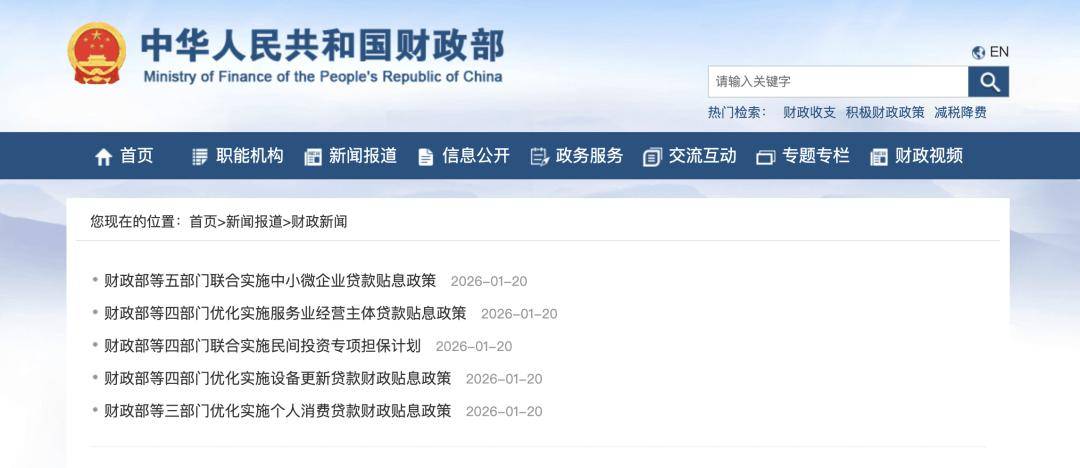
国有大型银行板块1月20日涨0.78%,中国银行领涨,主力资金净流入7.21亿元
Zheng Xing Xing Ye Ri Bao· 2026-01-20 08:56
Group 1 - The core viewpoint of the news is that the state-owned large bank sector experienced a rise of 0.78% on January 20, with China Bank leading the gains [1] - The Shanghai Composite Index closed at 4113.65, down 0.01%, while the Shenzhen Component Index closed at 14155.63, down 0.97% [1] - The trading performance of individual stocks in the state-owned large bank sector showed varied results, with China Bank closing at 5.44, up 1.49%, and Agricultural Bank at 7.17, up 0.99% [1] Group 2 - The net inflow of main funds into the state-owned large bank sector was 721 million yuan, while retail investors saw a net outflow of 177 million yuan [1] - The detailed fund flow for individual banks indicated that Agricultural Bank had a net inflow of 210 million yuan from main funds, while it experienced a net outflow of 140 million yuan from speculative funds [2] - Industrial and Commercial Bank had a net inflow of 181 million yuan from main funds, but a significant net outflow of 254 million yuan from speculative funds [2]


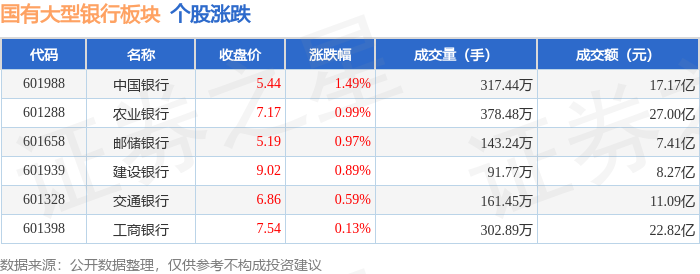
14.72亿元主力资金今日抢筹银行板块
Zheng Quan Shi Bao Wang· 2026-01-20 08:49
沪指1月20日下跌0.01%,申万所属行业中,今日上涨的有20个,涨幅居前的行业为石油石化、建筑材 料,涨幅分别为1.74%、1.71%。银行行业今日上涨0.80%。跌幅居前的行业为通信、国防军工,跌幅分 别为3.23%、2.87%。 资金面上看,两市主力资金全天净流出957.23亿元,今日有11个行业主力资金净流入,银行行业主力资 金净流入规模居首,该行业今日上涨0.80%,全天净流入资金14.72亿元,其次是房地产行业,日涨幅为 1.55%,净流入资金为6.27亿元。 主力资金净流出的行业有20个,电力设备行业主力资金净流出规模居首,全天净流出资金190.54亿元, 其次是电子行业,净流出资金为183.94亿元,净流出资金较多的还有通信、国防军工、计算机等行业。 银行行业今日上涨0.80%,全天主力资金净流入14.72亿元,该行业所属的个股共42只,今日上涨的有41 只;下跌的有1只。以资金流向数据进行统计,该行业资金净流入的个股有31只,其中,净流入资金超 亿元的有7只,净流入资金居首的是招商银行,今日净流入资金2.25亿元,紧随其后的是农业银行、工 商银行,净流入资金分别为2.22亿元、2.08亿元。 ...
国盛宏观熊园:“天量”居民存款到期,影响几何?
Xin Lang Cai Jing· 2026-01-20 08:35
Core Viewpoint - The gradual reduction of deposit rates is leading to a significant maturity of time deposits accumulated by households and enterprises, with a notable increase in the scale of maturing deposits expected in 2026, which will impact asset pricing significantly [1][20]. Group 1: Scale - The estimated scale of maturing medium- and long-term deposits for households and enterprises in 2026 is projected to reach 58.3 trillion, an increase of 5.6 trillion compared to 2025, with household deposits alone expected to reach 37.9 trillion, marking a 4.3 trillion increase and the highest level in five years [9][24]. - The proportion of time deposits in the total deposits of households and enterprises has increased from 65% in 2021 to 73% in 2024, indicating a clear trend towards longer deposit durations [22][30]. Group 2: Timing - The majority of maturing time deposits in 2026 will occur in the first quarter, accounting for 54% of the total, with over 60% of household time deposits maturing in this period [20][31]. - The estimated quarterly distribution of maturing deposits shows that 60.7% of household deposits will mature in the first quarter, highlighting a concentrated timing effect [30][31]. Group 3: Impact - The repricing of maturing time deposits is expected to alleviate pressure on bank interest margins, potentially reducing banks' liability costs by approximately 550 billion and lowering interest rates by 31 basis points [2][31]. - However, the reallocation of maturing deposits may disrupt the stability of bank liabilities, necessitating close monitoring of the restructuring of deposits [15][31]. Group 4: Asset Allocation - The large-scale maturity of household deposits in 2026 is anticipated to bring incremental funds to the equity market, positively impacting stock prices, particularly given the concentration of maturing deposits in the first quarter, which may lead to an unexpected "spring rally" in the market [16][32]. - The actual impact on the bond market remains to be observed, with potential changes in purchasing power and yield spreads depending on the reallocation of funds from deposits [17][33].
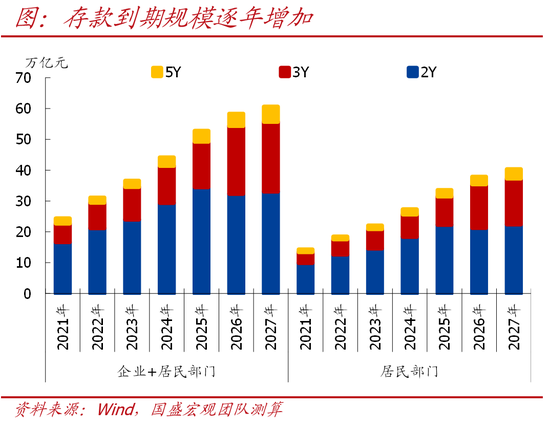
宏观点评:“天量”居民存款到期,影响几何?-20260120
GOLDEN SUN SECURITIES· 2026-01-20 08:32
Group 1: Macroeconomic Overview - The maturity scale of long-term deposits for residents and enterprises in 2026 is estimated at CNY 58.3 trillion, an increase of CNY 5.6 trillion compared to 2025[1] - Among this, the maturity scale for the resident sector is CNY 37.9 trillion, up CNY 4.3 trillion from 2025, marking the highest level in five years[3] - In 2026, 54% of the total deposits will mature in the first quarter, with over 60% of resident deposits maturing in the same period[5] Group 2: Impact on Banking Sector - The re-pricing of maturing deposits is expected to reduce banks' liability costs by approximately CNY 550 billion, leading to a 31 basis point decrease in interest rates paid by banks[6] - However, the potential "deposit migration" could disrupt the stability of banks' liabilities, necessitating close monitoring of the reallocation of deposits[6] Group 3: Asset Market Implications - The large-scale maturity of deposits is likely to bring incremental funds to the equity market, potentially benefiting the stock market, especially during the first quarter[7] - The impact on the bond market remains uncertain, as the actual allocation of funds will depend on the speed of credit decline and the relative speed of deposit outflows[8]
财政部:实施中小微企业贷款贴息政策,延长个人消费贷款财政贴息政策实施期限
Sou Hu Cai Jing· 2026-01-20 07:48
Group 1: Small and Micro Enterprises Loan Interest Subsidy Policy - The policy provides a 1.5% annual interest subsidy for eligible small and micro private enterprises' fixed asset loans and new policy financial tools, with a maximum subsidy loan limit of 50 million yuan per enterprise [1][3][9] - The policy is applicable to loans issued from January 1, 2026, and is initially set to last for one year, with the possibility of extension based on future evaluations [1][3] - The focus is on key industries such as new energy vehicles, industrial mother machines, pharmaceuticals, artificial intelligence, and other emerging sectors [3][9] Group 2: Personal Consumption Loan Interest Subsidy Policy - The implementation period for the personal consumption loan interest subsidy policy has been extended to December 31, 2026, allowing residents to enjoy subsidies for eligible consumption during this period [5][15] - The policy now includes credit card installment payments with an annual subsidy rate of 1%, and removes previous restrictions on consumption fields [5][16] - The maximum annual subsidy per individual remains capped at 3,000 yuan, while previous limits on single transaction subsidies have been removed [5][16] Group 3: Private Investment Special Guarantee Plan - The plan has a total quota of 500 billion yuan, to be implemented over two years, aimed at supporting small and micro enterprises in various sectors including technology upgrades and service industry enhancements [2][7][22] - The guarantee fee for private enterprises is capped at 1%, with the government financing guarantee fund reducing re-guarantee fees by half [2][23] - The plan allows for a compensation rate increase from 4% to 5% for government financing guarantees, enhancing risk tolerance for medium to long-term loans [7][24]
财政部连发5个重要文件,事关消费贷、民间投资等
Sou Hu Cai Jing· 2026-01-20 07:14
Group 1 - The Ministry of Finance and other departments have released five documents related to consumer loans and private investment, aiming to stimulate consumption and expand domestic demand [1] - The loan interest subsidy policy for service industry operators has been extended until December 31, 2026, with specific provisions for loans issued between March 16, 2025, and December 31, 2025 [1][2] - The maximum loan amount eligible for interest subsidies has been increased to 10 million yuan, with a subsidy rate of 1% for a maximum period of one year [2][3] Group 2 - The scope of supported sectors has been expanded to include digital, green, and retail consumption areas, in addition to existing categories like catering, health, and tourism [2][3] - A total of 21 national banks and various commercial banks are designated as eligible institutions for processing these loans [3][4] - The funding mechanism for interest subsidies will adopt a "pre-allocation + settlement" approach, ensuring timely disbursement and accountability [4][5] Group 3 - A special guarantee plan for private investment has been introduced with a total quota of 500 billion yuan, to be implemented over two years [8][10] - The plan focuses on supporting small and micro enterprises in various sectors, including technology upgrades and consumption-related activities [10][11] - The risk-sharing ratio has been adjusted, with banks bearing at least 20% of the loan risk and the government guarantee system covering up to 80% [11][12] Group 4 - The equipment update loan interest subsidy policy has been optimized, with a subsidy rate of 1.5% for loans related to equipment updates, applicable for a maximum of two years [15][16] - The supported sectors for equipment updates have been broadened to include high-tech and green industries, enhancing support for modernization [16][17] - A total of 26 banks are authorized to handle these subsidy loans, ensuring a wide reach for the policy [17][18] Group 5 - The personal consumption loan interest subsidy policy has been extended until the end of 2026, with an emphasis on innovative financial products to boost consumer spending [22][23] - The subsidy rate for personal consumption loans has been set at 1%, with the removal of previous caps on subsidy amounts for individual borrowers [23][24] - The funding allocation for these subsidies will also follow a "pre-allocation + settlement" model to enhance efficiency [24][25]
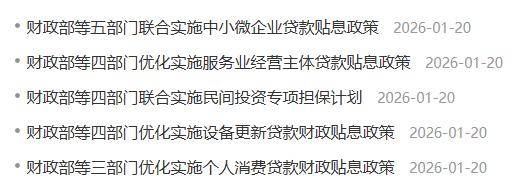
四部门:优化实施设备更新贷款财政贴息政策
Zhong Guo Xin Wen Wang· 2026-01-20 06:23
Core Viewpoint - The joint announcement by four departments aims to optimize the implementation of the equipment renewal loan interest subsidy policy to support enterprises in updating equipment and technology, reduce financing costs, and promote effective investment [1][2]. Group 1: Policy Expansion - The support range is expanded to include fixed asset loans for equipment renewal projects, with a subsidy of 1.5% on the principal for a maximum of two years [2]. - The policy now includes new technology innovation loans issued by banks starting in 2026, which will also receive interest subsidies [2]. - Additional sectors supported include construction, municipal services, energy equipment, aviation materials, and more, focusing on high-end, intelligent, green, and digital equipment updates [3]. Group 2: Implementation and Management - A total of 26 banks are designated as eligible for processing interest-subsidized loans, including major state-owned and commercial banks [3]. - The subsidy process will utilize a "pre-allocation + settlement" method, streamlining the funding request and approval process [4]. - From 2027, annual settlement applications for interest subsidies will be required, with specific deadlines for submission and review [5]. Group 3: Oversight and Compliance - The implementation will be overseen by multiple regulatory bodies, ensuring that banks monitor the use of funds and prevent misuse [6]. - Joint inspections will be conducted to identify any serious violations by enterprises receiving subsidies, with strict penalties for banks involved in collusion [6]. - Banks must establish reporting systems to provide monthly updates on loan issuance and subsidy usage to the relevant authorities [7].
开年重磅 | 2026彭博全球大类资产配置论坛
彭博Bloomberg· 2026-01-20 06:05
Group 1 - The core viewpoint of the article emphasizes the resilience of the global economy in 2025 despite challenges such as tariffs, inflation, and geopolitical conflicts, and questions whether this momentum can continue into 2026 [1] - The article highlights the collaboration of China's fiscal and monetary policies aimed at promoting domestic demand growth and sustaining recovery, while exploring which sectors may present new opportunities [1] - It discusses the anticipated impact of the Federal Reserve's interest rate cuts and the need for proactive strategies to manage risks while seizing opportunities [1] Group 2 - Key topics for discussion at the forum include the outlook for China's macro economy and policies, trends and opportunities in the offshore credit market under global changes, and capturing opportunities in the bond market amidst macroeconomic uncertainties [1] - The forum will also address new strategies for risk management in foreign exchange and gold investments, as well as trading opportunities in precious metals amidst long-term trends and short-term volatility [1] - Notable speakers include experts from various financial institutions, providing insights into macroeconomic conditions and asset allocation strategies [4][5]
五部门:联合实施中小微企业贷款贴息政策
Zhong Guo Xin Wen Wang· 2026-01-20 05:45
Core Viewpoint - The Chinese government has announced a loan interest subsidy policy aimed at supporting small and micro enterprises, particularly in key industries, to stimulate investment and enhance economic resilience [1][2]. Policy Content - **Eligible Entities**: The policy applies to all small and micro private enterprises involved in key industry chains and their upstream and downstream sectors, including those recommended by financing coordination mechanisms or shared by the Ministry of Industry and Information Technology [2]. - **Targeted Sectors**: The policy supports sectors such as new energy vehicles, industrial mother machines, pharmaceuticals, medical equipment, software, civil aircraft, and various service industries including logistics and environmental services [3]. - **Subsidy Standards**: Starting from January 1, 2026, eligible loans will receive a subsidy of 1.5% per annum for a maximum of two years, with a cap of 50 million yuan per loan. The policy is initially set for one year, with potential extensions [3]. Implementation Mechanism - **Participating Banks**: The policy involves 21 national banks and certain city commercial banks with a financial regulatory rating of 3A or above [4]. - **Operational Process**: Enterprises can apply for loans directly to banks, which will approve based on market principles. The subsidy funds will be allocated through a "pre-allocation + settlement" method [6][7]. - **Funding Settlement**: Banks must report their loan issuance monthly, and the Ministry of Finance will oversee the settlement of subsidy funds [7][9]. Organizational Implementation - **Information Reporting**: Banks are required to report on the execution of the policy monthly, including loan issuance and subsidy usage [9]. - **Collaboration**: The Ministry of Finance will lead the implementation, ensuring budget management and supervision of subsidy usage, while other ministries will provide guidance on loan fund allocation [9][10]. - **Supervision and Management**: The Ministry of Finance and financial regulatory authorities will conduct joint inspections to ensure compliance and prevent misuse of funds [10].