
欣旺达

Search documents
500亿来了!深圳宝安这场大会藏着哪些“财富”密码?
Nan Fang Du Shi Bao· 2025-09-10 07:17
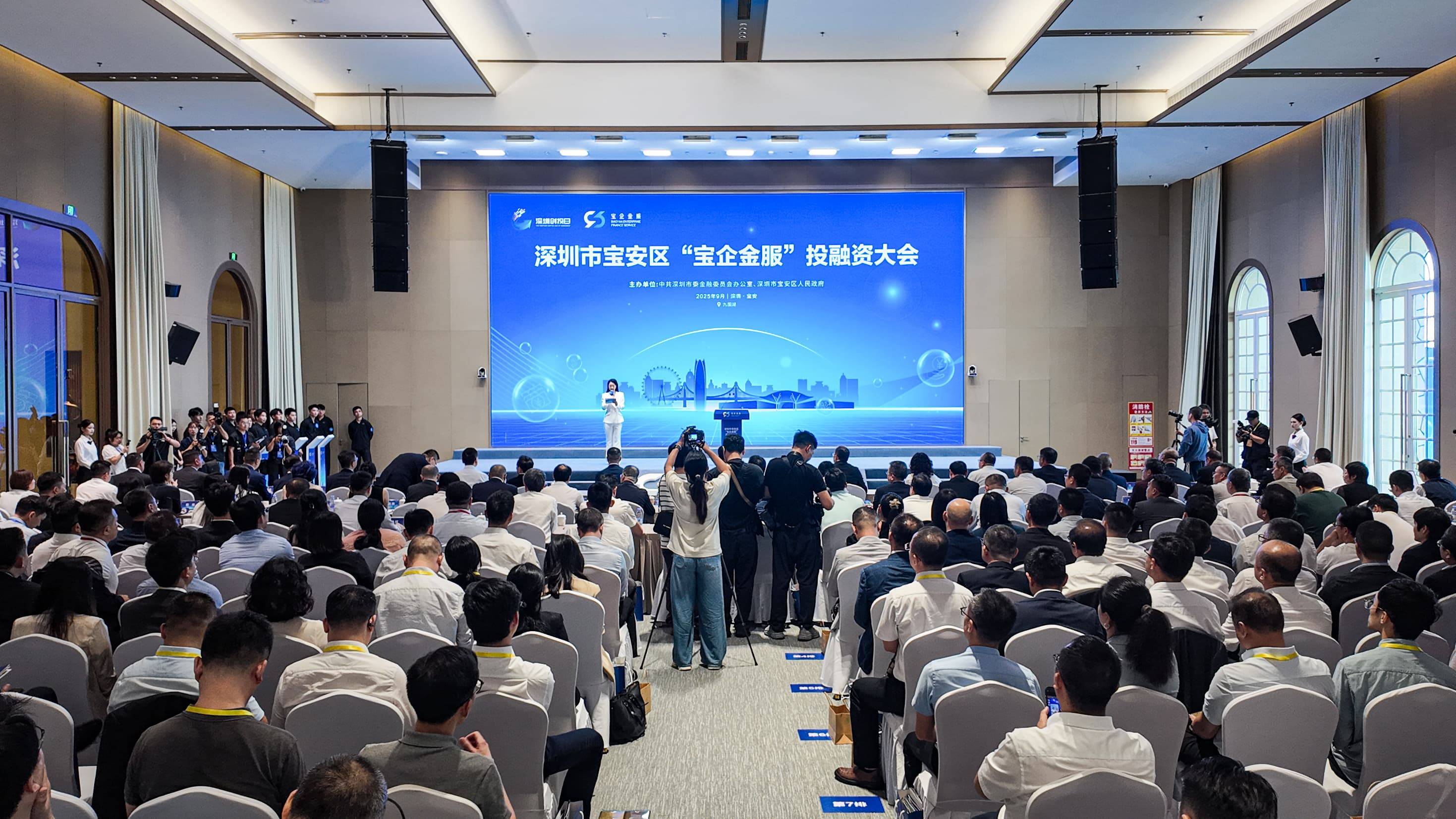
Group 1 - The event in Shenzhen Baoan gathered decision-makers from 132 financial institutions and leaders from 426 local enterprises, resulting in over 50 billion yuan in signed agreements, highlighting the importance of finance as the lifeblood of the real economy [2] - The conference aimed to reshape the supply-demand logic from merely "finding funds" to "resource allocation," addressing the core needs of many tech enterprises for capital partners who understand their industries [3] - The event featured a matrix structure with one main venue and six thematic sub-venues, allowing for precise segmentation of financial supply according to Baoan's advantageous industrial chains, facilitating tailored financial solutions for various companies [3] Group 2 - Agricultural Bank of China’s participation exemplifies the new logic of resource allocation, providing customized financial tools for tech enterprises, including loans for mergers and acquisitions and special loans for "specialized, refined, unique, and innovative" small giants [4] - Other banks, such as Industrial and Commercial Bank of China and China Construction Bank, are also focusing on providing systematic financial services tailored to the full lifecycle of tech enterprises, indicating a collective effort from major financial institutions [6] - The event is a strategic move for Shenzhen as a global innovation capital formation center, with Baoan being a key area for financial innovation and home to nearly 5,600 manufacturing enterprises and a leading number of national high-tech enterprises [6] Group 3 - Companies like Shenzhen Tengjinda Information Technology and Rongxin Medical express gratitude for the support from local banks, emphasizing the importance of tailored financial products that meet their specific needs, such as R&D loans and innovative assessment systems [7][8] - The ecosystem in Baoan is characterized by solid industrial strength, with a focus on financial services empowering the real economy and driving industrial upgrades [8] - Baoan is positioned as a core area where industry and finance resonate, with every technological breakthrough seeking capital support, ultimately enhancing the competitiveness of Shenzhen and the Greater Bay Area [8]

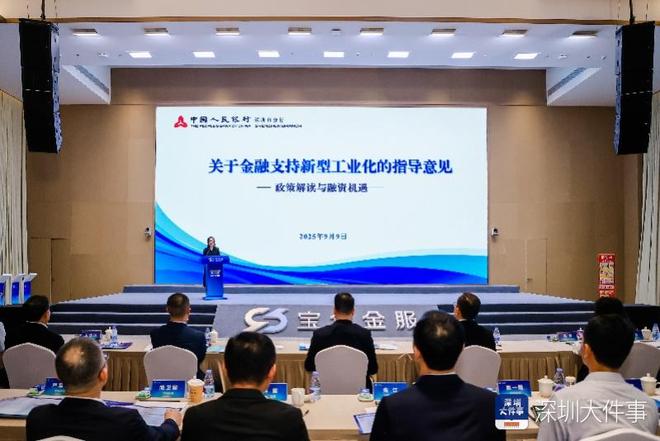
深圳宝安投融资大会成功举办 签约金额超500亿元
Sou Hu Cai Jing· 2025-09-10 06:32
Core Viewpoint - The "Baoqi Jinfu" investment and financing conference in Bao'an District, Shenzhen, aims to enhance financial support for local enterprises, facilitating a high-level circulation of technology, industry, and finance to promote high-quality regional economic development [1][3]. Financial Support and Economic Impact - The conference featured a theme of "comprehensive financing services + comprehensive industry empowerment," resulting in over 500 billion yuan in signed agreements between 132 financial institutions and 426 Bao'an enterprises, significantly boosting the local economy [3][5]. - Shenzhen's financial industry achieved a value-added of 245.85 billion yuan in the first half of 2025, marking a year-on-year growth of 10.9%, the highest quarterly growth since 2017 [5]. Industry and Financial Integration - Bao'an District is home to nearly 5,600 regulated manufacturing enterprises and has ranked first in the number of national high-tech enterprises for eight consecutive years, indicating a strong industrial base [5][10]. - The district aims to create a "technology-industry-finance integration pilot area," focusing on a multi-level, composite financial service system that supports enterprises throughout their development lifecycle [10][16]. Financing Solutions and Innovations - The conference facilitated various types of financing products, including R&D loans, mergers and acquisitions loans, and cross-border loans, to help enterprises expand and innovate [7][11]. - Several key projects, such as a 300 billion yuan private equity fund and a 100 billion yuan merger fund, were signed at the event, indicating a robust commitment to financial innovation [8][10]. Ecosystem Development and Support Mechanisms - Bao'an District has established a comprehensive financial service system, including "financial stations" at various administrative levels to provide direct consultation and services to enterprises [15][16]. - The district has also developed a "government funding leverage + guiding fund collaboration" model, creating a capital empowerment system with over 1 trillion yuan in industry fund clusters [15][16].
欣旺达赴港IPO隐忧:净利率仅0.24% 动力、储能电池市场份额难突破
Jing Ji Guan Cha Bao· 2025-09-09 11:22
Core Viewpoint - XINWANDA has submitted an application for H-share listing on the Hong Kong Stock Exchange, aiming to become the third lithium battery company in China to achieve dual listing. However, the company faces significant challenges including low net profit margins, ongoing losses in its power battery business, and difficulties in increasing market share [1]. Group 1: Business Overview - XINWANDA's core business focuses on the research and manufacturing of lithium-ion batteries. In the consumer battery sector, it is the largest global supplier of mobile phone batteries with a market share of 34.3%, and the second largest for notebook and tablet batteries with a market share of 21.6% [2]. - In the power battery and energy storage sectors, XINWANDA holds a market share of only 2.1% and 1.4% respectively, ranking tenth globally in power batteries and facing intense competition from top players [2]. Group 2: Financial Performance - As of Q1 2025, XINWANDA's net profit margin was a mere 0.24%, indicating a "revenue growth without profit" scenario. Revenue fluctuated between 47.862 billion and 56.021 billion yuan from 2022 to Q1 2025, but net profit margins have been below 1% due to product price declines [4]. - The company has reported significant losses in its power battery segment, with cumulative losses nearing 4.7 billion yuan from 2022 to 2024. The gross profit margin for power batteries is only 8.80%, significantly lower than competitors [4]. Group 3: Operational Challenges - XINWANDA has halted major investment projects in Chengdu and Zhuhai in 2024 and paused a 14 billion yuan investment project in Ningxiang and Zhuhai in April 2025 due to industry overcapacity [3]. - The company's asset-liability ratio reached 64.59% by the end of Q1 2025, with outstanding debts totaling 28.287 billion yuan, of which approximately 49.7% is due within one year, indicating substantial short-term repayment pressure [4]. Group 4: Cash Flow and Future Prospects - Despite having 10.752 billion yuan in cash as of Q1 2025, XINWANDA's short-term borrowings amount to 10.297 billion yuan, limiting its financial flexibility. The funds raised from the IPO are intended for overseas production base construction and global sales network expansion, posing a critical test for the company to find a profitable balance in a competitive market [5].

欣旺达:关于2022年限制性股票与股票期权激励计划部分股票期权注销完成的公告
Zheng Quan Ri Bao Zhi Sheng· 2025-09-08 11:12
Core Points - The company announced the cancellation of certain restricted stock and stock options as part of its 2022 incentive plan due to 38 employees leaving the company [1] - A total of 248,800 stock options will be canceled as a result of these departures [1] - The cancellation process was completed on September 8, 2025, as confirmed by the China Securities Depository and Clearing Corporation [1]
欣旺达(300207) - 关于2022年限制性股票与股票期权激励计划部分股票期权注销完成的公告
2025-09-08 07:42
欣旺达电子股份有限公司 关于 2022 年限制性股票与股票期权激励计划 部分股票期权注销完成的公告 证券代码:300207 证券简称:欣旺达 公告编号:<欣>2025-071 本公司及董事会全体成员保证信息披露内容的真实、准确和完整,没有虚假 记载、误导性陈述或重大遗漏。 欣旺达电子股份有限公司(以下简称"公司")于 2025 年 8 月 26 日召开的 第六届董事会第十九次会议、第六届监事会第十九次会议审议通过了《关于 2022 年限制性股票与股票期权激励计划作废部分第二类限制性股票及注销部分股票 期权的议案》。公司《2022 年限制性股票与股票期权激励计划》中原审议确定 的首次授予激励对象中有 38 名激励对象申请离职,公司将对授予该激励对象合 计 24.88 万份股票期权进行注销。具体内容详见公司于 2025 年 8 月 28 日在中国 证监会指定的创业板信息披露网站巨潮资讯网(http://www.cninfo.com.cn)披 露的《关于 2022 年限制性股票与股票期权激励计划作废部分第二类限制性股票 及注销部分股票期权的公告》。 经中国证券登记结算有限责任公司深圳分公司审核确认,上述股票期权注销 ...
半固态电池:多场景突破,全面迈入商业化
2025-09-08 04:11
Summary of Key Points from Conference Call Records Industry Overview - The focus is on the **semi-solid battery** industry, with significant advancements expected in commercialization from 2025 to 2027, particularly from leading companies like BYD, Guoxuan High-Tech, Yiwei Lithium Energy, and XINWANDA [1][2][5]. Core Insights and Arguments - **Commercialization Timeline**: Full solid-state sulfide batteries are expected to undergo batch vehicle testing by 2027, while semi-solid batteries will see product breakthroughs and production scaling from 2025 to 2027 [1][2]. - **Energy Density Improvements**: Current mainstream oxide polymer batteries achieve energy densities of 350 Wh/kg, which can exceed 450 Wh/kg with lithium metal anodes. New Energy has achieved 500 Wh/kg [1][4]. - **Technical Bottlenecks**: Challenges such as interface contact and flow issues in oxide and polymer systems can be addressed through quasi-solid electrolyte technology and the addition of ionic liquids [1][6]. - **Market Applications**: Semi-solid batteries have already made commercial progress in various fields, including 3C electronics, low-altitude drones, robotics, commercial vehicles, and passenger cars, with more applications expected by late 2025 to 2026 [1][8]. Key Players and Their Strategies - **Leading Companies**: Major players like BYD, Guoxuan High-Tech, Yiwei Lithium Energy, and XINWANDA are actively investing in semi-solid battery technology and have clear plans for vehicle integration and mass production [2][5]. - **Starship Energy**: This company leads in the oxide lithium metal anode semi-solid battery sector, achieving energy densities over 500 Wh/kg and collaborating with high-end clients [3][12][13]. - **Hai Moxing**: The company is experiencing a business turnaround with a significant increase in orders, expecting to reduce losses in Q3 and potentially turn profitable in Q4 [15]. Additional Important Insights - **Technological Advantages**: Semi-solid or quasi-solid oxide polymer technology enhances conductivity and safety, with solutions for low room temperature conductivity through the introduction of plasticizers or UV light [9]. - **Investment Opportunities**: While full solid-state sulfide remains a core investment focus, semi-solid batteries are also seen as having substantial potential, warranting investor attention [16]. - **Future Projections**: The semi-solid battery market is anticipated to see large-scale applications by 2026 and significant industrial results by 2029-2030, driven by technological iterations and cost reductions [12]. Conclusion - The semi-solid battery sector is poised for rapid growth and commercialization, with leading companies making significant strides in technology and market applications. Investors are encouraged to monitor developments in this space for potential opportunities.

王缉慈|探索先进制造业集群发展的关键:制度和技术创新+创业环境
Xin Lang Cai Jing· 2025-09-08 02:43
Core Viewpoint - The development of advanced manufacturing clusters in China is a strategic initiative aimed at fostering innovation and collaboration among enterprises and institutions within specific regions, enhancing the overall competitiveness of the manufacturing sector [1][3][9] Group 1: Definition and Characteristics of Advanced Manufacturing Clusters - Advanced manufacturing clusters are defined as networked industrial organizations where enterprises and institutions closely collaborate within a specific advanced manufacturing field [1] - The cultivation of these clusters involves selecting and incentivizing "leading" enterprises, establishing dynamic databases for these enterprises, and encouraging data sharing and platform empowerment [1][2] - The approach to developing these clusters is based on both top-down selection by the Ministry of Industry and Information Technology (MIIT) and bottom-up growth from existing industrial foundations [2][3] Group 2: Government and Policy Support - The MIIT's recognition of "national advanced manufacturing clusters" comes with central financial support, leading local governments to view them as policy dividends and tools for GDP growth [2] - Local governments often appoint a "chain leader" to oversee the cluster, providing guarantees to banks and facilitating funding, talent, and land for key industries [2] - The establishment of cluster governance signifies a shift towards a collaborative rule-making process involving multiple stakeholders rather than a purely government-driven initiative [3] Group 3: Case Study of Shenzhen's Advanced Battery Materials Cluster - Shenzhen has developed a closed-loop ecosystem for battery production, encompassing materials, cells, equipment, and recycling, positioning it as a global leader in battery technology innovation [4][6] - The entrepreneurial environment in Shenzhen is robust, with a collaborative spirit among numerous private enterprises, leading to significant advancements in battery technology [6] - The Shenzhen advanced battery materials cluster exemplifies the importance of a conducive innovation and entrepreneurial environment in fostering industry growth [6][7] Group 4: Innovation Ecosystem and Competitive Advantage - The innovation ecosystem in Shenzhen has enabled the advanced battery materials cluster to maintain international competitive advantages, characterized by a diverse and densely interconnected network of stakeholders [7][8] - The concept of "critical mass" is essential for understanding how innovation clusters achieve self-reinforcement and exceptional competitiveness in specific industries [7][8] - Advanced manufacturing clusters are seen as place-based innovation strategies that facilitate resource mobility and collaboration among startups, supporting entrepreneurship and technological innovation [8][9] Group 5: Future Considerations - While there are unique experiences in cultivating advanced manufacturing clusters in China, fundamental questions about the necessity and key factors for their development remain to be explored [9]



供需新周期有望开启,重视龙头+弹性方向 | 投研报告
Zhong Guo Neng Yuan Wang· 2025-09-08 01:34
Core Insights - The report highlights breakthroughs in solid-state battery technology by leading companies such as EVE Energy, Putailai, and Xiamen Tungsten, benefiting from advancements in the energy storage sector [1][3] - A new supply-demand cycle is anticipated in the industry, emphasizing the importance of leading companies and flexible strategies [2] Group 1: Solid-State Battery Developments - EVE Energy's solid-state battery research institute in Chengdu has unveiled the "Longquan No. 2" all-solid-state battery, featuring a capacity of 10Ah and an energy density of 300Wh/kg, aimed at humanoid robots [1][3] - The Chengdu facility is being constructed in two phases, with the first phase expected to be completed by December 2025, achieving a manufacturing capacity of 60Ah batteries [3] - The solid-state battery industry aims to reach an energy density of 400Wh/kg and 1000Wh/L by 2025, accelerating the industrialization process [3] Group 2: Energy Storage Market Growth - Global energy storage battery shipments are projected to reach 258GWh in the first half of 2025, representing a year-on-year increase of 106% [1][4] - Chinese companies dominate the global energy cell shipment rankings, holding all top ten positions and accounting for 91.2% of the global market share [1][4] - Emerging overseas markets, such as Saudi Arabia, Australia, and Chile, have seen Chinese companies secure 199 new overseas energy storage orders, totaling over 160GWh, a year-on-year growth of 220.28% [4] Group 3: Photovoltaic and Silicon Industry Insights - The Chinese energy storage sector continues to gain global market share, with companies like CATL, Sungrow, EVE Energy, and others benefiting from this trend [4] - The Ministry of Industry and Information Technology has issued a plan to eliminate "involution" competition in the photovoltaic sector, promoting orderly development and capacity management [4][5] - China's polysilicon production reached 596,000 tons in the first half of 2025, with GCL-Poly's granular silicon cash cost dropping to 25.31 yuan/kg, potentially leading to profitability by August-September [5]






欣旺达20250907
2025-09-07 16:19
Summary of the Conference Call for XINWANDA Company Overview - **Company**: XINWANDA - **Industry**: Battery Manufacturing, specifically in consumer batteries, power batteries, and energy storage systems Key Points Financial Performance - In the first half of 2025, XINWANDA achieved revenue of **26.98 billion CNY**, a year-on-year increase of **13%** [3] - The scale profit was **856 million CNY**, up **3.88%** year-on-year, with a net profit of **583 million CNY** after excluding non-recurring items [3] - The company faced a foreign exchange loss of approximately **40-50 million CNY**, contrasting with a gain in the same period last year, leading to a net difference of about **100 million CNY** [3] Consumer Battery Segment - XINWANDA maintained its position as the **global leader** in the mobile phone battery market for five consecutive years, with a projected total shipment of **460 million units** in 2024, capturing **34.3%** of the global market share [2][4] - Revenue from consumer batteries in the first half of 2025 was **10.039 billion CNY**, reflecting a **5.22%** increase year-on-year, with a shipment growth rate of approximately **6%** [2][4] - The gross margin for consumer batteries improved from **17.6%** last year to **19.6%** in the first half of 2025 [4] New Energy Segment - Revenue from the new energy segment reached **7.6 billion CNY** in the first half of 2025, with a gross margin of nearly **10%**, up from **8%** last year [2][5] - Power battery shipments were **17.6 GWh**, with external shipments of **16 GWh**, showing a year-on-year growth of nearly **100%** [5] - Energy storage system revenue was **1 billion CNY**, with a year-on-year growth of **68.8%**, and shipments reached **78.9 GWh**, a **133%** increase [5] Customer Expansion and Market Strategy - The company is actively expanding its customer base in the consumer battery sector, targeting North American A customers, Korean clients, and Dell [2][6] - Major clients in the power and energy storage systems include Li Auto, Dongfeng Nissan, and Sunshine Power, with plans to expand internationally to clients like Volvo and Volkswagen [6] Production Capacity and Future Outlook - XINWANDA aims to achieve breakeven by the fourth quarter of 2025 and is actively expanding production capacity, considering leasing capacity from competitors [2][7] - The annual shipment target for the new energy segment is set at **35-40 GWh**, with a specific target of **10 GWh** for energy storage cells, which is expected to be exceeded [7] Technological Advancements - The company has made progress in semi-solid battery technology, with plans to adopt silicon-carbon anodes and potentially lithium-metal anodes for future products, aiming for mass production by **2026 or 2027** [3][21] - XINWANDA's ultra-fast charging batteries have achieved mass production at **6C** and have research capabilities up to **10-12C**, allowing for a recharge of **450 km** in just **5 minutes** [3][11] Market Trends and Challenges - The energy storage cell industry is experiencing tight capacity and price increases, but XINWANDA is leveraging increased orders to select higher-margin projects [13] - The overseas market accounts for approximately **40-50%** of the energy storage system business, with rapid growth expected [28] Emerging Markets and Product Development - XINWANDA is expanding into wearable devices and new consumer markets, including TWS headphones and AI glasses, with significant growth potential in humanoid robots [19][24] - The company is also focusing on developing new products in the wearable battery sector, including soft-pack and lithium polymer batteries [25][26] Conclusion - XINWANDA is positioned for growth in both consumer and new energy battery markets, with a strong focus on technological innovation and customer expansion, while navigating challenges in pricing and capacity constraints in the industry [2][3][28]
固态电池先发优势确立,反内卷驱动风光储行情
2025-09-07 16:19
Summary of Conference Call Records Industry Overview - The focus is on the solid-state battery technology, photovoltaic industry, and energy storage market, with significant developments expected in 2025-2026 [1][2][15]. Key Points and Arguments Solid-State Battery - Solid-state battery technology is anticipated to become a major investment direction by 2025-2026, with leading lithium battery companies initiating pilot production lines [1][2]. - The supply chain for solid-state batteries has been fully established, marking significant progress in equipment [2]. - Investment targets should be evaluated based on their involvement in the solid-state battery value chain, including materials like lithium chloride and dry electrodes [3][4]. Energy Storage Market - The energy storage market is experiencing strong demand, with a notable increase in the bidding volume for storage systems reaching 70 GWh [1][6]. - Companies like EVE Energy, Xinwanda, and CATL are nearing full production capacity, contributing to positive price expectations in the storage market [1][7]. - The commercial and residential energy storage sectors are highlighted as areas of growth, with companies like Deye performing well and having low valuations [8]. Photovoltaic Industry - The photovoltaic industry is undergoing supply-side adjustments due to the "anti-involution" trend, which is pushing competition into energy storage and new energy vehicles [5]. - The photovoltaic sector is expected to see improvements in pricing due to better supply-demand dynamics [5]. Wind Power Industry - The wind power industry is characterized by a stable competitive landscape, with slight price recoveries observed in wind turbine pricing [11]. - The offshore wind power sector is expected to have smooth expansion opportunities [11]. Grid Sector - The grid sector is currently in a relatively low investment phase, but upcoming projects like the Mengxi to Beijing-Tianjin-Hebei ultra-high voltage direct current project are expected to catalyze growth [12][13]. Investment Opportunities - Companies with potential in large-scale energy storage include Canadian Solar, Nandu Power, and Haibo Innovation, which are expected to see significant profit growth [9]. - Sunpower has reached historical highs, indicating strong market performance, with a projected price-to-book (PB) ratio indicating it remains undervalued compared to its peers [10]. - Companies like Sifang and Jinpan are highlighted for their strong cash positions and low valuations, making them attractive investment opportunities [16]. Additional Important Insights - The lithium battery industry is showing positive trends, with an increase in domestic new energy vehicle wholesale volume by 24% year-on-year in August [6]. - The overall energy market is in a favorable phase, with tight supply in storage batteries and midstream materials, leading to potential price increases [14]. - Solid-state battery production is expected to overcome previous manufacturing challenges, with major equipment manufacturers addressing production defects [15]. This summary encapsulates the key insights and developments within the solid-state battery, energy storage, photovoltaic, wind power, and grid sectors, highlighting potential investment opportunities and market dynamics.