华为

Search documents
【新能源周报】新能源汽车行业信息周报(2026年1月12日-1月18日)
乘联分会· 2026-01-20 13:41
Industry Information - The EU-China Chamber of Commerce welcomes the soft landing of the electric vehicle agreement between China and the EU, which is expected to boost market confidence and foster cooperation in the electric vehicle industry [7][9] - The second Intelligent Driving Competition concluded in Wenzhou, with the Star Epoch ES winning first place, followed by Momenta's solution-equipped vehicles [8] - Gotion High-Tech's Ganzhou base was recognized as an innovative small and medium-sized enterprise in Jiangxi, contributing to the upgrade of the new energy industry [9] - Honeycomb Energy launched the world's largest 80 kWh plug-in hybrid battery, featuring a 6% increase in energy density and rapid charging capabilities [10] - China aims to accelerate breakthroughs in solid-state batteries and advanced autonomous driving technologies in 2026 [11] - Shenzhen successfully implemented the first billing for electric vehicle discharging to the grid, with a user earning approximately 15 yuan for discharging 20 kWh [12] - A new sodium-sulfur battery developed by a Chinese research team achieved an energy density of 2021 Wh/kg, significantly surpassing existing lithium-ion batteries [14] - The Trump administration approved the export of NVIDIA's H200 chips to China, which may enhance AI capabilities in the region [15] - A meeting was held by three departments to address the issue of chaotic price wars in the electric vehicle industry, emphasizing the need for fair competition [19] - Honeycomb Energy introduced a new 3.5 generation pulse charging technology that reduces charging time by 25% without additional costs [20] - The State Council reported a 25.4% increase in exports of direct current charging piles and energy storage batteries to the EU by 2025 [21] - The city of Qingyuan in Guangdong will issue 1.8172 million yuan in charging subsidies by 2025 [22] - In December 2025, electric vehicle sales in Australia surpassed those of fuel vehicles for the first time, with a total of 35,058 electric vehicles sold [23] - The General Administration of Customs reported a 26.2% increase in lithium battery exports in 2025 [24] - The China Automobile Association released a report indicating that nearly 80% of the market share for self-developed NOA solutions in passenger vehicles is held by domestic manufacturers [25] - The Market Supervision Administration is establishing a national standardization committee for the recycling and utilization of power batteries [26] - The domestic power battery installation volume is projected to reach 769.7 GWh in 2025, a year-on-year increase of 40.4% [27] - The coverage rate of charging and swapping stations in Hanzhong County increased from 35% to 82% [28] - By the end of 2025, Guizhou Province plans to build over 250,000 charging facilities and 59 swapping stations [29] - Canada has reduced tariffs on electric vehicles imported from China to 6.1%, significantly benefiting Chinese manufacturers [30] - The first cross-province iron-sea intermodal transport of new energy vehicles through Xiamen Port took place in 2026 [31] - Huawei announced upgrades to its ADS 4.1 system, enhancing safety and user experience features [32] Policy Information - The Guangxi Energy Bureau issued guidelines for the construction and operation management of electric vehicle charging infrastructure [33] - Zhengzhou's Commerce Bureau announced a subsidy program for replacing old vehicles and appliances in 2026 [34] - The National Development and Reform Commission plans to introduce a comprehensive management approach for the recycling of power batteries [35]



【联合发布】2025年12月新能源汽车三电系统洞察报告
乘联分会· 2026-01-20 13:41
Group 1: Market Overview - The Chinese new energy vehicle (NEV) market continues to experience rapid growth, with a production volume of 16.524 million units in 2025, representing a year-on-year increase of 25.1% and a cumulative penetration rate of 47.5% [5][7] - The market is driven by policy support, product innovation, and export growth, contributing to a high-quality development direction [7] Group 2: Market Structure - By December 2025, the market share of cars (CAR) was 37.5%, down 6.1 percentage points year-on-year, while SUVs and MPVs accounted for 48.7% and 4.2%, respectively [11] - The truck market share increased to 6.0%, and the bus market share was 3.6%. The truck segment saw a significant year-on-year growth of 113.7% [11] Group 3: Battery Installation Trends - The installed capacity of NEV power batteries reached 92.0 GWh in December 2025, marking a year-on-year growth of 31.9% [17] - The average battery capacity per vehicle was 62.5 kWh, up 23.2% year-on-year, with BYD, Tesla, and Xiaomi being the main contributors to the installed capacity [17] Group 4: Battery Cell Structure - In 2025, square battery cells accounted for 98.1% of the market, while cylindrical and soft-pack cells made up 1.4% and 0.4%, respectively [18] - Lithium iron phosphate (LFP) batteries are becoming the mainstream choice in the NEV sector due to their cost, safety, and technological advantages [18] Group 5: Battery Supplier Market Share - By December 2025, the top three battery companies held a market share of 74.2%, with CATL leading at 49.8% [20] - Companies like Zhongxin Innovation and LG showed significant year-on-year growth rates of 83.7% and 104.4%, respectively [20] Group 6: Drive Motor Supplier Trends - The top ten drive motor suppliers accounted for 62.5% of the market share, with most companies experiencing a month-on-month increase in supply [22] Group 7: Fast Charging Battery Technology - Fast charging batteries represent a systemic engineering approach focused on ultra-high charging rates, impacting materials, structure, thermal management, and system integration [30] - The core value of fast charging technology lies in redefining the refueling experience for electric vehicles, extending beyond just fast charging [32] - Current challenges in scaling fast charging technology include various systemic issues [36] - Chinese battery companies have established a leading competitive position globally in the fast charging sector, with distinct technological paths [40]
华为乾崑 | 启境汽车全国首批 55 家门店官宣,覆盖安徽、北京、广东等地
Xin Lang Cai Jing· 2026-01-20 13:41
Core Insights - Huawei and GAC have officially launched the brand "Qijing," announcing the opening of the first batch of 55 stores across various provinces in China, including Anhui, Beijing, Fujian, and Guangdong [1][13] - Qijing has established over 300 stores in more than 70 cities nationwide [1][13] Store Locations - The first batch of stores includes locations in major cities such as Beijing, Guangzhou, Shenzhen, and Wuhan, among others [3][4][5][6][15][16][17][18][19] - Specific store locations include: - Beijing: Multiple centers in Haidian, Shijingshan, and Changping [3][15] - Guangdong: Centers in Guangzhou, Shenzhen, and Foshan [3][15] - Fujian: Centers in Fuzhou and Xiamen [3][15] - Other provinces include Henan, Hubei, Jiangsu, and more, showcasing a wide geographical coverage [4][5][6][15][16][17][18][19] Product Offering - Qijing is positioned as a new brand powered by Huawei, focusing on innovative design, superior driving experience, and advanced smart technology [9][21] - The first vehicle, a shooting brake model, is currently undergoing nationwide testing and is set to launch in June, featuring Huawei's L3 conditional autonomous driving hardware architecture [9][21][23]


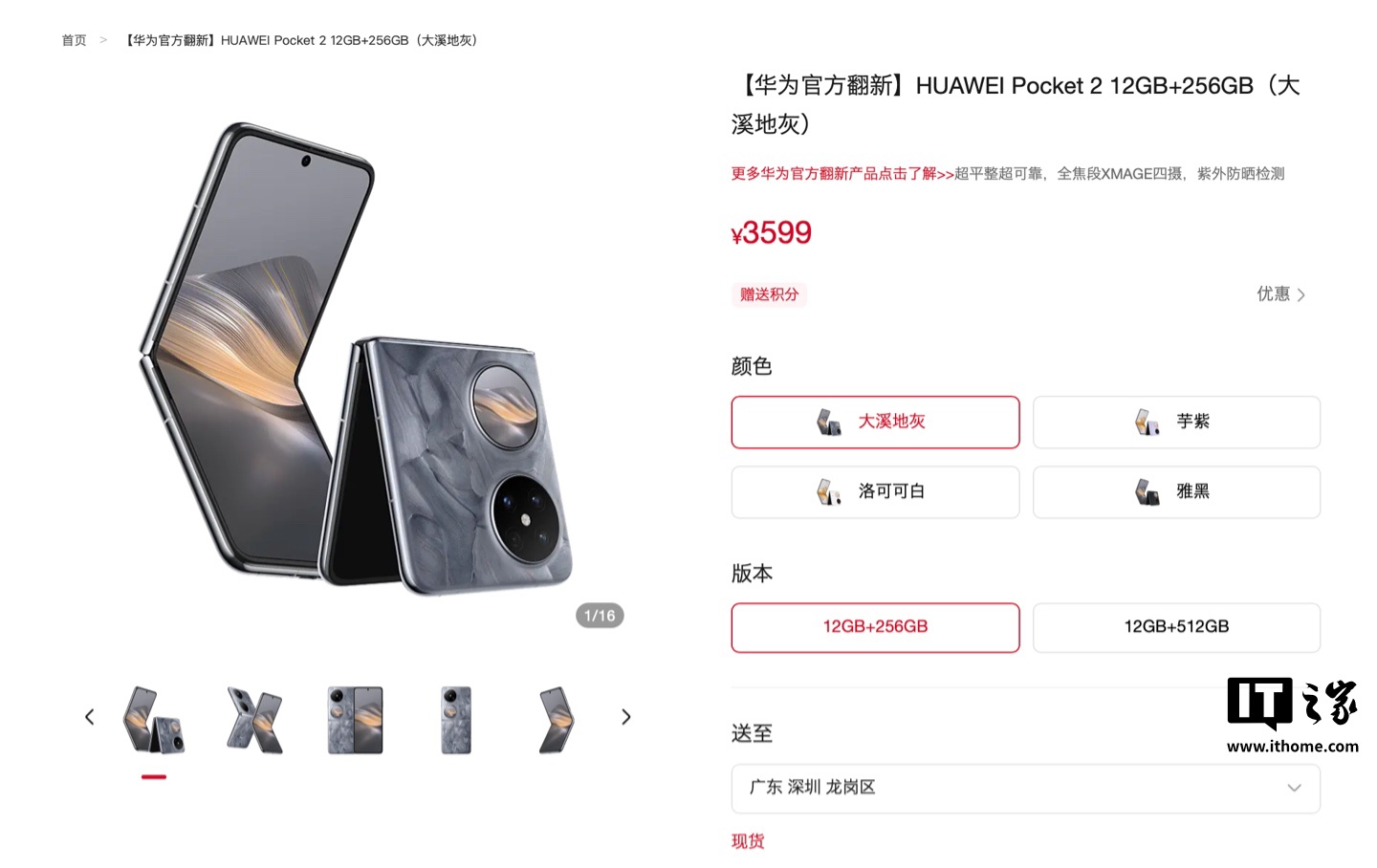
3599 元起,华为 Pocket 2 官翻版小折叠手机上架
Xin Lang Cai Jing· 2026-01-20 13:40
IT之家 1 月 20 日消息,华为现已在其商城上架官方翻新版 Pocket 2 小折叠手机,定价为 3599 元起,IT之家整理价格如下: 影像方面,华为 Pocket 2 号称"业界首创全焦段 XMAGE 四摄",后置 50MP 主摄(f / 1.6 光圈,OIS)+ 12MP 超广角微距(f / 2.2 光圈)+8MP 直立长焦(3 倍光学变焦,f / 2.4 光圈,OIS)+ 超光谱摄像头。 华为 Pocket 2 搭载了 Mate 60 同款的海思麒麟 9000S 芯片,配有 6.94 英寸 2690x1136 分辨率 1-120Hz 自适应刷新率 OLED 屏幕,最高 2200nits 亮度。 12GB RAM + 256GB 存储:3599 元 12GB RAM + 512GB 存储:3899 元 其他方面,华为 Pocket 2 支持超强灵犀通信,支持双向北斗卫星消息;拥有 4520mAh 电池,支持 66W 有线快充 + 40W 无线快充。 其他方面,华为 Pocket 2 支持超强灵犀通信,支持双向北斗卫星消息;拥有 4520mAh 电池,支持 66W 有线快充 + 40W 无线快充。 I ...
【市场】网传2025年中国手机市场激活量排名 vivo第一 小米第二
Xin Lang Cai Jing· 2026-01-20 13:40
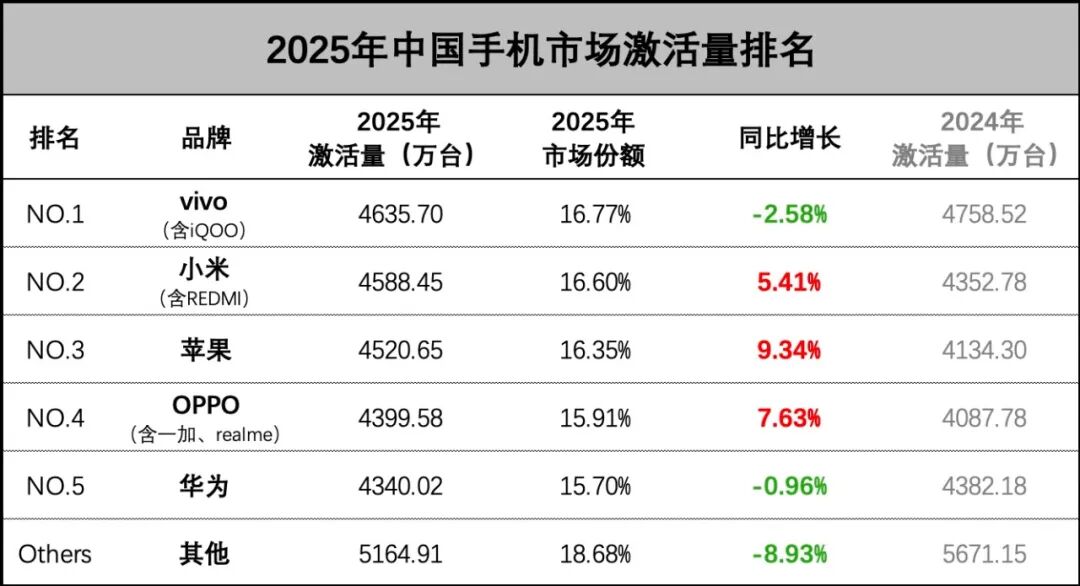
近日市场研究机构IDC、Counterpoint等纷纷更新了2025年第四季度(10-12月)和2025全年(1-12月)中国智能手机市场出货量数据,但都是出货量,今 日爆料达人数码闲聊站分享了一份激活量排名,来简单看下~ | | | | 2025年中国手机市场激活量排名 | | | | --- | --- | --- | --- | --- | --- | | 排名 | 品牌 | 2025年 | 2025年 | 同比增长 | 2024年 | | | | 激活量(万台) | 市场份额 | | 激活量(万台) | | NO.1 | VIVO (含iQOO) | 4635.70 | 16.77% | -2.58% | 4758.52 | | NO.2 | 小米 (含REDMI) | 4588.45 | 16.60% | 5.41% | 4352.78 | | NO.3 | 苹果 | 4520.65 | 16.35% | 9.34% | 4134.30 | | NO.4 | OPPO (含一加、realme) | 4399.58 | 15.91% | 7.63% | 4087.78 | | NO.5 | 华为 | ...


2025年中国手机激活量排名:vivo蝉联榜首 小米反超苹果登次席
Xin Lang Cai Jing· 2026-01-20 13:39
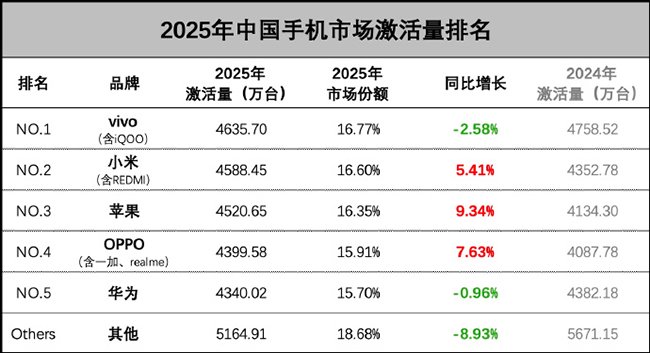
Core Insights - The 2025 Chinese smartphone market has seen a subtle shift in the competitive landscape, with vivo maintaining its lead, followed by Xiaomi and Apple, all surpassing 40 million units in activation volume [1][7]. Market Rankings - Vivo (including iQOO) ranked first with an activation volume of 46.357 million units, holding a market share of 16.77%, despite a slight decline of 2.58% from 2024 [2][8]. - Xiaomi (including REDMI) achieved an activation volume of 45.884 million units, capturing a market share of 16.60%, marking a growth of 5.41% year-on-year, thus surpassing Apple to claim the second position [3][9]. - Apple secured the third position with an activation volume of 45.206 million units and a market share of 16.35%, experiencing a significant growth of 9.34% [3][10]. - OPPO (including OnePlus and realme) ranked fourth with 43.996 million units and a market share of 15.91%, showing a year-on-year increase of 7.63% [4][10]. - Huawei placed fifth with an activation volume of 43.400 million units and a market share of 15.70%, reflecting a slight decline of 0.96% [4][10]. Market Trends - The overall smartphone market in China saw a slight decline in demand, with total shipments around 285 million units, down 0.6% year-on-year, indicating a softening consumer demand [2][8]. - The market is characterized by a "high-end consolidation and mid-range competition," with AI smartphones and foldable screens emerging as key growth areas [4][10]. - In 2025, the shipment volume of AI smartphones reached 118 million units, achieving a penetration rate of over 40% [4][10]. Future Outlook - Industry experts predict a continued slight decline in overall shipments by 2%-3% in 2026, with rising memory chip prices potentially increasing average smartphone prices by 10%-20% [11]. - The focus for leading brands will likely shift towards high-profit segments, intensifying market competition [11]. - Key questions for 2026 include whether vivo can maintain its lead, if Xiaomi can solidify its second position, and whether Apple can sustain its high-end growth trajectory [11].
昆仑万维周亚辉投资笔记:AI时代的Super App之战打响|甲子光年
Sou Hu Cai Jing· 2026-01-20 13:15
Core Viewpoint - The analysis suggests that Zhang Yiming will be the richest person in China and Asia in the next ten to twenty years due to his strong motivation, learning ability, execution power, and the resources of ByteDance [1]. Group 1: ByteDance's Strategic Position - ByteDance is expected to accelerate its international expansion, particularly with the launch of the Doubao phone and its entry into the automotive sector, aiming for a position in autonomous driving [2]. - The future of AI will see a significant reduction in the number of Super Apps, with only 3-4 likely to exceed 500 million monthly active users (MAU), compared to 10+ in the mobile internet era [2][3]. - The value of Super Apps in the AI era is projected to be several times greater than in the mobile internet era, with higher daily active users (DAU) to MAU ratios [2]. Group 2: Competitive Landscape - The competition for Super App dominance is intensifying, with Alibaba's Qwen positioned as a strong competitor to Doubao, marking a significant face-off between Zhang Yiming and Jack Ma [7]. - Other contenders for the Super App battle include Tencent, Meituan, Pinduoduo, JD.com, and Baidu, while smaller players like Xiaohongshu may struggle to compete effectively [7]. - The market for AI Super Apps is anticipated to be worth 1 trillion RMB, necessitating significant investment from companies with substantial cash reserves [7]. Group 3: Industry Insights - Huawei is unlikely to enter the Super App market due to its strategic focus on becoming a leading automotive group in China, while Tencent is seen as a stable player with a strong product matrix [8]. - The potential shift in user engagement from WeChat to Doubao could significantly alter the competitive dynamics in the app ecosystem, with Doubao's influence expected to grow rapidly [8].






前沿科创论坛在深圳举行 探讨AI技术扩散致远新路径
Zhong Guo Jing Ji Wang· 2026-01-20 13:08
Core Insights - The "Diffusion to the Future: Frontier Science and Technology Innovation Forum" was held in the Hong Kong-Shenzhen Innovation Cooperation Zone, focusing on the restructuring of scientific research and talent cultivation in the AI era, as well as addressing ethical challenges [1][2] - The forum emphasized the need for technology innovation to extend beyond laboratories and into industries, promoting an open and shared research environment [1][4] Group 1: AI and Research - The AI revolution is fundamentally different from previous industrial revolutions, as it liberates cognitive functions rather than just physical labor, impacting human decision-making [2] - Traditional research fields, such as materials science, must now integrate AI and automation to enhance efficiency and enable deeper scientific discoveries [2] - The center of research innovation is shifting from academic institutions to enterprises that possess vast amounts of data and computational power [2][4] Group 2: Education and Talent Development - Education must adapt to focus on skills that AI cannot easily replicate, such as problem discovery and systemic thinking [3] - Hong Kong University of Science and Technology has developed an experiential education model that combines interdisciplinary knowledge, design thinking, and entrepreneurial spirit to better meet societal and corporate needs [3] - The involvement of enterprises and society in the "last mile" of knowledge iteration is crucial for talent development in the Guangdong-Hong Kong-Macao Greater Bay Area [4] Group 3: Ethical Considerations and Data Privacy - The rapid evolution of AI raises significant concerns regarding user data privacy and the ethical implications of AI applications [5][6] - There is a pressing need for AI to be trustworthy and aligned with user welfare, rather than solely focused on maximizing corporate profits [5][6] - The Hong Kong-Shenzhen Innovation Cooperation Zone is implementing supportive policies to facilitate cross-border flows of personnel, capital, and information, enhancing the region's role in technological innovation [6]
抖音生活服务城市生态大会上海站举办,解码上海生意增长新引擎
Zhong Guo Shi Pin Wang· 2026-01-20 13:07
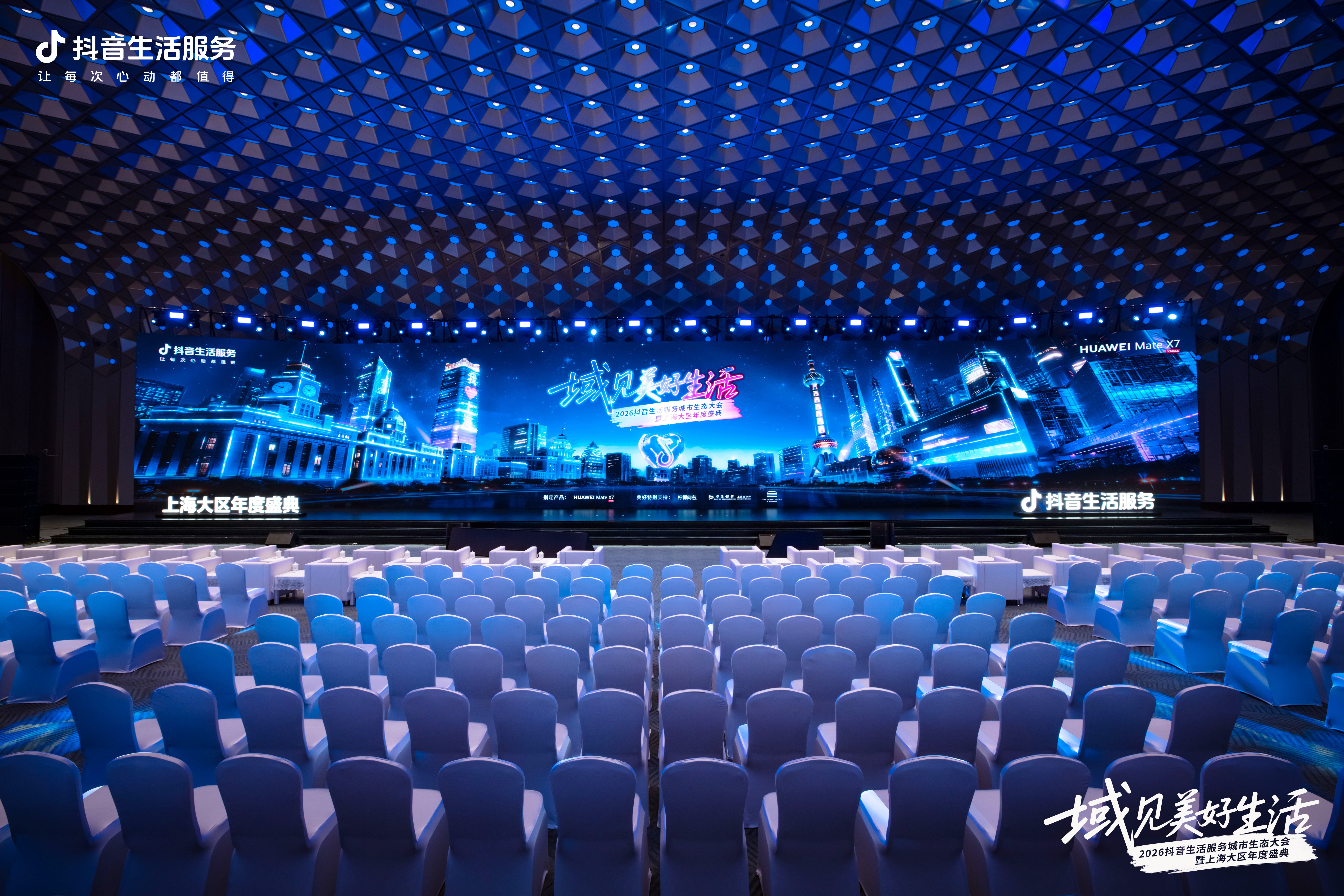
Core Insights - The "Yujian Beautiful Life" 2026 Douyin Life Service City Ecology Conference and Shanghai District Annual Merchant Ceremony was held in Shanghai, focusing on business practices and strategies in the life service industry, particularly in light of the upcoming Spring Festival [1] - The conference highlighted the growth opportunities for Shanghai merchants, emphasizing the importance of adapting to market trends and consumer demands [1] Economic Performance - In the first ten months of 2025, Shanghai's total retail sales of consumer goods reached 1.30 trillion yuan, a year-on-year increase of 4.8% [6] - Douyin's platform saw a 100% increase in transaction volume in Shanghai, with over 10 million users checking in on Douyin, and a 52% year-on-year growth in transaction user scale [6][7] Merchant Support and Strategies - Douyin Life Service reported a 59% increase in total transaction volume in 2025, with 3.99 million new merchants joining the platform [7] - The platform's data indicated a significant shift in consumer preferences, with over 50% growth in dining transactions and over 160% increase in steak orders in Shanghai [7] - High-end hotel bookings saw a growth rate exceeding 150%, outpacing mid-range and budget hotels [7] Marketing and Engagement Initiatives - Douyin collaborated with various city IPs to enhance offline commercial vitality, including a large-scale social game event in Shanghai's Yangpu district, which involved over 1,000 local merchants [8] - The platform explored a "business + advertising" ecosystem, achieving over 10 million yuan in GMV through events like the "Summer Flash Party" [8] Differentiated Business Approaches - Merchants are adopting differentiated strategies to escape homogenized competition, with traditional brands innovating their offerings and marketing approaches [9] - The hotel industry is shifting focus from volume to quality and efficiency, with strategies targeting family and leisure segments [10] - The entertainment sector is leveraging Douyin's content and social ecosystem to enhance brand visibility and operational effectiveness [10] Upcoming Opportunities - With the Spring Festival approaching, merchants are advised to prepare for increased consumer demand, particularly from over a million visitors expected in Shanghai [12] - Key opportunities include catering to local residents' entertainment needs and the diverse demands of tourists for local cuisine and experiences [13] Future Outlook - Douyin Life Service aims to continue optimizing operational tools and resources to support merchants, fostering long-term growth in Shanghai's local life industry [14] - In 2025, the platform's consumer payment order volume grew by 33%, indicating ongoing expansion in consumption scale and total transaction volume [14]
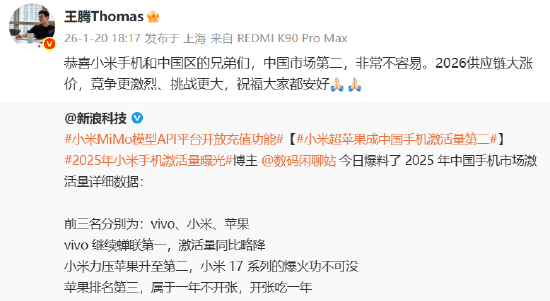
小米超苹果成中国手机激活量第二,王腾:恭喜,非常不容易
Xin Lang Cai Jing· 2026-01-20 12:08
Core Insights - The 2025 Chinese smartphone market activation data shows that Vivo, Xiaomi, and Apple are the top three brands, with Vivo experiencing a year-on-year decline in activation volume, while Xiaomi's sales of the Xiaomi 17 series have propelled it to surpass Apple and rank second in the market [1][4]. Group 1: Market Rankings - Vivo (including iQOO) ranks first with an activation volume of 4,635.70 thousand units, holding a market share of 16.77%, but showing a year-on-year decline of 2.58% from 4,758.52 thousand units in 2024 [3][6]. - Xiaomi (including REDMI) ranks second with an activation volume of 4,588.45 thousand units, achieving a market share of 16.60% and a year-on-year growth of 5.41% from 4,352.78 thousand units in 2024 [3][6]. - Apple ranks third with an activation volume of 4,520.65 thousand units, capturing a market share of 16.35% and experiencing a year-on-year increase of 9.34% from 4,134.30 thousand units in 2024 [3][6]. Group 2: Other Competitors - OPPO (including OnePlus and realme) ranks fourth with an activation volume of 4,399.58 thousand units and a market share of 15.91%, reflecting a year-on-year growth of 7.63% from 4,087.78 thousand units in 2024 [3][6]. - Huawei ranks fifth with an activation volume of 4,340.02 thousand units, holding a market share of 15.70%, but showing a slight year-on-year decline of 0.96% from 4,382.18 thousand units in 2024 [3][6]. - The "Others" category accounts for 5,164.91 thousand units, representing 18.68% of the market, with a year-on-year decline of 8.93% from 5,671.15 thousand units in 2024 [3][6]. Group 3: Industry Commentary - Former REDMI General Manager Wang Teng congratulated Xiaomi and its team for achieving the second position in the Chinese market, emphasizing the challenges ahead due to anticipated supply chain price increases and intensified competition in 2026 [1][4].