上海交通大学

Search documents
西安交通大学发表最新Nature论文
生物世界· 2025-05-01 11:46
Core Viewpoint - The research highlights a method to enhance the hydrogen tolerance of aluminum alloys, specifically through the engineering of structurally complex phases, which can significantly improve their performance in hydrogen environments [2][5][6]. Group 1: Research Findings - The study published in Nature by researchers from Xi'an Jiaotong University and Shanghai Jiao Tong University focuses on aluminum-magnesium alloys with added scandium, demonstrating high hydrogen capture capabilities through the use of fine Al3Sc nanoparticles and in-situ formed core-shell structures [5][6]. - A two-step heat treatment process induces heterogeneous nucleation of the Al3(Mg, Sc)2 phase on the surface of Al3Sc nanoparticles, leading to localized magnesium segregation and the formation of Al3(Mg, Sc)2 [6]. - The customized distribution of dual nanoparticles in Al-Mg-Sc alloys results in a strength increase of approximately 40% and a nearly fivefold improvement in hydrogen embrittlement resistance compared to alloys without scandium, achieving a record elongation rate for aluminum alloys with hydrogen content up to 7 ppmw [6]. Group 2: Broader Applications - The strategy developed in this research can be applied to other aluminum-magnesium-based alloys, including Al-Mg-Ti-Zr, Al-Mg-Cu-Sc, and Al-Mg-Zn-Sc alloys, indicating its potential for widespread industrial application [6].
谁又募到钱了
投资界· 2025-05-01 07:52
Fundraising Activities - In April 2023, a total of 28 fundraising activities were reported, indicating a vibrant investment environment [3] - The "Lilly Asia VI Fund" has been established, becoming the largest market-oriented fundraising biopharmaceutical VC fund in recent years, with a total commitment exceeding RMB 40 billion [5] - Prologis launched its first data center income fund, raising approximately RMB 2.6 billion, marking a significant entry into the data center investment space [7] - The "Kaihui Future Fund" was established in collaboration with L'Oréal and the Shanghai Jing'an District government, focusing on the evolving beauty market in China [8] - A fund initiated by Anhui entrepreneurs raised RMB 3 billion to invest in local science and technology enterprises [10] - Blackstone's latest European real estate fund raised €9.8 billion (approximately $10.6 billion), setting a record for third-party capital commitments in Europe [11] - The "Sanofi-Kaihui Pharmaceutical Innovation Fund" was established with a management scale of approximately RMB 2 billion, focusing on clinical-stage innovative drug pipelines [14] - The "Hubei Highway Development Fund" was launched with a total scale of RMB 30 billion, aimed at supporting modern transportation systems [16] - The Shanghai Biopharmaceutical M&A Fund completed its first closing with a scale of RMB 5 billion, supporting the high-quality development of the biopharmaceutical industry [18] - Eurazeo Capital V successfully raised approximately €3 billion, focusing on high-growth sectors such as technology-enabled business services and healthcare [20] New Fund Establishments - The "Zero One Venture" announced the completion of a new RMB 500 million fund, focusing on intelligent manufacturing and cross-border ventures [22] - The "Hongyi Investment" established a fund in Yixing with a first closing amount of RMB 606 million, targeting new energy and new materials [24] - The "Shaanxi Financial and High-tech Investment Fund" completed its second closing, focusing on semiconductor and AI sectors with a total scale of RMB 1.198 billion [26] - The "Pudong Venture Capital Fund" was launched with a target scale of RMB 1 billion, focusing on the biopharmaceutical industry [28] - Wuxi announced a market-oriented AI industry fund with a total scale of RMB 1 billion to support AI development [30] - The "Changfei Angel Fund" was launched with a total scale of RMB 600 million, focusing on optoelectronic information and AI sectors [32] - The "Low-altitude Economy Fund" in Sichuan was established to invest in eVTOL manufacturing, marking the province's first fund in this area [34] - The "Fangxi Purple Peak Venture Capital Fund" was registered, focusing on technology transfer and innovation in Hefei [36] - The "Yaan Chuan Business Emerging Industry Fund" was established with a registered scale of RMB 100 million, targeting seed and angel investments [39] - The "Wuhan University of Technology Innovation Fund" was launched with an initial fundraising scale of RMB 1 billion [41] Strategic Collaborations - The "AI Angel Fund" was launched by Shanghai Jiao Tong University, focusing on early-stage AI startups with a total scale of RMB 300 million [42] - The "Conch Private Equity Fund" was established, focusing on strategic emerging industries such as new materials and renewable energy [44] - The "Nongyin AIC Fund" was established in Tianjin, focusing on new generation information technology and intelligent manufacturing [56] - The "Hunan Gongrong Dici Venture Capital Fund" was registered, marking the first AIC venture capital fund in Hunan with a scale of RMB 1 billion [58] - The "Qingdao AIC Equity Investment Fund" was established, marking the first AIC fund in the city, with a focus on various strategic emerging industries [60]
华人学者一天发表了12篇Nature论文
生物世界· 2025-05-01 00:37
Core Viewpoint - The article highlights the significant contributions of Chinese scholars in the field of scientific research, particularly in the publication of papers in the prestigious journal Nature, showcasing advancements across various disciplines [2][4][6][8][10][13][16][18][20][22][24][26]. Group 1: Research Contributions - On April 30, 2025, a total of 23 papers were published in Nature, with 12 authored by Chinese scholars, indicating a strong presence in high-impact research [2]. - Notable papers include: - A study on DNA-gated molecular guards controlling bacterial defenses by Harvard Medical School [2]. - Research on a coronavirus similar to MERS-CoV by Nanjing Agricultural University and the Chinese Academy of Sciences [4]. - A paper on metal-centered planar annulenes by Southern University of Science and Technology [6]. - A study demonstrating dietary interventions outperforming microbial transplants in mice by the University of Chicago [8]. - Research on cell cycle duration's impact on oncogenic transformation by Sichuan University [10]. - A paper on hydrogen-tolerant aluminum alloys by Xi'an Jiaotong University and Shanghai Jiao Tong University [13]. - A study on the global evolution of inflammatory bowel disease by the Chinese University of Hong Kong [16]. - Research on subsurface microplastics in the ocean by the Japan Agency for Marine-Earth Science and Technology [18]. - A study on cardiac fibrosis suppression through mechanosensing inhibition by Stanford University [20]. - Research on serotonin and neurotensin inputs affecting social behavior by Mount Sinai School of Medicine [22]. - A paper on a battery-free nanofluidic delivery patch for internal organs by Peking University Third Hospital and others [24]. - A study on root tissue adaptation to soil stress using single-cell transcriptomics by Duke University [26].
「教」量|需理性看待北京协和医学院“4+4”项目,公平考核与透明监督是关键
2 1 Shi Ji Jing Ji Bao Dao· 2025-04-30 11:31
Group 1 - The "4+4" clinical medicine training program at Peking Union Medical College allows non-medical undergraduates to obtain a medical doctorate in four years, starting from 2019, and aims to attract diverse talent to the medical field [1][2] - The program is designed to address the limitations of traditional eight-year medical education, which often attracts students without a clear commitment to the medical profession, thus providing opportunities for those with a genuine interest in medicine [2] - The program includes rigorous admission processes with initial screening and multiple rounds of interviews, as well as various assessments throughout the training to ensure quality and competency of graduates [3] Group 2 - The "4+4" program is inspired by American medical education models, recognizing that students from humanities and social sciences can also excel in medicine, not just those from biological or engineering backgrounds [2] - There are concerns regarding the need for improved monitoring and training of graduates once they enter medical institutions, highlighting the importance of transparency in the program's admission, training, and graduation processes [3]
“4+4”医学博士,也需确保招生公平和培养质量
Xin Jing Bao· 2025-04-30 00:03
Core Viewpoint - The emergence of the "4+4" medical training model in China has sparked public concern regarding the fairness and quality of training for medical professionals, especially following a scandal involving a physician from this program [1][2]. Group 1: Overview of the "4+4" Model - The "4+4" model consists of 4 years of non-medical education followed by 4 years of medical education, allowing students without a medical background to become doctors [1]. - Institutions like Peking Union Medical College, Shanghai Jiao Tong University School of Medicine, and Zhejiang University School of Medicine have adopted this model, with the first cohort graduating in 2023 [1]. Group 2: Concerns and Criticisms - There are significant concerns about the transparency of the admissions process, as the model allows for a wide range of non-medical backgrounds, including engineering, economics, and foreign languages, raising questions about fairness and potential favoritism [2]. - The compressed timeline of 4 years for medical training raises doubts about the adequacy of the education and clinical experience compared to traditional models that require 8 years or more [2][3]. Group 3: Psychological Impact on Traditional Medical Students - The "4+4" model may create psychological challenges for students trained under traditional models, as they may feel disadvantaged by the shorter path to obtaining a medical degree [3]. - The potential advantages of cross-disciplinary backgrounds in the job market could further exacerbate feelings of inadequacy among traditional medical graduates [3]. Group 4: Need for Caution and Evaluation - The implementation of the "4+4" model requires careful consideration and ongoing evaluation to ensure that it does not compromise medical safety and education quality [3]. - Balancing diverse educational backgrounds with essential medical training is crucial to avoid undermining the competencies of future medical professionals [3].
高校网络育人能力提升研讨会在南航召开
Zhong Guo Qing Nian Bao· 2025-04-28 09:42
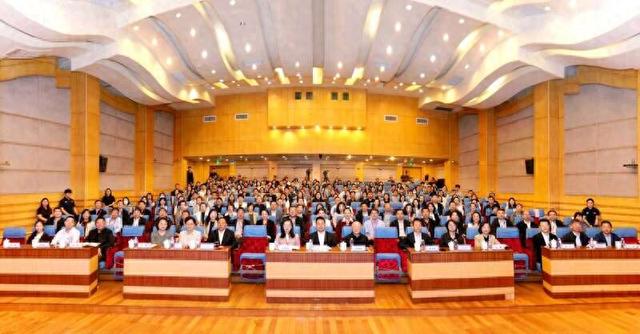
中国青年报客户端讯(通讯员 王伟 中青报·中青网见习记者 张仟煜 记者 李超)4月26日,高校网络育人 能力提升研讨会在南京航空航天大学举行。本次研讨会邀请16位全国高校思想政治工作中青年骨干、全 国高校网络教育名师、全国最美高校辅导员等省内外高校思政工作骨干参会。 研讨会现 场。主办方供图 南京航空航天大学党委书记甄良在致辞中表示,南航始终秉承"航空报国、贡献国防"的光荣使命,坚持 为党育英才、为国铸重器,长期以来,形成了以"徐川思政工作法"为代表的思政品牌,构建了南航特 色"大思政课"体系。他希望大家以研讨会为契机,充分交流经验、分享智慧,共同探索深化网络思政育 人模式,为培养更多担当民族复兴大任的时代新人贡献力量。 江苏省教育厅二级巡视员张鲤鲤在致辞中指出,为进一步提升网络思政工作的针对性和实效性,要做到 把握时代脉搏,主动超前布局,营造数字思政"新生态";聚焦思想引领,有力应对变局,奏响网络育 人"主旋律";坚守育人初心,奋力开拓新局,汇聚立德树人"强动能"。 南航能源与动力学院党委书记、马克思主义学院教授、"川流不息"思政团队负责人徐川汇报了"南航徐 川"公众号运营十周年的成果。自2015年创立以来 ...

重磅:“双一流”高校扩招2万人!涉多个“卡脖子”学科,广东怎么跟?
21世纪经济报道· 2025-03-14 00:31
Core Viewpoint - The article discusses the expansion of undergraduate enrollment in "Double First-Class" universities in China, highlighting a strategic shift towards quality over quantity in higher education, particularly in response to national development needs and industry demands [4][6][15]. Group 1: Enrollment Expansion - The National Development and Reform Commission aims to increase the enrollment scale of "Double First-Class" universities by 20,000 students in 2025, following an increase of 16,000 students last year [2][6]. - Top universities such as Tsinghua and Peking University have announced plans to expand undergraduate enrollment in cutting-edge fields like artificial intelligence [4][5]. - In Guangdong, universities like Sun Yat-sen University plan to increase their undergraduate enrollment by 90 students in 2025, contributing to a broader trend of gradual enrollment increases across the region [12][13]. Group 2: Strategic Focus Areas - The expansion of enrollment is primarily directed towards "bottleneck" disciplines such as artificial intelligence, integrated circuits, and biomedicine, as well as foundational and interdisciplinary fields [15][18]. - The emphasis on quality expansion aligns with the national strategy to cultivate high-quality innovative talents needed for economic development and technological advancement [8][16]. - The article notes that the enrollment increase is not merely about numbers but aims to address specific market needs and enhance the quality of education [5][9]. Group 3: Regional Implications - The article highlights that the Guangdong region is experiencing a notable trend of enrollment expansion, with universities gradually increasing their capacities to meet local economic demands [11][14]. - The "Million Talents Gathering in South Guangdong" initiative reflects the region's desire to attract high-level talents, emphasizing the importance of aligning educational offerings with industry needs [17]. - The development of interdisciplinary programs in response to technological advancements is seen as crucial for fostering innovation and meeting the demands of emerging industries [18].
本科扩招、文科缩减,顶尖大学的真相是什么?
21世纪经济报道· 2025-03-13 14:03
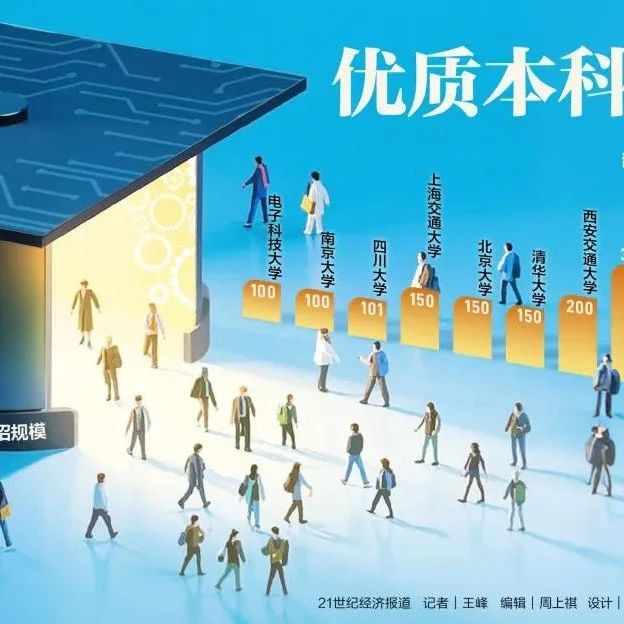
Core Viewpoint - The article discusses the expansion of high-quality undergraduate programs in China, highlighting the increase in enrollment numbers at top universities while also addressing the reduction of liberal arts programs, suggesting a shift towards interdisciplinary studies and the integration of liberal arts with science and technology [1][2][3]. Group 1: Expansion of Undergraduate Programs - The Chinese government aims to increase the enrollment of "double first-class" universities, with an additional 20,000 students planned for 2025, following a previous increase of 16,000 students [1]. - Tsinghua University and Peking University have announced plans to expand their undergraduate admissions by 150 students each, focusing on fields such as artificial intelligence and clinical medicine [5][6]. - Other 985 universities, including Shanghai Jiao Tong University and Xi'an Jiaotong University, are also expanding their enrollment, with a focus on emerging fields like AI, integrated circuits, and biomedical sciences [5][7]. Group 2: Reduction of Liberal Arts Programs - The trend of reducing liberal arts programs has sparked discussions, with Fudan University's president stating that the proportion of liberal arts admissions will decrease from 30-40% to 20% [2][9]. - Despite the reduction, data from the C9 university alliance indicates that liberal arts programs will not disappear, but rather undergo adjustments to better align with societal needs [9][11]. - The article emphasizes that while liberal arts may face cuts, they still hold significant importance in comprehensive universities, with a substantial number of students and faculty dedicated to these fields [11][13]. Group 3: Interdisciplinary Focus - The article suggests that the future of liberal arts lies in interdisciplinary integration, with universities developing programs that combine liberal arts with science and technology [3][15]. - Examples include Tsinghua University offering cross-disciplinary programs in political economy and creative design, and Fudan University launching new programs like neurolinguistics and data intelligence [18][19]. - The shift towards interdisciplinary studies is seen as a response to the evolving job market and societal demands, indicating a need for graduates who possess a blend of skills from both liberal arts and sciences [16][17].

清华、上交、武大等多所高校宣布!
券商中国· 2025-03-07 23:29
Core Viewpoint - Several top universities in China, including Tsinghua University, Yunnan University, Shanghai Jiao Tong University, China Agricultural University, and Wuhan University, have announced plans to expand their undergraduate enrollment to meet national strategic needs and enhance the quality of talent cultivation. Group 1: University-Specific Enrollment Plans - Wuhan University plans to increase its undergraduate enrollment by 7,300 students by 2025, focusing on cultivating interdisciplinary talents in artificial intelligence and emerging industries [3]. - China Agricultural University will add 500 undergraduate spots, targeting fields such as food security, biotechnology, and sustainable development [5]. - Shanghai Jiao Tong University aims to expand its enrollment by 150 students, concentrating on critical areas like artificial intelligence, integrated circuits, and renewable energy [7]. - Yunnan University intends to increase its undergraduate enrollment by 300 students, emphasizing science, agriculture, and medical fields to address talent shortages [9]. - Tsinghua University plans to add approximately 150 undergraduate spots, establishing a new general education college to foster interdisciplinary talents [10]. Group 2: National Higher Education Expansion Goals - The National Development and Reform Commission aims to increase the enrollment of "Double First-Class" universities by 20,000 students this year, following a previous increase of 16,000 students last year [12].
UCL强化学习派:汪军与他的学生们
雷峰网· 2025-02-27 10:15
Core Viewpoint - The article discusses the evolution and significance of reinforcement learning (RL) in China, highlighting key figures and their contributions to the field, particularly focusing on Wang Jun and his influence on the development of RL research and education in China [2][46]. Group 1: Historical Context and Development - Wang Jun's journey in AI began with information retrieval and recommendation systems, where he achieved significant academic recognition [4][8]. - His transition to reinforcement learning was influenced by his experiences in advertising, where he recognized the parallels between decision-making in advertising and RL principles [12][14]. - The establishment of the RL China community marked a pivotal moment in promoting RL research and education in China, addressing the lack of resources and formal education in the field [49][50]. Group 2: Contributions and Innovations - Wang Jun and his students have made substantial contributions to RL, including the development of SeqGAN and IRGAN, which integrate RL with generative adversarial networks for improved performance in various applications [23][24]. - The introduction of multi-agent systems in RL research has been a significant focus, with applications in complex environments such as advertising and gaming [27][28]. - The establishment of MediaGamma allowed for practical applications of RL in real-time advertising, showcasing the commercial viability of RL algorithms [17][18]. Group 3: Educational Initiatives and Community Building - The formation of RL China has facilitated knowledge sharing and collaboration among researchers and students, significantly enhancing the learning environment for RL in China [49][52]. - The publication of "Hands-On Reinforcement Learning" has provided accessible educational resources, bridging the gap between theory and practice for students [53]. - Wang Jun's mentorship has fostered a new generation of RL researchers, emphasizing the importance of exploration and innovation in academic pursuits [26][43]. Group 4: Future Directions and Challenges - The integration of RL with large models and embodied intelligence represents a promising frontier for future research, aiming to address the challenges of generalization across different tasks and environments [56][62]. - The ongoing exploration of RL applications in real-world scenarios, such as robotics and automated decision-making, highlights the potential for RL to impact various industries significantly [61][62]. - Despite setbacks in some projects, the commitment to advancing RL research and its applications remains strong among Wang Jun and his students, indicating a resilient and forward-looking approach to the field [56][62].