
欧莱雅

Search documents
科蒂进入转型关键期
Xin Lang Cai Jing· 2025-12-24 17:47
Core Viewpoint - Coty has appointed Markus Strobel as the interim CEO starting January 1, 2026, succeeding Sue Nabi, as the company aims to strengthen its leadership in the beauty sector and drive profitability growth and expansion [1][3] Leadership Change - Markus Strobel brings 33 years of experience from Procter & Gamble, where he led the global skin and personal care business, recognized for revitalizing the SK-II brand [1] - Coty expresses confidence in Strobel's ability to lead the company during a critical period, particularly with a strategic review of its consumer beauty business [3] Business Restructuring - Coty is adjusting its product portfolio, having sold the remaining 25.8% stake in Wella to KKR, completing a plan initiated in 2020 to simplify its operations and maximize the value of its Wella business [3] - The proceeds from this transaction will primarily be used to repay short-term and long-term debt, marking a significant milestone in Coty's transformation and long-term deleveraging commitment [3] Impact of Brand Loss - The recent deal between Kering and L'Oréal, valued at over €4 billion, affects Coty's operations of the Gucci brand, which is crucial to Coty's revenue, accounting for approximately 8% of total sales and 11% of profits [4][5] - Losing the Gucci brand is expected to significantly impact Coty's high-end strategy and brand competitiveness in the beauty market [5] Financial Performance - Coty reported a net revenue of $5.893 billion for fiscal year 2025, a decline of 3.68%, resulting in a loss of $381 million, marking a shift from profit to loss [5] - In the first quarter of fiscal year 2026, Coty experienced an 8% revenue decline, with both the high-end beauty and mass beauty segments seeing decreases of 6% and 11%, respectively [5] Strategic Initiatives - In response to challenges, Coty is focusing on its high-end lines, including Hugo Boss and Burberry, with Hugo Boss's new fragrance performing well in Europe [6] - Coty has signed beauty licensing agreements with brands like Etro and Marni, and is launching its own fragrance brand, Infiniment Coty Paris, in 2024, aiming to innovate in the fragrance market [6]



京东时尚秒送合作门店数量增长超150% 助力波司登、安踏等品牌实现新增量
Zhong Guo Jin Rong Xin Xi Wang· 2025-12-24 12:43
Core Insights - The instant retail sector in China is projected to exceed 1 trillion yuan by 2026 and reach 2 trillion yuan by 2030, driven by the dual forces of digital economy and consumer transformation [1] - JD Fashion's instant delivery service is experiencing explosive growth, becoming a key method for brands to engage in instant retail and for consumers to access trendy products [1] Group 1: Industry Growth and Trends - The Ministry of Commerce's report indicates that the instant retail market is set for significant expansion, with a focus on building a robust ecosystem for high-quality development [1] - JD Fashion's instant delivery service has onboarded over 1,000 merchants by the end of 2025, including major retail brands, and has seen a more than 150% year-on-year increase in store numbers [1] Group 2: Sales Performance - Major sports brands like Nike, Adidas, and Anta have reported over 200% year-on-year growth in sales through JD Fashion's instant delivery service, with some categories like underwear seeing a 500% increase [1] - During the Qixi Festival in 2025, the beauty and skincare category saw a 150% year-on-year increase in sales, with luxury brands experiencing growth rates exceeding 600% [2] Group 3: Seasonal Promotions and Consumer Engagement - JD Fashion's instant delivery service is capitalizing on seasonal events, offering significant discounts and promotions for products like beauty gift sets and sports apparel during holidays [2] - The service aims to address consumer pain points by ensuring product quality and timely delivery, enhancing the overall shopping experience [2]


金甲虫刘船高:即时零售改变不了线下
Sou Hu Cai Jing· 2025-12-24 12:29
Core Viewpoint - The recent announcement by the National Medical Products Administration regarding 37 batches of non-compliant cosmetics has highlighted the challenges of counterfeit products in the instant retail sector, particularly on platforms like Meituan [1] Group 1: Instant Retail Growth and Market Potential - The instant retail market in China is projected to exceed 1 trillion yuan by 2026 and reach 2 trillion yuan by 2030, with an average annual growth rate of 12.6% during the 14th Five-Year Plan period [1][2] - Major e-commerce platforms, including JD.com and Alibaba, have significantly invested in instant retail, with JD.com entering the food delivery sector and offering substantial subsidies to attract users and merchants [2][4] - Instant retail has shown remarkable performance during the Double 11 shopping festival, with total e-commerce sales reaching 16,950 billion yuan, a year-on-year increase of 14.2%, while instant retail sales surged to 670 billion yuan, up 138.4% [4] Group 2: Adaptability of Beauty Products in Instant Retail - Beauty products are well-suited for instant retail due to their small size, high price points, and standardized nature, making them ideal for quick delivery [5] - The beauty industry has embraced instant retail as a pioneering sector, with major platforms like Meituan and JD.com seeing significant growth in beauty product sales [6] Group 3: Differentiated Development of Beauty Brands - Beauty brands are primarily adopting an indirect entry model into instant retail, relying on beauty collection stores and large supermarkets to reach consumers [7] - Notable brands like L'Oréal and Lin Qingxuan have successfully completed official certifications for entry into instant retail platforms, while many others are still in the process [7][8] Group 4: Consumer Behavior and Market Dynamics - Despite the rise of instant retail, some industry experts argue that it may not significantly alter the current landscape of offline retail, as consumers often stock up on beauty products rather than relying on immediate purchases [9] - The overlap between instant retail customer bases and existing offline store customers suggests that speed may not be the primary concern for beauty consumers [9] Group 5: Strategic Considerations for Retailers - Retailers are advised to focus on brand strength, quality, pricing, and service rather than chasing every market trend, as a strong brand presence can naturally attract consumers regardless of channel changes [11][12] - Companies like Jinjia Chong have maintained a sustainable development model by emphasizing authenticity and affordability, which has contributed to their long-term success in the market [11]

换帅,出售股权……科蒂进入转型关键期
Bei Jing Shang Bao· 2025-12-24 10:54
Core Insights - Coty has appointed Markus Strobel as the interim CEO starting January 1, 2026, succeeding Sue Nabi, indicating a significant leadership change at a critical time for the company [1][3] Leadership Change - Markus Strobel brings 33 years of experience from Procter & Gamble, where he was the president of global skin and personal care, overseeing a multi-billion dollar portfolio [3] - Coty expresses strong confidence in Strobel's ability to lead the company through a strategic review of its consumer beauty business, aiming to enhance its leadership position and drive profitability [3] Product Portfolio Adjustment - Coty announced the sale of its remaining 25.8% stake in Wella to KKR-managed capital accounts, completing a plan initiated in 2020 to simplify its portfolio and operations [4] - The proceeds from this sale will primarily be used to repay short-term and long-term debt, marking a key milestone in Coty's transformation and long-term deleveraging commitment [4] Impact of Brand Loss - The recent deal between Kering and L'Oréal, valued at over €4 billion, affects Coty's management of the Gucci brand, which is crucial to its strategy, as Gucci accounts for approximately 8% of Coty's total sales and 11% of its profits [5] - The loss of Gucci's authorization is expected to significantly impact Coty's high-end strategy and brand competitiveness in the beauty market [5] Financial Performance Challenges - Coty reported a net revenue of $5.893 billion for fiscal year 2025, a decline of 3.68%, and a loss of $381 million, marking a shift from profit to loss [6] - In the first quarter of fiscal year 2026, Coty experienced an 8% revenue decline, with both high-end and mass beauty segments seeing decreases of 6% and 11%, respectively [6] Strategic Initiatives - In response to challenges, Coty is focusing on its high-end brands, including Hugo Boss and Burberry, with Hugo Boss's new fragrance performing well in Europe [6] - Coty has signed beauty licensing agreements with Italian luxury brands Etro and Marni, as well as Swarovski, and is launching its own fragrance brand, Infiniment Coty Paris, in 2024 [6]
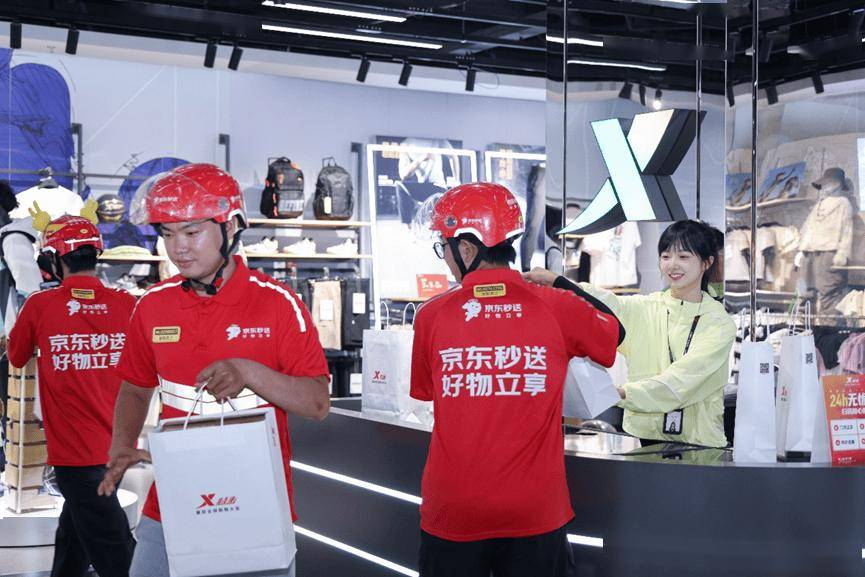
京东时尚秒送合作门店数量增长超150%,大牌节日礼盒爆款低至5折
Sou Hu Cai Jing· 2025-12-24 06:59
截至2025年底,京东时尚秒送累计入驻商家超千家,包括滔搏、安踏、李宁、鸿星尔克、波司登、特步等国内零售巨头、 服饰运动大牌;营业门店数量同比增长超150%,覆盖了包括服装、鞋靴、内衣、美妆、运动户外等多个核心品类,持续为 消费者提供更丰富、更便捷的即时时尚消费体验。 在数字经济与消费转型的双重驱动下,即时零售正用"分钟级履约"重新定义商业效率的天花板。根据商务部研究院发布的 《即时零售行业发展报告(2025)》,2026年我国即时零售规模将突破1万亿元,预计到2030年,将达到2万亿元。构建良 好生态,推动高质量发展将是即时零售行业的重要议题。京东时尚秒送在2025年全面加速服饰、运动、美妆等核心品类供 给布局,迎来爆发式增长,已成为品牌布局即时零售、消费者获取潮流商品的重要方式。 2025年,品牌商家也通过京东时尚秒送实现了销售新增量。年初至今,耐克、阿迪达斯、骆驼、安踏等运动户外品牌成交 额同比增长均超2倍,内衣品牌松山棉店成交额同比增长5倍;随着冬季保暖需求增加,自11月波司登入驻京东秒送以来, 其销售也呈现高增长态势。 除此以外,京东时尚秒送在重要节日期间增长也尤为显著。近年来,受送礼观念日常化、礼 ...
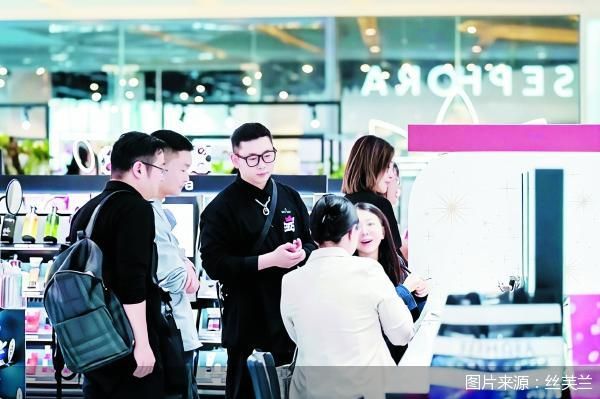
丝芙兰降身段引入平价“网红”美妆
Bei Jing Shang Bao· 2025-12-23 16:03
Core Viewpoint - Sephora is undergoing a transformation by collaborating with several affordable makeup brands to diversify its offerings and address declining sales in the Chinese market, which has led to losses [1][5][10]. Group 1: Brand Collaborations - Sephora has partnered with popular affordable brands such as BABI, Lianhuo, and Sanzitang, which are characterized by their low prices and strong sales performance [1][3]. - Lianhuo, launched by Marubi in 2017, reported significant revenue growth, with 2023 revenue expected to exceed 1 billion yuan, reflecting a 125.14% year-on-year increase [3]. - BABI's products, priced around 50 yuan, achieved a total sales of 600 million yuan by the end of 2023, with a year-on-year growth of over 70% [3]. Group 2: Market Position and Challenges - Sephora, traditionally known for its high-end positioning and exclusive partnerships with luxury brands, is now blurring the lines between high-end and affordable makeup, which may dilute its unique market identity [4][10]. - The Chinese market for high-end cosmetics has been contracting, with a reported 8% decrease in consumption from 2021 to 2023, impacting major brands like L'Oréal and Estée Lauder [10][11]. Group 3: Financial Performance - Sephora's financial performance in China has been under pressure, with combined revenues of 3.444 billion yuan in the first half of the year, a 12.3% decline year-on-year, and a net loss of 120 million yuan [8]. - The company has faced cumulative losses exceeding 1 billion yuan since 2022, indicating a troubling trend in its financial health [8]. Group 4: Consumer Sentiment - Long-time Sephora customers express dissatisfaction with the brand's shift towards affordable products, feeling that it undermines the premium shopping experience they once enjoyed [7]. - A survey indicated that a significant portion of Sephora's customer base has lost interest, with many stating they have not visited the store in years [7]. Group 5: Industry Trends - The retail landscape for cosmetics is shifting towards online channels, with live-streaming sales becoming the dominant shopping method, which poses challenges for traditional brick-and-mortar stores like Sephora [9]. - The emergence of new beauty retail brands focusing on high cost-performance ratios has intensified competition in the market, further complicating Sephora's position [10][12].
天图投资冯卫东:质价比、小确幸、自我完善消费将成主流趋势丨2025T-EDGE
Tai Mei Ti A P P· 2025-12-23 13:22
Core Insights - The 2025 T-EDGE Annual Conference and AI Global Dialogue will take place from December 15 to 21, featuring top leaders in innovation and business discussing various topics, including the opportunities and challenges for consumer brands in the AI era [2][3]. Group 1: Market Trends - The current market is described as being in a "consumption mini ice age," driven by structural economic changes, leading consumers to prioritize cost-effectiveness and quality-price ratios [3][5][19]. - There is a notable shift towards "small happiness consumption," where consumers seek emotional value through experiences rather than large purchases [19]. - The trend of self-improvement consumption is emerging, with consumers investing in health and personal development, indicating a shift in spending priorities [19][20]. Group 2: Brand Strategies - Brands are increasingly adopting local capital strategies, selling their China operations while retaining long-term brand licensing to benefit from ongoing brand value appreciation [4][8]. - Effective differentiation and value innovation are crucial for brands to maintain competitive advantages, especially in an AI-driven market [3][14]. - The integration of AI into products and services is seen as a revolutionary opportunity for brands to enhance communication and consumer engagement [3][11][15]. Group 3: Investment Insights - The investment strategy is shifting towards growth and mature stage investments rather than relying on IPOs, reflecting a broader trend in the investment landscape [9][22]. - The focus on consumer sectors is evolving, with an emphasis on sustainable and innovative brands that can adapt to changing consumer preferences and market conditions [19][22]. - The AI revolution is expected to create significant opportunities across various consumer categories, particularly in health and technology sectors [20][21].

引入平价彩妆,丝芙兰的自救
Bei Jing Shang Bao· 2025-12-23 12:56
Core Viewpoint - Sephora is undergoing a transformation by collaborating with affordable makeup brands to diversify its offerings and address declining sales in the Chinese market, which has led to losses [2][5][6]. Group 1: Brand Collaborations - Sephora has partnered with several affordable makeup brands, including BABI, Lianhuo from Marubi, and Sanzitang, which are characterized by their low prices and strong sales performance [2][3]. - Lianhuo, launched in 2017, reported significant revenue growth, with 2023 revenue reaching 643 million yuan, a 125.14% increase year-on-year, and is projected to exceed 1 billion yuan in 2025 [3]. - BABI's products, priced around 50 yuan, have also seen impressive sales, with total sales reaching 600 million yuan by the end of 2023, and a projected GMV of 750 million yuan in 2025, reflecting over 70% growth [3]. Group 2: Market Position and Challenges - Sephora, traditionally known for its high-end positioning and exclusive partnerships with luxury brands, is now blurring the lines between high-end and affordable makeup, which may dilute its unique market identity [4][5]. - The high-end makeup market in China has been experiencing a slowdown, with a reported 8% contraction in consumer spending from 2021 to 2023, impacting major brands like L'Oréal and Estée Lauder [12]. - The shift towards affordable brands is seen as a response to the rapid growth of budget makeup brands and the changing dynamics of consumer preferences, particularly among younger demographics [6][11]. Group 3: Consumer Sentiment and Performance - Consumer feedback indicates dissatisfaction with Sephora's shift towards affordable brands, with long-time members feeling that the brand is lowering its standards and losing its premium shopping experience [8]. - Financial reports show that Sephora China has been facing consistent losses, with a combined net loss of 1.2 billion yuan in the first half of 2025, following a trend of declining revenues [9]. - The competitive landscape has intensified with the rise of new beauty retail brands that focus on high cost-performance ratios, further challenging Sephora's traditional business model [10][11].
美妆行业周度市场观察-20251223
Ai Rui Zi Xun· 2025-12-23 07:38
Investment Rating - The report does not explicitly provide an investment rating for the beauty industry Core Insights - The beauty industry is witnessing a significant shift towards targeting Generation Z, with annual beauty spending reaching $5 billion, and brands are leveraging campus marketing strategies to engage this demographic [4] - Traditional pharmacy chains are undergoing transformation to include beauty and personal care products, with YST planning to add beauty categories in 70% of its stores, indicating a strategic pivot in response to market challenges [4] - Estee Lauder is utilizing artificial intelligence in fragrance creation, enhancing innovation and efficiency in product development [8] Industry Trends - International universities are becoming battlegrounds for fashion and beauty brands, with brands employing campus ambassadors and social media strategies to penetrate this market [4] - The "ten-thousand-store pharmacy" model is undergoing significant changes, with many beauty brands entering the pharmacy sector to capitalize on the growing demand for beauty products [4] Top Brand News - L'Oreal and Estee Lauder have signed global ambassadors to enhance brand influence, indicating a competitive landscape for talent acquisition [7] - Estee Lauder has launched a global innovation center for fragrances, integrating AI to monitor trends and optimize formulations [8] - Huaxi Biological has faced a decline in revenue and market value due to increased competition in the hyaluronic acid market, prompting a need for diversification and new growth avenues [8]
Sue Nabi to Exit Coty and Be Succeeded by Markus Strobel
Yahoo Finance· 2025-12-22 13:01
Leadership Changes - Sue Nabi is stepping down as CEO of Coty, with Markus Strobel appointed as interim CEO and executive chairman of the board [1][3] - Strobel has a 33-year background at Procter & Gamble, where he held senior roles in beauty and grooming, including leading prestigious brands [2][3] Financial Implications - Shares of Coty closed down 3.5% to $3.15 following the announcement of leadership changes [2] - Strobel's annual base salary is set at $1.25 million, which will decrease to $1 million once he is no longer interim CEO, along with a one-time cash sign-on bonus of $940,000 [4] Executive Compensation - Nabi was the highest-paid beauty executive in the U.S. in 2023, with total compensation of $149.4 million [5] - Upon her departure, Nabi will receive approximately $1.74 million in cash and the vesting of about 2,083,333 restricted stock units [6] Strategic Challenges - Coty is facing significant challenges, including the impending loss of the Gucci license for fragrance and beauty in 2028, which currently contributes about 8% of Coty's sales and 11% of its profits [7]