隆基绿能

Search documents
1月绿色甲醇25项进展:交付/签约/备案齐发力
势银能链· 2026-02-05 03:02
Core Viewpoint - The green methanol industry is experiencing significant growth in 2026, marked by advancements across the entire supply chain, including shipping applications, port refueling, project approvals, and capacity expansion, with 25 notable developments indicating a robust acceleration in progress [2]. Application Side: Shipping Delivery and Port Refueling - In January, the first methanol dual-fuel 15,000 TEU container ship "Dafeng Kristal" was delivered in Dalian, China, capable of achieving over 90% lifecycle emissions reduction, meeting current maritime environmental standards [3]. - Shenzhen Port successfully completed its first international refueling of green methanol, supplying 200 tons of green methanol produced by CIMC Enric to the vessel "Kangnai" [3]. - The 8,500 DWT dual-phase stainless steel chemical tanker "Zhongran Green Energy 85" was launched, enhancing the green methanol refueling capacity in Shanghai and Ningbo [3]. Project Side: Major Projects and Capacity Expansion - Since January, numerous green methanol projects have been rapidly advancing across the country, with ongoing approvals, construction, and contracts, leading to simultaneous improvements in capacity and technology [4]. - In Inner Mongolia, several projects have been approved, including a 200,000-ton integrated green methanol project and a 320,000-ton/year green methanol technology upgrade project with an investment of 247 million yuan [5]. - The first phase of a wind-solar hydrogen integration project in Chifeng is approved for 150,000 tons/year of green methanol production, with a second phase planned for 350,000 tons/year [5]. International Developments - European startup Vioneo has shifted its focus to China, abandoning plans for a 300,000-ton/year green methanol project in Europe to invest in a similar project in China [8]. Collaboration Side: Industry Chain Synergy and Technological Innovation - The rapid development of the industry relies on collaboration across the supply chain, integrating resources and focusing on key areas such as green methanol preparation and core equipment [9]. - A pilot project for "kiloton-level biogas carbon-directed conversion to green methanol" achieved a methanol purity of 99.99% and received international green certification [9]. - A significant project in Tieling, Liaoning, with an investment of 5.25 billion yuan, aims to produce 240,000 tons of green methanol annually, alongside other products [9]. Summary of January Developments - January's breakthroughs illustrate the accelerated rise of the green methanol industry, with applications in shipping, substantial investment projects, and collaborative innovations, positioning green methanol as a key driver for energy transition and industrial upgrade [14].


储能行业系列报告:容量电价政策发布,储能有望打开成长空间
Bank of China Securities· 2026-02-05 02:46
Investment Rating - The report maintains an "Outperform" rating for the energy storage industry, indicating expected performance above the market benchmark over the next 6-12 months [2][44]. Core Insights - During the "14th Five-Year Plan" period, China is expected to face increased carbon reduction pressures while experiencing a slowdown in new energy installation growth. The introduction of a national capacity pricing policy in January 2026 is anticipated to open up new installation space for renewable energy and support high-yield investment opportunities for power companies [2][4][12]. - The demand for energy storage is projected to grow significantly, with new energy storage installations expected to reach 66.43 GW and 189.48 GWh in 2025, representing year-on-year increases of 52% in power scale and 73% in energy scale [31][37]. Summary by Sections Investment Recommendations - The report suggests prioritizing investments in leading companies involved in energy storage integration and upstream battery cells, recommending firms such as Sungrow Power Supply, Trina Solar, LONGi Green Energy, JinkoSolar, CATL, and EVE Energy. It also advises monitoring companies like Haibo Technology, Sungrow Electric, Canadian Solar, and Penghui Energy [4][37]. Policy Impact - The national capacity pricing policy aims to stabilize investment returns for energy storage projects, potentially increasing project profitability to over 8% under favorable conditions. This policy is seen as a crucial element for driving investment enthusiasm among state-owned enterprises in the energy sector [4][23][37]. Market Dynamics - The report highlights that the share of energy storage in new energy installations is expected to rise, with energy storage becoming a core investment direction for power state-owned enterprises during the "15th Five-Year Plan" period. The report anticipates a shift in demand for energy storage beyond just the northern regions of China, with central and eastern provinces also likely to see increased demand [22][24][37]. Growth Projections - The energy storage market is expected to experience high growth, with projections indicating that from 2026 to 2027, domestic energy storage installations will maintain a high level of activity. The report emphasizes the importance of energy storage in supporting the stability of renewable energy sources like wind and solar [31][37].
亚玛顿20260204
2026-02-05 02:21
Summary of Yamaton's Conference Call Company Overview - **Company**: Yamaton - **Industry**: Photovoltaic Glass Manufacturing Key Points Financial Performance - In 2025, Yamaton's revenue benefited from the energy storage market, with solar roof tiles and energy storage door glass contributing approximately 192 million RMB. However, the company still incurred a loss of 100 to 120 million RMB, primarily due to low photovoltaic glass prices and rising raw material costs, resulting in a negative gross margin [2][6] - The company's glass sales volume in 2025 was approximately 150 million square meters, with a focus on securing supply for mainstream customers rather than blindly accepting orders to avoid losses and accounts receivable risks [4][18] - Despite a positive gross margin for 1.6 mm photovoltaic glass, the net profit remained negative due to overall market conditions [19] Market Position and Product Offering - Yamaton holds over 50% market share in the 1.6 mm photovoltaic glass segment, but there is no significant premium pricing compared to 2.0 mm products [4][19] - Major clients include Trina, Jinko, and Longi, with applications primarily in overseas residential photovoltaic scenarios [9] - The company is a supplier of traditional technology route photovoltaic glass for Tesla's 3.2 mm single-sided components [10] Strategic Initiatives - To address the demand from Tesla and uncertainties in US-China relations, Yamaton plans to build a 500,000-ton photovoltaic glass production capacity in the UAE, with a total investment of approximately 250 million USD, expected to be operational by mid-2027 [2][5] - The UAE site was chosen for its favorable relations with both China and the US, low energy costs, and a 5% tariff on exports to the US, enhancing product competitiveness [5][12] Technological Capabilities - The UAE facility will have the capability to produce various thickness specifications of photovoltaic glass, ranging from 1.6 mm to 3.2 mm, with no significant technical challenges anticipated [11] - Yamaton has a history of technological innovation, being a pioneer in products such as coated glass and ultra-thin double glass [3] Future Outlook - The profitability outlook for the photovoltaic glass industry in 2026 is uncertain, heavily dependent on price trends. The first half of 2026 may see challenges in profitability due to already low prices [20] - Yamaton is positioned to support Tesla's expansion plans, which aim for a capacity of 100 GW, and is expected to become a preferred supplier [17] Competitive Landscape - The company faces competition from both domestic and international markets, with overseas products priced approximately 2.3 to 2.6 USD per square meter higher than domestic products, providing Yamaton with a pricing advantage [15] - The overall photovoltaic glass market is experiencing overcapacity, which may lead to price pressures in the future [22] Operational Challenges - Yamaton has made provisions for bad debts and asset impairments, primarily due to the closure of its Changzhou production base, which lacked cost advantages [26][27] - The company is also exploring partnerships with other overseas component manufacturers interested in its production capacity [12] Conclusion Yamaton is navigating a challenging market environment with strategic expansions and partnerships, particularly with Tesla, while managing financial losses and operational adjustments. The company's focus on innovation and cost-effective production in the UAE may position it favorably for future growth in the photovoltaic glass sector.

“马斯克团队调研”消息引爆太空光伏概念!多家公司回应
Sou Hu Cai Jing· 2026-02-05 02:17
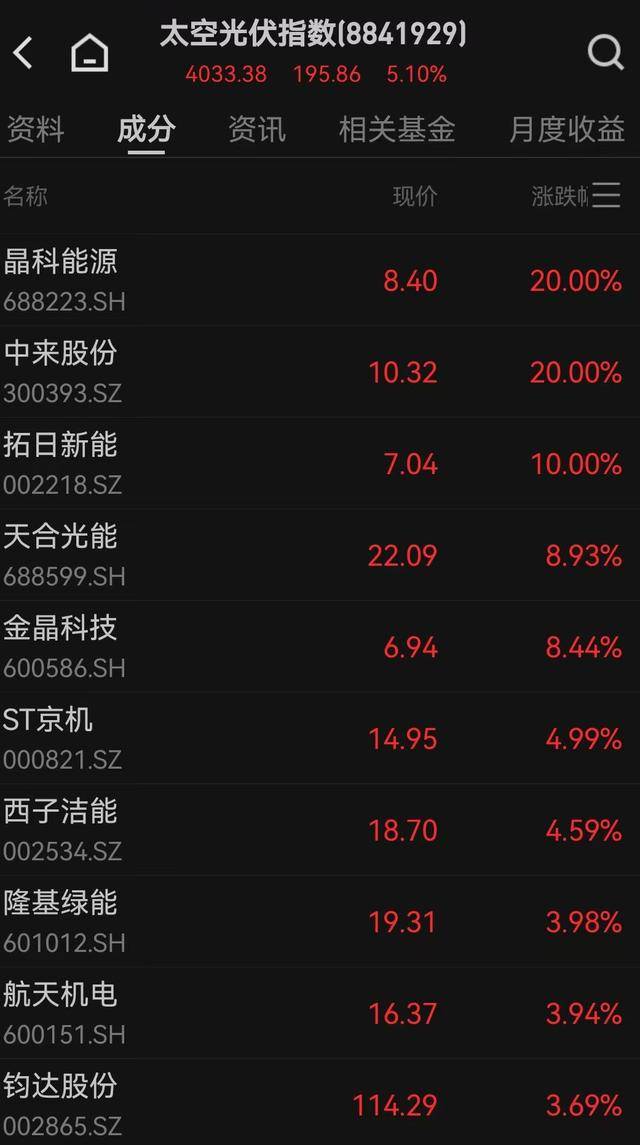
Core Viewpoint - The news highlights the recent interest in space photovoltaic technology sparked by Elon Musk's teams from SpaceX and Tesla conducting research on Chinese photovoltaic companies, leading to significant stock price movements in related A-share companies. Group 1: Market Reactions - The space photovoltaic index saw increases of 7.48% and 5.10% on February 3 and 4, respectively, with companies like JinkoSolar and Zhonglai Co. hitting the 20% daily limit up [4]. - Several companies, including JinkoSolar and Trina Solar, experienced significant stock price increases, with JinkoSolar's stock reaching a closing price of 22.09, up 8.93% [2][4]. Group 2: Company Responses - JinkoSolar issued a statement clarifying that while there were rumors of contact with Musk's team, no formal agreements or orders have been established, and the technology is still in the exploratory phase [4][5]. - High Measurement Co. confirmed it has not engaged in any space photovoltaic business or collaborations with Musk's teams, emphasizing the uncertainty surrounding the commercialization of space photovoltaic technology [5][6]. - Other companies like Guosheng Technology and Shuangliang Energy also stated they have not been approached by Musk's team and are not involved in space photovoltaic projects, reiterating the exploratory nature of the technology [8][9]. Group 3: Industry Insights - Space photovoltaic energy refers to harnessing solar energy in outer space and transmitting it wirelessly to Earth or powering satellites and space stations, positioning it as a strategic solution for commercial space and high-end applications [9]. - According to research from China International Capital Corporation, the demand for space photovoltaic technology is expected to grow significantly, potentially reaching a market size of hundreds of billions by 2030, particularly as low Earth orbit satellites become more prevalent [10].




未知机构:高盛闭门会详解中国工业的三大主题机器人aidc电力太空光伏20260201dl36-20260205
未知机构· 2026-02-05 01:40
Summary of Conference Call Records Industry or Company Involved - Humanoid Robotics Industry - Electric Power Supply Sector - Data Center Electrical Equipment - Space Solar Energy Industry Key Points and Arguments Humanoid Robotics Industry - **Cautious Outlook**: The humanoid robotics sector is viewed with caution as optimistic long-term growth expectations are already reflected in current stock prices. The rating for Sunwah Intelligent Control Asia will be downgraded from neutral starting November 2025 due to this concern [1][2] - **Challenges in Development**: Achieving general humanoid robot capabilities is more challenging and time-consuming than anticipated. For instance, Tesla's Optimus has a long-term shipment target of one million units, which is already priced into related stocks. The release of Optimus 3 has been delayed from February to the coming months, and it is still in early development stages [1][2] - **Market Demand and Growth**: The global humanoid robotics market is still in its early stages, with an expected shipment of approximately 15,000 units by 2025, which is only 3% of the annual shipment of industrial robots. Domestic leading companies are expected to achieve tens of thousands of units shipped by 2025 [3] - **Application Trends**: The demand structure is evolving, with 2025 focusing on early research applications. Future demand will shift towards specialized scenarios like guided tours, which require lower navigation and interaction capabilities [4] Electric Power Supply Sector - **Investment Logic**: The mainstream solutions for power shortages face significant bottlenecks, with 60% of AIDC power demand in the U.S. potentially met by natural gas. However, OEM manufacturers are at full capacity, leading to limited short-term expansion [5] - **Growth Projections**: INL is expected to see a 40% compound annual growth rate (CAGR) in EPS and a 25% CAGR in revenue over the next five years, driven by product structure optimization and improved profit margins [6] - **Market Share Growth**: By 2030, INL aims to achieve a revenue of 10 billion yuan, with significant contributions from partnerships with major companies like Siemens Energy and Baker Hughes [5][6] Data Center Electrical Equipment - **K Star's Competitive Edge**: K Star is a leading UPS supplier and the only Chinese company in the U.S. AI data center supply chain, with a projected 60% year-on-year profit growth in 2025. The company is expected to see a significant increase in orders from core clients [9] - **MKM's Transition Challenges**: MKM is transitioning to the global AI server power market but faces execution challenges, including managing complex supply chains and meeting project-based demands [9] Space Solar Energy Industry - **Demand Logic**: Elon Musk's plans for solar satellites have sparked expectations for increased demand in space solar energy. If Tesla and SpaceX's production plans materialize, the Chinese solar sector is expected to benefit significantly [10] - **Market Trends**: Domestic solar demand is projected to decline by 25% in 2026 but is expected to rebound by 14% in 2027, marking a critical turning point for the industry [15][19] Other Important but Possibly Overlooked Content - **Data Acquisition Challenges**: The humanoid robotics industry faces significant challenges in acquiring training data, which is crucial for AI development. Solutions include data factories and simulation training, but achieving high success rates remains a challenge [12][16] - **Electric Power Equipment Cycle**: The current cycle is driven by AI demand, contrasting with previous cycles driven by domestic policies. This shift presents new opportunities for Chinese companies in high-value markets like the U.S. [13][17] - **Execution Risks**: INL's capacity expansion plans face execution risks related to equipment yield and the need for skilled labor. MKM's transition to mass production is also under scrutiny due to potential delivery challenges [14][18]

暴涨超215%!太空光伏龙头钧达股份,被马斯克带上“天”
Sou Hu Cai Jing· 2026-02-05 00:17
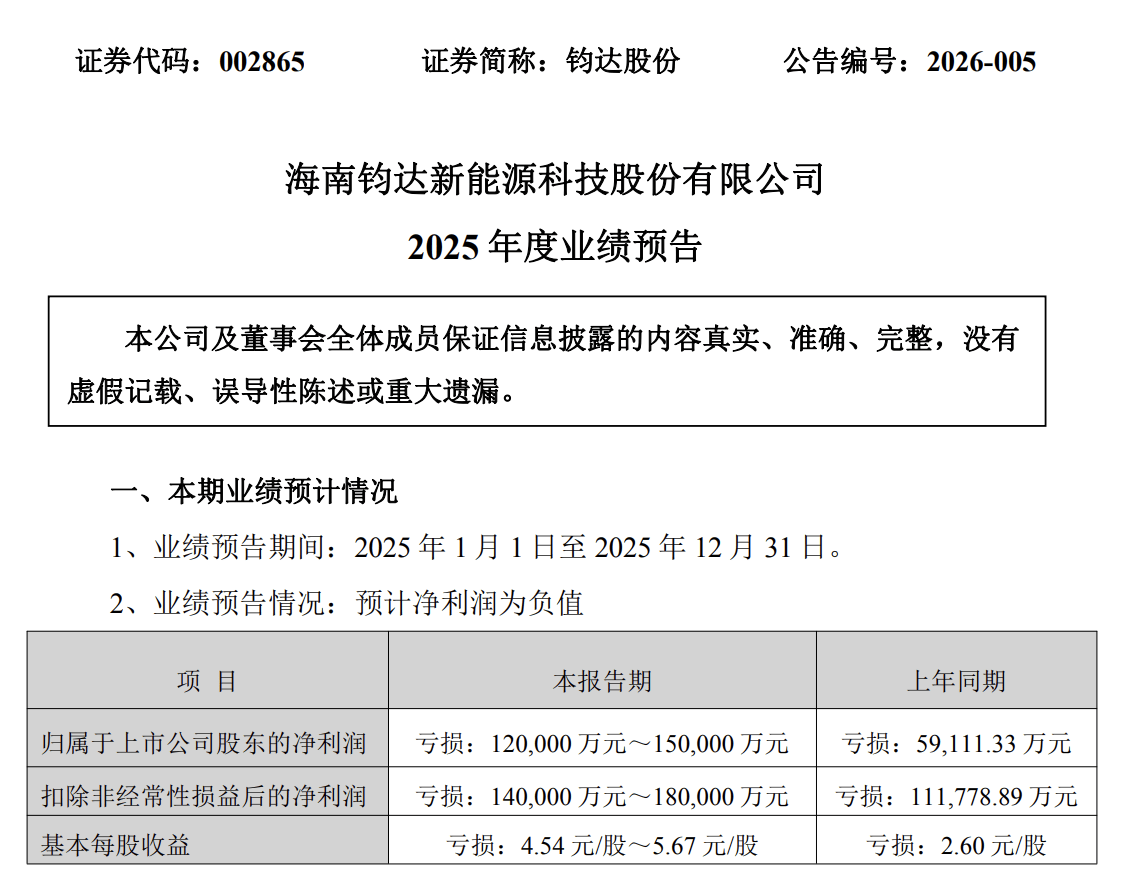
太空光伏的叙事逻辑,正在被马斯克验证。 作为未来太空能源的延伸,光伏行业的窘境,正在被"太空光伏"概念所拯救。且随着马斯克太空光伏能源的设想逐步落地,太空光伏的实操性正在增强。 在马斯克的加持下,光伏行业的景气度正在逐渐提升。 那么,究竟什么是太空光伏? 其核心构想是在地球轨道上建立太阳能电站,实现全天候、无遮挡的清洁能源收集。且随着SpaceX等公司大幅降低发射成本,这一"科幻级"设想正加速走向 现实。 更为重要的是,随着太空光伏的设想逐步进入实际操作阶段,低迷的光伏行业也找到了新的突围方向,龙头也开始逐渐复苏。根据统计,截至最新收盘,年 内光伏设备板块涨幅接近30%,而钧达股份等行业龙头涨幅更是超过了100%。 若从2025年12月初算起,"太空光伏"光伏龙头钧达股份涨幅更是超过了215%,市值突破350亿元,也就是说,仅两个月时间钧达股份市值增长就超过了240 亿元。 当然,从基本面来看,钧达股份并不优秀。 据此前披露的业绩预告显示,预计2025年净利润亏损12亿元至15亿元,较2024年亏损5.91亿元进一步扩大;预计扣非净利润亏损14亿元至18亿元,上年同期 为亏损11.18亿元。 | 项目 | 本 ...

全球产业竞速 太空光伏叩响商业化大门
Zhong Guo Jing Ji Wang· 2026-02-04 23:38
Core Viewpoint - The space photovoltaic sector is gaining significant attention due to the increasing demand for space resources and advancements in technology, with the Wande Space Photovoltaic Concept Index rising by 34.07% since 2026 [1] Group 1: Market Dynamics - The space photovoltaic market is driven by the rigid demand from downstream applications, with major space-faring nations applying for frequency resources for tens of thousands of low-Earth orbit satellites, indicating long-term potential demand [3] - The expected launch of over 70,000 satellites in the next five years, along with advancements in solar wing technology, is anticipated to propel the space photovoltaic market into a phase of substantial growth [3] - The market for space photovoltaics is projected to reach a scale of hundreds of billions in the near term, with potential to escalate to trillions if space computing enters an optimistic deployment phase post-2030 [4] Group 2: Technological Developments - Space photovoltaics, which include solar components on satellites and the wireless transmission of solar energy back to Earth, have been in development for over half a century, with most spacecraft now equipped with photovoltaic cells [2] - Current technological pathways include gallium arsenide batteries, which have high performance but are costly, and perovskite batteries, which are lightweight but require further validation for mass production and stability in space [7][8] - The p-type heterojunction battery is seen as the optimal solution for commercial transition due to its advantages in radiation resistance and lightweight design [8] Group 3: Industry Competition - Global companies are rapidly entering the space photovoltaic market, with China's industry structure comprising national research institutions, leading photovoltaic firms, and specialized material equipment manufacturers [5] - Major companies like Trina Solar are accelerating the commercialization of perovskite technology, while Longi Green Energy collaborates with space research institutions to validate advanced energy technologies in space [6] - The competitive landscape is characterized by differentiated strategies based on resource endowments, with the U.S. leveraging reusable rockets for cost advantages and Europe maintaining a stronghold in traditional high-end markets [6] Group 4: Challenges and Future Outlook - Despite the enthusiasm in capital markets, the industry remains cautious, recognizing that the true industrial pull for space photovoltaics will require significant time and development [7] - Key challenges include high production costs, the need for batch manufacturing capabilities, and the establishment of a standardized supply chain and quality control systems [8] - The current phase of space photovoltaics is critical for transitioning from engineering productization to large-scale industrialization, necessitating collaborative efforts across technology, engineering, manufacturing, and system integration [8]
马斯克团队密访 光伏股“回血”2200亿元
Bei Jing Shang Bao· 2026-02-04 16:23
一则埃隆·马斯克旗下SpaceX团队和Tesla团队密访中国多家光伏企业的传闻,再度引爆市场。2月4日, 光伏股集体大涨,TCL中环、晶科能源在午后强势封涨停。北京商报记者从业内人士处获悉,马斯克团 队密访传闻属实,涉及光伏产业链硅片、电池、组件等核心领域,调研企业还包括协鑫集团。今年1 月,太空光伏成为A股最为火爆的概念板块,光伏股也迎来一波大涨。经同花顺iFinD统计,今年1月23 日—2月4日,70只光伏股市值"回血"2200亿元。 2月4日,市场有传闻称,马斯克团队近期秘密走访中国多家光伏企业,其中重点考察推进异质结、钙钛 矿技术路线的公司,包括晶科能源、TCL中环等行业龙头。受该消息影响,晶科能源、TCL中环午后股 价直线拉升封上涨停。当日,北京商报记者从协鑫集团官方了解到,"马斯克团队确实来调研了"。 光伏设备板块也掀起涨停潮。除晶科能源"20cm"涨停外,泽润新能、时创能源、中来股份迎 来"20cm"涨停,此外双良节能、永臻股份等也以涨停收盘。 据同花顺iFinD统计,仅2月4日,70只光伏股总市值集体"回血"近900亿元。 今年以来,太空光伏成为资本市场的热门板块。1月22日,马斯克在瑞士达沃 ...


三角度参透业绩预告背后的投资“玄机”
Zheng Quan Ri Bao· 2026-02-04 16:09
A股2025年年度业绩预告披露正式收官。笔者认为,投资者可从行业景气度、内生增长韧性、困境反转 三个角度切入,参透上市公司业绩预告背后隐藏的投资"玄机"。 首先,锚定行业景气度,是解读业绩预告的首要前提。 行业赛道的冷暖,直接决定了企业业绩的基本盘。Wind资讯数据显示,在已披露去年业绩预告的上市 公司中,电子(半导体)、汽车零部件、电力设备行业是预增主力。具体来看,半导体领域,寒武纪受 益于行业算力需求的持续增长,预计2025年归属母公司的净利润超过18.5亿元,大幅扭亏;汽车零部件 领域,博俊科技受益于全国乘用车市场稳定增长及新能源汽车快速上量,预计去年盈利增超35%;电力 设备领域,明阳智能受益于全球新能源装机规模持续扩大,风机交付规模与销售收入同比显著扩张,预 计去年净利润同比增长超131.14%。这些行业或借国产化加速的东风,或乘新能源渗透率提升的浪潮, 持续夯实业绩增长的"压舱石"。 其次,聚焦经营韧性,辨别内生增长真实成色。 真正的增长应源于主营业务深耕,而非短期因素加持。例如,中科三环预计2025年扣非净利润大幅扭 亏,核心在于公司持续优化运营效率,稳步拓展市场份额;山外山作为国产血液净化设备 ...
马斯克,再次“引爆”超级赛道!
DT新材料· 2026-02-04 16:05
Core Viewpoint - Elon Musk is at the forefront of multiple technological trends, including electric vehicles, humanoid robots, commercial space travel, and now space-based solar power, indicating a significant shift in the energy landscape and potential investment opportunities in the solar industry [1][3]. Group 1: Research and Development in Solar Technology - Musk's team has conducted research on several Chinese photovoltaic companies, focusing on advanced technologies such as Heterojunction (HJT) and perovskite solar cells, which promise higher efficiency and stability [1][2]. - HJT solar cells can achieve a light-to-electricity conversion efficiency of over 24%, making them a key area of interest for future solar energy production [1]. Group 2: Market Dynamics and Future Projections - SpaceX aims to achieve an annual solar manufacturing capacity of 100 GW within the next three years, highlighting the growing importance of solar energy in Musk's broader vision [3]. - The integration of AI with space-based energy networks is expected to lower the cost of AI computing power, with Musk predicting that space will become the most cost-effective location for generating AI computing resources within 2-3 years [3]. Group 3: Industry Sentiment and Challenges - Despite the optimism surrounding space solar power, many companies in the photovoltaic sector remain cautious, with some stating they have not yet engaged in space solar initiatives [5]. - The current state of space solar technology is still in the exploratory phase, and established technologies like gallium arsenide (GaAs) solar cells are still preferred for commercial space applications due to their proven reliability [5]. Group 4: Financial Outlook and Market Trends - The photovoltaic industry is expected to improve by 2026, driven by technological advancements and a shift towards high-value markets like space solar power [4]. - Major players in the solar industry are setting ambitious profitability targets for 2026, with companies like Trina Solar aiming for a profit of at least 200 million yuan [5].