
Stripe

Search documents
Could 2026 Be The Year Of Monster IPOs?
Forbes· 2026-01-20 14:15
Core Insights - The IPO market in 2025 saw a significant increase with 203 new public companies, raising $44 billion, a 35% increase from the previous year, and a 49% rise in capital investment compared to 2024 [2][4] - Despite the growth in IPOs, the capital raised was only a fraction of the $280 billion invested in venture deals, with a notable $41 billion investment in OpenAI by SoftBank [3][4] - The U.S. IPO market is expected to revive in 2026, driven by high-profile companies like SpaceX, OpenAI, and Anthropic preparing for significant IPOs [5][19] IPO Market Dynamics - The SEC Chairman highlighted the decline in public companies by 40% since the 1990s, attributing it to "regulatory creep" that has made going public less attractive [7][9] - Proposed reforms aim to simplify corporate filings and reduce unnecessary disclosures, potentially revitalizing the IPO market [10][12] - The Hong Kong Stock Exchange emerged as the leading IPO venue in 2025, with 114 new listings raising $37 billion and average first-day gains of 37% [13][14] Major Companies Preparing for IPOs - SpaceX is reportedly preparing for a 2026 IPO with a valuation exceeding $1 trillion, potentially raising $30 billion to fund solar-powered AI data centers [20] - OpenAI, valued at $500 billion, is expected to raise $60 billion in its IPO, also approaching a trillion-dollar valuation [21] - Anthropic is in the IPO preparation phase with a valuation in the hundreds of billions, planning to spend $50 billion on AI data centers [22][23] Broader Market Implications - The anticipated high-profile IPOs could generate enthusiasm in the market, encouraging other companies to go public [25] - The need for significant capital raises from these large IPOs may require a reallocation of institutional capital, especially given the recent underperformance of private equity [25] - A favorable economic environment, including controlled inflation and gradual monetary easing, is essential for a successful IPO year in 2026 [26]

Gaming Firm Plaee Taps Crypto.com to Launch Prediction Markets in the US
Yahoo Finance· 2026-01-20 12:32
Core Insights - Plaee has formed a strategic partnership with Crypto.com to develop a prediction market technology infrastructure compliant with CFTC standards [1] Group 1: Partnership Details - The collaboration will utilize Plaee's technology to onboard operators, including fintech platforms and traditional trading brokers, for federally regulated event-based trading in the US [2] - The integration will include Crypto.com's institutional liquidity and regulatory framework, enhancing Plaee's offerings [2][4] Group 2: Market Potential - The US prediction market sector is projected to reach $1 trillion in trading volume within a few months, indicating a growing demand for compliant and user-friendly technology platforms [3] - The current demand for such technology is at an all-time high (ATH) [3] Group 3: Technological Advancements - The partnership provides a "plug-and-play" API-first architecture, enabling operators to implement advanced prediction market technology within weeks, covering various sectors like sports, politics, and macroeconomics [4] - Trades executed through Plaee's technology will meet high regulatory compliance standards, addressing key challenges for operators such as regulatory complexity, liquidity, and time-to-market [5] Group 4: Recent Developments - Crypto.com has been actively securing partnerships, including a recent deal with Stripe to facilitate cryptocurrency payments in online shopping and another with High Roller Inc. for event-based prediction markets in the US [6] - The strategic rollout of these partnerships has led to significant stock price increases, such as a nearly 490% spike in ROLR stock [7]
Ethereum to $4,000? Traders Turn Bullish as Tom Lee Backs ‘Great’ Viral List Showing Institutional Surge
Yahoo Finance· 2026-01-20 11:31
Core Insights - Bullish predictions for Ethereum's price have emerged due to comments from Fundstrat's Tom Lee and a viral post highlighting institutional adoption of the blockchain [1][8] - Ethereum continues to trade below recent highs, with technical indicators suggesting caution in the near term [1] Institutional Adoption - Tom Lee emphasized a list of 35 major financial institutions adopting Ethereum recently, showcasing a significant institutional push [2][3] - Ethereum is described as the "1 choice for global financial institutions," with over 30 recent initiatives involving banks, asset managers, and technology companies [5] - Notable examples include Kraken's tokenized U.S. stocks and ETFs on Ethereum, Fidelity's tokenized money market fund, and BlackRock's staked ether ETF filing [5] Technological Developments - JPMorgan has migrated its tokenized deposit product to Ethereum's Base layer-2 network, while Stripe is expanding stablecoin-based subscriptions on the platform [6] - Google's development of an agent payments protocol utilizing stablecoins on Ethereum indicates growing adoption by technology firms [6] Market Sentiment - The influx of institutional announcements has led to increased bullish sentiment among traders, with some viewing Ethereum's recent price consolidation as a positive sign [7][8] - Despite the optimistic sentiment, analysts note that Ethereum has struggled to maintain key technical levels [8]
14万亿 vs 1万亿:谁杀死了波士顿这只下金蛋的鹅?
创业邦· 2026-01-20 10:46
Core Viewpoint - The article discusses the decline of Boston as a technology hub compared to the San Francisco Bay Area, attributing this to a combination of misguided policies, regulatory predation, and a failure to foster a supportive innovation ecosystem [5][9][42]. Group 1: Historical Context - In 2004, top investors identified San Francisco and Boston as the leading software hubs, with Boston leveraging its prestigious universities like MIT and Harvard [5][11]. - By today, the San Francisco Bay Area has generated $14 trillion in enterprise value, while Boston has only managed $1 trillion, highlighting a significant disparity [5][9]. Group 2: Factors Contributing to Boston's Decline - Boston possesses key resources such as intellectual density, historical significance in technology, and a strong talent network, yet it has failed to translate these into successful outcomes [11][12][13]. - The article identifies "Inputs-first Delusion" as a critical issue, where Boston's policymakers mistakenly believe that having the best facilities and talent will automatically lead to innovation [18]. Group 3: Regulatory Issues - Regulatory predation is highlighted as a major factor in Boston's decline, where the government views the tech industry as a cash cow rather than nurturing it [20][22]. - Specific policies, such as the refusal to adopt QSBS exemptions and the imposition of a millionaire's tax, have created a hostile environment for entrepreneurs [22][25]. Group 4: Cultural and Economic Dynamics - The article critiques the local venture capital culture in Boston, which has shifted from a collaborative spirit to a predatory approach, where investors exploit entrepreneurs [30][33]. - The decline of trust and the rise of a "managerial class" that complicates business operations have further exacerbated the situation, leading to a loss of innovation [27][28]. Group 5: Lessons for the Future - The article emphasizes the importance of creating a low-friction business environment and fostering trust to build a successful innovation ecosystem [42]. - It warns against industries that prioritize financial manipulation over value creation, suggesting that such environments are detrimental to innovation [43]. - The need for technology to address moral questions about its societal impact is also highlighted, as failure to do so may lead to backlash against innovators [44].

“商业的HTTP”来了:谷歌CEO劈柴官宣 UCP,Agent 直接“剁手”下单,将倒逼淘宝京东“拆家式重构”?
AI前线· 2026-01-20 06:35
Core Viewpoint - Google has introduced the Universal Commerce Protocol (UCP), aiming to standardize online shopping through a new open standard that allows agents to facilitate direct purchases online [2][4]. Summary by Sections Introduction of UCP - Google CEO Sundar Pichai announced UCP at the NRF conference, which aims to break down the shopping process into reusable components, enhancing the interaction between agents and merchants [2][5]. Ambition of UCP - UCP is likened to HTTP for commerce, aiming to streamline the traditional e-commerce process from "search-ad-product page-checkout" to "intention-agent reasoning-purchase" [5][6]. Structure and Capabilities of UCP - UCP aims to connect various stages of the purchasing process, including product discovery, checkout, and post-purchase support, under a unified standard [7][10]. - The protocol includes six core capabilities: product discovery, shopping cart, identity linking, checkout, order management, and other vertical capabilities [10][11]. Communication and Integration - UCP is designed to work alongside other agent protocols like Agent Payments Protocol (AP2) and Agent2Agent (A2A), allowing flexibility in how agents and merchants interact [11][14]. Product Discovery and Shopping Cart - Product discovery is expected to be linked with Google Shopping Feed, while the shopping cart aims to create a unified experience across merchants, potentially revolutionizing e-commerce [12][19]. Data and Discoverability - UCP focuses on enhancing product discoverability by requiring merchants to provide extensive product data, which is crucial for AI-driven searches [16][18]. - Google is expanding its Merchant Seller tools to include new data attributes, which will help brands optimize their product listings for better AI search rankings [17][19]. Industry Partnerships - UCP has attracted significant partners from both retail and payment sectors, including Shopify, Walmart, and Visa, indicating a strong collaborative effort to establish the standard [21][23]. Future Implications - The introduction of UCP signals a shift in the retail landscape, where agents will play a crucial role in transactions, potentially reshaping the relationship between consumers and brands [24][25].


倒反天罡,Claude“反向”操控人类,公司估值冲2万亿跃居全球第二
3 6 Ke· 2026-01-19 12:45
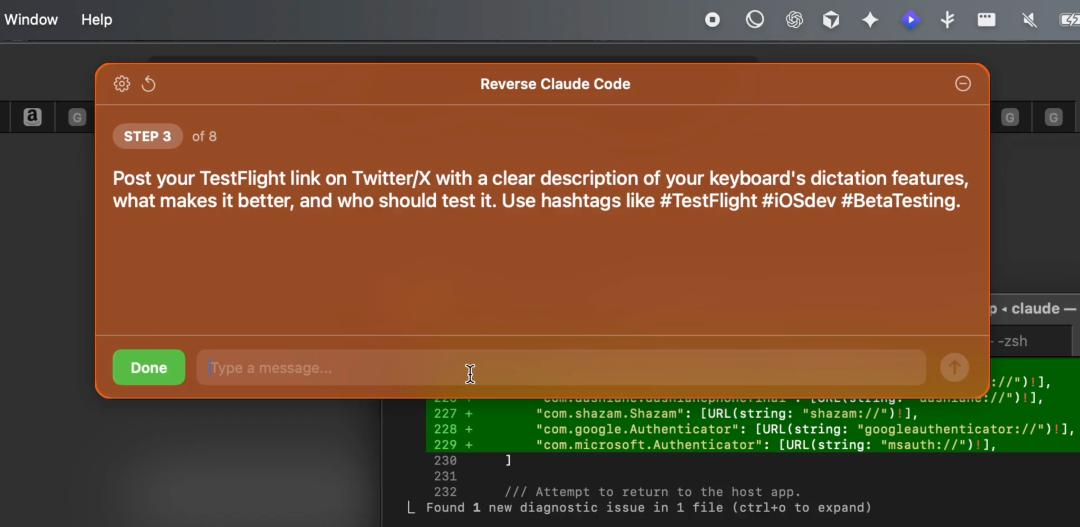
当一段「AI指挥人类写代码」的视频刷屏时,全球顶级资本正在疯狂涌入Claude的公司Anthropic,成为OpenAI之后第二家顶级AI独角兽。 你去查一下这个API的文档,把这段代码重构一下,注意保持风格一致。 你去发一个X消息、你去。。。 这里的Reverse还真就是「倒反天罡」,让AI指挥人类干活了! 人类工程师反倒变成了那个敲键盘执行命令的角色。 先从一场「荒诞的实验」讲起。 2026年1月17日,Midjourney的一位工程师在X上发布了一段视频,标题是「Reverse Claude Code」。 视频里,Claude Code没有在等待人类的指令,而是反过来给人类下达任务: 社区纷纷表示,这才是AI的正确用法。 | Arthur (agi/arc) @ @arthur hyper88 . 1月17日 | | | | | --- | --- | --- | --- | | this is how you're supposed to use Claude, @GeorgeInTheMeta | | | | | 这才是使用 Claude 的正确方式, @GeorgeInTheMeta | | | ...
速递|红杉资本“覆盖赛道”押注Anthropic,新一轮融资目标约250亿美元,预计最快今年IPO
Z Potentials· 2026-01-19 03:02
Core Viewpoint - Sequoia Capital is reportedly joining a significant funding round for AI startup Anthropic, which is developing Claude, raising eyebrows in Silicon Valley due to its simultaneous investments in competing firms like OpenAI and Elon Musk's xAI [3][5]. Funding and Valuation - Anthropic plans to raise $25 billion or more at a valuation of $350 billion, more than doubling its previous valuation of $170 billion from four months ago [4]. - The funding round is led by Singapore's GIC and U.S. investment firm Coatue, each contributing $15 billion [3]. Investment Dynamics - Sequoia's investment in Anthropic appears to be more about strengthening ties with Elon Musk rather than merely supporting a competitor to OpenAI [5]. - Sequoia has a history of backing Musk's ventures, including investments in Twitter (now X), SpaceX, and Neuralink [5]. Leadership Changes - The investment in Anthropic comes after a dramatic leadership change at Sequoia, where Roelof Botha was unexpectedly ousted [6]. - Alfred Lin and Pat Grady have taken over leadership roles following this change [6]. IPO Plans - Anthropic is reportedly preparing for an initial public offering (IPO), potentially as soon as this year [7].

畅想2026:第二部分
3 6 Ke· 2026-01-18 23:09
Core Insights - The article discusses the transformative impact of AI on various industries, emphasizing the shift towards native AI infrastructure and the revival of American manufacturing by 2026 [2][3][16]. Group 1: AI Infrastructure and Industry Transformation - The rise of native AI and software-first industry infrastructure is reshaping sectors like energy, manufacturing, logistics, and infrastructure, creating significant opportunities [2]. - Companies are moving away from modernizing past systems to building future-oriented solutions, particularly in advanced energy systems and autonomous operations [2]. - The integration of AI into manufacturing processes will lead to a new era of industrial strength, characterized by modular deployment of AI and automation technologies [3]. Group 2: Observability and Data Utilization - The concept of physical observability is becoming crucial, with over a billion connected cameras and sensors deployed across the U.S., enabling real-time insights into urban and infrastructure dynamics [5]. - The demand for data in key industries is increasing, with companies leveraging existing physical infrastructure to collect vast amounts of operational data at minimal costs [9][10]. Group 3: AI in Financial Services - Financial institutions are expected to modernize their foundational infrastructure to fully leverage AI, moving away from outdated vendor contracts to more integrated native AI solutions [16]. - The simplification and parallelization of workflows in financial services will lead to the emergence of new market leaders that can scale significantly beyond traditional firms [16]. Group 4: New Roles and Organizational Structures - The rise of multi-agent systems will necessitate a rethinking of organizational structures and workflows, leading to the creation of new roles such as AI workflow designers and agent supervisors [19]. - Companies will need to develop coordination systems to manage interactions among multiple AI agents, enhancing decision-making and operational efficiency [19]. Group 5: Consumer AI Evolution - By 2026, consumer AI products are expected to shift from productivity tools to enhancing personal connections and self-awareness, creating a more integrated part of daily life [20][21]. - The emergence of new companies driven by advanced reasoning and multi-modal capabilities will unlock previously impossible business models and applications [22]. Group 6: Startup Ecosystem and Growth Strategies - Startups are positioned to capitalize on the current AI product cycle by targeting new companies and growing alongside them, following a "greenfield" approach [23]. - The year 2026 is anticipated to witness a significant scaling of startups that adopt this strategy, focusing on underserved markets and innovative solutions [23].
AI应用与电力跟踪
傅里叶的猫· 2026-01-18 12:13
AI Applications - The AI application sector is currently a hot topic, with companies like Yidian Tianxia and Liou Co. facing trading suspensions, indicating a desire for sustainable growth rather than speculative surges [2][3] - The market is expected to return to companies with solid performance, despite recent regulatory impacts on short-term market conditions [3] - 2023 is identified as a pivotal year for AI applications, with significant revenue growth anticipated for many companies by 2026, projecting increases of at least 30-50%, with some high-quality firms potentially doubling their revenues [4][5] Development Stages of AI Applications - The development of AI applications is described in three progressive stages: 1. From 2023 to mid-2024, models will transition from basic dialogue capabilities to advanced long-text processing and multimodal interactions, improving from a "primary school" to a "high school" level of intelligence [6] 2. By September 2024, OpenAI will launch the o1 series models, introducing the Agent concept, which will transform applications from mere interaction tools to revolutionary labor tools, enhancing penetration into both personal and B2B sectors [6] 3. From 2025 onwards, models will reach an "Olympic competition" level of intelligence, with applications evolving to include emotional and planning capabilities, integrating personal assistants with e-commerce and payment scenarios [6][7] Major Players in AI Applications - OpenAI's GPT-5 did not meet public expectations due to high initial hopes, focusing instead on reliability and practical applications for enterprise environments, marking a shift towards productization and commercialization [8] - Google's Gemini 3 was noted for its impressive benchmark performance but lacked a significant impact on everyday user experiences [8] - Alibaba's Qianwen showcased its integration with various platforms, achieving a closed-loop AI shopping function, indicating a trend towards practical applications in everyday life [9] OpenAI's Strategic Initiatives - OpenAI plans to test advertising in January 2026, aiming to diversify revenue streams ahead of a potential IPO and offset the high costs of AI system development [11] - The company is transitioning to a platform ecosystem, enhancing collaboration with third-party applications, and investing in computational infrastructure to support user growth [12] - OpenAI is also exploring partnerships in e-commerce and healthcare, aiming to create seamless shopping experiences and health management solutions [12] Power Sector Insights - The power sector remains stable, with expectations for growth in the gas turbine industry and power equipment, driven by overseas electricity shortages [14] - Significant demand for Heat Recovery Steam Generators (HRSG) is anticipated in regions like China and the Middle East, with price increases expected between 5-15% [15] - The North American market is projected to see a surge in gas turbine installations, further driving HRSG demand and price increases [15]

Space X, OpenAI Dominate Speculation About $3 Trillion IPO Geyser
Yahoo Finance· 2026-01-18 05:01
Core Insights - The potential IPO of SpaceX is estimated to range from $800 billion to over $1 trillion, which would make it the largest offering in history and could position its founder, Elon Musk, as the world's first trillionaire [1] - SpaceX has transformed from a launch services company into a global aerospace and communications platform, significantly tied to the AI revolution, with its Starlink satellite network generating recurring revenue and providing strategic geopolitical infrastructure [2] - The IPO market is expected to reopen in 2026, driven by a small number of mega-cap private companies, which could absorb substantial institutional capital and reshape the market landscape [4][7] SpaceX and Other Major Players - SpaceX is viewed as the most significant potential IPO among large private companies, with its listing likely to redefine the IPO cycle [3] - OpenAI is also positioned as a major player in the upcoming IPO landscape, with market estimates for its public value ranging from hundreds of billions to over $1 trillion [8] - Anthropic, another AI systems developer, is seen as a credible candidate for an IPO, with an estimated valuation of around $350 billion [9] Market Dynamics and Trends - The IPO market has been historically stalled due to rising interest rates, volatile equity markets, and regulatory uncertainties, leading to a backlog of mature private companies ready for public listings [6] - The upcoming IPO wave is expected to be characterized by capital concentration, where a few mega-cap companies dominate the market, potentially sidelining smaller IPOs [4][13] - The success of a few large IPOs may determine the overall market conditions for smaller companies looking to go public [14] Other Notable Companies - Databricks, valued at over $130 billion, is considered a strong candidate for an IPO due to its well-understood business model in data analytics and AI infrastructure [15] - Stripe, with an estimated valuation between $90 billion and $120 billion, is another durable fintech IPO prospect, deeply embedded in global digital commerce [16] - Companies like Revolut, Canva, and Strava are also part of the conversation for potential IPOs in 2026, indicating a renewed interest in consumer-facing tech [17] Investor Sentiment and Market Readiness - There is a growing appetite for IPOs, with evidence of renewed momentum as investor demand for private companies has doubled year over year [19] - The recent filing of Bob's Discount Furniture for an IPO signals a broader belief in market stability and investor willingness to underwrite cyclical risks [22] - The overall sentiment suggests that the IPO pipeline is becoming more imminent, with the potential to redefine the market landscape if these listings succeed [25]