
迈瑞医疗

Search documents
这只创业板ETF,破千亿!
Sou Hu Cai Jing· 2025-08-26 09:46
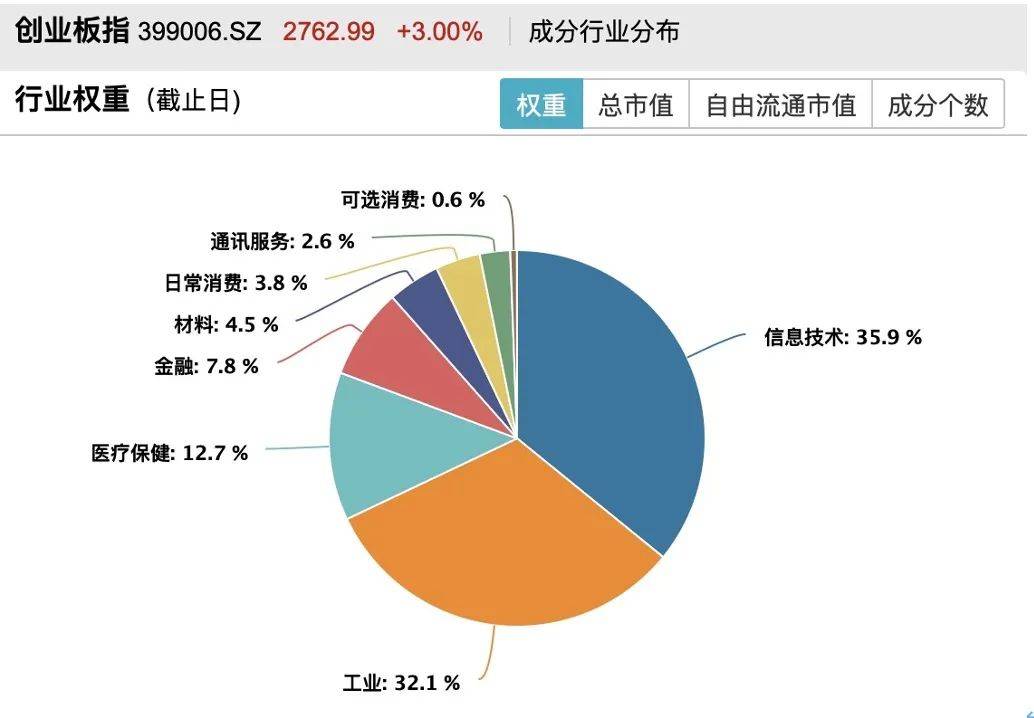
Core Viewpoint - The E Fund ChiNext ETF has surpassed 100 billion yuan in scale, becoming the largest ChiNext ETF in the market as of August 25 [1][4]. Group 1: ETF Performance and Growth - As of August 25, the E Fund ChiNext ETF reached a scale of 100.708 billion yuan, marking a significant increase since it last surpassed the 100 billion yuan mark on November 13 of the previous year [4][5]. - The ChiNext Index has shown impressive performance, with a year-to-date increase of over 29% and a maximum increase of over 58% since the low point in April [4][5]. - The E Fund ChiNext ETF was established on September 20, 2011, with an initial issuance of 562 million shares, and its current share count stands at 36.769 billion [4][5]. Group 2: Market Context and Comparisons - There are currently seven ETFs in the market with a scale exceeding 100 billion yuan, covering key indices such as CSI 300, SSE 50, and CSI 500 [2][5]. - The E Fund ChiNext ETF is the seventh large-scale stock ETF, with the top four positions held by CSI 300-related ETFs, the largest being the Huatai-PB CSI 300 ETF with over 400 billion yuan [5]. - The ChiNext Index is characterized by its growth style, primarily driven by the technology and new energy sectors, and has outperformed the CSI 300 and CSI 500 indices since 2011, with a cumulative increase of over 140% [7][11]. Group 3: Industry Composition and Valuation - The ChiNext Index covers strategic emerging industries, including high-end manufacturing, information technology, and biomedicine, with significant weight in information technology (35.9%) and industrial sectors (32.1%) [7][10]. - As of August 25, 2025, the ChiNext Index has a price-to-earnings ratio of 40.08, indicating a high valuation level [7][10]. - The recent optimization of the ChiNext Index's compilation rules has enhanced its market representation and investment value, focusing on new industries and high-tech enterprises [10][11].


这只创业板ETF,破千亿!
中国基金报· 2025-08-26 07:42
Core Viewpoint - The E Fund ChiNext ETF has surpassed 100 billion yuan in scale, becoming the largest ChiNext ETF in the market as of August 25 [2][5]. Group 1: ETF Performance and Growth - As of August 25, the E Fund ChiNext ETF reached a scale of 100.71 billion yuan, marking a significant increase since it last surpassed the 100 billion yuan mark on November 13 of the previous year [5][6]. - The ChiNext Index has shown impressive performance, with a year-to-date increase of over 29% and a maximum increase of over 58% since the low point in April [5][6]. - The E Fund ChiNext ETF was established on September 20, 2011, with an initial issuance of 562 million shares, and its current share count stands at 3.68 billion [5][6]. Group 2: Market Context and Comparisons - There are currently seven ETFs in the market with a scale exceeding 100 billion yuan, covering key indices such as CSI 300, SSE 50, and CSI 500 [3][6]. - The E Fund ChiNext ETF is the seventh large-scale stock ETF, with the top four positions held by CSI 300-related ETFs, including the Huatai-PB CSI 300 ETF, which exceeds 400 billion yuan [6]. - The ChiNext Index is characterized by its growth style, focusing on emerging industries such as high-end manufacturing, information technology, and biomedicine, with significant representation from the information technology sector (35.9%) and industrial sector (32.1%) [8][12]. Group 3: Valuation and Future Outlook - As of August 25, 2025, the ChiNext Index has a price-to-earnings ratio of 40.08, placing it at the 38.36 percentile [9]. - The ChiNext Index has shown a cumulative increase of over 140% since January 1, 2011, significantly outperforming the CSI 300 and CSI 500 indices [8][12]. - Industry experts believe that the high proportion of emerging industries and high-tech enterprises in the ChiNext Index indicates strong growth potential and competitiveness, contributing to high-quality economic development in the long term [12].
最新!2款创新器械获批上市!
思宇MedTech· 2025-08-26 07:26
Core Insights - The article highlights the approval of two innovative medical devices in China: the "Fully Automatic Cell Morphology Analyzer" by Shenzhen Mindray Bio-Medical Electronics Co., Ltd. and the "X-ray Computed Tomography Equipment" by Neusoft Medical Systems Co., Ltd. [1][2] Group 1: Product Overview - The Fully Automatic Cell Morphology Analyzer is designed for classifying and counting white blood cells and nucleated red blood cells from human peripheral blood samples, enhancing accuracy in identifying abnormal samples through advanced imaging and deep learning technologies [3]. - The X-ray Computed Tomography Equipment, NeuViz P10, is noted as China's first photon counting CT and the world's first 8cm wide photon counting CT, utilizing a novel detection method for improved resolution and lower radiation doses [9][11]. Group 2: Company Profiles - Mindray Medical, established in 1991 and headquartered in Shenzhen, is the largest medical device manufacturer in China, with a global presence in 31 countries and a strong focus on patient monitoring, in vitro diagnostics, and medical imaging systems [5]. - Neusoft Medical, founded in 1998, is a core medical imaging equipment company under Neusoft Group, providing a wide range of imaging solutions and services, and has products in over 110 countries [12]. Group 3: Financial Performance - In 2024, Mindray reported an annual revenue of 36.73 billion yuan, a year-on-year increase of 5.1%, with a net profit of 11.67 billion yuan, reflecting a growth of 0.7% [7]. - For the first quarter of 2025, Mindray's revenue was 8.24 billion yuan, showing a decline of 12% year-on-year, with a net profit of 2.63 billion yuan, down 16.7% [7].
开立医疗(300633):25Q2业绩环比改善,高端新品密集推出
Guoxin Securities· 2025-08-26 06:24
Investment Rating - The investment rating for the company is "Outperform the Market" [5][3][24] Core Views - The company experienced a slight decline in revenue and significant pressure on profits, but there was a quarter-on-quarter improvement in Q2 2025. Revenue for the first half of 2025 was 964 million yuan, down 4.78%, with a net profit attributable to shareholders of 47 million yuan, down 72.43% [1][8] - The domestic business saw a decline, while overseas business remained stable. In the first half of 2025, the ultrasound business generated 550 million yuan, a year-on-year decrease of 9.87%, while the endoscope and related instruments generated 388 million yuan, remaining flat [1][14] - The company is focusing on high-end product launches in 2025, with new products like the iEndo series 4K smart endoscope platform and high-end ultrasound platforms expected to enhance product structure and support future revenue growth [2][22] Financial Performance Summary - For the first half of 2025, the company's gross margin was 62.08%, down 5.34 percentage points, influenced by centralized procurement and insufficient scale effects from new businesses. The sales expense ratio increased to 31.63%, and R&D expense ratio rose to 25.31% [2][20] - The company maintains its profit forecast, expecting revenues of 2.34 billion, 2.69 billion, and 3.09 billion yuan for 2025, 2026, and 2027 respectively, with net profits of 310 million, 400 million, and 480 million yuan for the same years [3][4][25]

场内交投持续活跃!创业板综指ETF鹏华(159289)火热发售中,低估值迎布局良机
Xin Lang Cai Jing· 2025-08-26 05:29
Group 1 - The market has been strengthening, with the ChiNext Index rising by 3% on August 25, 2025, reaching a three-year high, indicating a favorable environment for growth stocks [1] - The Penghua ChiNext Composite Index ETF (code: 159289) is currently being actively promoted, closely tracking the ChiNext Composite Index (code: 399102), which is a hub for "specialized, refined, unique, and innovative" companies [1] - As of August 14, the top four industries in the ChiNext Composite Index are Power Equipment (19.0%), Biomedicine (13.1%), Electronics (12.6%), and Computers (10.5%), collectively accounting for over 50% of the index [1] Group 2 - In the analysis of the ChiNext's sub-sectors, New Energy holds a weight of approximately 29%, with improvements in supply-demand dynamics due to the exit of outdated battery production capacity and acceleration of solid-state batteries [2] - The Biopharmaceutical sector, with a weight of 12%, is expected to rebound as innovative drug policies and overseas expansion accelerate [2] - The Technology sector, accounting for 36%, is benefiting from sustained global AI demand and a new upcycle in semiconductors, driven by both policy and technological advancements [2] Group 3 - The expected compound annual growth rate (CAGR) for ChiNext's revenue from 2025 to 2026 is approximately 20%, while the net profit attributable to shareholders is expected to grow at a CAGR of about 29%, significantly outpacing other broad indices like CSI 300 and CSI 500 [2] - The valuation of the ChiNext Composite Index has been recovering since hitting a low in Q3 of last year, currently returning to historical averages, which, combined with performance growth expectations, enhances its investment attractiveness [2]
织密织牢民生保障网 中国人寿绘就鹏城幸福新图景
Ren Min Wang· 2025-08-26 02:49
Core Viewpoint - Shenzhen has become a model of China's reform and opening up over the past 45 years, with China Life actively supporting national strategies through various financial services and products aimed at enhancing the local economy and social welfare [1] Group 1: Support for Small and Micro Enterprises - Shenzhen is the most active city for small and micro enterprises, with nearly 50,000 new business entities added monthly in 2024 [2] - China Life has optimized its product offerings to support small and micro enterprises, including the introduction of tailored insurance products for various industries, covering over 13,000 small and micro enterprises with a total risk coverage exceeding 257.1 billion yuan by mid-2025 [2] - Guangfa Bank has developed an integrated online and offline financial service model, achieving a balance of over 40 billion yuan in loans for small and micro enterprises by July 2025 [3] Group 2: Social Welfare and Talent Retention - Shenzhen's talent pool has surpassed 7 million, making it one of the top cities for talent attraction in China [4] - China Life has been a key player in the "Shenzhen Huimin Insurance" program, with 6.159 million participants in 2025, providing significant medical expense coverage [4] - The company has also launched various insurance products targeting the elderly and children, providing comprehensive risk protection for different demographics [5] Group 3: Technological Innovation Support - Shenzhen hosts 25,000 high-tech enterprises, and China Life is actively involved in providing risk coverage for these companies, with 754.2 billion yuan in risk protection offered by mid-2025 [7] - Guangfa Bank has tailored financing solutions for technology companies, significantly increasing credit limits to support their growth [8] Group 4: Environmental Protection Initiatives - China Life has invested 1.5 billion yuan in Shenzhen Energy Environmental Company to support waste management and green initiatives [9] - The company has provided over 624.1 billion yuan in risk coverage for clean energy projects, contributing to Shenzhen's green transformation [10]

医疗器械板块拐点或至,资金左侧大举增仓,医疗器械指数ETF(159898)近10日获近1.2亿元资金埋伏
Sou Hu Cai Jing· 2025-08-26 01:57
Core Viewpoint - The A-share market is experiencing a surge in sentiment, with the Shanghai Composite Index breaking through key levels of 3700 and 3800, and trading volume exceeding 2 trillion yuan for several consecutive days. The medical device sector, particularly high-elasticity sub-sectors, has become a major focus for capital inflow [1] Group 1: Market Performance - The Medical Device Index ETF (159898) has seen a continuous inflow of 116 million yuan over the past 10 days and 163 million yuan over the last 20 days, with the latest fund size reaching 410 million yuan, a new high since its listing [1] - The ETF closed at 0.616 yuan yesterday, reflecting a 40% decline since its listing in 2021 [1] - The Medical Device Index ETF has outperformed its benchmark across various time frames this year, over the past year, and the past three years, ranking among the top in excess return capabilities among similar index ETFs [1][9] Group 2: Industry Outlook - The medical device industry is currently facing pressures on performance and valuation due to multiple factors such as centralized procurement, DRGs implementation, and medical anti-corruption efforts. However, support from the National Medical Insurance Administration for domestic innovative drugs and devices is expected to ease price reductions from centralized procurement, potentially marking a turning point for performance, valuation, and policy in the medical device sector [1][16] - Future focus areas for the medical device sector include innovation, technology, international expansion, and companies with low baselines benefiting from operational improvements [2][17] Group 3: Key Stocks in the Index - The top ten weighted stocks in the Medical Device Index include: - Mindray Medical (300760) - 13.71% - United Imaging Healthcare (688271) - 8.62% - Aimeike (300896) - 3.75% - Lepu Medical (300003) - 3.08% - Huatai Medical (688617) - 3.06% - New Industries (300832) - 3.03% - Yuyue Medical (002223) - 2.83% - Yingke Medical (300677) - 2.22% - Furuya Co., Ltd. (300049) - 2.21% - Shandong Pharmaceutical Glass (600529) - 2.00% [5] Group 4: Historical Performance - Since its inception on December 31, 2004, the Medical Device Index has achieved a cumulative increase of 1026%, translating to an annualized return of 12.83%, outperforming the same period's performance of the CSI Medical Index and the CSI 300 Medical Index [6][8]

金融四十五载助力书写“深圳奇迹”
Jin Rong Shi Bao· 2025-08-26 01:44
Group 1: Shenzhen's Financial Innovation - Shenzhen has transformed from a remote town to a financial innovation leader, marking 45 years of achievements in financial development [1][2] - The city has consistently focused on serving the real economy, breaking barriers with a spirit of innovation and openness [1][2] Group 2: Support for Startups and Innovation - Shenzhen's entrepreneurial policies and early financial support have been crucial for startups like Zhenmai Biotech, which developed a competitive gene sequencing product [2][3] - The city has over 2.6 million private enterprises, with a significant portion being innovative companies supported by financial institutions [4] Group 3: Financial Services and Accessibility - Shenzhen's financial institutions provide not only capital but also strategic guidance and market insights, fostering a supportive environment for tech entrepreneurs [4] - As of June 2025, Shenzhen's loans for technology innovation reached 2.1 trillion yuan, with nearly 2 trillion yuan allocated to small and micro enterprises [4] Group 4: Evolution of Digital Banking - The establishment of WeBank in 2014 marked a significant milestone in China's digital banking landscape, focusing on serving underserved businesses [6][7] - WeBank's innovative use of technology has allowed it to achieve low operational costs and high transaction volumes, setting a precedent for the industry [7][8] Group 5: Cross-Border Financial Services - Shenzhen has evolved its cross-border financial services from rudimentary methods to advanced digital solutions, enhancing the efficiency of international transactions [9][10] - The city has implemented various financial reforms and pilot programs to facilitate cross-border loans, investments, and asset transfers [11] Group 6: Payment Innovations - The development of electronic payment systems in Shenzhen has significantly improved transaction efficiency, moving from manual processes to digital solutions [12][13] - The rise of mobile payment, particularly through platforms like WeChat Pay, has transformed consumer behavior and payment methods in the city [12][14] Group 7: Future Directions - Shenzhen's financial sector is poised for further innovation, with a focus on becoming a leader in AI-driven financial services and continuing to support emerging technologies [15]

科创创业ETF(588360)开盘跌0.84%,重仓股宁德时代跌1.12%,中芯国际跌2.10%
Xin Lang Cai Jing· 2025-08-26 01:38
Core Viewpoint - The article discusses the performance of the Science and Technology Innovation ETF (588360), highlighting its recent market movements and key holdings [1]. Group 1: ETF Performance - The Science and Technology Innovation ETF (588360) opened down 0.84%, priced at 0.826 yuan [1]. - Since its inception on June 29, 2021, the ETF has returned -17.06%, while its return over the past month has been 25.11% [1]. Group 2: Key Holdings - Major holdings in the ETF include: - Ningde Times down 1.12% - SMIC down 2.10% - Mindray down 0.57% - Haiguang Information down 3.29% - Zhongji Xuchuang down 2.00% - Xinyi Sheng up 0.63% - Cambrian down 5.41% - Huichuan Technology up 0.21% - Sunshine Power down 0.66% - Lanke Technology down 0.96% [1].





双创ETF(588300)开盘跌1.01%,重仓股宁德时代跌1.12%,中芯国际跌2.10%
Xin Lang Cai Jing· 2025-08-26 01:38
Core Viewpoint - The double innovation ETF (588300) opened with a decline of 1.01%, indicating a negative market sentiment towards the fund and its underlying assets [1] Group 1: ETF Performance - The double innovation ETF (588300) opened at 0.782 yuan, reflecting a decrease of 1.01% [1] - Since its establishment on June 25, 2021, the fund has recorded a return of -21.15% [1] - Over the past month, the fund has shown a recovery with a return of 25.13% [1] Group 2: Major Holdings Performance - Major holdings in the ETF include: - Ningde Times: down 1.12% [1] - SMIC: down 2.10% [1] - Mindray: down 0.57% [1] - Haiguang Information: down 3.29% [1] - Zhongji Xuchuang: down 2.00% [1] - Xinyi Sheng: up 0.63% [1] - Cambrian: down 5.41% [1] - Huichuan Technology: up 0.21% [1] - Sunshine Power: down 0.66% [1] - Lanke Technology: down 0.96% [1]