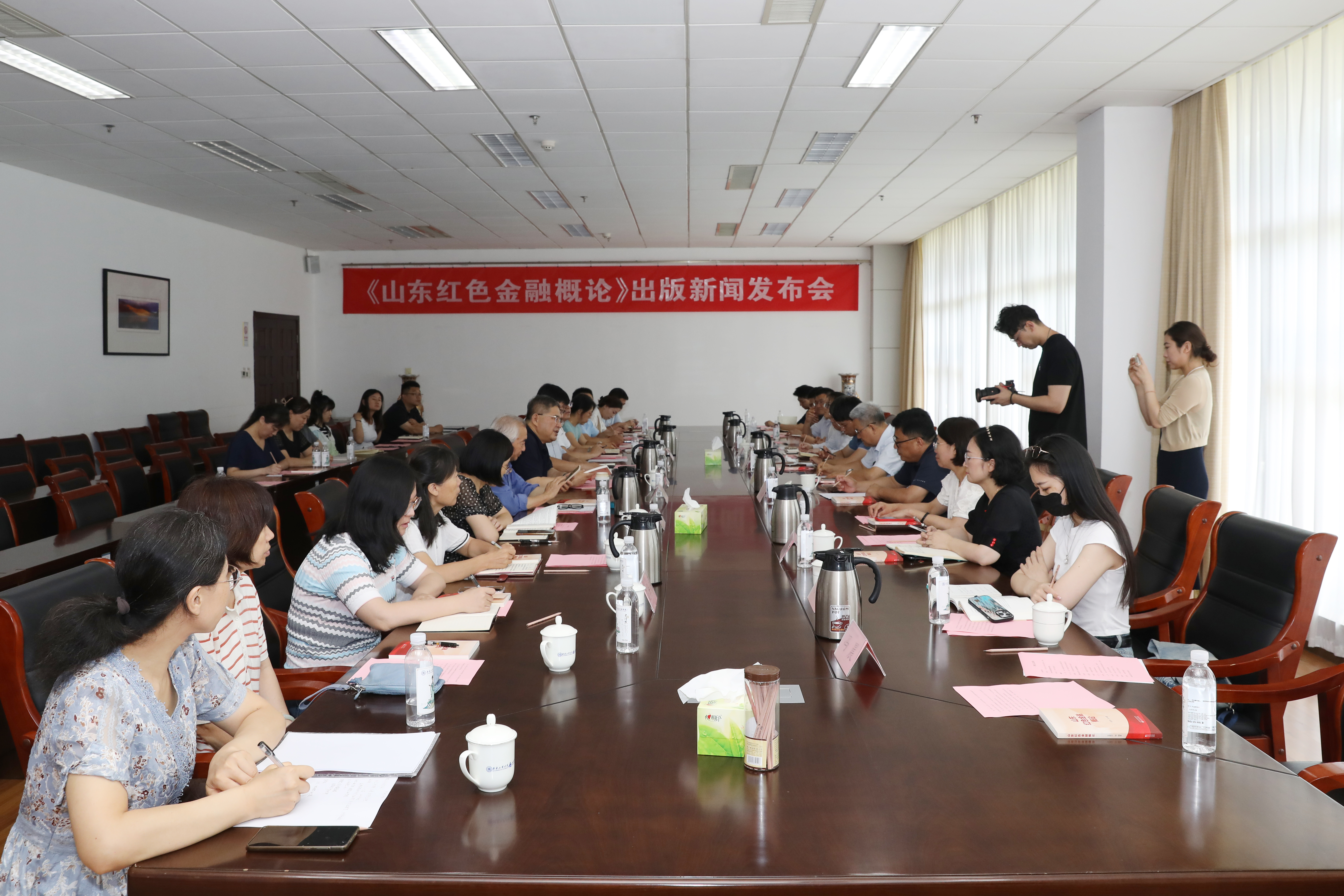
中国人民银行

Search documents
21社论丨货币政策有效支撑实体经济,稳物价需重点发力
21世纪经济报道· 2025-07-22 00:06
Core Viewpoint - The People's Bank of China maintains the Loan Prime Rate (LPR) at 3.0% for 1-year and 3.5% for over 5 years, indicating a stable monetary policy amid economic recovery efforts [1] Monetary Policy and Economic Indicators - The monetary policy is characterized by moderate easing, effectively supporting macroeconomic stability [1] - M2 growth reached 330.29 trillion yuan, up 8.3% year-on-year, marking the highest level since March 2024 [2] - M1 increased by 4.6% year-on-year, the highest since May 2025, indicating a recovery in demand for current deposits [2] - The gap between M2 and M1 growth rates narrowed to 3.7%, the lowest since 2022, suggesting a rebound in investment and consumption [2] - Consumer Price Index (CPI) remains low at 0.1%, and Producer Price Index (PPI) at -3.6%, reflecting cautious expectations among economic entities [2] Social Financing and Government Bonds - Social financing stock grew by 8.9% year-on-year, indicating an improving financing environment for the real economy [3] - Government bonds are the main contributor to the increase in social financing, with a 21.3% year-on-year growth [3] - In June, social financing increased by 900.8 billion yuan year-on-year, exceeding market expectations [3] Loan Structure and Consumer Behavior - Residents show caution in short-term loans, reflecting weak consumer confidence, while long-term loans are supported by policy and real estate market recovery [5] - Corporate loans increased, indicating a willingness to invest in production expansion and technological upgrades [5] - The stability of LPR rates suggests no significant changes in influencing factors, with banks facing high interest margin pressures [5] Future Monetary Policy Directions - The monetary policy should remain moderately loose, with potential for further rate cuts depending on inflation trends [6] - Structural monetary policy tools will be optimized to support key sectors like small enterprises and green development [6] - Coordination between monetary and fiscal policies is essential to create a synergistic effect [7] - Enhanced management of monetary policy expectations and risk monitoring in key areas like real estate and local government debt is necessary [7]


21社论丨货币政策有效支撑实体经济,稳物价需重点发力
2 1 Shi Ji Jing Ji Bao Dao· 2025-07-21 22:35
Core Viewpoint - The People's Bank of China (PBOC) has maintained the Loan Prime Rate (LPR) at 3.0% for 1-year and 3.5% for over 5 years, aligning with market expectations, while the monetary policy remains moderately accommodative to support macroeconomic stability [1] Monetary Policy and Economic Indicators - The monetary policy is effectively supporting macroeconomic stability through a combination of total control and structural tools, with a focus on enhancing corporate investment and consumer confidence [1] - Broad money supply (M2) grew by 8.3% year-on-year to 330.29 trillion yuan by the end of June, marking the highest growth since March 2024 [2] - Narrow money supply (M1) increased by 4.6% year-on-year, indicating a recovery in both corporate and household demand for current deposits [2] - The gap between M2 and M1 growth rates narrowed to 3.7%, the lowest since 2022, suggesting a rebound in investment and consumption willingness [2] Social Financing and Loan Structure - The total social financing stock grew by 8.9% year-on-year by the end of June, indicating an improving financing environment for the real economy [3] - Government bonds are the main contributor to the increase in social financing, with a 21.3% year-on-year growth, while loans to the real economy grew by 7% [3] - In the household sector, short-term loans remain weak, reflecting cautious consumer sentiment, while long-term loans are supported by policy measures and a recovering real estate market [3] Corporate Loan Trends - Both short-term and long-term loans for enterprises have increased, indicating a growing willingness to invest in production expansion and technological upgrades [4] - The stability of the LPR in July suggests that there have been no significant changes affecting the pricing factors, despite high pressure on bank interest margins [4] Future Monetary Policy Directions - The monetary policy is expected to remain moderately accommodative, with potential for further reductions in reserve requirements and interest rates in the second half of the year, depending on price index changes [5] - There is a focus on optimizing structural monetary policy tools to support key sectors such as small and micro enterprises, technological innovation, and green development [5] - Coordination between monetary and fiscal policies is emphasized to create a synergistic effect, while monitoring risks in real estate, local government debt, and external market fluctuations [5]
残缺、污损人民币如何兑换?
Zheng Quan Ri Bao· 2025-07-21 06:48
记者了解到,《征求意见稿》共十六条,主要明确了办法适用范围和定义、残缺污损人民币兑换标准、 异议处理及鉴定程序、监督管理等四个方面内容。 所谓"残缺、污损人民币",是指票面撕裂、损缺,或外观、质地受损,颜色变化,图案不清晰,防伪特 征受损,不宜再继续流通使用的人民币。 残缺、污损人民币如何在银行兑换?这是日常生活中不少人会遇到的问题。 为进一步做好残缺、污损人民币兑换工作,7月18日,中国人民银行发布《中国人民银行残缺污损人民 币兑换办法(征求意见稿)》(简称《征求意见稿》),并面向社会公开征求意见。 "残缺、污损人民币兑换,关系到金融消费者合法权益的维护。《征求意见稿》不仅明确了兑换标准, 便于人民群众去兑换;也更便于银行机构按照标准来执行,还能减少一些纠纷。"招联首席研究员、上 海金融与发展实验室副主任董希淼告诉《农村金融时报》记者,"这也是一项金融便民惠民的具体举 措。" 《征求意见稿》明确,金融机构应当无偿为公众办理残缺、污损人民币兑换业务,不得拒绝办理。因火 烧、侵蚀、霉烂等特殊原因形成的残缺、污损人民币(以下简称"特殊残缺、污损人民币")的兑换业 务,由中国人民银行分支机构指定的金融机构办理。 根 ...
7月LPR报价出炉!一年期、五年期LPR均维持不变
Sou Hu Cai Jing· 2025-07-21 01:40
Core Points - The Loan Prime Rate (LPR) for both 1-year and 5-year terms remains unchanged at 3.0% and 3.5% respectively as of July 21, 2025 [1][3] - The People's Bank of China (PBOC) emphasizes the need for a moderately accommodative monetary policy to support economic growth and stabilize the real estate market [4] - Analysts suggest that there is still potential for LPR adjustments downward in the second half of the year, depending on external uncertainties and domestic demand stimulation [4][5] Monetary Policy Insights - The PBOC's monetary policy committee reiterated the importance of implementing a moderately accommodative monetary policy and enhancing counter-cyclical adjustments [4] - There is a recommendation to increase the intensity of monetary policy regulation and improve its foresight, targeting, and effectiveness based on economic and financial market conditions [4] - Analysts indicate that the downward adjustment of LPR may be influenced by the potential reduction of policy and deposit rates, which could lower banks' funding costs [5]
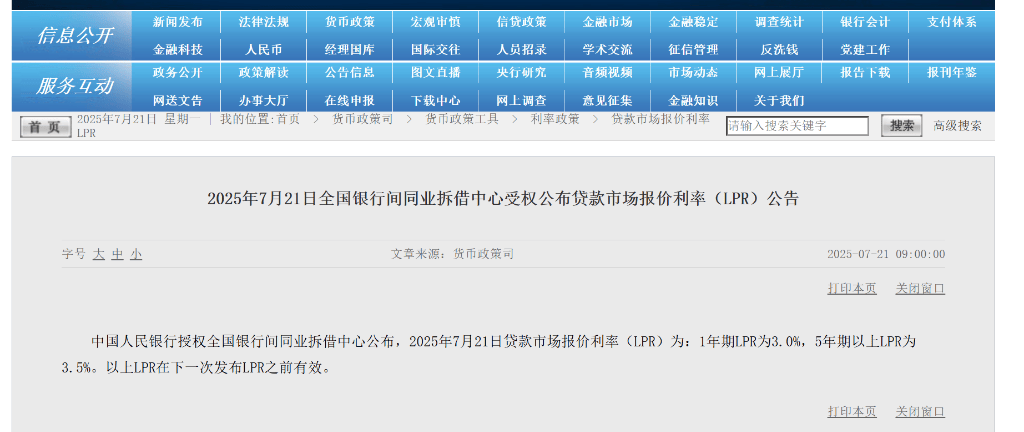
首部系统梳理山东红色金融史的开创性著作——解读《山东红色金融概论》
Qi Lu Wan Bao· 2025-07-20 12:23
Core Viewpoint - The publication of "Shandong Red Financial Overview" marks a significant milestone in the inheritance of red financial culture in Shandong, providing a comprehensive historical account of the development of red finance during the New Democratic Revolution period [3][8]. Group 1: Historical Context - The book systematically reviews the creation, development, and expansion of red finance in Shandong from 1921 to 1949, highlighting key periods such as the Land Revolution War, the Anti-Japanese War, and the Liberation War [2][4]. - During the Land Revolution War (1927-1937), early financial explorations were conducted under extreme conditions, laying the ideological and organizational foundations for future developments [2]. - The Anti-Japanese War (1937-1945) saw the establishment of significant financial institutions like Beihai Bank and Luxi Bank, which played crucial roles in supporting the economy of the anti-Japanese base areas [2][5]. - The Liberation War (1945-1949) led to the further improvement of the financial system in Shandong, culminating in the unification of currency and the establishment of the People's Bank of China [2][7]. Group 2: Financial Institutions and Policies - Beihai Bank, established in December 1938, became a vital economic pillar for the Shandong anti-Japanese base, issuing "Beihai Currency" despite facing operational challenges due to the war [2][5]. - The book discusses the monetary policies implemented in the anti-Japanese base areas, focusing on the management of currency value and the fight against inflation through the use of Beihai Currency [6]. - The financial operations of Beihai Bank and Luxi Bank during the anti-Japanese period were crucial for breaking the enemy's economic blockade and supporting the local economy [5][6]. Group 3: Educational and Cultural Significance - The book is part of a broader initiative by Qilu University of Technology to promote red financial culture through various means, including the establishment of a red financial museum [3][4]. - It serves as an important educational resource for understanding the historical contributions of red finance to revolutionary efforts, economic development, and the foundation of the financial system in China [4][8]. - The publication has received high praise from academic circles for its scholarly value and its role in supporting the education of party history and financial history [8].
质押券取消冻结:境内与境外、当下与未来
Huachuang Securities· 2025-07-20 09:13
证 券 研 究 报 告 【债券日报】 质押券取消冻结:境内与境外、当下与未来 ❖ 2025 年 7 月 18 日,央行发布《中国人民银行关于修改部分规章的决定(征求 意见稿)》起草说明。其中,第二方面内容取消对债券回购的质押券进行冻结 的规定,引发市场关注。 ❖ 一、现行情况:回购交易的质押券原户冻结 1、法律规定,质权自权利凭证交付时设立。按照《民法典》第四百四十一条 的相关内容,有价证券出质的质权的设立以汇票、本票、支票、债券、存款单、 仓单、提单出质的,质权自权利凭证交付质权人时设立。 2、现行情况:考虑质押物出质后质权人或存在不当使用的问题,质押券采用 原户冻结的模式。债券登记托管结算机构可依法为债券持有人提供债券质押 登记服务,对相应债券进行冻结。一方面,债券质押品被冻结在资金融入方账 户,无法继续在二级市场流通。另一方面,出现债务人违约等情况,债权人可 能无法及时处置质押物来实现债权,或面临一定的损失风险。 ❖ 二、美欧及香港经验:质押券逆回购方可再使用 1、美欧:目前美欧操作中,逆回购方可使用质押券进行再融资。相关法律规 定,对手方同意的情况下,资金融出方能够对作为抵押品的金融工具行使重复 使用 ...
非银支付机构监管将迎新规!央行拟按5类11级差异化监管
Nan Fang Du Shi Bao· 2025-07-19 02:00
Core Viewpoint - The People's Bank of China (PBOC) has released a draft for public consultation regarding the "Non-Bank Payment Institutions Classification Rating Management Measures (Revised Draft)," aimed at enhancing the regulatory framework for payment institutions and ensuring compliance with the Non-Bank Payment Institutions Supervision and Administration Regulations [2][4]. Group 1: Overview of the Draft - The draft consists of five chapters and twenty-three articles, covering general principles, rating indicators and methods, results and applications, organizational implementation, and supplementary provisions [5][8]. - The revision of the draft is a specific measure to implement the spirit of the Central Financial Work Conference and is a necessary requirement for enforcing the Non-Bank Payment Institutions Supervision and Administration Regulations [4]. Group 2: Rating Indicators and Methods - The draft specifies the rating indicators, methods, and adjustment factors, with a total score of 100 points distributed across seven modules, including corporate governance, business norms, reserve fund management, user rights protection, system security, anti-money laundering measures, and operational stability [9][10]. - The business norms module holds the highest weight at 25 points, indicating its significance in the overall assessment [9]. Group 3: Rating Results and Application - The classification rating results are divided into five categories (A, B, C, D, E) with eleven levels, and specific scoring ranges are defined for each category [10][12]. - Institutions rated as E will face severe consequences, such as being classified as non-compliant if they fail to submit self-assessment reports or are found to have engaged in illegal activities [10]. Group 4: Implementation and Regulatory Measures - The draft outlines that the rating applies to payment institutions that have been established for over one year, detailing the procedures for self-assessment, initial evaluation by branches, and final evaluation by headquarters [7][12]. - Differentiated regulatory measures will be applied based on the rating results, with A-rated institutions required to rectify issues within a specified timeframe, while D and E-rated institutions will face stricter regulatory actions [12].

上半年信贷结构持续优化 金融市场韧性增强
Zhong Guo Chan Ye Jing Ji Xin Xi Wang· 2025-07-18 23:13
Group 1 - The core viewpoint of the articles emphasizes the continuous optimization of credit structure and the enhancement of financial market resilience in China, as indicated by the People's Bank of China's (PBOC) recent data and policy measures [1][3][4] - The PBOC has implemented a moderately accommodative monetary policy in response to a complex external environment, aiming to support economic recovery and stabilize market expectations [2][3] - The total amount of loans in China has increased, with a year-on-year growth of 7.1% as of June, and new loans amounting to 12.92 trillion yuan in the first half of the year, focusing on key sectors like manufacturing and infrastructure [4][5] Group 2 - The PBOC has introduced a series of monetary policy measures, including interest rate cuts and targeted lending to stimulate consumption and support sectors such as hospitality, education, and elderly care [5][6] - The financial sector has shown strong resilience, with the RMB appreciating against the USD while maintaining stability against a basket of currencies, reflecting a robust domestic economic foundation [7][8] - The PBOC's commitment to maintaining a flexible exchange rate policy and preventing excessive fluctuations in the RMB is aimed at ensuring stability in the financial markets [8]
央行:禁止经纪机构直接或间接持有交易头寸
news flash· 2025-07-18 09:09
Core Viewpoint - The People's Bank of China has proposed a draft regulation that prohibits brokerage firms from holding trading positions directly or indirectly, aiming to enhance market integrity and prevent unfair advantages in the interbank market [1] Group 1: Regulatory Changes - The draft regulation specifically states that currency brokerage companies and other brokerage departments in the interbank market are not allowed to hold trading positions directly or indirectly [1] - It also prohibits these entities from controlling trading accounts or using information advantages gained through brokerage services to obtain improper benefits during the matching process [1]
弘扬中国特色金融文化,《山东红色金融概论》面世
Qi Lu Wan Bao· 2025-07-17 02:20
Core Viewpoint - The publication of "Introduction to Shandong Red Finance" marks a significant contribution to the understanding and promotion of red finance in Shandong, highlighting its historical significance and practical experiences during the New Democratic Revolution period [1][8][14]. Group 1: Historical Context - Shandong served as a crucial area for revolutionary financial activities led by the Communist Party during the New Democratic Revolution, with institutions like Beihai Bank and Luxi Bank exemplifying red finance practices [1][5]. - Beihai Bank was established on December 1, 1938, and underwent several transformations due to the war, ultimately becoming a foundational institution for the People's Bank of China in 1948 [6][7]. Group 2: Academic Contribution - "Introduction to Shandong Red Finance" is noted as the first academic work focusing specifically on the history of red finance in Shandong, filling a gap in existing research [8][10]. - The book's compilation involved extensive research, including over 350 academic papers and 500 academic works, ensuring a solid foundation for its content [10]. Group 3: Institutional Role - Qilu University of Technology (Shandong Academy of Sciences) has played a pivotal role in promoting red finance culture, leveraging its historical ties to the Beihai Bank for educational purposes [9][18]. - The establishment of the Shandong Red Finance Museum at Qilu University represents a significant step in showcasing the region's red finance culture and history [9]. Group 4: Scholarly Reception - Experts have praised "Introduction to Shandong Red Finance" for its academic and spiritual value, noting its innovative concepts and insights into the historical significance of red finance in Shandong [14][18]. - The book is expected to support the education of future generations about red stories and the inheritance of red genes, contributing to the broader cultural narrative [14][18].