
华泰柏瑞沪深300ETF

Search documents
中国铁建的前世今生:2025年三季度营收7284.03亿元行业第二,净利润172.29亿元行业第三
Xin Lang Zheng Quan· 2025-10-30 16:29
Core Viewpoint - China Railway Construction Corporation (CRCC) is a leading comprehensive construction group with strong performance in engineering contracting and a diversified business model, showing significant revenue and profit figures in the industry [2][5]. Group 1: Business Overview - CRCC was established on November 5, 2007, and listed on the Shanghai Stock Exchange on March 10, 2008, with its headquarters in Beijing [1]. - The company operates in various sectors including engineering contracting, design consulting, industrial manufacturing, real estate development, capital operations, and logistics, showcasing a full industry chain advantage [1]. Group 2: Financial Performance - As of Q3 2025, CRCC reported a revenue of 728.40 billion yuan, ranking second in the industry, surpassing the industry average of 135.95 billion yuan [2]. - The main business segments include engineering contracting (434.60 billion yuan, 88.84%), logistics and other services (40.72 billion yuan, 8.32%), real estate development (20.76 billion yuan, 4.24%), industrial manufacturing (11.83 billion yuan, 2.42%), and design consulting (6.74 billion yuan, 1.38%) [2]. - The net profit for the same period was 17.23 billion yuan, ranking third in the industry, above the industry average of 3.65 billion yuan [2]. Group 3: Financial Ratios - As of Q3 2025, CRCC's debt-to-asset ratio was 79.14%, higher than the previous year's 76.83% and above the industry average of 72.81% [3]. - The gross profit margin was reported at 8.77%, lower than the previous year's 9.16% and below the industry average of 11.72% [3]. Group 4: Shareholder Information - As of June 30, 2025, the number of A-share shareholders decreased by 2.70% to 217,500, while the average number of shares held per shareholder increased by 2.77% to 52,900 [5]. - The top ten shareholders include China Securities Finance Corporation, holding 323 million shares, with no change from the previous period [5]. Group 5: Future Outlook - The company is expected to benefit from rapid growth in overseas business, with a 20.29% increase in revenue from international operations in H1 2025 [5]. - New contracts signed in H1 2025 increased by 57.43% year-on-year, indicating strong future growth potential [5][6]. - Profit forecasts for 2025 to 2027 are 22.82 billion, 23.55 billion, and 24.28 billion yuan, respectively, with corresponding P/E ratios of 4.82, 4.66, and 4.52 [5].



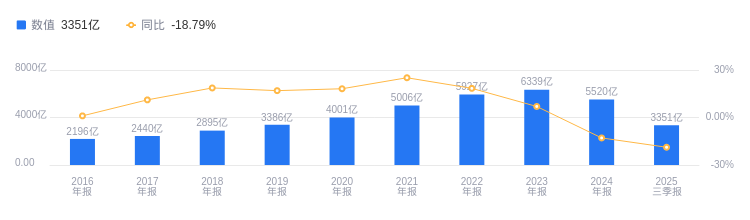
中国中冶的前世今生:2025年三季度营收3350.94亿行业居首,净利润53.88亿远超同业
Xin Lang Cai Jing· 2025-10-30 14:40
Core Viewpoint - China Metallurgical Group Corporation (China MCC) is the largest metallurgical construction contractor and metallurgical enterprise service provider globally, with a comprehensive business model covering engineering contracting, resource development, and more [1] Group 1: Business Performance - In Q3 2025, China MCC achieved a revenue of 335.09 billion yuan, ranking first in the industry, significantly surpassing the second-ranked company, Shen Sanda A, which reported 33.02 billion yuan [2] - The main business composition includes engineering contracting at 215.75 billion yuan (90.83%), specialty businesses at 16.87 billion yuan (7.10%), real estate at 4.79 billion yuan (2.02%), and other businesses at 0.12 billion yuan (0.05%) [2] - The net profit for the same period was 5.39 billion yuan, also leading the industry, with the second-ranked company, Yaxiang Integration, reporting only 0.44 billion yuan [2] Group 2: Financial Ratios - As of Q3 2025, China MCC's debt-to-asset ratio was 78.71%, an increase from 74.71% year-on-year, and higher than the industry average of 61.18% [3] - The gross profit margin for the same period was 10.00%, up from 9.04% year-on-year, but still below the industry average of 16.47% [3] Group 3: Leadership - The chairman, Chen Jianguang, has a rich background, currently serving as the vice general manager of China Minmetals Corporation and has held various positions in the industry [4] Group 4: Shareholder Information - As of September 30, 2014, the number of A-share shareholders increased by 10.38% to 340,700, while the average number of circulating A-shares held per household decreased by 9.41% to 47,700 [5] - By September 30, 2025, major shareholders included China Securities Finance Corporation with 589 million shares, unchanged, while Hong Kong Central Clearing Limited reduced its holdings by 223 million shares [5] Group 5: Resource Business Outlook - The mineral resource business is becoming a stable and sustainable growth driver, with three operating mines generating 2.82 billion yuan in revenue in H1 2025, contributing 0.55 billion yuan to net profit [6] - Two copper mines with significant resource reserves are expected to enhance company performance as copper prices are anticipated to rise due to a long-term supply-demand gap [6] - The company is projected to maintain net profits of 6.15 billion yuan, 6.66 billion yuan, and 7.27 billion yuan for 2025 to 2027 [6]

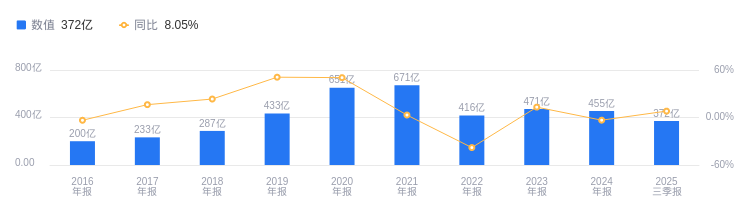
中联重科的前世今生:2025年三季度营收371.56亿行业第三,净利润41.05亿位居第三
Xin Lang Cai Jing· 2025-10-30 12:50
Core Viewpoint - Zoomlion is a leading global manufacturer in the engineering machinery sector, with a strong focus on research, development, manufacturing, sales, and service of engineering and agricultural machinery [1] Financial Performance - In Q3 2025, Zoomlion achieved a revenue of 37.156 billion yuan, ranking third among 23 companies in the industry, with the top two being XCMG at 78.157 billion yuan and SANY at 65.741 billion yuan [2] - The net profit for the same period was 4.105 billion yuan, also ranking third, with SANY leading at 7.239 billion yuan and XCMG at 6.083 billion yuan [2] Profitability and Debt Ratios - As of Q3 2025, Zoomlion's debt-to-asset ratio was 53.80%, slightly up from 53.25% year-on-year, which is higher than the industry average of 44.93% [3] - The gross profit margin for Q3 2025 was 28.10%, down from 28.37% year-on-year, but still above the industry average of 25.31% [3] Shareholder Information - As of July 20, 2021, the number of A-share shareholders increased by 5.62% to 342,600, while the average number of circulating A-shares held per shareholder decreased by 5.21% to 19,100 [5] - As of September 30, 2025, major shareholders included China Securities Finance Corporation with 233 million shares and Hong Kong Central Clearing Limited with 202 million shares, the latter having increased by 19.734 million shares [5] Business Expansion and Future Outlook - Zoomlion has established a mining machinery company in Xiangtan, focusing on "green, large-scale, and intelligent" product development, with domestic mining machinery business growing against the trend and overseas business increasing by over 29% [5] - The company showcased five humanoid robots and aims for a net profit of 4.9 billion, 6.2 billion, and 7.4 billion yuan from 2025 to 2027, representing year-on-year growth of 40%, 25%, and 20% respectively [5] Analyst Ratings - According to GF Securities, Zoomlion is considered a post-cycle stock with a three-year CAGR of 62% in overseas revenue, and it is viewed as an undervalued high-dividend stock [6] - The projected net profits for 2025 to 2027 are 4.8 billion, 6.3 billion, and 8 billion yuan, with a target PE of 14x for 2026, suggesting a reasonable A-share value of 10.22 yuan per share [6]

麦高证券:麦高视野:ETF观察日志
Mai Gao Zheng Quan· 2025-09-29 05:04
Report Summary 1. Report Industry Investment Rating No relevant content provided. 2. Core Viewpoints No explicit core viewpoints are presented in the provided content. The report mainly offers daily tracking data of various ETFs, including their performance metrics such as trading volume, net subscriptions, and RSI indicators. 3. Summary by Category A. Data Explanation - The report tracks daily frequency data of ETFs, divided into "broad - based" and "theme" sub - tables according to the tracked index categories. The "broad - based" ETFs track mainstream broad - based indices like CSI 300 and CSI 500, while "theme" ETFs track industry/style indices such as non - bank and dividend indices [2]. - A fund pool is constructed by selecting one or several large - scale ETFs in each type for analysis [2]. - The RSI relative strength indicator is calculated based on the ratio of average gains to average losses over a 12 - day period. RSI > 70 indicates an overbought market, and RSI < 30 indicates an oversold market [2]. - The net subscription amount is calculated using the formula NETBUY(T) = NAV(T)–NAV(T - 1)*(1 + R(T)), where NAV(T - 1) is the previous trading day's ETF net value [2]. - The intraday market trend is based on a 5 - minute intraday transaction price trend chart, with red dots representing the day's highest and lowest prices. Some intraday data may be missing [2]. - The institutional holding ratio is the estimated ratio from the latest annual or semi - annual reports of ETF funds, excluding the holding ratio of corresponding linked funds, and the data may have deviations [3]. B. Broad - based ETFs - Multiple ETFs tracking indices like CSI 300, CSI 500, SSE 50, etc. are presented. For example, the Huatai - Peregrine CSI 300 ETF has a circulation market value of 416.721 billion yuan, a decline of 0.94%, an RSI of 60.18, a net subscription of 703 million yuan, and a trading volume of 3.345 billion yuan [4]. - Different ETFs show varying performance in terms of market value, price changes, net subscriptions, and trading volumes. For instance, the Tianhong CSI 300 ETF has a relatively small market value of 8.977 billion yuan and a net subscription of - 53 million yuan [4]. C. Theme ETFs - **Consumer Electronics**: ETFs such as the Huaxia China Securities Consumption Electronics Theme ETF have a market value of 4.423 billion yuan and a decline of 3.44%. They also have different RSI values, net subscriptions, and trading volumes [6]. - **Non - bank**: The Guotai CSI All - Index Securities Company ETF has a market value of 5.4226 billion yuan and a decline of 0.41%. The industry shows diverse performance among different ETFs in terms of price changes, net subscriptions, etc. [6]. - **Banking**: The Huabao CSI Bank ETF has a market value of 1.4223 billion yuan and a gain of 0.13%. Different bank - related ETFs have different institutional holding ratios and trading volumes [6]. - **Dividend**: The Huatai - Peregrine SSE Dividend ETF has a market value of 1.9402 billion yuan and a gain of 0.03%. Dividend - themed ETFs show differences in performance and net subscriptions [6]. - **New Energy**: The Huaxia CSI New Energy Vehicle ETF has a market value of 549.4 million yuan and a decline of 1.50%. New - energy - related ETFs have different price trends and net subscription situations [6]. - **Chip and Semiconductor**: The Huaxia China Securities Semiconductor Chip ETF has a market value of 2.7587 billion yuan and a decline of 1.24%. These ETFs also vary in RSI values and trading volumes [6]. - **Photovoltaic**: The Huatai - Peregrine CSI Photovoltaic Industry ETF has a market value of 1.3512 billion yuan and a decline of 1.07%. Photovoltaic - themed ETFs show different performance metrics [6]. - **Military Industry**: The Guotai CSI Military Industry ETF has a market value of 1.3688 billion yuan and a decline of 0.33%. Military - industry - related ETFs have different price changes and net subscriptions [6]. - **ESG**: The Yifangda CSI Shanghai Environmental Exchange Carbon Neutrality ETF has a market value of 96.5 million yuan and a decline of 0.41%. ESG - related ETFs show different performance characteristics [6]. - **Robot**: The Huaxia CSI Robot ETF has a market value of 2.2068 billion yuan and a decline of 3.25%. Robot - themed ETFs have different RSI values and trading volumes [6]. - **Central and State - owned Enterprises**: The Huitianfu CSI Shanghai State - owned Enterprises ETF has a market value of 796.5 million yuan and a decline of 0.10%. Central and state - owned - enterprise - related ETFs show different performance in the market [6]. - **Artificial Intelligence**: The Yifangda CSI Artificial Intelligence ETF has a market value of 2.421 billion yuan and a decline of 3.25%. AI - themed ETFs vary in net subscriptions and trading volumes [6]. - **Real Estate**: The Nanfang CSI All - Index Real Estate ETF has a market value of 686.9 million yuan and a gain of 0.19%. Real - estate - related ETFs show different price trends [6]. - **Biomedicine**: The Huabao CSI Medical ETF has a market value of 2.6023 billion yuan and a decline of 1.55%. Biomedicine - related ETFs have different performance metrics [6]. - **China Concept Internet**: The Yifangda CSI Overseas Internet ETF has a market value of 4.2085 billion yuan and a decline of 1.85%. China - concept - internet - related ETFs show different net subscriptions and trading volumes [6]. - **Resources**: The Nanfang CSI Shenwan Non - ferrous Metals ETF has a market value of 1.2669 billion yuan and a decline of 0.07%. Resource - related ETFs have different price changes and net subscriptions [6]. - **Consumption**: The Penghua CSI Wine ETF has a market value of 1.9911 billion yuan and a decline of 0.68%. Consumption - related ETFs show different performance in the market [6].
ETF周报(20250915-20250919)-20250922
Mai Gao Zheng Quan· 2025-09-22 08:01
Report Industry Investment Rating - Not provided in the report. Core Viewpoints - The report analyzes the secondary market trends, ETF product profiles (including market performance, fund flows, trading volumes, margin trading, and new issuance/listing) in the period from September 15 to September 19, 2025 [1][22]. Summary by Relevant Catalogs 1. Secondary Market Overview - In the sample period, the GEM Index, STAR 50, and S&P 500 had the top weekly returns, at 2.34%, 1.84%, and 1.22% respectively. The S&P 500 had the highest PE valuation quantile at 100.00%, and the Nikkei 225 had the lowest at 85.25% [1][10]. - Among Shenwan primary industries, Coal, Power Equipment, and Electronics had the top returns at 3.51%, 3.07%, and 2.96% respectively, while Banking, Non - ferrous Metals, and Non - bank Finance had the lowest returns at - 4.21%, - 4.02%, and - 3.66% respectively. The industries with the highest valuation quantiles were Social Services, Coal, and Real Estate at 100.00%, 100.00%, and 99.18% respectively, and those with lower quantiles were Non - bank Finance, Agriculture, Forestry, Animal Husbandry and Fishery, and Household Appliances at 22.95%, 40.16%, and 50.61% respectively [17]. 2. ETF Product Profile 2.1 ETF Market Performance - Among different types of ETFs, QDII ETFs had the best average performance with a weighted average return of 2.45%, while Style ETFs had the worst with - 1.38%. Among ETFs classified by listing sectors, those related to the GEM and STAR - GEM 50 performed well with weighted average returns of 2.30% and 2.07% respectively, while CSI 300 and CSI 2000 ETFs performed poorly with - 0.38% and - 0.25% respectively [22]. - Among industry - themed ETFs, Technology sector ETFs had the best average performance with 2.34%, and Financial Real Estate sector ETFs had the worst with - 3.73%. In terms of themes, Chip Semiconductor and Consumer Electronics ETFs performed well with 3.50% and 2.98% respectively, while Non - bank and Banking ETFs performed poorly with - 3.91% and - 3.87% respectively [27]. 2.2 ETF Fund Inflows and Outflows - From the perspective of different types of ETFs, Industry - themed ETFs had the largest net inflow of 372.55 billion yuan, and Broad - based ETFs had the smallest at - 173.39 billion yuan. From the perspective of listing sectors, Hong Kong Stock ETFs had the largest net inflow of 198.26 billion yuan, and STAR - Market - related ETFs had the smallest at - 73.54 billion yuan [2][29]. - From the industry sector perspective, Financial Real Estate sector ETFs had the largest net inflow of 143.03 billion yuan, and Biomedical sector ETFs had the smallest at 10.99 billion yuan. From the theme perspective, Non - bank and Robot ETFs had the largest net inflows of 136.28 billion yuan and 49.27 billion yuan respectively, while Artificial Intelligence and Chip Semiconductor ETFs had the smallest at - 16.07 billion yuan and - 10.24 billion yuan respectively [2][31]. 2.3 ETF Trading Volume - From the perspective of different types of ETFs, QDII ETFs had the largest increase in average daily trading volume change rate at 13.72%, and Broad - based ETFs had the largest decrease at - 10.54%. From the perspective of listing sectors, US Stock ETFs had the largest increase at 5.27%, and STAR - GEM 50 had the largest decrease at - 31.65% [36][39]. - From the industry sector perspective, Traditional Manufacturing sector ETFs had the largest increase in average daily trading volume change rate at 2.49%, and Biomedical sector ETFs had the largest decrease at - 13.47%. From the theme perspective, Non - bank and Chip Semiconductor ETFs had the largest average daily trading volumes in the past 5 days at 245.85 billion yuan and 127.16 billion yuan respectively. Robot and Central - State - owned - enterprise ETFs had the largest increases in average daily trading volume change rate at 36.40% and 11.19% respectively, while Consumer Electronics and Military - industry ETFs had the largest decreases at - 40.28% and - 29.46% respectively [42][45]. 2.4 ETF Margin Trading - In the sample period, the net margin purchase of all equity ETFs was - 13.29 billion yuan, and the net short - selling was - 0.25 billion yuan. The Cathay CSI All - Index Securities Company ETF had the largest net margin purchase, and the Huatai - Peregrine CSI 300 ETF had the largest net short - selling [2][51]. 2.5 ETF New Issuance and Listing - During the sample period, 19 funds were established and 8 funds were listed [3][53].
先锋期货期权日报-20250917
Xian Feng Qi Huo· 2025-09-17 09:34
Report Information - Report Name: Pioneer Futures Options Daily Report - Date: September 17, 2025 1. Option Underlying Volatility Ranking - The report provides a ranking of option underlying volatility, including the implied volatility of at-the-money options, 30-day historical volatility, and the true range of the underlying on the day [3][4]. - The top-ranked underlying in terms of implied volatility of at-the-money options are the September contracts of Science and Technology Innovation Board 50 ETF and the September contract of Science and Technology Innovation 50 ETF, with values of 3.5% and 3.4% respectively [3]. - The top-ranked underlying in terms of 30-day historical volatility are also the September contracts of Science and Technology Innovation Board 50 ETF and the September contract of Science and Technology Innovation 50 ETF, with values of 3.4% and 3.3% respectively [3]. - The top-ranked underlying in terms of the true range of the underlying on the day are the September contract of Science and Technology Innovation 50 ETF and the September contract of Science and Technology Innovation 50 ETF, with values of 3.1% and 3.0% respectively [3]. 2. Exchange Options Analysis 2.1 Shanghai Stock Exchange Options 2.1.1 Shanghai 50ETF - **Basic Information**: The trading volume of the main options of Shanghai 50ETF on the day was 605,762 lots, the open interest was 1,273,240 lots, the volume ratio of call options to put options was 1.66, and the weighted average implied volatility was 23.84% [20]. - **Volatility Trading**: The report provides implied volatility curves for different strike prices and deltas of Shanghai 50ETF call options, and suggests selling options with higher implied volatility and buying options with lower implied volatility [23]. - **Risk-Free Arbitrage**: The optimal arbitrage portfolio held to maturity has a minimum annualized yield of 18.8% when traded at the settlement price and 3.26% when traded at the counterparty price [27][29]. 2.1.2 Huatai-PineBridge CSI 300ETF - **Basic Information**: The trading volume of the main options of Huatai-PineBridge CSI 300ETF on the day was 771,046 lots, the open interest was 943,234 lots, the volume ratio of call options to put options was 1.57, and the weighted average implied volatility was 22.76% [32]. - **Volatility Trading**: Similar to Shanghai 50ETF, the report provides implied volatility curves and trading suggestions [37]. - **Risk-Free Arbitrage**: The optimal arbitrage portfolio held to maturity has a minimum annualized yield of 9.34% when traded at the settlement price and 3.92% when traded at the counterparty price [39][41]. 2.1.3 Southern CSI 500ETF - **Basic Information**: The trading volume of the main options of Southern CSI 500ETF on the day was 1,513,052 lots, the open interest was 904,760 lots, the volume ratio of call options to put options was 1.37, and the weighted average implied volatility was 26.98% [44]. - **Volatility Trading**: The report provides implied volatility curves and trading suggestions [48]. - **Risk-Free Arbitrage**: The optimal arbitrage portfolio held to maturity has a minimum annualized yield of 50.9% when traded at the settlement price and 12.5% when traded at the counterparty price [51][53]. 2.1.4 ChinaAMC Shanghai Science and Technology Innovation Board 50ETF - **Basic Information**: The trading volume of the main options of ChinaAMC Shanghai Science and Technology Innovation Board 50ETF on the day was 1,178,321 lots, the open interest was 1,635,232 lots, the volume ratio of call options to put options was 1.83, and the weighted average implied volatility was 55.29% [56]. - **Volatility Trading**: The report provides implied volatility curves and trading suggestions [59]. - **Risk-Free Arbitrage**: The optimal arbitrage portfolio held to maturity has a minimum annualized yield of 25.6% when traded at the settlement price and 5.62% when traded at the counterparty price [63][64]. 2.1.5 E Fund Shanghai Science and Technology Innovation Board 50ETF - **Basic Information**: The trading volume of the main options of E Fund Shanghai Science and Technology Innovation Board 50ETF on the day was 268,348 lots, the open interest was 452,951 lots, the volume ratio of call options to put options was 1.93, and the weighted average implied volatility was 53.79% [67]. - **Volatility Trading**: The report provides implied volatility curves and trading suggestions [70]. - **Risk-Free Arbitrage**: The optimal arbitrage portfolio held to maturity has a minimum annualized yield of 41.0% when traded at the settlement price and 12.3% when traded at the counterparty price [74][76]. 2.2 Shenzhen Stock Exchange Options 2.2.1 Harvest CSI 300ETF - **Basic Information**: The trading volume of the main options of Harvest CSI 300ETF on the day was 132,683 lots, the open interest was 226,327 lots, the volume ratio of call options to put options was 1.52, and the weighted average implied volatility was 24.19% [80]. - **Volatility Trading**: The report provides implied volatility curves and trading suggestions [82].
先锋期货期权日报-20250822
Xian Feng Qi Huo· 2025-08-22 09:35
1. Report Industry Investment Rating No relevant content provided. 2. Core View of the Report The report presents the daily option data of various underlying assets, including the implied volatility of at - the - money options, 30 - day historical volatility, and the real - time volatility of the day. It also provides trading suggestions for volatility trading and the minimum annualized return for risk - free arbitrage of different options on the Shanghai Stock Exchange, Shenzhen Stock Exchange, China Financial Futures Exchange, Zhengzhou Commodity Exchange, Dalian Commodity Exchange, Shanghai Futures Exchange, Shanghai International Energy Exchange, and Guangzhou Futures Exchange [3][6][25]. 3. Summary According to the Directory 3.1 Shanghai Stock Exchange Options 3.1.1 Shanghai 50ETF - **Basic Information**: The trading volume of the main options of the Shanghai 50ETF on the day was 1,230,718 lots, the open interest was 810,259 lots, the trading volume ratio of call options to put options was 1.83, and the weighted average implied volatility was 21.41% [21]. - **Volatility Trading**: Different months - sell the month with the curve above and buy the month with the curve below; same month - sell the option with the point above the curve and buy the option with the point below the curve [25]. - **Risk - Free Arbitrage**: The minimum annualized return of the optimal arbitrage portfolio held to maturity was 31.8% at the settlement price and 3.10% at the counter - price [28][30]. 3.1.2 Huatai - Berry Shanghai - Shenzhen 300ETF - **Basic Information**: The trading volume of the main options of the 300ETF on the day was 1,081,531 lots, the open interest was 543,409 lots, the trading volume ratio of call options to put options was 1.8, and the weighted average implied volatility was 18.78% [34]. - **Volatility Trading**: Similar to the Shanghai 50ETF, sell the curve above and buy the curve below for different months, and sell the point above and buy the point below for the same month [38]. - **Risk - Free Arbitrage**: The minimum annualized return of the optimal arbitrage portfolio held to maturity was 21.8% at the settlement price and 8.44% at the counter - price [41][43]. 3.1.3 Southern China Securities 500ETF - **Basic Information**: The trading volume of the main options of the 500ETF on the day was 1,649,826 lots, the open interest was 707,570 lots, the trading volume ratio of call options to put options was 1.39, and the weighted average implied volatility was 23.45% [46]. - **Volatility Trading**: The same trading suggestions as above [48]. - **Risk - Free Arbitrage**: The minimum annualized return of the optimal arbitrage portfolio held to maturity was 27.7% at the settlement price and 1.69% at the counter - price [52][54]. 3.1.4 Huaxia Shanghai Science and Technology Innovation 50ETF - **Basic Information**: The trading volume of the main options of the Science and Technology Innovation 50ETF on the day was 2,147,328 lots, the open interest was 710,562 lots, the trading volume ratio of call options to put options was 2.36, and the weighted average implied volatility was 54.24% [57]. - **Volatility Trading**: Follow the general volatility trading suggestions [61]. - **Risk - Free Arbitrage**: The minimum annualized return of the optimal arbitrage portfolio held to maturity was 47.2% at the settlement price and 5.91% at the counter - price [64][66]. 3.1.5 E Fund Shanghai Science and Technology Innovation 50ETF - **Basic Information**: The trading volume of the main options of the Science and Technology Innovation 50ETF on the day was 560,522 lots, the open interest was 249,762 lots, the trading volume ratio of call options to put options was 2.07, and the weighted average implied volatility was 50.01% [69]. - **Volatility Trading**: Adopt the same volatility trading strategies [71]. - **Risk - Free Arbitrage**: No specific data provided in the text. 3.2 Other Exchanges' Options The report also lists the options on the Shenzhen Stock Exchange, China Financial Futures Exchange, Zhengzhou Commodity Exchange, Dalian Commodity Exchange, Shanghai Futures Exchange, Shanghai International Energy Exchange, and Guangzhou Futures Exchange, including basic information, volatility trading, and risk - free arbitrage for each underlying asset, but detailed data for some parts are not fully presented in the provided text [8][9][10][11][12][13][14][15][16][17][18].
上交所期权周报-20250803
Xiangcai Securities· 2025-08-03 11:58
1. Report Industry Investment Rating No relevant content provided. 2. Core Viewpoints of the Report - The weekly market declined to varying degrees, with all three option underlying assets dropping by over 1%. The changes in the position PCR ratios showed divergence, with the position PCR of 50ETF and 300ETF continuing to fall, while the put contract position ratio of 500ETF increased. Considering the changes in the implied volatility curve structure, with the curve of 500ETF shifting to the left, indicating some cautious sentiment, it is believed that the current market risk preference level has decreased, and a cautious attitude towards small-cap growth stocks is recommended. This is relatively favorable for large-cap blue-chip underlying assets such as 50ETF and 300ETF [5][43]. 3. Summary by Relevant Catalogs 3.1 Periodic and Spot Market Review 3.1.1 Underlying Asset Market - From July 28 to August 1, the Shanghai Composite Index fluctuated during the week, closing at 3559.95, with lower trading volume compared to the previous week. The Shenzhen Component Index fluctuated and declined during the week, with a decline of 1.58% compared to the previous week, closing at 10991.32, and lower trading volume compared to the previous week [2][8]. - 50ETF opened at 2.917 at the beginning of the week and closed at 2.876 at the end of the week, down 0.040 or 1.37% from the previous week, with a trading volume of 10.865 billion yuan. Huatai-PineBridge CSI 300ETF opened at 4.203 at the beginning of the week and closed at 4.133 at the end of the week, down 0.070 or 1.67% from the previous week, with a trading volume of 17.173 billion yuan. Southern CSI 500ETF opened at 6.365 at the beginning of the week and closed at 6.287 at the end of the week, down 0.078 or 1.23% from the previous week, with a trading volume of 6.109 billion yuan [3][8]. 3.1.2 Futures Index Market - From July 28 to August 1, all contracts of the stock index futures IH closed down. Among them, contract IH2508 declined by -1.42%. All contracts of the stock index futures IF closed down. Among them, contract IF2508 declined by -1.93%. All contracts of the stock index futures IC closed down. Among them, contract IC2508 declined by -1.43% [9]. 3.2 Option Market Review 3.2.1 Trading and Position Holding Situation - From July 28 to August 1, the average daily trading volume of 50ETF options decreased compared to the previous week, while the total position increased. The average daily trading volume of 50ETF options for the week was 1,249,242 contracts, a decrease of 123,739 contracts from the previous week's average daily trading volume. The total position was 1,443,444 contracts, an increase of 202,752 contracts from the end of the previous week. The total position PCR was 0.84, a decrease of 0.14 from the end of the previous week [13]. - The average daily trading volume of Huatai-PineBridge CSI 300ETF options decreased compared to the previous week, while the total position increased. The average daily trading volume of Huatai-PineBridge CSI 300ETF options for the week was 1,165,780 contracts, a decrease of 219,482 contracts from the previous week's average daily trading volume. The total position was 1,284,104 contracts, an increase of 107,929 contracts from the end of the previous week. The total position PCR was 0.89, a decrease of 0.14 from the end of the previous week [15]. - The average daily trading volume of Southern CSI 500ETF options decreased compared to the previous week, while the total position increased. The average daily trading volume of Southern CSI 500ETF options for the week was 1,352,948 contracts, a decrease of 102,102 contracts from the previous week's average daily trading volume. The total position was 1,249,009 contracts, an increase of 165,492 contracts from the end of the previous week. The total position PCR was 1.07, an increase of 0.06 from the end of the previous week [19]. 3.2.2 Volatility Situation - **Historical Volatility**: As of August 1, the 5-day historical rolling volatility of 50ETF rose to 13.05%, near the 50th percentile of the five-year historical level. Currently, the 5-day, 10-day, 20-day, and 40-day historical volatilities are 13.05%, 10.97%, 9.09%, and 9.07% respectively [22]. - The 5-day historical rolling volatility of Huatai-PineBridge CSI 300ETF rose to 14.26%, near the 50th percentile of the five-year historical level. Currently, the 5-day, 10-day, 20-day, and 40-day historical volatilities are 14.26%, 12.76%, 10.26%, and 9.74% respectively [25]. - The 5-day historical rolling volatility of Southern CSI 500ETF rose to 12.99%, near the 25th percentile of the five-year historical level. Currently, the 5-day, 10-day, 20-day, and 40-day historical volatilities are 12.99%, 13.83%, 11.63%, and 11.80% respectively [26]. - **Implied Volatility**: On August 1, the implied volatility near the at-the-money level decreased, and the overall implied volatility level declined. For 50ETF and 300ETF, the slopes on both sides of the curve increased, indicating an increased market expectation of future volatility. For 500ETF, the curve shifted to the left, showing some cautious sentiment [29]. - **Comparison of Historical Volatility and Implied Volatility Trends**: In terms of volatility, short-term volatility increased slightly, and monthly volatility followed suit. Implied volatility declined continuously during the week, and the volatility difference narrowed significantly. It is expected that historical volatility will continue to rise in the future, and the volatility difference will further narrow [36]. 3.3 Investment Recommendations - Given the market decline, the divergence in position PCR ratios, and the changes in the implied volatility curve structure, a cautious attitude towards small-cap growth stocks is recommended, and large-cap blue-chip underlying assets such as 50ETF and 300ETF are relatively favored [5][43].
ETF周报(20250721-20250725)-20250728
Mai Gao Zheng Quan· 2025-07-28 08:01
Report Industry Investment Rating No relevant content provided. Core Viewpoints of the Report The report comprehensively analyzes the secondary market and ETF product situation from July 21 to July 25, 2025. It includes the performance of major indexes and industries, the flow of funds in different types of ETFs, trading volume, and new fund launches and listings [1][2][3]. Summary by Related Catalogs 1. Secondary Market Overview - **Index Performance**: During the sample period, the top performers in weekly returns were the Science and Technology Innovation 50, Nikkei 225, and CSI 500, with returns of 4.63%, 4.11%, and 3.28% respectively. The PE valuation quantile of the CSI 500 was the highest at 99.59%, while that of the Nikkei 225 was the lowest at 72.13% [10]. - **Industry Performance**: In terms of returns, the top three industries were building materials, coal, and steel, with returns of 8.20%, 7.98%, and 7.67% respectively. The bottom three were banking, communication, and public utilities, with returns of -2.87%, -0.77%, and -0.27% respectively. In terms of valuation, the top three industries in valuation quantile were computer, national defense and military industry, and textile and apparel, all at 100.00%. The bottom three were agriculture, forestry, animal husbandry and fishery, comprehensive, and household appliances, at 23.14%, 39.05%, and 40.70% respectively [17]. 2. ETF Product Overview 2.1 ETF Market Performance - **By Product Type**: The average performance of industry - themed ETFs was the best, with a weighted average return of 2.96%, while that of bond ETFs was the worst, with a weighted average return of -0.27%. - **By Listing Plate**: The ETFs related to the Science and Technology Innovation Board and Japanese stocks performed well, with weighted average returns of 4.54% and 3.82% respectively. The ETFs related to US stocks and MSCI China A - share concept performed poorly, with weighted average returns of 0.40% and 1.65% respectively. - **By Industry Plate**: The cycle - sector ETFs had the best average performance, with a weighted average return of 7.21%, while the consumer - sector ETFs had the worst, with a weighted average return of 1.53%. - **By Theme**: Chip semiconductor and non - banking ETFs performed well, with weighted average returns of 4.98% and 4.93% respectively. Banking and innovative drug ETFs performed poorly, with weighted average returns of -2.87% and 0.88% respectively [21][24]. 2.2 ETF Fund Inflow and Outflow - **By ETF Category**: Industry - themed ETFs had the largest net inflow of funds at 231.53 billion yuan, while broad - based ETFs had the smallest at -148.46 billion yuan. - **By Listing Plate**: Hong Kong stock ETFs had the largest net inflow of funds at 106.88 billion yuan, while Science and Technology Innovation Board - related ETFs had the smallest at -39.97 billion yuan. - **By Industry Plate**: Cycle - sector ETFs had the largest net inflow of funds at 72.00 billion yuan, while biomedical - sector ETFs had the smallest at -4.03 billion yuan. - **By Theme**: Non - banking and robot ETFs had the largest net inflows of funds, at 59.10 billion yuan and 14.15 billion yuan respectively. Chip semiconductor and dividend ETFs had the smallest, at -10.89 billion yuan and -7.41 billion yuan respectively [2][29][32]. 2.3 ETF Trading Volume - **By ETF Category**: The daily average trading volume change rate of industry - themed ETFs increased the most, by 28.96%, while that of bond ETFs decreased the most, by -6.75%. - **By Listing Plate**: The daily average trading volume change rate of Japanese stock ETFs increased the most, by 72.66%, while that of US stock ETFs decreased the most, by -17.66%. - **By Industry Plate**: The daily average trading volume change rate of cycle - sector ETFs increased the most, by 98.87%, while that of biomedical - sector ETFs increased the least, by 17.86%. - **By Theme**: Non - banking and innovative drug ETFs had the largest 5 - day average daily trading volumes, at 290.98 billion yuan and 97.35 billion yuan respectively. Central state - owned enterprises and chip semiconductor ETFs had the largest increases in daily average trading volume change rate, at 39.26% and 37.77% respectively. Consumer electronics and military industry ETFs had the largest decreases, at -11.92% and -6.02% respectively [38][41][44][45]. 2.4 ETF Margin Trading During the sample period, the net margin purchase of all equity ETFs was -1.432 billion yuan, and the net short - selling was 0.47 billion yuan. The E Fund CSI Hong Kong Securities Investment Theme ETF had the largest net margin purchase, and the Huaxia CSI 1000 ETF had the largest net short - selling [2][51]. 2.5 ETF New Launches and Listings During the sample period, 10 funds were established and 8 funds were listed [3][53].