幻方量化

Search documents
未知机构:TF计算机英伟达20亿美元重注CoreWeave第三方云算力需求加速释放-20260127
未知机构· 2026-01-27 02:05
CoreWeave美股盘前涨超10%。 客户涵盖OpenAI、微软、Meta等巨头,英伟达持续加码彰显全球AI算力需求长期爆发趋势。 #英伟达重 【TF计算机】英伟达20亿美元重注CoreWeave,第三方云算力需求加速释放 英伟达与CoreWeave宣布扩大长期合作,以每股87.20美元投资20亿美元,助力CoreWeave到2030年建设超5吉瓦AI 工厂。 CoreWeave美股盘前涨超10%。 客户涵盖OpenAI、微软、Meta等巨头,英伟达持续加码彰显全球AI算力需求长期爆发趋势。 #英伟达重金入股本质是"锁定核心算力渠道+制衡云厂商自研芯片"的战略布局。 【TF计算机】英伟达20亿美元重注CoreWeave,第三方云算力需求加速释放 英伟达与CoreWeave宣布扩大长期合作,以每股87.20美元投资20亿美元,助力CoreWeave到2030年建设超5吉瓦AI 工厂。 全球AI算力需求持续井喷,第三方AIDC成为大厂扩容的必选项,A股云算力板块有望迎来估值重塑! 1航锦科技(000818)——英伟达生态核心卡位,算力风口最佳标的 子公司超擎数智为英伟达GPU和网络双Elite精英级合作伙伴,客 ...

DeepSeek新模型曝光?
新华网财经· 2026-01-22 05:00
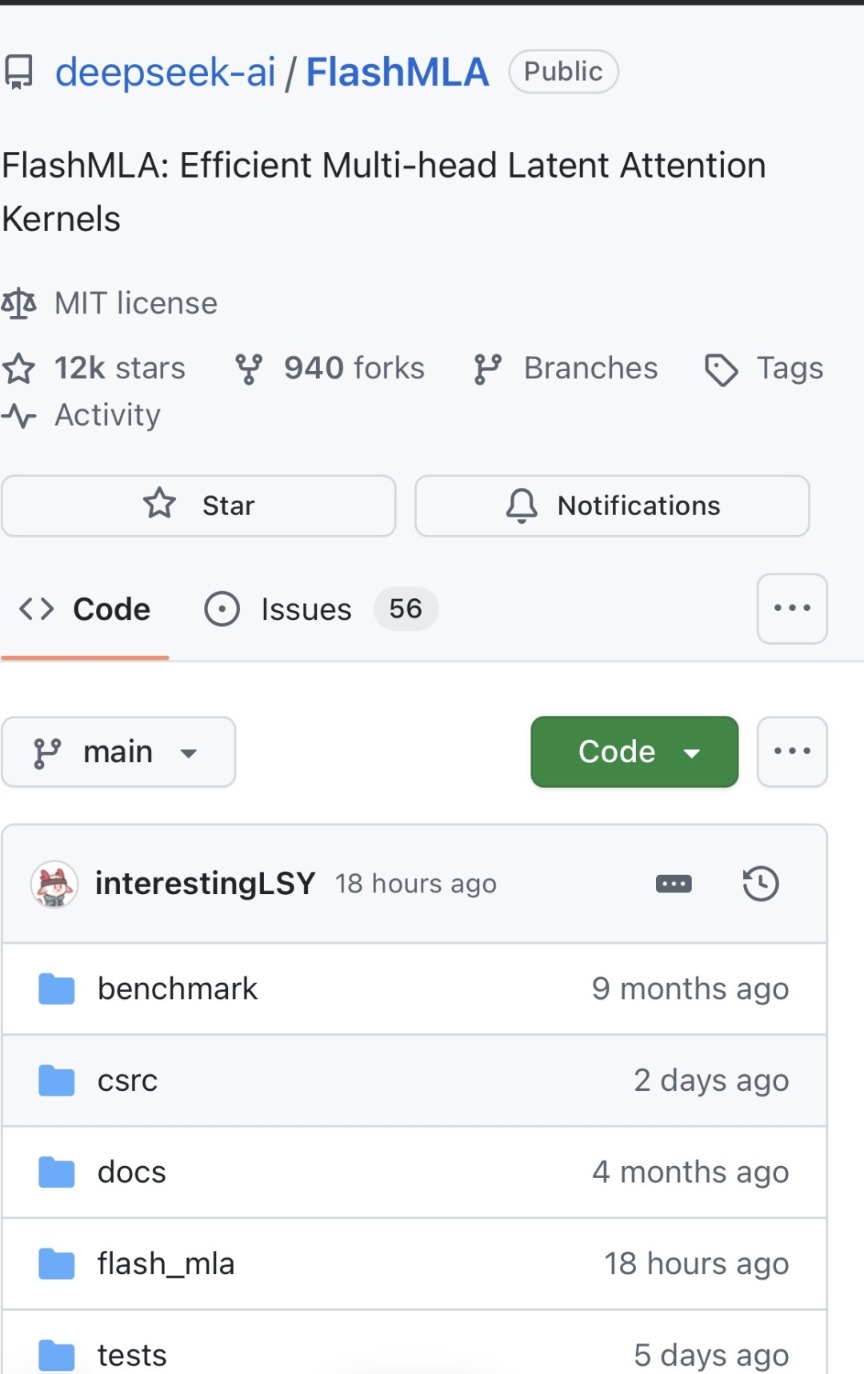
Core Insights - DeepSeek has released a new model "MODEL1" in the open-source community, coinciding with the one-year anniversary of the DeepSeek-R1 model launch [1] - The company plans to gradually unveil five code repositories during the "Open Source Week" starting in February 2025, with Flash MLA being the first project [3] - Industry analysts suggest that "MODEL1" may represent a new architecture distinct from the existing "V32" model, potentially indicating the next-generation model (R2 or V4) that has not yet been publicly released [4] Group 1 - Flash MLA optimizes memory access and computation processes on Hopper GPUs, significantly enhancing the efficiency of variable-length sequence processing [3] - The core design of Flash MLA includes a dynamic memory allocation mechanism and parallel decoding strategy, which reduces redundant computations and increases throughput, particularly for large language model inference tasks [3] - DeepSeek has been active since January 2026, releasing two technical papers on a new training method called "optimized residual connections (mHC)" and a biologically inspired "AI memory module (Engram)" [4] Group 2 - On January 12, DeepSeek published a new paper in collaboration with Peking University, introducing a conditional memory mechanism to address the inefficiencies of the Transformer architecture in knowledge retrieval [5] - The Engram module proposed by DeepSeek is said to enhance knowledge retrieval and improve performance in reasoning and code/mathematics tasks [5] - The private equity firm managed by Liang Wenfeng, known for high returns, has provided substantial support for DeepSeek's research and development efforts [5]

DeepSeek新模型曝光?“MODEL1”现身开源社区
Shang Hai Zheng Quan Bao· 2026-01-21 21:31
Core Insights - DeepSeek has updated its FlashMLA code on GitHub, revealing the previously undisclosed "MODEL1" identifier, which may indicate a new model distinct from the existing "V32" [3][4] - The company plans to launch an "open source week" in February 2025, gradually releasing five codebases, with Flash MLA being the first project [4] - Flash MLA optimizes memory access and computation processes on Hopper GPUs, significantly enhancing the efficiency of variable-length sequence processing, particularly for large language model inference tasks [4] Company Developments - DeepSeek's upcoming AI model, DeepSeek V4, is expected to be released around the Lunar New Year in February 2025, although the timeline may vary [4] - The V4 model is an iteration of the V3 model released in December 2024, boasting advanced programming capabilities that surpass current leading models like Anthropic's Claude and OpenAI's GPT series [5] - Since January 2026, DeepSeek has published two technical papers introducing a new training method called "optimized residual connections (mHC)" and a biologically inspired "AI memory module (Engram)" [5] Industry Context - The introduction of the Engram module aims to improve knowledge retrieval and general reasoning, addressing inefficiencies in the Transformer architecture [5] - The support from Liang Wenfeng's private equity firm, which has achieved a 56.55% average return in 2025, has bolstered DeepSeek's research and development efforts [5]

去年平均回报率超45% 私募量化指增策略迎来高光时刻
Zhong Guo Zheng Quan Bao· 2026-01-20 22:03
Core Insights - The A-share market recovery in 2025 has led to outstanding performance in quantitative index enhancement strategies, with an average return of 45.08% across nearly a thousand products, and almost 90% achieving positive excess returns [1][2] - The small and mid-cap index enhancement strategies have significantly outperformed, particularly the CSI 1000 index enhancement products, which achieved an average return of 49.78% [2][3] - The integration of AI technology into strategy development has become a mainstream trend in the industry, with a focus on multi-strategy and multi-frequency collaboration [6][8] Performance Highlights - The average excess return for quantitative index enhancement products in 2025 was 16.75%, with the CSI 1000 index enhancement products showing an average excess return of 17.49% [2][3] - Large-scale private equity firms with over 10 billion yuan in assets under management achieved an average return of 50.61% and an excess return of 20.26%, indicating a clear performance differentiation in the industry [3][8] - The trend of "double ten" institutions, which have been established for over ten years and have products with net values exceeding 10 yuan, has been notable, with some achieving significant growth [3] Market Dynamics - The fundraising environment for quantitative private equity has shown a dichotomy, with larger firms attracting more capital while smaller firms face increasing challenges [4][5] - A significant increase in dividend distributions has been observed, with a total of 1,658 distributions amounting to over 17.3 billion yuan, marking a 236.59% increase from the previous year [5] - The industry is witnessing a shift towards simpler models in strategy development, moving away from complex models to enhance effectiveness [5][6] Future Outlook - The industry outlook for 2026 is cautiously optimistic, with expectations of continued structural opportunities in small and mid-cap index enhancement strategies [7][8] - Challenges such as strategy crowding and market style shifts are anticipated, which may impact excess returns [7] - The trend of deepening the Matthew effect suggests that leading firms will continue to dominate, while smaller firms must differentiate their strategies to remain competitive [8]
私募量化指增策略迎来高光时刻
Zhong Guo Zheng Quan Bao· 2026-01-20 21:04
Core Insights - The A-share market recovery in 2025 has led to outstanding performance in quantitative index enhancement strategies, with an average return of 45.08% across nearly a thousand products, and almost 90% of these products achieving positive excess returns [1][2] - The small-cap index enhancement strategies have significantly outperformed, particularly the CSI 1000 index enhancement products, which achieved an average return of 49.78% and a 95.93% positive excess return rate [2] - The industry is witnessing a "Matthew Effect," where larger firms with over 10 billion yuan in assets under management are dominating performance metrics, achieving an average return of 50.61% and a 96.65% positive excess return rate [3] Performance Analysis - In 2025, the average excess return for CSI 1000 index enhancement strategies reached 29.48%, outperforming the CSI 500 and CSI 300 index enhancements [2] - The performance disparity is attributed to structural market dynamics, with small-cap index enhancement products consistently outperforming large-cap varieties [2][3] - The top-tier private equity firms have shown a significant increase in both performance and scale, with many achieving returns exceeding 40% [3] Fundraising and Distribution Trends - The fundraising environment in 2025 has shown a dichotomy, with top-tier firms attracting more capital while smaller firms face increasing challenges [4] - A notable trend is the unprecedented wave of distributions, with private equity firms distributing over 173 billion yuan, a 236.59% increase from the previous year [4] - The focus on long-term stability and risk management has become crucial for attracting investor capital [4] Strategy Innovation - The industry is experiencing a wave of strategy innovation, with new products like micro-index enhancements and technology-themed enhancements emerging [5] - The integration of AI technology has become essential, shifting from optional to mandatory in strategy development [5][6] - Firms are increasingly adopting simpler models rather than complex ones, focusing on effective alpha capture through diverse data sources [6] Market Outlook - The outlook for 2026 is cautiously optimistic, with expectations of continued structural opportunities in small-cap index enhancements despite potential challenges from strategy crowding and market style shifts [6][7] - The industry is expected to evolve towards more diversified and refined strategies, with a growing demand for multi-asset and multi-strategy products [7][8] - The trend towards increased technical investment and a more mature investor structure suggests a positive long-term development trajectory for the quantitative investment sector [8]
超45%!2025量化指增策略全景解读出炉
Zhong Guo Zheng Quan Bao· 2026-01-20 13:36
Core Insights - The quantitative index enhancement strategies performed exceptionally well in 2025, with an average return of 45.08%, and nearly 90% of products achieving positive excess returns [1][2][3] Performance Overview - The average excess return for quantitative index enhancement products reached 16.75%, with small-cap index enhancement strategies leading the performance [2] - The CSI 1000 index enhancement products had an average return of 49.78% and an excess return of 17.49%, with 95.93% of products achieving positive excess returns [2] - Large-cap indices like CSI 300 had a lower average return of 31.22%, despite having the highest positive excess return ratio at 97.14% [2][3] Market Dynamics - The A-share market saw high turnover rates and average daily trading volumes, benefiting quantitative strategies [2] - The performance divergence reflects a structural change in market styles, with small-cap index enhancement products outperforming large-cap ones [3] Industry Trends - The industry experienced a significant increase in dividend distributions, with a total of 1,658 dividends amounting to over 17.3 billion yuan, a 236.59% increase from 2024 [5][6] - The trend of strategy innovation is evident, with new products like micro-index enhancements and technology-themed enhancements emerging [6][7] Future Outlook - For 2026, the industry anticipates continued structural opportunities in quantitative index enhancement strategies, although challenges such as strategy crowding and style switching are expected [8][9] - The head institutions are likely to dominate the market due to their technological, talent, and brand advantages, while smaller institutions may need to focus on differentiation [9][10]
新晋百亿私募,国内知名纯AI量化管理人,一图看懂倍漾量化!
私募排排网· 2026-01-20 12:30
Core Viewpoint - Beiyang Quantitative, established in 2020, is an innovative quantitative manager driven by artificial intelligence technology, achieving a management scale exceeding 10 billion yuan by January 2026, making it the first pure quantitative private equity manager in Jiangsu Province [3][8]. Group 1: Company Overview - Beiyang Quantitative is positioned as an AI-native technology company, employing a full-process AI investment research model, with notable technical strength in artificial intelligence within China [3][9]. - The company was founded by Dr. Feng Ji, who is the executive director of the Nanjing International Artificial Intelligence Research Institute, and the team includes ACM/ICPC medalists and experts in artificial intelligence [3][9]. - As of January 2026, Beiyang Quantitative has built a competitive supercomputing center with a computing power exceeding 150 PFlops and a storage capacity of over 50 PB [12][14]. Group 2: Investment Philosophy and Strategies - The core philosophy of Beiyang Quantitative is "Building the Future of Investment with AI," focusing on transforming financial investment paradigms through advanced technology [3][9]. - The company employs short-cycle quantitative strategies with a turnover rate exceeding 200 times, capturing short-term alpha while maintaining a focus on market volatility [13]. - The investment strategies include: - **Index Enhancement Strategy**: Targets the CSI 1000 index, aiming for excess returns through a combination of active and passive investment approaches [18]. - **Quantitative Stock Selection Strategy**: Focuses on achieving higher absolute returns without tracking specific broad-based indices, allowing for greater flexibility in portfolio construction [20]. - **Market Neutral Strategy**: Utilizes mathematical models to identify pricing inefficiencies while minimizing risk through a balanced long and short position [21]. Group 3: Performance and Recognition - Beiyang Quantitative's products have consistently outperformed benchmarks, with several funds achieving returns above ***% since their inception [3][19]. - The company has received multiple industry honors, including the "Three-Year Outstanding Private Equity Company Award" in the neutral strategy category at the 2025 Golden Bull Awards [27].

业绩与募资双爆发!私募交出2025答卷!“金长江”私募赋能计划第二赛段榜单重磅揭晓
券商中国· 2026-01-20 09:32
Core Viewpoint - The Chinese private equity industry is transitioning from quantitative expansion to qualitative transformation, driven by capital market reforms and long-term capital inflows, as highlighted by the "Golden Yangtze" private equity empowerment plan [3]. Group 1: Private Equity Performance and Fundraising - In 2025, the private equity industry achieved remarkable performance, with 75 billion-level private equity firms reporting an average return of 32.77%, with 98.67% of them generating positive returns [4]. - The top five firms, including Lingjun Investment and Yuanshin Investment, reported annual returns exceeding 50%, with the top three surpassing 70% [4]. - Quantitative private equity emerged as a standout performer, with 45 billion-level quantitative firms achieving an average return of 37.61%, all reporting positive returns [4]. Group 2: Product Registration and Market Trends - The number of registered private equity products reached 12,645 in 2025, doubling year-on-year, with stock strategy products accounting for 65.86% of the total [5]. - The dominance of billion-level private equity firms in product registration reflects their advantages in brand, performance, and channels, leading to a concentration of resources in capable institutions [5]. - The regulatory environment is improving, and long-term capital continues to enter the market, positioning the private equity sector for higher quality development [5]. Group 3: Sales and Platform Development - Longjiang Securities' private equity sales business saw a remarkable growth of approximately 350% in sales scale compared to 2024, with a 47% increase in retained volume [7]. - The "Golden Aircraft Carrier" funding platform has established a five-level funding closed-loop system, connecting various financial institutions and facilitating over 10 billion yuan in investments into private equity [8]. - The platform emphasizes building an open, collaborative, and sustainable service ecosystem, enhancing connections between private equity and wealth management [8]. Group 4: Research and Technological Support - Longjiang Securities provides comprehensive research support to private equity managers through reports, surveys, and strategy discussions, enhancing their decision-making capabilities [9]. - The company is focused on building an intelligent, integrated, and efficient operational and trading support system, improving efficiency and accuracy in key processes [10]. - Customized solutions are offered to different strategy managers, enhancing their execution and asset management capabilities [10]. Group 5: Performance Metrics and Strategy Insights - The second phase of the "Golden Yangtze" private equity empowerment plan in 2025 showcased nearly 3,000 participating products, with an average return of 30% and a median return of 22% [11]. - The index enhancement strategy led the performance with a median return of 42.4%, while quantitative stock selection and subjective long strategies followed closely [11]. - The performance of certain strategies, such as CTA, showed a decline in median returns, reflecting challenges posed by market volatility and liquidity changes [11].


没有商业模式--DeepSeek最坚固的“护城河”
华尔街见闻· 2026-01-19 09:46
Core Viewpoint - DeepSeek's unique advantage lies in its lack of a commercial model, allowing it to focus solely on its AGI (Artificial General Intelligence) aspirations without external pressures or funding requirements [3][8][12]. Group 1: Market Expectations and Competition - The market's expectations for DeepSeek's upcoming model are tempered by the saturation of open-source models, making it less likely to shock the world again as it did previously [3][4]. - DeepSeek is no longer the only or the most open player in the market, as other labs have quickly followed suit with their own models [5][8]. Group 2: Funding and Control - DeepSeek's founder, Liang Wenfeng, has maintained a "zero external financing" approach, prioritizing control over financial gain, which is unique among top labs [3][9]. - The success of Liang's quantitative fund, which generated over $700 million in profit with a 53% return rate, allows DeepSeek to fund its operations without external investment [3][11]. Group 3: Advantages of No Commercial Model - The absence of external funding means DeepSeek is not burdened by commercial KPIs, allowing it to focus purely on technological advancements [3][12]. - The lack of external financial pressures fosters a flat organizational structure, reducing internal competition and bureaucracy, which can hinder innovation [14][15]. Group 4: Research and Resource Allocation - DeepSeek's limited resources do not impede its research quality, as good research does not necessarily require excessive computational power [13][14]. - The organization can prioritize innovative ideas without the distractions and conflicts that often accompany larger, well-funded labs [15][18].

没有商业模式,是DeepSeek最坚固的“护城河”
3 6 Ke· 2026-01-19 08:22
Core Insights - The article discusses the upcoming anniversary of DeepSeek and the expectations surrounding its new model release, emphasizing that the market should temper its expectations as the AI landscape has evolved significantly since last year [1][10]. Group 1: Business Model and Funding - DeepSeek's strongest competitive advantage is its unique model of zero external financing, allowing it to pursue its AGI dream without commercial pressures [2][15]. - The founder, Liang Wenfeng, prioritizes control over financial backing, making DeepSeek an outlier in a capital-driven AI industry [3][18]. - DeepSeek's funding comes from its profitable quantitative fund, Huanfang Quantitative, which generated over $700 million (approximately 5 billion RMB) in profit last year, allowing for investment in resources without external investor pressure [4][18]. Group 2: Market Position and Competition - The article warns that while DeepSeek previously led the market with its models, it is no longer the only or the most open player, as many competitors have emerged with open-source models [10][11]. - The expectation that DeepSeek will release a groundbreaking model is tempered by the reality that the market is now saturated with open-source alternatives, diminishing its unique position [10][14]. Group 3: Internal Dynamics and Research Quality - The absence of external funding allows DeepSeek to maintain a flat organizational structure, reducing internal competition and bureaucracy, which can hinder research quality [20][22]. - The article highlights that excessive funding can lead to "big company syndrome," where resources are mismanaged and research quality suffers, a situation DeepSeek avoids by self-funding [6][20]. - The focus on research quality over sheer computational power is emphasized, with insights from Ilya Sutskever suggesting that significant breakthroughs do not necessarily require vast computational resources [7][21]. Group 4: Investor Perspective - The author expresses a paradoxical desire to invest in DeepSeek while recognizing that accepting external funding would compromise its unique characteristics and mission [9][25]. - The article concludes that DeepSeek's lack of a commercial model is its enduring strength, allowing it to align its internal goals with its AGI research without external pressures [25].