
量化指数增强产品

Search documents
百亿量化厮杀进入生态战!AI大模型+全链条体系,谁能笑到最后?
券商中国· 2026-02-04 03:12
Core Viewpoint - In 2025, quantitative strategy products achieved high returns, and this year, quantitative products continue to be a focal point in asset allocation [1] Group 1: Development of Quantitative Institutions - Quantitative institutions are rapidly evolving, especially leading firms that leverage strong research capabilities and strategy development to accelerate product chain systematization, continuously iterating through AI technology to meet diverse client needs [2] Group 2: Product Structure Diversification - Since last year, the number of registered quantitative products has significantly increased, surpassing subjective private equity products, with a "stronger becoming stronger" trend. The competition among billion-dollar private equity firms has entered a "diversified" system competition [3] - Innovative products such as micro-index enhancement, technology-themed index enhancement, and North Certificate index enhancement have emerged. With the market rising, strategies incorporating timing or options protection have also become popular, further diversifying strategies and product lines to meet different client needs [3] - Resources such as talent, technology, and capital continue to concentrate in leading institutions, making it essential for smaller firms to establish differentiated advantages in niche markets. The industry competition landscape has shifted from merely competing on scale to ecological competition [3] Group 3: AI and Quantitative Technology Iteration - The deep application of AI and machine learning is becoming a significant driving force for quantitative strategies, with more managers starting to integrate AI into research and development, marking a new focus for the next stage [4] - The application of machine learning and artificial intelligence in quantitative investment has deepened, allowing models to adapt more quickly to market changes and uncover more complex patterns. This technological advantage was particularly evident in 2025, widening the gap with traditional subjective investments and slower-evolving strategies [4] - The quantitative industry is rapidly expanding its technical imagination regarding large models, with firms like Jiukun Investment announcing the launch of a new generation of code large language models [4] Group 4: Performance and Market Outlook - In 2025, quantitative strategies became market leaders, with third-party monitoring showing that the average annual return of quantitative index enhancement products reached 45.08%, with nearly 90% of products achieving positive excess returns [6] - Looking ahead to 2026, many quantitative institutions remain optimistic about market beta trends, with ample liquidity and structural opportunities expected to remain the main focus [6] - The core driving forces for quantitative strategies are the resonance of liquidity, factor effectiveness recovery, and market rotation across three dimensions. The current market trading volume is close to 40 trillion, providing a favorable trading environment for quantitative strategies [6] Group 5: Challenges and Strategic Responses - The biggest challenge facing the quantitative industry is the pressure on strategy adaptability due to rapid market style changes. The core response strategy involves enhancing strategy diversity and combination management [7] - This includes exploring diverse data sources, uncovering independent signals, and configuring different frequency strategies to achieve mutual support among low-correlation return sources [7] - Emphasizing refined combination management and risk control is crucial, especially as increased management scale may exacerbate signal cyclical volatility risks, enhancing portfolio stability through long-term strategic layouts [7]


白银价格年内飙涨近32%,银行投资银条被买空 |财富周历 动态前瞻
Sou Hu Cai Jing· 2026-01-26 00:16
A股市场 - The overall equity position of public funds has slightly decreased compared to the end of Q3 last year, with average positions for stock funds and mixed funds at 89.06% and 81.05% respectively [2] - The "CPU concept stocks" have surged, with Longxin Zhongke rising over 8%, Chipsea Technology up 12.77%, and Guoxin Technology increasing by over 3% as of January 22 [3] - As of January 20, 177 companies in the A-share market have announced performance forecasts, with 55 companies showing a net profit growth rate exceeding 100% after excluding those that turned losses into profits [3] - More than 500 A-share companies have disclosed performance forecasts or quick reports for 2025 as of January 20 [3] - Jing Shan Light Machine's stock was suspended for one day on January 19 and was subsequently placed under other risk warnings, changing its stock name to "ST Jingji" due to a recent administrative penalty notice revealing past financial fraud [3] 理财市场 - The People's Bank of China will conduct a 900 billion yuan medium-term lending facility (MLF) operation on January 23, 2026, to maintain ample liquidity in the banking system [4] - The scale of public funds continues to rise, approaching 38 trillion yuan by the end of Q4 2025, highlighting the growing importance of public funds in wealth management [4] - As of January 21, the spot silver price in London reached a peak of 95.42 USD/ounce, with a year-to-date increase of nearly 32%, significantly outpacing gold's growth [4] - The digital RMB has processed 3.48 billion transactions with a total transaction amount of 16.7 trillion yuan by the end of November 2025 [4] - Quantitative index enhancement strategies have performed exceptionally well in the recovering A-share market, with an average annual return of 45.08% for 2025 [4] QDII基金 - The total scale of QDII funds reached 970 billion yuan, nearing 1 trillion yuan, representing a 59% increase compared to 610 billion yuan in the same period last year [5] 其他行业动态 - The Ministry of Commerce and eight other departments released 18 specific measures to promote the high-quality development of the pharmaceutical retail industry [6] - In 2025, the sales volume of new energy commercial vehicles in China reached 954,000 units, a year-on-year increase of 65.5%, with market penetration exceeding 30% for four consecutive months [6] - China's seed export volume reached 62,000 tons in 2025, achieving a trade surplus of 7.5 million USD, marking the second consecutive year of surplus in crop seed trade [6] - The National Bureau of Statistics reported that China's GDP for 2025 reached 140.1879 trillion yuan, growing by 5.0% year-on-year, with per capita GDP exceeding 13,000 USD for three consecutive years [6] 消费贷政策 - The personal consumption loan interest subsidy policy has been upgraded, with major state-owned banks actively implementing the new requirements, extending the policy until the end of 2026 and including credit card installment business in the subsidy scope [7]

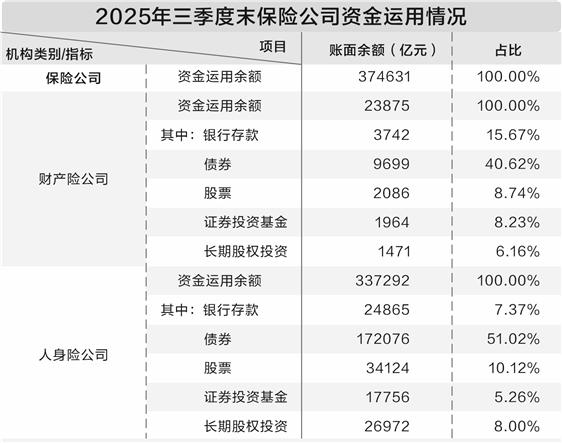
调查|险资“灰色”投资私募量化,中小险企借道MOM试水
券商中国· 2026-01-23 06:59
Core Viewpoint - Insurance funds are increasingly investing in private quantitative products, particularly since the positive changes in the capital market following the "9·24" event in 2024, with several small and medium-sized insurance companies participating in this trend [3][4][8]. Investment Trends - There is a noticeable trend of insurance capital investing in private quantitative products, with a focus on quantitative index enhancement strategies that have shown strong performance [2][4]. - Quantitative index enhancement products have outperformed traditional public funds, leading insurance companies to prefer these private offerings [5][10]. Investment Structure - Insurance funds typically invest in private quantitative products indirectly through a "Manager of Managers" (MOM) structure, where they invest in a single asset management plan managed by a brokerage, with the private fund acting as an advisor [3][11]. - This structure allows insurance companies to navigate regulatory uncertainties while still accessing the benefits of private quantitative strategies [11][12]. Performance and Market Conditions - In a low-interest-rate environment, insurance companies are compelled to seek alternative investment avenues, with private quantitative products providing a potential solution for enhancing returns [8][9]. - The performance of small-cap index enhancement products has been particularly strong, with some achieving returns exceeding 50% in a favorable market [4][8]. Regulatory Environment - The regulatory stance on insurance funds investing in private quantitative products remains ambiguous, with existing guidelines generally excluding private securities funds from eligible investment categories [11][12]. - There is speculation that regulatory bodies may eventually clarify the rules surrounding these investments, potentially imposing stricter requirements on the management of insurance funds [12]. Industry Sentiment - While there is enthusiasm for the potential of private quantitative investments, there are also concerns regarding compliance and the inherent risks associated with private fund management [9][10]. - Some industry insiders advocate for a cautious yet open approach to these investment strategies, recognizing them as a necessary exploration for small and medium-sized insurance companies seeking to improve their returns [10].

中小险企试水私募量化 借道MOM投资引关注
Zheng Quan Shi Bao· 2026-01-22 18:21
Core Viewpoint - Insurance funds are increasingly investing in private quantitative products, particularly since the "9·24" market rally in 2024, with several small and medium-sized insurance companies participating in this trend [1][2][5]. Group 1: Investment Trends - There is a noticeable trend of insurance capital investing in private quantitative index-enhanced products, which have shown strong performance [1][4]. - The preference among insurance funds is shifting towards quantitative index-enhanced products due to their better explainability and relatively stable performance compared to subjective products [2][4]. - Small and medium-sized insurance companies are primarily experimenting with private quantitative investments, with investments still at a small scale and not yet a major part of their portfolios [6][7]. Group 2: Market Environment - The current low-interest-rate environment poses significant challenges for insurance investments, leading to a necessity for exploring private quantitative options to enhance returns [7][8]. - In a bull market, quantitative index-enhanced products are attractive as they often outperform the index, while in a bear market, the demand for such products may decrease [5][7]. Group 3: Regulatory Landscape - The regulatory framework regarding insurance capital investing in private products remains unclear, with existing guidelines generally excluding private securities funds from eligible investment categories [10][11]. - There is an expectation that regulatory bodies may refine existing regulations to clarify the compliance of such investments, potentially introducing specific requirements for the management of insurance funds [11]. Group 4: Performance and Risk - Quantitative strategies are perceived to mitigate some risks associated with traditional private investments, such as performance sustainability and governance issues [9]. - Despite the potential benefits, there are concerns regarding compliance and the regulatory status of private investments, which could pose risks for insurance companies [8][10].
和众汇富研究手记:2025年量化指增策略迎来高光时刻
Cai Fu Zai Xian· 2026-01-22 01:56
Core Insights - The A-share market in 2025 experienced a comprehensive recovery driven by multiple positive factors, leading to a significant restoration of market risk appetite and increased trading activity, with quantitative index enhancement strategies achieving remarkable performance [1][3] Market Environment - The A-share market in 2025 displayed distinct structural characteristics, supported by policy guidance for stable capital market operations and long-term capital inflows, while themes related to technological innovation and industrial upgrades led to notable stock differentiation [3] - The market exhibited a "moderate index rise with high structural differentiation" characteristic, creating abundant Alpha sources for quantitative models through multi-factor stock selection, industry rotation, and style switching [3] Strategy Performance - Mid-cap index enhancement products emerged as the top-performing segment in 2025, with some products achieving returns close to or exceeding 50%, benefiting from active trading and frequent style rotation [3] - Quantitative strategies demonstrated strong adaptability in complex market conditions, with mid-cap index enhancement strategies showing attractive risk-adjusted return metrics [3][4] Institutional Advantages - Leading quantitative institutions further amplified their advantages in 2025, with larger management scales enabling more efficient model iterations and parameter adjustments during rapid market changes [4] - Data shows that products from top institutions achieved average returns and excess returns significantly above industry averages, highlighting the importance of continuous R&D investment and dynamic strategy adjustments [4] Technological Advancements - The application of artificial intelligence in quantitative investment deepened in 2025, enhancing model training, signal generation, and risk control, allowing strategies to maintain flexibility across different market conditions [4] - AI improved the models' perception of market changes, enabling quantitative strategies to control drawdowns while striving for higher excess returns [4] Product Design Trends - Quantitative index enhancement products in 2025 exhibited increased diversification, with some managers optimizing traditional structures through dynamic position adjustments and risk budget management to enhance defensive capabilities [5] - The introduction of dividend mechanisms in quantitative products became more common, improving investor experience and contributing to more stable long-term allocation attributes [6] Overall Outlook - The outstanding performance of quantitative index enhancement strategies in 2025 resulted from the improved A-share market environment, technological advancements, and increased industry maturity, enhancing their position in asset allocation [6] - Looking ahead, quantitative index enhancement strategies are expected to play a crucial role in seeking stability amid market uncertainties, with a focus on managers' research capabilities, risk control levels, and sustainable long-term performance [6]

四大证券报头版头条内容精华摘要_2026年1月21日_财经新闻
Xin Lang Cai Jing· 2026-01-21 00:41
Group 1 - Shanghai has introduced 18 measures to enhance the competitiveness of non-ferrous metal commodities, aiming for improved market interconnectivity and internationalization by December 30, 2025 [1] - The average return of quantitative index enhancement strategies for 2025 is reported to be 45.08%, with nearly 90% of products achieving positive excess returns [4][21] - Over 500 A-share companies have disclosed their 2025 performance forecasts, with many in the technology sector expected to see robust growth due to AI advancements [9][26] Group 2 - The stock price of Kailong High-Tech (300912) was reported at 19.85 yuan per share, with a total market capitalization of 2.28 billion yuan, as it plans a major asset restructuring [5][22] - Yihualu (300212) announced the termination of several projects due to low input-output ratios, reallocating approximately 355 million yuan of remaining funds to enhance liquidity [6][23] - The securities sector has shown signs of recovery, with a slight increase of 0.42% after a previous decline of over 4% [7][24] Group 3 - The A-share market is experiencing a high-volume consolidation, with traditional sectors like non-ferrous metals and AI applications showing strong performance [8][25] - QDII fund total assets have reached 970 billion yuan, marking a 59% increase from the previous year, indicating a growing demand for global asset allocation [14][32] - The South China East Ying South China Index ETF has been listed on the Singapore Exchange, reflecting China's ongoing efforts to enhance its capital market's global influence [15][33]
四大证券报精华摘要:1月21日
Zhong Guo Jin Rong Xin Xi Wang· 2026-01-20 23:53
Group 1 - The Ministry of Finance will continue to implement a more proactive fiscal policy in 2026, focusing on increasing total volume, optimizing structure, improving efficiency, and enhancing momentum to support employment, enterprises, markets, and expectations [1] - The A-share market has seen structural opportunities emerge, particularly in popular sectors such as brain-computer interfaces, commercial aerospace, and embodied intelligence, with several listed companies becoming attractive to institutional investors [1] - Despite recent market fluctuations, industry insiders believe that investment opportunities in sectors like brain-computer interfaces and satellites remain significant due to policy support and technological breakthroughs [1] Group 2 - In 2025, quantitative index enhancement strategies performed exceptionally well in the A-share market, with an average return rate of 45.08%, and nearly 90% of products achieving positive excess returns [2] - Small and mid-cap index enhancement strategies have outperformed, highlighting the continued prominence of industry leaders, while AI integration in strategy design has become mainstream [2] - The private equity industry anticipates structural opportunities in 2026, but also warns of challenges from strategy crowding and style shifts [2] Group 3 - The Ministry of Finance has introduced six policies to support small and micro enterprises, including loan interest subsidies and investment guarantees, aimed at boosting private investment and consumption [3] - Major listed insurance companies are expected to see growth in premium and profit metrics in 2025, benefiting from a strong equity market performance [3] - The overall performance of listed insurance companies is projected to maintain high growth due to favorable market conditions in 2025 [3] Group 4 - Shanghai has launched an action plan to enhance the competitiveness of non-ferrous metal commodities, aiming to strengthen the link between spot and futures markets [4] - The action plan is designed to elevate Shanghai's global pricing influence in the non-ferrous metals sector [4] Group 5 - As of January 20, 2025, 525 A-share companies have disclosed earnings forecasts, with around 200 expecting growth and over 100 projecting net profit increases exceeding 100% [5] - The technology sector, particularly driven by AI, is maintaining high growth, while industries like photovoltaics and liquor are facing performance pressures due to market fluctuations [5] - The global precious metals market has shown strength, with gold and silver prices reaching new historical highs [5] Group 6 - The industrial application of silver is significant, with over 60% of demand coming from industries like photovoltaic energy, which is currently facing cost pressures due to rising silver prices [7] - Companies in the photovoltaic sector are exploring alternatives to silver, such as copper and aluminum, due to cost considerations [7] Group 7 - The high-tech manufacturing sector in China is experiencing robust growth, particularly in robotics, with significant increases in the production of gear reducers and various types of robots [8] - The market for reducers is projected to grow to 151 billion yuan by 2025, with specific increases in the sales of harmonic and RV reducers [8] - Several listed companies are actively expanding their operations in the robotics reducer market [8]
去年平均回报率超45% 私募量化指增策略迎来高光时刻
Zhong Guo Zheng Quan Bao· 2026-01-20 22:03
Core Insights - The A-share market recovery in 2025 has led to outstanding performance in quantitative index enhancement strategies, with an average return of 45.08% across nearly a thousand products, and almost 90% achieving positive excess returns [1][2] - The small and mid-cap index enhancement strategies have significantly outperformed, particularly the CSI 1000 index enhancement products, which achieved an average return of 49.78% [2][3] - The integration of AI technology into strategy development has become a mainstream trend in the industry, with a focus on multi-strategy and multi-frequency collaboration [6][8] Performance Highlights - The average excess return for quantitative index enhancement products in 2025 was 16.75%, with the CSI 1000 index enhancement products showing an average excess return of 17.49% [2][3] - Large-scale private equity firms with over 10 billion yuan in assets under management achieved an average return of 50.61% and an excess return of 20.26%, indicating a clear performance differentiation in the industry [3][8] - The trend of "double ten" institutions, which have been established for over ten years and have products with net values exceeding 10 yuan, has been notable, with some achieving significant growth [3] Market Dynamics - The fundraising environment for quantitative private equity has shown a dichotomy, with larger firms attracting more capital while smaller firms face increasing challenges [4][5] - A significant increase in dividend distributions has been observed, with a total of 1,658 distributions amounting to over 17.3 billion yuan, marking a 236.59% increase from the previous year [5] - The industry is witnessing a shift towards simpler models in strategy development, moving away from complex models to enhance effectiveness [5][6] Future Outlook - The industry outlook for 2026 is cautiously optimistic, with expectations of continued structural opportunities in small and mid-cap index enhancement strategies [7][8] - Challenges such as strategy crowding and market style shifts are anticipated, which may impact excess returns [7] - The trend of deepening the Matthew effect suggests that leading firms will continue to dominate, while smaller firms must differentiate their strategies to remain competitive [8]
私募量化指增策略迎来高光时刻
Zhong Guo Zheng Quan Bao· 2026-01-20 21:04
Core Insights - The A-share market recovery in 2025 has led to outstanding performance in quantitative index enhancement strategies, with an average return of 45.08% across nearly a thousand products, and almost 90% of these products achieving positive excess returns [1][2] - The small-cap index enhancement strategies have significantly outperformed, particularly the CSI 1000 index enhancement products, which achieved an average return of 49.78% and a 95.93% positive excess return rate [2] - The industry is witnessing a "Matthew Effect," where larger firms with over 10 billion yuan in assets under management are dominating performance metrics, achieving an average return of 50.61% and a 96.65% positive excess return rate [3] Performance Analysis - In 2025, the average excess return for CSI 1000 index enhancement strategies reached 29.48%, outperforming the CSI 500 and CSI 300 index enhancements [2] - The performance disparity is attributed to structural market dynamics, with small-cap index enhancement products consistently outperforming large-cap varieties [2][3] - The top-tier private equity firms have shown a significant increase in both performance and scale, with many achieving returns exceeding 40% [3] Fundraising and Distribution Trends - The fundraising environment in 2025 has shown a dichotomy, with top-tier firms attracting more capital while smaller firms face increasing challenges [4] - A notable trend is the unprecedented wave of distributions, with private equity firms distributing over 173 billion yuan, a 236.59% increase from the previous year [4] - The focus on long-term stability and risk management has become crucial for attracting investor capital [4] Strategy Innovation - The industry is experiencing a wave of strategy innovation, with new products like micro-index enhancements and technology-themed enhancements emerging [5] - The integration of AI technology has become essential, shifting from optional to mandatory in strategy development [5][6] - Firms are increasingly adopting simpler models rather than complex ones, focusing on effective alpha capture through diverse data sources [6] Market Outlook - The outlook for 2026 is cautiously optimistic, with expectations of continued structural opportunities in small-cap index enhancements despite potential challenges from strategy crowding and market style shifts [6][7] - The industry is expected to evolve towards more diversified and refined strategies, with a growing demand for multi-asset and multi-strategy products [7][8] - The trend towards increased technical investment and a more mature investor structure suggests a positive long-term development trajectory for the quantitative investment sector [8]
超45%!2025量化指增策略全景解读出炉
Zhong Guo Zheng Quan Bao· 2026-01-20 13:36
Core Insights - The quantitative index enhancement strategies performed exceptionally well in 2025, with an average return of 45.08%, and nearly 90% of products achieving positive excess returns [1][2][3] Performance Overview - The average excess return for quantitative index enhancement products reached 16.75%, with small-cap index enhancement strategies leading the performance [2] - The CSI 1000 index enhancement products had an average return of 49.78% and an excess return of 17.49%, with 95.93% of products achieving positive excess returns [2] - Large-cap indices like CSI 300 had a lower average return of 31.22%, despite having the highest positive excess return ratio at 97.14% [2][3] Market Dynamics - The A-share market saw high turnover rates and average daily trading volumes, benefiting quantitative strategies [2] - The performance divergence reflects a structural change in market styles, with small-cap index enhancement products outperforming large-cap ones [3] Industry Trends - The industry experienced a significant increase in dividend distributions, with a total of 1,658 dividends amounting to over 17.3 billion yuan, a 236.59% increase from 2024 [5][6] - The trend of strategy innovation is evident, with new products like micro-index enhancements and technology-themed enhancements emerging [6][7] Future Outlook - For 2026, the industry anticipates continued structural opportunities in quantitative index enhancement strategies, although challenges such as strategy crowding and style switching are expected [8][9] - The head institutions are likely to dominate the market due to their technological, talent, and brand advantages, while smaller institutions may need to focus on differentiation [9][10]