UH祐禾

Search documents
网红烘焙的冬天还没结束
创业邦· 2025-06-27 03:10
Core Viewpoint - The baking industry in China is experiencing a significant downturn, with many once-popular brands rapidly closing stores and facing financial difficulties, indicating a harsh reversal from the boom seen in 2020 to the current struggles in 2025 [5][11][19]. Group 1: Industry Trends - The baking market has seen a drastic shift from a buying frenzy in 2020 to a wave of store closures by 2025, highlighting a severe industry contraction [5][10]. - In 2024, the baking market size is projected to grow by 5.2% year-on-year, reaching 110.5 billion yuan, despite the challenges faced by many brands [18]. - Data shows that in 2024, 103,000 new baking stores opened while 95,000 closed, resulting in a net increase of only 8,000 stores [13]. Group 2: Company Performance - Major baking companies have reported significant declines in revenue and profit, with "bread leader" Taoli Bread's revenue growth dropping from 6.24% to -9.93% over four years, and net profit shrinking by 31.58% [15]. - Yuanzi Co. experienced a nearly 13% decline in revenue and a nearly 10% drop in net profit in 2024, while Maiqu'er reported a 10.4% revenue decline and a staggering 137.37% drop in net profit, resulting in a loss of 230 million yuan [17]. Group 3: Market Dynamics - The rapid expansion of baking brands, driven by capital influx, has led to a common pattern of bankruptcy due to overexpansion and financial mismanagement [19][21]. - The industry faces inherent challenges, such as rapid imitation of popular products leading to price wars and declining profit margins, which have fallen to 5%-10% [20]. - The competitive landscape is shifting, with traditional brands like Haolilai and Baoshifu maintaining their market positions through stable product quality, while new entrants focus on "handmade and healthy ingredients" [32][33]. Group 4: Future Outlook - To survive the industry's cyclical nature, brands must prioritize product innovation, quality control, and strategic expansion, as evidenced by the ongoing challenges faced by new entrants [34].

融资千万美元,经营13年的网红烘焙品牌突然“暴雷”
Sou Hu Cai Jing· 2025-06-18 03:13
Core Viewpoint - The sudden collapse of the popular baking brand "Huan Niu Cake House" reflects deep-seated crises in the rapidly developing internet celebrity baking sector, driven by rising costs, intensified market competition, and management failures [2][8]. Group 1: Company Overview - Huan Niu Cake House started with an initial investment of 30,000 yuan and expanded to over 50 stores, receiving nearly 10 million USD in Series A financing from Shunwei Capital in 2022 [2][5]. - The brand gained popularity through innovative products like the "Doufu Box," which significantly increased store orders and revenue, with a single store generating up to 500,000 yuan monthly [3][5]. Group 2: Expansion and Challenges - Following the success of the "Doufu Box," the company invested in factory construction to support chain operations, expanding its presence across Hangzhou and planning to enter cities like Suzhou and Shanghai [5][7]. - However, a consumption restriction order issued by the Hangzhou court in June 2023 due to unpaid obligations raised concerns about the brand's operational status, leading to negative public sentiment [7][8]. Group 3: Management Issues - The founder's management style was overly simplistic, relying on basic financial principles that failed to adapt to the complexities of rapid expansion, resulting in a mismatch between organizational capabilities and strategic ambitions [14][18]. - Despite attempts to introduce professional management, the lack of a modern governance structure led to operational inefficiencies and ultimately contributed to the company's downfall [15][18]. Group 4: Market Impact - The collapse of Huan Niu Cake House signifies a broader trend in the baking industry, where many once-promising brands are facing operational challenges and market exits due to outdated business models and lack of innovation [25][26]. - The baking market is witnessing a shift towards regional boutique brands and supermarket baking, which are gaining popularity by focusing on quality and cost-effectiveness [28][30]. Group 5: Conclusion - The downfall of Huan Niu Cake House serves as a reminder that reliance on capital and traffic alone cannot substitute for sound business models and operational efficiency in traditional industries like baking [33].

烘焙业态试水自助,“回本”预期成面包抢客抓手
Cai Jing Wang· 2025-05-19 11:20
Group 1 - The self-service bakery trend is gaining popularity, with brands like 21cake offering breakfast bread buffets at competitive prices, such as 19.9 yuan per person [1][2] - 21cake's breakfast buffet includes over 10 types of bread, drinks, and sauces, available from 9:30 to 11:30 AM, with a focus on value for money [1][2] - Other brands, such as 原麦山丘, have also adopted similar self-service models, with varying price points ranging from 19.9 yuan to nearly 200 yuan, indicating a diverse market strategy [2][3] Group 2 - The pricing strategy of bakery brands is shifting towards affordability, with many brands introducing products priced between 4 to 18 yuan, aiming to attract more customers [3] - The self-service model is seen as a way to enhance customer engagement and sales, leveraging both online and offline channels for promotion [2][3] - Despite the appeal of "all-you-can-eat" offers, some consumers express concerns about the variety and quality of available options, suggesting a need for brands to continuously innovate [2][3]
月入两万,吃不起面包“爱马仕”
创业邦· 2025-05-18 03:07
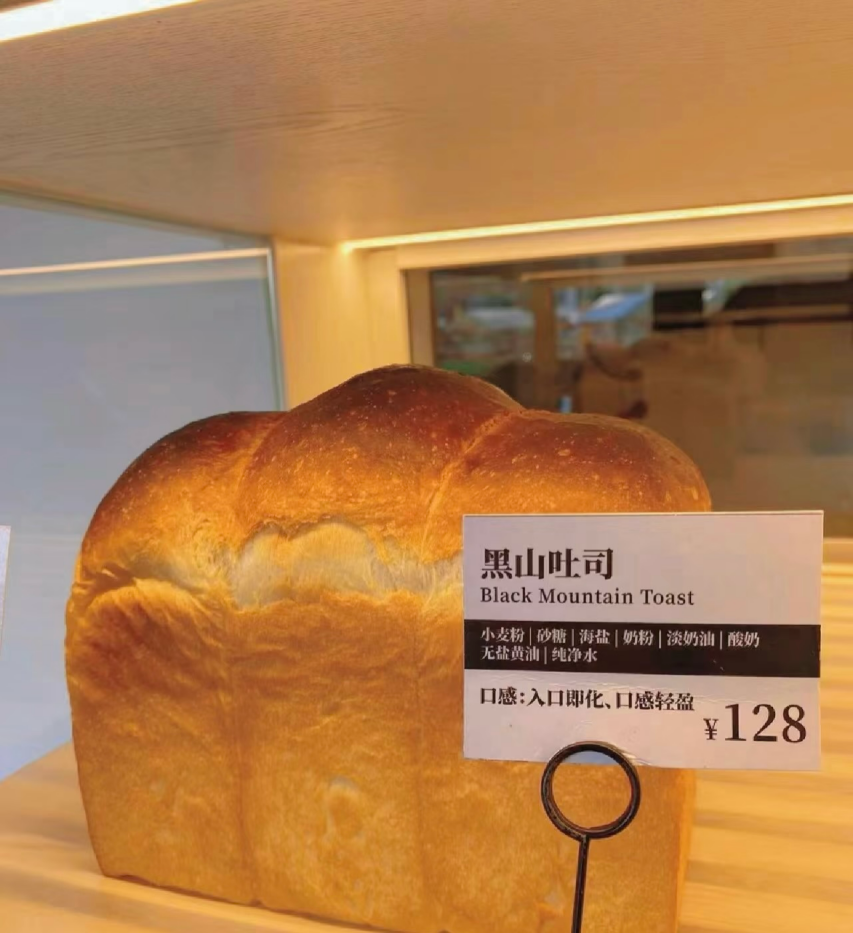
Core Viewpoint - The article discusses the rising trend of expensive bread in China, highlighting how it has transformed from a street food to a luxury item, with consumers expressing shock at the high prices of certain bakery products [5][21]. Price Trends - The price of bread has significantly increased, with items like black mountain toast priced at 128 yuan and strawberry cream tarts at 39 yuan, leading to consumer complaints about the cost [3][5]. - A survey indicated that 70% of respondents were only willing to pay under 10 yuan for bread, while less than 10% could accept prices above 20 yuan [5][6]. Consumer Behavior - Young consumers are increasingly drawn to high-priced bread, which is positioned between everyday items and luxury goods, satisfying a "light luxury" desire without being overly burdensome [15][21]. - The social aspect of purchasing these expensive breads is emphasized, as they serve as a form of social currency, with consumers buying them for sharing on social media [16][19]. Marketing Strategies - Brands employ scarcity tactics, such as limited purchases and exclusive releases, to create a sense of urgency and desirability among consumers [16][19]. - The use of social media for marketing is prevalent, with brands generating buzz before opening new locations, leading to long queues and heightened consumer interest [19][21]. Brand Positioning - Many high-end bread brands utilize foreign language names and cultural references to create a perception of sophistication and exclusivity [10][11]. - The design and ambiance of these bakeries are also crucial, with a focus on aesthetics that appeal to consumers' desire for a luxurious experience [10][11]. Challenges Ahead - The high operational costs associated with maintaining a premium brand image pose significant challenges for these bakeries, particularly in terms of rent and labor costs [21][22]. - The industry faces issues of product homogeneity and low technical barriers, making it difficult for brands to maintain a competitive edge [21][22]. - Consumer habits in China differ from those in Western countries, with bread not being a staple food, leading to lower repeat purchase rates for high-priced items [22][23]. Future Outlook - The sustainability of the expensive bread trend is uncertain, as brands must address challenges related to cost management, product innovation, and consumer behavior to avoid becoming a fleeting trend [25].

月入两万,吃不起面包“爱马仕”
凤凰网财经· 2025-05-17 13:34
Core Viewpoint - The article discusses the rising trend of expensive bread in China, highlighting how it has transformed from a common food item to a luxury product, with consumers expressing shock at the high prices [1][3][17]. Group 1: Price Trends - The price of bread has significantly increased, with some items starting at 50 yuan, and average spending at premium bakeries reaching around 60 yuan per person [2][3][12]. - A survey indicated that 70% of respondents were only willing to pay under 10 yuan for bread, showing a disconnect between consumer expectations and current market prices [1][2]. Group 2: Branding and Marketing Strategies - Premium bread brands utilize creative naming and branding strategies to create a sense of luxury, often incorporating foreign language elements and cultural symbols [6][7]. - The design and ambiance of these bakeries are also tailored to enhance the consumer experience, with a focus on aesthetics and social media appeal [8][9]. Group 3: Consumer Behavior - The phenomenon of "hunger marketing" is prevalent, where limited availability and exclusivity drive consumer demand, leading to long queues and even scalping [12][14]. - Social media plays a crucial role in promoting these brands, with consumers often purchasing products for social validation rather than regular consumption [16][19]. Group 4: Challenges Ahead - High operational costs and the challenge of scaling up while maintaining quality pose significant risks for premium bread brands [17][18]. - The industry faces issues of product homogeneity and low consumer repurchase rates, as bread is not a staple food in China compared to Western countries [19][20].

起个洋名贵三倍,贵价面包刺痛中产
Feng Huang Wang Cai Jing· 2025-05-17 11:27
Core Insights - The article discusses the rising trend of expensive bread, which has transformed from a street food to a luxury item, with prices significantly increasing over the past two years [3][11] - Consumers express disbelief at the high prices, with many feeling that the cost of bread has become exorbitant, often exceeding the price of a full meal [1][3] Price Trends - Current prices for premium bread start at 50 yuan, with some items like the "Wellington Beef Croissant" priced at 58 yuan and average spending at B&C reaching 59 yuan [3][11] - A survey indicated that 70% of respondents were only willing to pay under 10 yuan for bread, highlighting a disconnect between consumer expectations and current market prices [3][11] Branding and Marketing Strategies - Premium bread brands utilize creative naming and branding strategies to create a sense of luxury, often incorporating foreign language elements and cultural symbols [6][8] - The design and ambiance of these bakeries are also tailored to enhance the consumer experience, with many featuring stylish interiors that encourage social media sharing [7][10] Consumer Behavior - The phenomenon of "hunger marketing" is prevalent, where limited availability and exclusivity drive consumer demand, leading to long queues and high resale values [11][12] - Social media plays a significant role in promoting these brands, with consumers often purchasing bread as a status symbol or for social currency rather than for regular consumption [11][12] Challenges Ahead - High operational costs and the challenge of scaling while maintaining quality pose significant risks for premium bread brands [13][17] - The industry faces issues of product homogeneity and low technical barriers, making it difficult for brands to differentiate themselves in a crowded market [13][14] - Consumer habits in China, where bread is not a staple food, limit the potential for repeat purchases, creating a barrier to long-term success for these premium brands [15][16]
贵价面包杀回北上广!35元一个的面包,年轻人抢疯了?
FBIF食品饮料创新· 2025-05-13 16:22
Core Viewpoint - The article discusses the resurgence of high-priced bakery brands in major cities like Beijing, highlighting the intense competition and changing consumer preferences in the premium bread market [4][9][43]. Group 1: Market Trends - High-end bakery brands with average prices above 60 yuan are rapidly expanding in first- and second-tier cities, with over 20 brands competing in popular shopping malls in Beijing alone [4][9]. - Despite a wave of consumer downgrade, new premium bakery brands are emerging, indicating a paradox where expensive bread shops are thriving even as older brands face closures [9][43]. - The average price of premium bread has increased significantly, with some items priced at 32 yuan for a small pastry, leading to consumer complaints about high costs [9][13]. Group 2: Brand Strategies - New bakery brands are focusing on larger portions and more diverse offerings, with products like high-carb, large loaves becoming popular [16]. - Innovative naming and marketing strategies are being employed, with unique names for products that often come from foreign languages, enhancing the brand's appeal [18][19]. - The importance of location is emphasized, with brands targeting prime spots in high-traffic shopping areas to maximize visibility and foot traffic [22][23][31]. Group 3: Consumer Behavior - Young consumers are willing to wait in long lines for premium bakery products, indicating a strong demand for unique and high-quality offerings [13][26]. - Social media plays a crucial role in driving consumer interest, with brands leveraging platforms like Xiaohongshu and Douyin for marketing and promotions [40][42]. Group 4: Challenges and Risks - The premium bakery market faces challenges such as high operational costs, reliance on social media marketing, and the risk of product homogeneity leading to decreased consumer loyalty [44][47]. - Many high-end bakery brands have experienced closures due to insufficient product innovation and high operational costs, highlighting the volatility of the market [45][53].
面包5.8元起,海底捞要当“烘焙界小米”?
Xin Lang Cai Jing· 2025-05-09 03:20
Group 1 - Haidilao's bakery brand "拾 耍·SCHWASUA" has officially opened in Hangzhou, attracting high customer traffic since its launch during the May Day holiday, with some popular products selling out by 11 AM [1][3] - The bakery offers a variety of products with prices starting at 5.8 yuan, positioning itself as a cost-effective option, with many items priced under 10 yuan, leading to positive consumer feedback on its affordability [1][4] - The store features over 50 types of baked goods, including popular items like coffee bread, which sells over 200 units daily, often running out of stock [3][4] Group 2 - The store's design adopts a minimalist black and gold theme, with a unique circular glass display for products and interactive elements like a lottery machine to engage customers [4][6] - The bakery market is highly competitive, with a rapid turnover of brands; recent examples include the rise and fall of brands like 熊猫不走 and 虎头局·渣打饼行, highlighting the volatility in the sector [8][9] - Haidilao's entry into the bakery market combines elements of both affordable and premium offerings, aiming to explore a new business model that emphasizes quality while maintaining low prices [11][13]