中国核电

Search documents
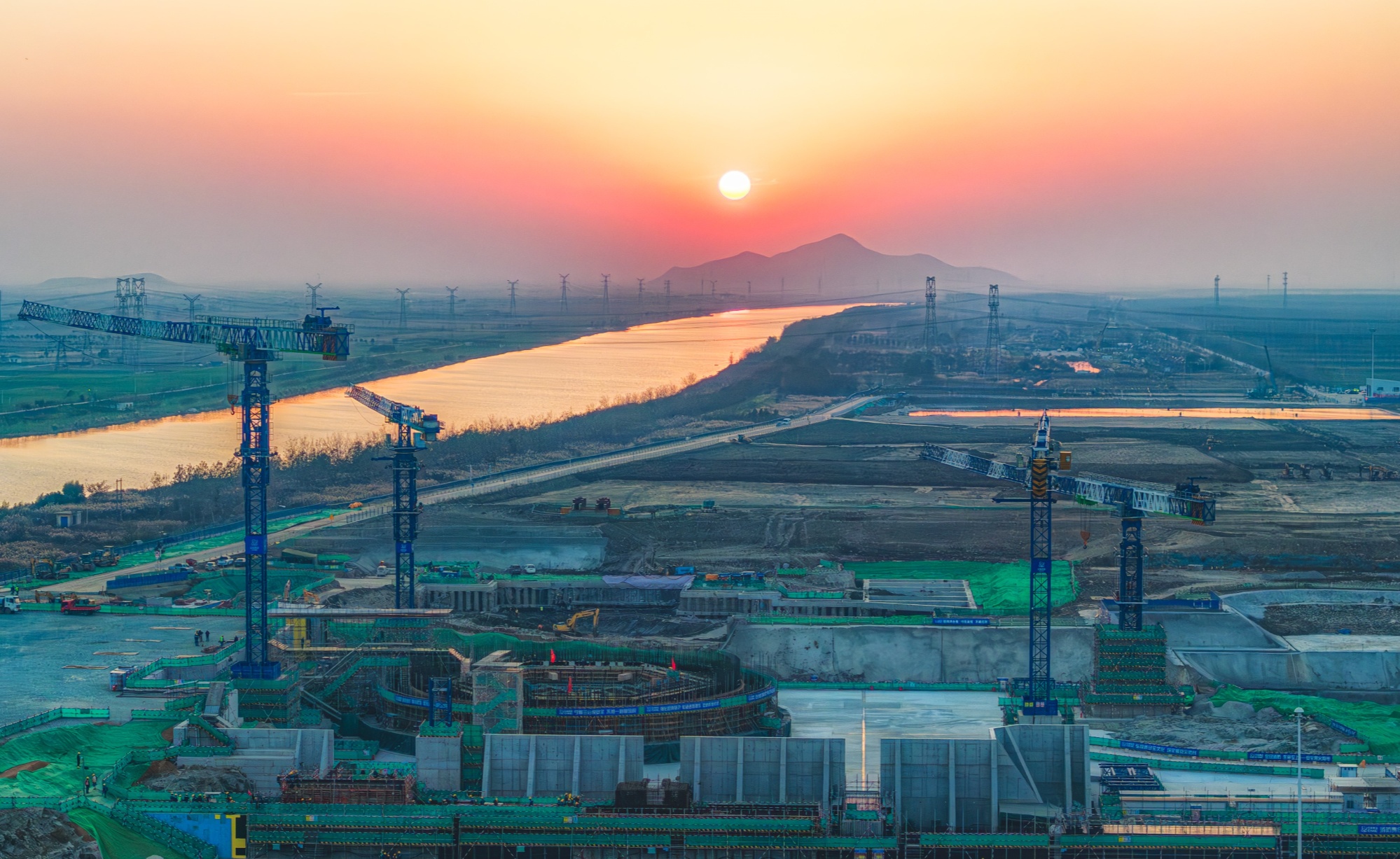
中国2026年首台核电机组开工建设
Ren Min Ri Bao· 2026-01-16 20:15
Core Insights - The Jiangsu Xuwei Nuclear Energy Heating Power Plant's Unit 1 has begun concrete pouring, marking the start of the main construction phase for the world's first large-scale coupling project of nuclear energy and the petrochemical industry [1] Group 1: Project Overview - The Jiangsu Xuwei Nuclear Energy Heating Power Plant is the world's first project to couple pressurized water reactors with high-temperature gas-cooled reactors and the first commercial promotion project of high-temperature gas-cooled reactors [1] - The project adopts China's independently developed third-generation nuclear technology "Hualong One" and fourth-generation nuclear technology high-temperature gas-cooled reactor, transitioning China's nuclear energy focus from primarily electricity generation to diversified supply [1] Group 2: Environmental Impact - The first phase of the project plans to construct 2 units of "Hualong One" pressurized water reactors and 1 unit of high-temperature gas-cooled reactor, which will supply 32.5 million tons of industrial steam annually and generate over 11.5 billion kilowatt-hours of electricity [2] - The project is expected to reduce the consumption of standard coal by 7.26 million tons and decrease carbon dioxide emissions by 19.6 million tons annually, providing reliable clean energy support for the green transformation of the petrochemical industry in the Yangtze River Delta region [2]
央企重大项目开工“赶前抓早”
Zheng Quan Ri Bao· 2026-01-16 16:26
Group 1 - The core point of the news is the commencement of major infrastructure projects by central enterprises in China, signaling a strong push for investment and development in various sectors, including energy and construction [1][2][3] Group 2 - China National Nuclear Corporation's Jiangsu Xuwei Nuclear Energy Heating Power Plant has begun concrete pouring for its first unit, marking the start of the world's first large-scale coupling project between nuclear energy and the petrochemical industry [1] - The first phase of the project plans to construct two Hualong One reactors and one high-temperature gas-cooled reactor, which will supply 32.5 million tons of industrial steam annually and generate over 11.5 billion kilowatt-hours of electricity [1] - The project is expected to reduce coal consumption by 7.26 million tons and cut carbon dioxide emissions by 19.6 million tons each year, providing high-quality low-carbon industrial steam to the Lianyungang petrochemical industry base [1] Group 3 - In January, China Energy Investment Corporation's Ningxia Tengger 1.5 million kilowatt wind power project is set to officially commence construction, with a total installed capacity of 1.5 million kilowatts and plans to install 209 wind turbines [2] - The company also plans to start construction on the Dadu River Danba Hydropower Station in the first quarter of this year [2] Group 4 - State Grid Corporation of China announced that its fixed asset investment during the 14th Five-Year Plan period is expected to reach 4 trillion yuan [3] - The concentrated launch of major projects by central enterprises is seen as a clear signal of increased investment, which is expected to have multiplier effects on economic stability and growth [3] - These investments are anticipated to provide strong momentum for China's economy in the current year and lay a foundation for future economic transformation and competitiveness over the next five to ten years [3]


“十五五”首台核电机组,今日开工!
Zhong Guo Dian Li Bao· 2026-01-16 13:53
Core Viewpoint - China Nuclear Power Co., Ltd. announced that the first concrete pour for the nuclear island of Unit 1 of the Jiangsu Xuwei Nuclear Heating Power Plant Phase I is scheduled for January 16 [1] Group 1: Project Details - The Unit 1 of the Jiangsu Xuwei Nuclear Heating Power Plant utilizes China's independently developed "Hualong One" nuclear technology [1] - The rated power of the unit is optimized to 1,222 megawatts, compared to the previously disclosed rated power of 1,208 megawatts [1] - The design operational lifespan of the power plant is 60 years [1] Group 2: Company Operations - After the first concrete pour, the number of nuclear power units under construction controlled by China Nuclear Power will be 13, with a total installed capacity of 15,148 megawatts [1]
2026年我国首台核电机组开工建设
Xin Hua Wang· 2026-01-16 11:16
Core Viewpoint - The Jiangsu Xuwei Nuclear Energy Heating Power Plant has commenced the main construction phase with the concrete pouring of the nuclear island for its first unit, marking the first nuclear power unit to start construction in China this year [1]. Group 1: Project Overview - The Jiangsu Xuwei Nuclear Energy Heating Power Plant is a project under China National Nuclear Corporation (CNNC) that innovatively couples pressurized water reactors (PWR) with high-temperature gas-cooled reactors (HTGR) for heating and power generation [1]. - The project primarily focuses on industrial heating while also providing electricity, utilizing China's independently developed third-generation nuclear technology "Hualong One" and fourth-generation HTGR technology [1]. Group 2: Project Impact - Upon completion, the first phase of the project is expected to supply 32.5 million tons of industrial steam annually and generate over 11.5 billion kilowatt-hours of electricity, significantly reducing coal consumption by 7.26 million tons and cutting carbon dioxide emissions by 19.6 million tons [2]. - This project aims to support the large-scale supply of high-quality low-carbon industrial steam to the trillion-level petrochemical industry base in Lianyungang, providing reliable clean energy for the green transformation of the petrochemical industry in the Yangtze River Delta region [2]. Group 3: Broader Industry Context - The green and low-carbon transition of the energy structure is a crucial aspect of achieving carbon peak and carbon neutrality goals [2]. - CNNC currently operates 27 nuclear power units and has 18 units under construction or approved, with a total installed capacity of 46.859 million kilowatts, while also promoting comprehensive nuclear energy utilization in areas such as regional heating, industrial steam/cooling supply, seawater desalination, nuclear hydrogen production, and isotope production [2].
全球首个双堆耦合核能综合利用项目开建
Zhong Guo Neng Yuan Wang· 2026-01-16 09:30
Core Viewpoint - The China National Nuclear Corporation (CNNC) has made significant progress in the comprehensive utilization of nuclear energy, marking the start of construction for the first nuclear power unit during the 14th Five-Year Plan, which integrates nuclear energy with the petrochemical industry, providing a replicable low-carbon transition model for high-energy-consuming industries globally [1][3]. Group 1: Project Overview - The Jiangsu Xuwei Nuclear Heating Power Plant is the world's first project to couple pressurized water reactors with high-temperature gas-cooled reactors, and it is also the first commercial promotion project for high-temperature gas-cooled reactors [3]. - The project will primarily focus on industrial heating while also supplying electricity, utilizing China's independently developed third-generation nuclear technology "Hualong One" and fourth-generation high-temperature gas-cooled reactor technology [3]. - The first phase of the project plans to construct two "Hualong One" units and one high-temperature gas-cooled reactor unit, which will supply 32.5 million tons of industrial steam annually and generate over 11.5 billion kilowatt-hours of electricity [3]. Group 2: Environmental Impact - Upon completion, the project is expected to reduce the consumption of standard coal by 7.26 million tons and cut carbon dioxide emissions by 19.6 million tons annually, supporting the green transition of the petrochemical industry in the Yangtze River Delta region [3]. - The CNNC currently operates 27 nuclear power units and has 18 units under construction or awaiting approval, with a total installed capacity of 46.859 million kilowatts [4]. - The company aims to achieve a cumulative clean energy grid-connected electricity generation of 230.747 billion kilowatt-hours by 2025, actively promoting regional heating, industrial steam/cooling supply, seawater desalination, nuclear hydrogen production, and isotope production [4].

战略性矿产系列报告:铀,天然铀价值重估,长牛征程进行时
Minmetals Securities· 2026-01-16 08:43
Investment Rating - The investment rating for the uranium industry is "Positive" [3] Core Insights - The report emphasizes the long-term bullish trend for uranium, driven by geopolitical factors and the global push for clean energy solutions, particularly nuclear power [28] - Uranium is recognized as a strategic mineral, with its importance highlighted in various national critical mineral lists, including those of the US, China, and Canada [28] - The report outlines the nuclear fuel cycle, indicating that uranium constitutes 51% of nuclear fuel costs, which translates to approximately 9% of the overall cost of nuclear power generation [29] Summary by Sections 1. Nuclear Fuel Cycle Overview - The nuclear fuel cycle includes the preparation of nuclear fuel before it enters the reactor, its combustion within the reactor, and the subsequent processing of spent fuel [34] - The cycle can be categorized into front-end and back-end processes, with the front-end involving uranium mining, conversion, and enrichment, while the back-end includes spent fuel management and waste disposal [34] 2. Natural Uranium Price Review and Forecast - The report does not provide specific details in this section, indicating a focus on supply-demand dynamics instead [7] 3. Natural Uranium Supply and Demand Patterns - Natural uranium is widely distributed in the Earth's crust, with an average abundance of approximately 2.5 parts per million (ppm) [37] - The report identifies that the highest economic value uranium deposits are sandstone/sedimentary types, which account for about 18% of global resources [37] - Kazakhstan, Canada, and Australia together account for over 50% of the world's uranium resources, with Kazakhstan being the largest producer [44][49] 4. Nuclear Fuel Cycle Technology Chain Overview - The report details the entire nuclear fuel cycle, emphasizing the importance of uranium as a critical resource for nuclear energy [28] - It highlights that uranium's cost constitutes a significant portion of nuclear fuel expenses, with the front-end costs being crucial for the overall economics of nuclear power [29] 5. Upstream - Uranium Resource Distribution - The report notes that the global uranium resource distribution is concentrated, with Australia, Kazakhstan, and Canada holding the majority of the resources [44] - It mentions that the global uranium production is expected to meet 90% of the demand, with Kazakhstan, Canada, and Namibia being the top producers [49] 6. Midstream - Conversion and Enrichment - The report states that only a few countries, including Russia, the US, France, and China, possess large-scale uranium conversion and enrichment capabilities [59][65] - It highlights the strategic sensitivity of the enrichment process, which is tightly regulated and dominated by a few key players [65] 7. Downstream - Nuclear Fuel Component Manufacturing - The manufacturing of nuclear fuel components is the final step in the nuclear fuel cycle, primarily involving the production of uranium oxide ceramic fuel pellets [74] - The report indicates that the global capacity for fuel component manufacturing is currently in surplus, with countries like China, India, and South Korea striving for self-sufficiency [74]


新能源ETF(516160)盘中涨超1%,阳光电源涨超3%,国内电网投资进入“十五五”高景气周期
Xin Lang Cai Jing· 2026-01-16 03:50
Group 1 - The core viewpoint of the news highlights significant investments in the energy sector, particularly by the State Grid Corporation, which is expected to reach a historical high of 4 trillion yuan during the 14th Five-Year Plan, representing a 40% increase compared to the previous plan [1] - The investment focus will be on promoting green and low-carbon energy transition, constructing a new power system, and deepening technological innovation [1] - The expected fixed asset investments for the State Grid and Southern Grid during the 14th Five-Year Plan are approximately 4 trillion yuan and 1 trillion yuan, respectively, with a projected annual grid investment of 889 billion yuan in 2026, reflecting a year-on-year growth of over 7% [1] Group 2 - The meeting of the inter-ministerial joint conference on energy-saving and new energy vehicles noted that the market size of China's new energy vehicles increased by 3.6 times during the 14th Five-Year Plan, with battery costs reduced by 30%, lifespan increased by 40%, and charging speeds improved by over three times [2] - There is a pressing need to establish a power capacity market mechanism to ensure the recovery of installation costs for various power generation entities in the context of high renewable energy penetration [2] - The top ten weighted stocks in the CSI New Energy Index, which the New Energy ETF closely tracks, account for 43.23% of the index, including major companies like CATL, Sungrow Power, and Longi Green Energy [2]






国网投资4万亿助力电力系统发展,央企能源ETF(562850)一键布局高质量能源央企
Xin Lang Cai Jing· 2026-01-16 03:50
2026年1月16日早盘,特高压、电工电网板块拉升,截至11:07,中证国新央企现代能源指数上涨 0.70%,成分股中国电建上涨8.96%,中国能建上涨5.46%,平高电气上涨4.83%,国电南瑞上涨3.82%, 东方电气上涨3.80%。 数据显示,截至2025年12月31日,中证国新央企现代能源指数前十大权重股分别为长江电力、中国铝 业、国电南瑞、中国核电、云铝股份、三峡能源、中国海油、中国石油、国电电力、中国电建,前十大 权重股合计占比48.98%。 央企能源ETF(562850)紧密跟踪中证国新央企现代能源指数,涉及绿色能源、化石能源、能源输配等现 代能源产业的50只上市公司证券作为指数样本,以反映央企现代能源主题上市公司证券的整体表现。 没有股票账户的投资者可以通过央企能源ETF联接(019593)一键布局高质量能源央企。 消息方面,1月15日中午,国家电网公司发布消息称,"十五五"期间,公司固定资产投资预计将达到4万 亿元,较"十四五"增长40%,以扩大有效投资带动新型电力系统产业链供应链高质量发展。能源行业专 家、电力设备及新能源行业研究人士分析认为,国网公司投资4万亿元,再加上南方电网公司投资规 ...
国网4万亿投资引爆绿色电力板块,绿色电力ETF(159625)一键布局清洁能源投资机遇
Xin Lang Cai Jing· 2026-01-16 03:18
Group 1 - The core viewpoint of the news is that the investment in the power grid during the "14th Five-Year Plan" period is expected to significantly increase, with a projected investment of 4 trillion yuan, representing a 40% growth compared to the previous plan [1] - The National Grid's investment will lead to an average annual investment in the national grid exceeding 1 trillion yuan, with a focus on UHV projects [1][2] - The demand for power grid equipment is expected to grow due to structural shortages globally, benefiting leading companies in the sector [1] Group 2 - During the "15th Five-Year Plan" period, the average annual investment in the domestic power grid is anticipated to surpass 1 trillion yuan, with accelerated construction pace [2] - The high-voltage direct current (HVDC) sector is expected to see coordinated growth, with 4-5 HVDC lines and 3-4 AC lines projected to be approved for construction by 2026 [2] - The top ten weighted stocks in the National Green Power Index account for 54.68% of the index, indicating a concentrated investment opportunity in leading companies [2]
全球首个双堆耦合核能综合利用项目开工!为何将三代与四代核电技术相结合?
Yang Guang Wang· 2026-01-16 03:06
Core Viewpoint - The Jiangsu Xuwei Nuclear Heating Power Plant, utilizing a combination of "Hualong One" pressurized water reactor and high-temperature gas-cooled reactor technologies, marks a significant shift in China's nuclear energy strategy from primarily electricity generation to diversified energy supply, including industrial heating and other applications [1][5][8] Group 1: Project Overview - The first unit of the Jiangsu Xuwei Nuclear Heating Power Plant began concrete pouring on January 16, 2023, indicating the start of the main construction phase [1] - The project includes two "Hualong One" units and one high-temperature gas-cooled reactor, with the first unit expected to be operational by 2030 [2][3] - Upon completion, the plant will supply 32.5 million tons of industrial steam annually and generate over 11.5 billion kilowatt-hours of electricity, significantly reducing coal consumption and CO2 emissions [2][3] Group 2: Technological Innovation - The project is the world's first large-scale coupling of nuclear energy with the petrochemical industry, designed to meet the high energy demands of the Lianyungang petrochemical industrial base [3][4] - The combination of "Hualong One" and high-temperature gas-cooled reactor technologies allows for the provision of high-quality steam at temperatures up to 460 degrees Celsius, enhancing the efficiency of industrial processes [4][5] - This innovative approach aims to address the energy needs of various industrial sectors, particularly in the petrochemical industry, which requires substantial amounts of steam for production [3][4] Group 3: Economic and Environmental Impact - The project is expected to significantly contribute to the green transformation of the petrochemical industry in the Yangtze River Delta region by providing reliable and clean energy [8] - The integration of nuclear energy into industrial applications is seen as a solution to the energy supply gap in high-demand sectors, promoting a shift towards low-carbon energy sources [5][8] - The successful implementation of this project could position China as a leader in advanced energy systems and zero-carbon development models, enhancing its international influence [8]