航发动力

Search documents
航改燃机正成为电力缺口的解决方案之一:超过30%!…我的政府正在与美国主要科技公司合作,争取它们对我的影响
GF SECURITIES· 2026-01-19 02:38
Investment Rating - The industry investment rating is "Buy" [2] Core Insights - The report highlights that aviation modified gas turbines are becoming one of the solutions to address the electricity gap, driven by the increasing demand for data centers and the need for efficient power generation [1][15][55] - The global power consumption of data centers is expected to grow significantly, from 49 GW in 2023 to 96 GW in 2026, with 90% of this growth driven by AI [15][20] - The aging infrastructure of power grids in developed economies necessitates upgrades and replacements, creating further demand for power generation solutions [17][25] Summary by Sections Section 1: AIDC and Power Grid Renovation - The development of AI infrastructure is driving a surge in electricity demand for data centers, which is expected to double global power consumption from 2022 levels by 2026 [15][20] - Over 50% of power grid infrastructure in developed economies is over 20 years old, leading to urgent maintenance and replacement needs [17][25] Section 2: Performance and Cost-Effectiveness of Aviation Modified Gas Turbines - Aviation modified gas turbines share core technologies with aircraft engines, making them efficient and cost-effective for various applications [55][59] - The report details several successful models derived from aircraft engines, such as the LM2500 series, which has become widely used due to its performance and reliability [56][61] Section 3: Flexibility and Rapid Installation of Aviation Modified Gas Turbines - Aviation modified gas turbines can be installed in as little as 1.5 months, making them ideal for rapidly expanding data centers [65][67] - These turbines offer quick start-up times and high efficiency, making them suitable for distributed energy and emergency power applications [63][66] Section 4: Investment Recommendations - The report suggests focusing on companies that supply components and technologies for aviation modified gas turbines, as they are likely to benefit from the growing demand in this sector [6][70] - Companies such as 航亚科技, 振华股份, and 航发科技 are highlighted as potential beneficiaries of this trend [6][7]
航发动力涨2.05%,成交额5.66亿元,主力资金净流入2162.14万元
Xin Lang Zheng Quan· 2026-01-19 02:37
Core Viewpoint - The stock of Aviation Power has shown fluctuations in price and trading volume, with a recent increase of 2.05% on January 19, 2023, and a total market capitalization of 110.36 billion yuan [1]. Group 1: Stock Performance - As of January 19, 2023, Aviation Power's stock price is 41.40 yuan per share, with a trading volume of 5.66 billion yuan and a turnover rate of 0.52% [1]. - Year-to-date, the stock has increased by 3.42%, but it has decreased by 7.88% over the last five trading days [1]. - Over the past 20 days, the stock has increased by 9.81%, while it has risen by 5.83% over the last 60 days [1]. Group 2: Financial Performance - For the period from January to September 2025, Aviation Power reported a revenue of 22.91 billion yuan, representing a year-on-year decrease of 11.73% [2]. - The net profit attributable to shareholders for the same period was 108 million yuan, reflecting a significant year-on-year decline of 85.13% [2]. Group 3: Shareholder Information - As of October 31, 2025, the number of shareholders for Aviation Power is 130,800, with an average of 20,376 circulating shares per person, both figures remaining unchanged from the previous period [2]. - The company has distributed a total of 4.057 billion yuan in dividends since its A-share listing, with 1.072 billion yuan distributed over the last three years [3]. - Among the top ten circulating shareholders, Hong Kong Central Clearing Limited holds 35.839 million shares, a decrease of 3.762 million shares from the previous period [3].

神舟二十号飞船返回舱成功着陆!航空航天ETF天弘(159241)直线拉升,标的指数强势翻红涨超1%
Sou Hu Cai Jing· 2026-01-19 02:19
Core Insights - The aerospace ETF Tianhong (159241) has seen a trading volume of 35.98 million yuan with a turnover rate of 4.52%, while the tracked index CN5082 rose by 1.17% [1] - The ETF has attracted a total of 107 million yuan over the last five trading days [1] - The ETF tracks the national aerospace index, which covers over 68% of the aerospace and aviation equipment sectors, making it the highest "aerospace content" military index in the market [1] Product Highlights - The top ten holdings of the aerospace ETF include major state-owned enterprises such as AVIC and Aero Engine Corporation, providing both stability from core assets and growth potential from smaller market cap companies [1] Industry Trends - CICC has noted an upward trend in global defense spending, with the U.S. proposing to increase its defense budget to 1.5 trillion USD for the fiscal year 2027, indicating a long-term positive outlook for the aerospace and defense sector [2] - The commercial aerospace industry in China has entered a rapid development phase since 2025, with expectations for satellite demand to further increase and reusable rockets to begin frequent launches [2] - China has submitted over 200,000 satellite frequency applications to the ITU, highlighting the strategic value of frequency resources and the potential for increased domestic satellite manufacturing and launch demand [2]

商用大飞机及航空发动机行业深度:大国之翼,逐梦启航
Changjiang Securities· 2026-01-19 00:56
Investment Rating - The report maintains a "Positive" investment rating for the aerospace and defense sector [9]. Core Insights - The report indicates that during the 14th Five-Year Plan period, the production pace of domestic commercial aircraft and the self-sufficiency of commercial aviation engines are expected to accelerate, becoming significant growth drivers for the military aviation sector. This is anticipated to lead to a revaluation of related stocks in the aviation sector [3]. - Over the next 20 years, the global commercial aviation market is projected to reach approximately 48.5 trillion yuan, averaging about 2.4 trillion yuan annually. The Chinese market is expected to accumulate around 10 trillion yuan, averaging over 500 billion yuan per year [6]. - By 2029, China's civil aviation fleet is expected to require more than 400 new commercial aircraft annually, with a cumulative need for nearly 2,000 aircraft during the 14th Five-Year Plan period [6][18]. Summary by Sections Domestic Commercial Aircraft - The domestic commercial aircraft market is expected to break the oligopoly of Airbus and Boeing, which currently hold over 90% of the global market share. The C919 aircraft has various models, including the basic, extended, and plateau versions, with plans for an extended version to enhance market coverage [6][25][33]. - The structure of the C919 aircraft is primarily produced by domestic manufacturers, achieving basic localization. The body structure accounts for approximately 30%-35% of the total value, while the engine and onboard systems account for 20%-25% and 25%-30%, respectively [38][39]. Domestic Commercial Aviation Engines - The domestic commercial aviation engine market is projected to exceed 2.9 trillion yuan over the next 20 years, with an expected demand for over 900 engines annually by 2029. Currently, the market is dominated by foreign manufacturers, with no domestic engines in operation as of 2024 [7][46][49]. - The report highlights that the domestic engine manufacturer, AVIC Engine, is making strides towards self-sufficiency, with products like the CJ1000 and CJ2000 engines showing technological maturity [7][46]. Commercial Aviation Industry Chain - The commercial aviation industry chain consists of three main segments: aircraft body, onboard systems, and engines. Key players include AVIC Xi'an Aircraft Industry Group, AVIC Heavy Machinery, and others, which are positioned to benefit from the growth of the domestic aircraft market [8][9]. - The report emphasizes the importance of achieving self-sufficiency in the aviation engine sector, as it is currently a critical bottleneck for domestic aircraft production [7][46].


数据中心重要增量部件,国产燃气轮机完成评估验收
Xuan Gu Bao· 2026-01-18 23:27
Group 1 - China Aviation Engine Group successfully passed the evaluation and acceptance of the National Energy Administration's gas turbine innovation development demonstration project, marking a breakthrough in core technologies such as research and design, key materials development, and manufacturing [1] - The "Taihang 110" gas turbine demonstration unit has accumulated over 8400 equivalent hours of operation, achieving 100% domestic production and filling the gap in the domestic 110 MW heavy-duty gas turbine market, currently being the largest domestic commercial heavy-duty gas turbine [1] - The International Energy Agency (IEA) predicts that global data center electricity consumption will grow from approximately 415 billion kWh in 2024 to about 945 billion kWh by 2030, with a compound annual growth rate of about 15% from 2024 to 2030, significantly higher than the overall electricity consumption growth rate [1] Group 2 - Gas turbines have a short deployment cycle (typically 1-2 years) and are highly reliable, making them the primary choice to meet the explosive growth in electricity demand from data centers, unlike wind, nuclear, hydro, and traditional geothermal projects which have longer approval and construction processes [2] - The global gas turbine industry is highly concentrated, with major players like GE, Siemens Energy, and Mitsubishi Heavy Industries accounting for about two-thirds of the global installed capacity, and the new installed capacity in 2024 expected to account for 85% of the total [2] - Companies such as Aviation Power, which is controlled by China Aviation Engine Group, provide supporting products for gas turbines, and Lichung Group produces aerospace-grade special intermediate alloys that can be used in the manufacturing of key components like compressor blades and fan blades for gas turbines [3]
突破多项核心技术!“太行三兄弟”完成评估验收
Bei Jing Ri Bao Ke Hu Duan· 2026-01-18 13:48
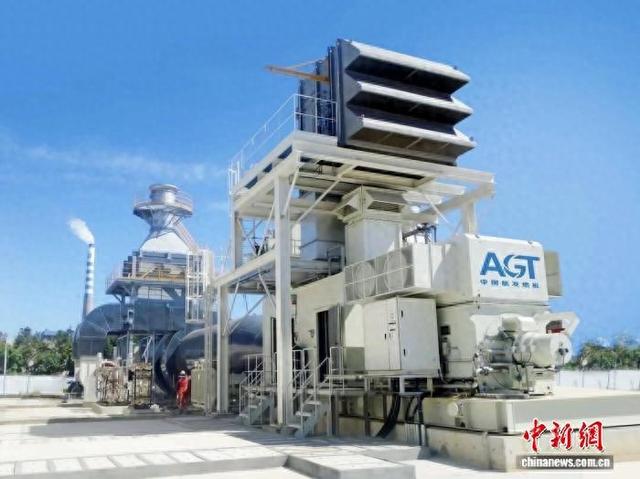
Core Viewpoint - China Aviation Engine Group has successfully passed the evaluation and acceptance of three gas turbine innovation demonstration projects, marking a significant advancement in the country's gas turbine industry and its capabilities in independent research, design, manufacturing, testing, and maintenance [1] Group 1: Project Achievements - The "Taihang" series gas turbines have demonstrated stable operation, with the "Taihang 7" turbine accumulating over 25,000 hours of operation, filling the gap for domestic gas turbines in offshore platform applications [1] - The "Taihang 15" turbine has operated for over 6,300 hours, utilizing associated gas resources from offshore oil fields to provide autonomous power supply for island microgrids, validating the unit's stability and reliability [1] - The "Taihang 110" turbine has achieved over 8,400 equivalent hours of operation, possessing complete independent intellectual property rights and achieving 100% localization, filling the gap for 110 MW heavy-duty gas turbine products in China [1] Group 2: Industry Impact - The successful development of these gas turbines is expected to significantly promote the industrialization and commercialization of China's gas turbine industry [1] - The "Taihang 110" turbine is currently the largest domestically produced commercial heavy-duty gas turbine, having passed national product verification and achieved international commercial orders [1]
国防军工行业投资策略周报:商业航天高景气可期,大飞机和军贸关注度提升-20260118
GF SECURITIES· 2026-01-18 08:26
Core Insights - The report highlights the promising outlook for the commercial aerospace sector and increased attention on large aircraft and military trade [2][3] - The construction of a space power is accelerating, with a focus on breakthroughs in reusable rocket technology and the development of new industries such as commercial aerospace and low-altitude economy [5][13] - Airbus has set a record for civil aircraft orders, with a total of 8,754 aircraft in backlog by the end of 2025, indicating strong market demand [5][13] - Military trade is expected to improve, with significant defense export growth reported in the UK, reaching over £20 billion in 2025 [5][14] Investment Strategy - The report recommends focusing on companies that align with the "S-curve" evolution, emphasizing supply chain reform and automation trends, with specific recommendations for companies like Aero Engine Corporation and AVIC [5][15] - It also suggests targeting companies involved in military trade, large aircraft, and low-altitude economy, highlighting firms such as Guorui Technology and China Power [5][15] - New emerging industries such as commercial aerospace, AI, and quantum computing are also identified as key areas for investment, with recommendations for companies like Ruichuang Micro-Nano and Ziguang Guowei [5][15] Company Valuation and Financial Analysis - The report provides detailed financial metrics for key companies in the defense and aerospace sector, including expected earnings per share (EPS) and price-to-earnings (PE) ratios for 2025 and 2026 [6] - For instance, Aero Engine Corporation is projected to have an EPS of 0.22 CNY in 2025, with a PE ratio of 184.41x, indicating strong growth potential [6] - Other companies like AVIC Heavy Machinery and Guorui Technology are also highlighted for their expected profitability and market positioning [6][25][27]


中国航发“太行”系列燃气轮机创新发展示范项目完成评估验收
Zhong Guo Xin Wen Wang· 2026-01-18 05:47
Core Viewpoint - China Aviation Engine Group (China Aviation) has successfully completed the evaluation and acceptance of its gas turbine innovation development demonstration projects, marking a significant advancement in the independent research, design, manufacturing, testing, and operational maintenance capabilities of gas turbines in China [1][3]. Group 1: Project Achievements - The "Taihang 7" gas turbine has accumulated over 25,000 operating hours, filling the gap in the application of domestic gas turbines for offshore platforms, thus enhancing oil and gas exploration and development capabilities [2][3]. - The "Taihang 15" gas turbine demonstration unit has run for over 6,300 hours, utilizing associated gas resources from offshore oil fields to provide autonomous power supply for microgrid systems, validating the unit's stability and reliability [5]. - The "Taihang 110" heavy gas turbine has operated for over 8,400 equivalent hours, achieving 100% domestic production and filling the gap in the domestic market for 110 MW heavy gas turbine products, which is currently the largest commercial heavy gas turbine in China [7]. Group 2: Strategic Implications - The demonstration projects are part of a strategic collaboration between China Aviation and China National Offshore Oil Corporation (CNOOC), aimed at establishing a national-level testing and demonstration base for autonomous gas turbines in the marine engineering sector [5][7]. - China Aviation aims to leverage the successful evaluation and acceptance of these projects as a new starting point to deepen technological innovation, accelerate product iteration and upgrades, and promote the large-scale application of these technologies to enhance national energy security and drive high-quality development in the equipment manufacturing industry [1][7].
“太行三兄弟”完成评估验收
中国能源报· 2026-01-18 05:38
Core Viewpoint - The successful completion of the evaluation and acceptance of the "Taihang" gas turbine projects marks a significant advancement in China's gas turbine industry, indicating breakthroughs in core technologies related to research, design, materials, manufacturing, testing, and maintenance [1][2]. Group 1: Project Achievements - The "Taihang 7" gas turbine has accumulated over 25,000 operating hours, filling the gap in domestic gas turbine applications for offshore platforms, thus enhancing oil and gas exploration capabilities [1]. - The "Taihang 15" gas turbine demonstration unit has run for over 6,300 hours, utilizing associated gas resources from offshore oil fields to ensure independent power supply for microgrid systems, demonstrating its stability and reliability [1]. - The "Taihang 110" gas turbine demonstration unit has achieved over 8,400 equivalent operating hours, possesses complete independent intellectual property rights, and is fully domestically produced, filling the gap for 110 MW heavy-duty gas turbine products in China [2]. Group 2: Industry Impact - The successful validation and international commercial orders for the "Taihang 110" gas turbine highlight its status as the largest domestically produced commercial heavy-duty gas turbine in China [2]. - The advancements in the "Taihang" series are expected to significantly promote the industrialization and commercialization of the gas turbine sector in China [1].

新华财经早报:1月18日
Zhong Guo Jin Rong Xin Xi Wang· 2026-01-18 00:50
Group 1 - China Aviation Engine Group's "Taihang Three Brothers" has completed evaluation and acceptance, marking a significant breakthrough in gas turbine R&D and technology, which will strongly promote the industrialization and commercialization of the gas turbine industry in China [1][1][1] - The People's Bank of China and the National Financial Regulatory Administration announced that the minimum down payment ratio for commercial housing loans will be adjusted to no less than 30%, aiming to support a new model for real estate development [1][1] - The Ministry of Industry and Information Technology has revised the management measures for high-quality small and medium-sized enterprises, including technology-based SMEs in the cultivation scope, which will be implemented from April 1, 2026 [1][1] Group 2 - The National Energy Administration announced that by 2025, China's total electricity consumption will exceed 10 trillion kilowatt-hours, reaching 10.4 trillion kilowatt-hours, a year-on-year increase of 5%, which is unprecedented for a single country [1][1][1] - In 2025, the foreign trade import and export volume of Yiwu, Zhejiang, is expected to exceed 800 billion yuan, reaching 836.5 billion yuan, with imports hitting 105.8 billion yuan, a year-on-year increase of 32.3% [1][1] - In 2025, Shanxi's renewable energy generation is projected to reach 118 billion kilowatt-hours, a year-on-year increase of 26%, equivalent to the annual electricity consumption of approximately 35 million households [1][1]