一汽集团

Search documents
工信部复查新能源车补贴:累计核减8.6亿元 奇瑞辟谣“骗补”
Zhong Guo Jing Ji Wang· 2025-07-15 12:29
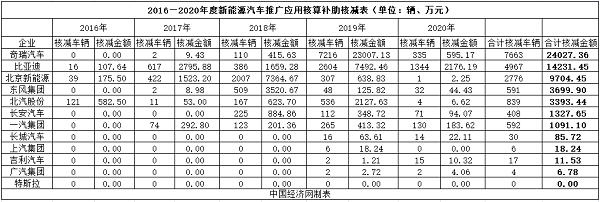
Core Viewpoint - The Ministry of Industry and Information Technology (MIIT) has released a public notice regarding the preliminary audit of subsidy funds for the promotion and application of new energy vehicles (NEVs) from 2016 to 2020, indicating that many car manufacturers received less subsidy than applied due to non-compliance with submission requirements and data upload issues [1][6]. Summary by Relevant Sections Subsidy Reduction Data - From 2016 to 2020, the automotive industry saw a total subsidy reduction of 860 million yuan, with Chery Automobile and BYD accounting for over 40% of this total, with reductions of 240 million yuan and 140 million yuan respectively [2][6]. - Chery's peak subsidy reduction occurred in 2019, with 7,216 vehicles and over 230 million yuan reduced, while BYD's peak was also in 2019, with 2,604 vehicles and 749 million yuan reduced [6][8]. Company Responses - Chery Automobile clarified that the subsidy reduction was due to the sales terminal payment vouchers not meeting requirements, asserting that there was no fraudulent behavior involved [3][8]. - BYD has not yet provided a response to the situation [3]. Historical Context of Subsidies - The subsidy policy for NEVs began in 2009, significantly boosting sales, with a peak of 74,700 units sold in 2014, marking the emergence of new car manufacturers [4]. - A joint inspection mechanism was established in 2016 to verify vehicle usage and data authenticity, leading to a gradual reduction of subsidies to encourage industry upgrades [5]. Regulatory Implications - The MIIT's review of subsidy flows over the past five years serves as a regulatory measure to ensure fair competition in the industry as it transitions to a post-subsidy era [9].


汽车业提质逐新拓增量
Jing Ji Ri Bao· 2025-07-14 21:59
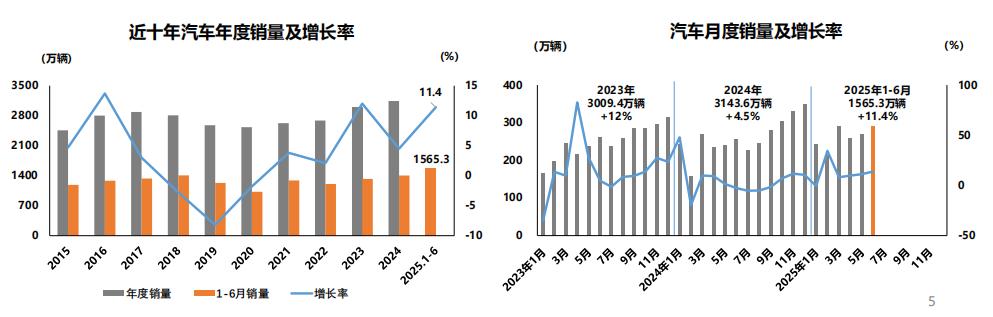
Core Insights - In the first half of this year, China's automobile production and sales reached 15.62 million and 15.65 million units respectively, marking a year-on-year increase of 12.5% and 11.4%, achieving a historical milestone of exceeding 15 million units for the first time in the same period [1] - The growth of the automotive market is primarily driven by new energy vehicles (NEVs), which saw production and sales of 6.968 million and 6.937 million units, representing year-on-year growth of 41.4% and 40.3% respectively, with NEVs accounting for 44.3% of total new car sales [1][2] - The Chinese automotive industry is expected to maintain stable growth throughout the year, with NEV sales projected to reach 16 million units, potentially exceeding 50% of total new car sales [3] Industry Performance - Geely Auto reported a total sales volume of 1.4092 million units in the first half of the year, a 47% increase year-on-year, with NEVs accounting for 725,200 units, a 126% increase, marking a significant milestone in its transition to electric vehicles [2] - The overall sales of Chinese brand passenger cars reached 9.27 million units, a 25% increase, maintaining a market share of 68.5% [2] - Exports of automobiles reached 3.083 million units, a 10.4% increase, with NEV exports at 1.06 million units, a 75.2% increase, indicating strong resilience in the export market [2] Technological and Policy Drivers - The dual drive of technology and policy is evident, with the implementation of the "two new" policies significantly supporting the growth of the automotive market [5] - NIO's announcement of its self-developed intelligent driving chip marks a significant technological advancement, enhancing vehicle safety and user experience [4] - The "two new" policies, including vehicle trade-in subsidies, have led to a notable increase in retail sales, with applications for trade-in subsidies reaching 4.12 million by the end of May [5] Industry Dynamics - The automotive industry is witnessing a shift towards a more sustainable competitive environment, with major manufacturers committing to shorten payment cycles to suppliers, enhancing supply chain stability [6][7] - The industry is moving away from price wars towards value-driven competition, emphasizing the importance of innovation, quality, and user experience [8] - The initial effects of reducing internal competition are becoming apparent, with improved production rhythms and inventory management among manufacturers [7]
2027固态电池装车倒计时:设备订单放量在即,产业链布局窗口期开启
智通财经网· 2025-07-12 00:27
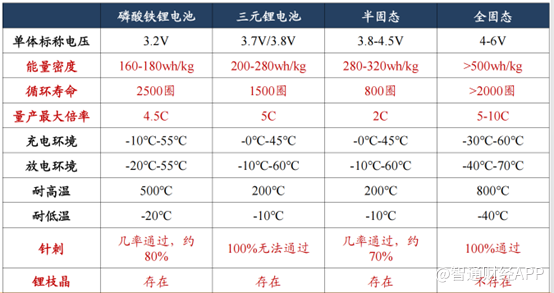
Core Viewpoint - The solid-state battery technology is rapidly advancing, with major global automakers and battery manufacturers announcing timelines for vehicle integration, indicating a shift towards high-performance lithium batteries that offer both high energy density and safety [1][3][15]. Group 1: Industry Developments - Major automakers like BYD, Toyota, and Volkswagen are planning to implement solid-state batteries in their vehicles between 2025 and 2030, with various companies setting specific timelines for small-scale production and testing [3][4]. - CATL is transitioning from semi-solid to solid-state batteries, aiming for small-scale production by 2027, while other companies like Guoxuan High-Tech and EVE Energy have similar timelines for their solid-state battery projects [3][4]. Group 2: Technical Advantages - Solid-state batteries can achieve energy densities exceeding 500 Wh/kg, significantly higher than traditional lithium batteries, which are nearing their theoretical limits [2][3]. - The solid-state battery technology addresses safety concerns associated with liquid batteries, such as thermal runaway, making it suitable for applications in electric vehicles, robotics, and energy storage [1][2]. Group 3: Market Potential - The global demand for solid-state batteries is expected to grow, driven by the increasing penetration of electric vehicles and advancements in low-altitude economy and renewable energy sectors [5][15]. - The market for solid-state battery equipment is projected to increase from 5-6 billion CNY per GWh to 2.5 billion CNY per GWh by 2029, indicating a significant reduction in production costs as technology matures [8][9]. Group 4: Material Innovations - The development of solid-state batteries is leading to advancements in materials, with a shift from graphite to silicon-based anodes, which have a theoretical capacity ten times higher than graphite [13][14]. - New electrolyte materials, including polymer, oxide, and sulfide, are being explored, each with distinct advantages and challenges, contributing to the ongoing evolution of solid-state battery technology [10][11][12].
工信部:复查5年!比亚迪、奇瑞核减超1.4亿
新华网财经· 2025-07-10 06:15
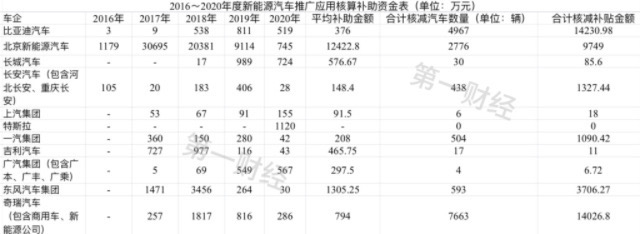
Core Viewpoint - The Ministry of Industry and Information Technology has released a public notice regarding the audit of subsidy funds for the promotion and application of new energy vehicles from 2016 to 2020, indicating a dynamic adjustment of subsidies to prevent companies from becoming overly reliant on them [1][6]. Summary by Sections Subsidy Adjustments and Company Performance - Many car manufacturers received less subsidy than applied for between 2016 and 2020 due to non-compliance with application requirements or failure to upload operational data [1]. - BYD received an average annual subsidy of 3.76 million yuan, with a total reduction of approximately 142 million yuan due to nearly 5,000 fewer vehicles being subsidized than applied for [4]. - Changan Automobile averaged 148,400 yuan in annual subsidies, with a reduction of about 13.27 million yuan due to 438 fewer vehicles being subsidized [4]. - Beijing New Energy Automobile Company received an average of 12.42 million yuan annually, with a total reduction of about 9.7 million yuan due to 2,776 fewer vehicles [4]. Overall Subsidy Trends - From 2017 to 2020, several companies, including GAC Group, FAW Group, Geely, and Dongfeng, received annual subsidies ranging from 910,000 to 13.05 million yuan, with Dongfeng receiving the highest average [5]. - The total subsidy reductions for companies like Dongfeng exceeded 37 million yuan, while BYD and Chery faced reductions of over 140 million yuan [5]. Policy Dynamics - The subsidy policy for new energy vehicles has undergone dynamic adjustments since 2016, influenced by technological advancements and market conditions, to avoid creating dependency among manufacturers [7][8]. - The policy adjustments include raising the entry threshold for subsidies based on vehicle energy consumption, range, and battery performance, as well as cracking down on fraudulent subsidy claims [8]. - By 2024, the penetration rate of new energy passenger vehicles has exceeded 50%, indicating a shift towards market-driven competition beyond subsidies [9].
上半年我国汽车产销量均超1500万辆:中国品牌乘用车销量占比68.5%,商用车出口同比增长10.5%
Mei Ri Jing Ji Xin Wen· 2025-07-10 05:48
Core Insights - The Chinese automotive industry is experiencing growth in both production and sales, with June figures showing a year-on-year increase of 11.4% in production and 13.8% in sales [1][3] - The first half of 2023 saw cumulative production and sales of 15.62 million and 15.65 million vehicles, respectively, reflecting a year-on-year growth of 12.5% and 11.4% [1][3] Passenger and Commercial Vehicle Market - Both passenger and commercial vehicle markets are showing positive growth in the first half of the year, with passenger vehicle production and sales reaching 13.52 million and 13.53 million, marking increases of 13.8% and 13% year-on-year [3][4] - Commercial vehicle production and sales totaled 2.10 million and 2.12 million, with year-on-year growth of 4.7% and 2.6% [3][4] New Energy Vehicles (NEVs) - The majority of NEV sales are concentrated in the price range of 150,000 to 200,000 yuan, with cumulative sales of 1.51 million units, representing a year-on-year increase of 16.8% [6] - Chinese brand passenger vehicles accounted for 67.3% of the market share in June, up 2.7 percentage points from the previous year, with a cumulative sales figure of 9.27 million units in the first half of the year [4][6] Commercial Vehicle Exports - The commercial vehicle market saw a significant increase in exports, with June exports reaching 90,000 units, a year-on-year growth of 10.6% [9][12] - Cumulative exports for the first half of the year reached 501,000 units, also reflecting a growth of 10.5% [9][12] Market Concentration - The top fifteen automotive groups accounted for 92.2% of total sales in the first half of the year, with a combined sales figure of 14.43 million units, showing a year-on-year increase of 9.8% [10] - In the NEV sector, the top fifteen groups sold 6.60 million units, representing a 43% year-on-year growth and capturing 95.1% of the total NEV sales [10] Future Outlook - The industry anticipates the need for stable policy expectations and regulatory measures to ensure healthy and stable operations in the automotive sector [12]




工信部:复查5年!比亚迪、奇瑞核减超1.4亿
第一财经· 2025-07-10 04:21
Core Viewpoint - The article discusses the dynamic adjustment of subsidies for new energy vehicles (NEVs) in China from 2016 to 2020, highlighting the reduction in actual subsidies received by various car manufacturers compared to their applications, aimed at preventing "subsidy dependency" among companies [1][8]. Group 1: Subsidy Adjustments and Impacts - The Ministry of Industry and Information Technology (MIIT) has published a report indicating that many car manufacturers received less subsidy than applied for due to non-compliance with requirements [1][8]. - The average annual subsidy for BYD from 2016 to 2020 was 3.76 million, with a peak in 2019 at 8.11 million, but the actual subsidy amount was reduced by approximately 142 million due to fewer vehicles qualifying [3][4]. - Changan Automobile received an average of 1.48 million annually, with a peak in 2019, but faced a reduction of about 13.27 million in actual subsidies [4]. Group 2: Performance of Various Manufacturers - Beijing New Energy Automobile Co. received an average annual subsidy of 12.4 million, with a peak of around 30 million in 2017, but had a reduction of about 97 million in actual subsidies [4]. - Other manufacturers like Dongfeng Motor Group and FAW Group also experienced significant reductions in subsidies, with Dongfeng's reductions exceeding 37 million [5]. - Among the 11 manufacturers analyzed, five had reductions in the number of vehicles qualifying for subsidies of 30 or fewer, indicating a varied impact across the industry [5]. Group 3: Historical Context and Future Outlook - The NEV market in China saw rapid growth from 2016 to 2020, with production and sales exceeding 500,000 units in 2016, and sales reaching 1.367 million in 2020, marking a significant increase in market penetration [7]. - The subsidy policy has undergone dynamic adjustments to address issues like subsidy dependency and fraudulent claims, with stricter eligibility criteria introduced in 2017 and 2019 [8][9]. - By 2024, the penetration rate of new energy passenger vehicles is expected to exceed 50%, indicating a shift towards market-driven competition beyond subsidies [9].
工信部复查5年新能源推广补助资金!比亚迪、奇瑞核减超1.4亿
Di Yi Cai Jing· 2025-07-09 13:55
Core Viewpoint - The Ministry of Industry and Information Technology has released a public notice regarding the audit of subsidy funds for the promotion and application of new energy vehicles from 2016 to 2020, indicating a dynamic adjustment of subsidies to prevent companies from becoming overly reliant on them [1][5][6]. Group 1: Subsidy Adjustments and Company Performance - Many car manufacturers received less subsidy than they applied for between 2016 and 2020 due to non-compliance with application requirements or failure to upload operational data [1][4]. - BYD received an average annual subsidy of 3.76 million yuan from 2016 to 2020, with a peak in 2019 at 8.11 million yuan, but had nearly 5,000 fewer vehicles approved than applied for, resulting in a subsidy reduction of approximately 142 million yuan [2][3]. - Changan Automobile averaged about 1.48 million yuan in subsidies annually, with a peak in 2019, but saw a reduction of around 438 vehicles and a subsidy decrease of about 13.27 million yuan [3]. - Beijing New Energy Automobile Co., Ltd. averaged 12.4 million yuan in annual subsidies, with a peak of around 30 million yuan in 2017, but had a reduction of about 2,776 vehicles and a subsidy decrease of approximately 97 million yuan [3]. Group 2: Industry Growth and Market Dynamics - The new energy vehicle market in China has seen significant growth, with production and sales exceeding 500,000 units in 2016, and sales reaching 1.367 million units in 2020, marking a penetration rate of 5.4% [5]. - The penetration of new energy vehicles into the private consumer market has increased significantly, with private consumption accounting for about 70% [5]. - The subsidy policy for new energy vehicles has been dynamically adjusted since 2016, responding to technological advancements and market conditions, to avoid creating a dependency on subsidies among manufacturers [5][6]. - The adjustment of subsidy standards includes raising entry thresholds based on vehicle energy consumption, range, and battery performance, while also cracking down on fraudulent subsidy claims [6].
周治平任中国兵器工业集团董事长
证券时报· 2025-07-08 12:48
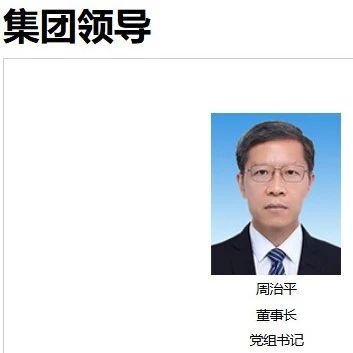
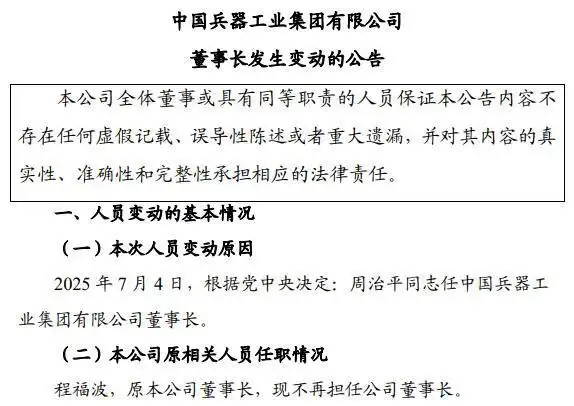
Core Viewpoint - The announcement of Zhou Zhiping's appointment as the chairman of China Ordnance Industry Group Co., Ltd. signifies a leadership change within the company, which may impact its strategic direction and operational focus [1]. Summary by Sections Leadership Change - On July 4, the Central Committee decided to appoint Zhou Zhiping as the chairman of China Ordnance Industry Group Co., Ltd., replacing Cheng Fubo [1]. - Zhou Zhiping has an extensive background in various leadership roles within the industry, including positions at China North Industries Group Corporation and Chang'an Automobile [5][6]. Background of Zhou Zhiping - Zhou Zhiping, born in January 1971, holds a doctoral degree in management and is a senior engineer [5]. - His previous roles include vice chairman and general manager of Southern Assets, as well as various leadership positions in the automotive and defense sectors [5].
快讯!周治平已任兵工集团董事长
Zheng Quan Ri Bao Wang· 2025-07-08 10:47
Group 1 - The core point of the article is the appointment of Zhou Zhiping as the new chairman of China Ordnance Industry Group Co., Ltd., following the decision by the Central Committee of the Communist Party of China [1][9] - Zhou Zhiping's background includes extensive experience in the automotive industry and various leadership roles in related companies, which may provide valuable insights for his new position in the military industry [6][9] - The transition from the previous chairman, Cheng Fubo, to Zhou Zhiping fills a critical leadership gap in the company, which focuses on the development of military equipment and technology [9] Group 2 - Zhou Zhiping's educational qualifications include a Ph.D. in Management Science and Engineering from Beijing Institute of Technology, and he is a senior engineer [6] - The company is expected to leverage Zhou Zhiping's understanding of military-civilian integration to enhance its operations in the defense sector [9] - The future direction of the "new Ordnance Group" under Zhou Zhiping's leadership is anticipated to be a focal point for stakeholders, particularly in advancing military capabilities [9]
独家:兵装与兵工完成重组 周治平任“新兵工集团”书记兼董事长
Sou Hu Cai Jing· 2025-07-07 02:47
Group 1 - The appointment of Cheng Fubo as the Chairman and Party Secretary of China Aviation Industry Corporation marks a significant leadership change within the organization [1] - The vacancy left by Cheng Fubo at China Ordnance Industry Group has led to speculation about who will succeed him [1][2] - Zhou Zhiping has been appointed as the Party Secretary and Chairman of the newly formed "New Ordnance Group," following the restructuring of China Ordnance Equipment Group and China Ordnance Industry Group [2][3] Group 2 - Zhou Zhiping's career reflects a unique trajectory within China's automotive state-owned enterprises, having held senior positions in three major companies: China Ordnance Equipment Group, FAW Group, and Dongfeng Group [3][4] - His experience in these companies is seen as a strategic advantage for the integration of military and automotive sectors, particularly in the context of ongoing state-owned enterprise reforms [4][6] - Zhou Zhiping's management style is characterized by strategic integration, which has been crucial in previous roles, such as leading the revival of the Hongqi brand and promoting new energy vehicle sales [4][7] Group 3 - The restructuring of state-owned enterprises is viewed as a precursor to further integration within the military and automotive sectors, with Zhou Zhiping's appointment being a key element of this process [4][9] - Zhou Zhiping's background in the automotive industry is expected to influence the military sector, particularly in terms of market-oriented practices and technology commercialization [10][11] - The ongoing integration efforts suggest a shift towards a more collaborative approach between military and civilian sectors, with the potential for enhanced technology transfer and operational efficiency [11]