
华为云

Search documents
揭秘GoTo旗下业务迁移腾讯云始末
雷峰网· 2025-06-12 00:32
Core Viewpoint - The cloud migration of GoTo reflects the escalating competition among domestic cloud giants in the Southeast Asian market, marking a significant shift in their international strategies [1]. Group 1: GoTo's Cloud Migration - GoTo, Indonesia's largest internet technology company, has successfully migrated its Gojek ride-hailing and delivery services to Tencent Cloud, while its financial services infrastructure has been deployed on Alibaba Cloud [2][3]. - The migration is unprecedented in Southeast Asia, as no other company has undertaken such a large-scale cloud transition, drawing significant attention from regional enterprises [3]. - GoTo's decision to migrate was driven by the need to enhance its service offerings and operational efficiency, particularly in the ride-hailing and delivery sectors [5][7]. Group 2: Technical Challenges and Solutions - The migration of GoTo's ODS (On-Demand Services) was particularly challenging due to rapid business growth and the lack of a systematic technical foundation [9]. - GoTo's leadership recognized the necessity of upgrading their technology stack to support the transition to a more efficient delivery system [8][12]. - The migration process involved meticulous planning, including a detailed execution guide with thousands of operational steps and multiple rehearsals to anticipate potential issues [14][15]. Group 3: Strategic Partnerships and Outcomes - GoTo's collaboration with Tencent Cloud was based on a comprehensive evaluation of service compatibility, cost-effectiveness, and technical capabilities [11]. - The successful migration, which took 4 hours and 54 minutes, resulted in a cost reduction of over 50% for GoTo, marking a significant operational leap [16]. - This partnership signifies Tencent Cloud's strategic move into the Southeast Asian market, highlighting the increasing pace of domestic cloud providers' international expansion [17].



达实智能落子沙特,智慧空间方案开拓中东蓝海
Zhong Guo Chan Ye Jing Ji Xin Xi Wang· 2025-06-10 03:07
Group 1 - The core viewpoint of the news is that Shenzhen Das Intellitech Co., Ltd. is officially entering the Middle Eastern market by establishing a wholly-owned subsidiary in Saudi Arabia, marking a significant step in the company's internationalization strategy [1][2] - The company plans to invest 20 million RMB to establish "Das Intellitech Saudi Co., Ltd." which will focus on smart energy and smart space products, solutions, and technical services [1][2] - This investment aligns with China's Belt and Road Initiative, aiming to enhance the company's competitiveness and brand influence in overseas markets [2] Group 2 - The foundation for Das Intellitech's expansion into Saudi Arabia is its self-developed core technology, the AIoT intelligent IoT control platform V7, which was officially launched in March 2025 [3] - The V7 platform features a revolutionary "generative AI + real-time IoT data" dual-engine architecture, overcoming traditional system limitations and enabling proactive service through intelligent control [3] - The platform's strong compatibility (supporting over 95% of communication protocols) and low-code development capabilities significantly lower technical barriers and integration costs, facilitating rapid adaptation to the Saudi market [3] Group 3 - Das Intellitech emphasizes the power of ecosystem collaboration, having validated its "platform + partners" strategy in the domestic market [4] - The company provides open access to the AIoT V7 platform, low-code tools, and extensive data support to empower ecosystem partners in developing scenario-based applications [4] - The establishment of the Saudi subsidiary is expected to deepen localized cooperation, with a broad business scope covering smart energy, smart space, and power services [4]

公有云“内卷式”价格战升级 云计算市场迎来生死之战
Xi Niu Cai Jing· 2025-06-09 03:22
Core Viewpoint - The cloud computing industry is experiencing a significant price war initiated by major players like Alibaba Cloud, which has led to a reshaping of the market dynamics and poses challenges for smaller cloud providers [2][12][13] Group 1: Price War Dynamics - Alibaba Cloud has launched its largest price reduction ever, with core product prices dropping between 20% and 55%, affecting over 100 products and 500 specifications [2] - JD Cloud has responded with a commitment to undercut prices by an additional 10%, putting pressure on smaller competitors [2] - The price war is seen as a potential catalyst for industry restructuring, raising questions about its impact on innovation [2][13] Group 2: Financial Performance of Major Players - Alibaba Cloud reported a revenue of 106.37 billion yuan in 2024, a year-on-year increase of 37.78%, indicating a strategy of increasing public cloud penetration to dilute costs [2] - The utilization rate of Alibaba Cloud's core products has increased significantly, leading to substantial energy savings [2] - Despite revenue growth, profit margins are under pressure, with Industrial Fulian's cloud computing business showing a gross margin of only 4.99% [3][4] Group 3: Challenges for Smaller Cloud Providers - Smaller cloud providers are facing a "profit margin recovery" while experiencing revenue pressure, with companies like Kingsoft Cloud and Yuke Data showing mixed financial results [5] - Smaller firms are adopting strategies such as focusing on high-value areas like AI computing to survive in a competitive landscape [5][12] - The cash flow risks for smaller players are evident, with some reporting significant declines in revenue and negative cash flow [5] Group 4: Investment and Resource Allocation - Major players are extending the price war into the AI sector, with Alibaba Cloud's AI model prices dropping to the lowest in the industry [6][8] - Alibaba Cloud plans to invest 380 billion yuan in AI infrastructure over the next three years, while Tencent Cloud has a similar plan of 500 billion yuan [8] - The rapid growth in AI computing demand presents both opportunities and challenges for smaller firms, which struggle to keep pace with larger competitors [12] Group 5: Market Concentration and Future Outlook - The market concentration is increasing, with the top three players holding 71% of the cloud infrastructure market share, indicating a trend towards oligopoly [11] - The price war is accelerating market reshaping, with smaller firms' market share being further compressed [12] - The industry is at a crossroads, where innovation requires resource investment, and the ongoing price war is altering resource distribution [14][15] Group 6: Strategies for Survival - Smaller cloud providers need to focus on niche markets and strengthen their technological barriers to survive [17] - Embracing open ecosystems and avoiding direct competition with larger firms are essential strategies for smaller players [17] - Regulatory measures may be necessary to prevent larger firms from abusing their market dominance and to preserve innovation space for smaller companies [17]

硅基昇腾,中国突围!
是说芯语· 2025-06-08 08:35
Core Viewpoint - The article discusses the rapid development and deployment of the DeepSeek AI model and the CloudMatrix 384 super node by Huawei Cloud, highlighting the competitive landscape and technological advancements in China's AI infrastructure [5][8][76]. Group 1: DeepSeek and Competitive Landscape - The launch of DeepSeek R1 on January 15, 2025, created a significant impact globally, leading to intense competition among AI teams worldwide [5][6]. - Just two weeks later, Huawei Cloud partnered with Silicon-based Flow to launch DeepSeek R1/V3, marking a major milestone in domestic AI deployment [8][9]. - The collaboration aimed to leverage domestic computing power to address deployment challenges, resulting in a 40-fold increase in website traffic for Silicon-based Flow in February [14][15]. Group 2: CloudMatrix 384 Super Node - Huawei Cloud introduced the CloudMatrix 384 super node, which integrates 384 Ascend cards, significantly surpassing NVIDIA's NVL72 super node, which integrates only 72 GPUs [24][21]. - The CloudMatrix 384 is designed to meet the high demands of AI applications, requiring substantial power and advanced cooling systems to manage increased heat density [45][46]. - Despite initial doubts about the feasibility of using optical modules for communication, Huawei Cloud successfully addressed challenges related to communication quality and stability, leading to a successful deployment of the super node [49][56]. Group 3: Performance Improvements - By April 10, 2025, the performance of the DeepSeek service on the CloudMatrix 384 improved dramatically, achieving a throughput of 1920 Tokens/second, which is six times better than earlier performance [69][71]. - The enhancements included significant improvements in various performance metrics, such as training and inference efficiency, showcasing Huawei Cloud's advancements in AI technology [71][75]. - The successful deployment of the CloudMatrix 384 super node represents a breakthrough in China's AI capabilities, establishing a robust domestic computing power infrastructure [76][78].

欧企展望牵手中国AI
Xin Hua She· 2025-06-07 22:05
在瑞士东南部达沃斯小镇举行的首届欧亚经济峰会(EAES)5月28日落下帷幕。此次峰会以"人工智能 (AI)与可持续发展"为主题,中国AI技术成为峰会焦点。与会欧洲企业代表纷纷表示看好与中国企业 的合作前景,认为中国在AI领域的创新突破将为欧中经济合作注入新动能。 在主题为"融合人类智慧与机器智能"的人工智能主旨演讲环节,来自中国的人形机器人甫一亮相便吸引 了全场与会者的目光。随着指令下达,机器人以铿锵有力的步伐在场内自如行走,并流畅完成蹲起动 作,其精准的运动控制和拟人化表现引起阵阵惊叹,观众纷纷举起手机记录。 世界贸易组织副总干事安杰拉·埃拉德在视频讲话中强调,当今世界面临诸多紧迫挑战,这些挑战呼唤 对话、协同行动、重视全球公域的价值。 "我们应该共同强化这一理念:贸易的本质是共赢而非零和。"埃拉德说,"在这个充满不确定性的时 代,通过世贸组织加强合作是明智的商业选择。" 瑞士圣加仑大学经济学讲师斯特凡·莱格接受记者采访时表示,如今还有很多人以零和思维看世界,这 很危险。世界各国应强化共赢思维,寻找各方共赢的机会。 为期两天的峰会上,包括华为云和阿里云在内的中国企业代表与来自欧洲、亚洲的跨国公司、中小企业 ...
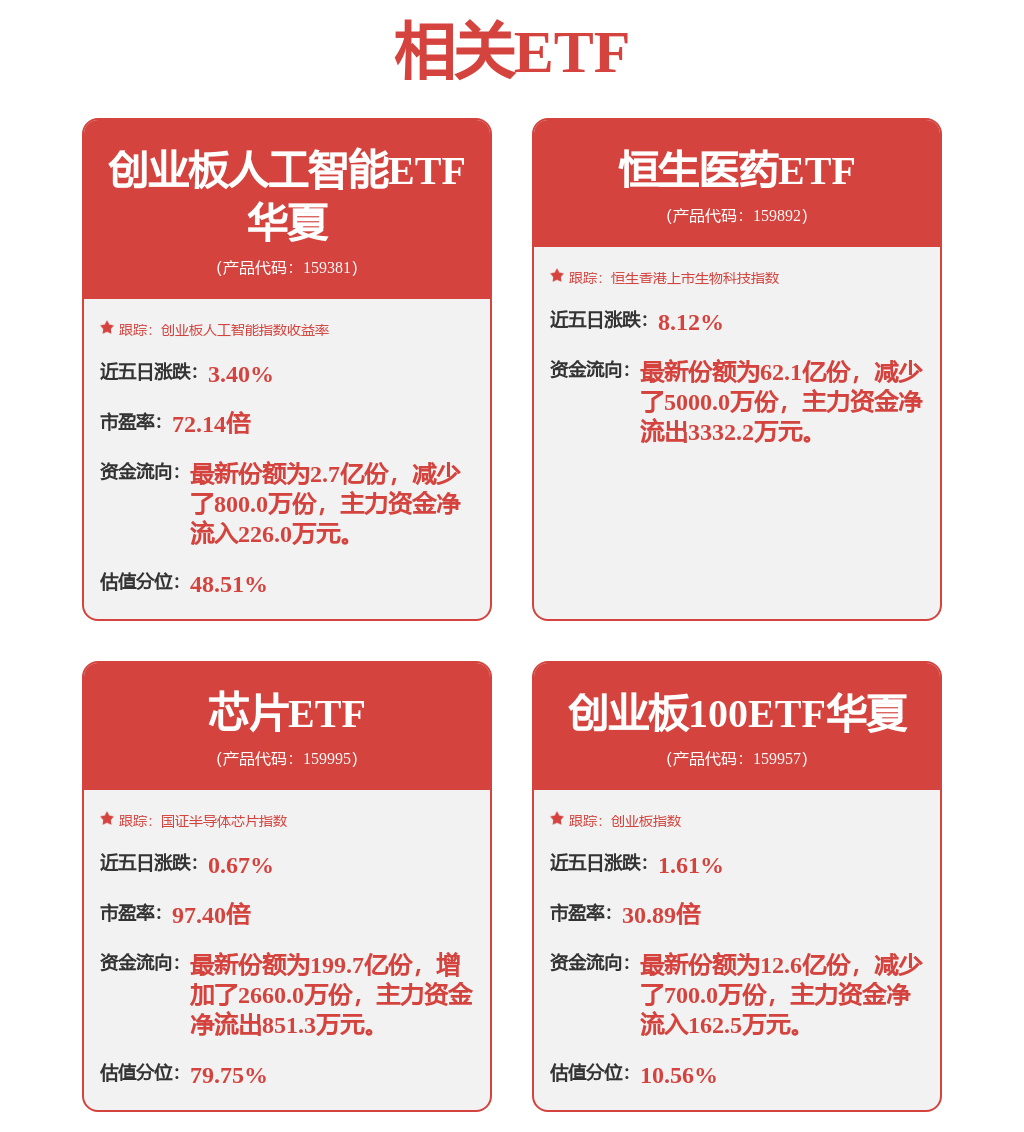
光模块CPO午间异动拉升,创业板人工智能ETF华夏涨超3%
Zheng Quan Zhi Xing· 2025-06-05 05:25
Group 1 - The AI computing power sector is showing strong performance, with significant gains in optical module stocks and related companies [1] - The domestic market for optical modules is expected to benefit from the expansion of data centers by major cloud providers, which hold a combined market share of approximately 71% [1] - Major global companies like Amazon, Google, Microsoft, and Meta are projected to significantly increase their capital expenditures, collectively exceeding $300 billion by 2025 [1] Group 2 - The Huaxia AI Computing ETF (159381) is highlighted for its low fee structure and high elasticity, tracking the entrepreneurial board AI index [2] - The top ten holdings of the Huaxia AI Computing ETF include leading optical module companies and key players in the chip design and cloud computing sectors [2] - The annual management fee for the Huaxia AI Computing ETF is 0.15%, with a custody fee of 0.05%, making it one of the lowest in its category [2]

四大家族格局松动?中国机器人企业谁能成为下一个“顶流”
机器人圈· 2025-06-04 10:09
前不久,ABB 正式宣布计划将其机器人业务单元进行100%分拆,并目标于2026年第二季度作为一家独立公司上市交易。 市场随后传出ABB亦在考虑出售该业务的可能性,估值在35亿至50亿美元之间。这一传闻为ABB机器人业务的未来增添了 诸多不确定性。 ABB的这一战略调整并非偶然。从ABB集团整体的财务表现来看,2024年,在电气事业部增长的驱动下,ABB在销售收 入、毛利率、运营息税摊销前利润及利润率方面均创下历史新高。其中,运营息税摊销前利润为59.68亿美元,同比增加 10%,利润率为18.1%。 相比之下,机器人业务的运营息税摊销前利润率仅为12.1%。ABB机器人业务2024年实现销售收入23亿美元,占集团总收 入的7%,运营息税摊销前利润(EBITDA)为3.29亿美元,同比下滑39%。 机器人业务订单下滑的主要原因是汽车和消费电子领域的投资减少,而物流和一般工业领域的增长势头良好。 根据ABB最新公布的财报显示,2025年一季度运营息税摊销前利润增长13%,达到15.9亿美元。但机器人与离散自动化事 业部的运营息税摊销前利润同比下降35%,虽然订单额回升了14%,但收入下降14%。 这些数据也非常 ...

2025年中国企业跨境电商行业洞察报告
Sou Hu Cai Jing· 2025-06-02 13:44
Core Insights - The report highlights the transformation of cross-border e-commerce from an optional strategy to a crucial necessity for Chinese enterprises in the context of significant changes in global trade dynamics [1] Group 1: Explosive Growth - In the first three quarters of 2024, China's cross-border e-commerce achieved a total import and export volume of 1.88 trillion RMB, representing a year-on-year growth of 11.5%, with exports growing by 15.2%, significantly outpacing overall foreign trade growth [2][29] - The rise of social e-commerce is a key driver, with the global social commerce market expected to reach $688 billion in 2024, growing by 20%, and projected to exceed $1 trillion by 2028 [2][31] Group 2: Dual Track Approach - Chinese enterprises primarily utilize two pathways for international expansion: B2B and B2C models [3][33] - The B2B model focuses on bulk trade between businesses, emphasizing supply chain management [3] - The B2C model targets direct sales to consumers, which can be further divided into platform-dependent and independent brand models [4][5] Group 3: Multi-Dimensional Globalization - Chinese enterprises are expanding beyond simple product exports to a multi-dimensional global strategy, including product, technology, and service exports [7][8][9] - Key sectors for product exports include consumer electronics, new energy vehicles, and fashion [7] - Technology exports involve digital technologies like 5G and AI, while service exports include logistics and brand services [8][9] Group 4: Regional Focus - Different markets exhibit unique characteristics, with mature markets like Europe and North America focusing on brand value and supply chain efficiency [10] - Southeast Asia is identified as the fastest-growing e-commerce region, driven by a young population and digitalization [11] - Emerging markets in the Middle East and Latin America present significant growth opportunities [12] Group 5: Benchmark Brands - Temu is rapidly expanding, projected to reach a GMV of $54 billion in 2024, significantly aided by its semi-managed model [13] - SHEIN is recognized as a leading fashion brand with a strong influence on Gen Z, driven by supply chain innovation [14] - TikTok Shop is emerging as a strong player in social commerce, with a projected GMV exceeding $50 billion in 2024 [15] Group 6: Future Trends - Six consumer trends are anticipated to shape product selection by 2025, including gardening, smart home integration, and outdoor living [17][18][22] - The "dopamine economy" emphasizes emotional value in consumption, while sleep-related products are expected to see increased demand [19][20] Group 7: Infrastructure Support - The growth of cross-border e-commerce relies on foundational support from payment solutions, logistics networks, and cloud services [23] - Companies like Ant International and Cainiao are pivotal in providing global payment and logistics solutions [23]




上海加速布局具身智能产业:2025张江具身智能开发者大会暨国际人形机器人技能大赛成功举行
机器人大讲堂· 2025-05-30 06:20
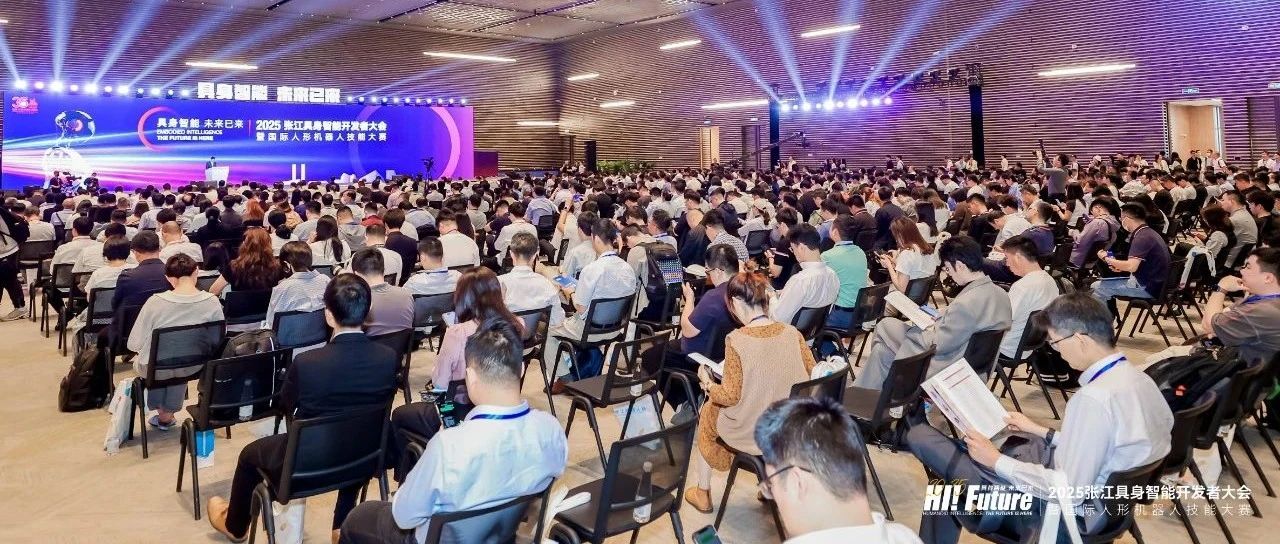
Core Viewpoint - The 2025 Zhangjiang Embodied Intelligence Developer Conference and International Humanoid Robot Skills Competition successfully took place, focusing on the theme "Embodied Intelligence, the Future is Here," showcasing over 200 key enterprises and 5,000 industry experts, emphasizing the acceleration of embodied intelligence technology into real-life applications [1]. Group 1: Event Overview - The event featured a new model combining a summit, competition, and exhibition, aimed at fostering technology implementation and ecosystem development [1]. - The conference was guided by the Shanghai Municipal Economic and Information Commission and supported by various institutions, including Shanghai Jiao Tong University and Agricultural Bank of China Shanghai Branch [1]. Group 2: Government Support and Policies - Shanghai's government officials highlighted the region's efforts to create an industrial cluster for embodied intelligence and humanoid robots, with policies to enhance supply chain cooperation and application across various sectors [2]. - The release of 16 policy measures aimed at supporting the high-quality development of the embodied intelligence industry was announced, focusing on innovation, application promotion, and talent support [2]. Group 3: Competition Highlights - The International Humanoid Robot Skills Competition is recognized as the most comprehensive and influential professional competition globally, showcasing the highest technical standards in the field [5]. - The competition includes five tracks covering 28 challenging scenarios, attracting over 60 top teams from various institutions [5]. Group 4: Application Challenges - The humanoid robot application scenario challenge demonstrated real-world application capabilities, with teams completing tasks in industrial and domestic settings [6]. - The embodied intelligence application scenario challenge showcased the technology's versatility across various environments, including industrial and commercial applications [6]. Group 5: Innovation and Collaboration - The establishment of the Embodied Intelligence Data Alliance aims to enhance data sharing and collaboration across sectors such as services, transportation, and healthcare [10]. - A partnership plan for a universal embodied intelligence development platform was launched, involving multiple organizations and universities to promote standardization and collaboration [10]. Group 6: Developer Engagement - The event included nine professional developer forums focusing on key areas such as data collection and application scenarios, promoting the development of humanoid robot data sets [11]. - Various activities, including signing ceremonies and workshops, were organized to enhance interaction among developers and showcase Shanghai's welcoming attitude towards global talent [13]. Group 7: Exhibition and Industry Growth - The humanoid robot innovation product exhibition attracted over 80 companies, covering 3,000 square meters and showcasing the latest technological achievements [15]. - Shanghai is committed to expanding the embodied intelligence industry, with initiatives like the establishment of a heterogeneous humanoid robot training ground and the launch of a super factory [15]. Group 8: Future Development - The event emphasized the importance of driving industry development through practical applications and the establishment of a supportive environment for enterprises [16]. - Shanghai aims to continue fostering innovation in the embodied intelligence and humanoid robot sectors, contributing to the advancement of autonomous technology and industrialization [16].
2025国际人形机器人技能大赛召开 业内呼吁理性包容机器人行业“成长的烦恼”
Zheng Quan Shi Bao Wang· 2025-05-29 14:07
以"具身智能,未来已来"为主题的2025张江具身智能开发者大会暨2025国际人形机器人技能大赛5月29 日在上海浦东张江举行。2025国际人形机器人技能大赛设置5大赛道,覆盖28个高难度场景,60余支顶 尖参赛队伍和国内外参赛选手共同参赛。本次大赛旨在于集中展示人形机器人解决实际问题的能力和场 景应用落地能力,助力机器人产业向"能看、会说、有智商"进阶。 国家地方共建人形机器人创新中心首席科学家江磊在接受证券时报记者采访时表示,上海聚焦人形机器 人在生产制造、服务场景中的实际应用,强调 "解决实际问题"。本次大赛设定商超、药店、工业制造 等真实场景任务,以场景驱动行业回归实用。江磊说,公众需以包容的心态看待机器人行业发展现状。 行业的快速发展仅有三年左右时间,如同"三岁儿童",需给予它更长的时间发育。 参赛者:理性看待机器人行业发展进度 当天,上海开普勒K2"大黄蜂"团队、北京理工大学急行智学团队、清华大学紫荆战队等60余支顶尖参 赛队伍和国内外参赛选手,在9个比赛场地同步展开激烈角逐。 记者了解到,此次赛事的所有项目均源自企业实际需求,每个赛道都还原了真实应用场景,总体难度较 大。因此,机器人未能完成任务并 ...
