
Rokid

Search documents
Manus收入营收率达 9000万美元;美团旗下外卖品牌Keeta在卡塔尔上线;长城汽车巴西工厂竣工投产|一周大公司出海动态
Tai Mei Ti A P P· 2025-08-24 06:01
Group 1 - Manus AI's Revenue Run Rate (RRR) has reached $90 million, with expectations to exceed $100 million soon [1] - Manus is collaborating with Stripe to enable payments within their Agent platform, aiming to create a seamless "research-decision-order/settlement" process [1] Group 2 - Haier Biomedical signed a strategic cooperation agreement with RAM Medical Group in Thailand, focusing on pharmacy automation and smart healthcare [2] - This partnership marks a significant step in Haier's "one country, one policy" overseas strategy in Southeast Asia, targeting a market of 670 million people [2] Group 3 - Lenovo Group is establishing a regional headquarters in Riyadh, Saudi Arabia, as part of its strategic cooperation with the Public Investment Fund [2] - This move supports Saudi Arabia's Vision 2030 and aims to enhance Lenovo's local leadership and operational capabilities [2] Group 4 - Rokid Glasses, an AI+AR product, has received 300,000 global orders and launched its overseas version in Hong Kong [3] - This launch is a key milestone in Rokid's global expansion strategy [3] Group 5 - Meituan's international delivery brand Keeta has officially launched in Doha, Qatar, with plans to expand into Brazil in the coming months [4] Group 6 - Leap Motor has exported 24,980 vehicles in the first seven months of 2025, leading the new energy vehicle export rankings in China [5] - The company is accelerating its global expansion, with a new ship designed for car transport set to deliver over 2,500 vehicles to Europe [5] Group 7 - Zhaowei Electromechanical plans to invest $10 million in a new production base in Thailand, enhancing its international market presence [7] Group 8 - XGIMI's first projector from its Vietnam factory has officially rolled off the production line, with an investment of $14 million and an annual capacity of 1 million units [8] - The factory is a crucial part of XGIMI's global supply chain and is expected to drive significant growth in overseas revenue [8] Group 9 - Great Wall Motors' factory in Brazil has been completed and is set to produce 50,000 vehicles annually, focusing on smart and electric models [9] - This factory represents a comprehensive strategic layout for Great Wall Motors in the Brazilian market [9] Group 10 - China Zhongwei New Materials has established a joint venture with Germany's Revomet, acquiring a 25% stake in Revomet Bitterfeld GmbH [10] - This partnership is part of Zhongwei's broader global expansion strategy [10] Group 11 - Ganfeng Lithium is collaborating with Lithium Argentina AG to develop three lithium salt lake projects in Argentina, with a planned annual capacity of 150,000 tons of lithium products [11][12] - Ganfeng International will provide up to $130 million in financial support for this project [12] Group 12 - Temasek led a strategic financing round for TOP TOY, a潮玩 brand under Miniso, achieving a post-investment valuation of approximately HKD 10 billion [13] - TOP TOY generated revenue of 400 million yuan in Q2, with a total of 293 stores [13]

AI眼镜概念股走高 重点关注相关领域投资机遇
Di Yi Cai Jing· 2025-08-20 05:10
Core Viewpoint - The AI glasses concept stocks have seen significant gains, driven by a new implementation plan from Shanghai's economic and information technology departments aimed at accelerating the development of "AI + manufacturing" [1] Group 1: Stock Performance - AI glasses concept stocks have risen, with companies like Yian Technology and Chipone Technology increasing by over 10%, while Kosen Technology and Sanan Optoelectronics reached their daily limit up [1] - Other companies such as Longli Technology, Crystal Optoelectronics, and Aiwei Electronics also experienced notable increases [1] Group 2: Policy and Market Outlook - The Shanghai Municipal Economic and Information Commission, along with two other departments, released an implementation plan on the 19th, focusing on the iteration and upgrade of new intelligent consumer terminals like AI computers, AI glasses, and AI phones [1] - CICC's research report highlights recent product launches and mass production from brands like Xiaomi, Meta, and Rokid, indicating a positive outlook for AI glasses equipped with display modules to enhance interaction efficiency [1] - The report suggests that advancements such as dual-chip and dual-system architectures could extend battery life and enhance spatial computing capabilities, potentially creating a new interactive experience for AI terminals [1] - There is a recommendation to focus on investment opportunities in the AI/AR glasses sector [1]
2025上半年AR智能眼镜出货量显著:雷鸟创新、XREAL、星纪魅族前三
Feng Huang Wang· 2025-08-20 02:50
Core Insights - The online retail volume of smart devices in Chinese living rooms is projected to reach 35.231 million units in the first half of 2025, representing a year-on-year increase of 8.4% [1] - The total retail sales value is expected to hit 52.98 billion yuan, reflecting a year-on-year growth of 12.2% [1] Market Performance - Demand for large-screen devices, specifically smart projectors and smart TVs, is currently weak [1] - The VR market is experiencing sluggish consumption due to technological limitations and a lack of content, while AR products have shown significant improvements in portability, practicality, and cost-effectiveness [1] - The AR market is led by companies such as Thunder Innovation, XREAL, Starry Sky Meizu, VITURE, and Rokid [1] Product Launches - Xiaomi has officially launched its highly anticipated AI glasses on June 26, with the electrochromic model selling out quickly, and projected sales for 2025 are estimated at 300,000 units [1]
中金公司:重点关注AI/AR眼镜相关领域投资机遇
Mei Ri Jing Ji Xin Wen· 2025-08-19 00:09
Core Viewpoint - Recent product launches and mass production by brands such as Xiaomi, Meta, and Rokid indicate a growing trend in the AI/AR glasses market, suggesting potential investment opportunities in this sector [1] Group 1: Industry Trends - The report highlights the expectation of more AI glasses equipped with display modules to enhance interaction efficiency [1] - There is a focus on dual-chip and dual-system architectures to extend battery life and improve spatial computing capabilities [1] - The development of these technologies is anticipated to create a new AI terminal interaction experience [1] Group 2: Investment Opportunities - The report suggests a strong emphasis on investment opportunities within the AI/AR glasses sector [1]

蓝思科技散热技术核心布局:消费电子/AI设备/智能汽车多领域创新
Quan Jing Wang· 2025-08-18 07:44
Group 1: Core Technology Layout - The company focuses on high thermal conductivity materials for applications in consumer electronics, providing ultra-thin glass covers and sapphire ceramic components for smartphones and foldable screens, enhancing surface heat dissipation and structural stability [1] - In the smart automotive sector, the company supplies glass components for smart cockpits to automakers like Tesla and BYD, integrating thermal conductive coatings to reduce electronic device temperatures, with graphene composite coating technology improving thermal efficiency by 40% [1] Group 2: AI Device Cooling Solutions - For high-end laptops, the company produces advanced cooling solutions using piezoelectric fans that enhance heat exchange through high-frequency vibrations, significantly increasing value compared to traditional cooling modules [2] - The company provides nano-microcrystalline glass lenses for AI glasses, achieving over 95% light transmittance and improved impact resistance, supporting lightweight designs [2] - For humanoid robots, the company supplies joint modules and force control sensors using high-strength lightweight materials like ceramic composites to reduce heat generation in moving parts [2]

看一眼就付钱!AI眼镜开启新支付革命,何时走出智能手机叙事框架
Hua Xia Shi Bao· 2025-08-15 16:38
Core Insights - The article discusses the evolution of payment methods in the context of AI and AR glasses, highlighting a new feature called "Look and Pay" introduced by Thunder Innovation in collaboration with Ant Group [1][2] - The integration of payment functionality is seen as a crucial step in connecting various scenarios and making smart glasses more relevant in daily life, although it is not expected to lead to a significant sales increase on its own [1][2][5] Payment Functionality - Thunder Innovation's AI glasses, Thunder X3 Pro, are the first globally to support "Look and Pay" with Alipay, allowing users to complete payments by simply looking at a payment code [2][3] - The payment feature will be expanded to other models, including Thunder V3 and V3 Slim, aiming to enhance market penetration of AI and AR glasses [2] - Rokid has also launched a similar payment feature with its smart glasses, allowing users to make payments through voice commands, indicating a trend among various companies to adopt this functionality [3][5] Market Dynamics - The entry of major players like Apple, Xiaomi, and Alibaba into the AR space is viewed positively by companies like Rokid, as it helps in market education and user awareness [4] - Despite the competition, companies see collaboration with large firms as beneficial for overall market growth rather than direct competition [4] Consumer Adoption Challenges - The current offerings of AI glasses do not meet the broader needs of consumers, as payment functionality alone is not a decisive factor for purchase; overall user experience, comfort, and diverse applications are critical [5][6] - The payment feature is considered an enhancement rather than a core driver of consumer interest, with companies emphasizing the need for a comprehensive ecosystem of services [6][9] Future Outlook - AI glasses are seen as potential successors to smartphones, but they currently rely heavily on smartphone connectivity and functionality [7][8] - Companies believe that the unique advantages of AI glasses, such as integrated health monitoring and advanced AI capabilities, could eventually lead to a shift in consumer behavior, although this transition is not expected to happen quickly [9][10] - IDC forecasts that by 2025, the shipment of smart glasses in China will reach 2.75 million units, a significant increase but still a fraction of smartphone shipments, indicating a long road ahead for widespread adoption [10]


对话Rokid邵华强:阿里、小米卷入“百镜大战”,Rokid如何应对?
Xin Lang Ke Ji· 2025-08-15 08:27
Core Insights - Rokid has launched the overseas version of Rokid Glasses that supports Cantonese and is now available in Hong Kong, aiming to deepen its presence in the Hong Kong and Asia-Pacific markets while promoting the adoption of AI and AR technologies [1] - The international business head of Rokid, Shao Huaqiang, views the entry of major companies like Alibaba and Xiaomi into the AI glasses market as a positive development that will enhance the industry's growth [1] - The AR/AI glasses industry has evolved significantly, moving from initial product failures due to an immature supply chain and high market education costs to a competitive landscape driven by major players investing heavily in the sector [1] - Despite Meta's substantial financial losses, estimated in the hundreds of millions of dollars, the company’s efforts have accelerated industry advancements, leading to a "hundred glasses battle" [1] - The complexity of developing AI glasses is highlighted, with current Shenzhen manufacturers facing challenges in delivering viable products, while Rokid claims to be the first to mass-produce lightweight, fully functional AI and AR glasses due to its decade-long experience [1]

下半年AI眼镜有望加速,消费电子ETF(561600)涨超0.6%
Xin Lang Cai Jing· 2025-08-15 02:12
Group 1 - Alibaba has initiated a recruitment drive for nearly a thousand positions, focusing on consumer-facing businesses such as Quark, Tongyi, and AI glasses [1] - The market outlook for AI smart glasses is optimistic, with expectations of global sales surpassing 5.5 million units by 2025, driven by the upcoming launches from major tech companies like Meta, Alibaba, Rokid, Samsung, and Li Auto [1] - The sustained interest in the AI smart glasses market, combined with strong sales growth and the release of new AI+AR glasses products, is expected to significantly boost annual sales beyond initial forecasts [1] Group 2 - The CSI Consumer Electronics Theme Index tracks 50 listed companies involved in component production and consumer electronics, reflecting the overall performance of the sector [2] - As of July 31, 2025, the top ten weighted stocks in the CSI Consumer Electronics Theme Index account for 51.57% of the index, including companies like Luxshare Precision, SMIC, and BOE Technology Group [2] - The Consumer Electronics ETF closely follows the CSI Consumer Electronics Theme Index and includes various connection products for investors [2]
AI眼镜的成人礼在于支付
3 6 Ke· 2025-08-14 10:22
Core Insights - The year 2025 is anticipated to be the "Year of AI Glasses," with multiple manufacturers like Rokid, Meizu, Quark, Xiaomi, and Thunderbird launching new smart glasses in rapid succession, focusing on various functionalities but converging on payment capabilities [1][2][8] - The introduction of payment features is seen as a critical factor for the mainstream adoption of smart glasses, transforming them from niche gadgets to everyday tools [2][7][15] Group 1: Payment as a Key Feature - Payment functionality is emerging as a significant driver for user adoption, with smart glasses integrating with platforms like Alipay for seamless transactions [1][5][8] - The average adult initiates over 10 payment actions daily, making the "look and pay" feature of smart glasses a natural fit for daily life [3][7] - The integration of payment capabilities is expected to accelerate the frequency of use and user base growth, similar to the impact of Apple Pay on the Apple Watch [7][8] Group 2: Technological Maturity and User Experience - Two main barriers to widespread adoption are technological maturity and the establishment of high-frequency usage scenarios [2][14] - Recent advancements have improved the weight, battery life, and display stability of smart glasses, making them more comfortable for prolonged use [2][10] - The industry is focusing on integrating practical features like navigation and payment to create compelling reasons for users to wear smart glasses regularly [2][3] Group 3: Competitive Landscape and Market Dynamics - Chinese manufacturers are leading the charge in embedding payment functionalities into smart glasses, capitalizing on the country's advanced digital payment infrastructure [8][9] - The structural differences in payment systems between China and the West create a unique advantage for Chinese companies in the smart glasses market [9][10] - The rapid ecosystem development in China allows for quick adaptation and scaling of new features, enhancing the competitive edge of local brands [11][13] Group 4: Future Growth and Market Potential - The global smart glasses market is projected to see significant growth, with sales expected to reach 3.5 million units in 2025, a 230% increase year-on-year [14] - Despite the promising growth rates, smart glasses still face challenges in user habit formation, product optimization, and trust in security mechanisms [14][15] - Payment capabilities are viewed as a gateway to activating a broader ecosystem of services and applications, positioning smart glasses as integral to user interaction with AI [15]

Rokid Glasses智能眼镜将在中国香港开售
Bei Jing Shang Bao· 2025-08-14 03:45
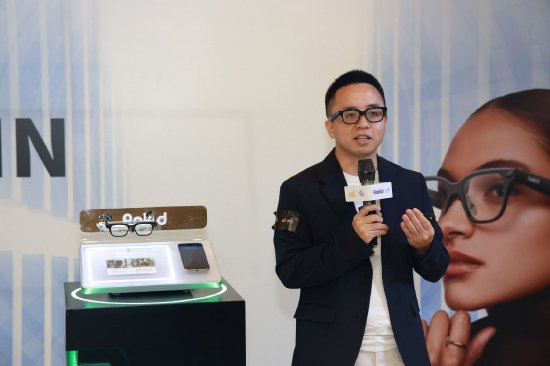
北京商报讯(记者陶凤实习记者王天逸)8月13日,Rokid举办Rokid Glasses中国香港发布会,正式宣布公 司支持广东话(粤语)的智能眼镜Rokid Glasses(海外版)将在中国香港开售。 Rokid方面向北京商报记者表示,该款智能眼镜侧重亚太地区,海外市场现已成为公司的"重要着力 点"。 ...