
京东健康

Search documents
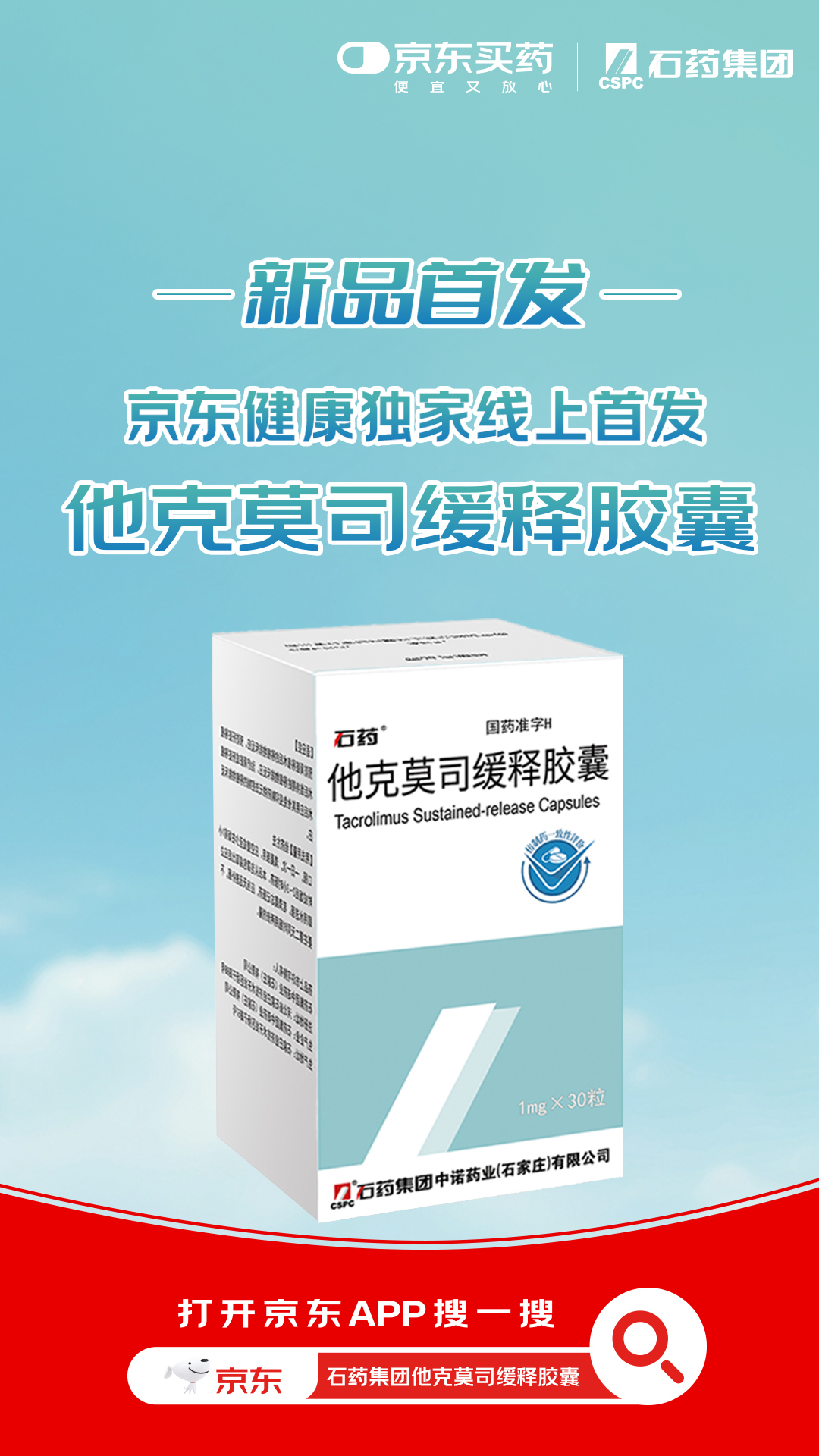
石药集团新药他克莫司缓释胶囊在京东健康全网首发
Zhong Jin Zai Xian· 2026-01-20 09:18
Core Viewpoint - The launch of the Tacrolimus extended-release capsules by Shiyao Group on JD Health represents a significant advancement in immunosuppressive therapy for organ transplant patients, offering a more convenient and stable treatment option [1][3]. Group 1: Product Launch and Features - The Tacrolimus extended-release capsules are designed to prevent transplant rejection in kidney and liver transplant patients, providing a safer and more effective immunosuppressive treatment [1]. - This new formulation allows for once-daily dosing, a shift from the traditional twice-daily regimen, which helps to stabilize drug concentration levels in the body and reduce the risk of side effects [3]. Group 2: Patient Benefits and Support - The extended-release formulation is expected to improve medication adherence and reduce patient burden, ultimately enhancing long-term treatment safety and protecting transplant kidney function [3]. - JD Health's comprehensive supply chain and online pharmacy services ensure that this specialized medication reaches patients efficiently and safely, while also offering online follow-up consultations and medication guidance [3]. Group 3: Future Plans - JD Health aims to collaborate with leading global pharmaceutical companies to introduce more innovative treatment options and provide a full spectrum of healthcare services, enhancing the quality of life for patients [4].

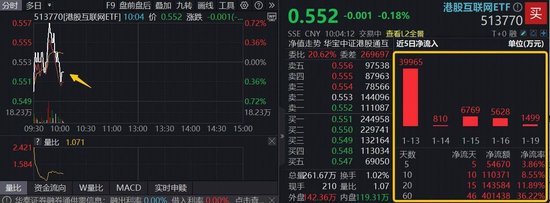
港股AI延续跌势,港股互联网ETF(513770)连续10日吸金逾11亿元,基金经理:回调后又有好的配置机遇
Xin Lang Cai Jing· 2026-01-20 02:27
Core Viewpoint - The Hong Kong stock market continues to show volatility, particularly in AI-related stocks, with major companies like Tencent and Alibaba experiencing declines, while the Hong Kong Internet ETF (513770) has seen significant inflows despite recent fluctuations [1][9]. Market Performance - On January 20, the Hong Kong stock indices opened lower, with AI stocks initially rising before retreating. Tencent Holdings fell over 1%, and other major players like Alibaba, Kuaishou, Xiaomi, and Bilibili followed suit [1][9]. - The Hong Kong Internet ETF (513770) briefly rose by 0.72% but is currently down by 0.18%, with a notable premium observed during trading [1][9]. - Over the past 10 days, the Hong Kong Internet ETF has attracted over 1.1 billion yuan in inflows [1][9]. Investment Insights - According to fund manager Cao Xuchen, the recent pullback in the Hong Kong Internet ETF may present new investment opportunities, driven by the acceleration of AI advancements [9]. - Morgan Stanley forecasts a brighter future for AI development by 2026, driven by both supply and demand factors, with internet companies expanding overseas to mitigate macroeconomic and geopolitical risks [9]. - Goldman Sachs anticipates that 2026 will mark a strategic turning point for leading Chinese internet companies, with Alibaba projecting that 60%-70% of routine tasks in the digital world will be performed by AI in the next two years [9][10]. ETF Composition - The Hong Kong Internet ETF (513770) passively tracks the CSI Hong Kong Internet Index, with Alibaba being the largest holding at 14.71%. The top ten holdings, which include Tencent, Xiaomi, Kuaishou, and Bilibili, account for nearly 77% of the ETF [10][11]. - As of January 16, the fund size of the Hong Kong Internet ETF reached a record high of 14.637 billion yuan, with an average daily trading volume exceeding 600 million yuan since 2025 [11]. Additional Investment Options - For investors looking to reduce volatility while still gaining exposure to technology, the Hong Kong Large Cap 30 ETF (520560) is recommended, which combines high-growth tech stocks with stable dividend-paying companies [11].
中国创新药2025年出海交易超1300亿美元,港股医药ETF(159718)备受关注
Xin Lang Cai Jing· 2026-01-20 02:24
Core Viewpoint - The Chinese innovative drug business development (BD) for overseas licensing reached a record high of $135.655 billion in total transaction value for 2025, with a significant increase in upfront payments and transaction numbers compared to previous years [1][2]. Group 1: Market Performance - The China Securities Hong Kong Stock Connect Pharmaceutical and Health Comprehensive Index (930965) showed mixed performance among its constituent stocks, with Times Angel leading at a 4.83% increase [1]. - The Hong Kong pharmaceutical ETF (159718) was quoted at 0.96 yuan [1]. Group 2: Industry Developments - The innovative drug BD overseas licensing transactions in China for 2025 totaled $135.655 billion, with upfront payments of $7 billion and 157 transactions, all marking historical highs [2]. - Notable collaborations include Rongchang Biopharma's PD-1/VEGF dual antibody RC148 receiving a $650 million upfront payment from AbbVie, and Yilian Biopharma's partnership with Roche on B7H3-targeted ADC [2]. - GSK's Bepirovirsen for chronic hepatitis B showed positive results in Phase III trials, and Arrowhead announced advancements in RNAi therapies for weight loss, validating the clinical value of small nucleic acid drugs [2]. Group 3: Investment Outlook - The 44th Annual J.P. Morgan Healthcare Conference revealed positive updates from leading global pharmaceutical companies, with significant BD transactions and improved forecasts from CXO companies like WuXi AppTec [2]. - The global pharmaceutical industry remains robust, with innovation in drugs and medical devices continuing to be the main investment theme [2].


GEO在医药数字化营销行业的应用及前景
2026-01-20 01:50
Summary of Conference Call Records Industry Overview - The pharmaceutical marketing industry is shifting from traffic competition to value provision, emphasizing full-process empowerment for patients, including chronic disease and health management. Digital marketing investment is expected to grow significantly, reaching 24% by 2025 [1][5][14]. Key Insights and Arguments - **Unique Position of GO in Pharmaceuticals**: GO has a unique position in the pharmaceutical field, where AI models can provide professional consultation but cannot replace the prescription authority of doctors. Pharmaceutical companies may utilize AI models for advertising, with some already experimenting with this approach [1][4]. - **Digital Marketing Metrics**: Advertisers focus on GMV (Gross Merchandise Volume), sales, and ROI (Return on Investment), while brand owners emphasize supply chain value and patient lifecycle value, shifting from CPC (Cost Per Click) to the value of each lead [1][6]. - **Efficiency Improvement through Digitalization**: Medical platforms enhance management efficiency for doctors and patients by providing educational resources, patient management functions, and innovative online payment methods, as well as supporting home services [1][7][8]. - **Major Players**: Key players in digital marketing include large internet healthcare platforms like JD Health and Alibaba Health, which focus on supply chain value and comprehensive patient management rather than just product sales [1][5]. Additional Important Content - **Growth of Digital Marketing**: The scale of digital marketing is expanding, with growth rates projected at 18.7% in 2023, 24% in 2024, and 19%-20% in 2025. The share of GO is expected to increase from 22% in 2023 to 41% in 2025 [1][5]. - **JD Health's New Drug Launch Platform**: JD Health aims to create a new drug launch platform supported by AI laboratories, with new drug launches expected to account for 30% of the overall budget and a gross profit margin of about 10% to 12% [1][17]. - **Impact of New Products**: The recent launch of new products by JD Health and Alibaba Health aims to better serve doctors and hospitals, enhancing data systematization and patient management [1][11][12]. - **Future Growth Trends**: Digital marketing is expected to maintain a strong growth trend over the next three years, with annual growth rates projected to exceed 30% due to changes in operational models that deepen the integration of pharmaceutical companies and major platforms [1][14]. - **Compliance in Content Generation**: JD Health employs a dynamic monitoring system to ensure compliance in generating healthcare content, utilizing blockchain technology to meet regulatory requirements [1][20]. - **Challenges in AI Development**: The development of AI technology in internet healthcare faces challenges, including strict data regulations and the need for real-time updates to AI models due to evolving medical research and treatment methods [1][21]. Competitive Landscape - **Competition with Other Platforms**: JD Health competes with platforms like Doubao and Qianwen, which rely on open interfaces and lack real-time supply chain data. JD Health's advantage lies in its comprehensive data and services [1][18]. - **Flow Doubling Strategy**: JD Health's flow doubling plan has significantly increased user engagement, with average user time rising from 2.1 minutes to 8 minutes and conversion rates improving by 2.5 times [1][22][23]. - **Digital Marketing Profit Margins**: JD Health's digital marketing gross profit margin typically ranges from 50% to 60%, although not all services achieve this level of profitability [1][15][16]. Conclusion - The pharmaceutical digital marketing landscape is evolving rapidly, with significant investments in technology and innovative strategies to enhance patient engagement and operational efficiency. JD Health and Alibaba Health are at the forefront of this transformation, leveraging AI and digital platforms to capture market share and improve service delivery.
阿里健康上线首个自研医学大模型;江中药业证券简称变为华润江中
2 1 Shi Ji Jing Ji Bao Dao· 2026-01-20 00:51
Policy Developments - The State Administration for Market Regulation has approved the national standard for "Classification and Determination of Traditional Chinese Medicine Constitution," which will be implemented from April 1. This standard categorizes nine basic types of TCM constitution and aims to enhance health literacy and optimize health service models [2]. Medical Device Approvals - Opcon Vision's application for the registration of "soft hydrophilic contact lenses" has been accepted by the National Medical Products Administration, currently in the acceptance phase [4]. - Livzon Pharmaceutical announced that its clinical trial application for injectable brexpiprazole microspheres for treating schizophrenia has been accepted by the National Medical Products Administration [5]. Capital Markets - AstraZeneca will acquire the remaining 50% equity of Westman Biotech's GPC3 armored CAR-T therapy in China, with a potential payment of up to $630 million, including upfront and milestone payments [7]. - Aote Biological's controlling shareholder has proposed a share buyback plan using funds from its IPO, with a total amount between RMB 100 million and RMB 200 million [8]. Industry Developments - Alibaba Health has launched its self-developed AI medical model "Hydrogen Ion," which is now in practical application, targeting clinical and research fields. This move complements Alibaba's existing health service strategies [10][11]. - Jiangzhong Pharmaceutical has changed its name to "China Resources Jiangzhong Pharmaceutical Co., Ltd." and will also change its stock abbreviation to "China Resources Jiangzhong," while keeping the stock code unchanged [12]. Shareholder Actions - Liaoning He Eye Hospital Group has received a notice from a major shareholder planning to reduce its stake by up to 3,106,074 shares, representing 1.97% of the total share capital, between February 7 and May 6, 2026 [14].





医院需要办实事的AI
Sou Hu Cai Jing· 2026-01-19 15:03
Core Viewpoint - The article discusses the ongoing debate in the medical AI sector regarding whether AI can fully replace doctors or simply enhance their capabilities, highlighting the need for practical AI solutions that address real-world challenges in healthcare [2][3]. Group 1: Market Trends and Developments - The Hong Kong stock market has seen a surge in AI medical concepts since the beginning of the year, driven by various initiatives from major companies like Ant Group and Alibaba, which have heightened investor interest in the sector [2]. - A significant debate has emerged in the industry, particularly after Zhang Wenhong, director of the National Center for Infectious Disease Medicine, expressed his refusal to integrate AI into his hospital's electronic medical record system, reigniting discussions on AI's role in healthcare [2]. Group 2: Company Initiatives and Strategies - JD Health has positioned itself on the side of practical solutions, emphasizing the importance of AI that can genuinely alleviate burdens for healthcare providers and improve patient experiences [3][4]. - At the recent "Annual Doctor Ceremony" and "Smart Medical Conference," JD Health introduced "JD Zhuoyi 2.0" for hospitals and the AI tool "Zhi Yi" for doctors, establishing a dual empowerment matrix targeting both healthcare providers and institutions [4][6]. Group 3: AI Application and Solutions - JD Health's CEO, Cao Dong, articulated a focus on three core issues: reducing the workload for healthcare providers, enhancing diagnostic quality, and improving patient experiences through AI [6]. - The company has identified three major pain points in hospitals: clinical nutrition management, medication supply issues, and chronic disease management, which have informed the development of its "JD Zhuoyi 2.0" system [7][9]. Group 4: Specific Solutions Offered - The "JD Zhuoyi 2.0" system addresses clinical nutrition management by providing an AI-driven solution that streamlines the entire process from outpatient to inpatient care, significantly reducing patient hospital visits and improving nutritional management [10]. - For medication services, the system utilizes AI to manage prescription reviews and follow-ups, ensuring compliance and improving the efficiency of medication delivery [12]. - In weight management, the system identifies individuals needing intervention and offers personalized plans, aiming to cover 80% of high-risk patients through digital tracking and support [12]. Group 5: AI Product Development - The "Zhi Yi" product aims to serve as an intelligent assistant for doctors, integrating a vast database of medical literature and guidelines to enhance clinical decision-making and research capabilities [15][16]. - Recent tests have shown that "Zhi Yi" outperformed competitors in confidence levels and coverage of reference materials, addressing concerns about the accuracy of AI in medical applications [16]. Group 6: Long-term Vision and Market Positioning - JD Health's strategy emphasizes long-term investment and compliance, aiming to create a sustainable value proposition rather than chasing short-term gains [22]. - The company adopts a business model that combines free tools for doctors with value-added services and supply chain revenue, fostering a cycle of value creation and revenue sharing [22]. - The overarching goal is to integrate AI into hospital operations effectively, ensuring that it serves as a practical tool rather than an additional burden for healthcare providers [22].

医院需要办实事的AI
虎嗅APP· 2026-01-19 13:53
Core Viewpoint - The article discusses the ongoing debate in the medical AI sector regarding whether AI can fully replace doctors or enhance their capabilities, highlighting the need for practical AI solutions that address real-world challenges in healthcare [2][3]. Group 1: AI in Healthcare Market Trends - The Hong Kong stock market has seen a surge in AI medical concepts since the beginning of the year, driven by significant updates from companies like Ant Group and Alibaba, which have heightened investor interest in the sector [2]. - There is a clear division in the industry, with some companies focusing on consumer-facing solutions while others target operational efficiencies within hospitals [2][3]. Group 2: JD Health's Approach - JD Health has positioned itself on the side of practical solutions, launching "JD Zhaoyi 2.0" aimed at empowering hospitals and doctors through AI tools [4][6]. - The CEO of JD Health emphasized that the focus should be on reducing the burden on healthcare providers, improving diagnostic quality, and enhancing patient experience [6]. Group 3: Identified Pain Points in Healthcare - JD Health's research identified three major challenges in hospitals: inadequate clinical nutrition management, issues with outpatient medication continuity, and difficulties in chronic disease management [9][11]. - The average incidence of nutritional risk among hospitalized patients is reported at 23.3%, with over 50% of cancer patients experiencing malnutrition [11]. Group 4: JD Zhaoyi 2.0 Solutions - JD Zhaoyi 2.0 offers three key solutions: clinical nutrition management, pharmaceutical services, and weight management, creating a comprehensive response to hospital challenges [12][15]. - The clinical nutrition solution aims to streamline processes and reduce costs by utilizing AI to manage patient nutrition from admission to discharge [13]. Group 5: AI Product "Zhi Yi" - The "Zhi Yi" product was introduced to assist doctors by integrating a vast database of medical literature and guidelines, aiming to enhance clinical decision-making and research efficiency [20][21]. - "Zhi Yi" has shown high performance in tests, particularly in confidence levels and coverage of reference materials, addressing concerns about the accuracy of AI in medical applications [21][22]. Group 6: Long-term Strategy and Market Positioning - JD Health's strategy focuses on long-term investment and compliance, aiming to create a sustainable value proposition rather than chasing short-term gains [28][29]. - The company employs a business model that combines free tools for doctors with value-added services and supply chain revenue, fostering a cycle of value creation and revenue sharing [28][29].

巨头竞逐医疗AI,如何重塑行业发展逻辑?
2 1 Shi Ji Jing Ji Bao Dao· 2026-01-19 12:25
Core Insights - Artificial Intelligence (AI) is becoming a core force driving a new wave of technological revolution and industrial transformation in the healthcare sector, injecting strong momentum for high-quality development [1][2] - The medical AI sector is a competitive battleground for internet healthcare companies and tech firms, with significant advancements and product launches from major players like JD Health and Alibaba Health [1][4][5] Company Developments - JD Health launched the "Zhi Yi" evidence-based medicine AI tool for doctors and the 2.0 version of "JD Zhuo Yi," aiming to transform patient service processes and become a new growth engine for hospitals [1][4] - JD Zhuo Yi 2.0 integrates JD Health's "AI + supply chain" capabilities, providing a comprehensive management solution covering clinical nutrition, outpatient medication, and weight metabolism [4] - Alibaba Health introduced its first self-developed medical large model "Hydrogen Ion," focusing on low hallucination rates and high evidence-based capabilities, now in practical application for clinical and research doctors [5][6] Market Trends - The AI healthcare market in China reached 97.3 billion yuan in 2023 and is expected to grow to 159.8 billion yuan by 2028, indicating a shift from conceptual hype to value realization [11] - The integration of AI in healthcare is expected to significantly change the behavior patterns of hospitals, clinicians, and patients, moving towards long-term health management rather than one-time treatments [7][8] Challenges and Considerations - The successful implementation of AI in healthcare faces challenges such as data quality issues, data silos, and the need for improved regulatory frameworks [9][10] - The quality of AI medical products is heavily dependent on the quality and accuracy of training data, necessitating a robust data governance mechanism [9] - Balancing technological functionality with humanistic care is crucial, as AI should enhance the patient experience while ensuring efficient clinical decision-making [10]

巨头竞逐医疗AI 如何重塑行业发展逻辑?
2 1 Shi Ji Jing Ji Bao Dao· 2026-01-19 12:21
Core Insights - Artificial Intelligence (AI) is becoming a core force driving a new round of technological revolution and industrial transformation in the healthcare sector, injecting strong momentum for high-quality development [1] - The medical AI sector is a competitive battleground for internet healthcare companies and technology firms, with significant advancements and product launches occurring [1][2] Company Developments - JD Health launched the "Zhuoyi" 2.0 version, aiming to become a new growth engine for hospitals, having already served over 5 million patients [2][3] - Alibaba Health introduced its first self-developed medical model "Hydrogen Ion," focusing on low hallucination rates and high evidence-based capabilities, now in practical application [3][4] - OpenAI has launched a healthcare version of ChatGPT, which is being deployed in various institutions to enhance patient care [5][4] Industry Trends - The healthcare industry is entering a new phase that demands high quality, efficiency, and sustainability, with AI technology providing new possibilities [2] - The integration of AI in healthcare is shifting patient behavior from single-instance treatment to long-term health management, indicating a transition to continuous healthcare [7][10] - The AI healthcare market in China reached 97.3 billion yuan in 2023 and is projected to grow to 159.8 billion yuan by 2028, marking a shift from conceptual hype to value realization [10] Challenges and Considerations - The successful implementation of AI in healthcare requires addressing data quality issues, regulatory frameworks, and ensuring a balance between technological functionality and humanistic care [8][9] - Companies must collaborate deeply with healthcare institutions to optimize AI models and workflows, creating a mutually beneficial relationship [8][10]
百川智能打赢OpenAI,AI圈“惨王”王小川杀回来了
Xin Lang Cai Jing· 2026-01-19 09:56
Core Viewpoint - Wang Xiaochuan's reputation has changed after a period of silence, as he refocuses Baichuan Intelligent on AI healthcare, which he considers his primary passion, while the company prepares for an IPO in 2027 [3][8]. Financial Status - Baichuan Intelligent currently has a cash reserve of 3 billion yuan and has raised a total of 5 billion yuan in funding, with a valuation of 20 billion yuan [3][10][29]. Product Development - The newly released medical model Baichuan-M3 achieved a score of 65.1 in the HealthBench evaluation, ranking first globally, and surpassed GPT-5.2 in the medical field [4][11]. - Baichuan-M3 also boasts the lowest hallucination rate globally at 3.5% [5]. Market Positioning - Baichuan Intelligent is shifting its focus back to AI healthcare after facing challenges in the B2B market due to competition from DeepSeek, leading to significant layoffs and the departure of key team members [12][14]. - The company aims to differentiate itself by emphasizing deep reasoning based on symbolic logic rather than just perception, positioning itself uniquely in the healthcare AI market [28][29]. Competitive Landscape - The AI healthcare market is highly competitive, with major players like Google, Microsoft, and domestic companies like Huawei and Ant Group heavily investing in this space [16][18][21]. - The market is projected to exceed 315.7 billion yuan by 2033, but faces challenges such as data privacy and ethical standards [26]. Challenges and Strategy - Baichuan Intelligent's strategy includes moving away from traditional B2B sales to focus on direct-to-consumer services, aiming to build value recognition from users [29]. - The company faces significant hurdles, including ensuring the reliability of AI health consultations and competing against major platforms like WeChat and Alipay [29].
