
太极股份

Search documents
产业大会即将召开,行业龙头预告新突破,国产操作系统有望加速渗透
Xuan Gu Bao· 2025-08-25 23:14
Core Insights - The China Operating System Industry Conference will be held on August 26, 2025, marking the launch of the new Galaxy Kirin Operating System V11, representing a significant breakthrough in China's operating system development [1] - The Ministry of National Security has highlighted security risks associated with foreign-produced chips, advocating for the use of domestically produced chips and operating systems in sensitive positions [1] - The Central Government Procurement Center issued a notice in March 2024 prioritizing the procurement of domestic CPUs and operating systems, indicating an acceleration in the adoption of domestic technology [1] Market Overview - According to Changjiang Securities, the Chinese operating system market is projected to reach a scale of 45 billion yuan by 2025, with the Xinchuang operating system market expected to reach 9.75 billion yuan, driving rapid revenue growth for domestic operating system vendors [1] - The competitive landscape of the domestic operating system market is expected to consolidate from a diverse array of players to a more focused ecosystem, with the operating system ecosystem becoming a decisive factor in competition [1] Competitive Landscape - In the Xinchuang market, Kirin Software and Euler are positioned with strong first-mover advantages in the PC and server segments, respectively, and are likely to further solidify their leading positions [1] - Huawei's Harmony OS is anticipated to leverage its mobile ecosystem to enhance its presence in the market [1] Key Players - The "national team" in the Xinchuang sector includes companies such as China Software, Dameng Data, China Great Wall, Haiguang Information, and Taiji Co., among others [1]

太极股份:公司与中昊芯英在天津移动TPU智算中心等项目中有合作
Zheng Quan Ri Bao· 2025-08-25 12:17
Group 1 - The company Taiji Co., Ltd. announced on August 25 that it is collaborating with Zhonghao Xinying on projects such as the Tianjin Mobile TPU Intelligent Computing Center [2] - The collaboration aims to advance the domestic computing power ecosystem to a higher level [2]


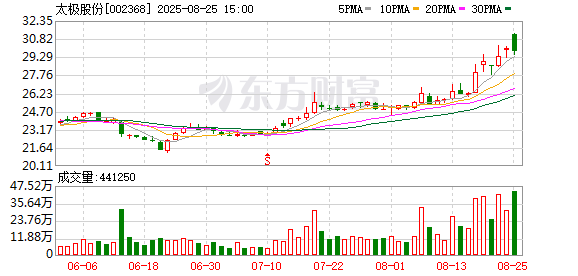
太极股份(002368.SZ):与中昊芯英在天津移动TPU智算中心等项目中有相关合作
Ge Long Hui· 2025-08-25 07:28
Group 1 - The company Taiji Co., Ltd. (002368.SZ) is collaborating with Zhonghao Xinying on projects such as the Tianjin Mobile TPU Intelligent Computing Center [1] - The partnership aims to advance the domestic computing power ecosystem to a higher level [1]
计算机行业周报:国产AI芯片,供需两旺-20250823
Shenwan Hongyuan Securities· 2025-08-23 15:08
Investment Rating - The report maintains a "Positive" outlook on the computer industry, indicating expectations for the sector to outperform the overall market performance in the coming months [2]. Core Insights - The domestic AI chip market is experiencing robust supply and demand, with significant developments from companies like DeepSeek, Huawei, and Cambricon, which are forming a comprehensive ecosystem for domestic chips [4][16]. - Key companies such as Kingsoft Office, JD Health, and Taiji Co. are showing strong performance, with Kingsoft's AI commercialization accelerating and JD Health exceeding revenue expectations [4][31][35]. - The report highlights the increasing capital expenditure among domestic internet giants, which is expected to drive demand for domestic computing power [25][27]. Summary by Sections Domestic AI Chips - The release of DeepSeek's V3.1 model emphasizes a shift towards domestic computing power, indicating a gradual transition from reliance on NVIDIA chips [4][6]. - Major domestic chip manufacturers like Huawei, Cambricon, and Haiguang are establishing their ecosystems, with Huawei's Ascend chips nearing the performance of NVIDIA's H100 [17][19]. - The report notes the importance of "super nodes" in AI computing, showcasing advancements in system-level integration and interconnectivity [13][15]. Key Company Updates - **Kingsoft Office**: Reported H1 2025 revenue of 2.66 billion, up 10.1% YoY, with AI-driven growth in its WPS365 platform [31][32]. - **JD Health**: Achieved H1 2025 revenue of 35.3 billion, a 25% increase YoY, driven by strong sales in pharmaceuticals and digital marketing [35][36]. - **Taiji Co.**: Focused on AI solutions for healthcare and legal sectors, with its "ZhiLing" medical AI solution recognized as a benchmark case in the industry [37][38]. Capital Expenditure Trends - Domestic internet giants are expected to increase their capital expenditures, with Q2 2025 showing a significant rise in spending, reflecting strong demand for AI cloud services [25][27][28]. - The report compares domestic and overseas capital expenditure intensity, noting that domestic firms have room for growth in this area [25][26]. Investment Targets - The report identifies several investment targets across different segments, including AIGC applications, digital economy leaders, and AI computing power providers [39].




研判2025!中国智慧应急行业产业链、相关政策及市场规模分析:智慧应急乘数字化东风强势崛起,中国方案借"一带一路"赋能全球安全治理[图]
Chan Ye Xin Xi Wang· 2025-08-23 02:06
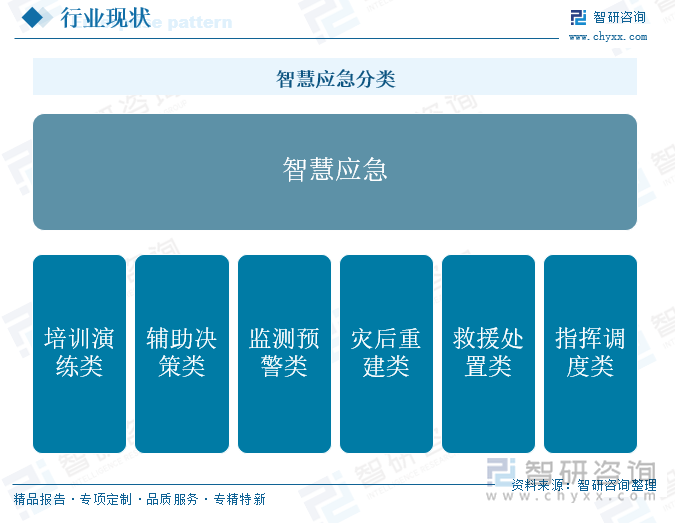
Core Viewpoint - The smart emergency industry in China is experiencing strong growth driven by digital transformation and increasing public safety awareness, with a projected market size of approximately 24.8 billion yuan in 2024, representing a year-on-year growth of 13.76% [1][12]. Industry Overview - Smart emergency refers to the use of modern information technologies (such as IoT, big data, cloud computing, and artificial intelligence) for the comprehensive management of emergency events, emphasizing efficiency and quality through information technology [1]. - The industry encompasses various segments including training, decision support, monitoring and early warning, post-disaster recovery, rescue operations, and command and dispatch [1]. Industry Value Chain - The upstream of the smart emergency industry includes hardware devices such as chips, sensors, electronic components, servers, drones, and robots, as well as software and technologies like operating systems, middleware, databases, cloud computing, big data, artificial intelligence, and digital twins [4]. - The midstream involves system integration and service, while the downstream applications are primarily in government and public services, industrial sectors, and urban communities [4]. Market Size - The smart emergency application industry in China is projected to reach approximately 24.8 billion yuan in 2024, with a year-on-year growth of 13.76%, driven by urbanization and the increasing frequency of natural disasters [12]. Key Companies' Performance - The competitive landscape of the smart emergency industry features a "leading enterprises + small and medium enterprises + cross-industry integration" model, with major players like Unicom Digital, Huawei, and Chen'an Technology holding significant market shares [14]. - Unicom Digital leads the smart emergency platform market, having connected 78% of provincial administrative regions through its national emergency management cloud platform [14]. - Chen'an Technology reported a revenue of 200 million yuan in Q1 2025, a year-on-year increase of 55.76%, while its net profit was -34 million yuan, up 41.32% [15]. - Tai Chi Technology's revenue in Q1 2025 was 1.396 billion yuan, a year-on-year decrease of 15.96%, with a net profit of 16 million yuan, down 0.42% [17]. Industry Development Trends 1. **Integration of Cutting-edge Technologies**: The smart emergency industry will accelerate technology integration, with advancements in virtual reality and quantum computing enhancing emergency management capabilities [19]. 2. **Innovation in Service Models**: New business models such as emergency insurance and social rescue will emerge, expanding the market space for emergency services [20]. 3. **Accelerated Globalization**: The globalization of China's smart emergency industry will enhance its international influence, with initiatives like the "Digital Silk Road" facilitating the export of monitoring and rescue systems [21].

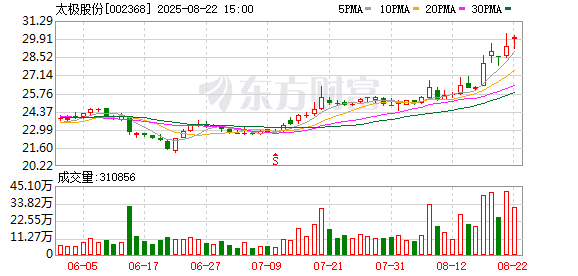
太极股份:主要业务为云与数据服务、自主软件产品、行业解决方案和数字基础设施
Zheng Quan Ri Bao Zhi Sheng· 2025-08-22 12:10
Core Viewpoint - The company, Taiji Co., focuses on cloud and data services, proprietary software products, industry solutions, and digital infrastructure, indicating a strong presence in the technology sector [1] Group 1: Business Overview - The main business areas of the company include cloud and data services, proprietary software products, industry solutions, and digital infrastructure [1] - In the cloud and data services segment, the company covers various fields such as government cloud, state-owned assets cloud, and trusted innovation cloud [1] - The company has been providing government cloud services for several years to regions including Beijing, Tianjin, and Hainan, showcasing its established market presence [1] Group 2: Infrastructure Development - The company has constructed the computing power infrastructure for government cloud services in certain regions, highlighting its role in building digital capabilities for local governments [1]
太极股份:截至2025年8月20日公司的股东户数为55615户
Zheng Quan Ri Bao· 2025-08-22 11:59
证券日报网讯太极股份8月22日在互动平台回答投资者提问时表示,截至2025年8月20日,公司的股东户 数为55615户。 (文章来源:证券日报) ...
研判2025!中国数据仓库软件行业产业链、市场规模及重点企业分析:“东数西算”叠加6G技术商用,数据仓库软件将成数字经济核心引擎赋能全行业转型[图]
Chan Ye Xin Xi Wang· 2025-08-22 01:28
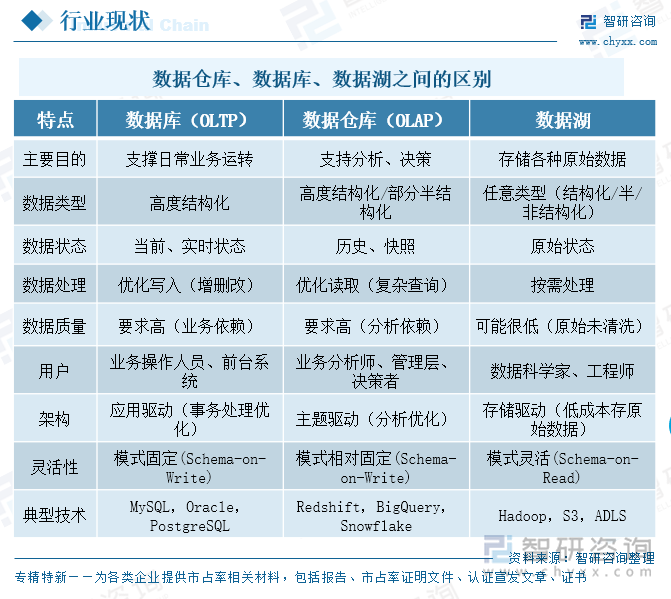
Industry Overview - The Chinese data warehouse software industry is experiencing rapid growth, with a market size projected to reach 7.784 billion yuan in 2024, representing a year-on-year increase of 13.83% [1][10] - Public cloud data warehouse software has surpassed on-premises solutions for the first time, indicating a shift towards cloud solutions as enterprises accelerate digital transformation [1][10] - The "East Data West Computing" initiative and the commercialization of 6G technology are expected to further enhance the role of data warehouse software as a core engine of the digital economy [1][10] Market Size - The market size of the data warehouse software industry in China is expected to be 7.784 billion yuan in 2024, with a growth rate of 13.83% year-on-year [10] - The public cloud data warehouse software market is gaining traction, reflecting the increasing adoption of cloud solutions by enterprises to manage growing data volumes and flexible business needs [10] Key Companies and Performance - The market for public cloud data warehouse services is highly concentrated, with the top five vendors expected to hold a combined market share of 90.2% by the second half of 2024 [12] - Major players in the public cloud segment include Alibaba Cloud, Huawei Cloud, and Tencent Cloud, leveraging their technological advantages and market resources [12] - In the on-premises market, the top five vendors are projected to account for 57.7% of the market share [12] Industry Development Trends - The integration of AI and data warehouse technologies is accelerating, with features like natural language query and intelligent optimization enhancing user experience and operational efficiency [18] - Public cloud deployment is becoming mainstream, with public cloud solutions expected to account for 50.3% of the market by the second half of 2024 [19] - The industry is witnessing a diversification in the competitive landscape, with traditional vendors focusing on vertical markets such as government and healthcare, while open-source and distributed databases are penetrating the financial and internet sectors [21]



液冷服务器概念持续下挫,机构称产业链将进入需求放量阶段
Mei Ri Jing Ji Xin Wen· 2025-08-21 06:03
Group 1 - The A-share market showed mixed performance with the ChiNext index fluctuating, while sectors related to AI hardware such as liquid cooling servers and circuit boards faced significant declines [1] - The liquid cooling concept has gained attention, with multiple institutions optimistic about its industry chain development prospects, driven by increasing AI model updates and application demands [1] - CICC predicts that the global AI liquid cooling market size is expected to reach $8.6 billion by 2026, indicating rapid market growth [1] Group 2 - Huatai Securities states that the liquid cooling industry chain is entering a phase of increased demand, highlighted by NVIDIA's GB300 adopting a fully liquid cooling design [2] - Major North American cloud providers like Google, Meta, and Microsoft are expected to transition to liquid cooling technology in their next-generation self-developed ASIC chip clusters [2] - Domestic liquid cooling industry leaders are actively engaging with overseas AI giants, suggesting that companies with advanced technology and strong performance are likely to achieve breakthroughs [2]
液冷服务器概念重挫,多股大跌!机构称仍看好算力产业链液冷需求
Mei Ri Jing Ji Xin Wen· 2025-08-21 05:21
Core Viewpoint - The liquid cooling sector is experiencing a significant increase in demand driven by multiple factors, including advancements in AI technology, supportive policies, and positive performance in the global AI computing supply chain [2][3]. Group 1: Market Performance - On August 21, A-shares saw a slight increase, while AI computing hardware sectors, including liquid cooling servers, faced significant declines, with companies like Feilong Co. and Tenglong Co. hitting the daily limit down [1]. - The Cloud Computing 50 ETF experienced fluctuations, with stocks like Shiji Information and China Software performing well, while others like Dawning Information and Tuwei Information saw declines [1]. Group 2: Industry Outlook - Institutions remain optimistic about the long-term prospects of the liquid cooling sector, citing a confluence of industrial demand, policy support, and changes in expectations as key drivers of market activity [2]. - The demand for liquid cooling is expected to rise significantly due to the introduction of products like NVIDIA's GB300 and Huawei's Ascend 384, which will enhance the overall demand in the computing supply chain [2]. - Policies from various levels of government are setting clear energy consumption requirements for data centers, with a goal to reduce the average Power Usage Effectiveness (PUE) to 1.5 by the end of 2025 [2]. Group 3: Technological Trends - The year 2025 is anticipated to be a pivotal year for the penetration of AI liquid cooling technologies, as traditional cooling methods are becoming inadequate for the increasing power demands of AI computing [3]. - Major cloud service providers, including Google, Microsoft, and Alibaba, are adopting liquid cooling solutions, indicating a shift from optional to essential technology [3]. - The global liquid cooling penetration rate in data centers is projected to reach approximately 30% by 2026, reflecting the growing necessity for efficient cooling solutions [3].