珀莱雅

Search documents
葛兰、赵蓓、刘彦春、胡昕炜等多位知名基金经理“出手”!
天天基金网· 2026-01-08 05:18
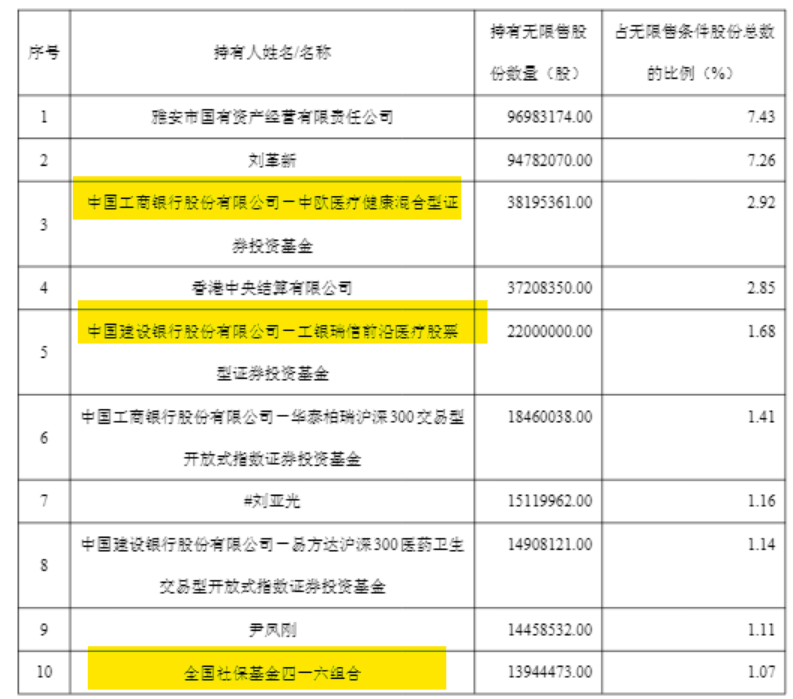
Group 1 - In the fourth quarter of last year, notable fund managers such as Ge Lan and Tang Xiaobin reduced their holdings in Kelun Pharmaceutical, while Zhao Bei increased her stake [2][3] - Ge Lan's fund, the China Europe Medical Health Mixed Fund, held 38.1954 million shares of Kelun Pharmaceutical as of December 31, 2025, having reduced its holdings by 1.867 million shares compared to the end of the third quarter [4] - Tang Xiaobin's fund, the GF Multi-Factor Mixed Fund, exited the top ten shareholders of Kelun Pharmaceutical by the end of 2025, having reduced its holdings from 24.2335 million shares to an estimated 1.394 million shares [6] Group 2 - Zhao Bei's fund, the ICBC Credit Suisse Frontier Medical Equity Fund, increased its holdings in Kelun Pharmaceutical to 22 million shares by December 31, 2025, up by 2 million shares from the end of the third quarter [6] - The National Social Security Fund's 416 portfolio became the tenth largest shareholder of Kelun Pharmaceutical with 13.9445 million shares by the end of 2025 [6] Group 3 - Liu Yanchun and Hu Xinwei reduced their holdings in Proya Cosmetics, with Liu's fund holding 2.6 million shares as of December 30, 2025, down from 3.332 million shares at the end of the third quarter [8] - Hu Xinwei's fund exited the top ten shareholders of Proya Cosmetics by the end of 2025 [8] Group 4 - Zhou Yun's fund, the Dongfanghong New Energy Mixed Fund, and the National Social Security Fund's 404 portfolio entered the top ten shareholders of Jiazhe New Energy by the end of 2025 [10] - The National Social Security Fund's 114 portfolio increased its holdings in Nanshan Aluminum by 4.3432 million shares in the fourth quarter of 2025, with five ETF products included in the top ten shareholders of Nanshan Aluminum by the end of 2025 [10] Group 5 - A surge in institutional research activities has been noted, with over 10,000 research sessions conducted in the past month, focusing on sectors such as semiconductors, general equipment, automotive, and artificial intelligence [12] - Fund managers from various firms, including Chang'an Fund and Nord Fund, have actively participated in company research activities, indicating a strong interest in the market outlook for 2026 [13]



“十全大补”面膜神话落幕:又一外资护肤品撤离中国
Guan Cha Zhe Wang· 2026-01-08 04:45
Core Insights - Filorga, a well-known French skincare brand, announced its withdrawal from the Chinese market, closing its Tmall flagship store on January 31, 2026, along with its 3.03 million followers and popular products like the "Ten Full Nourishing Mask" [1] - The exit of Filorga is part of a broader trend, with over 60 foreign beauty brands leaving the Chinese market between 2024 and 2025, indicating a significant retreat of foreign skincare brands [1] - Domestic beauty brands have gained market share, surpassing foreign brands for the first time in 2023, with Proya becoming the first domestic brand to exceed 10 billion yuan in revenue [1] Group 1: Filorga's Market Performance - Filorga entered the Chinese market in 2015 and quickly gained popularity, achieving a sales record of over 1 billion yuan during the 2018 Double Eleven shopping festival, with a year-on-year growth of 148% [2] - However, growth slowed significantly after 2020, attributed to ineffective pricing strategies and a lack of competitive advantage against domestic brands [2][3] - The brand's high-priced star product, the mask priced at 599 yuan, failed to maintain its premium image due to frequent discounts, while domestic competitors offered more affordable alternatives [2] Group 2: Challenges in Channel Operations - Filorga's online sales performance was poor, with only 2.5 million to 5 million yuan in sales on Douyin in 2025, indicating a lack of effective online marketing strategies [3] - The closure of physical stores resulted in a loss of high-end brand image and direct consumer engagement opportunities [3] - In contrast, other brands under the L'Oréal group, such as La Roche-Posay and Kiehl's, maintained strong market positions through effective product offerings and operational strategies [3] Group 3: Broader Industry Trends - The withdrawal of Filorga aligns with Colgate's global strategy to streamline operations, as the company's personal care segment saw a 2.05% decline in net sales in the first half of 2025 [4] - Similar strategic adjustments are occurring across the foreign beauty sector, with brands like Shiseido and LVMH also closing stores or withdrawing from the market due to declining performance [5] - Domestic brands like Proya and Winona have shown significant growth, with Proya achieving over 10.778 billion yuan in revenue in 2024, marking a year-on-year increase of over 20% [5] Group 4: Future Outlook - Analysts suggest that the challenges faced by foreign brands are not solely due to their foreign status but rather their inability to adapt to the Chinese market and consumer preferences [6] - L'Oréal's success is attributed to its localized operations, contrasting with Filorga's failure to establish a coherent market strategy in China [6] - The Chinese high-end beauty market is expected to continue facing challenges, but opportunities remain for brands that can effectively engage with local consumers [6]
多位知名基金经理“出手”!
Zhong Guo Ji Jin Bao· 2026-01-08 03:41
Group 1 - Notable fund managers have disclosed their latest stock adjustments as the new year begins, with several companies announcing related updates [1] - Fund managers Ge Lan and Tang Xiaobin reduced their holdings in Kelun Pharmaceutical (002422), while Zhao Bei increased her stake [1][2] - Liu Yanchun and Hu Xinwei reduced their holdings in Proya (603605), while Zhou Yun entered the top ten shareholders of Jiazhe New Energy (601619) [1][6] Group 2 - As of December 31, 2025, Ge Lan's fund held 38.1954 million shares of Kelun Pharmaceutical, having reduced by 1.867 million shares compared to the previous quarter [2] - Tang Xiaobin's fund exited the top ten shareholders of Kelun Pharmaceutical by the end of 2025, having reduced holdings from 24.2335 million shares to 13.94 million shares [4] - Zhao Bei's fund increased its holdings in Kelun Pharmaceutical to 22 million shares, up by 2 million shares from the previous quarter [4] Group 3 - Liu Yanchun's fund held 2.6 million shares of Proya as of December 30, 2025, down from 3.332 million shares, indicating a reduction of over 700,000 shares [7] - Hu Xinwei's fund is no longer among the top ten shareholders of Proya [8] - Zhou Yun's fund and the National Social Security Fund 404 combination entered the top ten shareholders of Jiazhe New Energy in the fourth quarter of 2025 [9] Group 4 - The National Social Security Fund 114 combination increased its holdings in Nanshan Aluminum (600219) by 4.3432 million shares in the fourth quarter of 2025 [9] - By the end of 2025, five ETF products were included among the top ten shareholders of Nanshan Aluminum, indicating the growing influence of index funds [9] Group 5 - A significant increase in institutional research activities has been noted, with over 10,000 research sessions conducted in the past month, focusing on sectors such as semiconductors, general equipment, automotive, and artificial intelligence [10] - Fund managers are optimistic about the performance of non-financial listed companies in A-shares for 2025 and 2026, anticipating a stable recovery [10]


多位知名基金经理“出手”!
中国基金报· 2026-01-08 03:36
Core Viewpoint - The article discusses the recent stock adjustments made by several well-known fund managers, highlighting their changes in holdings in various companies, particularly focusing on Kelong Pharmaceutical and Proya Cosmetics [2]. Group 1: Kelong Pharmaceutical - Fund managers Ge Lan and Tang Xiaobin reduced their holdings in Kelong Pharmaceutical, while Zhao Bei increased her stake [3]. - As of December 31, 2025, Ge Lan's fund held 38.1954 million shares of Kelong Pharmaceutical, a decrease of 1.867 million shares compared to the end of the third quarter [4]. - Tang Xiaobin's fund, Guangfa Multi-Factor Mixed Fund, exited the top ten shareholders of Kelong Pharmaceutical by the end of 2025, having reduced its holdings from 24.2335 million shares to at least 10.2935 million shares [6]. - In contrast, Zhao Bei's fund held 22 million shares of Kelong Pharmaceutical as of December 31, 2025, an increase of 2 million shares from the previous quarter [6]. - The National Social Security Fund's 416 portfolio became the tenth largest shareholder of Kelong Pharmaceutical with 13.9445 million shares by the end of 2025 [7]. Group 2: Proya Cosmetics - Liu Yanchun and Hu Xinwei reduced their holdings in Proya Cosmetics, with Liu's fund holding 2.6 million shares as of December 30, 2025, down from 3.332 million shares [9]. - Hu Xinwei's fund is no longer among the top ten shareholders of Proya Cosmetics [10]. Group 3: Other Companies - Zhou Yun's fund and the National Social Security Fund's 404 portfolio entered the top ten shareholders of Jiazhe New Energy by the end of 2025 [11]. - The National Social Security Fund's 114 portfolio increased its holdings in Nanshan Aluminum by 4.3432 million shares in the fourth quarter of 2025, with five ETF products now included among the top ten shareholders [11]. Group 4: Market Trends - As of early 2026, A-shares stabilized above 4000 points, with over 10,000 institutional research activities focused on sectors like semiconductors and artificial intelligence [13]. - Fund managers express optimism for A-share performance in 2026, anticipating a recovery in earnings growth for non-financial listed companies [13].

研判2025!中国睫毛膏行业发展历程、市场政策、产业链图谱、销售规模、竞争格局及发展趋势分析:高端市场仍然被国际知名品牌占据[图]
Chan Ye Xin Xi Wang· 2026-01-08 01:33
Core Insights - The mascara market in China has evolved from a "non-essential" product to a "daily necessity," driven by the younger generation's demand for natural, long-lasting, and multifunctional makeup effects [1][11] - In 2024, the total sales of mascara in China are projected to reach 2.004 billion yuan, with high-end mascara accounting for approximately 25.0% and mass-market mascara for about 74.9% [1][11] - The trend towards clean beauty and sensitivity-friendly products is pushing companies to accelerate the development of low-sensitivity, nourishing, and multifunctional mascara products [1][11] Overview - Mascara is defined as a viscous product made from a mixture of oils, water, wax, thickeners, pigments, film-forming agents, and emulsifiers, primarily used to enhance and beautify eyelashes [2] Development History - The mascara industry in China has undergone four major stages: introduction of imported products, rapid popularization, innovation and differentiation, and compliance with high-quality standards [5] - Domestic brands have shifted from imitation to breakthroughs in technology and branding, narrowing the gap with international brands [5][6] Market Policies - The Chinese government has implemented various regulations to enhance the quality and safety of cosmetics, including mascara, promoting a shift towards standardized and high-quality production [6][7] Industry Chain - The mascara industry supply chain includes raw material suppliers (oils, waxes, pigments), component suppliers (brush heads, tubes), and sales channels (department stores, beauty shops, e-commerce) [7][8] Consumer Insights - The primary consumer demographic for mascara in China is women, making up 90.3% of the market, with the age group of 18-35 years accounting for 78.6% of consumers [9][10] - Over 80% of consumers prioritize waterproof and smudge-proof features, while 40% consider ease of application as a key factor influencing repurchase rates [9][10] Competitive Landscape - The mascara market is highly competitive, featuring both international brands (e.g., Yves Saint Laurent, Lancôme, Dior) and domestic brands (e.g., Maogeping, CarziLan, Huaxizi) [11][12] - Domestic brands are leveraging insights into Asian consumer preferences and innovative marketing strategies to capture market share [11][12] Development Trends - There is a shift towards multifunctional and natural ingredient-based mascara products, with an emphasis on nurturing properties and reduced irritants [14] - Online sales channels are expected to strengthen, with innovations in marketing strategies such as social e-commerce and live streaming [15] - The rise of domestic brands is supported by the growing trend of national pride, with brands incorporating traditional cultural elements into their products [16]

葛兰、赵蓓、胡昕炜、刘彦春等百亿基金经理,最新调仓路线曝光
Zhong Guo Zheng Quan Bao· 2026-01-07 15:19
Group 1 - Kelong Pharmaceutical has seen a reduction in holdings by the China Europe Medical Health Mixed Fund managed by fund manager Ge Lan, from 42.60 million shares at the end of Q2 2025 to 38.20 million shares by the end of Q4 2025, indicating a decrease of 1.87 million shares [1] - The same fund had already begun reducing its stake in Kelong Pharmaceutical in Q3 2025, where the holdings decreased from 42.60 million shares to 40.06 million shares, a reduction of 2.53 million shares [1] - In contrast, the Industrial Bank of China Credit Suisse Frontier Medical Stock Fund managed by Zhao Bei increased its holdings in Kelong Pharmaceutical from 20.00 million shares at the end of Q3 2025 to 22.00 million shares by the end of Q4 2025 [1] Group 2 - Proya, another well-known consumer goods company, announced a share buyback on January 5, 2025, revealing that the Invesco Great Wall Emerging Growth Mixed Fund managed by Liu Yanchun reduced its holdings from 3.33 million shares at the end of Q3 2025 to 2.60 million shares by the end of December 30, 2025, a decrease of over 700,000 shares [2] - Additionally, the fund managed by Hu Xinwei, the Huatai-PineBridge Consumer Industry Mixed Fund, has exited the top ten circulating shareholders of Proya [2]
美容护理行业今日跌1.03%,主力资金净流出7357.64万元
Zheng Quan Shi Bao Wang· 2026-01-07 13:34
Group 1 - The Shanghai Composite Index rose by 0.05% on January 7, with 17 industries experiencing gains, led by the comprehensive and coal sectors, which increased by 3.86% and 2.47% respectively [1] - The oil and petrochemical and non-bank financial sectors saw the largest declines, with decreases of 1.73% and 1.13% respectively [1] - The beauty and personal care industry ranked third in terms of decline for the day, falling by 1.03% [2] Group 2 - The beauty and personal care industry experienced a net outflow of 73.58 million yuan, with 29 stocks in the sector, of which only 4 rose while 24 fell [2] - The top three stocks with the largest net outflows in the beauty and personal care sector were Qingdao Kingking, Aimeike, and Furida, with outflows of 43.47 million yuan, 21.05 million yuan, and 15.05 million yuan respectively [2][3] - The stock with the highest net inflow was Shuiyang Co., with an inflow of 18.80 million yuan, followed by Perleya and Zhongshun Jierou with inflows of 10.12 million yuan and 9.53 million yuan respectively [2][3]




上美股份彩妆合伙人离职,NANbeauty中高端市场破局不易
2 1 Shi Ji Jing Ji Bao Dao· 2026-01-07 11:37
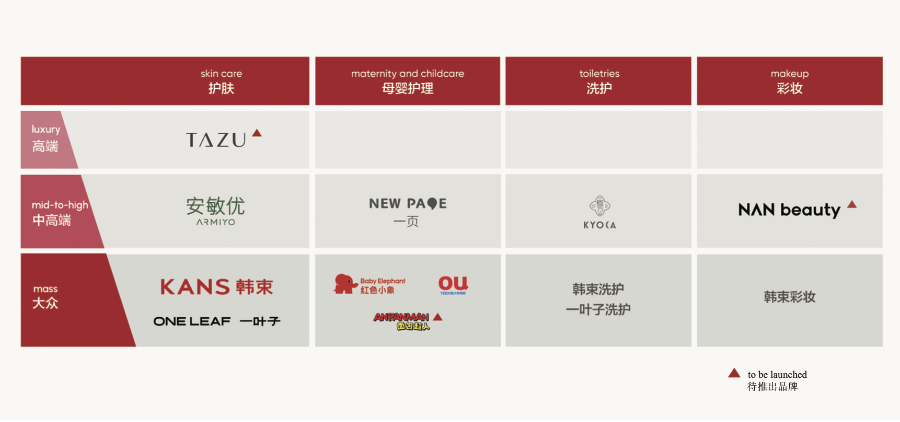
Core Viewpoint - The recent departure of Gu Mai from Shangmei Co., Ltd. (02145.HK) raises questions about the company's future strategies in the cosmetics sector, particularly regarding the NAN beauty brand, which is still in its early stages of development [1][11][13]. Group 1: Departure of Gu Mai - Gu Mai, who joined Shangmei Co. in the first half of 2025 as a brand partner for NAN beauty, has left the company less than a year after his appointment, citing personal career development as the reason [1][2]. - Prior to joining Shangmei, Gu Mai held significant positions in major companies such as Mars, Unilever, Estée Lauder, and LVMH, and was known for his role in bringing international high-end beauty brands to Tmall [2][10]. Group 2: NAN Beauty Brand Development - NAN beauty, positioned as a mid-to-high-end cosmetics brand, was first mentioned in Shangmei's 2024 annual report, indicating the company's strategic expansion into the cosmetics sector [4][10]. - The brand aims to leverage the unique combination of a professional makeup artist's IP and the growing demand in the cosmetics market, which is currently seen as a blue ocean with limited competition [5][11]. Group 3: Market Context and Comparisons - The market for cosmetics in China is competitive, with brands like Mao Geping and Proya's Caitang already establishing a presence. Mao Geping's cosmetic products generated revenue of 1.422 billion RMB in the first half of 2025, accounting for 55% of the company's total revenue [5][6]. - Proya's Caitang brand, which also focuses on professional makeup artistry, contributed 705 million RMB in revenue during the same period, increasing its share of Proya's total revenue from 8.99% to 13.17% [6][9]. Group 4: Current Status of NAN Beauty - As of January 7, 2026, NAN beauty's initial product line, launched in August 2025, includes five foundation products, but the brand is still in the incubation phase with limited market penetration [12]. - The brand's Tmall flagship store has garnered a modest following, with 2,484 fans, and its top-selling products include sample sets priced at 49.9 RMB and 59.9 RMB, with sales exceeding 10,000 and 6,000 units respectively [12].
中国最会化妆的男富豪,一把套现15亿!什么信号?
Xin Lang Cai Jing· 2026-01-07 10:34
Core Viewpoint - The core management team of MAOGEPING, a leading Chinese cosmetics brand, has announced a significant share reduction, raising questions about the company's governance and future direction. Despite this, the stock price increased by 7.26% following the announcement, indicating market confidence in the brand's performance and potential [1][3][29]. Company Overview - MAOGEPING, known as the "first domestic cosmetics stock" in Hong Kong, has a family-dominated governance structure, with five out of six board members being relatives of the founder, MAO Ge Ping [3][4][5]. - The company plans to reduce its shareholding by 3.51%, equating to a potential cash-out of approximately 1.5 billion HKD, which has sparked discussions among investors regarding the motivations behind this decision [3][7][29]. Financial Performance - For the first half of 2025, MAOGEPING reported a revenue of 2.588 billion CNY, a year-on-year increase of 31.28%, and a net profit of 670 million CNY, up 36.11% [11][44]. - Despite the impressive revenue growth, there are signs of declining growth rates in revenue, net profit, and gross margins, with the average selling price of products dropping from 163.8 CNY to 157 CNY, indicating increased promotional pressures [11][44]. Market Context - The Chinese cosmetics market has seen significant growth, with total transactions exceeding 1 trillion CNY for two consecutive years. However, the growth rate is expected to slow to 2.8% in 2024, indicating a shift to a more stable growth phase [16][49]. - The competitive landscape is intensifying, with domestic brands gaining market share at the expense of international giants like L'Oréal and Estée Lauder, which have faced declining sales in China [16][51]. R&D and Marketing Strategy - MAOGEPING has a notably high sales expense to R&D investment ratio of 59.5, the highest among domestic brands, reflecting a strategy that prioritizes marketing over research and development [19][52]. - In the first half of 2025, R&D spending was only 15.257 million CNY, accounting for just 0.59% of total revenue, which is among the lowest in the top domestic brands [19][52]. Consumer Perception - Despite the brand's strong market position, there are increasing consumer complaints regarding product quality, which could pose risks to brand reputation and future sales [11][44][56]. - The brand's unique selling proposition lies in its integration of MAO Ge Ping's personal IP and the experiential aspect of its products, which has attracted a loyal customer base, although this model may also present risks if the founder's image falters [23][56].

化妆品板块1月7日跌0.93%,嘉亨家化领跌,主力资金净流出5766.6万元
Zheng Xing Xing Ye Ri Bao· 2026-01-07 08:59
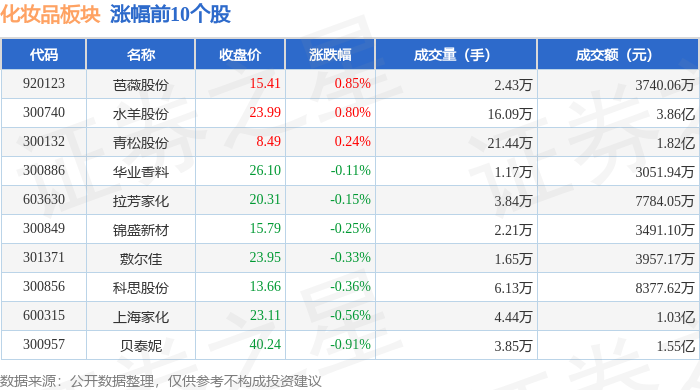
Group 1 - The cosmetics sector experienced a decline of 0.93% on January 7, with Jiaheng Jiahua leading the drop [1] - The Shanghai Composite Index closed at 4085.77, up 0.05%, while the Shenzhen Component Index closed at 14030.56, up 0.06% [1] - Key individual stock performances in the cosmetics sector included Bawei Co. up 0.85% and Jiaheng Jiahua down 4.96% [2] Group 2 - The net outflow of main funds in the cosmetics sector was 57.67 million yuan, while retail investors saw a net inflow of 39.72 million yuan [2] - The stock with the highest main fund inflow was Shuiyang Co. with 27.77 million yuan, while Jiaheng Jiahua had a significant outflow of 32.2 million yuan [3] - Retail investors showed a negative net flow in several stocks, including Shanghai Jahwa and Kesheng Co. [3]